
REVIEW · MARSEILLE BIKE TOURS
From Marseille: Calanques National Park E-Mountain Bike Tour
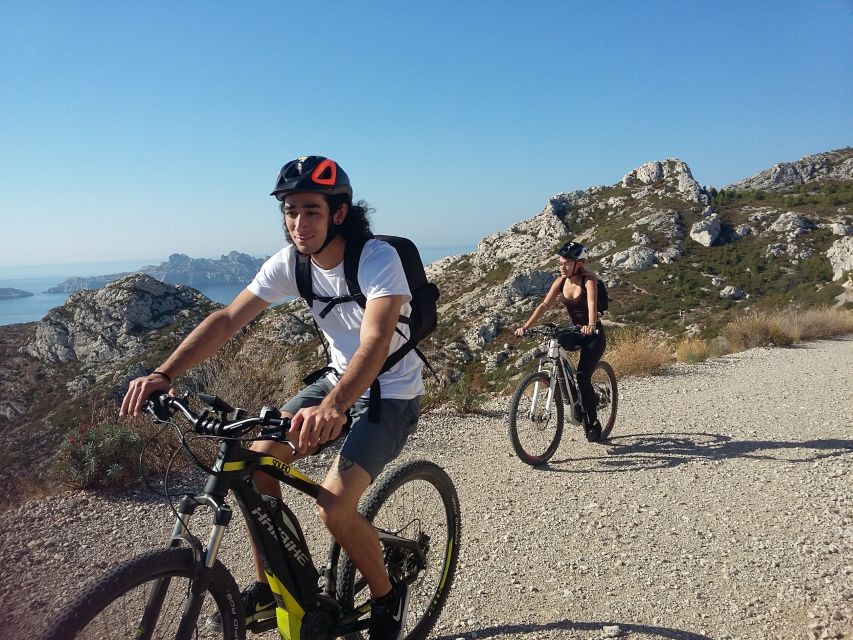
The Calanques are best seen on two wheels. I like the way this four-hour ride leaves ordinary Marseille behind for rugged off-road trails, steep hills, and big views over Sormiou. I also like the strong bikes, small groups, and guides who add local stories along the way. The catch is simple: this is not a gentle cycle through a city park. Rocky descents, dusty tracks, and steep climbs demand confidence and decent fitness.
The route gives you a different side of Marseille, passing Château Pastré, Montagne de l’Aigle, Roy d’Espagne, and the Crête des Escampons. The electric assistance helps greatly on the uphill sections, but it does not steer the bike for you. You still need to handle uneven ground, control your speed, and stay comfortable on a mountain bike.
The meeting point is easy to reach, but the shop has no toilet, so use the free public facilities near the bus stop before setting off. Bring closed shoes, water, sun protection, and perhaps a swimsuit and snack, since a beach stop of about an hour has been part of the experience.
Key points to know before you book
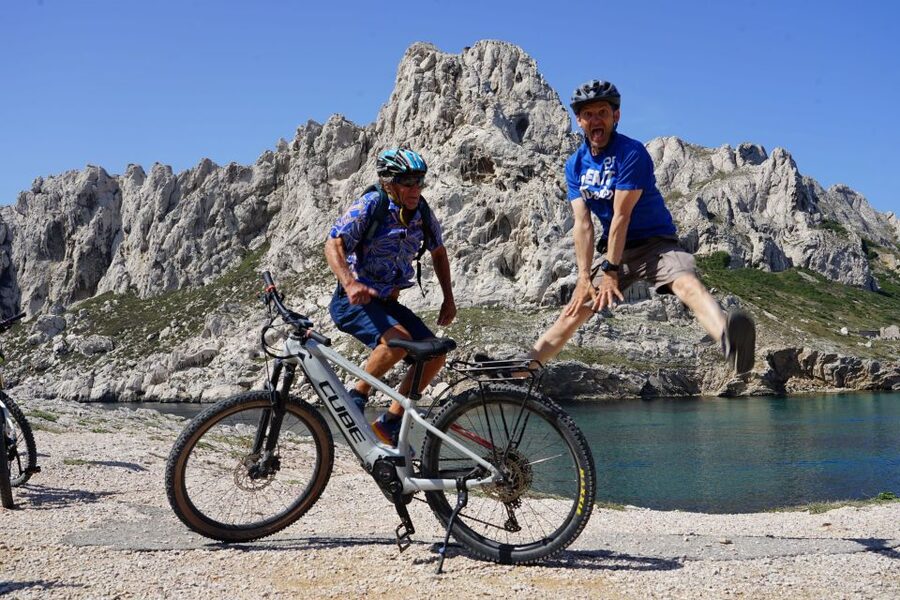
- A true off-road route: Expect rocky, dusty, and hilly trails rather than a flat cycle path.
- Electric help on steep climbs: The e-mountain bikes make uphill sections manageable, but you still need to pedal and control the bike.
- A full four hours outside: The route includes Château Pastré, Montagne de l’Aigle, Sormiou views, Roy d’Espagne, and other viewpoints.
- Small groups: No more than 10 people are booked together, allowing the guide to adjust the pace and help with bike settings.
- A possible beach break: Pack a swimsuit and snack if you would enjoy time by the water.
- Good value at $84: You get a guide, bike, helmet, and gloves for a half-day in one of Marseille’s most striking natural areas.
Starting at Pointe Rouge with an electric mountain bike
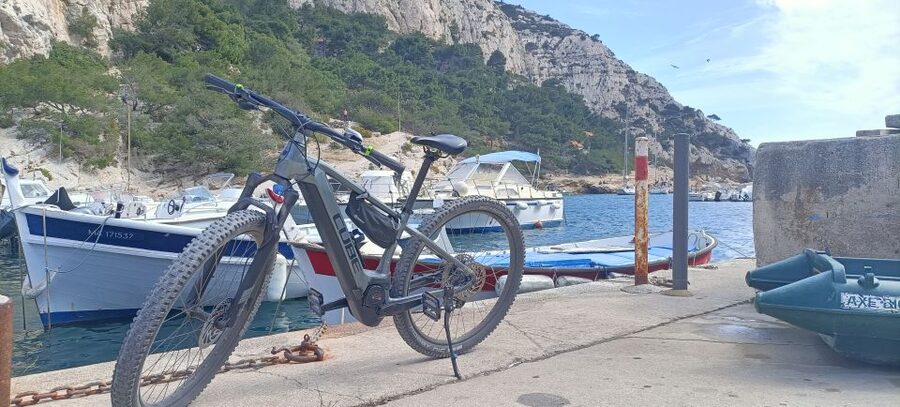
The tour begins at EVTT Provence, at 3 Avenue d’Odessa near Pointe Rouge. Look for the Avia gas station, then cross the road toward the restaurant Le Carré. The shop is inside the Résidence le Grand Large garage, with a street sign to help you find it.
This is not a polished visitor center. It is a practical bike base inside a garage, and you should allow a little time to orient yourself. There are no toilets on site. Free public toilets are about 50 meters beyond the gas station, near the bus stop, so use them before the briefing.
You will be fitted with an electric mountain bike, helmet, and gloves. The provider asks for each participant’s height when booking, which helps with bike setup. Take the adjustment seriously. A correctly fitted saddle and familiar brake position matter much more on rocky tracks than they do on a smooth road.
The guide should also explain how the electric assistance works before the group leaves. The point is not to let the motor do everything. You still choose the right level of help, steer around stones, and manage your braking on descents. Riders who have never used an e-mountain bike should take the practice period seriously.
The tour is offered in English, French, and Spanish. Guides named in feedback include Iris, Martin, and Cyril. Iris was praised for being attentive, Martin for his handling of the group, and Cyril for bringing energy and local information to the ride. The quality of the guide matters here, since the pace and safety briefing can shape the whole outing.
More Mountain Bike Tours in Marseille:
- From Ubud: Downhill Bike Tour with Rice Terraces and Meal
★ 4.9 · 664 reviews - Waimea Canyon Downhill Bike Ride
★ 5.0 · 650 reviews - Ubud: Downhill Cycling with Volcano, Rice Terraces and Meal
★ 5.0 · 536 reviews
Château Pastré offers a gentle start to the wild country
The first major section passes through Château Pastré park. This gives you a useful transition from Marseille’s built-up edge to the open country around the Calanques.
The park is attractive because it lets you warm up before the more demanding trails. You can get used to the bike, the motor assistance, and the way the group moves together. It is also a good place for the guide to point out how the city meets the protected area.
Do not expect a long stop inside a formal château or a palace visit. This is a cycling route through the park, not a château tour. The value lies in the setting and the gradual change in scenery.
The early section may feel easy compared with what follows. That is useful. Once the route reaches rougher ground, you will already know how the bike responds when you stand on the pedals, slow down, or use extra assistance.
Montagne de l’Aigle brings the real mountain biking
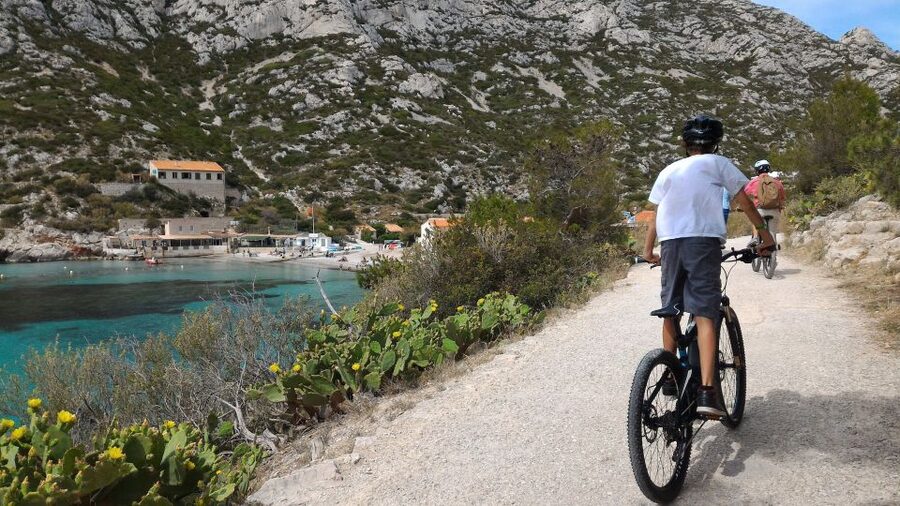
The route then reaches the mountain trails of Montagne de l’Aigle. This is where the outing earns its name.
The surface can be rocky and dusty, with uneven climbs and descents. One rider described the route as a mixture of beachside streets, walking paths, and rocky, hilly tracks. That combination is important. You are not spending four hours on one kind of surface, so your attention needs to change throughout the ride.
The electric motor is a major help on the climbs. Several riders found the steep sections manageable with assistance, even in hot weather. Still, the bikes are not magic. A rider who is nervous on loose ground may find the handling more difficult than the uphill effort.
You should be comfortable riding a bicycle before booking. Previous mountain-bike experience is useful, especially for rocky descents and dusty paths. You do not need to be in top athletic shape, but the tour is intended for reasonably fit participants. One rider called it a higher-intensity and sweaty excursion, which is a fair warning for warm days.
The guide’s role is especially useful here. A good leader can set a sensible pace, wait at tricky points, and help with bike adjustments. Small groups of no more than 10 make that easier. On one outing, two guides helped the group feel more secure and adjusted the bikes when needed.
Fontaine d’Ivoire and the view toward Sormiou
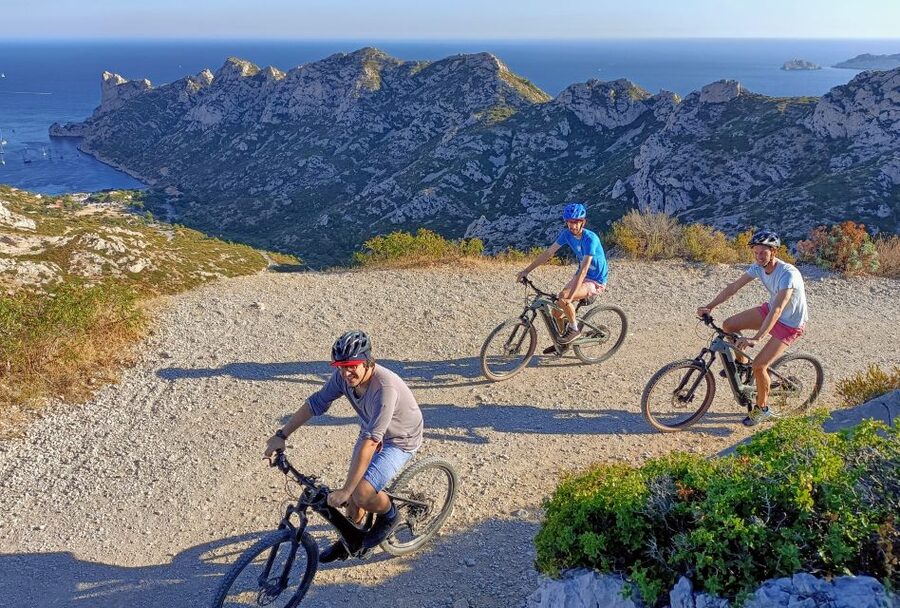
At Parc de la Fontaine d’Ivoire, the route opens into one of its more scenic sections. You will ride up and down the hills while taking in wide views around the southern edge of Marseille.
The reward is not one single monument. It is the feeling of moving through a large, rough piece of country that sits surprisingly close to the city. You are still connected to Marseille, but the roads and buildings no longer dominate the experience.
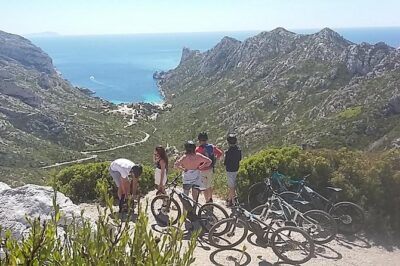
The Col de Cortiou provides one of the strongest viewpoints of the day, with a view toward Calanque de Sormiou. This is the kind of stop that makes the effort worthwhile. Sormiou is known for its dramatic meeting of pale rock and blue Mediterranean water, and seeing it from above gives you a broader sense of the coast than you get from a beach-level visit.
The guide also shares information about the area’s natural history, along with local stories and anecdotes. That added explanation keeps the ride from becoming a simple succession of viewpoints. If you enjoy knowing how the area formed and how the park fits around Marseille, listen closely during the pauses.
The main drawback is that viewpoints are earned through effort. You may arrive warm, dusty, and ready for water. Wear clothes that allow free movement, and do not bring anything you would hate to get dirty.
More Nature Bike Tours in Marseille:
- NYC: Central Park Bike Rentals
★ 4.2 · 2,528 reviews - NYC: Central Park Bike Rental
★ 4.1 · 1,651 reviews - Central Park Bike Rental
★ 4.7 · 1,509 reviews - New York City: Highlights of Central Park Bike or eBike Tour
★ 4.6 · 800 reviews
The steep road back tests the electric assistance
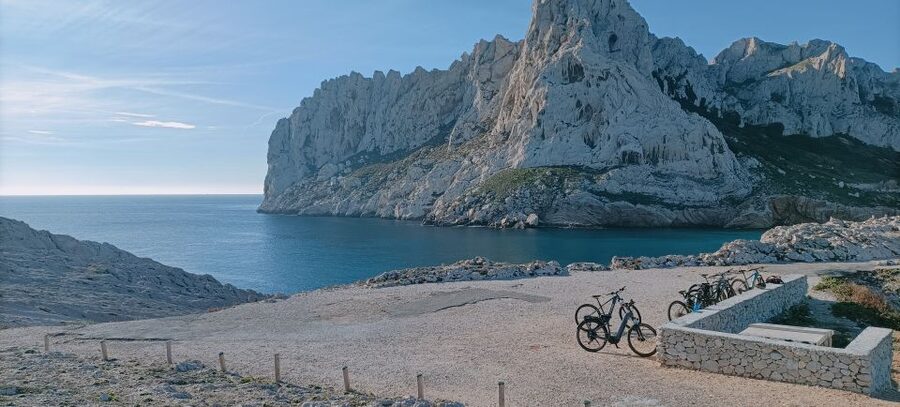
After the Sormiou viewpoint, the route includes a steep road. This is one of the clearest moments when the e-bike makes a difference.
You will still need to pedal, but the motor can take much of the sting out of the climb. Riders who were initially worried about the steep sections found the assistance effective. The bike helps you keep moving instead of forcing a long hike uphill.
That said, the tour is not suitable for everyone. If you have limited cycling experience, poor balance, or dislike steep and uneven ground, the electric motor will not remove every challenge. You need to be willing to work, sweat, and handle a mountain bike away from smooth pavement.
The route then continues along the Crête des Escampons, the ridge between Marseille and the Massif des Calanques. Ridge riding gives you a useful sense of place. You can see how the city, the suburbs, and the protected coastal hills fit together, rather than viewing the Calanques as an isolated attraction.
The return section may feel less scenic than the wildest parts of the park, but it completes the loop and shows another side of Marseille. You are not simply being driven back to the starting point. You ride through the southern suburb of Roy d’Espagne and return to Pointe Rouge under your own power.
A beach stop can make the hot-weather ride better
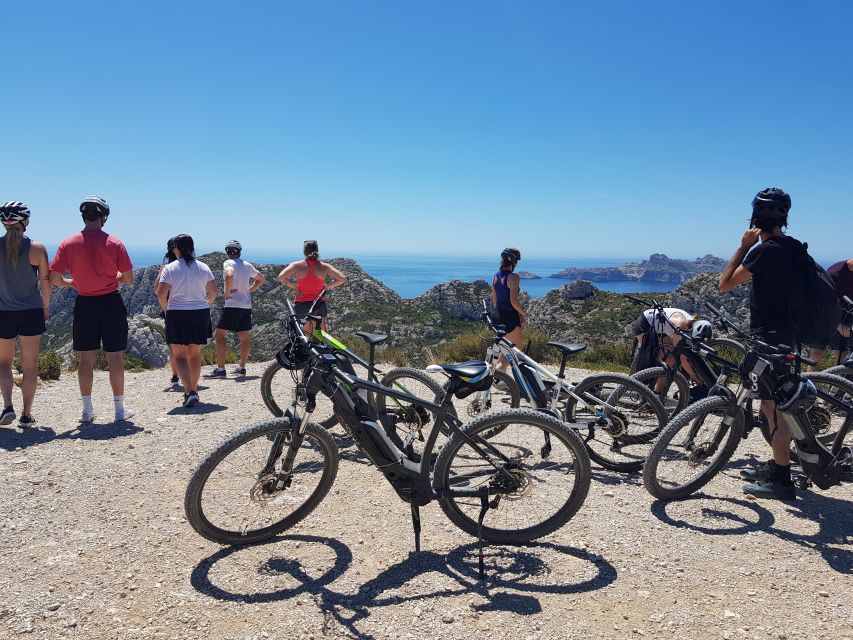
A beach stop of about an hour has been part of this experience. It is worth planning for, especially during the hotter months.
Pack a swimsuit, towel if you have room, and a snack. The official packing advice includes comfortable shoes, sunglasses, a sun hat, and sunscreen, but a beach break calls for a little more preparation. There is only one toilet stop on the route, and facilities may not be especially comfortable, so plan ahead.
The beach pause changes the rhythm of the tour. Instead of riding continuously for four hours, you get a chance to cool off and enjoy the coast without a bike beneath you. It also gives less experienced riders a useful rest before the return section.
The timing can vary, so do not assume the stop will work like a formal swimming excursion. The main purpose of the tour is mountain biking, not beach lounging. Still, having an hour near clear water can be one of the most pleasant parts of a warm day.
What the $84 price really includes
At $84 per person, the tour is fairly priced for a guided half-day in the Calanques. The cost includes the guide, electric mountain bike, helmet, and gloves. You are paying not only for equipment, but also for route planning and access to trails that would be difficult to connect on your own.
The value is strongest if you want an active way to see several parts of the park in one outing. You cover Château Pastré, Montagne de l’Aigle, Fontaine d’Ivoire, the Col de Cortiou viewpoint, the Crête des Escampons, and Roy d’Espagne. A self-guided ride would require finding the route, arranging a suitable bike, and managing steep trails without local support.
The price is less attractive if you want a relaxed sightseeing trip. This is not a substitute for a boat cruise or an easy coastal walk. You are paying for effort as well as scenery.
A previous outing included a bike that ran out of power, though the overall experience was still rated highly. That is a reminder to ask about the battery and assistance settings during the briefing. The bikes are generally described as being in good condition, with one rider specifically noting a nearly new Cube bike.
Getting to the meeting point and preparing well
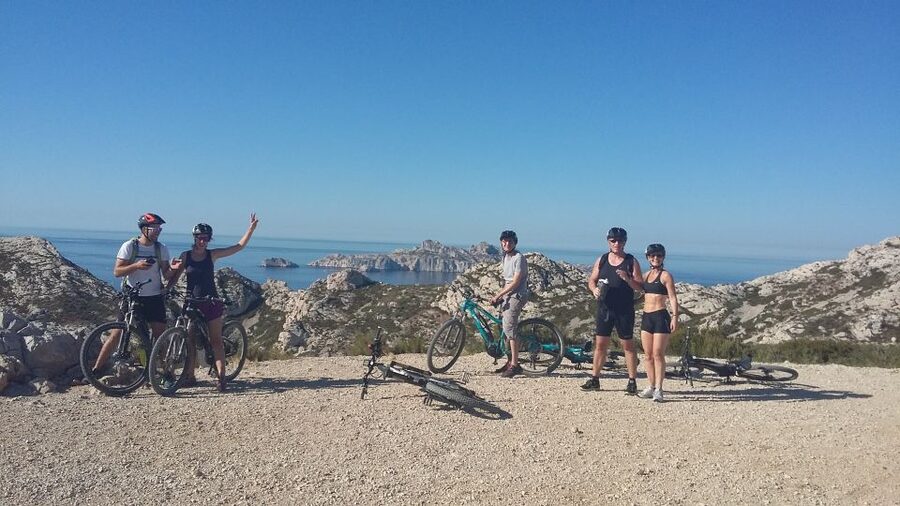
Hotel pickup and drop-off are not included. You must reach EVTT Provence at 3 Avenue d’Odessa yourself.
The meeting point is near the Avia gas station and Pointe Rouge, and it can be reached by public transport from central Marseille using the Metro and bus network. Follow the directions carefully because the shop is inside the garage rather than presented as a large street-level storefront.
Wear closed-toe shoes. Sandals, flip-flops, platforms, and high heels are not suitable and are not allowed. Choose loose, comfortable clothing that will not restrict your legs or catch on the bike.
Bring:
- Sunscreen and a hat
- Sunglasses
- Water
- A swimsuit and snack for the beach stop
- Clothes that can handle dust and sweat
- Closed, secure shoes
The activity depends on good weather. If poor conditions force a cancellation, you can choose another date or receive a full refund. You can also cancel up to 24 hours before the tour for a full refund, and the reserve-now, pay-later option keeps your plans flexible.
Who will enjoy this Calanques ride most
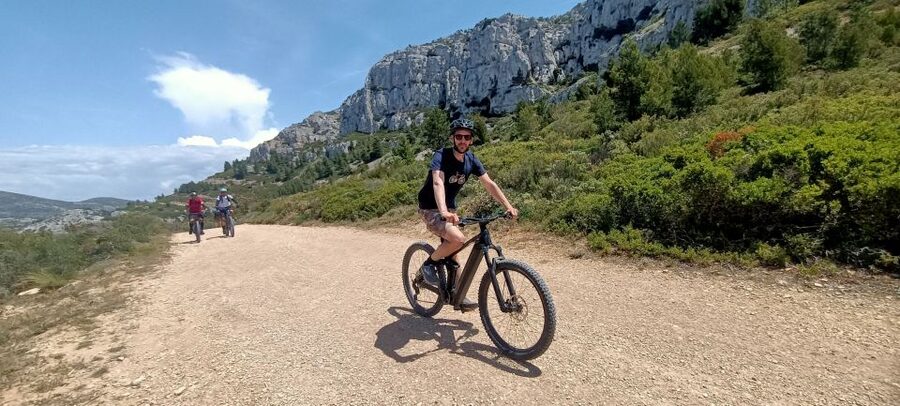
I would recommend this tour to active visitors who want more than a postcard view of Marseille. It suits confident cyclists, people with some mountain-bike experience, and anyone happy to trade a little comfort for better access to the hills.
It can also work for a reasonably fit beginner who is open to learning. The electric assistance helps a lot, and the guides can adjust the pace. But you should not book it if you expect a flat ride or feel uneasy riding over rocks and loose surfaces.
The age minimum is 15. The maximum group size is 10, which keeps the outing more personal and gives the guide a better chance to monitor the group.
Hot weather changes the difficulty. A ride that feels moderate in spring can feel demanding in summer, especially on exposed climbs. Start with enough water, use the assistance wisely, and treat the beach break as a real rest rather than an optional extra.
Should you book the EVTT Provence tour?
Book it if you want spectacular Calanques views with real outdoor effort. The strongest parts are the e-mountain bikes, the varied route, the Sormiou viewpoint, and the chance to reach places that are easy to miss from a city bus or ordinary walking tour.
Think twice if you want a calm sightseeing activity, dislike rocky descents, or are not comfortable on a bicycle. The tour can be demanding, and the return through traffic toward the bike base may feel busy if you are unfamiliar with French road rules.
For the right rider, $84 buys a memorable half-day, useful local guidance, and a much more active look at Marseille. Bring sun protection, closed shoes, and a willingness to get dusty. The Calanques will reward the effort.
FAQ
How long is the Calanques e-mountain bike tour?
The tour lasts four hours. You will ride through Calanques National Park and return to Pointe Rouge in Marseille.
What is included in the price?
The price includes a live guide, an electric mountain bike, a helmet, and gloves.
What languages are available?
The tour can be provided in English, French, or Spanish. The guide may be multilingual.
How old must I be to participate?
You must be at least 15 years old.
How difficult is the route?
The route includes steep climbs, rocky trails, dusty tracks, and fast or uneven descents. The electric assistance helps on uphill sections, but the activity is recommended for athletic participants and people comfortable riding a mountain bike.
Where does the tour meet?
Meet at EVTT Provence, 3 Avenue d’Odessa, in front of the Avia gas station and across from the restaurant Le Carré. The shop is inside the Résidence le Grand Large garage.
What should I bring?
Bring comfortable closed-toe shoes, sunglasses, a sun hat, and sunscreen. A swimsuit and snack may also be useful because the outing can include about an hour at a beach.
More National Park Trips in Marseille
- Big Island: Fat Tire E-Bike Tour through Volcanoes National Park
★ 5.0 · 546 reviews - Self-Guided Ebike Tours of Acadia National Park Carriage Roads
★ 5.0 · 427 reviews - Guided Ebike Tour of Acadia National Park Carriage Roads
★ 5.0 · 408 reviews - Saguaro National Park East E-Bike Tour
★ 5.0 · 316 reviews
Newly added rides around Marseille
- Marseille: Calanques Shore Excursion Electric Bike Day Tour★ 4.7 · 38 reviews
- Marseille: Sightseeing E-Bike Tour★ 4.9 · 161 reviews
- Marseille: Full-Day Guided E-Bike Coast & Calanques Tour★ 4.8 · 95 reviews
- Marseille: Half-Day E-Bike Tour from Cruise Port★ 4.7 · 201 reviews
- Marseille: E-Bike and Food Tour★ 4.7 · 34 reviews
- Marseille: E-bike Virtual Guided Tour★ 4.8 · 100 reviews
- E-Bike Rental in Marseille with our brand new Virtual Guide !!★ 5.0 · 81 reviews
- Electric Bike Tour to the Calanques from Marseille★ 4.5 · 300 reviews
Marseille Bike Tours, compared.
Marseille Grand E-Bike Tour : “le tour du Fada”
Read our review →
Ultimate Calanques Panoramic e-bike Ride – 3h (Small Group)
Read our review →

Electric Bike Tour to the Calanques from Marseille
Read our review →
Browse the lists this tour appears in