
REVIEW · ITALY BIKE TOURS
Rome: Monuments and Belvederes Bike Tour
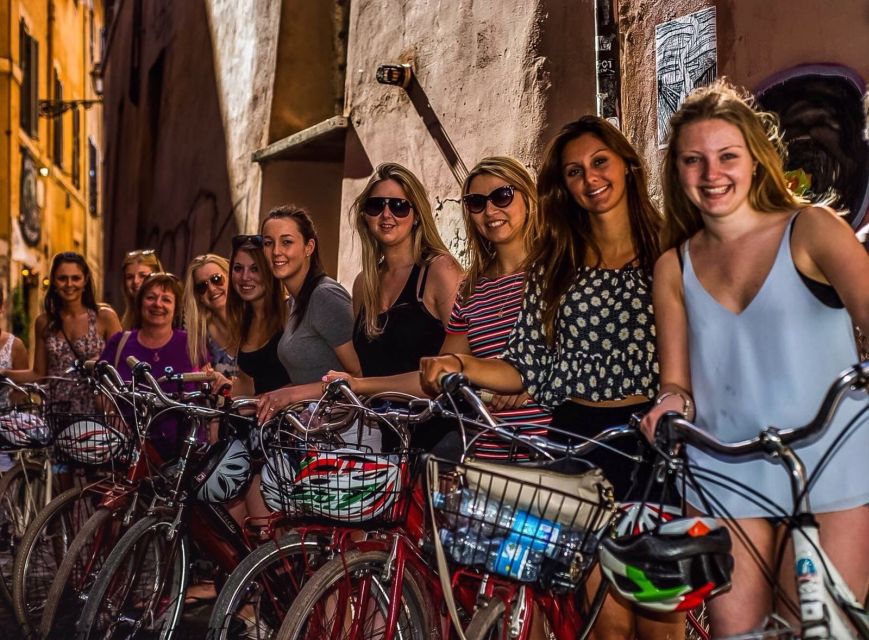
Rome rewards a quicker pace. This three-hour bike ride links ancient ruins, famous fountains, hilltop views, and grand piazzas in one smart route. I like the way it reaches places that feel far apart on foot, especially Aventine Hill and the Pincio balcony. I also like the local storytelling, with guides such as Lorenzo, Mario, and Maurizio adding anecdotes, church visits, and restaurant tips along the way.
The main drawback is simple: you need to be comfortable riding a bike. Rome has narrow medieval lanes, hills, and busy streets, so this is not a gentle sightseeing ride for someone who rarely cycles. At $71 per person, I see good value if you want a broad first look at Rome, but less value if you prefer slow, detailed time inside each monument.
Key points to know before you ride
- Aventine Hill delivers one of Rome’s best views, giving you a fine early look across the city.
- The route covers major icons without long walks, including the Colosseum, Trevi Fountain, Spanish Steps, Piazza Navona, and Saint Peter’s Basilica.
- The tour begins and ends at Via di S. Calisto, 9, in the Trastevere area.
- Three hours means many photo stops, not long interior visits, so plan separate time for the Colosseum, Vatican Museums, or other paid sights.
- The guide adds local color, with anecdotes, church stops, and, in some cases, restaurant suggestions.
- Bikes, helmets, and a child seat are included, but food, drinks, and hotel transfers are not.
Why a bike is a smart way to see Rome
Rome can feel scattered on a map. Trastevere sits across the river from the ancient center. The Aventine rises above the Circus Maximus. Trevi Fountain, the Spanish Steps, Piazza Navona, and Saint Peter’s Basilica each belong to a different pocket of the city.
On foot, connecting all of these sights takes time and energy. By bike, you can get the broad picture in three hours, with your guide handling the route and giving you context as you go. You will not study every monument at length, but you will understand how Rome’s ancient, medieval, Baroque, and modern layers fit together.
I especially like the balance between famous stops and viewpoints. The Colosseum and Trevi Fountain are essential Rome, but the ride also includes Aventine Hill, Capitoline Hill, the Pincio balcony, and the People’s Square. Those elevated stops help you see the city as a whole instead of collecting isolated photo backgrounds.
The tour uses a live guide in English, French, Spanish, or Italian. That matters here. Rome’s ruins and churches are easier to appreciate when someone explains what you are looking at, rather than simply pointing you toward the next landmark.
A few more rides around Italy worth a look
- Rome EBike Tour: Appian Way, Catacombs & Roman Aqueducts
★ 5.0 · 1,766 reviews - Rome: Top Highlights & Hidden Gems Tour by Cannondale E-Bike
★ 4.9 · 1,760 reviews - Rome: Appian Way & Aqueducts E-Bike Tour (Catacombs & Food)
★ 4.9 · 1,498 reviews
Starting in Trastevere at Via di S. Calisto
The meeting point is Via di S. Calisto, 9, in Trastevere. Arrive 15 minutes before departure so you have time to meet the guide, receive your bike and helmet, and get ready without holding up the group.
Trastevere is a fitting place to begin. Its narrow streets and medieval feel give you an immediate sense of old Rome, though they also make the first part of the ride less suited to nervous cyclists. You will need to pay attention and follow the guide closely.
The route returns to the same address at the end. That is useful because you do not need to arrange a return transfer from another part of the city. Hotel pickup and drop-off are not included, so you should plan your own way to Trastevere before the start.
A child seat is available, which makes the tour more practical for some families. Still, the activity is not suitable for anyone who cannot ride a bike. The provided information does not describe an alternative vehicle or a no-cycling option.
Aventine Hill and the first big city view
From Trastevere, the ride heads toward Aventine Hill. This is one of the best parts of the route for understanding Rome’s shape. From above, you can take in broad views of the city instead of looking up at one building at a time.
The stop also gives the tour an early sense of place. You begin among Trastevere’s tight lanes, then climb to a quieter viewpoint before returning toward the ancient center. That change of scale is one reason I would choose this ride early in a Rome visit.
The practical catch is the hill itself. You should expect some uphill cycling, and the tour is not advertised as flat or effortless. If you are comfortable riding but dislike climbs, ask yourself how much that matters before booking. The views are a strong payoff, but the route does ask more from your legs than a simple ride around a piazza.
Circus Maximus and the Colosseum
The route then reaches two major symbols of imperial Rome: Circus Maximus and the Colosseum.
Circus Maximus is a useful stop because it helps you picture the size of ancient public entertainment. The open space makes a sharp contrast with the Colosseum’s compact, massive structure. Your guide can connect the two sites and explain how they fit into the ancient city.
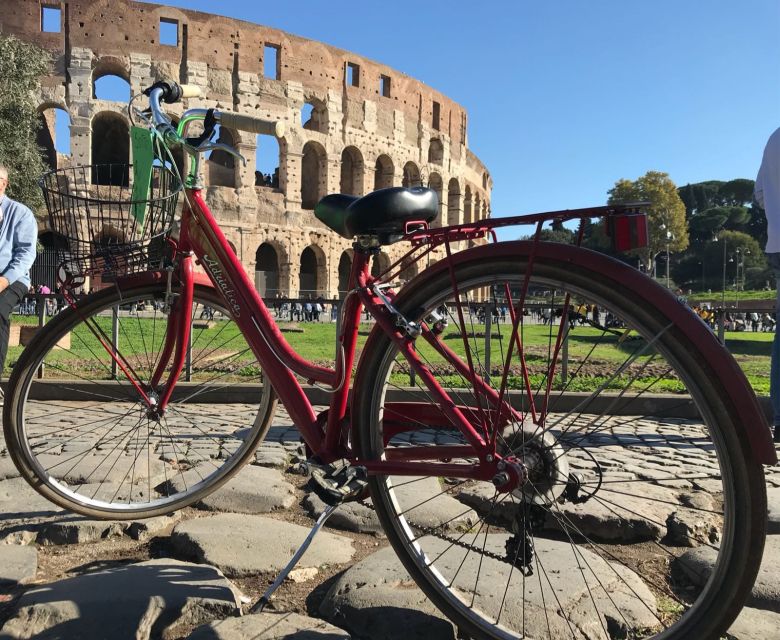
At the Colosseum, expect a photo stop and an outside look rather than an interior tour. That distinction is important. The ride lets you see the amphitheater without spending hours in an entry line, but you will not get the full underground, arena, or upper-level experience included with a dedicated Colosseum visit.
For a first day in Rome, that trade can work well. You get a strong introduction, learn why the monument matters, and save a separate visit for when you have time to explore at a slower pace. If the Colosseum is your main reason for coming to Rome, though, do not treat this bike tour as a replacement for an inside visit.
Same handlebars, a completely different route:
- Rome: Appian Way, Catacombs, & Roman Aqueducts E-bike Tour
★ 4.9 · 1,421 reviews - Rome City Small Group Bike Tour with quality Cannondale EBike
★ 5.0 · 1,380 reviews - Milan: Hidden Gems Guided Bike Tour
★ 4.8 · 1,334 reviews - Tuscany Bike Tours Through the Chianti Hills with Wine Tasting
★ 5.0 · 1,300 reviews
Capitoline Hill and the Roman Forum view
After the Colosseum, the bike reaches Capitoline Hill. This is another excellent viewpoint, with a panorama toward the Roman Forum and the surrounding ancient center.
I like this stop because it adds visual order to the ruins. From ground level, the Forum can feel like a collection of broken columns and stone fragments. From Capitoline Hill, you can see how the remains occupy the center of modern Rome and begin to imagine the old civic heart beneath the present city.
The hill also reinforces the tour’s main strength: it connects monuments with views. You are not simply moving from one famous address to another. You are repeatedly given a chance to step back and see the city’s structure.
As with Aventine Hill, you should expect some climbing. The tour is designed for people who can ride comfortably, not for those seeking a flat, leisurely pedal with no exertion.
Trevi Fountain and the Spanish Steps
The imperial ruins give way to the Baroque and grand urban Rome of Trevi Fountain and the Spanish Steps.
Trevi Fountain is one of the route’s most recognizable stops. Your guide provides a visit and photo opportunity, but the exact time spent there depends on the pace of the group and conditions at the site. This is a place where you may find crowds, so keep your bike and belongings under control and stay close to the guide.
The Spanish Steps bring you into another classic Rome setting, with Trinità dei Monti church above. The stop works well on a bike route because you can see the area without walking all the way between every central sight. Do remember that the steps themselves are for viewing and sitting, not for riding.
These stops are highly familiar, but that does not make them dull. A good guide can add the details that turn a quick look into a useful visit. Feedback about the guides repeatedly praises their friendliness, stories, and clear explanations. Lorenzo, in particular, is credited with adding anecdotes and taking the group into several churches.
Pincio balcony and People’s Square
The route continues to the Pincio balcony, another high point with wide views over Rome. You then reach the People’s Square, or Piazza del Popolo, where the open urban setting gives you a break from the tight streets around Trevi and the Spanish Steps.
This is one of the tour’s most pleasant sequences. You move from a fountain to a famous stairway, then up to a balcony and out into a large square. The rhythm keeps the ride from feeling like a checklist of monuments.
The Pincio stop is also practical for first-time visitors. It helps you orient yourself around central Rome and gives you a different view of the city than the ancient ruins provide. Bring a camera, but do not let the photo stop become the whole point. The value is in seeing how the historic center spreads out below you.
Piazza Navona and Bernini’s fountain
The ride returns through the medieval city toward Piazza Navona. This is where Rome’s grand Baroque style takes center stage.
The square is famous for Bernini’s Fountain of the Four Rivers, a dramatic centerpiece surrounded by historic buildings and open pedestrian space. You can expect a guided visit and time for photographs. The bike gives you a practical way to reach the square after covering the hills and central sights earlier in the route.
Piazza Navona is also a good place to let your guide interpret Rome’s layers. You have already seen imperial ruins, Renaissance and Baroque landmarks, and hilltop views. Here, the city feels more theatrical and urban, with architecture arranged around a public gathering place.
Again, this is not a long stop designed for detailed art study. If you want to examine the fountain closely or spend time inside nearby churches, plan to return on your own.
Castel Sant’Angelo and Saint Peter’s Basilica
The final part of the ride brings you toward Castel Sant’Angelo and Saint Peter’s Basilica. These two landmarks make a strong closing pair, linking the former Roman world with the city’s Christian and papal identity.
Castel Sant’Angelo is especially useful to see from outside because its shape is so different from the churches and ruins earlier in the day. Saint Peter’s Basilica then provides a grand finish, even though the tour does not include an interior visit.
This final stretch gives you a glimpse of Vatican City without turning the bike ride into a Vatican tour. If you want to enter Saint Peter’s Basilica or visit the Vatican Museums, schedule a separate block of time. The bike tour provides orientation and an exterior view, not admission or a guided examination of the Vatican complex.
What the $71 price really buys you
At $71 per person, the price is reasonable for a guided three-hour route that includes a bike, helmet, and child seat. You are paying for transport between far-flung sights, a live guide, and a carefully linked overview of Rome’s main historic zones.
The value is strongest if you have limited time or want help getting your bearings fast. In three hours, you cover much more ground than you could comfortably walk, and the hilltop stops add views that a standard central walking route might skip.
The value is weaker if you want long visits at individual monuments. The Colosseum, Trevi Fountain, Spanish Steps, Piazza Navona, and Saint Peter’s Basilica all appear in one ride, but each receives only part of the available time. Food and drinks are not included, and you must make your own way to and from Trastevere.
I would also factor in the quality of the guide. The strongest feedback centers on friendly, engaging guides who share anecdotes and practical restaurant advice. If your guide is Lorenzo, Mario, or Maurizio, you may get especially personal local color, but the exact guide and route style can vary.
Who should book this Rome bike tour
I would recommend it to:
- First-time visitors who want a wide view of Rome in one morning or afternoon
- Couples and families with older children who can ride confidently
- People who enjoy stories, viewpoints, and photo stops more than long museum visits
- Anyone who wants to connect Trastevere, ancient Rome, central Rome, and the Vatican area efficiently
- Visitors who prefer a local guide to explain what they are seeing
I would hesitate if you dislike hills, cannot ride comfortably, or want a slow, detailed tour inside monuments. This is also not the best choice if you have only one major sight in mind and want to study it closely.
Wear practical clothing and shoes, bring water for yourself, and carry identification. A passport or ID card is required, and a copy is accepted. You can cancel up to 24 hours before the activity for a full refund, and the reserve-now, pay-later option gives you some flexibility while you finalize your Rome plans.
Should you book it?
Book this tour if you want Rome in broad strokes, with real hills, big views, famous landmarks, and a guide who adds stories along the way. The route is ambitious for three hours, but that is precisely its appeal.
Skip it if cycling is not your thing or if you want interior access to the Colosseum, Saint Peter’s Basilica, or the Vatican. For confident riders, though, this is a useful and enjoyable way to connect Rome’s many faces before returning later to explore your favorites on foot.
FAQ
Where does the Rome bike tour start and finish?
The tour starts and ends at Via di S. Calisto, 9, in the Trastevere area.
How long does the tour last?
The guided bike tour lasts three hours. Starting times depend on availability.
What languages are available?
The live guide service is available in English, French, Spanish, and Italian.
Is the Colosseum entry included?
No. The Colosseum is included as a sightseeing and photo stop, but interior entry is not listed as part of the activity.
What equipment is included?
The tour includes a bike, helmet, and child seat.
Can I cancel the booking?
Yes. You can cancel up to 24 hours in advance for a full refund. You can also reserve now and pay later.
Newly added rides around Italy
- Mountain bike tour of the Madonie from Cefalù★ 5.0 · 38 reviews
- Cagliari E-Bike Tour: Gulf, Canals & Flamingos at Molentargius★ 5.0 · 79 reviews
- Private Bike Tour with Olive Oil Tasting★ 4.5 · 15 reviews
- E-bike tour in Ostuni. Oil mill, Dolmen and huge olive trees★ 5.0 · 13 reviews
- Desenzano e-bike tour★ 5.0 · 17 reviews
- E-Bike tour and Wine tasting from Desenzano Inland★ 5.0 · 24 reviews
- Guided E-bike Tour in Bologna with aperitif★ 5.0 · 97 reviews
- Bologna Panoramic Bike Tour★ 4.0 · 14 reviews
Italy Bike Tours, compared.

Rome EBike Tour: Appian Way, Catacombs & Roman Aqueducts
Read our review →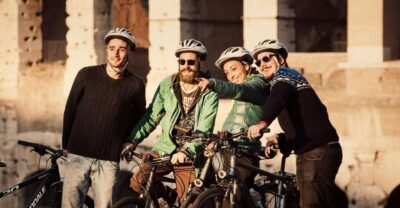
Top Highlights & Hidden Gems Tour by Cannondale E-Bike
Read our review →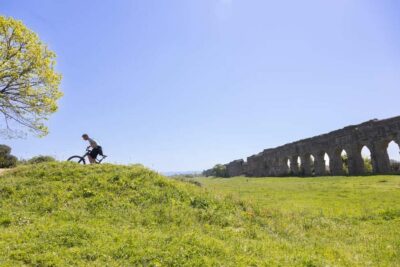
Appian Way & Aqueducts E-Bike Tour (Catacombs & Food)
Read our review →
Appian Way, Catacombs, & Roman Aqueducts E-bike Tour
Read our review →
Rome City Small Group Bike Tour with quality Cannondale EBike
Read our review →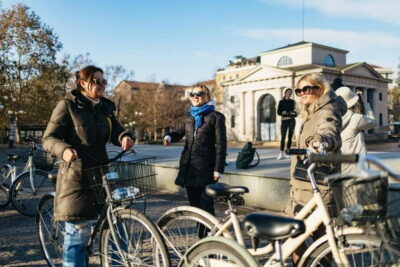
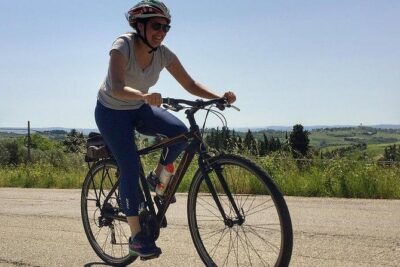
Tuscany Bike Tours Through the Chianti Hills with Wine Tasting
Read our review →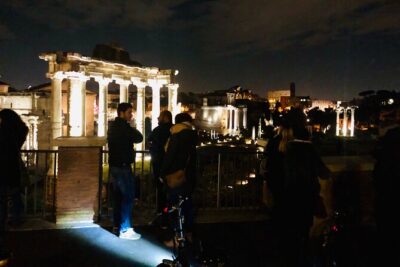
Rome by Night – Ebike Small Group Tour – Food and Wine (Option)
Read our review →Browse the lists this tour appears in