
REVIEW · BARCELONA BIKE TOURS
Barcelona: 2.5-Hour Bike or E-Bike Historical Tour
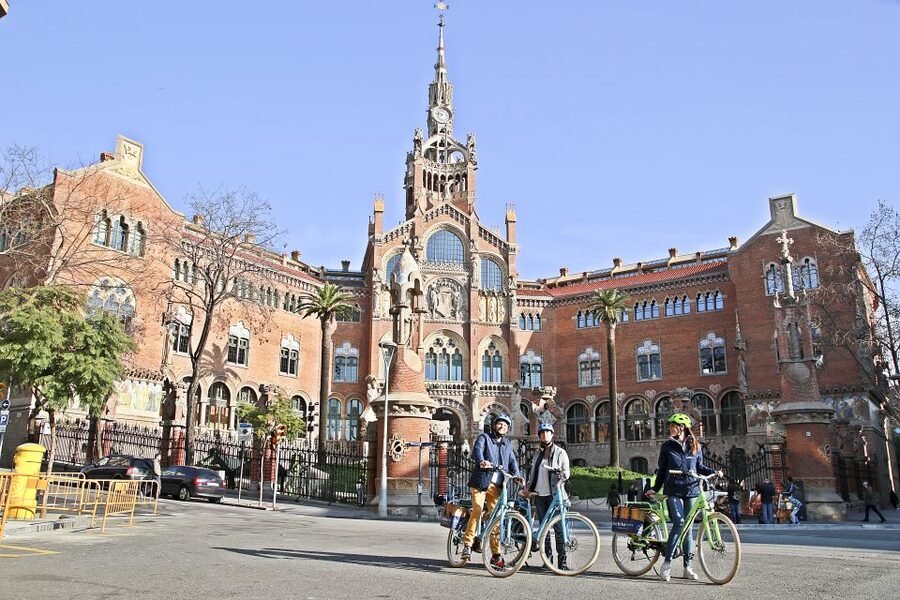
Barcelona reveals itself best at street level. This 2.5-hour bike tour links Gaudí’s major works with the old Born quarter, city parks, and broad avenues, so you see much more than you could on foot. I like the easy e-bike option and the route’s strong mix of famous sights and local streets. The main drawback is time: many stops are outside visits, and you will not tour the interiors of Casa Batlló, La Pedrera, or Sagrada Familia.
I also like the practical starting point beside Arc de Triomf, with metro access and a simple return to the same office. Small groups of two to 15 people make the ride easier to manage than a large coach outing, though the experience can still feel brisk if you want long photo stops or detailed architecture talks.
The essential details at a glance
- Gaudí from the saddle: See Casa Batlló, Casa Milà, Casa Calvet, Casa Vicens, and Sagrada Familia from the city streets.
- An e-bike makes the hills simple: The route includes a few uphill sections, especially around Gràcia, but the electric motor helps with starts and climbs.
- A useful Barcelona sampler: You pass Arc de Triomf, Ciutadella Park, El Born, Mercat del Born, Santa Maria del Mar, Plaça Sant Jaume, and Passeig de Sant Joan.
- Small groups keep it personal: Groups range from two to 15 people per guide, with private options available.
- Good value at $28: The price covers the bike or e-bike, helmet, water, insurance, and a live guide.
- Family rules matter: Children under 6 can ride free in a safety seat, as can children up to 20 kilograms and 130 centimeters tall. Children under 2 cannot take part.
Why this bike tour works in Barcelona
Barcelona is broad, busy, and full of sights spread across several districts. A walking tour can cover one neighborhood well, but it takes more effort to connect the old city with the Modernist avenues and Sagrada Familia. This ride solves that problem.
The route begins at Passeig de Lluís Companys, near Arc de Triomf, then moves through Ciutadella Park and El Born before heading toward Gràcia and the Eixample. You get a sense of how Barcelona changes from medieval lanes to grand boulevards and then to residential squares.
I would choose the e-bike if you are not a regular cyclist, if your group has mixed fitness levels, or if you want to pay attention to the buildings rather than your legs. The regular bike should suit confident riders, since one guide described the route as mostly flat, but the e-bike gives you extra help at traffic lights and on the occasional rise.
The strongest part of this experience is its efficiency. In 150 minutes, you cover a large section of the city without spending the day in a vehicle. The tradeoff is that you are looking at most sights from outside. For Sagrada Familia, the focus is on the spires and facades, not an interior visit.
More E-Bike Tours in Barcelona
- Barcelona 3-hour Bike or E-Bike Tour: Highlights and Hidden Gems
★ 5.0 · 1,429 reviews - Barcelona: Sagrada Familia or City Tour by Bike or eBike
★ 4.8 · 928 reviews - Barcelona E-Bike Photography Tour
★ 5.0 · 843 reviews
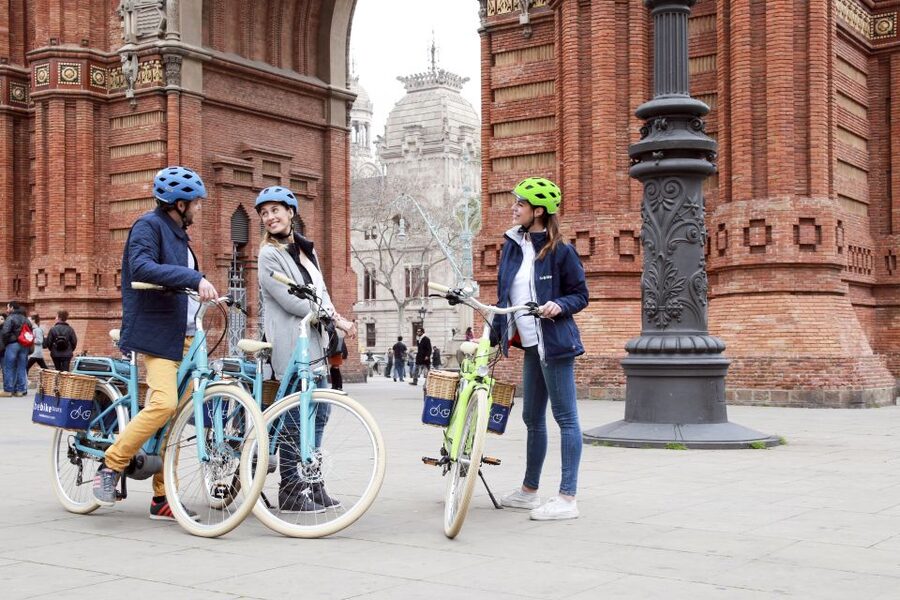
Starting beneath Arc de Triomf
The meeting point at Passeig de Lluís Companys, 10 is easy to find. Arc de Triomf station on the red metro line is about three minutes away, and the avenue itself leads directly toward the arch. Buses 39, 40, 51, and H14 also stop nearby.
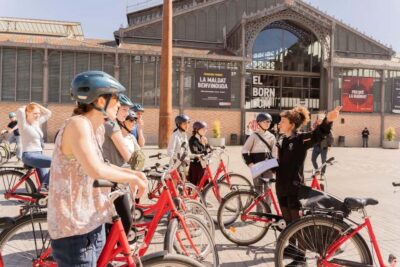
Arc de Triomf was built in a neo-Mudéjar style, which gives it a warmer, more decorative look than the triumphal arches you may know from other European capitals. You begin with a photo stop and a short introduction before collecting your bike.
This is a good place for the guide to check the group’s riding comfort. If you are using a regular bike, pay attention during this early section. If you are using an e-bike, get comfortable with the motor before entering busier streets. Guides such as Sergio, Peter, Sergey, Marina, Maria, Liuba, and Alex have been praised for keeping the pace friendly and for answering questions, but the exact guide depends on your date and language.
Ciutadella Park and the old Born quarter
From the arch, you ride into Parc de la Ciutadella. The park’s fountain has Italian-inspired details, and the tour points out possible contributions by a young Gaudí. That small detail gives you an early glimpse of how Barcelona’s Modernist story grew from earlier artistic traditions.
You get some free time here, though this is not a long park visit. The attraction is the change of pace: after the wide avenue, you are surrounded by trees, paths, and open space. It is also a useful spot for photos and a quick water break.
Next comes El Born, one of Barcelona’s most atmospheric central districts. The neighborhood once served as a seaside resort for medieval aristocracy, and its streets now lead you toward landmarks such as Mercat del Born and the Basilica of Santa Maria del Mar.
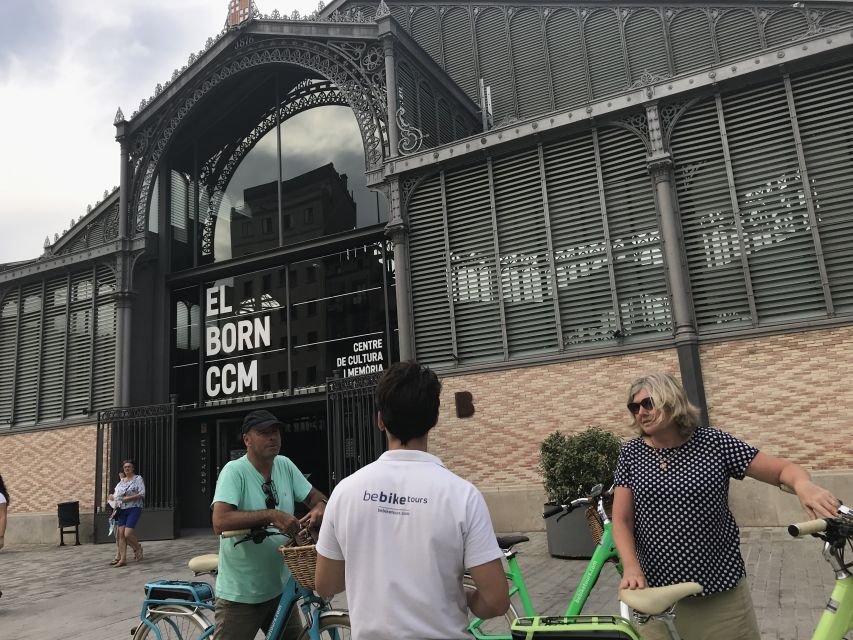
Mercat del Born is especially interesting because it gives the route a different architectural note from Gaudí’s houses. Santa Maria del Mar brings you close to one of the city’s important Gothic churches. You pass through rather than receive a full church tour, so think of this section as a compact introduction to Barcelona’s older center.
The route also includes Plaça Sant Jaume, the civic heart of the old city. Here, the interest is urban rather than purely architectural. You see the scale of the historic center and how its public spaces connect with the surrounding lanes.
Casa Calvet and the first taste of Gaudí
Casa Calvet gives the tour a less obvious Gaudí stop. It was designed as a residential and commercial building and was declared a Place of Cultural Interest in 1969. Compared with the fantasy of Casa Batlló or the sculptural curves of La Pedrera, Casa Calvet is more restrained.
That is precisely why it deserves attention. It helps you see that Gaudí was not only a designer of strange shapes and colorful surfaces. His work could also respond to a more traditional street setting.
The tour does not replace a proper architecture visit, but the guide can help you compare Gaudí’s different approaches. If you are especially interested in his work, keep Casa Calvet in mind for a later independent walk or photo stop.
More E-Bike Tours in Spain
- Barcelona: E-Bike Tour with Montjuic Cable Car & Boat Ride
★ 4.6 · 817 reviews - Barcelona e-Bike Tour: Gaudí & Old Town Small Group
★ 5.0 · 769 reviews - Barcelona E-Bike Small Group Tour with Tapas & Wine Tasting
★ 5.0 · 638 reviews - Barcelona: 1.5-Hour Sightseeing Tour by Bike/Electric Bike
★ 4.6 · 585 reviews
Gaudí’s grand boulevard: Casa Batlló and La Pedrera
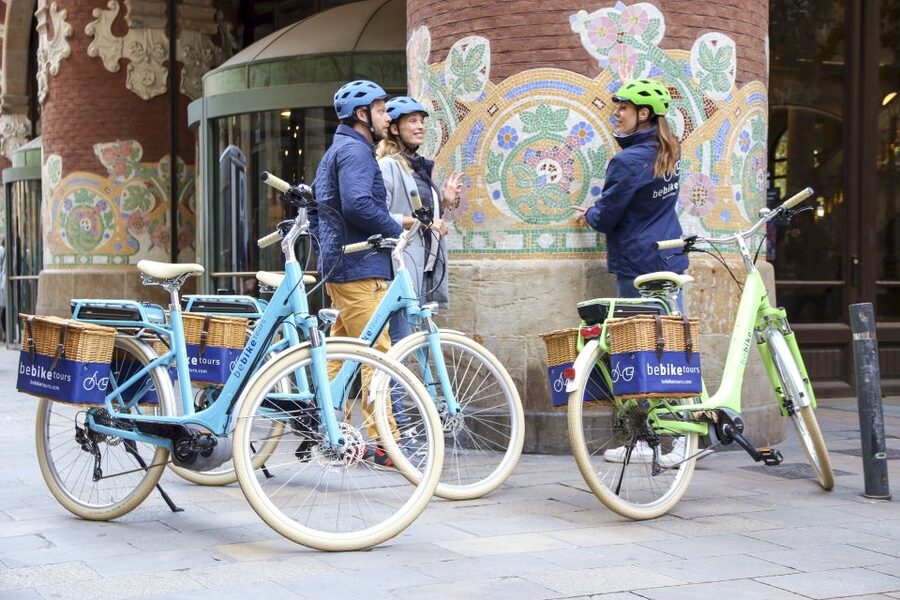
The route then heads into the Eixample, Barcelona’s broad, orderly modern quarter. This is where Casa Batlló and Casa Milà, better known as La Pedrera, become the visual stars.
Casa Batlló is hard to miss. Its curved balconies, irregular windows, and colorful facade look almost theatrical, especially when viewed from across Passeig de Gràcia. From the bike, you get a quick exterior view and a chance to understand how boldly Gaudí changed the idea of a city apartment building.
La Pedrera has a more massive presence. Its stone facade ripples along the block, while the roofline is famous for its sculptural forms and chimney details. The tour includes a guided sightseeing stop, but admission inside is not part of the experience.
That distinction matters. If you want the courtyards, roof, and interior rooms, book a separate timed visit. This bike tour is better for seeing the buildings in relation to the avenue and one another. You can cover the exteriors quickly, then return later to the one or two interiors that interest you most.
The guide’s commentary adds value here. Alex, for example, has been praised for combining architectural facts with suggestions for local dining and shopping. That sort of practical advice can be useful after the ride, especially if this is your first day in Barcelona.
Gràcia, Casa Vicens, and the Marieta bell
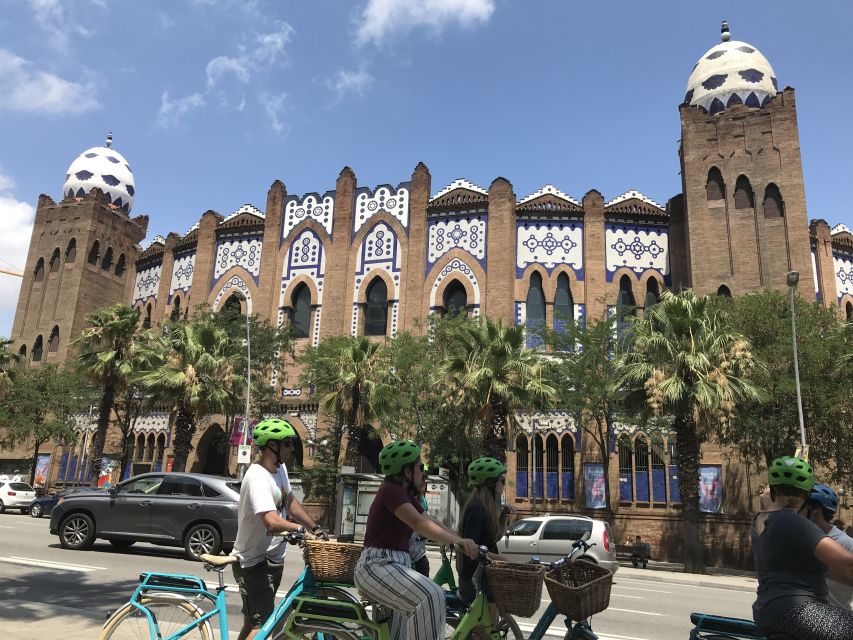
The route continues toward Gràcia, once a separate town and now one of Barcelona’s most appealing residential districts. You ride through Vila de Gràcia, described as the suburb’s administrative and commercial center, with its own squares and neighborhood identity.
This section helps explain why Barcelona does not feel like one uniform city. The grand Eixample avenues give way to a more local setting. You may notice a slower rhythm, smaller public spaces, and a stronger sense of neighborhood life.
A key sight is the bell tower, which rises 33 meters and is topped by the famous bell called Marieta. The tour also provides views of Casa Vicens, one of Gaudí’s earliest houses and one of the first important works linked with the Art Nouveau movement.
Casa Vicens has a different personality from his later buildings. Its patterned surfaces and decorative details show a younger architect testing ideas that would become more daring over time. You may only see it from outside, but it is a useful stop for understanding Gaudí’s development.
The route includes a few uphill sections in this area. They are manageable for many riders, and the e-bike makes them easier. One rider noted that restarting after traffic lights was particularly smooth with electric assistance. That is a small feature, but it matters in a city ride with frequent stops.
Passeig de Sant Joan and Sagrada Familia
From Gràcia, you ride along Passeig de Sant Joan toward Sagrada Familia. This avenue creates a welcome sense of direction after the tighter streets of the old districts.
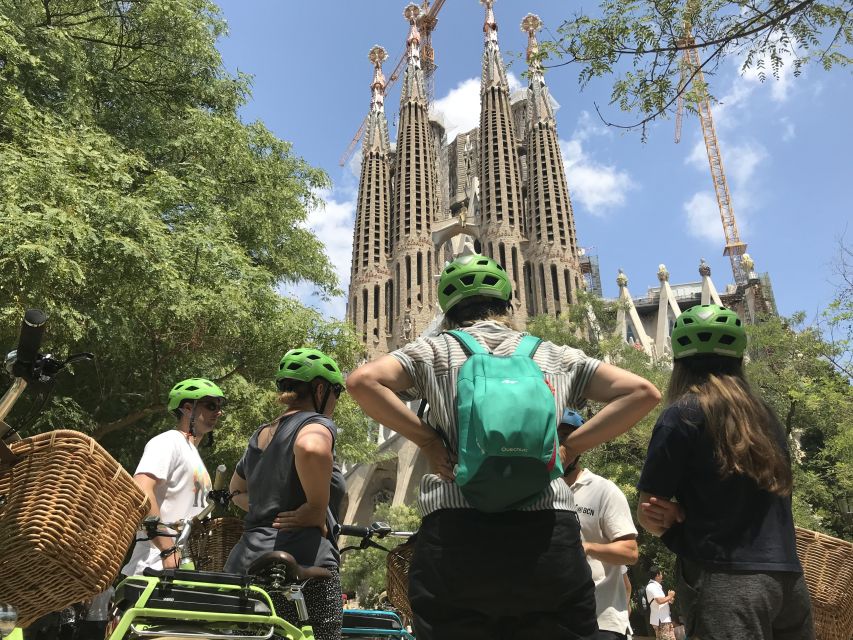
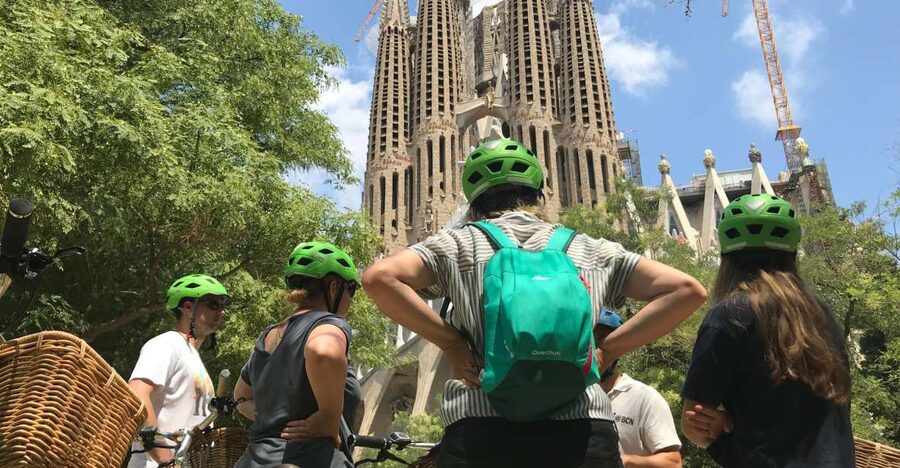
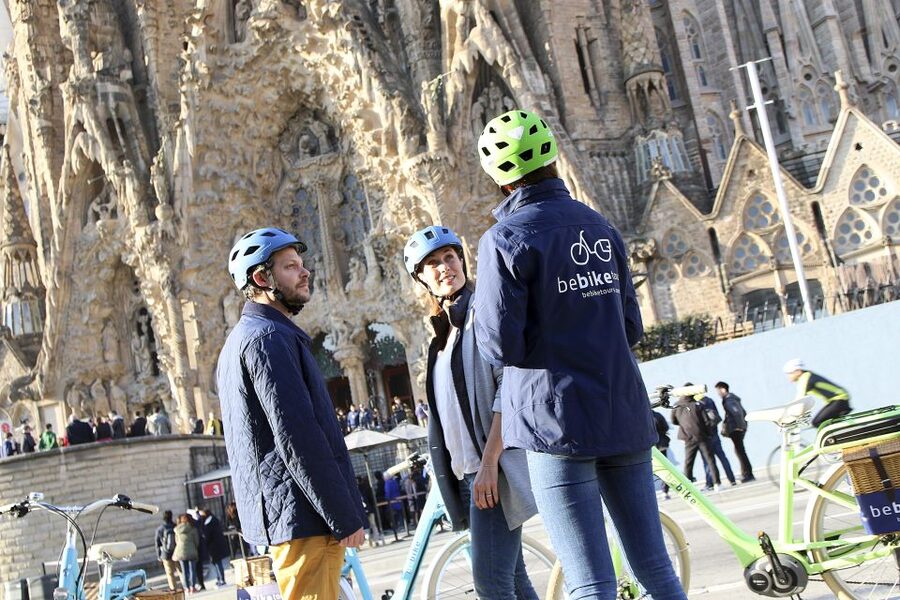
Sagrada Familia is the grand finish. The basilica has been under construction since 1883, and its towers and facades make a powerful impression even when seen from outside. The tour gives you time for photos, sightseeing, and a short guided explanation.
You should set your expectations correctly. This is not an admission tour, and there is no interior visit included. The value is the approach, the changing views of the spires, and the chance to see the building as part of the city around it.
For many people, Sagrada Familia is the sight they most want to see. The bike tour makes it one part of a larger story instead of the only stop. You also avoid using half a day to travel between the old center and the basilica.
After the Sagrada Familia stop, you return to Passeig de Lluís Companys and drop off the bikes. The route is full, so do not expect a long pause at every landmark. If you want a slow, detailed architectural study, pair this ride with a separate museum or interior visit.
Regular bike or e-bike?
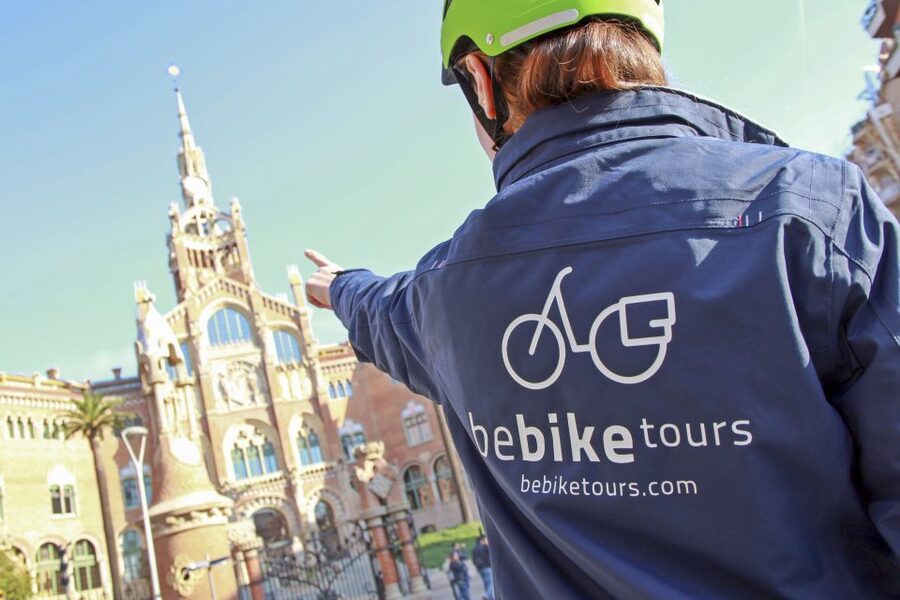
The choice affects the feel of the tour.
A regular bike costs less energy but asks more from you on the hills and during repeated starts. It may suit you if you cycle often and want a little exercise. One guide described the route as mostly flat, so strong recreational cyclists should not be put off by the distance.
The e-bike is the safer all-around pick for mixed groups. It reduces effort without turning the ride into a passive sightseeing trip. You still pedal, but the motor helps when the road rises or traffic requires you to stop and start.
The bikes have been described as easy to use and well maintained. There was also a report of a bike problem being handled by sending a mechanic to the group, while the affected riders waited at a nearby cafe. That suggests useful backup when equipment trouble appears, though any bike tour can still lose a little time to repairs.
Helmets, insurance, and a bottle of water are included. Wear clothes that allow easy movement and shoes you can pedal in comfortably. Barcelona can feel warm in the sun, so water is welcome even though the ride is not especially long.
Group size, pace, and language
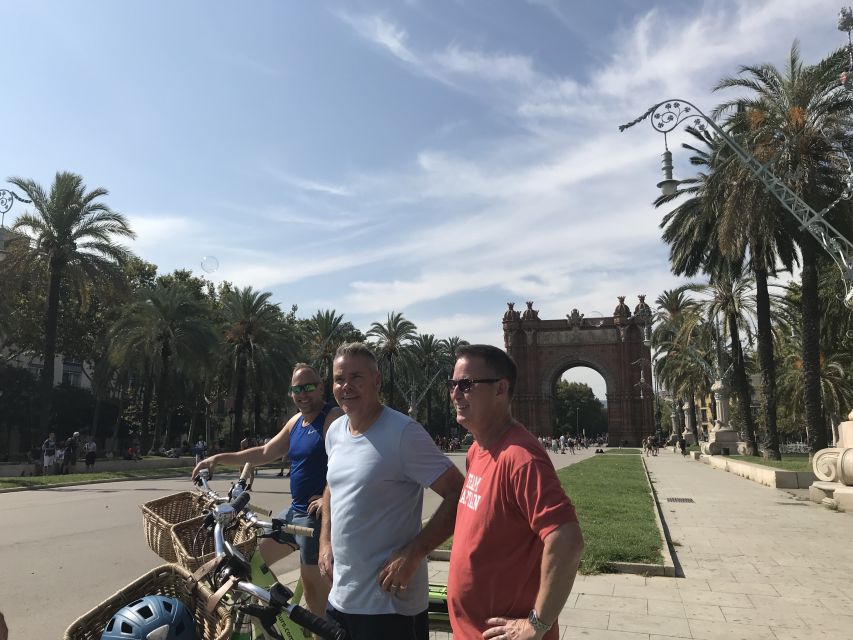
Groups range from two to 15 people per guide, and private tours are available. A group of two to 15 is small enough for the guide to keep an eye on the riders, but the experience changes at the larger end of that range. Expect a more set route and fewer individual detours.
When the group is tiny, the guide may adjust the ride to your interests and cycling ability. Peter once tailored a tour for a solo rider and even added a beach ride. That kind of flexibility is possible with a very small group, but it should not be treated as guaranteed on every departure.
Live guiding is offered in Spanish, English, French, German, Italian, Russian, Dutch, and Portuguese. Check the available start time and language when booking. The guide’s energy matters here because the ride includes many short explanations rather than one long lecture.
The activity is free to cancel up to 24 hours before departure, and you can reserve now and pay later. Those terms are useful if your Barcelona plans are still shifting.
Is $28 a good value?
At $28 per person, this is a strong value if you want a broad first look at Barcelona. The fee includes the regular bike or e-bike, helmet, guide, insurance, and water. You are also paying for route planning and the ability to connect districts that would take much longer on foot.
The price is less compelling if your main goal is interior access. You will need separate tickets for Casa Batlló, La Pedrera, Sagrada Familia, or other paid sights. Think of this as a city orientation and architecture sampler, not a substitute for those visits.
I would especially consider it early in a Barcelona stay. After the ride, you will know which areas deserve a second look and which Gaudí building you want to enter. It can save you from spending several hours wandering between disconnected sights.
Who should book this ride?
I would recommend it to first-time visitors, active couples, solo riders, and families with older children who want to cover a lot of ground. It also suits anyone who finds long walking days tiring but still wants to see Barcelona outdoors.
The e-bike option is best for mixed-ability groups and people uneasy about hills. Regular cyclists can choose the standard bike, especially if they like a little exertion.
This is not the right choice for children under 2, people with heart problems, or anyone uncomfortable riding in city streets. Children under 6 can ride free in a child seat on a parent’s bike, and children up to 20 kilograms and 130 centimeters can also ride at no cost in the seat. Confirm the arrangement for your family before booking.
FAQ
How long is the Barcelona bike tour?
The tour lasts 2.5 hours, including the ride through Barcelona’s historic districts and stops for sightseeing and photos.
Where does the tour begin?
It begins at the activity provider’s office at Passeig de Lluís Companys, 10, near Arc de Triomf.
How do I reach the meeting point by metro?
Take the red L1 line to Arc de Triomf. From the station, walk about three minutes along Passeig de Lluís Companys toward Passeig de Sant Joan.
Are regular bikes and electric bikes available?
Yes. You can select a regular bike or an electric bike when booking.
What does the price include?
The package includes the selected bike, a helmet, insurance, a bottle of water, and a live local guide.
Does the tour enter Sagrada Familia?
No. The tour provides views, sightseeing, a guided explanation, and free time around Sagrada Familia, but interior admission is not included.
Which Gaudí buildings are included?
The route includes views of Casa Batlló, Casa Milà, also called La Pedrera, and Casa Vicens. Casa Calvet is also included in the sightseeing route.
Can young children join?
Children under 6 can join free in a safety seat on a parent’s bike. Children up to 20 kilograms and 130 centimeters tall can also ride free in the child seat. Children under 2 cannot take part.
What languages are offered?
Guiding is available in Spanish, English, French, German, Italian, Russian, Dutch, and Portuguese. Check the selected departure for the language you need.
Should you book it?
Book this tour if you want a fast, friendly introduction to Barcelona’s architecture and prefer seeing the city from the street rather than from a vehicle. Choose the e-bike if you want the easiest ride, especially for a mixed group or a first day in town.
Skip it if your priority is going inside Gaudí’s buildings or spending 30 minutes at every facade. For most visitors, the best plan is to use this ride as an orientation, then return on foot to Sagrada Familia, Casa Batlló, or La Pedrera for a proper interior visit. At $28, it gives you a lot of Barcelona in a short time, with just enough effort to make the city feel earned.
More History Tours in Barcelona
- Historical Singapore Bike Tour on Full-Sized Bicycles
★ 5.0 · 1,421 reviews - Asheville Historic Downtown Guided Electric Bike Tour with Scenic Views
★ 5.0 · 1,234 reviews - Historic Athens: Small Group Electric Bike Tour
★ 4.9 · 966 reviews - Bordeaux: Historic Center & Chartrons District Bike Tour
★ 4.8 · 709 reviews
More Historic Bike Tours in Barcelona
- Historical and Modernist Bike Tour Barcelona
★ 5.0 · 262 reviews - Barcelona Historical 3-Hour Bike Tour
★ 4.7 · 222 reviews - Historical Barcelona E-bike Guided Tour
★ 4.5 · 106 reviews - Bike Tour in Barcelona: History, Architecture and Culture
★ 3.5 · 29 reviews
Newly added rides around Barcelona
- Barcelona: Bike or eBike Tour, Top Sights & Local Insights★ 5.0 · 47 reviews
- E-Bike tour in Barcelona with English Guide★ 5.0 · 128 reviews
- Sightseeing by Bike & Photo Shooting★ 5.0 · 31 reviews
- Private Ultimate Gaudi Legacy ebike Tour with Park Güell★ 5.0 · 26 reviews
- Private electric bike tour – Discovery of Barcelona★ 5.0 · 34 reviews
- Sights of Barcelona E-Bike Tour Led by a Local Guide★ 4.5 · 39 reviews
- Private Electric Bike Guided Tour in Barcelona★ 4.5 · 18 reviews
- Private Barcelona E-Bike Photography Tour★ 5.0 · 26 reviews
Barcelona Bike Tours, compared.
Highlights & Hidden Spots of Barcelona Bike Tour w/ Local Guide
Read our review →
Barcelona 3-hour Bike or E-Bike Tour: Highlights and Hidden Gems
Read our review →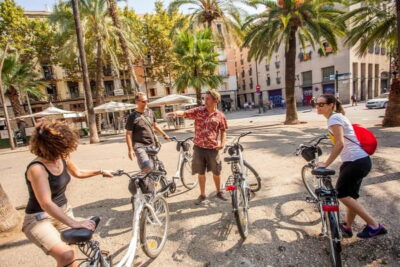
E-Bike Tour with Montjuic Cable Car & Boat Ride
Read our review →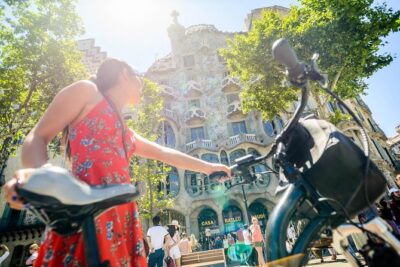
Barcelona e-Bike Tour: Gaudí & Old Town Small Group
Read our review →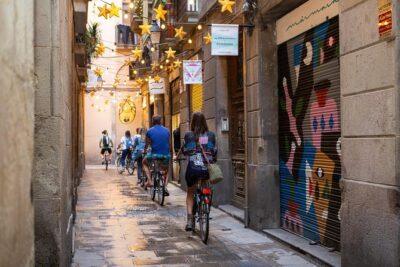
Browse the lists this tour appears in