
REVIEW · BUENOS AIRES BIKE TOURS
Private Off the Beaten Path: Hidden Urban Art Bike Tour
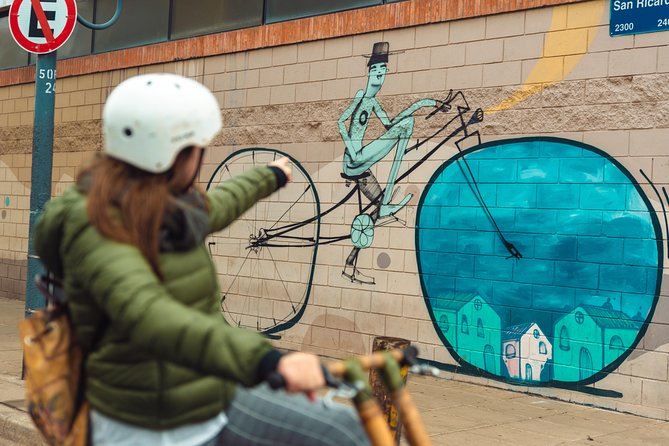
See Buenos Aires beyond the postcard. This four-hour private bike tour takes you from San Telmo into La Boca and Barracas, where murals, mosaics, political art, football culture, and working-class life fill the walls. I especially like the chance to meet local art collectives and the relaxed stops for empanadas, snacks, and yerba mate.
I also like that the route reaches places you would be unlikely to connect on foot in one afternoon, including Pasaje Lanín, the Metropolitan Design Center, and the Cooperativa Vieytes. The main consideration is simple: you need to feel comfortable riding in an urban setting and visiting less touristy parts of Buenos Aires.
Key points at a glance
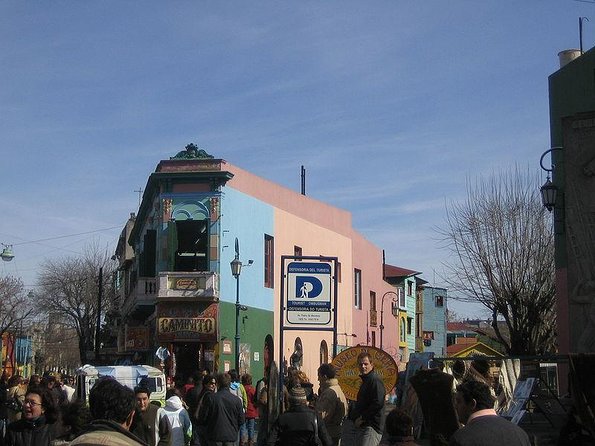
- Four hours on two wheels: A private route through San Telmo, La Boca, Barracas, and Caminito, with roughly eight stops and time to walk around.
- Street art with a story: Learn about artists such as Alfredo Segatori, Pum Pum, Mart, Pol Corona, and Martín Ron, along with political, religious, sports, and community themes.
- Pasaje Lanín: See Marino Santa María’s colorful transformation of a once-drab street, now recognized as a site of cultural interest.
- The big mural stop: Visit El Regreso de Quinquela, painted across three buildings by Alfredo Segatori, also known as Pelado.
- Local flavor included: The tour supplies bottled water, snacks, coffee or tea, and a stop for yerba mate. Empanadas received special praise for their quality.
- Private and flexible: Only your group participates, and guides can shape the conversation around art, Buenos Aires history, politics, football, and daily life.
Why this bike tour reaches a different Buenos Aires
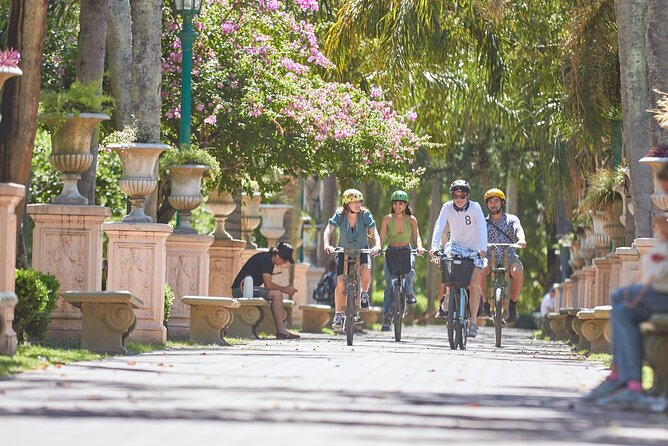
San Telmo is the starting point, but this is not mainly a San Telmo sightseeing ride. After a short orientation, you pedal south toward La Boca and Barracas, two areas with strong working-class roots and a long connection to immigration, industry, football, and neighborhood identity.
That change in scenery is the main reason to book. Buenos Aires has plenty of famous sights, but street art gives you another way to read the city. A mural may point to a political cause, a football club, a religious idea, a local artist, or the memory of a neighborhood. Your guide uses the walls as a starting point for wider conversations about Argentine culture.
This is also a good choice if you want to get your bearings early in your stay. One particularly enthusiastic account recommends doing it on the first day because the guide’s suggestions can help shape the rest of your time in Buenos Aires. That advice makes sense, especially since the experience ends back in San Telmo and includes practical tips for further exploring the city.
The tour has earned a 4.9 rating from 62 reviews, with 97 percent of participants recommending it. Those figures suggest a very dependable experience, but they do not remove the need to consider the cycling. The route includes city streets, back roads, and areas away from the main tourist route. You should have a moderate level of fitness and be comfortable managing a bicycle in urban traffic.
More Private Bike Tours in the world:
- Barcelona: Private Group Bike Tour
★ 4.8 · 1,420 reviews - Private Self-Guided E-Bike Ride in Tuscany with Vineyard Visit
★ 5.0 · 775 reviews - Bilbao: Guided Highlights Small Group or Private E-Bike Tour
★ 4.8 · 608 reviews
Starting in San Telmo with the right expectations
Meet at Balcarce 1016 in San Telmo in the early afternoon. Before setting off, you receive your bicycle, helmet, riding guidance, and an explanation of the route. This opening matters because the tour is not a slow ride through a closed park. You are riding through a real city, with traffic, changing surfaces, and ordinary neighborhood activity around you.
The company describes its work as a way to build a cultural bridge between visitors and local communities. That idea shapes the tour. The bicycle is useful, but the bigger point is how you see Buenos Aires while moving through it. You are not simply checking off monuments. You are watching the city change from one block to the next.
The standard bicycle is included in the price. An e-bike is available for an extra fee, which may be worth considering if you are unsure about four hours of riding or want to save energy for the stops. The tour operates in all weather, so dress for the forecast and expect the ride to continue unless the provider says otherwise.
Pasaje Lanín and the art of changing a street
One of the most memorable stops is Calle Lanín in Barracas. The street was once described as gray and lifeless, then transformed through the work of artist Marino Santa María. Painted facades and decorative details turned it into a neighborhood art project rather than a single isolated mural.
The street is now recognized by UNESCO as a site of cultural interest. That status gives the stop extra weight, but the appeal is easy to understand without any official designation. You get to see how art can change the character of an ordinary residential street while remaining connected to the people who live there.
The stop lasts about 15 minutes, so this is not a long gallery visit. You will likely have time to walk a short section, take photographs, and hear how the street developed. The tour’s strength here is scale. You are not just looking at one wall. You are seeing art woven into the fronts of homes and the rhythm of a neighborhood.
Barracas and Alfredo Segatori’s enormous mural
Barracas brings one of the tour’s largest visual moments: El Regreso de Quinquela. Alfredo Segatori, also known as Pelado, painted the mural across three buildings. It was once the longest mural painted by one person and is now described as the longest in Argentina.
The tour summary also presents it as the world’s largest street mural. The exact superlative matters less than the experience of standing before work that spreads across several building fronts. This is street art on an architectural scale, and it is difficult to understand from a small photograph.
Barracas gives the mural a fitting setting. Instead of seeing monumental art in a museum, you encounter it among ordinary streets and working buildings. That contrast helps explain why the tour is more than a collection of pretty walls. The art is tied to place.
You will also see a collaborative mural connected with the Styles Street Art Convention, plus works associated with Pum Pum, Mart, Pol Corona, and Martín Ron. The range is useful. Some pieces are decorative, some carry clear social or political ideas, and others show the technical skill of large-scale painting.
A few more rides around the world worth a look
- Florence Vintage Bike Tour–guided, small group or private option
★ 4.5 · 524 reviews - Bike Tour Copenhagen. Private Guide, Concierge Service, Small Grp
★ 5.0 · 416 reviews - Private Highlights of Florence Bike Tour
★ 5.0 · 400 reviews - Prague Bike City Tour with Small Group or Private Option
★ 5.0 · 355 reviews
La Boca beyond the colorful postcard
La Boca is famous for brightly painted buildings, Caminito, Boca Juniors football club, and its Italian working-class roots. The well-known streets can be crowded and theatrical, but this ride tries to show you more than the standard postcard view.
You spend time around original parts of the neighborhood and see murals connected with the COLOR BA festival. The guide also explains how La Boca became one of Buenos Aires’s most visited and colorful areas. That background helps you separate the staged tourist image from the older neighborhood identity underneath it.
The tour includes about 45 minutes around La Boca, plus a longer Caminito section of roughly 90 minutes. That is a substantial portion of the afternoon. You will have time to get off the bicycle, walk, take photographs, and discuss the art rather than simply passing it at riding speed.
A special Stealth Stencil stop adds a small hands-on or process-focused element to the route. The exact details are kept as part of the surprise, so you should not expect a standard museum explanation at every stop. The experience is designed to make you look at how art appears in public space and how artists work outside formal galleries.
Caminito, mate, and the social side of the route
Caminito can feel very different from the quieter side streets. It is one of Buenos Aires’s best-known visitor areas, with colorful buildings and a strong connection to tango, football, and the port-side identity of La Boca. The tour does not ignore its popularity. Instead, it uses the area to explain how that identity developed.
You also sample yerba mate, the local drink that is central to Argentine social life. Coffee or tea is included as well, along with bottled water and snacks. One account singled out the empanadas as the best of a Buenos Aires stay, which is useful praise because food stops on tours can sometimes be an afterthought.
Here, the food and drink are not just fuel. They provide a pause from riding and a chance to ask questions. The route includes about eight stops overall, with breaks to walk and take photographs. That pacing keeps the experience from becoming four straight hours in the saddle.
Still, you should understand the balance. This is a street art tour first, not a dedicated food tour, football tour, or museum visit. The snacks are a welcome part of the afternoon, but the murals and neighborhood context remain the main event.
Design collectives and contemporary Buenos Aires
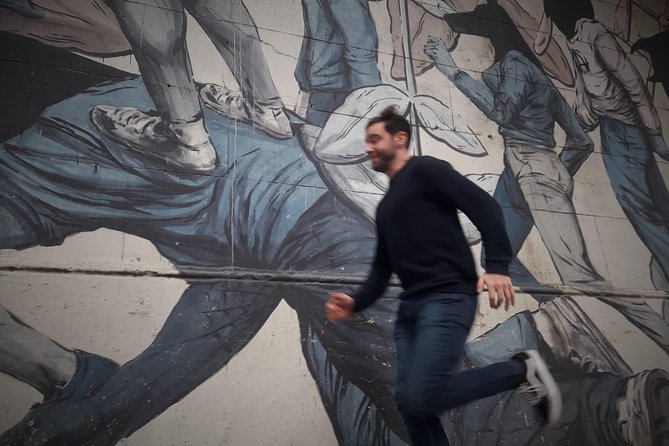
The tour also visits parts of Buenos Aires’s contemporary design district. The Metropolitan Design Center offers a look at the city’s newer creative side, while the Cooperativa Vieytes occupies a former ice cream factory decorated with a symbolic mural.
These stops broaden the focus beyond graffiti. You see how design, visual art, cooperation, and old industrial buildings can work together. The former factory setting at Cooperativa Vieytes is especially useful because it links art with reuse and community activity.
The guide may also introduce you to local art and design collectives such as Red Sudakas and Triángulo Dorado. The value of these visits depends partly on the day and the guide’s connections. One account described a guide arranging the possibility of meeting a well-known local artist in a studio, but that should be treated as a fortunate extra, not a guaranteed part of the tour.
This is one reason a private experience can be useful. You can ask more questions about a particular artist or style, spend a little more time with a work that catches your eye, or shift the conversation toward Argentine politics, art, football, or neighborhood life. Guides Raymond and Daniel received especially warm praise for making the experience personal and informative.
What the guides add to the ride
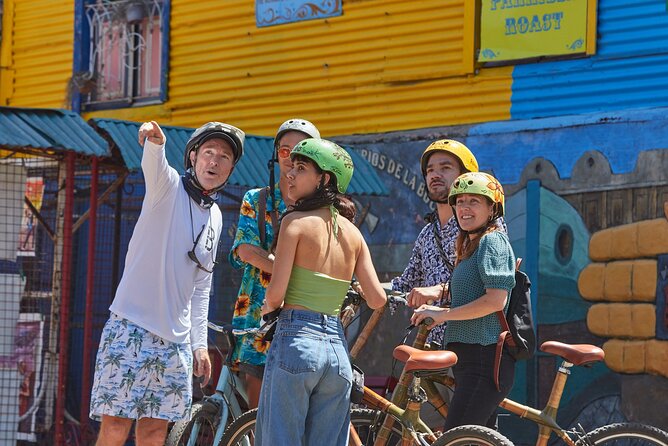
A strong guide is central here. Street art can be easy to admire and hard to interpret. Your guide explains who made the work, what it may refer to, and how it connects to Argentine society.
One guide, Raymond, was praised for using the art to open conversations about history, culture, football, religion, and local customs. Daniel was praised for his strong understanding of Buenos Aires’s working-class neighborhoods and for sharing useful recommendations for the rest of a visit.
Another account described a guide who was relatively new to the job but already very well informed. That is a fair reminder that guide styles may vary. The company can provide English or Spanish service, and the private format gives you a better chance to communicate your interests clearly.
The tour can also become intellectually wide-ranging. One participant described discussions that moved from how the brain responds to art to Argentine politics. If you prefer only quick facts and photographs, that may feel like extra conversation. If you like connecting public art with real life, it is a major advantage.
Safety, effort, and bicycle quality
The route is described as safe by several people who took it, but you should not confuse that with a traffic-free ride. You are cycling in an urban environment and heading into non-touristy areas. Basic confidence on a bicycle is more important than speed.
The tour requires moderate physical fitness. Four hours includes stops and walking, so you are not riding continuously, but you still need to be comfortable spending much of an afternoon on a bike. Wear practical clothes, use the supplied helmet, and bring a sensible attitude toward weather.
One criticism concerned bicycle maintenance. The bikes were described as usable but in need of more attention. That is worth taking seriously, especially if you are a regular cyclist or have high expectations for equipment. Ask about the e-bike option if you want an easier ride, though it costs extra.
The company provides bottled water, but I would still dress appropriately and be ready for changing conditions. The experience operates in all weather, and the route includes outdoor stops throughout.
Is $115 a fair price?
At $115 per person, this is not a budget bicycle rental with a guide. It is a private, half-day experience that includes the bicycle, helmet, English or Spanish guide, local taxes, bottled water, snacks, and a coffee or tea mate stop. The e-bike costs extra.
The price makes the most sense for couples, families, or small groups that value private attention and want to see several southern neighborhoods in one outing. You are paying for the route design, local interpretation, food breaks, and the ability to ask questions without being part of a large group.
It is less attractive if your main goal is simply to ride around and photograph Caminito. You could spend less by exploring one area independently. The value comes from linking La Boca, Barracas, San Telmo, art collectives, design spaces, and local stories in a single afternoon.
Free cancellation is available until 24 hours before the start time. Changes or cancellations made inside that window are not refunded, so keep the local cut-off time in mind when planning.
Who should book this experience?
I would choose this tour if you have already seen the main Buenos Aires sights, or if you want your first afternoon to show you a less polished side of the city. It suits people who like contemporary art, neighborhood stories, photography, design, public space, and casual conversations with a guide.
It is also a good fit for visitors who want to cover ground without spending the day in taxis or buses. The bicycle connects areas that feel separate on a standard sightseeing plan. You get movement, fresh air, and a clearer sense of how the neighborhoods relate to one another.
I would think twice if you dislike cycling in traffic, need a fully predictable schedule, or want only famous landmarks. The route includes non-touristy areas, outdoor riding, and a few surprises. You should be comfortable with a tour that values discovery over polished presentation.
FAQ
Where does the tour start and finish?
It starts at Balcarce 1016 in San Telmo, Buenos Aires, and returns to the same meeting point at the end.
How long does the bike tour last?
The experience lasts approximately four hours.
What neighborhoods does the tour visit?
The route includes San Telmo, La Boca, Barracas, and Caminito, with stops connected to local art, design, and neighborhood culture.
Is bicycle use included?
Yes. The bicycle and helmet are included in the tour price. An e-bike is available for an additional fee.
What food and drinks are included?
The tour includes bottled water, snacks, and a stop for coffee or tea mate. The experience also includes a chance to sample yerba mate.
Can I take the tour in English?
Yes. The guide speaks English or Spanish.
What fitness level is needed?
You should have a moderate level of physical fitness and feel comfortable riding a bicycle in an urban setting and through less touristy areas.
Should you book the Hidden Urban Art Bike Tour?
Book it if you want Buenos Aires to feel less like a list of famous sights and more like a living city. The best parts are the large mural in Barracas, the transformed street of Pasaje Lanín, the art collectives, and the conversations that connect public art with politics, football, religion, and everyday life.
The drawbacks are manageable but real: the bikes may need better maintenance, the ride requires urban cycling confidence, and the e-bike costs extra. For the right rider, $115 buys a thoughtful private introduction to La Boca and Barracas, with good food, local drink, practical advice, and a view of Buenos Aires that most visitors miss.
Newly added rides around the world
- Half-Day Lanna Countryside Cycling Tour in Chiang Mai★ 4.5 · 24 reviews
- Full-day E-bike Countryside and Nam Phrae (flat-hilly, GUIDED)★ 5.0 · 11 reviews
- Full-Day Hike and Bike Tour from Chiang Mai★ 5.0 · 14 reviews
- Experience The Real Chiang Mai by Bike★ 4.5 · 36 reviews
- FIELDS OF GOLD Mountain Biking Tour Chiang Mai★ 5.0 · 18 reviews
- Half-Day Colors of Chiang Mai Biking Tour★ 5.0 · 105 reviews
- Chiang Mai City Culture Half-Day Cycling Tour★ 4.5 · 15 reviews
- Chiang Mai Night Bike Tour★ 5.0 · 69 reviews
Buenos Aires Bike Tours, compared.
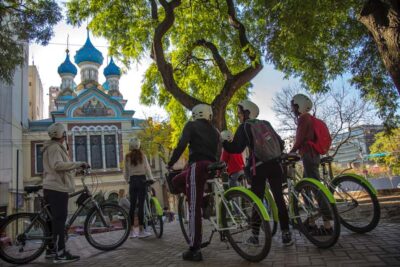
Buenos Aires: North or South Buenos Aires Bike Tour
Read our review →
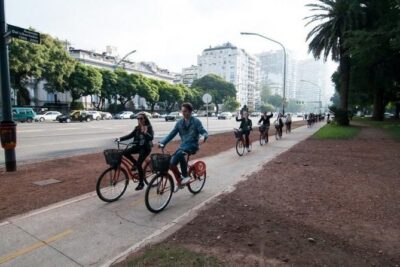
Buenos Aires Bike Tour: North Districts, Recoleta and Palermo
Read our review →
Buenos Aires Bike Tour: San Telmo and La Boca Districts
Read our review →
Cultural Experience by Bike around Palermo and Recoleta Max 6 ppl
Read our review →Browse the lists this tour appears in