
REVIEW · MAUI BIKE TOURS
Best Haleakala Downhill Self-Guided Bike Tour with Maui Sunriders
The volcano gives you the downhill advantage. Maui Sunriders combines a van ride up Haleakalā with a self-guided bike route through Kula, Makawao, and Paia, letting you set the pace instead of following a guide in a tight line. I like the freedom to stop for food, photos, and shops, and I like that the company supplies proper bikes, helmets, weather gear, route maps, and roadside help. The main catch is important: this is not one uninterrupted ride from the summit to sea level.
I also like the strong attention to bike maintenance and the option to choose a full-face helmet. Guides such as Remy, Dane, Matthias, Ron, Roy, Johnny, and Matice have been praised for clear safety advice and useful information about Maui. Still, if you want hours of continuous cycling, the route may disappoint because local restrictions and road conditions can split the ride into shorter sections with van transfers.
Key things to know before booking
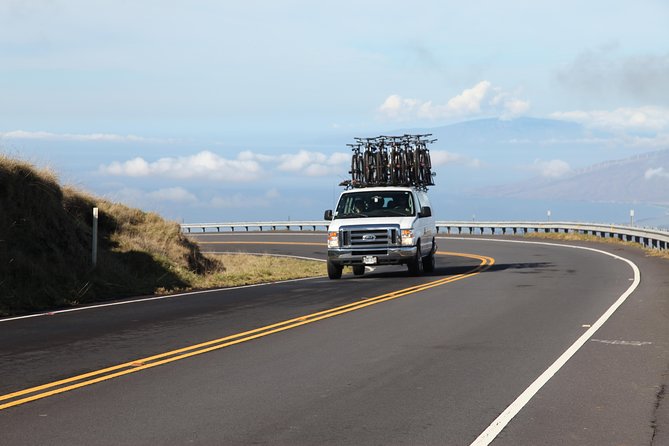
- The ride begins at about 6,500 feet, not at Haleakalā’s summit, so this is a high-elevation downhill outing rather than a summit-to-coast bicycle trip.
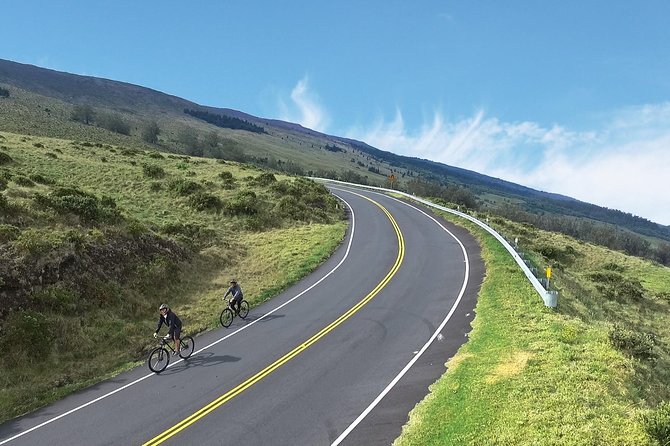
- The route is self-paced, giving you time to stop in Makawao, visit roadside stands, take photos, or continue downhill without staying beside a guide.
- The ride is commonly divided into two bike sections, with a van transfer around Kula. The exact amount of saddle time can feel short for the $139 price.
- Mountain bikes have front suspension and disc brakes, and the company says mechanics tune them daily.
- Morning conditions can be cold, windy, or wet, so use the supplied jacket and pants, and consider bringing water and gloves.
- Paia is the finish, with food, galleries, shops, and a relaxed North Shore atmosphere waiting after you return the bike.
What the $139 price really buys
The listed price is $139 per person for roughly four to five hours. That covers far more than bicycle rental. You receive transportation from Paia to the starting point, a mountain bike, helmet, gloves, wind and rain layers, a backpack, a lock, a route map, and roadside assistance. The company also operates three full-service bike shops and says its mechanics tune the bikes each day.
That package has real value if you want a ready-made outing. You do not need to arrange a rental, figure out how to get a bicycle to the mountain, or carry your own wet-weather gear. The van ride also handles the climb to 6,500 feet, which is useful because the route begins high above the towns you will visit later.
The price is harder to justify if your main goal is uninterrupted cycling. Several riders found that much of the morning was spent on check-in, safety instructions, and van transport. Some described the actual riding as two short downhill sections, with one account estimating about 6.5 miles before loading into the van and then riding again later.
That does not make the outing poor value for everyone. You are paying for equipment, transport, route support, and the chance to coast down one of Maui’s most famous volcanoes. But you should book it for the full package, not simply for a long day in the saddle.
More Mountain Bike Tours in the USA:
- Waimea Canyon Downhill Bike Ride
★ 5.0 · 650 reviews - Big Island Mountain Biking on Anna Ranch
★ 5.0 · 171 reviews - Guided Mountain Bike Tour of Mustang Trail in Red Rock Canyon
★ 5.0 · 160 reviews
Meeting in Paia at 8:45 a.m.
The day begins at Maui Sunriders Bike Co., at 71 Baldwin Avenue, Suite D3, in Paia. The listed start time is 8:45 a.m., and the activity ends back at this same meeting point after you return the bike.
Parking directly in front of the shop costs about $15 by credit card. A free public parking lot is available in Paia, so it is worth allowing extra time to park and walk over. The shop is also near public transportation.
At check-in, expect equipment fitting and a safety briefing before the van heads uphill. This part matters more than it may sound. Haleakalā’s upper road has steep grades and hairpin turns, and you want a helmet and bike that fit properly before starting. One less positive account described a guide as too forceful while helping with a helmet, so if something feels wrong, ask for an adjustment calmly and clearly.
The company limits the group to 30 people. That is not a tiny private outing, but the self-paced format helps prevent the ride from feeling like a single large pack. Guides may move between riders in vans, keeping support nearby while allowing you to ride at your own speed.
Starting high on Haleakalā at 6,500 feet
The first major stop is the staging area on Haleakalā’s upper switchbacks, at about 6,500 feet. The setting gives you the high-elevation views and the chilly morning air without requiring a bicycle climb.
The bikes are front-suspension mountain bikes with disc brakes. That combination suits a steep paved descent, especially when you need controlled braking around bends. The bike setup is not designed to feel like a light road bike. One rider who prefers upright road bicycles found the mountain-bike style less comfortable, while other riders praised the tires, brakes, and easy handling.
The full-face helmet is available for maximum protection, while advanced and expert cyclists may choose a regular helmet. I would favor the full-face option if you are nervous about the drop, unfamiliar with mountain bikes, or simply want more coverage. The route is mostly steering and coasting, but that does not remove the need for careful braking.
The first section can be thrilling. You may find yourself leaning into broad bends, stopping for photos, and looking out over the island when the weather is clear. Cloud cover can reduce the views, and the company cannot control that. Morning temperatures can also feel surprisingly cold, so use the supplied jacket and pants. A personal pair of gloves may be welcome, even though bike gloves are included.
Kula and the van transfer
The route then moves toward Kula, a community on Haleakalā’s western slopes at roughly 3,200 feet. The van stop is listed as about 15 minutes, but this section is more than a quick scenic pause because it explains the route’s biggest limitation.
You are not generally allowed to bicycle continuously through the Kula section. Local rules and current road conditions can require riders to load the bicycles into the van, bypassing part of the descent. This is why some people describe the activity as two separate rides rather than one long downhill run.
Road work has also affected the route at times. One rider found navigating around heavy equipment stressful. Conditions can change, but you should ask the staff at check-in how much riding is currently possible and whether road work affects the transfer. That simple question can prevent a mismatch between expectation and reality.
The van transfer is not wasted time. It gives your legs a break, keeps the route within local limits, and moves you safely through a section where a group of bicycles may not be welcome. Still, if the whole appeal for you is riding from high on the volcano to the coast, this is the point where the outing may feel less complete.
More Self-Guided Bike Tours in the USA:
- Red Rock Canyon Self-Guided Electric Bike Tour
★ 5.0 · 783 reviews - Haleakala Sunrise Best Self-Guided Bike Tour
★ 4.5 · 745 reviews - Self-Guided Ebike Tours of Acadia National Park Carriage Roads
★ 5.0 · 427 reviews - Tahoe Coastal Self-Guided E-Bike Tour – Half-Day | World Famous East Shore Trail
★ 5.0 · 315 reviews
Makawao, paniolo country, and a useful break
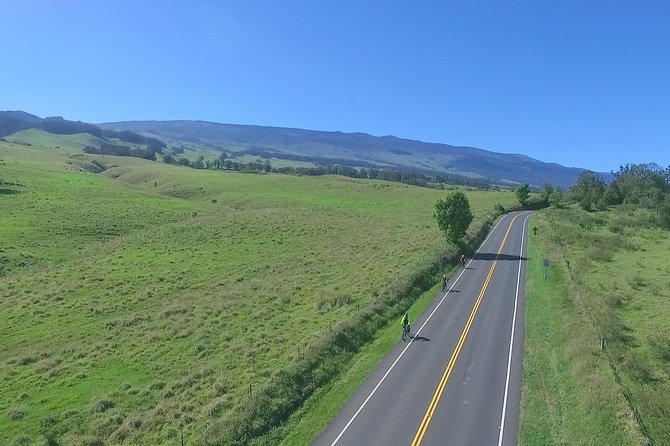
The next riding section brings you toward Makawao, a small town known for its paniolo, or Hawaiian cowboy, traditions. The town has rustic character, art galleries, specialty shops, and places to eat. The route description allows about an hour here, and the self-guided format makes this stop one of the strongest parts of the tour.
You are not rushed through town behind a guide. You can lock the bike, get lunch, browse a gallery, or simply walk around before continuing. That freedom is especially useful for families and couples who do not all ride at the same speed.
Makawao also gives the outing a more local feel than a simple mountain descent. You are moving through a working town with its own identity, not just checking off a scenic viewpoint. Some riders enjoyed food here, while others stopped at a small roadside stand for fresh fruit.
Do keep an eye on the clock. Self-paced does not mean unlimited time. You must follow the company’s instructions so the vehicle and staff can coordinate the rest of the route. Ask when you need to be back at the bikes, especially if your group plans to eat.
Finishing in Paia on Maui’s North Shore
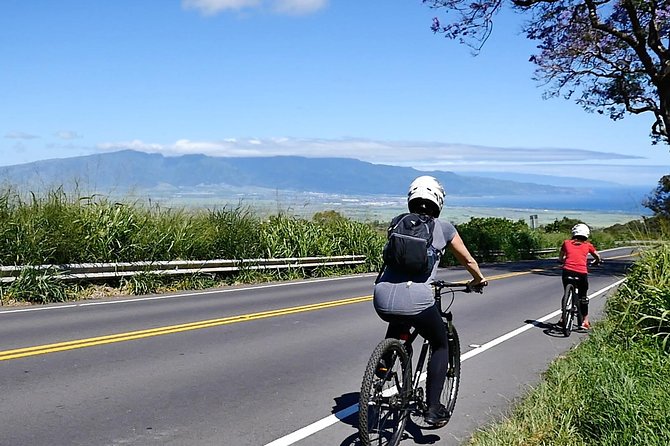
The ride ends at the Maui Sunriders shop in downtown Paia. Return the bicycle, browse the shop if you wish, and then use the town as an easy place to continue your day.
Paia has art galleries, gift shops, beach clothing stores, and restaurants. Paia Fish Market is an informal food option mentioned for the area. Mama’s Fish House is also nearby, though reservations typically need to be made three to six months ahead. That restaurant is not an automatic part of the tour, so plan it separately if you hope to eat there.
Ending in Paia works well because you do not finish at an isolated roadside pullout. You can have lunch, shop, or stroll through town after handing back the equipment. If your group includes riders who want to keep exploring and others who are ready to sit down, Paia offers both choices.
Safety, equipment, and riding difficulty
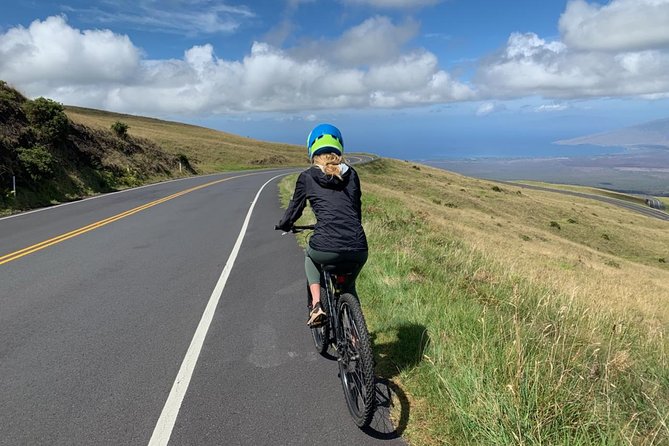
The company supplies a full-face or regular helmet, wind and rain clothing, gloves, a Dakine backpack, a bike lock, and a route map. Roadside assistance is also available. Guides provide safety instructions before the descent, and support vehicles may leapfrog along the route so help is not far away.
Most riders with ordinary fitness should find the route manageable because it is mainly downhill. One family described the ride as roughly 95 percent steering and coasting, with a small uphill section that required more effort. That short climb can feel noticeable after the cold start and repeated stops.
The steep grades and hairpin bends are the real challenge. You need to control your speed, use the brakes steadily, and stay alert. The route is not a race. The self-guided setup is best used to ride at a pace that feels comfortable rather than trying to keep up with the fastest person in your group.
The bike manufacturer recommends a maximum rider weight of 300 pounds. Most people can participate, but you should be comfortable handling a bicycle and following road safety directions. If you are uncertain about your ability, discuss it with the staff before departure.
What the best guide support adds
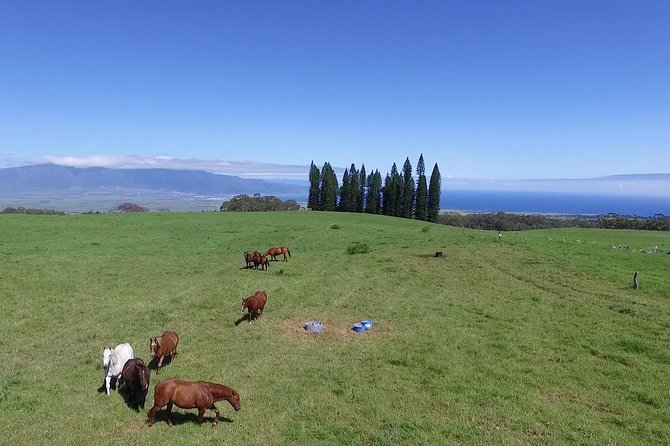
Although the ride is self-guided, it does not mean you are sent off with a bicycle and no help. The staff explain the route, cover safety, and offer local suggestions. Remy and Dane were praised for being informative and entertaining, while Matthias, Ron, Roy, Johnny, and Matice were also singled out for helpful support.
That human guidance matters on a route that can be confusing. You need to know where the bike sections begin and end, where to stop, and when to expect the van. A map in the backpack helps, but a clear briefing is better than trying to work everything out while braking downhill.
The quality of the experience can depend partly on how the guide communicates. Most reports describe friendly, reassuring staff, but one rider found a guide’s tone too sharp during a helmet adjustment. I would treat the safety briefing seriously while also expecting respectful help if you need equipment changed.
Weather, timing, and what to bring
Haleakalā weather can change your morning. Clouds may block some views, and wind or rain can make the upper section colder than Paia feels. The tour requires good weather, and a cancellation for poor conditions should result in a new date or a full refund.
Wear clothes that work under the supplied wind and rain layers. Bring water, since one rider specifically wished they had more. Gloves are supplied, but you may prefer your own pair for warmth and comfort.
Allow four to five hours for the complete outing, not just time on the bicycle. The van ride, safety briefing, equipment fitting, transfer through Kula, stops in Makawao, and return to Paia all form part of the day.
You can cancel for a full refund up to 24 hours before the start time. Changes or cancellations inside that window are not accepted for a refund. If the minimum number of riders is not reached, the company may offer another date or a full refund.
Who should book this Haleakalā ride?
I would recommend it to you if you want an active Maui morning but do not want to plan transportation, equipment, or a route yourself. It works particularly well for couples, families with older children, and mixed-ability groups because each person can ride at a comfortable pace.
It is also a good fit if you like combining scenery with a town stop. The route gives you high volcano views, a van-supported descent, time in Makawao, and a finish in Paia.
I would be more cautious if you are an experienced cyclist looking for a long, continuous descent. The route does not begin at the summit, and the Kula transfer breaks up the ride. Ask about current road restrictions before paying, especially if your main reason for booking is maximum bicycle time.
Should you book Maui Sunriders?
Book this tour if you value easy logistics, good equipment, local guidance, and the freedom to set your own pace. The bikes, safety support, Makawao stop, and Paia finish make it a pleasant half-day outing for many riders, including people who have not cycled recently.
Skip it if you expect to pedal continuously from the top of Haleakalā to the ocean. At $139, the value depends on how much you care about the entire package. For a supported volcano descent with town stops, it is a fair choice. For a pure cycling adventure, the split route may leave you wanting more.
FAQ
Where does the tour begin?
It begins at Maui Sunriders Bike Co., 71 Baldwin Avenue, Suite D3, Paia, Hawaii.
What time should I arrive?
The listed start time is 8:45 a.m.
Where does the tour finish?
It finishes back at the Maui Sunriders meeting point in Paia after you return the bicycle.
Does the ride begin at the summit of Haleakalā?
No. The bicycle portion begins at a staging area around 6,500 feet on the upper switchbacks.
Is the ride continuous from Haleakalā to Paia?
No. The route is divided into upper and lower riding sections, with a van transfer around the Kula area.
How long does the activity take?
The total duration is approximately four to five hours.
Is the tour guided?
It is self-guided on the bicycle, but staff provide transportation, safety instructions, route information, and roadside assistance.
What equipment is included?
You receive a front-suspension mountain bike with disc brakes, a helmet, wind and rain layers, gloves, a backpack, a bike lock, and a route map.
What is the maximum recommended rider weight?
The bicycle manufacturer recommends a maximum rider weight of 300 pounds.
What happens if bad weather cancels the tour?
You can be offered another date or a full refund if poor weather causes the company to cancel.
Newly added rides around the USA
- Private North County San Diego Electric Bike and Hike Tour★ 5.0 · 10 reviews
- 1 Day Electric Bike Rental in Solana Beach★ 5.0 · 11 reviews
- Local Guided Electric Bike Tour from Solana Beach to Encinitas★ 5.0 · 51 reviews
- Carlsbad 3-Hour Electric Bike Rental★ 4.5 · 46 reviews
- Hourly Electric Bike Rental in Solana Beach★ 5.0 · 24 reviews
- Luxury Guided Electric Bike Tour to Downtown Encinitas★ 5.0 · 18 reviews
- Wine Country Half-Day Bike Tour from Solvang – w/o Lunch★ 5.0 · 12 reviews
- Waterfront Ride: Outer Harbor History Bike Tour★ 5.0 · 15 reviews
Maui Bike Tours, compared.
Haleakala Express Self-Guided Bike Tour with Bike Maui
Read our review →
Haleakala Sunrise Best Guided Bike Tour with Bike Maui
Read our review →Browse the lists this tour appears in