
REVIEW · BELGIUM BIKE TOURS
Bruges: Guided Retro Bike Tour of Highlights and Hidden Gems
Bruges is made for two wheels. This retro bike tour covers the Belfry, Beguinage, canals, windmills, and Lake of Love while also slipping into quiet corners that are easy to miss on foot. I especially like the start inside the 15th-century Hof Bladelin and the chance to finish with a local drink in its private garden. The main consideration is the cobblestones, narrow lanes, and occasional pedestrian traffic, which may feel awkward if you are not comfortable on a bicycle.
The $52 price is fair for a small-group experience lasting about two to two and a half hours, especially since the bike, basket, guide, and post-ride drink are included. Guides such as Sebastian, Godfried, Eveline, Frieda, and Lorelei are praised for turning local history into lively stories, but the tour takes place rain or shine, so check the forecast and dress for the conditions.
Five things to know before you pedal away
- The secret garden sets the tone: You meet at Grauwwerkersstraat 29, enter through a green gate, and begin in the garden of Hof Bladelin.
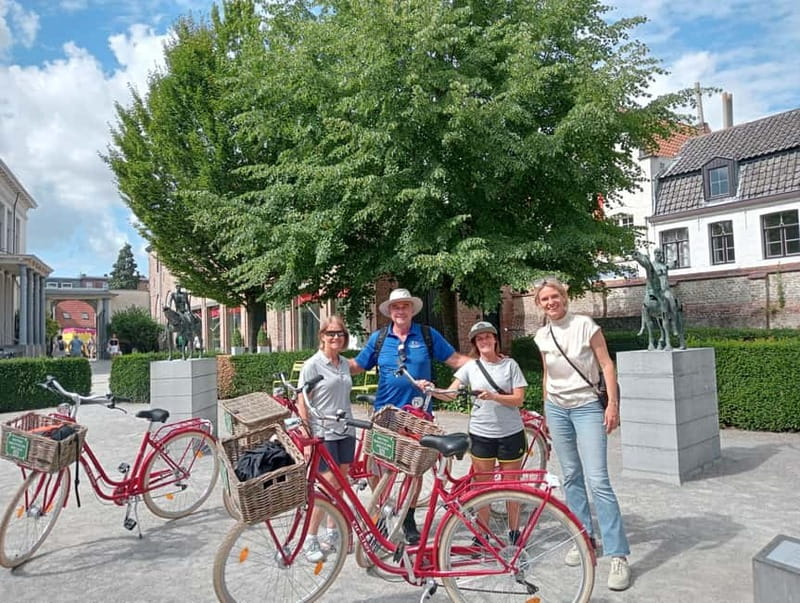
- You see far more than the postcard center: The route reaches the Market Square, Lake of Love, Beguinage, windmills, Sint-Anna, and the canals.
- Local guides are the main attraction: Sebastian, Eveline, Godfried, Frieda, and other guides are praised for clear storytelling, patience, and personal recommendations.
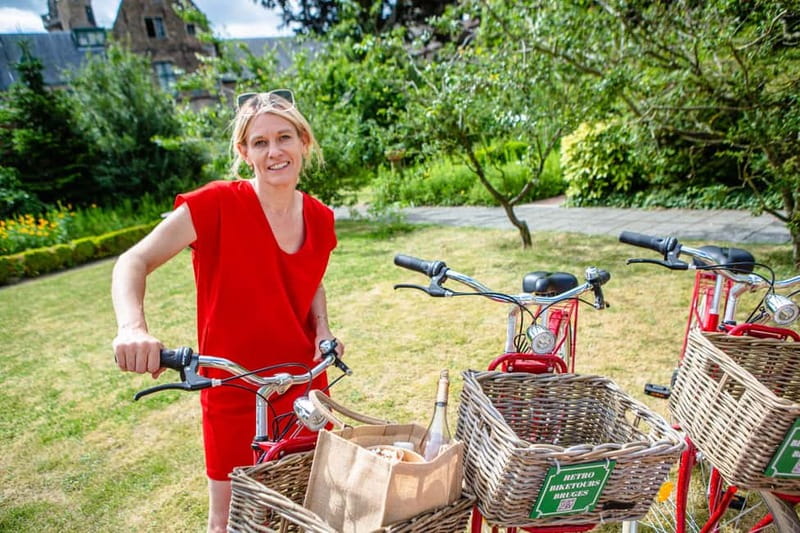
- The bikes are built for relaxed sightseeing: Each retro bicycle has a basket, and helmets are available. Bruges is mostly flat, though the cobbles still require care.
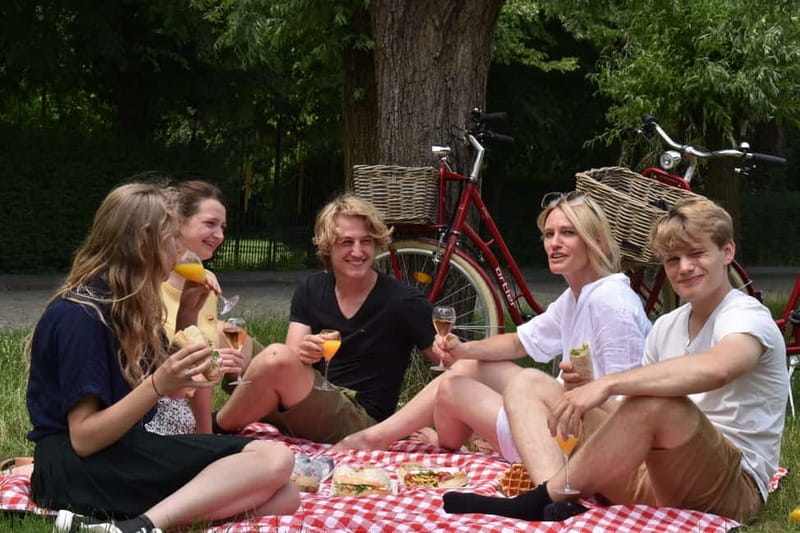
- The ending is unusually pleasant: Return to the garden for a complimentary local beer or limonade and time to chat with the guide.
Starting inside the Hof Bladelin
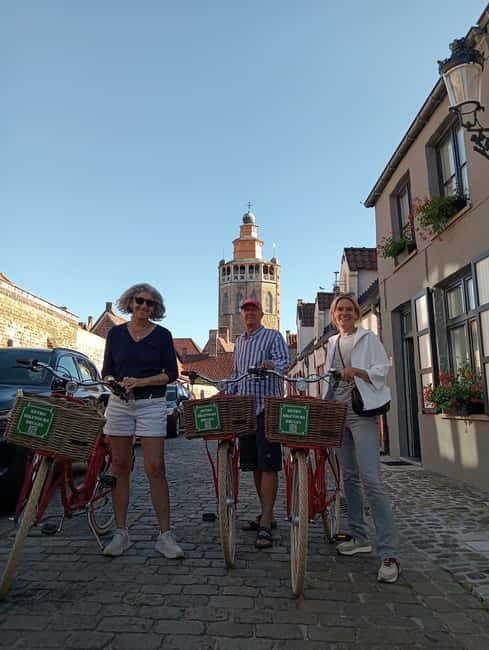
The meeting point at Grauwwerkersstraat 29 is easy to recognize: look for a green gate with a bicycle beside it. Behind that gate is the garden of Hof Bladelin, a 15th-century city palace.
This is more than a practical place to collect a bicycle. It gives you an immediate sense of Bruges beyond the polished postcard views. You are beginning inside a genuine medieval building, not beside a generic rental shop on a busy street. The garden also gives the group a calm place to gather before heading into the city.
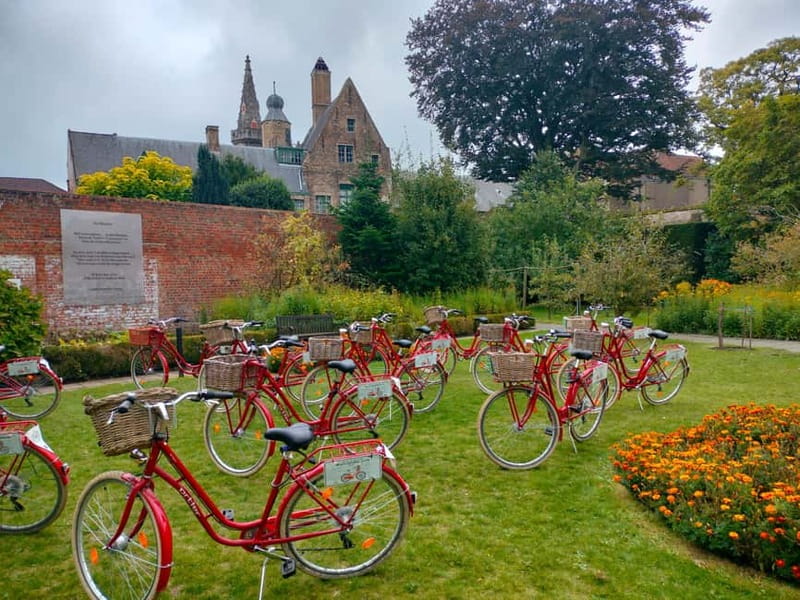
Your guide provides a retro bicycle with a basket for small belongings. A helmet is available for safety, and you can choose whether to wear it. The bikes have been described as stable and easy to ride, including by people who had not cycled for many years. That matters in Bruges, where the route can shift quickly from smooth bike paths to uneven stone streets.
The tour is available in English, Dutch, and French. A small group is available, and the relaxed pace helps the guide keep an eye on the riders. If you are traveling with children or have a slower cyclist in your party, tell the guide at the start. One family with children aged eight and nine found the guide attentive and helpful while they adjusted to cycling over cobblestones.
More City Bike Tours in Belgium:
- Antwerp: City Highlights Guided Bike Tour
★ 4.7 · 529 reviews - Brussels: City Highlights and Hidden Gems Bike Tour
★ 4.8 · 443 reviews - Guided Bike Tour: 2 Hours Highlights of Antwerp
★ 5.0 · 347 reviews
Bruges opens with its grandest sights
The ride moves through central Bruges, where the medieval street plan can feel like a maze when you first arrive. A bicycle gives you a useful middle ground: quicker than walking, but slow enough to notice doorways, bridges, small squares, and unusual details.
The first central sights include the Basilica of the Holy Blood, Bruges City Hall, and Rozenhoedkaai. The basilica is one of the city’s most important religious landmarks, while the City Hall introduces you to the civic power of medieval Bruges. Rozenhoedkaai, with its canal-side view and old buildings, is one of the most photographed corners in town.
Expect short stops for explanations and photos rather than long interior visits. The supplied schedule gives about ten minutes to several major points. That works well for orientation, but it is not enough time to study every church, museum, or facade in detail. Think of the tour as a broad introduction that helps you decide where to return later.
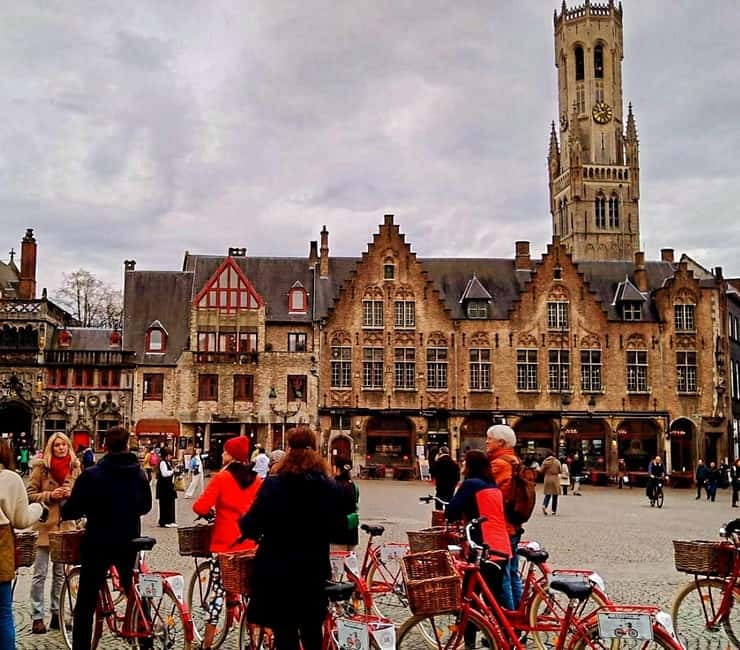
At the Market Square, the Belfry takes center stage. Its 13th-century origins and tall tower have made it the symbol of Bruges, and seeing it from the saddle gives you a different view from the usual pedestrian approach. The square can be busy, so you may spend more time looking and listening than riding here.
The Dukes Palace, medieval bridges, canals, alms houses, and Church of Our Lady also form part of the central route. The Church of Our Lady is especially useful as a reminder that Bruges is not just a pretty shell. Its architecture and artworks reflect the money, faith, and political importance the city held during the Middle Ages.
The Beguinage and Lake of Love slow the pace
The route then heads toward the Beguinage Ten Wijngaerde, a walled community founded for beguines, women who lived a religious life without taking formal monastic vows. Its white buildings and quiet paths feel far removed from the Market Square.
You get about 15 minutes here, making it one of the longer scheduled stops. That extra time helps. The Beguinage is a place where silence and restraint matter more than dramatic views, and rushing through it would miss the point. Follow the guide’s instructions, keep your voice low, and treat it as a living religious site rather than simply a photo backdrop.
Nearby, the Minnewater, or Lake of Love, offers one of the gentlest views in Bruges. The name carries plenty of romantic legend, but the practical appeal is simpler: water, trees, bridges, and open space provide a welcome break from the tight lanes of the old center.
This section is one reason the bike tour works so well. Walking from the central squares to the Beguinage and beyond is manageable, but cycling lets you cover the distance without spending much of your limited sightseeing time on connecting streets. The city is mostly flat, and the route is described as easy enough for older riders and people returning to cycling after a long break.
The Dijver route reveals Bruges from the water
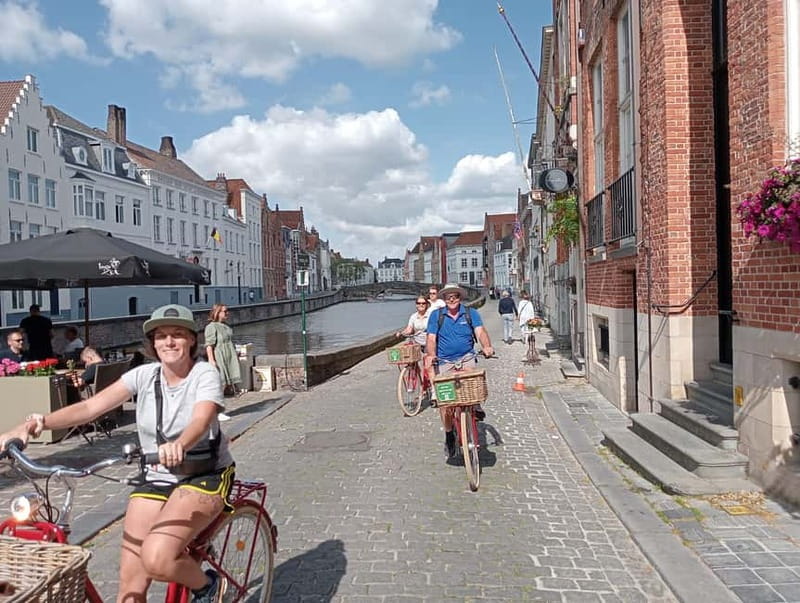
Cycling along Dijver brings you back to the canals and medieval bridges. This is the Bruges many people picture: narrow waterways, old brick facades, and reflections that change with every turn.
The guide adds value here by explaining how the waterways shaped the city. You are not simply passing pretty scenery. You learn how Bruges developed around trade, religious institutions, civic buildings, and merchant homes. The stories help connect the grand structures in the center with the quieter streets along the canal.
The route also passes the Gruuthusemuseum. The museum occupies a major historic building and represents the wealth of one of Bruges’ prominent families. You may not enter during the bike tour, but the guide’s explanation can help you decide if the museum deserves a separate visit.
The bikes are useful on this part of the ride, but keep your eyes ahead. Bruges has pedestrians crossing unexpectedly, narrow lanes, and other bicycles. One account described an unsafe electric scooter encounter, a reminder that even a gentle city ride requires attention. Stay close to the group and do not treat the tour as a race.
A few more rides around Belgium worth a look
- Ghent: Guided Urban Bike Tour
★ 4.9 · 297 reviews - Bruges: Guided Bike Tour with a Local to Sights & Secrets
★ 4.8 · 278 reviews - Ghent: City Highlights and Hidden Gems Guided Bike Tour
★ 4.7 · 196 reviews - Antwerp: Guided Bike Tour
★ 4.9 · 139 reviews
Sint-Anna and Jerusalem Chapel show a quieter Bruges
The ride continues into the Sint-Anna Quarter, a calmer area away from the main square. This is where the tour feels less like a checklist of famous sights and more like an introduction to ordinary Bruges.
You may see small streets, local residential areas, old walls, and places that many short visits leave out. The route includes alms houses, which were built to provide homes for people in need. Their modest scale and plain design offer a useful contrast to the Belfry, City Hall, and wealthy merchant buildings.
The Jerusalem Chapel is another unusual stop. It is associated with the Adornes family and is known for its distinctive design and connection to the Church of the Holy Sepulchre in Jerusalem. The guide’s explanation matters here because this is not the sort of landmark you understand fully from a quick photograph.
This area also includes the Stairway to Heaven, a local curiosity, and other lesser-known corners. The name sounds grander than the feature itself may be, but that is part of the fun. Bruges rewards attention to small details, and the guide can point out places you would probably cycle past without noticing.
The Chocolate Line is another memorable reference along the way. It gives you a useful clue about Bruges today: medieval streets and modern food culture sit side by side. Some guides also point out old pubs, local artwork connected with Mary of Burgundy, and other details that add texture to the ride.
Windmills and the old city edge
One of the strongest parts of the route takes you toward the Windmills of Bruges and the green space around the old city wall. This is a welcome change from the dense center.
The windmills sit in an open setting, giving you wider views and a better sense of Bruges beyond its famous core. The ride here is likely to feel more comfortable if you are still getting used to the bicycle. Several route accounts praised the chance to cycle beside the old defensive edge, through parks, and over bridges.
The windmills also explain why a bicycle is such a good choice for Bruges. You can reach the city’s outer sights without committing to a long walk, then return to the central canals by a different route. If you have only a day or two in town, this wider circuit helps you build a mental map quickly.
The official duration is presented as two hours to 150 minutes, and some outings may run longer depending on the group and the guide. Do not book the tour if you need to leave at an exact minute. Guides have sometimes allowed extra time for questions, photographs, or a slower pace.
What makes the guides worth listening to
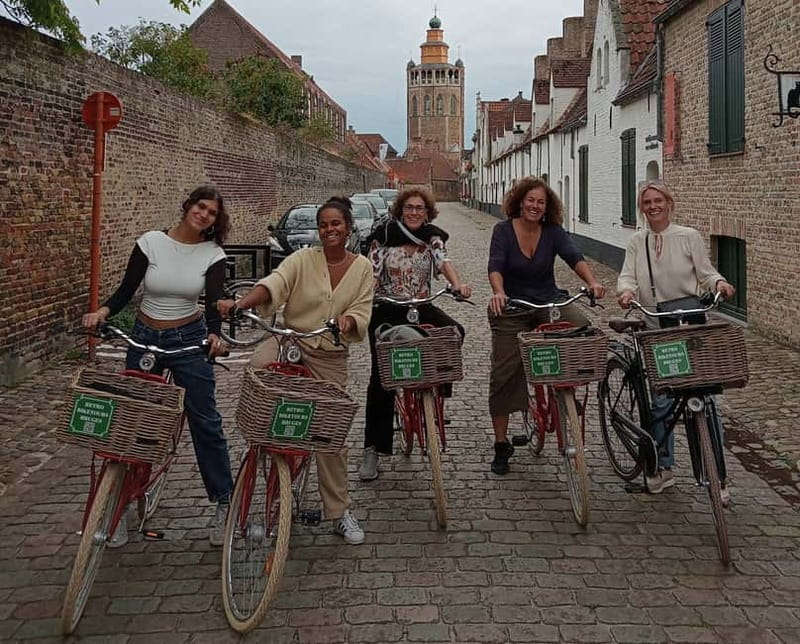
The strongest part of this experience is not the bicycle style. It is the guide.
Sebastian is praised for detailed storytelling and a strong feel for Bruges as his hometown. Godfried has been described as soft-spoken but full of facts, with a dry sense of humor and a willingness to continue beyond the planned end. Eveline is noted for her warmth, flexibility, and useful follow-up suggestions. Frieda and Lorelei are praised for keeping the group together while making the ride entertaining.
That variety matters because this is a story-led tour rather than a recorded audio route. You can ask why a building looks the way it does, request a restaurant suggestion, or ask what to see after the ride. Several guides have sent recommendations after the tour, and one guide took group photos, a small favor that is genuinely useful when you are traveling without another person to hold the camera.
The local connection also comes through in the family history of the company. One guide was described as having lived in Bruges all his life and being the owner’s father. You cannot guarantee a particular guide, but the family-run character is part of the appeal.
Is $52 a fair price?
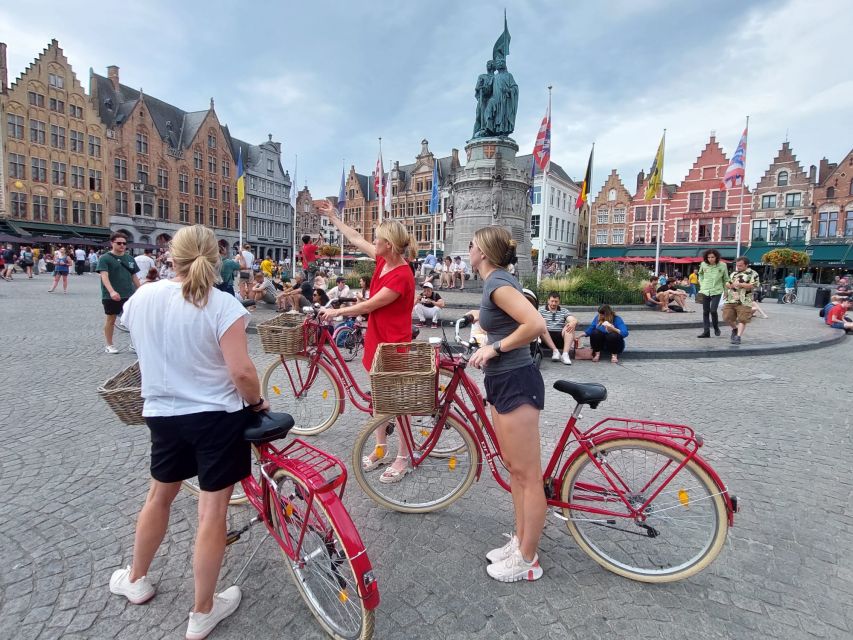
At $52 per person, the price is reasonable if you value orientation, local stories, and the amount of ground covered. You receive the retro bike, basket, guide, optional helmet, local drink, and practical suggestions for the rest of your stay.
A standard walking tour may cost less, but it will not cover the windmills, outer neighborhoods, Beguinage, and central canals with the same ease. Renting a bicycle alone may also cost less, but you would need to plan the route, find the quieter streets, and understand what you are seeing.
The value is strongest if you take this tour early in your visit. You can use the guide’s suggestions for later meals, museums, chocolate shops, and neighborhoods. It is also a good fit for a short stopover, since the route gives you a broad view of Bruges in one outing.
The value is weaker if you want long visits inside monuments. The scheduled stops are generally short, and food is not included. You are paying for movement, interpretation, and access to less obvious parts of the city, not for a full museum tour or a meal.
Practical advice for a smoother ride
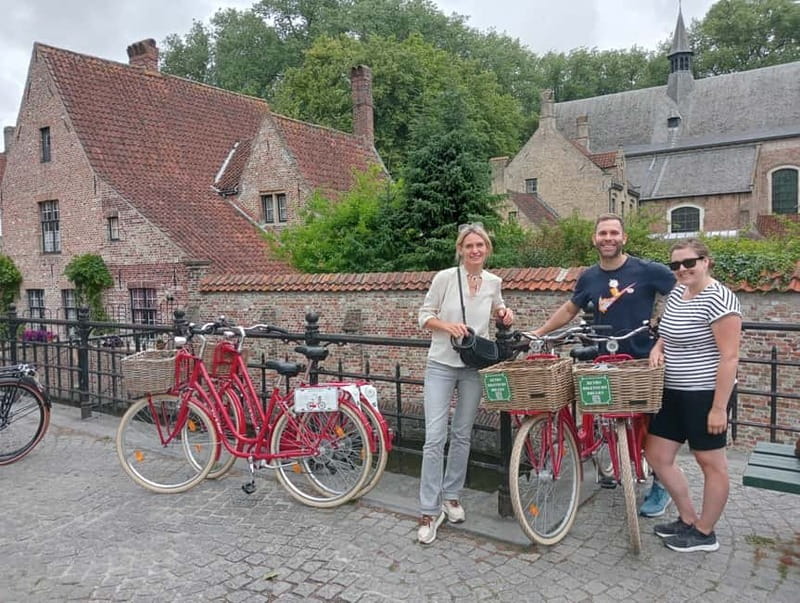
Wear shoes that work on pedals and cobblestones. Choose clothing that suits the weather because the tour operates rain or shine.
Keep small items in the bicycle basket, but do not overload it. A light bag is easier to manage when you are turning through narrow streets.
Arrive ready to ride. The first few minutes may involve adjusting to the bike and getting used to the stones. If you have not cycled in years, say so. The guides are used to helping riders find a comfortable pace.
A helmet is available, and I would use it, especially if you are not accustomed to urban cycling. The route is generally gentle, but pedestrians, scooters, bridges, and uneven paving call for care.
The tour is not suitable for wheelchair users or people with visual impairments. It is also not the right choice if cycling itself is uncomfortable for you.
Who should book this Bruges bike tour?
I would recommend it to first-time visitors, families with older children, couples, and anyone staying only a short time. It is also a fine choice for people who think they have already seen Bruges but have only visited the Market Square and canal viewpoints.
You will get the most from it if you enjoy history delivered through stories rather than a formal lecture. The route mixes major landmarks with residential quarters, windmills, small religious sites, and local curiosities, so it avoids feeling like a parade from one famous facade to the next.
I would hesitate only if you dislike bicycles, need a fully accessible activity, want guaranteed sunshine, or prefer to spend a long time inside each attraction. Cobblestones are part of Bruges, and the ride cannot avoid them entirely.
Final decision: book it for orientation and local insight
Book this tour if you want to understand Bruges quickly and see more than the central postcard views. The combination of the Hof Bladelin garden, a stable bicycle, local storytelling, the Beguinage, windmills, canals, and a drink at the end gives the experience a warm, personal feel.
For the best use of your money, schedule it near the beginning of your stay. You will leave with a clearer map of the city and a list of places worth revisiting. If cycling in light rain or over cobbles sounds miserable, choose a walking experience instead. Otherwise, this is a practical and enjoyable way to meet Bruges on its own streets.
FAQ
Where does the Bruges retro bike tour start?
It starts at Grauwwerkersstraat 29, at the Retro Biketours Bruges office. Look for a green gate with a bicycle beside it, then enter the garden behind the gate.
How long does the tour last?
The experience is listed as lasting between two hours and 150 minutes. The exact length can depend on the starting time, pace, questions, and group.
What languages are available?
The live tour is available in English, Dutch, and French.
Is a bicycle provided?
Yes. A retro bicycle with a basket is included in the price.
Is a helmet included?
Yes. A helmet is available for safety, and wearing it is optional according to the tour information.
What landmarks does the route visit?
The route includes the Basilica of the Holy Blood, Belfry of Bruges, Church of Our Lady, Beguinage, Dijver, Sint-Anna Quarter, Jerusalem Chapel, City Hall, Rozenhoedkaai, Gruuthusemuseum, and Market Square. It also includes canals, windmills, Lake of Love, and other city sights.
Is food included?
No. Food is not included. A taste of a local beer or limonade is included at the end.
Does the tour run in bad weather?
Yes. The tour takes place rain or shine, so dress for the forecast.
Is the tour suitable for wheelchair users or people with visual impairments?
No. The activity is not suitable for wheelchair users or people with visual impairments.
Newly added rides around Belgium
- Brussels Highlights & Hidden Gems Bike Tour★ 5.0 · 195 reviews
- Small-Group Highlights of Brussels Bike Tour★ 4.5 · 260 reviews
- Lively Brussels Highlights Bike tour DUTCH★ 5.0 · 11 reviews
- Private Bruges Countryside Cycling Tour to Damme with Guided Walk★ 4.5 · 24 reviews
- Bruges by bike with friends and family!★ 5.0 · 56 reviews
- Antwerp Bike Tours★ 5.0 · 200 reviews
- 3-Hour Antwerp Bike Tour★ 5.0 · 113 reviews
- Ghent: City Highlights and Hidden Gems Guided Bike Tour★ 4.7 · 196 reviews
Belgium Bike Tours, compared.
Guided Bike Tour: 2 Hours Highlights of Antwerp
Read our review →
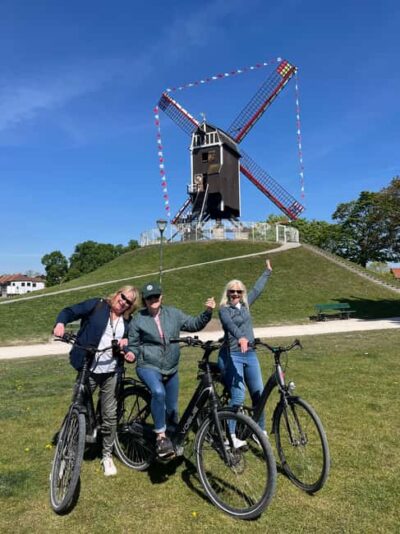
Bruges: Guided Bike Tour with a Local to Sights & Secrets
Read our review →
Browse the lists this tour appears in