
REVIEW · BUDAPEST BIKE TOURS
Budapest: Guided Downtown Electric Bike Tour
Budapest opens up beautifully on two wheels. This 3.5-hour ride takes you from Andrássy Avenue through City Park, the Jewish Quarter, Parliament, the Danube, and up Castle Hill without making the climb a test of willpower. I like the sheer amount of ground you cover, and I like the way a local guide connects grand buildings with Budapest’s complicated past. The one catch is that this is a sightseeing ride, not a series of interior visits, so you will see the landmarks from outside.
The electric assistance is the star here. You still pedal, but the motor takes the sting out of Castle Hill and keeps the pace comfortable for a mixed group. I also appreciate the small group limit of 10, which makes it easier to hear the guide and stop for photos. Bring comfortable clothes, though, and leave large bags behind. The bikes have open chains that can brush against loose clothing.
Why this Budapest bike tour deserves a place on your itinerary
- You cover a remarkable sweep of Budapest: Andrássy Avenue, Heroes’ Square, City Park, the Jewish Quarter, Parliament, the Danube, Castle Hill, Gellért Hill, the Central Market Hall, and the National Museum all fit into one outing.
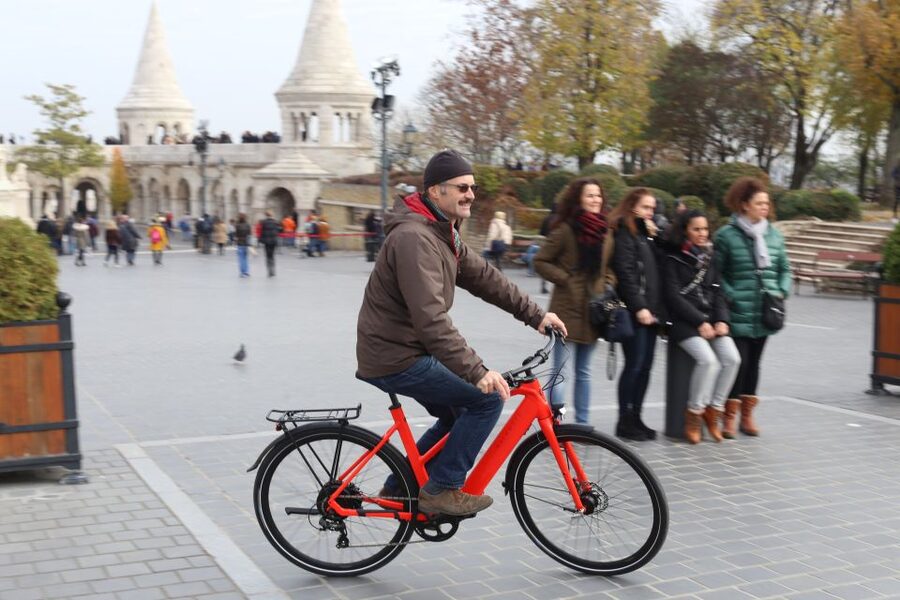
- Castle Hill becomes manageable: Electric support does the hard work on the uphill stretch to Matthias Church and Fisherman’s Bastion.
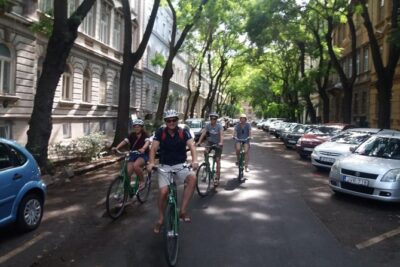
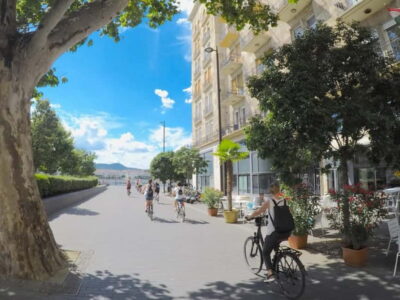
- The route uses bike lanes and smaller streets: That gives you a more local view than a bus ride and helps avoid spending the whole tour on major roads.
- The guides add personality: Oliver, Karol, Katalin, Thomas, Balint, and Katy are among the guides praised for clear storytelling, humor, patience, and personal views of the city.
- The best views come late in the ride: From Buda, you look back across the Danube toward Parliament and central Pest.
- It works well early in your stay: You get a useful map of the city and can mark places to revisit on foot or by public transport.
Starting near Deák Ferenc Square and the Jewish Quarter
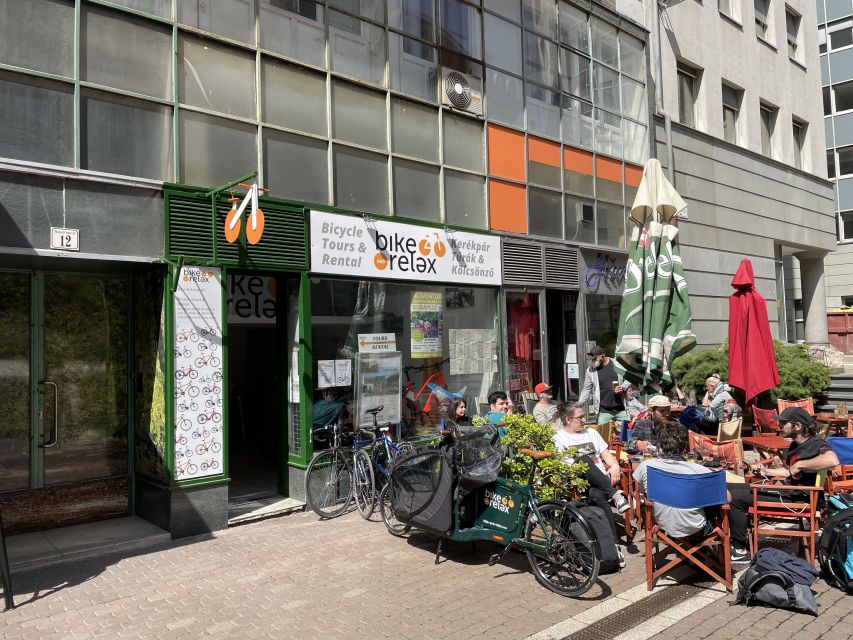
The tour begins at Bike & Relax in the center of the Jewish district, near the link between Madách tér and Gozsdu udvar. The shop is beside Cafe Hivatal and around the corner from Gozsdu udvar and Deák tér. That central position matters because Deák Ferenc Square connects several metro lines, trams, and the 100E airport bus.
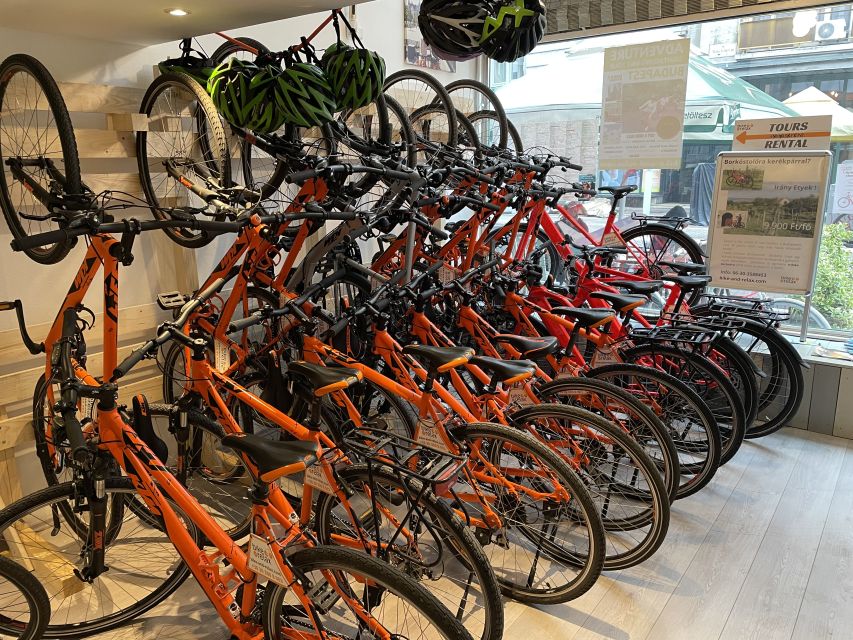
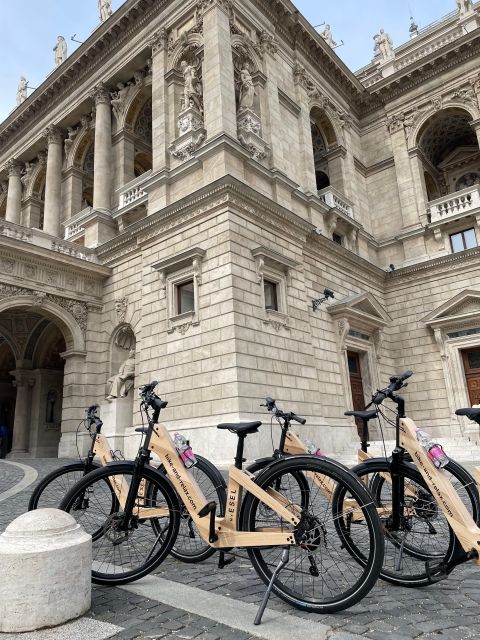
You will be fitted with an e-bike and given instructions before setting off. The operator uses wooden-framed My Esel bikes or Kalkhoff Berleen e-bikes. You still pedal, but electric assistance helps carry you along. Reviews repeatedly praise the bikes as comfortable, modern, and easy to handle, though one rider found the saddle less comfortable than the rest of the bike.
The helmet is optional. I would use one, especially in city traffic, but you can decide for yourself. Wear clothing that will not catch on an open chain. Water and rain ponchos have been provided on some rides, but they are not listed as standard inclusions, so do not rely on them. Food and drinks are not included.
More E-Bike Tours in Budapest:
- Budapest: E-Bike Guided Tour and Castle Hill
★ 4.9 · 241 reviews - Budapest: Guided Bike & E-bike Tour with a Goulash
★ 4.8 · 220 reviews - Budapest E-bike Tour
★ 5.0 · 125 reviews
Andrássy Avenue, the Opera, and the House of Terror
The first major stretch follows Andrássy Avenue, one of Budapest’s grandest urban routes. This is a fine opening because the boulevard gives you a strong sense of the city’s late 19th-century ambition before the route moves into more varied neighborhoods.
You pass the Hungarian State Opera House, a richly decorated building associated with Budapest’s musical life. The stop is for viewing and photographs, not a performance or interior tour. The Liszt Ferenc Academy of Music adds another musical note later in this part of town.
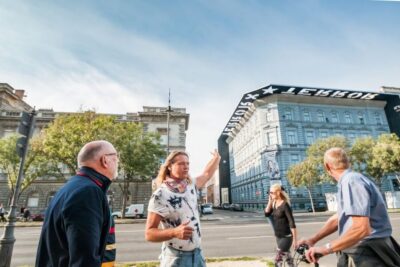
The House of Terror is a more difficult stop. Its name refers to the building’s use by both the Nazi-allied Arrow Cross regime and Hungary’s Communist secret police. Your guide explains the site from outside, but you will not enter. If you want the full museum experience, plan a separate visit.
This section also shows why a bike is useful. You are not confined to one central square. You move between landmarks, hear the explanation while the city is unfolding around you, and save your legs for the long list of stops ahead.
Heroes’ Square and City Park’s storybook castle
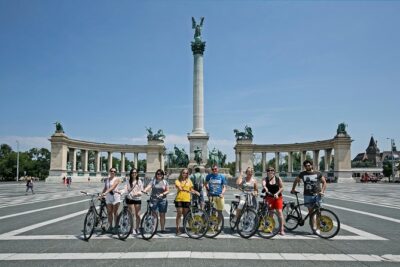
Andrássy Avenue leads to Heroes’ Square, one of Budapest’s most recognizable public spaces. Its statues honor important figures from Hungarian history, and the broad plaza gives you room to step off the bike, take photographs, and listen without standing in a tight crowd.
From here, you ride into City Park. The park is home to the Széchenyi Thermal Bath, Budapest’s largest and most popular bath complex. You see it from outside, so save a bath visit for another time. The tour gives you the useful first look, then you can decide if soaking in the pools belongs on your schedule.
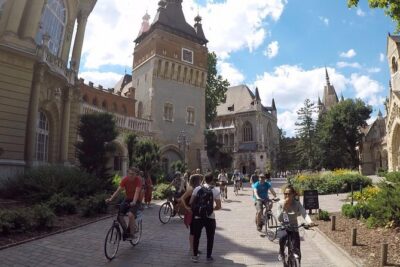
Vajdahunyad Castle is the playful surprise in this part of the route. It looks like a romantic medieval fortress, but it is a much later creation built in historic styles. That mixture of Gothic, Renaissance, and Baroque forms makes it a good photo stop and a good example of Budapest’s taste for dramatic architecture.
This is also one of the more relaxed parts of the ride. City Park offers a break from dense streets, although the exact pace depends on traffic, weather, and how long the group spends at each stop.
From the Jewish Quarter to St. Stephen’s Basilica
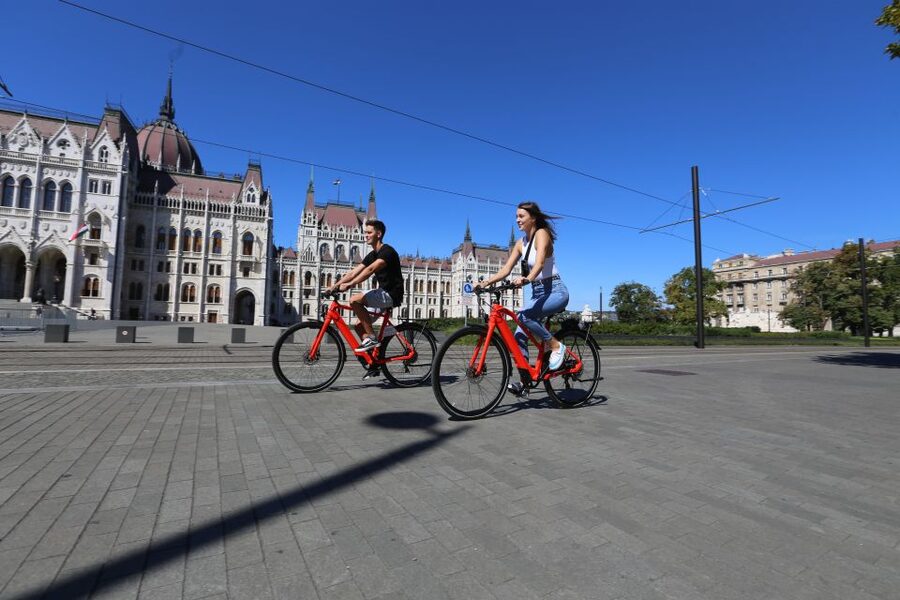
The route returns toward central Budapest through the Jewish Quarter. This district is known for its synagogues, courtyards, nightlife, and layered past. You get an overview rather than a specialized Jewish heritage tour, but the location helps connect Budapest’s modern social life with its wartime and postwar history.
St. Stephen’s Basilica is the city’s largest church and one of Pest’s key landmarks. Its dome and broad facade are easy to spot, and the surrounding square gives the group a natural place to pause. Again, the visit is from the outside. If you want to see the interior or climb to a viewpoint, schedule that separately.
The guides are an important part of this middle section. Several are praised for making history easy to follow without turning the ride into a lecture. Katalin, in particular, has been described as a strong storyteller who kept the group engaged, while Thomas was praised for adjusting the pace and answering questions.
More City Bike Tours in Budapest:
- Budapest: Grand Sightseeing Bike Tour
★ 4.8 · 984 reviews - Budapest Highlights Bike Tour
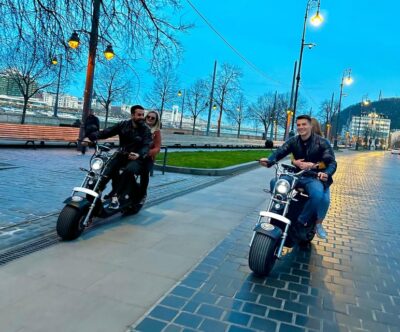
★ 5.0 · 770 reviews - Budapest: Monster Bike Roller Guided City Tour
★ 5.0 · 538 reviews - Budapest: Guided City Tour by E-Bike
★ 4.9 · 87 reviews
Liberty Square and the Hungarian Parliament
Liberty Square brings more serious history into the ride. It lies in Budapest’s financial district but carries memories of war, occupation, and political conflict. The disputed Holocaust memorial here needs context, and this is one place where a good guide adds real value. You see how public spaces can hold competing versions of the past.
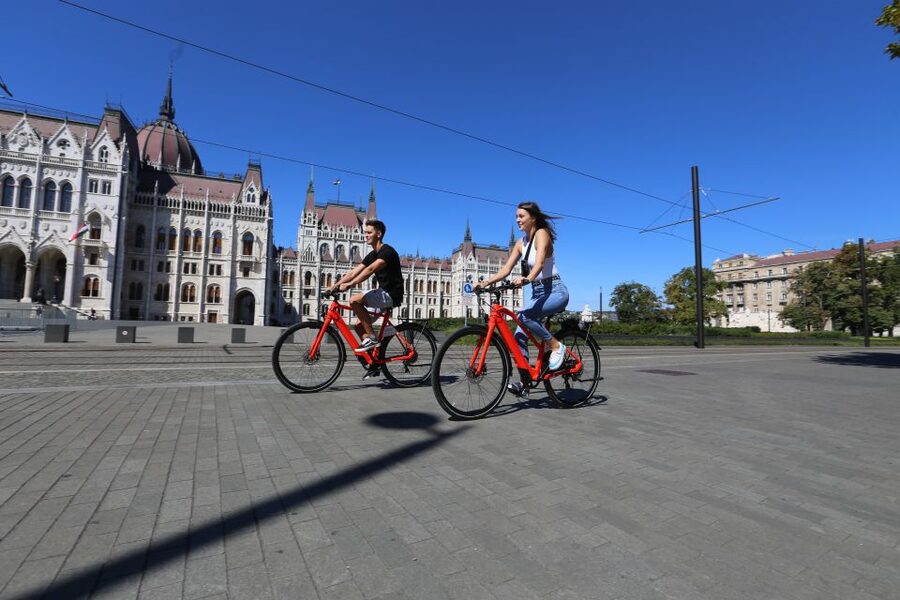
The Hungarian Parliament Building is one of the tour’s visual high points. From the Pest side, its riverside facade is an impressive sight, with the Danube giving the building room to dominate the view. You stop for photographs and an explanation, but there is no interior visit.
The route then reaches the Danube bank. From here, you look across at Buda and begin to understand Budapest as two historic halves joined by bridges. The Monument of the Shoes is nearby. Direct access is not always possible, so you may see the memorial without getting right beside it.
That limitation is worth knowing before you book. The tour gives you a broad introduction to Budapest’s important places, but the schedule cannot guarantee close access to every monument.
Crossing Chain Bridge and climbing Castle Hill
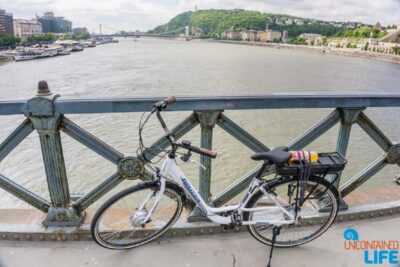
The ride across Chain Bridge is a major moment. The bridge has been renovated and is closed to private cars, which makes the crossing more pleasant than it would be with ordinary traffic. You get a direct view toward Buda and the hill that awaits you.
Castle Hill is where the e-bike earns its keep. The climb would be a serious effort on a standard bicycle, especially after several hours of sightseeing. With electric assistance, you still pedal but can reach the top without the climb overwhelming the rest of the tour.
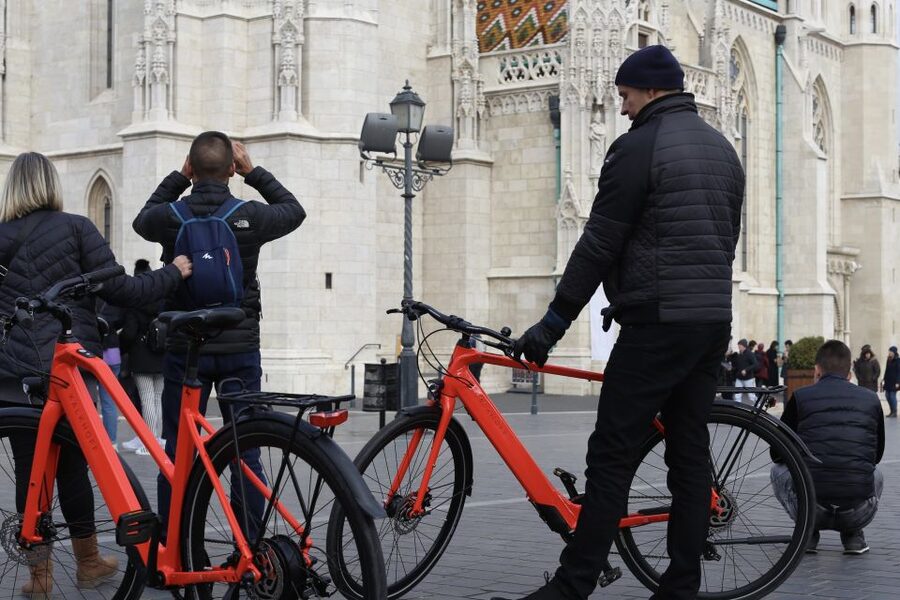
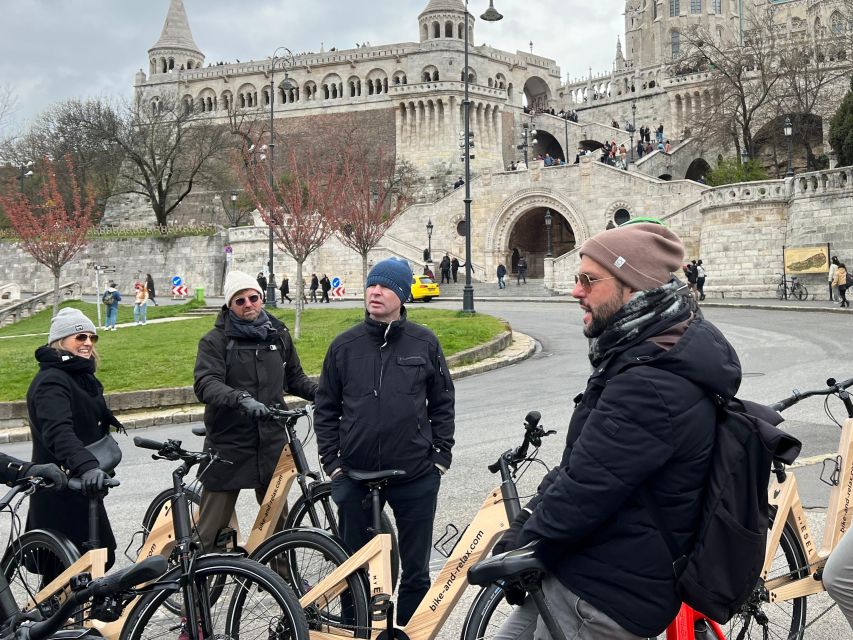
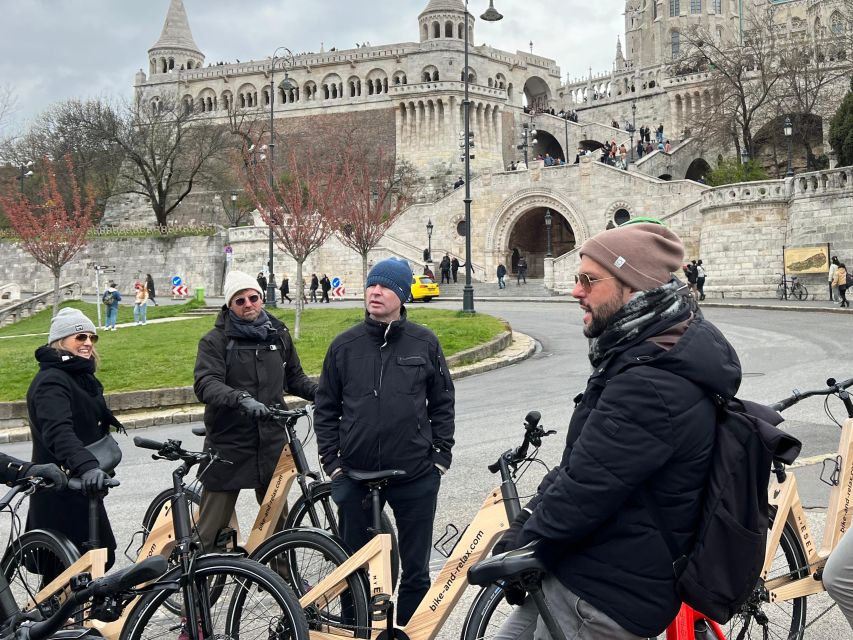
At the top, the route visits Matthias Church and Fisherman’s Bastion. Matthias Church is known for its patterned roof and ornate appearance, while Fisherman’s Bastion provides some of the best views across the Danube toward Parliament and Pest. This is the place to pause, catch your breath, and take the photographs you will probably remember most.
The height restriction matters here. The operator says the tour is not suitable for people below 5 feet 2 inches, and another note lists 5 feet 1 inch as a lower limit. Since the information gives two slightly different figures, confirm the current requirement before booking if you are close to that height.
Rudas Bath, Gellért Hill, and the Danube bridges
After Castle Hill, the route returns toward the river and passes Rudas Thermal Bath. Rudas is one of Budapest’s historic bathing sites, but you only view it from outside. The same applies to Gellért Thermal Bath, seen near Gellért Hill.
These stops are useful because thermal baths are central to Budapest’s identity, yet they require time to enjoy properly. This ride lets you note their locations and choose one for a separate visit instead of trying to combine bathing with a moving group tour.
The return crossing uses Liberty Bridge, a favorite among many riders because of its compact size and distinctive green structure. From the bridge, you get another angle on the river and the city’s two sides. The route then continues toward the Central Market Hall.
Central Market Hall, the National Museum, and the final synagogue stop
The Central Market Hall is one of Budapest’s best-known food and shopping buildings. You will see it from the outside and learn where it is, but food and drinks are not included and the tour does not turn into a market tasting. If you want paprika, pastries, local specialties, or a closer look at the stalls, return later with time to spare.
The Hungarian National Museum is another important exterior stop. Its location helps place the city’s national story within the route, but you will need a separate ticket and visit if you want the galleries.
The final major stop is the Dohány Street Synagogue, one of the defining buildings of the Jewish Quarter. It is a fitting end because the tour began nearby and has taken you through several parts of Budapest’s religious, political, and cultural story. You then cycle back to Bike & Relax.
This is a lot to cover in 3.5 hours. The benefit is range. The tradeoff is that most stops are brief photo and explanation stops, not long visits.
What the $63 price buys you
At $63 per person, the tour is not the cheapest way to get around Budapest. You could use public transport and walk between selected sights for less. But doing that would take more planning, and you would not get the same continuous route or the guide’s explanations along the way.
The value is strongest if you have only a few days in Budapest, want a city overview, or prefer not to spend your first day studying tram routes and maps. You cover a large portion of both Buda and Pest, including the major uphill section, without paying for separate taxis or bike rental.
The small group limit of 10 also matters. A guide can keep an eye on the group, adjust the pace, and answer questions. Several riders specifically praised guides for being considerate in heat, rain, and mixed fitness groups. The ride is not effortless in the sense of sitting in a vehicle, but riders with modest fitness found the electric support highly helpful.
Who should book, and who should skip it
You should consider this tour if you can ride a bicycle, want to see major sights quickly, and like learning while moving. It suits couples, friends, solo visitors, and families with children aged 13 or older. It is particularly useful at the start of a Budapest stay, since you can return later to the places that caught your attention.
You should skip it if you cannot ride a bike, dislike city cycling, are pregnant, have mobility limitations, or exceed the listed weight limit of 243 pounds or 110 kilograms. It is also not suitable for riders without cycling experience.
The listed height rules are inconsistent, with minimums of 5 feet 1 inch and 5 feet 2 inches appearing in the information. If you are close to either measurement, ask Bike & Relax before reserving. Large bags and luggage are not allowed, so carry only what you need.
Practical details worth knowing before you go
The tour is offered in English, German, or French, with shared or private group options. It can run longer than 3.5 hours depending on weather, traffic, and group conditions, so avoid booking a tight connection afterward.
Free cancellation is available up to 24 hours before departure, and you can reserve now and pay later. That is useful when your Budapest plans are still shifting, but check the exact terms at booking.
The guides praised most often include Oliver, Karol or Karoly, Katalin, Thomas, Balint, and Katy. Names can change by departure, but the pattern is clear: the experience depends heavily on the individual guide. You can expect history, local context, humor, and practical orientation rather than a silent bicycle procession.
Should you book this Budapest e-bike tour?
I would book it if I wanted a strong first look at Budapest and did not want the city’s hills to limit my route. The mix of grand avenues, difficult history, thermal baths, bridges, markets, Parliament, and Castle Hill gives you a useful sense of how the city fits together.
I would not book it expecting museum admissions, long meals, or quiet time at every landmark. Think of it as a fast, well-guided city orientation with excellent views and very capable electric bikes. At $63, it offers good value for the ground covered, especially if you take it early in your stay and use the rest of your trip to return to the places that deserve more time.
FAQ
How long is the Budapest guided e-bike tour?
The tour lasts approximately 3.5 hours, although the timing can vary with conditions on the day.
What languages are available?
The tour is offered in English, German, and French.
Are the bikes fully electric?
No. The e-bikes provide electric assistance, but you still need to pedal.
Is Castle Hill difficult to cycle up?
The climb is made much easier by the electric assistance. You still pedal, but the motor helps with the uphill section.
Do I enter the landmarks?
No. The tour stops at the landmarks for guided explanations and photographs, but it does not include entry inside them.
Where does the tour start and finish?
It starts and finishes at Bike & Relax in the Jewish district, near Madách tér, Gozsdu udvar, and Deák Ferenc Square.
Is the tour suitable for children?
It is not suitable for children under 13. You also need to be able to ride a bicycle and meet the operator’s height and weight requirements.
Newly added rides around Budapest
- Private Budapest Bike Tour with Cafe Stop★ 5.0 · 21 reviews
- Monster Bike Sightseeing Tour – City Budapest on Electric Rollers★ 5.0 · 69 reviews
- Budapest to Szentendre bike & boat tour★ 5.0 · 25 reviews
- Budapest private Bike & e-Bike Tour with a drink★ 5.0 · 12 reviews
- Budapest Bike Tour with Hungarian Goulash★ 5.0 · 198 reviews
- Budapest E-bike Tour★ 5.0 · 125 reviews
- Coolest E-bike Tour in Budapest★ 5.0 · 23 reviews
- Budapest Bike Ride★ 5.0 · 11 reviews
Budapest Bike Tours, compared.

Browse the lists this tour appears in