
REVIEW · SEVILLE BIKE TOURS
Seville: Relaxing City Bike Tour with a Tour Guide
See Seville before the crowds arrive. This guided ride is a smart way to connect the city’s major sights, from Barrio Santa Cruz and the Jardines de Murillo to Plaza de España, Triana, and the Guadalquivir River. You cover about 10 kilometers on a mostly flat route, with regular stops for stories, photos, and a breather.
I like the easy pace and the local flavor. Guides such as Carmen, Juan, Daniel, and Alvarito Garsia have been praised for mixing Seville’s history, politics, architecture, flamenco, and food tips into a lively introduction. The main drawback is that cycling through busy tourist areas can feel a little tense, especially if you have not ridden in city traffic recently.
The tour costs about $35 per person, which is fair for a high-quality bike, guide, water, insurance, and a two-and-a-half to three-hour orientation. I would book it early in your stay, then use the route and restaurant suggestions to shape the rest of your time in Seville.
At a Glance
- Start in Plaza de Santa Cruz: Meet at Plaza Santa Cruz 4, behind the Jardines de Murillo, in the heart of the old quarter.
- Ride about 10 kilometers: The route is mainly flat and designed for a relaxed pace, with stops every few minutes in some areas.
- See Seville’s major sights: The route includes María Luisa Park, Plaza de España, the Torre del Oro, Triana, the Cathedral, the Giralda, and Metropol Parasol.
- Small groups help: Groups can reach 15 people, though some departures have been much smaller, allowing closer contact with the guide.
- Best for an early orientation: You see a lot in a short time and collect useful ideas for food, flamenco, and further sightseeing.
- Allow for busy streets: Most of the ride is easy, but crowded tourist zones require attention and careful following.
Starting in Plaza de Santa Cruz
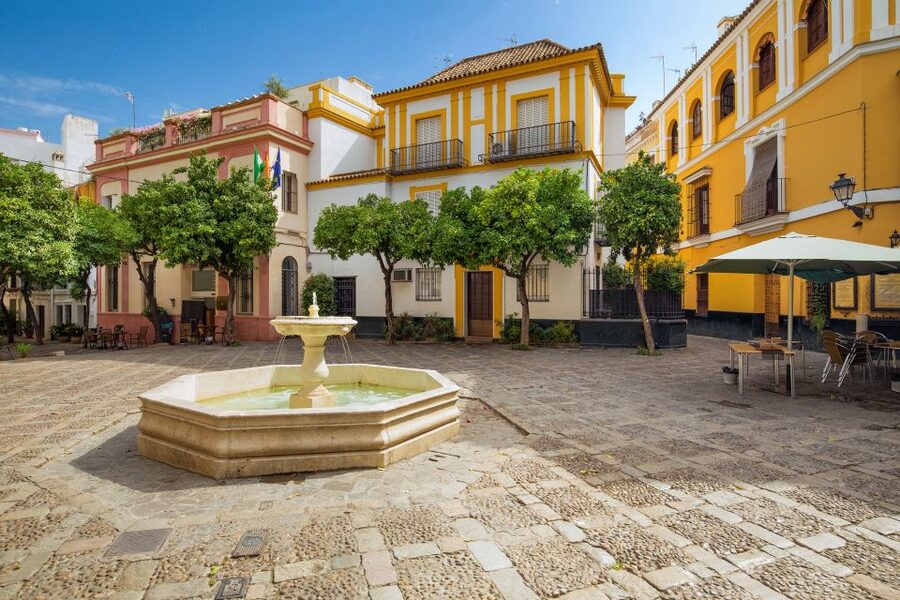
The meeting point at Plaza Santa Cruz 4 puts you in an excellent part of Seville. This is not a dull meeting area beside a highway or a bus station. You begin among the narrow lanes of Barrio Santa Cruz, close to the Jardines de Murillo and within easy reach of the city’s grandest sights.
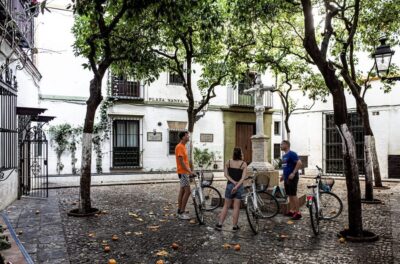
The old Jewish quarter is best experienced slowly. Its lanes twist between whitewashed walls, small squares, tiled courtyards, and orange trees. A bicycle lets you cover more ground than walking, but the guide still brings you to a stop often enough to explain what you are seeing.
You should arrive ready to ride rather than expecting a long shop briefing. One past account noted a slightly disorganized start, but the route and guiding more than made up for it. That is useful to know if the first few minutes feel less polished than the rest of the morning.
The bikes are city models, and a helmet is available. The route is not a race. Guides adjust the pace to the group, and several riders specifically appreciated being checked on through crowded sections. Bring a passport or identity card, comfortable clothing, and sunscreen. Bottled water is included, but Seville’s sun can still catch you quickly.
More City Bike Tours in Spain
- Seville Highlights Bike Tour (English)
★ 5.0 · 2,225 reviews - Seville: Highlights City Bike Tour
★ 4.8 · 2,168 reviews - Seville: City Sightseeing and Local Culture Bike Tour
★ 4.9 · 1,120 reviews
Orange Trees and the Royal Tobacco Factory
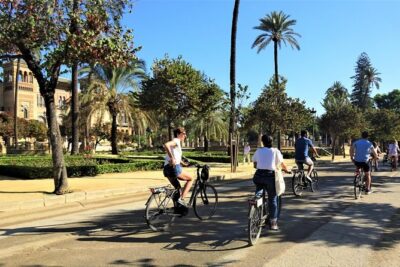
From Santa Cruz, the ride moves through the Jardines de Murillo. This leafy stretch is a welcome change from stone lanes and busy squares. Orange trees and palms provide shade, and the gardens give you a chance to settle into the rhythm of the tour.
The route then brings you toward the Antigua Fábrica de Tabacos, the old royal tobacco factory. Its scale helps explain the economic importance of Seville during Spain’s imperial period. Today, the building is associated with the University of Seville, but its original function gives it a very different story from the palaces and churches nearby.
This is where a good guide matters. A simple stop at a large stone building can feel forgettable if you only hear its name. Guides have been praised for explaining not just dates, but also the city’s politics, religion, architecture, and everyday life. Juan, Carmen, and Alvarito Garsia have all been singled out for making those connections clear and entertaining.
You will not tour the inside of every major building. This is a sightseeing ride, not a series of interior visits. If you want a close look at the Cathedral, Alcázar, or the tobacco factory, save separate time for those sites.
María Luisa Park and Plaza de España
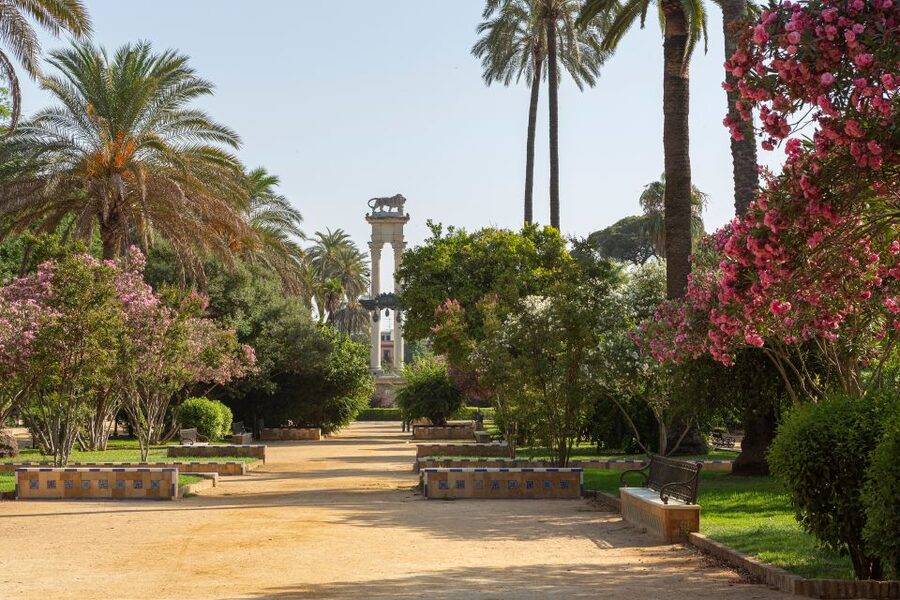
Parque de María Luisa is one of the strongest parts of the route. The park gives the ride room to breathe, with broad paths, palms, fountains, gardens, and shade. After the tight streets of Santa Cruz, the open setting feels almost like a reset.
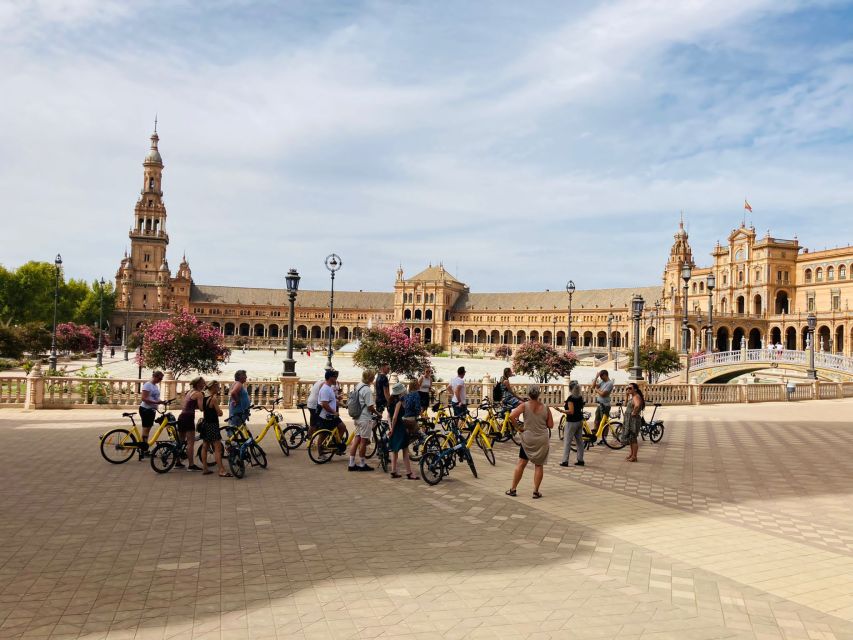
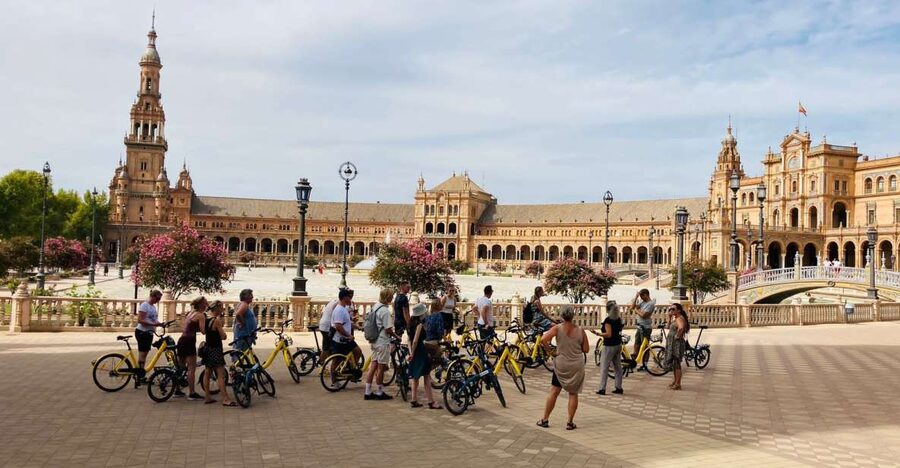
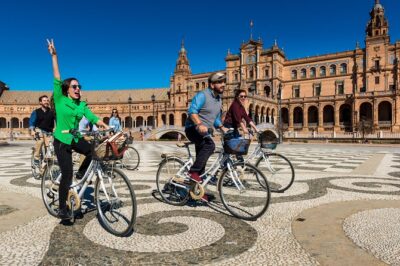
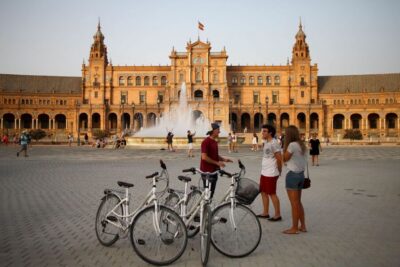
The main prize is Plaza de España, built for the 1929 Iberian-American Exposition. Its curved brick buildings, tiled alcoves, canals, bridges, and colorful ceramic work make it one of Seville’s most recognizable places. The tiles represent Spanish provinces and give the square a visual lesson in regional identity.
I especially like seeing Plaza de España by bike because you approach it as part of the city rather than as an isolated photo stop. You can take in its scale, then hear the guide explain why it was built and how it fits into Seville’s story.
The square can be crowded, and bicycles may not be the easiest way to move through the central area. Expect to dismount or walk the bike at times. The route’s relaxed design helps here. You are not pushed through in a hurry, and the guide can keep the group together while pointing out details.
Summer heat is another factor. The park has shade, but the open plaza can be bright and hot. The morning departure is the better choice if you dislike strong afternoon sun. The schedule information varies, with departures listed at 10:00, 10:30, and 14:00, so confirm your exact start time when booking.
The Guadalquivir and Torre del Oro
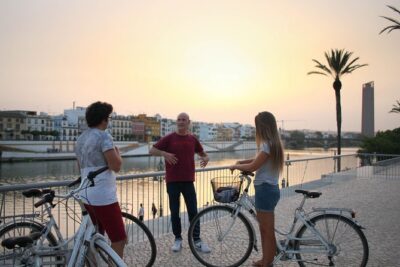
The ride continues toward the Guadalquivir riverside, where Seville opens up again. River views give you a clearer sense of the city’s position and its long connection to trade, exploration, and shipping.
The Torre del Oro is an especially useful stop because it is both scenic and easy to understand. The fortified tower once guarded the river entrance, and its golden appearance changes with the light. You will likely have time for photographs and a short explanation before continuing.
This riverside section is also one of the more comfortable parts of the ride. You are away from some of the tightest tourist streets, and the flat terrain makes it easy to keep moving without exhausting yourself.
Still, do not read relaxing as completely carefree. You must pay attention to pedestrians, other cyclists, crossings, and changes in the route. One rider described the need to cycle through busy areas, while others found the frequent pauses made the ride manageable. The practical truth is somewhere in the middle: the route is gentle, but you still need basic city-riding confidence.
More City Bike Tours in Seville:
- 3-hour Guided Bike Tour along the Highlights of Seville
★ 5.0 · 315 reviews - Seville: Highlights Bike Tour with Local Guide
★ 4.3 · 295 reviews - Seville: Electric Bike City Tour
★ 4.7 · 188 reviews - Seville: Dutch Cycling Highlights Tour with local guide
★ 4.7 · 163 reviews
Crossing to Triana
Triana adds a different side of Seville. Across the river, the district is strongly associated with flamenco, ceramic work, and local traditions. The change in mood is part of the value of the tour. You are not simply checking off famous monuments. You are seeing how different neighborhoods contribute to the city’s character.
A guide with a personal interest in flamenco can make this section especially rewarding. Several guides have shared suggestions for flamenco shows and tapas bars, and some have expertise in art, philosophy, and local culture. Those conversations can be more useful than a standard list of attractions because they help you decide what to do after the bike tour.
Triana may also be one of the busier parts of the route. Stay close to the guide and avoid racing ahead for photographs. The group leader will usually stop at suitable points, but you should not expect to ride side by side through every street.
The route is suitable for most riding levels, but the data is not perfectly consistent about hills. Most riders describe Seville as flat and easy, while one family mentioned a few more demanding inclines. I would treat the tour as gentle overall, with occasional short efforts rather than a totally flat loop.
Cathedral, Giralda, and Metropol Parasol
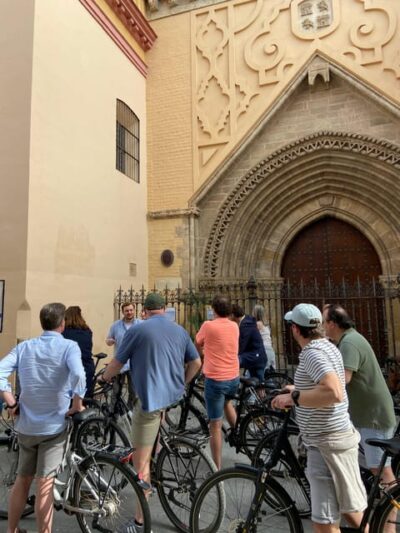
The route returns toward Seville’s central monuments. The Cathedral and Giralda form one of the city’s defining views, mixing Islamic, Gothic, Renaissance, and later Spanish traditions. From the outside, the buildings offer plenty to discuss, even though entry is not part of this bike activity.
The Giralda is especially striking because its tower began as a minaret before becoming the bell tower of the cathedral. A guide can help you read the different layers instead of seeing only a famous silhouette.
Metropol Parasol, usually called Las Setas, provides a sharp contrast. Its modern wooden structure rises above the older streets and has become one of Seville’s most debated landmarks. Including it in the route gives you a better sense of the city as a living place, not a preserved museum.
The final section can be the most crowded. Streets around the Cathedral and Las Setas attract large numbers of people, and you may spend more time walking the bicycle than riding it. That is not a flaw in the route so much as a reminder that Seville’s center is built for wandering, not fast cycling.
Guides Make or Break the Ride
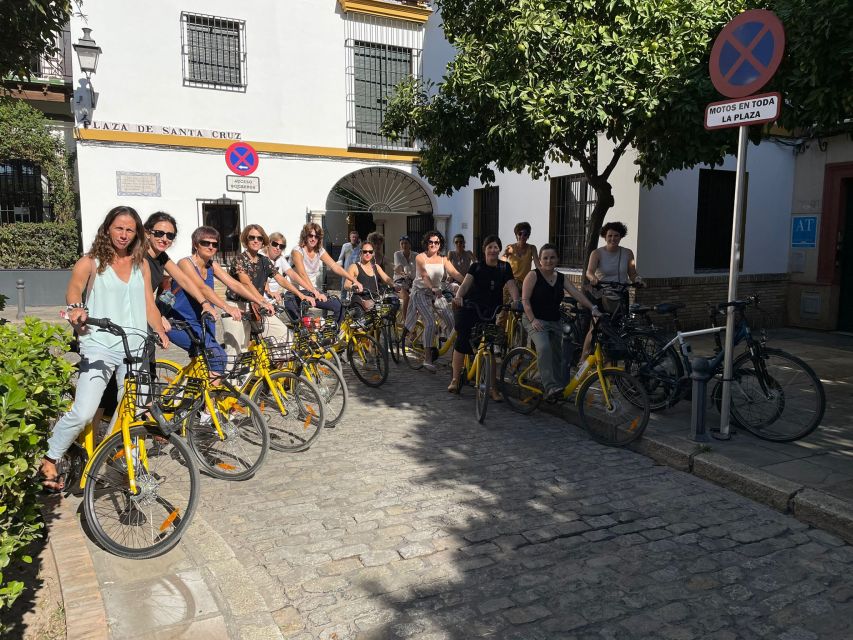
The strongest praise for this experience goes to the guides. Carmen is repeatedly described as friendly, clear, attentive to pace, and generous with practical suggestions. Juan is praised for his warmth, local stories, and wide knowledge of religion, culture, flamenco, art, and philosophy. Daniel has been remembered for energy, humor, and a talent for making long stretches of city history easy to follow.
Other guides, including Leo, Paulo, Pablo, Pierre, Ally, Alvaro, and Alvarito Garsia, have also received strong marks for explaining Seville in several languages and adapting to families or older riders. This range matters because the tour is not built around an audio recording or a fixed speech. Your experience depends partly on who leads your departure.
The language list includes Spanish, English, French, Italian, and Dutch in the main activity details. Other information also mentions German, Russian, and Portuguese, so specify your preferred language and confirm availability. English-language guiding has been praised in particular for being fluent and easy to follow.
A guide may give you a map or recommendations at the end. Use that moment well. Ask where to eat, where to see flamenco, and which sights deserve a return visit. The tour is most useful when it gives you a plan for the next few days, not just two hours of facts.
Is $35 a Fair Price?
At around $35, this is good value if you want a broad introduction to Seville. You receive a bike, optional helmet, bottled water, a guide, and liability insurance. More important, you save the time and effort of working out a route between districts that are spread across the city.
A self-guided rental may cost less, but you would need to choose the route, find the sights, manage navigation, and learn the context on your own. A walking tour might provide more detail at individual monuments, but it will not cover as much ground in the same period.
The price is less appealing if you plan to visit only one neighborhood or prefer long interior visits. This tour is about orientation and connections. You see the outside of many important places, then decide which deserve a return visit.
Small groups add value. The maximum is 15 people, though some departures have had only two, four, or five riders. A smaller group gives the guide more room to answer questions and adjust the route. A full group will feel less personal, though the company still describes it as a small-group experience.
Free cancellation up to 24 hours before departure and reserve-now, pay-later booking add flexibility. These terms are useful if your schedule is still shifting, but check the exact conditions at booking.
Who Should Book This Bike Tour?
I would recommend it for first-time visitors who want to understand Seville’s layout quickly. It works particularly well on your first full day, when you can use the guide’s suggestions to plan later visits to the Cathedral, Alcázar, Triana, museums, restaurants, and flamenco venues.
It is also a good fit for families with older children who can ride confidently. One family with children aged 7 and 9 had a particularly positive experience, with the guide keeping the ride interesting and manageable.
Older riders can enjoy it too, provided they can ride a bicycle and are comfortable in crowded areas. The guides have a strong record of adjusting speed and checking that everyone is keeping up.
I would skip it if you cannot ride a bike, dislike sharing roads and paths with pedestrians, or want a slow architectural tour with long stops at each monument. You should also think carefully about heat. Seville can be intense in summer, and sunscreen, water, and a morning departure will make the experience easier.
Final Verdict: Book It for Your First Day
Book this tour if you want a relaxed but efficient introduction to Seville. The route links the old quarter, gardens, exposition architecture, river, Triana, and central monuments in a way that would take much longer on foot.
The best reasons to go are the flat route, regular stops, friendly guides, and practical advice about the rest of your stay. The main cautions are crowded streets, occasional short hills, and the fact that most landmarks are viewed from outside.
For $35, I consider it a strong choice for active sightseers and families. Choose the morning if possible, request your preferred language, and arrive ready to ride at a comfortable city pace. You will finish with a better mental map of Seville and a useful list of places to return to on foot.
FAQ
Where does the Seville bike tour begin?
It begins at Plaza Santa Cruz 4 in Barrio Santa Cruz, behind the Jardines de Murillo.
How long is the bike tour?
The activity information gives a duration of two and a half hours, while the detailed tour description lists three hours. Confirm the exact duration and departure time when you book.
What sights are included?
The route includes Barrio Santa Cruz, the Jardines de Murillo, Parque de María Luisa, Plaza de España, the Antigua Fábrica de Tabacos, the Guadalquivir riverside, the Torre del Oro, Triana, Seville Cathedral, the Giralda, and Metropol Parasol.
Is the route difficult?
The route covers about 10 kilometers on mainly flat terrain and is described as suitable for all riding levels. Guides adjust the pace, though some short hills and busy areas may require extra care.
What is included in the price?
The tour includes a city bike, helmet, local guide, bottled water, and liability insurance.
Can I cancel or pay later?
You can cancel up to 24 hours in advance for a full refund, and reserve-now, pay-later booking is available. Check the booking terms for your selected departure.
Newly added rides around Seville
- Seville: Relaxing Electric Bike tour with Tour Guide★ 4.8 · 31 reviews
- Seville City Bike Tour: Top Seville’s Monuments★ 4.7 · 28 reviews
- Seville: Electric Stand-Bike Tour★ 5.0 · 18 reviews
- Seville: Electric Bike City Tour★ 4.7 · 188 reviews
- Seville: Highlights & Hidden Gems – Unique NL Bike Tour★ 4.7 · 11 reviews
- Seville: 2.5-Hour Private City Tour by Bike★ 4.8 · 45 reviews
- Sevilla: 100% Nederlandstalige Highlights Tour op E-BIKE★ 4.9 · 54 reviews
- Seville: 3-Hour Tapas Tour by Bike★ 3.9 · 72 reviews
Seville Bike Tours, compared.
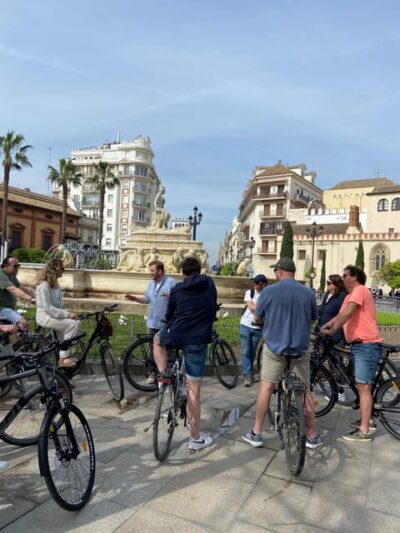
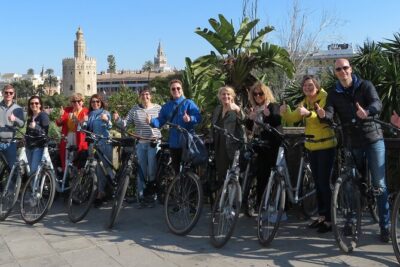
3-hour Guided Bike Tour along the Highlights of Seville
Read our review →Browse the lists this tour appears in