
REVIEW · ROME BIKE TOURS
Appian Way Aqueducts Bike Tour (Catacombs & Lunch Option)
Rome’s ancient roads lead far beyond the Colosseum. This e-bike tour carries you from central Rome through Porta San Sebastiano, the Appian Way, Caffarella Park, the catacombs, and the great aqueducts. I like the quiet countryside and the way electric assistance makes a long ride possible for more people. I also like the small group, with no more than 12 riders and guides such as Alex, Ava, Chris, Iman, and Paolo earning praise for safety and storytelling. The catch is simple: this is still a serious bike ride, with traffic, cobbles, dirt paths, and some rough going.
The four-hour route covers the main outdoor sights. The five-hour version adds the Catacombs of St. Callixtus, lunch in the morning or an afternoon aperitif, and more time among the aqueducts. At $78.60 per person, the tour offers a useful mix of transport, guiding, bike rental, helmet, child equipment, and several major Roman sites.
Key points before you book
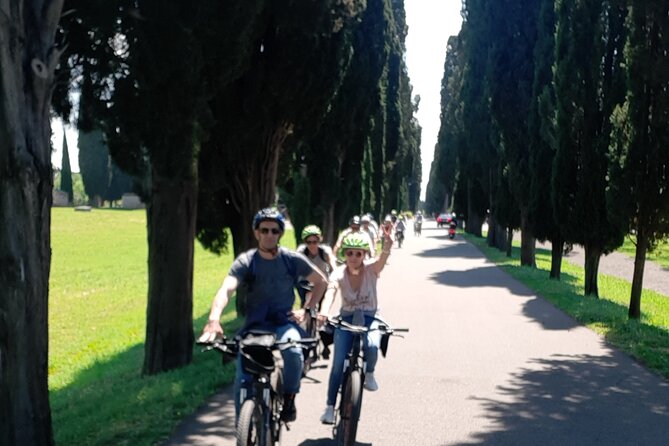
- Ancient roads under your wheels: Ride sections of the Via Appia Antica, one of Rome’s oldest and most important roads.
- Electric help, not electric magic: The e-bikes assist on hills and long stretches, but you must ride a bike well.
- The five-hour upgrade adds real value: It includes the catacombs plus lunch or an aperitif.
- Rome’s quieter side: Caffarella Park and the aqueduct parks offer fresh air, open space, animals, ruins, and far fewer city crowds.
- Expect rough surfaces: Cobblestones, deep gaps, dirt trails, and busy streets all form part of the route.
- Small-group guiding: The maximum group size is 12, giving the guide room to watch riders and explain the sites.
Starting near the Colosseum and passing through Rome’s walls
You meet at Roma STARBIKE on Via dei SS. Quattro, a short distance from the Colosseum. After a helmet fitting and a quick introduction to the e-bike, the group rides through city streets toward the Aurelian Walls.
This opening section matters because it is not just a transfer. You get a feel for Roman traffic before reaching the calmer parks. Guides are responsible for getting a group safely through the streets, and Alex, Ava, Chris, Iman, and Paolo are all praised for clear instructions and steady group control.
At Porta San Sebastiano, the ride reaches one of Rome’s most imposing ancient gateways. The gate formed part of the Aurelian Walls, built around AD 275, and marks the start of the historic Appian Way. Look for medieval graffiti left by pilgrims passing through over many centuries.
The stop lasts about 15 minutes. That is enough for an explanation and photographs, but not a long visit inside a museum. You are here to understand the setting before riding onward.
More Bike Tours with Lunch in Italy
- Rome: Appian Way E-Bike Tour Catacombs, Aqueducts & Picnic
★ 4.6 · 727 reviews - Rome: Appian Way Aqueducts Bike Tour (UPG Catacombs & Lunch)
★ 4.9 · 692 reviews - Rome in a Day Cannondale E-Bike Tour with Typical Italian Lunch
★ 5.0 · 265 reviews
Caffarella Park gives the ride breathing room
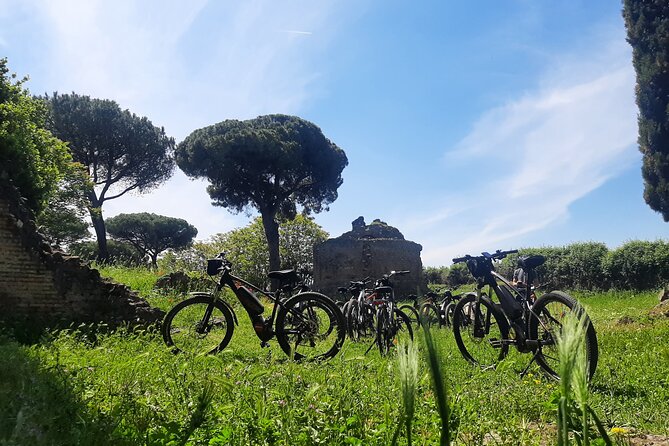
The route then enters Parco della Caffarella, one of Rome’s largest green areas. This is where the tour changes character. Traffic fades, trees and open fields replace buildings, and ancient remains appear along the paths.
I like this part because it shows Rome as more than a collection of famous monuments. The park contains traces of old buildings, rural scenes, groves, paths, and open space. One ride even included views of goats with bells, chickens, and turtles, a reminder that this corner of Rome can feel surprisingly pastoral.
The stop at Caffarella Park lasts about 50 minutes. You should not expect a gentle paved cycle path throughout. The route includes dirt and uneven sections, so pay attention to your speed and braking. The bikes have suspension, which helps, but a suspension fork does not turn a Roman cobblestone road into a billiard table.
The Appian Way is the heart of the experience
The Via Appia Antica was known by Roman writers as the Regina Viarum, or queen of roads. Construction began in the fourth century BC under Appius Claudius, first linking Rome with Capua and later extending toward Brindisi.
Riding here gives the history a physical scale that a museum display cannot. You see the broad route, the old paving stones, tombs, villas, and fields that once served one of the Roman world’s key connections. The road carried soldiers, officials, merchants, and pilgrims. Now it carries visitors on e-bikes, sometimes with a fair amount of bouncing.
This is also the portion that requires the most honest preparation. The stones can be large, uneven, and separated by deep gaps. At times you can ride on dirt beside the road, but not always. You may need to slow quickly for other cyclists, walkers, traffic, or a rough patch.
The e-bike is a major help on the longer stretches and short hills. It reduces the effort, especially in warm weather, but it does not remove the need for balance, steering, and careful braking. One rider described the route as mostly flat with a few short hills, while others found the terrain demanding. Both impressions can be true, depending on your cycling experience.
Egeria’s spring adds a quieter story
The Ninfeo di Egeria is a 20-minute stop tied to the story of the nymph Egeria and Numa Pompilius, Rome’s second king. According to the legend, Egeria’s grief after Numa’s death produced a spring through her tears.
The setting offers a pause from the larger Roman monuments. Your guide can connect the spring, the old religious traditions, and the surrounding park, making this more than a quick photo stop. It is also a useful breather before the route reaches larger tombs and archaeological sites.
More Bike Tours with Lunch in Rome:
- Rome: Appian Way Underground Catacombs Bike Tour with Lunch
★ 4.9 · 145 reviews - Rome: Full-Day Guided Tour by E-Bike with Lunch Included
★ 4.9 · 36 reviews - Roma: DELUXE Appian Way Bike Tour, Catacombs Visit & Lunch
★ 5.0 · 12 reviews - Versailles Full Day Bike Tour with Palace, Gardens, & Picnic
★ 5.0 · 2,217 reviews
Cecilia Metella shows how Roman tombs became medieval strongholds
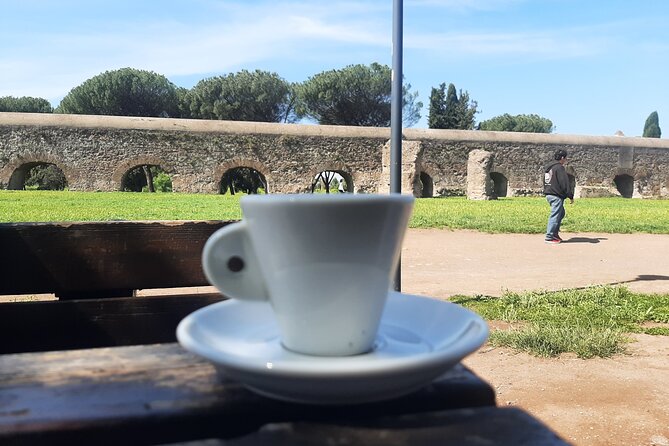
The Mausoleum of Cecilia Metella is one of the best-preserved tombs on the Appian Way. It dates from the first century BC and was later incorporated into the Castrum Caetani, a medieval fortified complex.
Here you can see the powerful round tomb, remains of the Caetani family’s medieval home, and the perimeter walls of San Nicola church. The site neatly shows how Rome reused its ancient structures. A pagan monument became part of a medieval power center, and the road kept changing around it.
The stop is about 20 minutes. It is brief, so listen closely when the guide sets the scene. This is one place where a good storyteller adds real value. Chris and Alex received repeated praise for giving context without rushing the group, while Iman was noted for combining historical detail with strong riding leadership.
The catacombs make the five-hour route more complete
The Catacombs of St. Callixtus are included only with the five-hour option. The guided visit lasts about 50 minutes and takes you underground into one of Rome’s major early Christian burial complexes.
The corridors extend for roughly 20 kilometers. More than 50 martyrs, 16 popes, and many other Christians were buried there. The site dates back to the second century BC, and its name comes from the deacon Callixtus I.
This is not a lighthearted attraction. It is a solemn, enclosed place, and the underground setting gives the history a different weight from the open-air ruins. If you want the fuller historical picture, I think the catacombs are worth the longer tour. If you dislike confined spaces or prefer a faster ride, the four-hour option may suit you better.
The catacombs also provide a clear break from cycling. You are not on the bike for every minute of the five-hour outing. That said, the extended tour still requires enough stamina for several hours of riding before and after the visit.
Aqueduct Park delivers the big Roman view
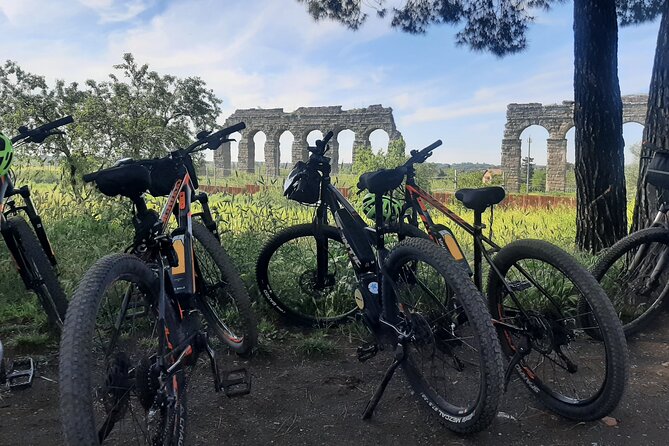
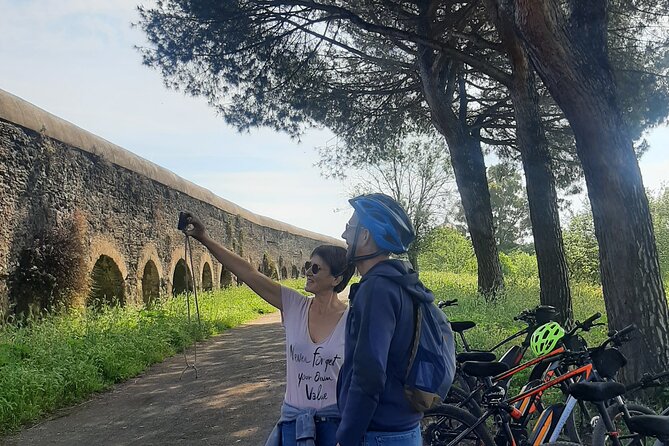
The five-hour route includes Parco degli Acquedotti, while the aqueduct area is a major highlight of the extended outing. Here, huge arches cross open fields, showing the scale of Roman water engineering.
The park is linked to the ancient water network and the Via Latina, described as Rome’s oldest road. Some aqueducts remain surprisingly well preserved, and some sections are still in operation. The contrast is striking: you pedal through a broad green area beneath structures built to carry water across the Roman world.
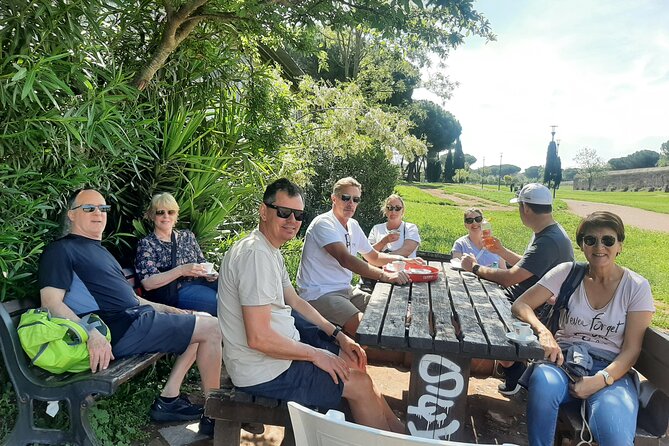
The morning version includes lunch at a restaurant near the Claudio aqueduct. The afternoon version replaces brunch with an aperitif. This is useful to know because the published description can make the meal sound like a simple boxed lunch, while the actual arrangement may be a sit-down meal with Italian specialties.
The lunch stop is not just about food. After rough roads and open-air riding, sitting down gives your legs a proper rest. Still, do not rely on the included meal as your only preparation. Bring water, and consider eating something before departure, especially if you choose the longer route.
Maxentius and Caracalla complete the Roman circuit
The Circus of Maxentius sits along the Appian Way and is one of the best surviving examples of a Roman circus. Its central spine, once decorated with an obelisk, remains visible. That obelisk later moved to Piazza Navona, where it became part of Bernini’s Fountain of the Four Rivers.
The stop lasts about 20 minutes. It is a good place to picture the scale of Roman public spectacles without the crowds found around the Colosseum. The guide’s explanation helps you understand the circus as part of a larger complex rather than an isolated ruin.
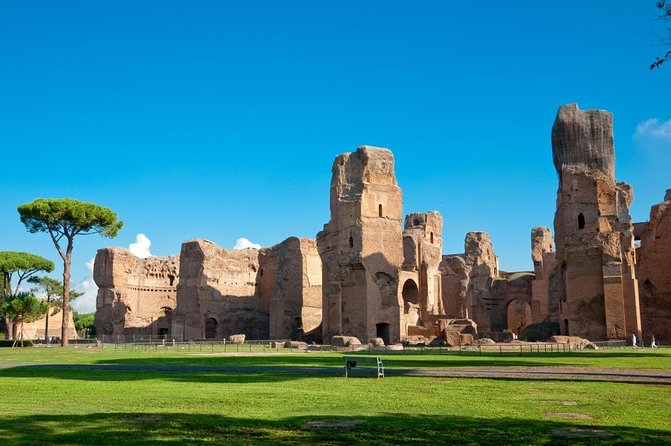
The final major stop is the Baths of Caracalla, visited for about 15 minutes. For roughly a century, these were the largest public baths in the Roman world. The structure is still substantial, and the old water supply explains the close link between baths and aqueducts.
The route also passes near the Aqua Marcia and the Antoninian aqueduct. By the end, you have seen roads, tombs, parks, water systems, burial places, walls, and baths. That variety is one reason the tour feels fuller than a simple countryside bike ride.
What the bike ride feels like in practice
The equipment includes a high-quality e-bike, helmet, mobile phone holder, handlebar holder, and a child seat for children up to 25 kilograms. Children aged six to ten can receive the reduced rate only if they are under 143 centimeters tall, because they use a trailer bike rather than riding alone.
You must know how to ride a bike well. This requirement is important. The route moves through busy city streets, dirt paths, short hills, and uneven Roman paving. Riders who have not cycled for many years may find the four-hour tour more sensible than adding the catacombs and meal.
The e-bikes are easy to operate, but several practical points matter:
- Get comfortable with the brakes before leaving the shop.
- Keep your speed low on cobblestones and tight dirt paths.
- Expect some seat discomfort after several hours.
- Wear clothes suitable for cycling and bring water.
- Do not confuse electric assistance with a motorbike. You still pedal, steer, and balance.
The maximum weight is 120 kilograms, or 265 pounds. The tour requires moderate physical fitness, and the route can be tiring even with electric assistance.
Guides make a noticeable difference
A good guide is especially important here because the outing combines road safety with history. Ava was praised for being patient, friendly, and attentive, including helping riders who needed minor first aid. Chris was praised for useful explanations and an unhurried pace. Alex received strong marks for traffic management, encouragement, and storytelling.
Iman was noted as an experienced cyclist and historian who gave clear instructions while checking on the group’s comfort. Paolo helped a rider after a fall and kept the group moving. These details matter because the first part of the ride can feel nervous, particularly if you are not used to cycling in Rome.
The group size, capped at 12, gives the guide a better chance to see what is happening. It does not remove every risk, and you remain responsible for riding carefully, but it is preferable to being one rider in a large bike procession.
Is $78.60 a fair price?
At $78.60, this is not the cheapest way to see the Appian Way. You are paying for an e-bike, helmet, child equipment when needed, a guide, and a route that links several sites difficult to combine on foot.
The price makes more sense on the five-hour version. The catacomb admission and guided visit are included, as are lunch in the morning version or an afternoon aperitif. You also get the aqueduct park and a longer route through Rome’s outer parks.
The four-hour tour is the better value for riders who want the Appian Way, parks, ruins, and aqueduct scenery without the extra meal and underground visit. The five-hour tour suits you if you want a fuller day and are comfortable spending several hours on a bike.
The experience has a 4.8 rating from 975 reviews, with 97 percent recommending it. Those figures support the idea that the tour delivers well for the right audience, but they do not cancel out the physical demands.
Should you book the Appian Way e-bike tour?
Book it if you want to get away from central Rome’s crowds and see ancient sites in open countryside. It is especially good for active families, couples, and history fans who like moving between places rather than standing in one archaeological zone.
Choose the five-hour version if the catacombs and aqueducts are priorities, and if lunch or an aperitif would make the day easier. Choose four hours if your cycling legs are uncertain, or if you prefer a shorter outing.
Skip it if you have poor bike control, dislike uneven ground, or want a gentle sightseeing tour. For everyone else, this is a memorable way to see a side of Rome that many visitors miss: ancient roads under your tires, aqueducts overhead, and enough green space to make the city feel pleasantly far away.
FAQ
Where does the Appian Way e-bike tour start?
The tour starts at Roma STARBIKE, Via dei SS. Quattro, 58, in central Rome, a short distance from the Colosseum.
Where does the tour end?
The activity ends back at the bike shop where you began.
How long does the tour last?
The tour lasts approximately four to five hours. The five-hour version includes the catacombs and lunch or an aperitif.
Is the catacomb visit included?
The guided visit to the Catacombs of St. Callixtus is included only in the five-hour tour.
Is lunch included?
Lunch in the morning version, or an afternoon aperitif, is included only with the five-hour option. It is not included in the four-hour tour.
Are the bikes included in the price?
Yes. A high-quality e-bike, helmet, mobile phone holder, and handlebar holder are included.
Can children join the tour?
Children can join. A child seat is available up to 25 kilograms. The reduced rate for children aged six to ten applies only to children under 143 centimeters tall, because they use a trailer bike rather than riding independently.
How fit do I need to be?
You need moderate physical fitness and must know how to ride a bike well. The route includes city traffic, dirt paths, cobblestones, short hills, and several hours of cycling.
What happens if bad weather cancels the tour?
If poor weather causes cancellation, you will be offered a different date or a full refund. You can also cancel for a full refund if you do so at least 24 hours before the start time.
More Lunch Experiences in Rome
- Electric Cycling Tour of Ubud with Free Hotel Transfer and Lunch
★ 5.0 · 1,397 reviews - Bangkok: Bike and Canal Boat Tour with Lunch
★ 4.9 · 1,350 reviews - Cat Ba: Lan Ha, HaLong bay full day- biking, kayaking, lunch
★ 4.8 · 1,166 reviews - Electric Bike Beach Adventure with Tequila Tasting and Lunch
★ 5.0 · 1,162 reviews
Newly added rides around Rome
- Rome: Guided eBike Evening Tour with italian Aperitif★ 5.0 · 16 reviews
- Rome: Villa Borghese, Villa Ada, and Coppedè E-Bike Tour★ 4.8 · 78 reviews
- Rome: Villa Borghese E-Bike Tour (Small Group or Private)★ 4.9 · 92 reviews
- Rome: Appian Way, Aqueducts, & Catacombs E-Bike Guided Tour★ 4.9 · 54 reviews
- Rome: Top 10 Highlights Guided Tour by Bike or E-Bike★ 4.4 · 15 reviews
- Sunrise in Rome: Small Group E-Bike Tour & Italian breakfast★ 4.9 · 177 reviews
- Rome: Panoramic Off-the-beaten-track Cannondale E-Bike tour★ 5.0 · 71 reviews
- Rome: Piazza Venezia E-Bike Rental★ 4.4 · 10 reviews
Rome Bike Tours, compared.

Rome EBike Tour: Appian Way, Catacombs & Roman Aqueducts
Read our review →
Top Highlights & Hidden Gems Tour by Cannondale E-Bike
Read our review →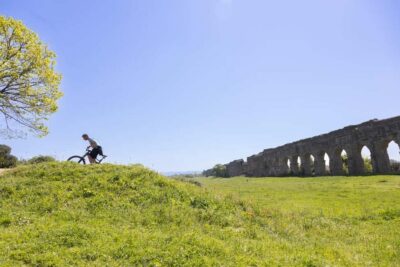
Appian Way & Aqueducts E-Bike Tour (Catacombs & Food)
Read our review →
Appian Way, Catacombs, & Roman Aqueducts E-bike Tour
Read our review →
Rome City Small Group Bike Tour with quality Cannondale EBike
Read our review →
Rome by Night – Ebike Small Group Tour – Food and Wine (Option)
Read our review →
Rome by Night: E-bike Small Group Tour -Food & Wine (Option)
Read our review →
Browse the lists this tour appears in