REVIEW · TOURS
Bucharest: Communist Bike Tour
Bucharest’s past is easier to read on two wheels. This four-hour ride links the Old City, Coral Temple, the first Romanian parliament, Casa Radio, and Revolution Square into one clear story. I like that the bike lets you cover far more ground than a walking tour, and I like the way the route connects buildings to the political events that shaped them. The main catch is city traffic, so you should feel comfortable riding a bicycle in busy streets.
The English-speaking guides add real value. Horia, Alex, and Chorea are praised for explaining political, economic, religious, and social themes rather than simply pointing at buildings. At $53 per person, the tour is not the cheapest way to see Bucharest, but the bike, helmet, lock, and four hours of guided context make it a strong choice for a first look at the city.
Key points before you book
- Four hours on a bicycle: You cover a broad section of central Bucharest, including places that would take much longer to connect on foot.
- A history lesson with wheels: The route follows Romania from the early communist movement through Soviet occupation and the 1989 Revolution.
- Important stops, not just photo stops: Coral Temple, the first Romanian parliament, the Stalin-era elite neighborhood, Casa Radio, and Revolution Square each serve a clear purpose in the story.
- Strong English-language guiding: Horia, Alex, and Chorea are singled out for clear explanations and friendly help.
- Bring practical cycling gear: Comfortable shoes matter, and the tour is not suited to people with limited mobility.
- Flexible booking: You can cancel up to 24 hours before the tour for a full refund and reserve without paying immediately.
Why a communist history tour fits Bucharest
Bucharest can feel like several cities placed on top of one another. Ottoman-era traces, nineteenth-century architecture, Orthodox churches, grand government buildings, Soviet influence, and the apartment districts of the communist period all appear within a relatively compact central area.
That layering can be hard to understand from a normal sightseeing walk. The Communist Bike Tour gives you a simple timeline. You begin with the damage done to the historic center, move through the rise of the communist movement, continue into the Soviet-controlled years, and finish at the 1989 Revolution.
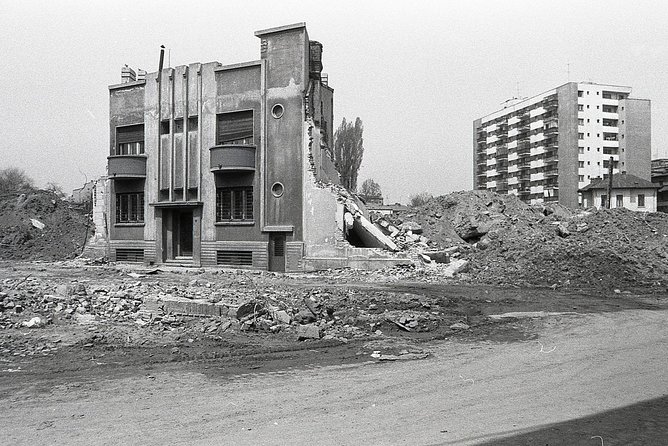
I like this approach because the tour does not treat communism as a collection of gray buildings. It uses specific places to explain power, propaganda, occupation, urban planning, and the destruction or reshaping of older Bucharest.
The bike also changes the scale of the experience. A four-hour walk covering this much ground would be tiring, while a bus ride could leave you disconnected from the streets. On a bicycle, you move between districts and see how the city changes along the way. You also need to pay attention to traffic, which makes this more active than a standard sightseeing tour.
A few more rides around the world worth a look
- Lion City Bike Tour of Singapore
★ 5.0 · 6,211 reviews - Big Bike tour Amsterdam – See all in 3 unforgettable hours
★ 4.7 · 4,929 reviews - 3-Hour Porto Highlights on a Electric Bike Guided Tour
★ 5.0 · 4,392 reviews
Starting in the Old City
The tour begins in Bucharest’s old city center, at the meeting point across from Hanu’ Berarilor, Casa Oprea Soare. This is a useful starting place because the Old City is one of the areas most affected by the communist regime’s urban plans.
Your guide begins by explaining how the historic center was damaged and reshaped during the communist era. That introduction gives you a better way to look at the streets around you. Instead of seeing only restaurants, old facades, and busy lanes, you begin asking what was removed, what survived, and why this part of Bucharest feels uneven.
The opening is also practical. You receive a bicycle, helmet, and lock, then set out with an English-speaking guide. Food and drinks are not included, so eat beforehand or plan to buy something separately. The tour lasts four hours, and a comfortable pair of shoes will make the ride easier.
The route description does not specify the group size or exact bicycle model. That means you should not expect a customized private cycling setup unless your booking says otherwise. Still, the included equipment keeps the $53 price from feeling like a simple guiding fee.
Coral Temple and the early communist movement
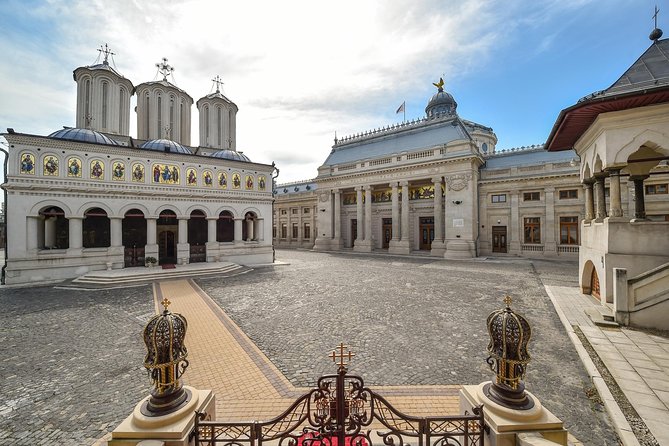
The next major stop is Coral Temple, one of the most distinctive places on the route. It is included because members of Bucharest’s Jewish community were among the early initiators of the communist movement in the 1920s.
This stop adds needed detail to a subject that is often presented too simply. Romania’s communist story did not begin only after the Second World War, and it was not shaped by one group acting alone. At Coral Temple, the guide can place the early movement within the city’s political and social setting.
I find this kind of stop more useful than a long list of dates. You have a visible place connected to a complex political beginning, and the guide can explain how ideas moved through Bucharest before the country came under Soviet control.
The temple also gives the tour some variety. You are not spending four hours looking only at former state buildings. Religious, civic, and political sites all appear in the route, helping you see how different communities and institutions fit into the story of twentieth-century Bucharest.
The first Romanian parliament and the communist bomb attack
The tour then reaches the site connected to a communist bomb attack against Romania’s democratic government and the country’s first parliament. This is one of the route’s most important historical stops because it shows how the movement tried to challenge the existing political order before it took control of the state.
Your guide’s explanation matters here. Without context, a site connected to an old government building or street can seem ordinary. With the story attached, it becomes evidence of the tensions that existed before the postwar occupation.
This is also where the tour’s political focus becomes clear. You are not simply seeing architecture from the communist period. You are tracing the steps from political agitation to violence, occupation, and one-party rule.
The cycling format helps connect this stop to the wider center. You do not treat each location as an isolated monument. You ride from one part of Bucharest to the next, which makes the city’s political geography easier to grasp.
Same handlebars, a completely different route:
- Small Group Guided Bike Tour of Amsterdam’s Hidden Gems
★ 5.0 · 3,936 reviews - 3-hour Complete Prague Bike Tour
★ 5.0 · 3,674 reviews - Bangkok: Temples, Canals & Local Life Bike Tour
★ 4.9 · 3,511 reviews - Lisbon: Hills, Alfama, and Mouraria Tour by Electric Bike
★ 4.8 · 3,438 reviews
The Stalin-era neighborhood for communist elites
After covering the early movement, the route advances to the years after the Second World War, when Romania was occupied by the Soviet Union for 12 years. The tour passes through a neighborhood where Russian army generals who controlled the country lived.
This is a particularly useful stop because it makes foreign influence visible at street level. Soviet control was not just an idea discussed in textbooks. It affected who held power, where senior officials lived, and how Bucharest was organized.
The neighborhood was built for communist elites during the Stalin era, so it also raises questions about class and privilege. Communist governments often promised equality while creating their own layers of power. Seeing the kind of district reserved for senior figures helps you understand that contradiction.
I would pay close attention to the guide’s descriptions here. This is the sort of place where the political setting matters more than a single famous facade. The value comes from learning who lived there, why the area was created, and how it fits into Romania’s transition from monarchy and democratic government to Soviet-backed rule.
Casa Radio and the unfinished city
One of the route’s most striking sights is Casa Radio, described as the largest unfinished communist urban project in Bucharest. The building is a reminder that ambitious state projects could outgrow their budgets, plans, or political moment.
The scale of communist urban planning is easier to understand when you see an unfinished project rather than only a completed government building. Casa Radio represents the desire to reshape the capital on a huge scale, along with the practical and human costs of that approach.
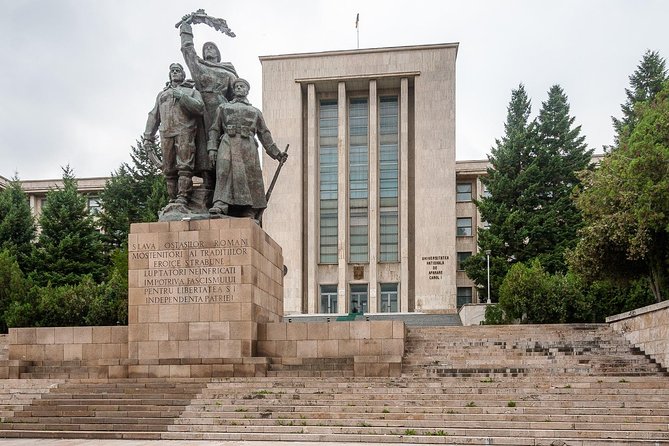
The tour also connects this final stage with the National History Museum and other buildings that were completely reshaped by the communist regime. This part of the route is less about one isolated structure and more about how the government changed central Bucharest.
You may find the unfinished site visually rough rather than traditionally beautiful. That is part of its value. It shows the gap between official ambition and the city that actually remained. Your guide’s explanation turns an incomplete building into a useful lesson about planning, power, and failure.
Revolution Square and Ceaușescu’s final speech
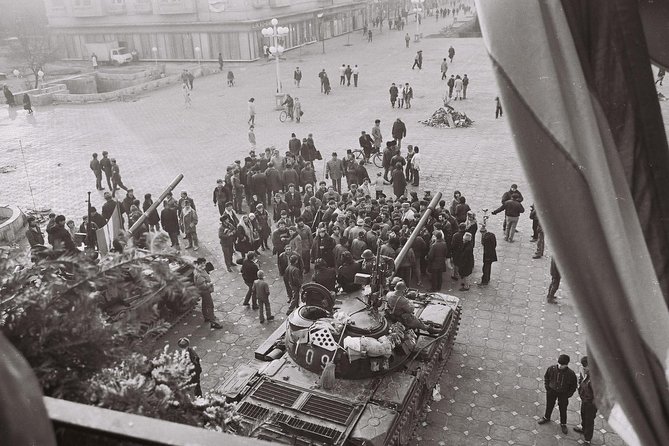
The final stop is in front of the former Communist Central Committee, now associated with the end of the regime. This is where Nicolae Ceaușescu delivered his last speech, and where the December 1989 Revolution began.
The location carries strong political weight. Ceaușescu’s final public appearance there marked the collapse of a system that had ruled Romania for decades. The revolution began in the same setting, making this an effective place to close the tour.
Revolution Square is not just a final photo stop. It brings together the themes introduced earlier: political power, public control, Soviet influence, state propaganda, and resistance. By arriving here after seeing the earlier sites, you have a clearer sense of what changed in 1989 and why the moment mattered.
I also like ending here because it gives you a useful reference point for the rest of your Bucharest visit. You can return to Revolution Square on your own and look more closely at the surrounding buildings with the tour’s timeline in mind.
What the guides add to the ride
The strongest feature of this tour is the guiding. Alex is praised for giving historical, economic, and political context, while Horia is described as friendly, helpful, and well prepared. Another ride with Chorea included a break across Bucharest and was praised for clear explanations.
The names matter because they suggest that the experience depends heavily on the person leading your group. The route has plenty of material, but a guide needs to explain connections without turning the ride into a lecture. The strongest comments describe guides who add subjects such as the city’s founding, the Orthodox Church, and life in Bucharest today.
That wider context is useful. You are not limited to one political period. The communist years become part of a larger story about Bucharest and Romania, which makes the tour helpful even if you already know some basic facts.
A well-run four-hour ride should leave you with more than a list of dates. You should understand why the Old City was damaged, how Soviet influence shaped the capital, and why Revolution Square became the setting for the regime’s final days.
Cycling conditions and who should choose it
The biggest practical question is simple: are you comfortable cycling in dense city traffic? One detailed assessment of the experience says the extended range is worth the effort for people who feel at ease riding in busy streets.
That is fair advice. A bicycle lets you see more of Bucharest, but it also asks you to stay alert. People with limited mobility should choose another format, since the tour is specifically not recommended for them.
Wear comfortable shoes. Helmets, bikes, and locks are included, so you do not need to bring that equipment. The tour is in English, and the guide leads the route for the full four-hour period.
This tour suits you best if you:
- Want a clear introduction to Bucharest’s twentieth-century history
- Enjoy active sightseeing rather than sitting on a bus
- Feel confident cycling through city streets
- Prefer a guide who explains politics and society, not just architecture
- Are visiting Bucharest early in your stay and want orientation for later exploring
It is less suitable if you dislike cycling in traffic, need frequent mobility support, or want a slow walking tour with long indoor visits.
Is $53 a fair price?
At $53 per person, the tour sits in the middle range for a four-hour guided city activity. The price includes the guide, bicycle, helmet, and lock, so you are paying for both transport around the city and interpretation of the sites.
The value is strongest if you are visiting Bucharest for a short stay. You can cover a large area in one morning or afternoon and gain a framework for understanding the city. A cheaper self-guided ride would save money, but you would lose the explanations linking the first parliament, Coral Temple, the elite neighborhood, Casa Radio, and Revolution Square.
The price is less attractive if you already know Bucharest well or mainly want to admire architecture without political discussion. This is a history-focused ride, and its success depends on your interest in the subject.
You can reserve now and pay later, which helps if your schedule is still changing. Free cancellation is available up to 24 hours before the start for a full refund. Check the available start times when booking, since the exact departure schedule is not fixed in the information provided.
Final verdict: should you book?
I would choose this tour if you want to understand how communism changed Bucharest rather than simply see a few famous buildings. The route is broad, the timeline is clear, and the bicycle makes it possible to connect distant parts of central Bucharest in four hours.
Book it early in your stay if you are comfortable cycling in traffic. The explanations from guides such as Horia and Alex can give you useful context for the rest of your visit. Skip it if cycling is difficult for you or if you prefer quiet streets, indoor museum visits, and a slower pace.
For the right person, the best reason to book is the combination of movement and meaning. You see more of Bucharest, but you also learn why the city looks the way it does today.
FAQ
How much does the Bucharest Communist Bike Tour cost?
The tour costs $53 per person.
How long does the bike tour last?
The tour lasts four hours.
What language is the tour conducted in?
The live guided tour is conducted in English.
What is included in the ticket price?
The ticket includes a live guide, bicycle, helmet, and bike lock.
Where is the meeting point?
Meet across from Hanu’ Berarilor, Casa Oprea Soare, in Bucharest’s Old City area.
Which major places does the tour visit?
The route includes Bucharest’s Old City, Coral Temple, the site of the first Romanian parliament, a Stalin-era neighborhood for communist elites, Casa Radio, and Revolution Square near the former Communist Central Committee.
Are food and drinks included?
No. Food and beverages are not included in the ticket price.
Can I cancel the booking?
Yes. You can cancel up to 24 hours in advance for a full refund.
Is the tour suitable for people with limited mobility?
No. The tour is not recommended for people with mobility impairments. Comfortable shoes are recommended for the ride.
Newly added rides around the world
- Half-Day Lanna Countryside Cycling Tour in Chiang Mai★ 4.5 · 24 reviews
- Full-day E-bike Countryside and Nam Phrae (flat-hilly, GUIDED)★ 5.0 · 11 reviews
- Full-Day Hike and Bike Tour from Chiang Mai★ 5.0 · 14 reviews
- Experience The Real Chiang Mai by Bike★ 4.5 · 36 reviews
- FIELDS OF GOLD Mountain Biking Tour Chiang Mai★ 5.0 · 18 reviews
- Half-Day Colors of Chiang Mai Biking Tour★ 5.0 · 105 reviews
- Chiang Mai City Culture Half-Day Cycling Tour★ 4.5 · 15 reviews
- Chiang Mai Night Bike Tour★ 5.0 · 69 reviews
Tours, compared.
Big Bike tour Amsterdam – See all in 3 unforgettable hours
Read our review →
3-Hour Porto Highlights on a Electric Bike Guided Tour
Read our review →
Small Group Guided Bike Tour of Amsterdam’s Hidden Gems
Read our review →
Hills, Alfama, and Mouraria Tour by Electric Bike
Read our review →