
REVIEW · CAMBODIA BIKE TOURS
Customs and Culture Half Day Walk and Bike Tour in Battambang
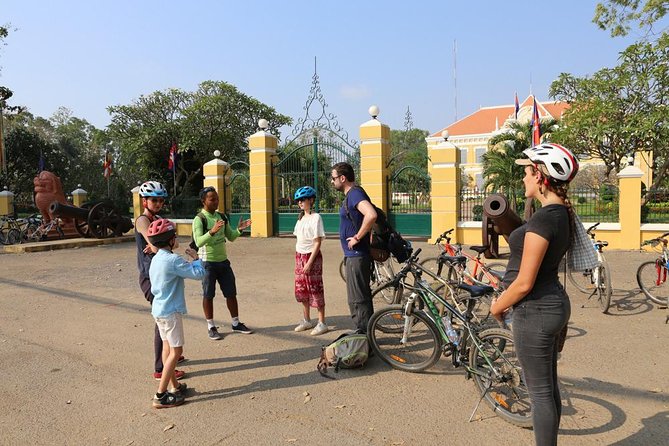
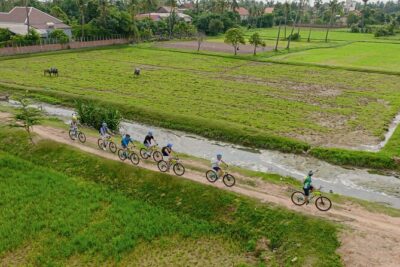
See Battambang beyond its streets. This half-day ride takes you through rice fields and a Muslim fishing village, where you can watch net weaving, fish drying, and other everyday work. I especially like the small-group setting and the chance to meet families in their homes rather than simply looking at local life from a road. The visit to a Buddhist temple, with time to speak with a newly trained monk, adds a useful second point of view.
The tour also makes cycling easy with good imported mountain bikes, helmets, water, and a local English-speaking guide. Guides such as Pich, Pek, Phalla, Peak, and Savith have been praised for clear explanations, patience, and a relaxed pace. The main consideration is the early 7:30 am start and the fact that hotel drop-off after the tour is not included.
Key points to know before booking
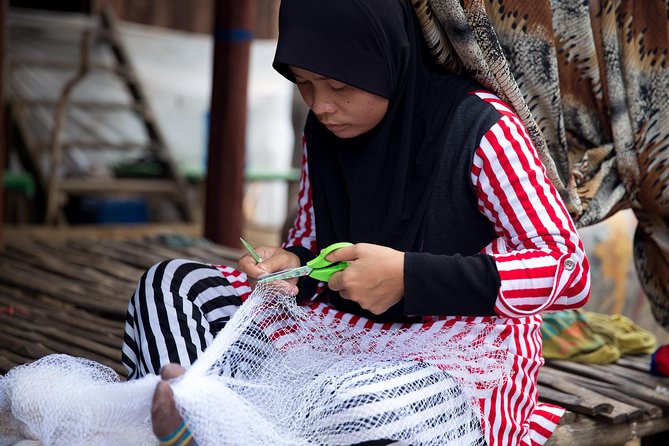
- Meet fishing families at work: See net weaving, fishing, fish drying, and food preparation in a mostly Muslim village.
- Compare two faith traditions: Discuss village customs and Islam, then visit a Buddhist temple and speak with a young monk.
- Ride on quality bicycles: Giant, Trek, and GT mountain bikes are provided, along with helmets and water.
- Keep the pace comfortable: The route is designed for a relaxed half-day ride, with tuk-tuk transport at the start and possible route support along the way.
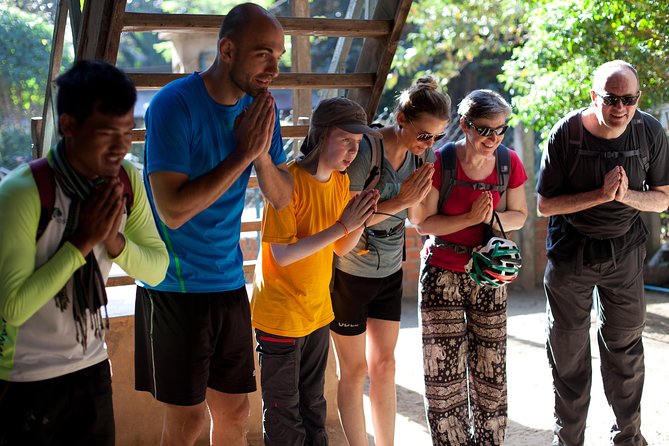
- Learn a little Khmer: You receive a short lesson in useful local words so you can greet people in their language.
- Support the families you meet: Part of the tour fee goes to the local households visited during the route.
Why this ride gives you a better look at Battambang
Battambang is a good place to slow down. Its appeal is not only the city center or the familiar sightseeing stops. The countryside begins close to town, and a bicycle lets you notice the small details: a house set beside a field, fish laid out to dry, or a family working with materials that are part of daily life.
This tour is built around those encounters. Rather than moving from one major attraction to another, you spend time learning how people earn a living and how religion shapes family and community life. That makes it a useful choice if you want more than photographs of rural Cambodia.
The route also brings together two parts of Cambodian culture that are easy to treat as separate subjects. In the Muslim fishing village, you learn about food, work, and local customs. At the Buddhist temple, you can ask questions about Theravada Buddhism and speak with a monk who has recently completed his training.
I like that the tour does not present culture as a performance. The focus is on ordinary tasks and conversation. Still, you should come prepared for a real community visit, not a polished attraction with a fixed show. The experience can feel personal, and your curiosity and good manners matter.
More Walking Tours in Cambodia:
- 4h Complete Lyon Experience: E-Bike, Food Tasting & Old Town Walk
★ 5.0 · 228 reviews - Chicago: Classic Food & Walking Tour with Free Bike or Kayak
★ 4.9 · 145 reviews - Lisbon: Private Boat Trip, Guided Walking Tour, Bike & Tram
★ 4.8 · 116 reviews
A 7:30 am start and an easy ride into the countryside
The tour begins at 7:30 am, with tuk-tuk pickup from your hotel. That early start is practical in Cambodia. Morning riding is generally more pleasant than the hotter part of the day, and the schedule leaves enough time for several stops before returning to town.
You are given an imported mountain bike from brands such as Giant, Trek, or GT, plus a helmet. The equipment is a real benefit. A comfortable bike makes a difference when you are spending several hours on rural roads, and the tour is not asking you to manage the ride on a basic city bicycle.
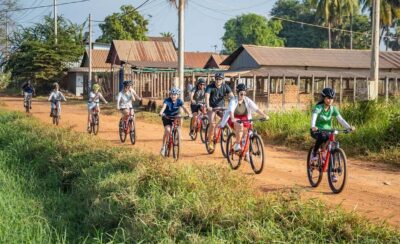
The group is limited to a maximum of eight people. That is small enough for questions and conversation, especially during home visits or at the temple. It also gives the guide a better chance to keep the group together and adjust the pace.
The route is described as lasting about three hours, with the full experience usually taking three to four hours. This is long enough to feel like a proper outing but short enough to fit around another Battambang activity.
There are no baskets on the bikes, so carry your phone, camera, sunscreen, and other small items in a backpack. Water and a snack are provided, but a small daypack is still useful. Wear clothing that covers your shoulders, both out of respect for rural customs and because you will visit a Buddhist temple.
Meeting the Muslim fishing village
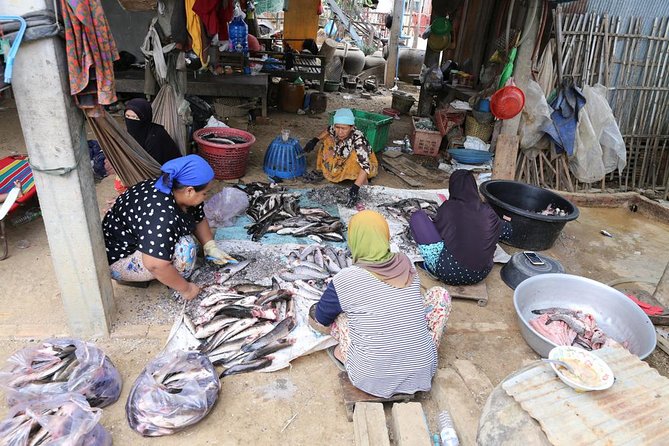
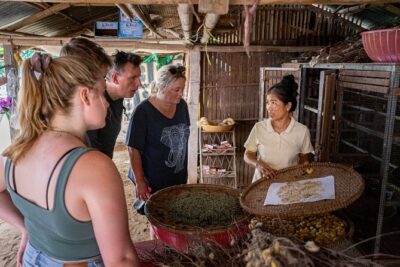
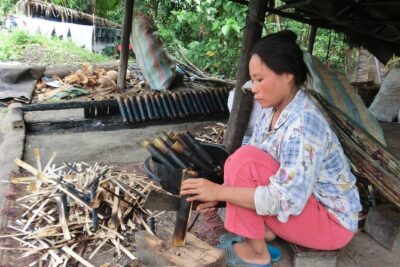
The fishing village is the heart of the tour. Here you can see several jobs connected to fish and food, including net weaving and fish drying. These activities help explain how one product can shape a whole local economy, from the person making the tools to the families preparing food for sale or home use.
The fish-drying stop is especially useful for understanding Cambodian cooking. Dried fish is important in Cambodian cuisine, and seeing how it is handled gives you more context than simply tasting it in a restaurant. You may also encounter local snacks, including fermented fish, which has been part of the food sampling on this route.
A key strength is the chance to meet people in their working environment. You are not just told that fishing matters. You can see the tools, the work, and the family roles connected with it. The tour description also points to different roles within the village, so your guide can explain how these tasks fit together.
This is a mostly Muslim community, which gives the day a wider cultural range than a tour focused only on Buddhist Cambodia. Your guide helps compare village customs with the Theravada Buddhist practices found throughout much of the country.
The visit may not suit you if you want a fast-moving sightseeing schedule. Some of the value comes from stopping, listening, and asking questions through the guide. The experience is strongest when you give each household time rather than treating the village as a quick photo stop.
Rice fields, local food, and the work behind the scenery
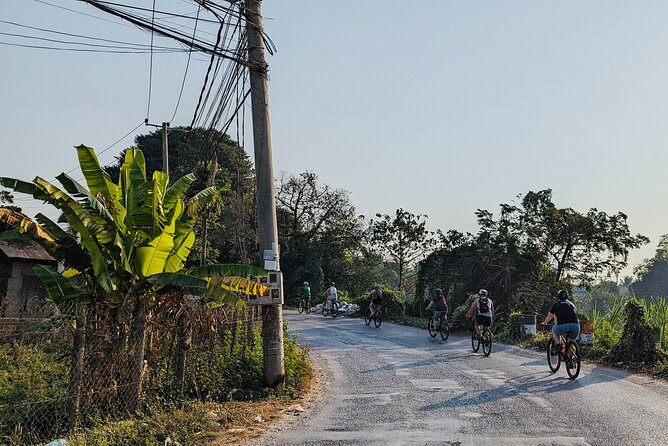
From the village, the ride continues through rice fields. The views are pleasant, but the important part is the explanation of rice cultivation. Rice is central to Cambodian life, and the fields are not just pretty scenery. They show the work and seasonal activity that support families across the country.
A bicycle is a good way to cover this stretch. You move slowly enough to see the countryside, but you cover more ground than you would on foot. The guide can pause to explain what you are seeing, and the group can travel without the enclosed feeling of a vehicle.
Along the route, local food is part of the learning. Experiences described during this tour have included sticky rice, fermented fish, rice wine, rice paper, fruit, and sticky rice cooked in bamboo. The exact stops can vary, so you should think of these as examples of the kinds of household skills and foods you may encounter, rather than a guaranteed tasting menu.
The home visits are one reason the $37 price is easier to justify. You are paying for a guide, bicycle, safety equipment, tuk-tuk pickup, water, and snacks, but you are also helping compensate the families who receive the group. That direct support gives the tour a practical social purpose.
A local café provides a break during the route. It is described as a Muslim café, which fits naturally with the village portion of the tour. This is a simple stop, not a grand dining venue, but it gives you time to rest, cool down, and continue the conversation.
A few more rides around Cambodia worth a look
- Siem Reap Countryside Bike Tour / E-Bike or Tuk Tuk
★ 5.0 · 935 reviews - Angkor Sunrise Bike Tour / E-Bike or Tuk Tuk
★ 5.0 · 615 reviews - Phnom Penh Silk Island Bike Tour/ E-Bike or Tuk Tuk
★ 5.0 · 495 reviews - Siem Reap: Bike the Angkor Temples – Full-Day 30km Tour
★ 5.0 · 463 reviews
A Buddhist temple and a conversation with a monk
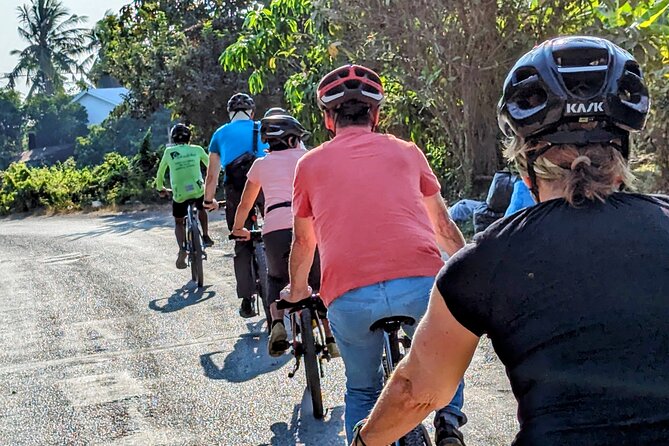
The route then shifts from village work and food to religion. At a Buddhist temple, you can learn about Cambodian Buddhist customs and speak with a young monk who has recently completed his training.
This stop works because it gives you a chance to ask questions rather than only admire the building. You can use the visit to understand how Buddhism fits into daily life, what monks do, and how religious practice differs from the customs you have just seen in the Muslim village.
Your guide acts as translator and cultural interpreter. That is important because the value of the conversation depends on being able to ask clear questions and understand the answers. Guides such as Pich and Phalla have been praised for their English and for explaining Cambodian history and family life in a way that is easy to follow.
Remember the dress rule. Cover your shoulders, and choose respectful clothing for the temple and rural homes. The tour is informal, but it is still a visit to active religious and family spaces.
The temple stop may be less satisfying if you expect an extended temple tour or a major monument. This is primarily a cultural conversation, not a long architectural visit. If that sounds like the kind of temple experience you want, it adds balance to the morning.
Guides who shape the experience
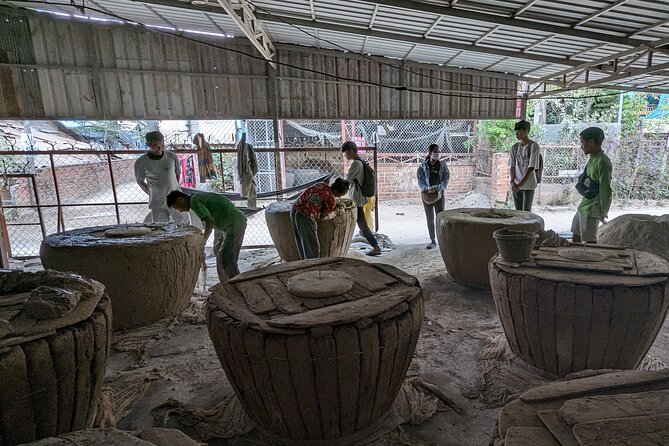
The guide is central to this tour. The roads and village stops are worthwhile, but the explanations turn them into something more than a bike ride.
Several guide names have received specific praise. Pich was described as clear in English and helpful with history and local culture. Phalla was valued for personal stories about growing up in Cambodia, along with careful attention to safety and a comfortable pace. Pek was praised for being kind, patient, and generous with time.
Peak has also led the route, with a reputation for giving people space to enjoy the ride. Savith has worked as both guide and translator, helping with questions at family visits. These details matter because you are likely to spend much of the morning asking about everyday subjects that need context: food, work, religion, family traditions, and rural life.
The guides are local young people, and the tour gives them work and training. That helps explain the friendly, personal approach described throughout the experience. You are not getting a scripted lecture from a distant operator. You are spending the morning with someone who can connect the route to life in Battambang.
The short Khmer lesson is another nice touch. You learn basic words for greeting local people, which can make the introductions warmer and more respectful. It will not turn you into a speaker, but even a few words can change the tone of a brief encounter.
What the price includes, and what it does not
At $37 per person, this is not the cheapest way to ride around Battambang, but it offers more than bicycle rental. The price covers tuk-tuk pickup, a first-aid-certified English-speaking guide, a quality mountain bike, helmet, water, a snack, the Khmer lesson, and compensation for the families visited.
The small group also matters. With no more than eight people, the cost includes personal attention that is difficult to get on a large bus tour. You can ask questions, hear the guide, and spend more time at household stops.
The tour also has a strong local value. Your money is not limited to transport and equipment. It helps pay the families who open their workplaces and homes to the group, while also supporting local guides.
The main omission is hotel drop-off after the tour. You receive pickup at the beginning, but you need to arrange your own way back afterward. Since the tour ends in or near town, this may be easy, but it is still worth remembering when planning your morning.
Free cancellation is available if you cancel at least 24 hours before the 7:30 am start. Changes or cancellations made later are not accepted for a refund.
Who should book this Battambang tour?
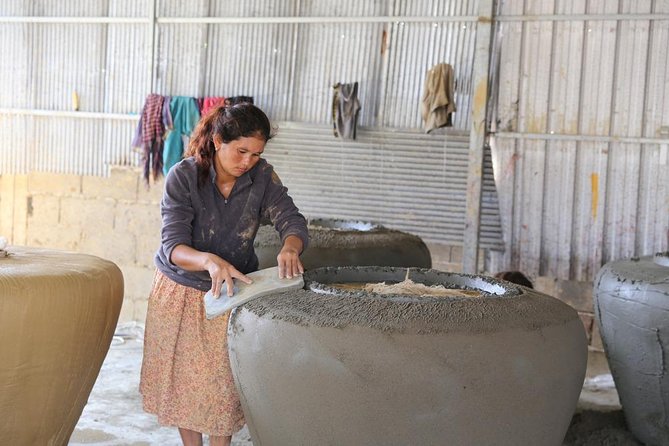
I would choose this tour if you want to understand how people around Battambang live, work, eat, and practice religion. It is a particularly good fit for visitors who prefer conversation and small encounters over a checklist of famous sights.
It also suits first-time cyclists who want a guided route rather than an independent ride. The quality bikes, helmets, water, tuk-tuk support, and first-aid-certified guide reduce the usual worries about getting around rural roads.
Food-curious visitors will have plenty to discuss and possibly sample, from sticky rice and dried fish to fermented fish and rice wine. You should be open-minded, since local specialties may be unfamiliar and the point is to understand them in their setting.
Families and couples can also find value here, provided everyone is comfortable with cycling and respectful home visits. Most people can participate, but the tour is still a physical outing, and you should be ready to ride for several hours.
You may want a different activity if your priority is a major temple, a long city tour, or a luxury food experience. This route is about people and working life. Its best moments are simple: a family explaining a task, a guide translating a question, or a short conversation at a temple.
Should you book it?
Yes, if you want a thoughtful and active introduction to Battambang. The combination of a Muslim fishing village, rice fields, local food, a Buddhist temple, and a small group gives you a broad view of the area in one morning.
Book it with the right expectations. You are not signing up for a polished attraction or a nonstop list of photo stops. You are signing up to cycle at a manageable pace, listen carefully, try local flavors, and meet people whose daily work is the subject of the tour.
For $37, the equipment, guide, pickup, refreshments, and direct support for local families make the value solid. Bring sunscreen, a backpack, modest clothing, and curiosity. Arrange your own return from the end point, and this becomes one of the more useful ways to spend a morning in Battambang.
FAQ
What time does the tour start?
The tour starts at 7:30 am.
How long does the experience last?
The ride and cultural visits take about three hours, with the full experience lasting approximately three to four hours.
Is hotel pickup available?
Yes. Tuk-tuk pickup from your hotel is included.
Is hotel drop-off included afterward?
No. Drop-off at your hotel after the tour is not included.
What type of bicycle is provided?
You receive a high-quality imported mountain bike from brands such as Giant, Trek, or GT. A helmet is also provided.
How large is the group?
The tour has a maximum of eight participants.
What should I wear and bring?
Wear clothing that covers your shoulders out of respect for rural culture and the Buddhist temple. Sunscreen is recommended, and you should bring a backpack for personal items because the bicycles do not have baskets. Water and a snack are provided.
Newly added rides around Cambodia
- Phnom Penh: Cycling Adventure on Islands of the Mekong★ 5.0 · 225 reviews
- Explore local livelihood & countryside (Half-Day Cycling Tour)★ 5.0 · 19 reviews
- Local Livelihood Full Day Bike Tour in Battambang★ 5.0 · 37 reviews
- Cultural Cycling Tour – half day (8:00-11:30)★ 5.0 · 26 reviews
- Siem Reap: Bike the Angkor Temples – Full-Day 30km Tour★ 4.9 · 159 reviews
- Kampong Phluk: Floating Village Sunset Bike Tour or E-Bike★ 5.0 · 11 reviews
- Siem Reap: Bike Rental★ 4.7 · 12 reviews
- Siem Reap: Countryside Cycle and Local Village Life Tour★ 4.7 · 32 reviews
Cambodia Bike Tours, compared.
Siem Reap Countryside Bike Tour / E-Bike or Tuk Tuk
Read our review →
Phnom Penh Silk Island Bike Tour/ E-Bike or Tuk Tuk
Read our review →
Angkor Wat Sunrise Bike Tour & Jungle Breakfast
Read our review →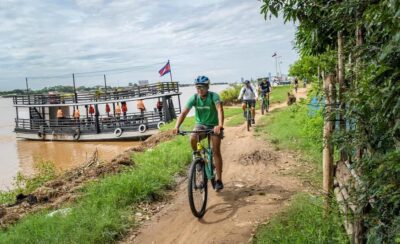
Local Livelihood Half Day Bike Tour in Battambang
Read our review →Browse the lists this tour appears in