
REVIEW · ROTTERDAM BIKE TOURS
Discover Rotterdam: Classic Highlights Bike Tour by a Local
Rotterdam rewards a closer look. This three-hour bike tour links the city’s bold architecture, maritime past, and postwar rebuilding in one easy-moving circuit. I especially like the chance to see major sights without spending the day on foot, and the guide-led stories give meaning to places that can otherwise feel like disconnected photo stops. The main consideration is simple: you need to be comfortable riding a bike in an urban setting.
I also like the tour’s friendly pace. There are regular stops for photos and explanations, plus a 20-minute break at Heilige Boontjes for coffee or a snack. Guides such as Elmer and Yoreh have earned praise for being warm, flexible, and good at adjusting the ride to the group. You should arrive 15 minutes early, since the meeting point is a small wooden house with a colorful roof and the bikes need to be ready.
Key points to know
- Rotterdam’s story comes into focus: You connect the wartime destruction at De Brandgrens with the city’s striking modern rebuild.
- The route covers the major sights: Hotel New York, Erasmus Bridge, Cube Houses, Markthal, De Hef, and more all fit into three hours.
- Local guides keep it personal: Elmer and Yoreh are praised for clear explanations, good humor, photos, and a relaxed manner.
- The coffee break matters: Twenty minutes at Heilige Boontjes gives your legs a rest and time for a drink or bite.
- The price reflects the package: At $71 per person, you pay for a bike, a live guide, and a broad city orientation rather than simple bike hire.
Why a bicycle is the right way to meet Rotterdam
Rotterdam is not a city you understand from one square. Its identity is spread between the river, old harbor basins, rebuilt streets, grand civic buildings, and daring new architecture. A bicycle helps you connect those pieces quickly.
I like this route because it does not treat Rotterdam as only a collection of modern buildings. You see glass and steel, but you also hear about the city’s wartime destruction and the choices made during reconstruction. That contrast is the heart of Rotterdam: old port traditions beside ambitious urban design.
The riding itself appears designed for sightseeing rather than speed. The stops are frequent, and the route includes time to listen, take photos, and ask questions. That is useful if you are visiting for only a day and want a clear sense of the city before deciding where to return on foot.
Still, this is a bike tour, not a sightseeing bus. You must be able to ride a bicycle. Wear comfortable clothing and shoes, check the forecast, and bring water. Helmets are supplied but optional, so you can choose what feels right for you.
More City Bike Tours in the Netherlands
- Amsterdam: Hidden Gems & Highlights Guided Bike Tour
★ 4.8 · 1,404 reviews - Amsterdam Highlights Bike or E-Bike Tour
★ 5.0 · 1,171 reviews - Amsterdam: Relaxed City Highlights Guided Bike Tour
★ 4.7 · 1,069 reviews
Starting at Linker Veerdam with the city behind you
The tour begins at Linker Veerdam 1. Look for the small wooden house with the colorful rooftop. That visual clue is more useful than a vague street address, especially if you are arriving in an unfamiliar part of the city.
You will meet the guide, collect your bicycle, and get ready for the ride. The tour is offered in Dutch or English, and private groups are available. A small group can make a real difference here. You have more room to ask questions, and the guide can adjust the pace without holding up a large crowd.
The starting point also suits the route’s theme. You begin close to the water, then move through Rotterdam’s port connection and central streets. The city reveals itself in stages rather than all at once.
Hotel New York and the riverfront story
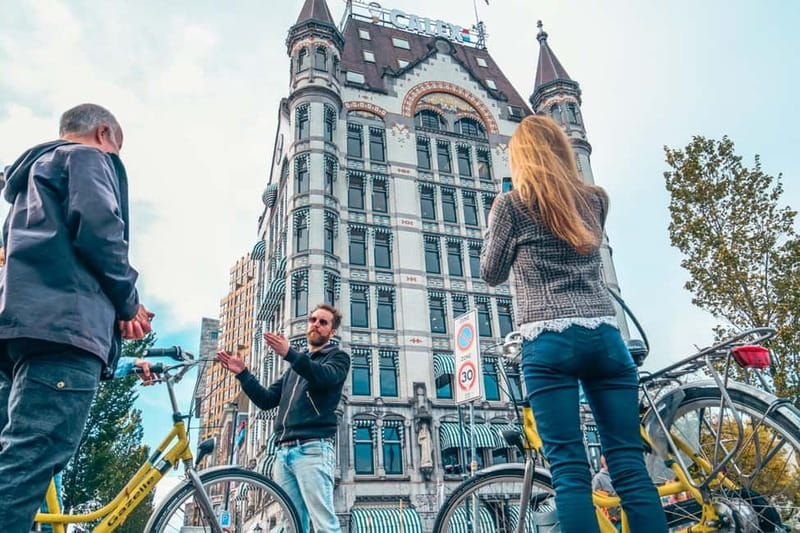
Hotel New York is one of the first major landmarks on the route. The former headquarters of the Holland-America Line is closely tied to Rotterdam’s maritime identity, and its location by the water gives you an immediate sense of the city’s relationship with travel, trade, and departure.
The tour passes by for about 15 minutes, so do not expect a full interior visit. The value is in the setting and the guide’s explanation. From the bike, you can take in the building and its waterfront position without stopping the tour for too long.
This is one of the places where a local guide adds more than a map can. A building can look attractive in a photograph, but its role in the city’s story makes it more memorable.
Erasmus Bridge, Rotterdam’s signature crossing
The Erasmus Bridge follows, with about 10 minutes around the landmark. Its pale, angled pylon and sweeping cables have made it one of Rotterdam’s best-known sights. The bridge also gives you a strong visual reminder that this is a city built around movement, water, and engineering.
Expect time for photos and a short explanation rather than a long architectural lecture. That balance suits the tour. You see the bridge in the context of the river and the surrounding city, then keep moving.
If you enjoy architecture, this is an important stop. If you mainly want historic buildings, it may feel less personal than the older parts of the route. Rotterdam’s appeal comes from having both.
Same handlebars, a completely different route:
- Big Bike tour Amsterdam – See all in 3 unforgettable hours
★ 4.7 · 4,929 reviews - Small Group Guided Bike Tour of Amsterdam’s Hidden Gems
★ 5.0 · 3,936 reviews - Amsterdam: Off the Beaten Path Bike Tour in French
★ 4.9 · 1,632 reviews - Countryside Bike Tour from Amsterdam: Cheese, Clogs & a Windmill
★ 5.0 · 1,485 reviews
De Brandgrens and the cost of rebuilding
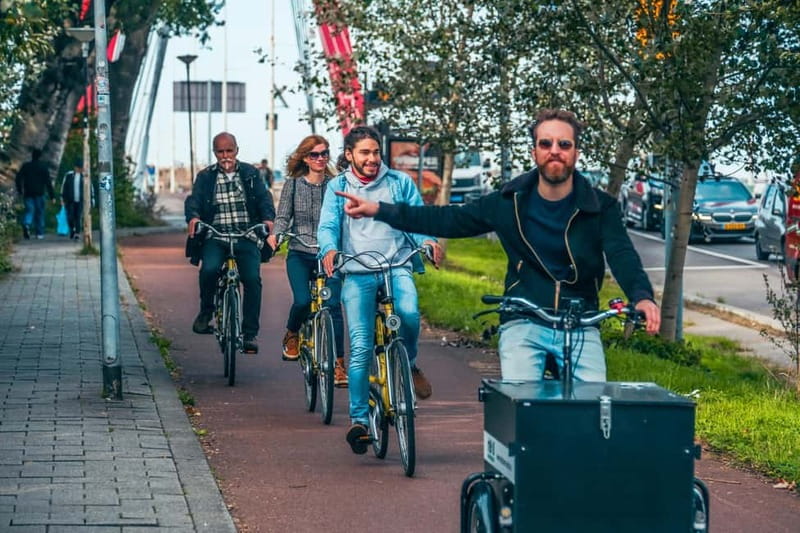
De Brandgrens marks the area affected by the destruction of Rotterdam during World War II. This stop gives the tour emotional weight. Without it, the city’s modern center can seem like a deliberate playground of new design. With it, you begin to understand why so much of the city looks different from older Dutch centers.
The guide’s explanation is especially valuable here. You can see the present-day streets while learning about the break between the prewar city and the one rebuilt afterward. The story is not only about loss. It is also about resilience, planning, and the decision to create a new kind of urban center.
Allow around 15 minutes. This is a place to listen rather than simply snap a picture.
Veerhaven and Euromast: water, views, and a change of pace
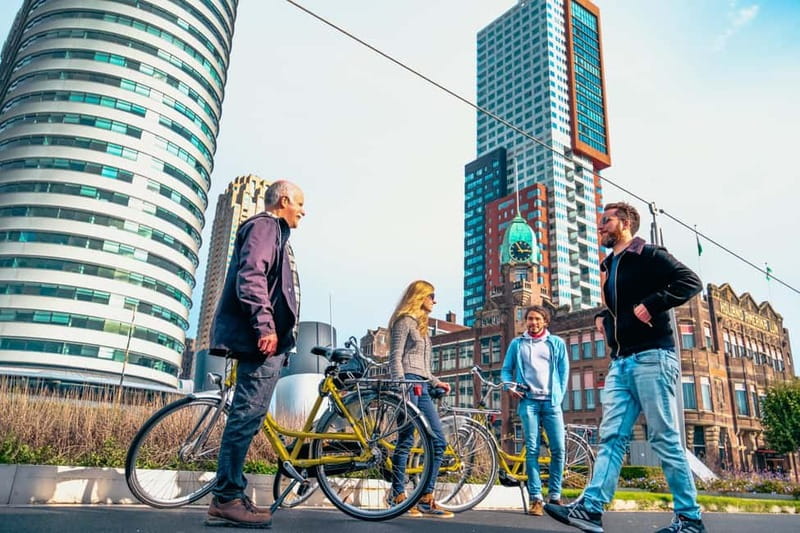
At Veerhaven, the route brings you back to Rotterdam’s waterside character. The harbor setting offers a different mood from the wide modern streets downtown. You might find this stop especially appealing if you like ships, waterfront buildings, and the practical side of port cities.
The tour then passes the Euromast, Rotterdam’s tall observation tower. There is no listed visit to the top, so think of this as an exterior landmark and a chance to place the city in your mind. From street level, the tower helps you read Rotterdam vertically, with broad streets and high structures sharing the same view.
Each stop lasts roughly 10 to 15 minutes. That keeps the ride moving, though it also means you will not have time for a full visit inside every attraction. The strength of this tour is range.
Depot Boijmans Van Beuningen and Rotterdam’s playful side
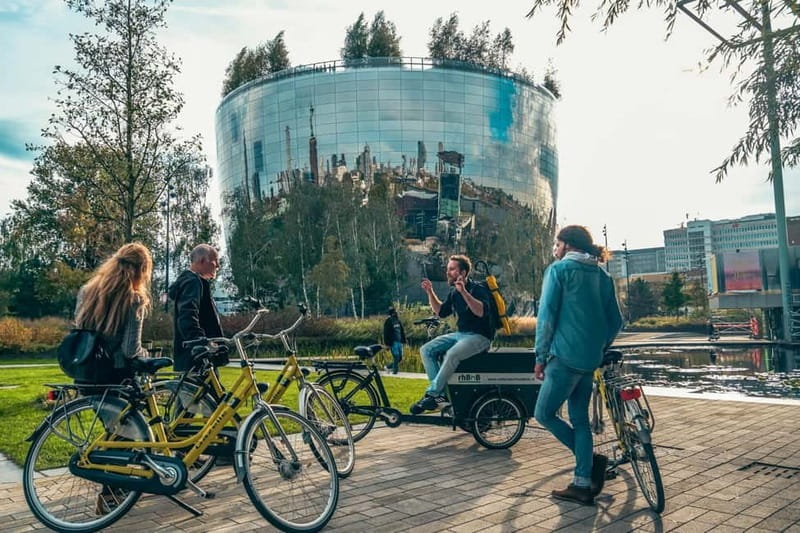
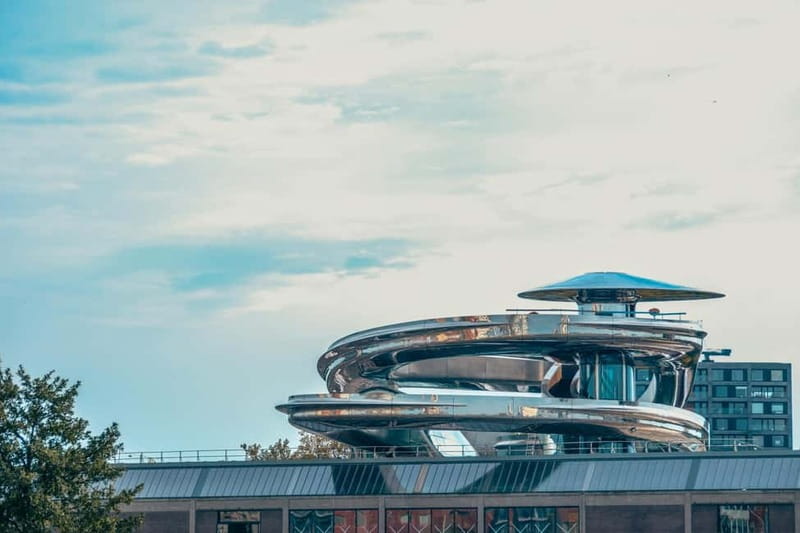
The Depot Boijmans Van Beuningen is one of Rotterdam’s most eye-catching recent architectural sights. Its rounded form and reflective exterior make it unlike the traditional museum buildings you may know from other Dutch cities.
The tour passes by for about 15 minutes. You will have time to see the building, photograph it, and hear how it fits Rotterdam’s taste for unusual public architecture. If you want to visit the art collection or explore the building indoors, plan a separate visit.
This stop works well because it follows the older harbor and war history sections. Rotterdam does not rebuild in one single style. It keeps adding new ideas, and the Depot is a clear example.
The 20-minute break at Heilige Boontjes
After several landmarks, you get a 20-minute break at Heilige Boontjes. Food and drinks are not included, so bring a little money or be ready to purchase your own coffee and bite.
I consider this break an important part of the design, not filler. A three-hour cycling tour is easier to enjoy when you can stop, sit, and reset. It also gives you a chance to chat with the guide and the rest of the group rather than listening while constantly watching the road.
One past participant particularly liked the chance to grab coffee and talk with the group during the pause. That tells you what this tour does well: it is not only a sequence of landmarks. It leaves some room for a social, human rhythm.
City Hall, Laurenskerk, and the older center
The route continues to Stadhuis Rotterdam, the city hall. This landmark brings you into a more formal civic part of central Rotterdam and gives the modern city some historical balance.
Next comes Grote of Sint-Laurenskerk, the large church that survived the wartime destruction. Its presence matters because it provides a visible link to the city that existed before the bombing. Against Rotterdam’s modern skyline, the church feels like a reminder that not everything disappeared.
You pass by each stop for about 10 minutes. That is enough for context and exterior photographs, but not a full church visit. If the church interests you, make a note to return later when you have more time.
Cube Houses and Markthal, Rotterdam’s famous pair
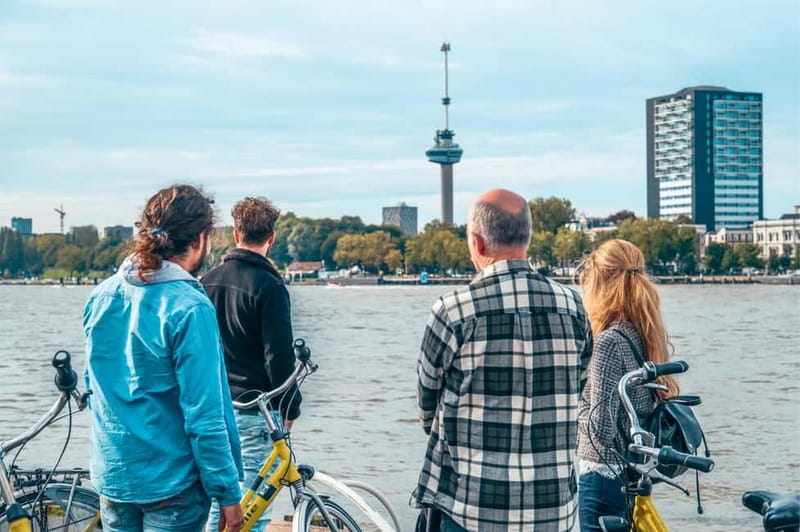
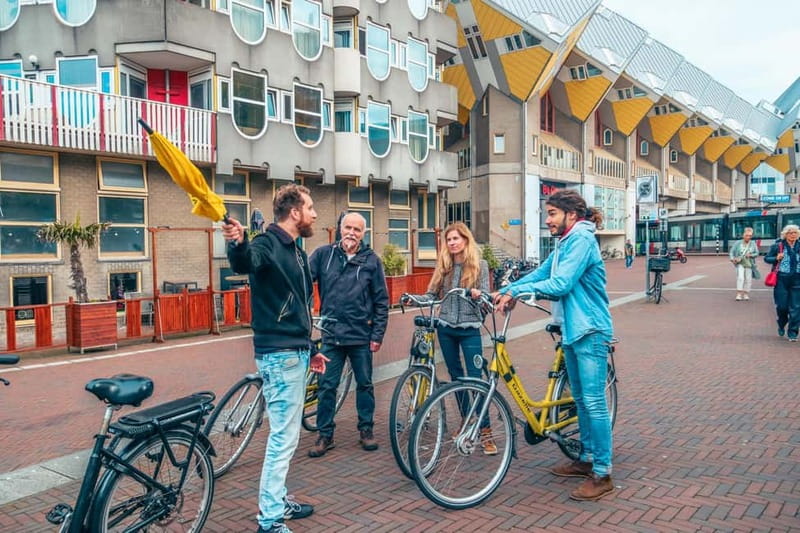
The Cube Houses are among the tour’s most memorable stops. Their tilted forms are playful, unusual, and instantly recognizable. You get about 15 minutes here, which gives you time to study how the buildings fit together and take photos from different angles.
I like this stop because the guide can explain the idea behind the design rather than leaving you with a quick picture and a puzzled smile. The houses are not merely odd-looking apartments. They show Rotterdam’s willingness to experiment with how people use space.
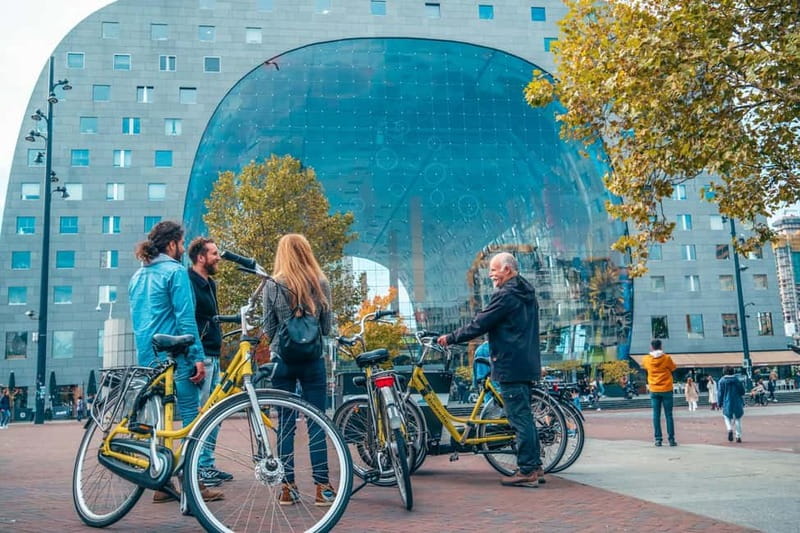
Nearby, Markthal provides a very different kind of spectacle. Its large interior and food-focused setting make it a natural place to look around, even if you are only passing by with the group. The route allows about 15 minutes, so you can appreciate the building and its location without turning the tour into a full meal stop.
Food and drinks are not included, and this is not the main refreshment break. If you want to eat at Markthal, plan to return after the bike tour.
Oude Haven and De Hef finish the circuit
Oude Haven brings you back to Rotterdam’s older harbor atmosphere. It helps connect the city’s working-port identity with the newer architecture you have seen during the day. This is a good place to ask the guide about how Rotterdam’s waterfront areas have changed.
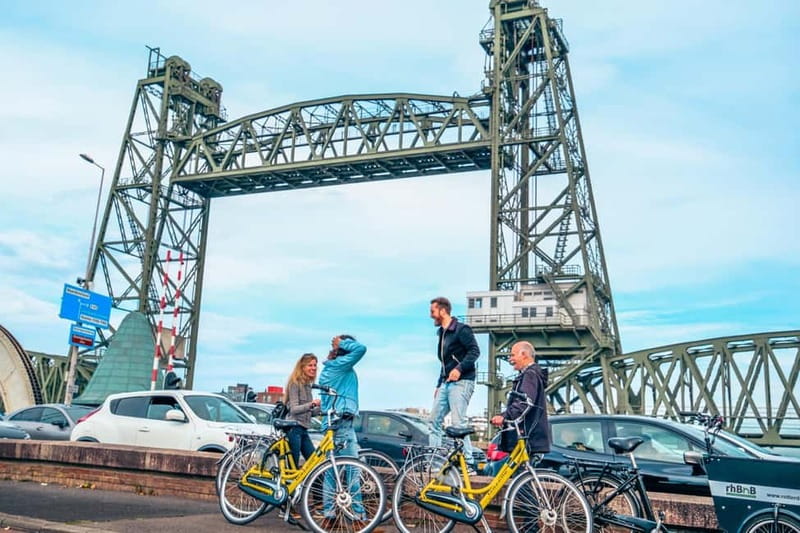
The final major landmark is De Hef, the old railway bridge. Its industrial structure gives the ending a strong sense of place. After the polished lines of Erasmus Bridge and the playful Cube Houses, De Hef feels more functional and mechanical.
The route then returns to Linker Veerdam 1. Finishing where you began is convenient, especially if you have plans afterward. You leave with a broad map of the city in your head, plus a list of places that deserve a slower second look.
What the $71 price really buys
At $71 per person, this is not the cheapest way to rent a bicycle for three hours. But bike hire alone would not give you the route, local explanations, historical context, or help choosing what deserves more of your time.
The price includes the three-hour ride, bicycle rental, live guide, and optional helmet. It does not include food or drinks, so budget separately for the break. You are paying mainly for orientation and interpretation.
For a first visit, I think the value is strongest if you have limited time. You cover a large area without tiring yourself out by walking between distant sights. The tour also helps you decide where to return independently, such as the church, Markthal, Depot, or waterfront.
The value drops if you already know Rotterdam well or want long indoor visits. This is an overview by bicycle, not a museum tour or a slow architectural study.
Guides who make the difference
The guide is central to this experience. Elmer is praised for his humor, enthusiasm, useful city facts, and friendly approach. Yoreh is noted for careful attention, strong local-history explanations, and taking excellent photos during the ride.
Those details matter. A guide who talks nonstop can turn a bike tour into a moving classroom. The strongest feedback here points to guides who keep things interesting without burying you in dry facts, and who adapt the pace to the group.
That flexibility is useful if your group has mixed cycling confidence. You still need to ride a bike, but the tour is intended to be adjusted to the group’s pace rather than treated as a race.
Who should book this Rotterdam ride?
I would choose this tour if you are visiting Rotterdam for the first time, especially for one day or a short stay. It gives you the essential city shape, covers major landmarks, and explains why Rotterdam looks so different from many other Dutch cities.
It also suits people who enjoy architecture, urban planning, port history, and local stories. You do not need to be a serious cyclist, but you do need basic riding ability and a willingness to cycle through the city.
I would think twice if you dislike bicycles, need a long rest at every stop, or want to spend hours inside museums and churches. The tour is active, and the broad route means each landmark receives a short visit.
Weather matters too. Bring water, dress for the forecast, and wear shoes that are comfortable on a bicycle. The bikes and optional helmets are supplied, but your clothing is your responsibility.
Should you book the Classic Highlights Bike Tour?
Yes, if you want a friendly, efficient introduction to Rotterdam and are comfortable cycling. The combination of Hotel New York, Erasmus Bridge, De Brandgrens, Cube Houses, Markthal, and De Hef gives you both the city’s modern face and its hard-earned story of rebuilding.
The best reason to book is the guide-led context. Elmer and Yoreh are praised for making the ride personal, clear, and enjoyable, while the 20-minute coffee break keeps the three-hour schedule from feeling rushed.
At $71, I see it as a good orientation tour rather than a bargain bike rental. Book it early in your Rotterdam stay, then use what you learn to choose your own second look at the city.
FAQ
How long is the Rotterdam bike tour?
The tour lasts three hours, including the guided cycling route and a 20-minute break.
Where does the tour begin and end?
It begins and ends at Linker Veerdam 1. Look for the small wooden house with the colorful rooftop.
What languages are available?
The live guide is available in Dutch and English.
Is a bicycle included?
Yes. Bicycle rental is included in the tour price, and helmets are provided but optional.
Are food and drinks included?
No. Food and drinks are not included. You can buy a coffee and a bite during the 20-minute break at Heilige Boontjes.
Can I cancel the booking?
You can cancel up to 24 hours before the tour for a full refund. Reserve now and pay later is also available.
Newly added rides around the Netherlands
- Amsterdam E Bike Tour to the Windmills of Zaanse Schans★ 5.0 · 65 reviews
- Private Amsterdam City Highlights Bike Tour (PRIVATE GUIDE)★ 5.0 · 28 reviews
- Daily group bike tour in Spanish.★ 5.0 · 60 reviews
- Amsterdam 3 hrs Bike Tour – live guide En/Fr/De/Nl/Sp★ 4.5 · 138 reviews
- Bill’s Bike Tour Amsterdam – Culture, Liberalism & Tolerance★ 5.0 · 28 reviews
- Zaanse Schans Windmills E Bike Day Trip from Amsterdam★ 5.0 · 15 reviews
- Explore Amsterdam by Bike in the Company of a French Local Guide★ 4.5 · 31 reviews
- Amsterdam’s Hidden Gems and Street Art Bike Tour★ 5.0 · 65 reviews
Rotterdam Bike Tours, compared.

Browse the lists this tour appears in