
REVIEW · CANADA BIKE TOURS
E-bike through Toronto’s Dynamic Neighbourhoods
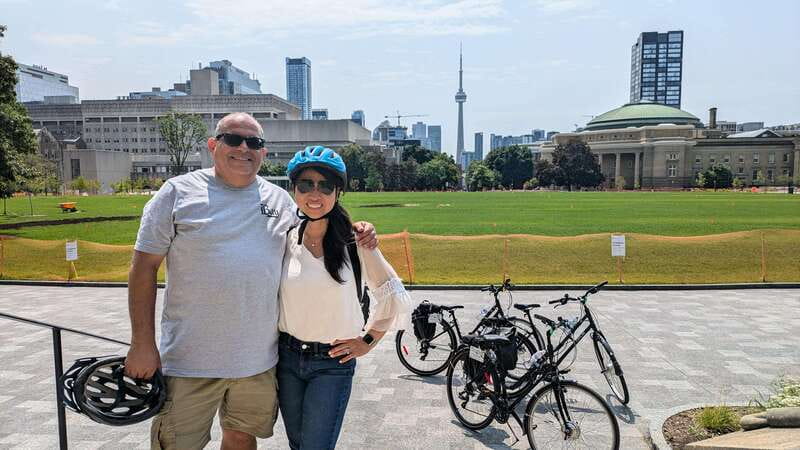
Toronto is best understood on two wheels. This 3.5-hour e-bike tour moves well beyond the usual downtown stops, linking neighborhoods, parks, cultural sites, and waterfront spaces that show how the city lives and changes. I especially like the small eight-person limit and the chance to see places such as Lower Ossington, St. James Town, and Rosedale in one outing.
I also like that the electric bikes make a wide route manageable, even if you are new to e-biking. Guide Mariana has earned praise for making first-time riders comfortable while adding useful background at each stop. The main consideration is the price, $107 per person, and the occasional risk of a last-minute cancellation if staffing problems arise.
Key points at a glance
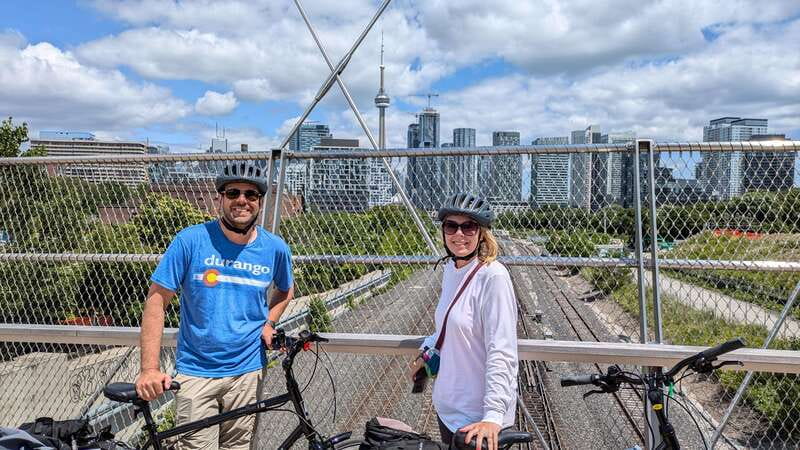
- Eight-person maximum: The small group leaves room for questions and a more personal exchange with the guide.
- A wide cross-section of Toronto: The route connects Lower Ossington, Trinity Bellwoods, St. James Town, Graffiti Alley, Rosedale, and the waterfront.
- More than postcard Toronto: You get a look at social programs, mental-health work, urban change, and everyday neighborhood life.
- Electric bikes included: The motor helps you cover substantial ground without turning the ride into a fitness test.
- A practical four-hour outing: The 210-minute schedule gives you a useful orientation if you have only a day in Toronto.
- Simple refreshments supplied: A helmet, water, and granola bar are included, but coffee-stop drinks cost extra.
Why an e-bike is the right tool for this Toronto route
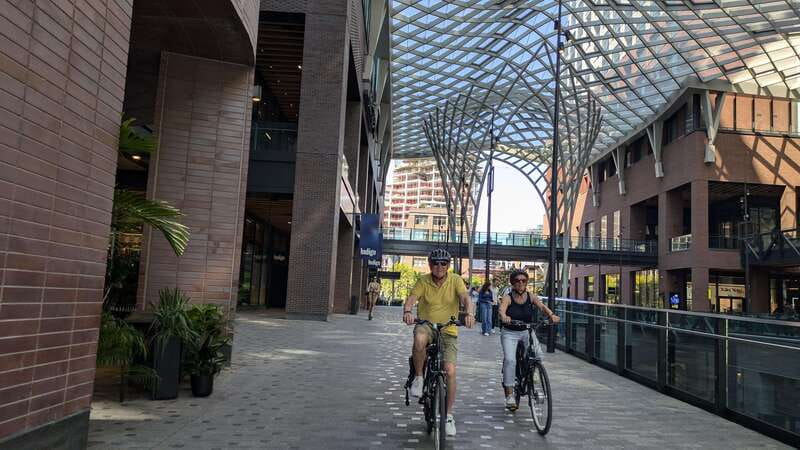
Toronto is spread out. Its districts have distinct personalities, but they are not all within a pleasant walking distance of one another. An e-bike lets you connect these areas in a single outing, with less effort than a standard bicycle and much more local contact than a bus or car.
You still pedal, so you remain involved in the ride. The electric assist simply takes the sting out of hills, longer stretches, and repeated stops and starts. That matters here because the route is designed to show connections between neighborhoods, not just one compact sightseeing zone.
I would consider this especially useful at the beginning of a Toronto visit. You can get a feel for where different parts of the city sit, then return later to the areas that catch your interest. If you are in town for only one day, the tour also gives you a broad first look without spending the whole day underground or in traffic.
The tour is limited to eight people. That is a real advantage on a bicycle. A large pack can be hard to keep together at intersections, while a small group is easier to manage and gives you a better chance to ask about what you are seeing.
More E-Bike Tours in Canada
- Epic Electric Bike Tour by Cycle City Tours
★ 5.0 · 848 reviews - Montreal eBike Sightseeing Tour
★ 5.0 · 573 reviews - Montreal: E-Bike Sightseeing Tour
★ 4.8 · 365 reviews
Starting underground on St. Patrick Street
The meeting point is not a conventional storefront. You go to the parking garage at 124 St Patrick Street, about 50 meters south of Dundas Street on the west side. The garage is just north of the salon.
If the door is closed, step closer and it should open automatically. Enter, follow the ramp down, and look for the yellow signs leading to level P2, section H. This is the sort of detail worth saving on your phone because the starting point can be easy to miss if you expect a bicycle shop entrance.
Arrive with comfortable clothing. The operator supplies the electric bike, helmet, water, and a granola bar. You should be ready to ride and should not book this outing if you cannot ride a bicycle. It is also not suitable for children under 16.
The language is English, and the guide provides live commentary throughout. Previous riders have praised Mariana in particular for explaining the bikes clearly and helping first-time e-bike users settle in. That technical introduction matters: a motorized bicycle can feel unfamiliar for the first few minutes, and confidence makes city riding much more enjoyable.
Lower Ossington and Trinity Bellwoods: Toronto’s changing west side
Lower Ossington is one of the most interesting early stops because it shows how quickly a city district can change. Once overlooked, the area developed a reputation for independent food, nightlife, and creative businesses. The point is not simply to pass through a fashionable street. You get a chance to think about what makes a neighborhood desirable, and what can happen when that popularity arrives.
The route then reaches Trinity Bellwoods, a popular green space where the tempo changes. After riding through city streets, a park gives you room to pause and watch everyday Toronto unfold. This is a good place to notice the contrast between dense urban life and the need for open public space.
I like this pairing because it gives you two sides of the same urban story. Lower Ossington shows reinvention through businesses and street life. Trinity Bellwoods shows how a public park can act as a shared backyard for a packed city.
The drawback is that these areas are not museum exhibits. The streets keep changing, and the experience depends partly on the guide’s explanation and the mood of the day. You are getting a snapshot of living neighborhoods, not a fixed attraction with a formal entrance and a list of guaranteed sights.
St. James Town and the people who make a city work
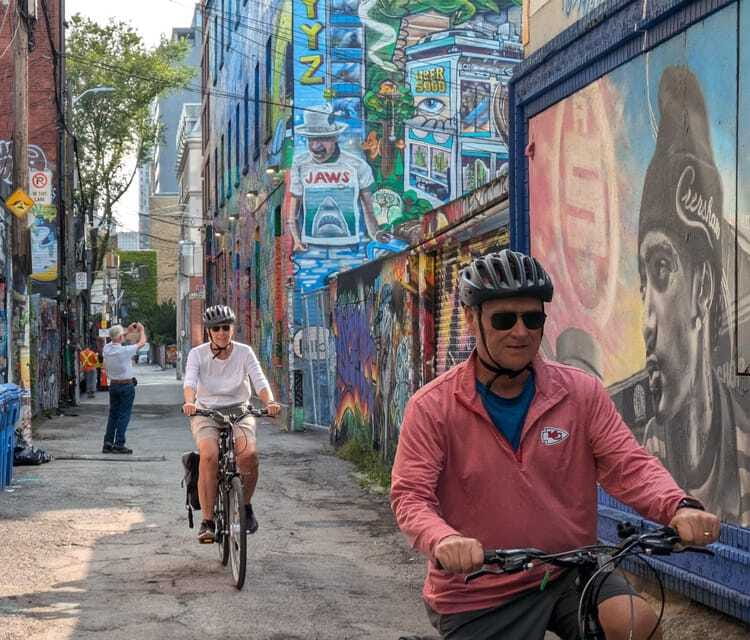
St. James Town brings a different kind of attention. It is one of Toronto’s most culturally diverse communities, and the tour uses it to discuss local responses to practical urban problems, including food, healthcare, and social services.
That focus gives the ride more substance than a circuit of fashionable streets. You are encouraged to notice how communities organize and adapt, rather than judging a neighborhood only by its buildings or reputation. The stop can help explain why making a city more livable involves much more than adding restaurants or beautifying a street.
This is also where a good guide makes a major difference. Mariana has been praised for connecting neighborhood history with current developments, and that approach suits this route. You are not simply collecting names for a map. You are learning why the places you pass through matter now.
Do not expect a long indoor visit or a formal social-services presentation. The information is part of a moving city tour. If you prefer only major monuments, this portion may feel less immediately entertaining. If you want to understand how Toronto works for its residents, it is one of the more useful sections.
Same handlebars, a completely different route:
- The Grand Bicycle Tour by Cycle City Tours
★ 5.0 · 1,827 reviews - The Stanley Park Bicycle Tour by Cycle City Tours
★ 5.0 · 785 reviews - Vancouver: Guided Bike Tour
★ 4.9 · 435 reviews - Toronto: Heart of Downtown 3.5-Hour Bike Tour
★ 4.9 · 419 reviews
The Bloor Street Cultural Corridor and Graffiti Alley
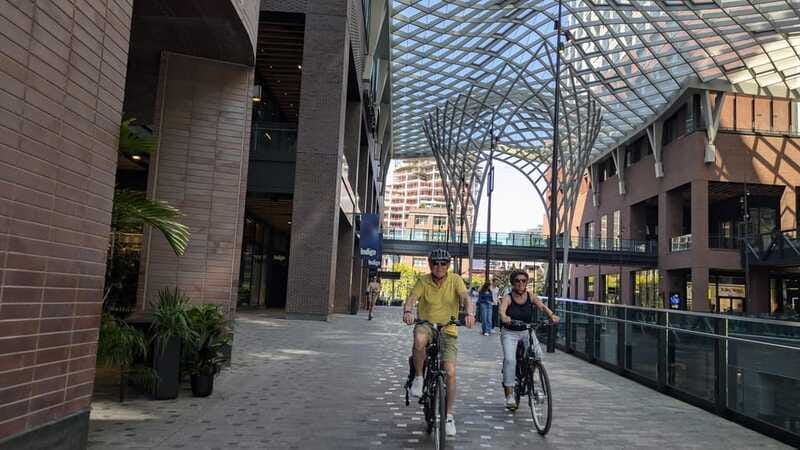
The Bloor Street Cultural Corridor brings arts and culture into the ride. Museums, performance venues, and food from around the world give this stretch a strong sense of Toronto’s international character.
The value here is variety. Toronto does not present its culture in one tidy historic quarter. It is spread through ordinary streets, institutions, restaurants, and venues. Seeing the corridor by bike helps you understand that the city’s cultural life is part of its daily pattern, not confined to one attraction.
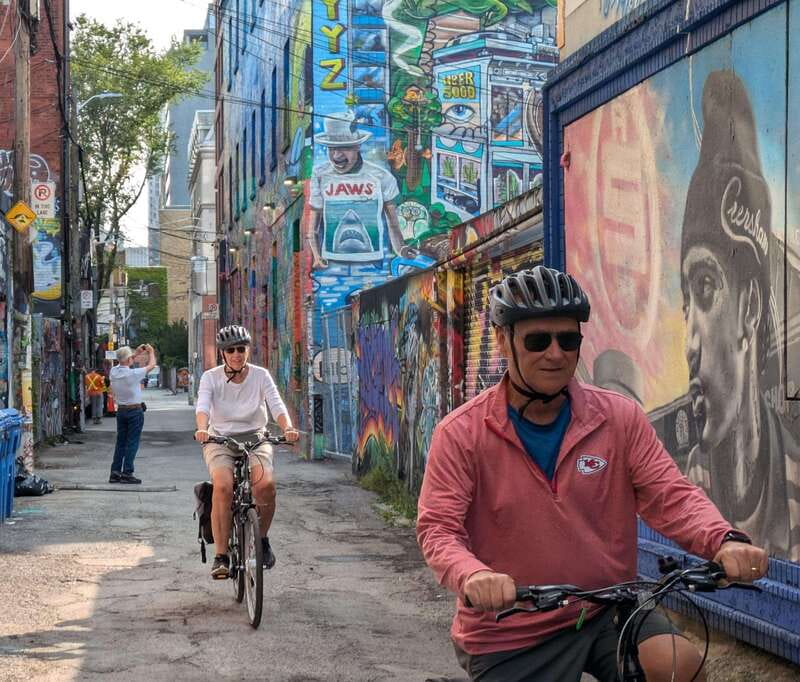
Graffiti Alley offers a sharper, more visual change. The street art is constantly changing, so what you see depends on when you visit. That uncertainty is part of the appeal. It feels more like an active public art space than a finished gallery.
I would have your camera ready, but keep your expectations flexible. The tour cannot guarantee a particular mural, and street art can look different from one visit to the next. The guide’s context helps turn a quick photo stop into a look at how Toronto expresses itself in public space.
CAMH and Toronto’s changing approach to mental health
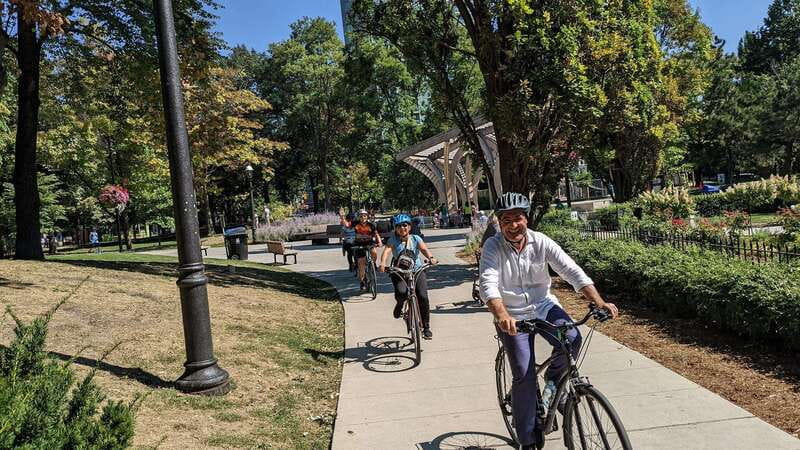
The stop at the Centre for Addiction and Mental Health, usually known as CAMH, adds an important civic subject to the route. The tour looks at Toronto’s progressive approach to mental health and the changes taking place at the institution.
This is not a light sightseeing stop, but it fits the larger purpose of the ride. Toronto is presented not only as a collection of attractive districts, but as a city trying to improve how it supports people. The inclusion of CAMH makes the route more thoughtful and gives you a different way to read the city’s streets and institutions.
The subject may not suit everyone looking for a purely carefree afternoon. Still, I see it as a strength. Many city tours avoid difficult topics and leave you with a polished but shallow picture. Here, the route gives space to social change as well as restaurants, parks, and architecture.
Ontario Place and Trillium Park on the waterfront
At Ontario Place and Trillium Park, the ride shifts toward the waterfront. You can expect open views and a discussion of Ontario Place, a well-known venue going through a period of transformation.
This stop is useful because it shows Toronto in the middle of a public conversation about how waterfront land should be used. The site is not treated as a finished attraction. Instead, it becomes an example of a city deciding what belongs along the water and how public spaces should evolve.
Trillium Park provides a change from the tighter streets and dense neighborhoods earlier in the route. It is a welcome stretch for the eyes and the legs. The waterfront also helps you understand Toronto’s scale, something that can be hard to grasp when you spend all your time among downtown buildings.
Conditions and construction can affect what feels most prominent at Ontario Place. The important point is to expect a site in transition, not a perfectly completed attraction. That may disappoint anyone seeking a polished waterfront landmark, but it is valuable if you want to see the city as it is now.
Rosedale, leafy streets, and a different Toronto
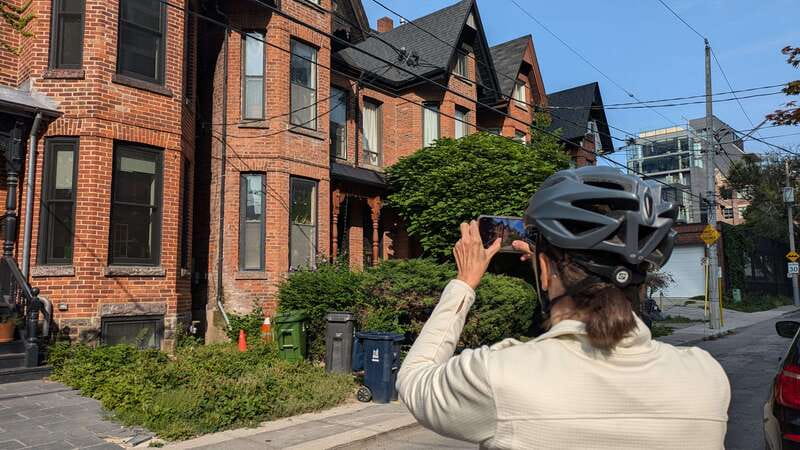
Rosedale provides one of the clearest contrasts of the day. The route moves through one of Toronto’s most affluent neighborhoods, where picturesque streets and large homes create a noticeably different urban mood.
The interest is not just in seeing an expensive district. The guide also brings out the stories behind the area, giving you a chance to consider how wealth, geography, and city development shape one another. After St. James Town, Graffiti Alley, and the waterfront, Rosedale adds another piece to the city’s social and visual range.
This is a good example of why the route works better than a standard list of famous sights. You are not staying inside one version of Toronto. You move between districts with different incomes, styles, public concerns, and histories.
The tradeoff is that a bicycle tour cannot stop at every point for long. You will get an overview and commentary rather than a detailed tour of every neighborhood. If one area catches your attention, make a note of it and return on foot or by transit later.
What the 210-minute schedule feels like
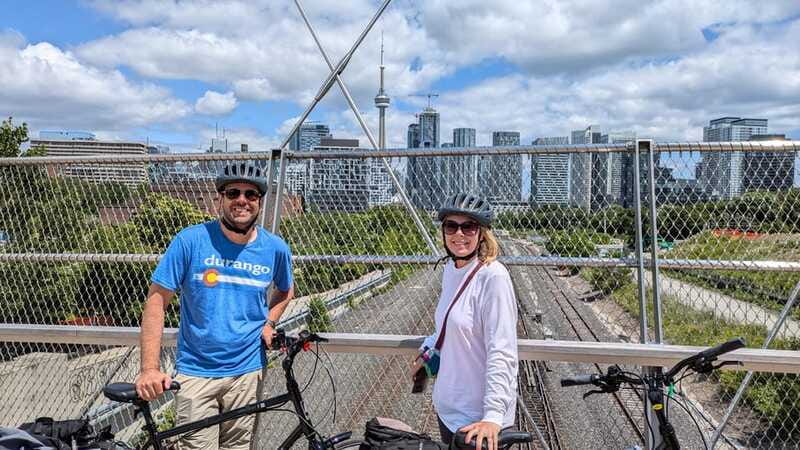
The full tour lasts 210 minutes, or three and a half hours. That is long enough to cover a generous section of the city, but short enough to fit into a day of sightseeing.
The route has a natural rhythm: ride, pause, listen, and move on. You should expect a moving orientation rather than long visits inside buildings. The bike is the main transport, so the day feels active even though the electric assist reduces the physical demand.
Water and a granola bar are included. Drinks at the coffee stop are not, so bring a payment method and budget for that extra if you want one. A short stop for a drink would also be useful because one rider specifically wished for a café break with something to sip. That is a fair suggestion, especially on a warm day.
The tour runs in a small group of no more than eight. One booking can occasionally result in a very personal outing. A solo rider once ended up with what became essentially a private bike tour, with extra conversation and photo opportunities. That is not guaranteed, but it shows how the small-group format can work in your favor.
Is $107 good value?
At $107 per person, this is not the cheapest way to see Toronto. It is also not simply a bike rental. The price includes the electric bike, helmet, water, granola bar, guide, and a carefully connected route through several parts of the city.
I think the value is strongest for three types of visitor:
- You have only a day and want broad city orientation.
- You enjoy active sightseeing but do not want a strenuous standard-bike ride.
- You prefer neighborhood stories and current urban issues to a checklist of famous buildings.
The price is harder to justify if you already know Toronto well, dislike group activities, or want to stop for long periods at individual attractions. You would likely get more from separate self-guided rides in that case.
The small group and guide-led context are what support the cost. The electric bicycle gets you farther, but the interpretation is what turns distance into understanding. The strongest praise has focused on the guides, the bike quality, and the chance to see Toronto as a resident might.
Practical details before you book
Wear comfortable clothes suitable for cycling. You must be able to ride a bike, and the minimum age is 16. English is the tour language.
Give yourself time to find the garage at 124 St Patrick Street. Follow the yellow signs to P2, section H, and call 416-477-2184 if you need directions. Since the tour begins inside a parking garage, this is one meeting point where a few extra minutes can prevent needless stress.
You can cancel up to 24 hours before departure for a full refund. The reserve-now, pay-later option keeps your plans flexible, which is useful if your Toronto schedule is still shifting.
One caution deserves attention. A previous booking was cancelled twice within 48 hours because of a scheduling misunderstanding and then a staff illness. The staff apologized, but the disruption was serious for someone visiting Toronto only briefly. This appears to be an occasional operating risk rather than the normal experience, yet I would avoid placing the tour at the very end of a short trip if it is your main plan.
Who should book this e-bike tour?
I would book it if you want a lively introduction to Toronto that connects social issues, public spaces, culture, street art, wealth, and waterfront change. The route gives you a more useful city picture than a quick downtown loop.
It is particularly well suited to first-time visitors, active couples, solo riders, and anyone who likes asking questions. The small group should appeal to you if you prefer conversation over a large crowd, and the electric assistance helps if you want to ride without exhausting yourself.
I would skip it if you cannot ride a bicycle, are under 16, or want a slow, indoor sightseeing day. I would also leave room in your schedule in case an operational cancellation affects your plans. For most curious visitors, though, the mix of neighborhoods and the help of guides such as Mariana make this a strong way to see how Toronto’s locals roll.
FAQ
How long does the Toronto e-bike tour last?
The tour lasts 210 minutes, or three and a half hours.
How many people can join the tour?
The tour is limited to a maximum of eight participants.
What is included in the price?
The price includes an electric bike, helmet, water, and a granola bar snack.
Are drinks included at the coffee stop?
No. Any drinks purchased at the coffee stop are paid for by you on the spot.
Where does the tour meet?
The meeting point is in the parking garage at 124 St Patrick Street, Toronto, M5T 2X8. Enter the garage, follow the ramp to P2, and look for the yellow signs in section H.
Can children join the tour?
Children under 16 are not permitted. All participants must also be able to ride a bicycle.
Newly added rides around Canada
- 2 Hour E-bike tour of Charlottetown★ 5.0 · 13 reviews
- 3 Hour E-Bike Tour of Charlottetown★ 4.5 · 40 reviews
- Canmore’s #1 Food Bike Tour: A Must Do Mountain Experience!★ 5.0 · 38 reviews
- Calgary #1 Food Bike Tour: Taste Local And See The City By E-Bike★ 5.0 · 15 reviews
- Calgary City Highlights 3 Hour Bike Tour, E-Bike Upgrade Avail.★ 5.0 · 182 reviews
- Small Group E-Bike Tour the Banff Local Explorer★ 5.0 · 40 reviews
- Sundance Canyon eBike and Hike Guided Tour★ 5.0 · 26 reviews
- 2-Hour Guided Banff Townsite e-Bike Explorer★ 5.0 · 16 reviews
Canada Bike Tours, compared.

The Stanley Park Bicycle Tour by Cycle City Tours
Read our review →



Browse the lists this tour appears in