
REVIEW · UBUD BIKE TOURS
Electric Bike Tour in Ubud
Trade traffic for rice fields. This three-hour ride gives you a practical way to see Ubud beyond its center, using a fat-tire electric bike on narrow Sok Wayah paths, village roads, and rice-field tracks. I especially like the chance to visit a traditional Balinese house and the fact that local food, water, snacks, equipment, and Ubud hotel transfers are included.
The guides are another strong point. Wayan, Ketut, Nyoman, Inyoman, Suradnya Inyoman, and Gusti are praised for careful road supervision, cultural explanations, photos, and patient help with the bikes. The main caution is simple: this is still active cycling, and some sections use busy roads or narrow paths where balance and confidence matter.
Key Points Before You Book
- Sok Wayah rice-field paths: Ride beside cottages, paddies, and small village lanes rather than staying in central Ubud.
- Fat-tire electric bikes: Motor assistance reduces the strain on hills, but you still need to pedal and steer.
- Traditional Balinese house visit: Learn about family compounds and daily life in a setting more personal than a standard sightseeing stop.
- Tegalalang Village and rice terraces: Stop for views and photographs, with explanations from your local guide.
- Local meal included: Finish at the company’s shop terrace with food, bottled water, and snacks included in the price.
- Small groups and flexible departures: Bookings allow up to six people, while the total tour group can reach ten.
Why This $34 Ride Works Well in Ubud
At $34, this tour offers good value if you want several parts of an Ubud day bundled into one outing. You get a bike, safety gear, guide, bottled water, snacks, a meal, an air-conditioned vehicle, and pickup and return within Ubud. That saves you from arranging separate transport and paying extra for a bike rental or lunch.
The bigger value is access. Ubud’s rice fields are close to town, but reaching the quieter paths on foot can take time, and hiring a car only gets you to the road. An electric bike lets you cover more ground while still moving slowly enough to notice cottages, irrigation channels, village activity, and changing views across the paddies.
I would not choose this tour only for speed. The electric motor helps, but the point is to pause, listen, take photographs, and ask questions. A good guide turns a ride through fields into a better understanding of Balinese family life and village customs.
There is one important limit. The route is not a quiet, car-free cycle path from start to finish. You may ride alongside motorbikes and cars on road sections, then turn onto narrow paths through the rice fields. The guides take safety seriously, but you need to feel comfortable braking, steering, and riding near other traffic.
More E-Bike Tours in Indonesia
- Ubud: Rice Terraces & Villages Half-Day Fat Tire E-Bike Tour
★ 4.9 · 602 reviews - Ubud eBikes Tour to Tegallalang Rice Terrace
★ 5.0 · 507 reviews - E-Bike: Ubud Rice Terraces & Traditional Villages Cycling
★ 4.6 · 37 reviews
Hotel Pickup and Getting Started Near Kajeng Street
The tour begins with pickup from your Ubud accommodation, followed by a ride to the company’s shop and meeting point at Puri Bebengan on Jalan Kajeng. The return transfer brings you back to your Ubud accommodation after the meal.
If you are staying outside Ubud, the included transfer does not apply automatically. The operator can arrange an outside-Ubud pickup, but you need to ask about it before booking.
At the shop, you meet your guide, receive your bike and gear, and get time to become familiar with the controls. This part matters more than it might sound. Electric assistance can feel different from a normal bicycle, particularly when you first start, slow down, or approach a narrow bend.
Use this time to ask how the assistance settings work. Some riders choose more motor help on uphill sections, while others pedal more and use the battery only when needed. The bikes make the route easier, but they do not remove the need for basic cycling skill.
The tour is limited to a maximum of six people per booking, with no more than ten people on the activity overall. That is small enough for a guide to keep an eye on the group, though the exact feel depends on how many separate bookings are combined.
Riding the Sok Wayah Rice-Field Paths
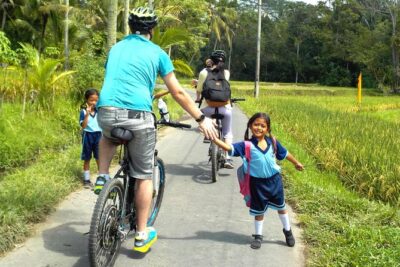
The most appealing part of the ride is the change in pace. You leave the town center and follow narrow routes through Sok Wayah, passing rice paddies, cottages, and village surroundings. This is where the fat tires make sense, since the surface can be less predictable than ordinary pavement.
You should expect uneven sections and tight lanes. One rider found the early rice-field paths a little difficult while getting used to the bike, and another noted that the electric assistance still required effort on uphill stretches. Give yourself time to settle in rather than trying to keep up with a faster companion immediately.
The guide usually controls the rhythm with stops for photographs and explanations. Wayan is praised for taking photos and checking that riders feel safe. Other guides, including Ketut and Inyoman, are singled out for clear English and thoughtful answers about Balinese culture and family life.
The route is not a silent ride through untouched countryside. Some portions use public roads, and motorbikes and cars may pass. Two guides may supervise road sections, which can make the crossing and group movement easier, but you should still stay alert.
For a confident cyclist, the mixture adds variety. You get a look at normal village connections as well as quieter field paths. For a nervous cyclist, the roads and narrow tracks may be the hardest part of the morning or afternoon.
Tegalalang Village and the Rice Terraces
A stop in Tegalalang Village gives the ride one of its most recognizable views. The rice terraces offer a fine setting for photographs, but the stop also helps place the farming scenery in context. Your guide explains what you are seeing and how the surrounding area fits into everyday Balinese life.
Do not expect a long, formal sightseeing session here. This is an active cycling tour, so the terrace stop works as a pause in the route rather than a full walking visit. You get time to look, take pictures, and catch your breath before continuing.
The timing can vary. One group finished in about three and a half hours, while another took longer because a rider needed extra time on the narrow paths. That flexibility is useful, especially for mixed-ability groups, but you should not book this as a tightly timed activity before a flight or another fixed appointment.
The views are strongest when you pay attention to the small details: cottages set near the paddies, narrow lanes between fields, and the way village life sits close to cultivated land. The electric bike lets you reach these areas without spending all your energy on the hills.
More E-Bike Tours in Ubud:
- Private Fat Tire E-Bike Tour in Ubud
★ 5.0 · 25 reviews - 3-Hour Porto Highlights on a Electric Bike Guided Tour
★ 5.0 · 4,392 reviews - Lisbon: Hills, Alfama, and Mouraria Tour by Electric Bike
★ 4.8 · 3,438 reviews - Athens Scenic Electric Bike Tour with optional Acropolis visit
★ 5.0 · 3,350 reviews
The Traditional House and Balinese Family Life
The traditional house visit is the tour’s most meaningful cultural stop. Your guide explains the Balinese family compound and how family members support one another. This gives you a clearer sense of local life than simply riding past homes from the road.
The visit is not presented as a museum display. It offers a look at a lived-in setting and the structure of family life. Inyoman, Nyoman, and Gusti are praised for explaining these details in a friendly and accessible way.
You may also receive water or fresh fruit at a house stop, along with the snacks included in the tour. That makes the visit a useful rest point as well as a cultural one.
Some departures have included a coffee tasting or plantation stop. This can be a pleasant break, but it may feel more commercial than the rice fields and family compound. If you are choosing this outing mainly for rural scenery and local life, keep your expectations measured around any coffee stop.
Lunch on the Shop Terrace
The ride ends with a local meal on the terrace of the company’s shop. Food is included in the tour price, along with bottled water and snacks, so you do not need to carry money for a planned lunch stop.
The meal gives you a chance to cool down and talk with the guide after the ride. One rider particularly enjoyed the noodles, while another described the food as good. Exact dishes can vary, so I would treat lunch as a welcome included meal rather than booking this tour as a culinary experience.
This ending also makes the three-hour schedule feel more complete. You are not simply dropped back at the shop after cycling. You get time to rest, eat, and finish the day at a slower pace before the return transfer.
How Difficult Is the Electric Bike Ride?
The tour calls for a moderate level of physical fitness. That description is fair. The bike provides motor assistance, but you still need to pedal, steer, brake, and manage changing surfaces.
The main challenges are:
- Narrow paths through the rice fields
- Uphill sections where the motor may not provide all the power you want
- Public roads shared with motorbikes and cars
- Getting used to the electric controls at the start
- Possible rain and slippery conditions
You do not need to ride hard for the entire outing. The assistance allows you to choose how much work you want to do, and guides can adjust their pace for different abilities. Still, this is not a passive sightseeing vehicle.
If you ride bikes regularly, the route should feel manageable and pleasantly varied. If you have not ridden for years, you may find the first section demanding. Private bookings can help because the guide can focus more closely on your pace, though a private group is not specifically promised for every booking.
Rain is also part of the practical picture. Ubud weather can change, and guides have provided raincoats when showers arrived during a ride. The operator may cancel for poor weather, offering another date or a full refund.
Guide Quality and Safety on the Roads
The guides receive the strongest praise for safety and personal attention. Wayan is noted for checking riders, taking photos, and keeping the outing enjoyable. Ketut is praised for clear explanations and strong English, while Suradnya Inyoman helped riders with bike comfort, questions, photographs, and rain protection.
You can expect the guide to explain what you are passing, not simply lead the group from one point to another. That makes a difference in Ubud, where the scenery is attractive but the cultural details can be easy to miss.
Road supervision is another practical strength. The guides may ride in positions that help manage the group when cars and motorbikes are nearby. Even so, you remain responsible for controlling your own bike.
I would advise wearing clothes you can move in and shoes suited to cycling. The tour provides bike rental and gear, but the supplied information does not specify every item included in the gear package. Ask before departure if you have a particular safety requirement.
Morning or Afternoon: Which Departure Is Better?
Morning and afternoon departures are available. The better choice depends on your schedule and how you handle heat, but the tour information does not promise a specific weather pattern or crowd level for either departure.
A morning ride may fit neatly before an afternoon visit in Ubud. An afternoon ride can work well if you prefer a slower start. Remember that this is an outdoor activity, and weather can affect the experience at either time.
I would leave some space around the three-hour estimate. The ride can take longer if the group needs extra help, if photographs take time, or if rain changes the pace.
Who Should Book This Ubud E-Bike Tour?
This tour suits you if you want:
- A guided way to reach rice fields outside central Ubud
- A mix of cycling, scenery, local food, and cultural explanation
- Electric assistance without giving up the feeling of riding
- A small-group activity with hotel pickup within Ubud
- A flexible route with time for photographs
- A more active alternative to a car tour
It may not suit you if you want a fully paved route, a quiet trail with no traffic, or a relaxed sightseeing experience without physical effort. You should also think twice if narrow paths make you nervous or if you have a fixed appointment soon afterward.
The 98 percent recommendation rate and 4.9 rating from 281 ratings point to a consistently strong experience, but the less glowing details are worth taking seriously. The route includes roads, the electric assistance can be inconsistent uphill, and the early rice-field paths may require some confidence.
Booking, Cancellations, and the Final Call
The tour offers free cancellation up to 24 hours before the start time for a full refund. Changes or cancellations within 24 hours are not accepted for a refund. Since poor weather can cancel the activity, check the forecast and keep your plans flexible.
I would book this tour if you want to see Ubud at ground level and do not mind a little effort. The traditional house, village lanes, and rice terraces give it more substance than a simple bike rental, while the electric motor keeps the hills from becoming the whole story.
Skip it if you are looking for a purely scenic route away from traffic. For everyone else, $34 is a fair price for transport, equipment, guidance, food, and several different sides of Ubud in one half-day outing.
FAQ
How long does the electric bike tour last?
The tour lasts approximately three hours, though it may take longer if the group needs extra time on the paths or for other stops.
Is hotel pickup included?
Pickup and drop-off are included for accommodations within Ubud. Transfers outside Ubud can be arranged, but they are not included automatically.
Where does the tour begin?
The meeting point is Puri Bebengan, F7X7+H6H, Jalan Kajeng, Ubud, Bali. The activity ends back at the meeting point before the return transfer.
Is lunch included?
Yes. A local meal is served at the end of the ride on the terrace of the company’s shop. Bottled water and snacks are also included.
How many people can join the tour?
A booking can include up to six people, and the total activity has a maximum of ten participants.
What happens if the weather is poor?
The tour requires good weather. If the operator cancels because of poor weather, you can choose another date or receive a full refund.
Newly added rides around Ubud
- E-Bike: Ubud Rice Terraces & Traditional Villages Cycling★ 4.6 · 37 reviews
- Ubud: Downhill Cycling with Volcano, Rice Terraces, and Meal★ 4.9 · 189 reviews
- Private Fat Tire E-Bike Tour in Ubud★ 5.0 · 25 reviews
- Ubud: Zipline, Bali Swing, and Sky Bike in a Private Rice Terrace★ 4.5 · 60 reviews
- Ubud : PRIVATE Bike Tour inside Rice Field Ubud Countryside★ 4.9 · 118 reviews
- Bali Downhill Cultural Cycling Tour★ 5.0 · 224 reviews
- Bali Countryside Cycling Tours★ 5.0 · 246 reviews
- Ubud: Downhill Bike Tour with Rice Fields, Volcano and Meal★ 5.0 · 267 reviews
Ubud Bike Tours, compared.
Electric Cycling Tour of Ubud with Free Hotel Transfer and Lunch
Read our review →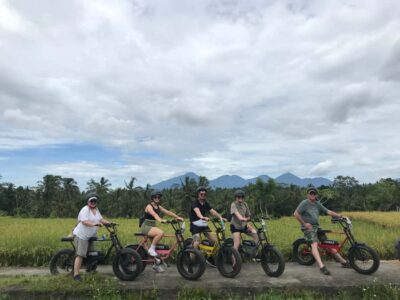
Rice Terraces & Villages Half-Day Fat Tire E-Bike Tour
Read our review →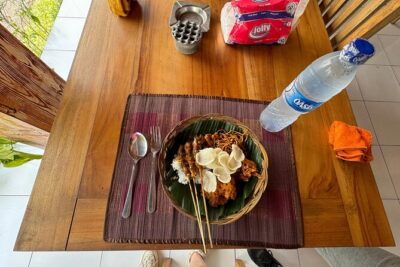
Downhill Cycling with Volcano, Rice Terraces and Meal
Read our review →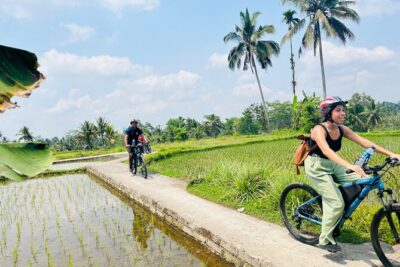

Half-Day Ubud Electric Cycling Tour to Tirta Empul Water Temple
Read our review →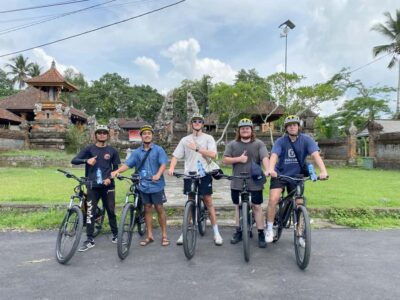
Downhill Bike Tour with Rice Fields, Volcano and Meal
Read our review →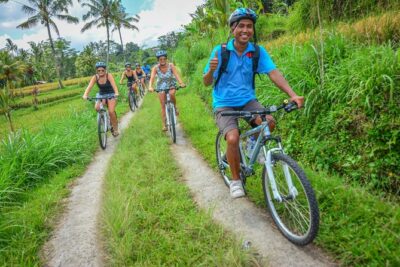

Browse the lists this tour appears in