REVIEW · TOURS
From La Paz: The World’s Most Dangerous Road Biking Tour
This road earns its frightening name. Starting high among snow-covered peaks and ending in hot Yungas country, Vertigo Biking’s 64-kilometer ride gives you a sharp change of scenery in a single day. You begin on pavement, then tackle the narrow dirt road known as Death Road, with guides, support transport, protective gear, food, and a hotel stop included.
I especially like the well-equipped downhill bikes and the steady presence of bilingual guides who check brakes, offer riding advice, and stop for photos and safety checks. I also like the finish: a buffet lunch, shower, swimming pool, and time to clean up after a ride that can leave you wet, dusty, and overheated.
The main consideration is simple: this is a serious physical activity, not a gentle sightseeing ride. The road section is downhill, but loose dirt, mist, waterfalls, traffic conditions, and exposed edges demand attention. The van ride back to La Paz also takes about three hours, and one rider found the transport less comfortable than the biking itself.
Key points to know before you book
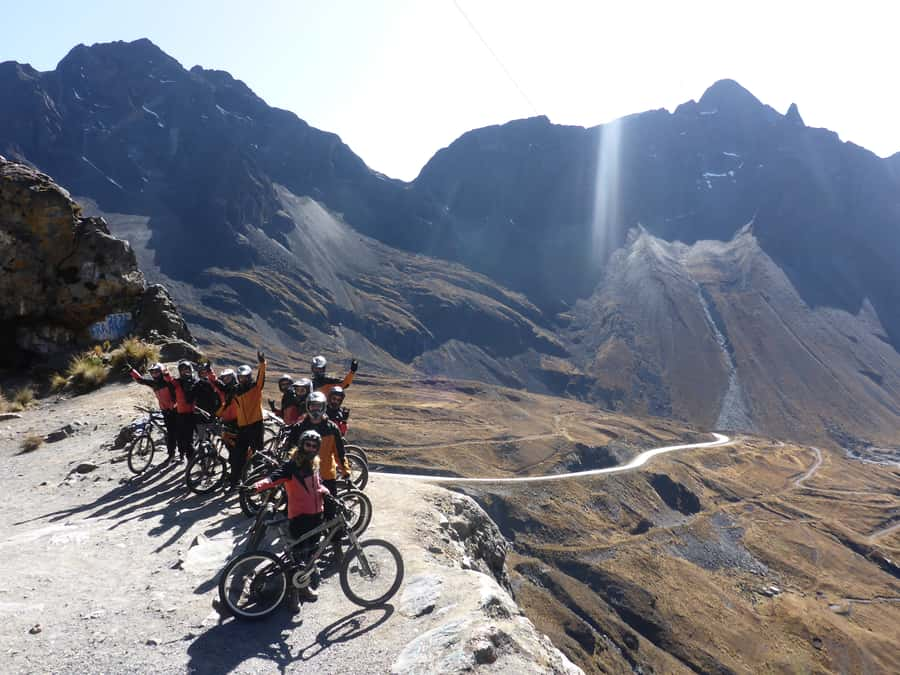
- 4,700 meters to 1,200 meters: You start at Cristo de la Cumbre in cold mountain air and finish near the entrance to Bolivia’s Amazon region.
- About 64 kilometers by bike: The first stretch is paved and useful for getting comfortable before the true Death Road begins at Chuspipata.
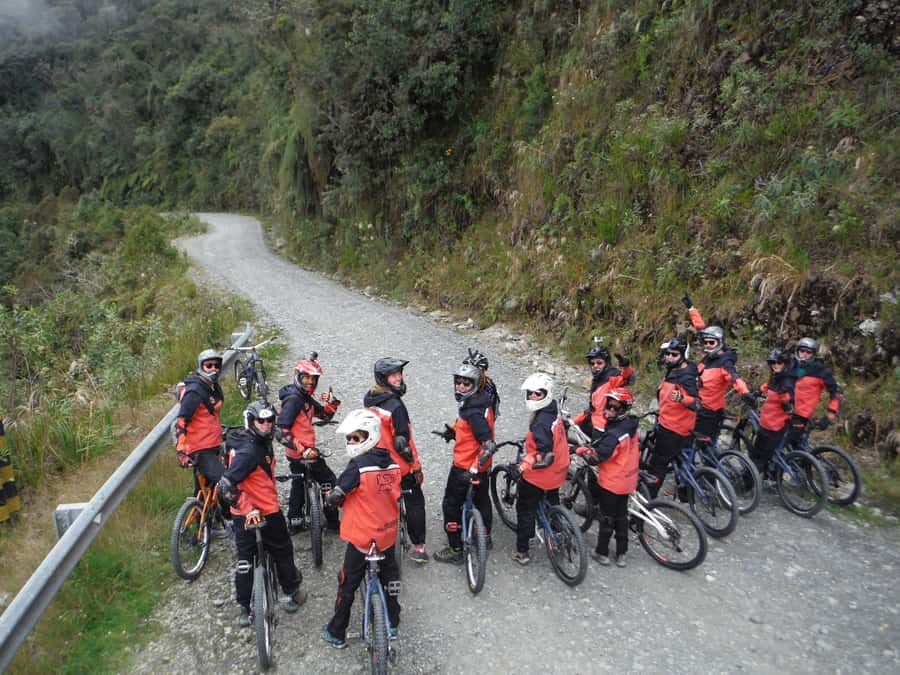
- Safety is taken seriously: You get a full-face helmet, protective jacket and pants, elbow and knee pads, gloves, and a full-suspension mountain bike with hydraulic disc brakes.
- Guides shape the day: English and Spanish-speaking guides lead the ride, inspect bikes, give safety briefings, and adjust the pace to the group.
- The finish is unusually comfortable: A buffet meal, showers, swimming pool, and time to rest turn a dirty ride into a pleasant finish.
- Extra costs remain: The Death Road tax is 50 bolivianos, and a zipline is available for an additional payment.
Why Death Road is such a dramatic ride
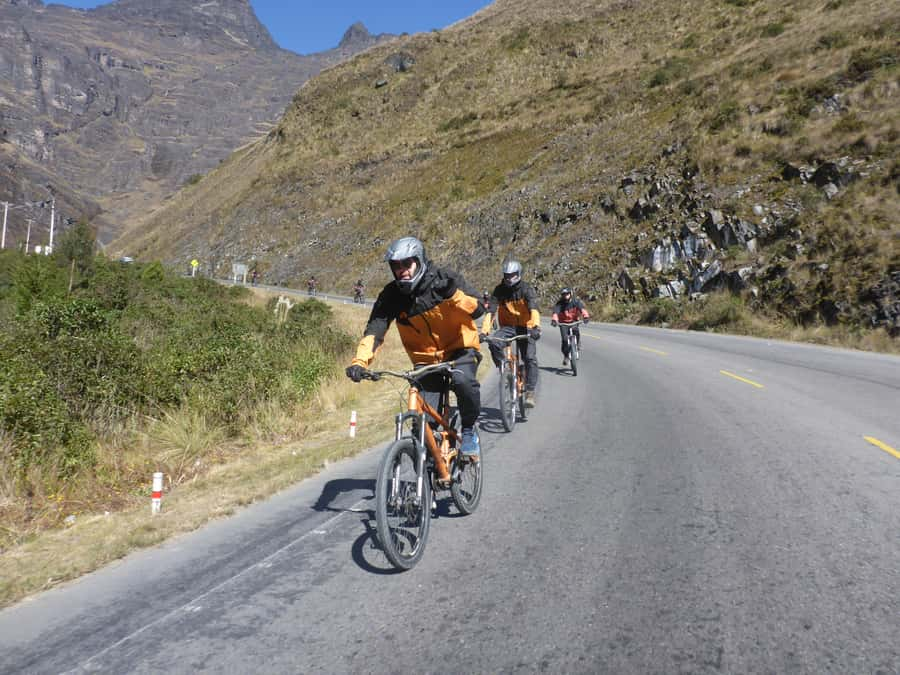
Death Road runs down the eastern side of the Andes toward the Yungas. The attraction is not just the thrill of cycling downhill. It is the huge change in climate and scenery packed into one route.
At the start, you are at about 4,700 meters, surrounded by cold air and high peaks. By the end, you are at roughly 1,200 meters, where the air is hot and the vegetation is thick. You can feel the journey in your body as your jacket comes off, the road turns damp, and the temperature rises.
The route covers around 64 kilometers, but distance alone does not explain the experience. Much of the ride points downhill, yet the road surface and setting keep you alert. You pass through mist, small waterfalls, tiny streams, trees, and stretches of rough dirt. You should expect to get wet and dirty. That is part of the deal.
The road is famous for its danger, but the tour is not designed as a reckless race. The guides provide repeated instructions and regular stops. You can ride at a pace that feels manageable, while the support vehicle remains part of the day.
A few more rides around the world worth a look
- Lion City Bike Tour of Singapore
★ 5.0 · 6,211 reviews - Big Bike tour Amsterdam – See all in 3 unforgettable hours
★ 4.7 · 4,929 reviews - 3-Hour Porto Highlights on a Electric Bike Guided Tour
★ 5.0 · 4,392 reviews
Leaving La Paz for Cristo de la Cumbre
The day starts at the Vertigo Biking office, where the tour bus should be parked outside. From there, private transport takes you toward the high starting point. The first transfer takes about 45 minutes.
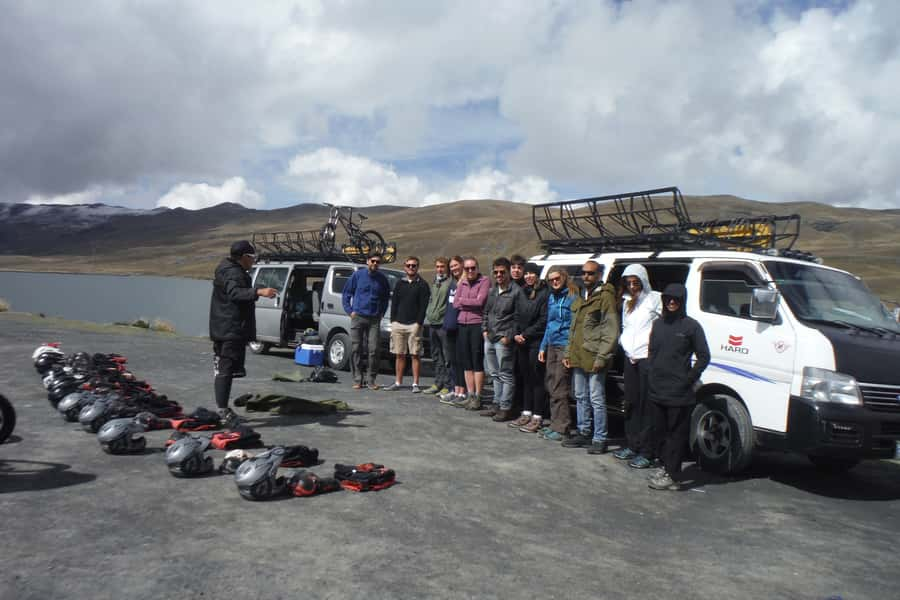
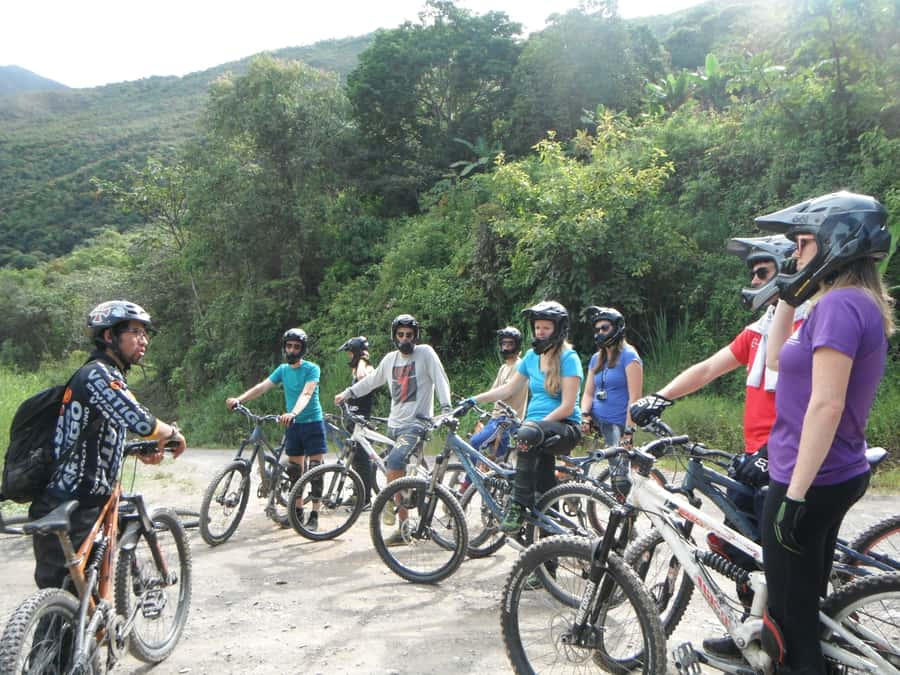
At Cristo de la Cumbre, the group receives a safety briefing lasting around 30 minutes. This is where you learn how to handle the bike, how to approach the road, and what the guides expect from you. The cold at this altitude makes warm layers useful, even if you soon begin descending into warmer air.
The guides also check the bikes before the ride begins. That matters here. You are not simply handed a bicycle and pointed downhill. The equipment includes full-suspension downhill mountain bikes and hydraulic disc brakes, along with a full-face helmet, gloves, protective pants and jacket, and elbow and knee pads.
You should use the briefing to ask questions and make sure the bike feels right. A good fit and working brakes matter more than polished-looking equipment. One rider made this point clearly: the bikes may not look brand new or high-tech, but the suspension and brakes do the important work well.
The paved descent helps you settle in
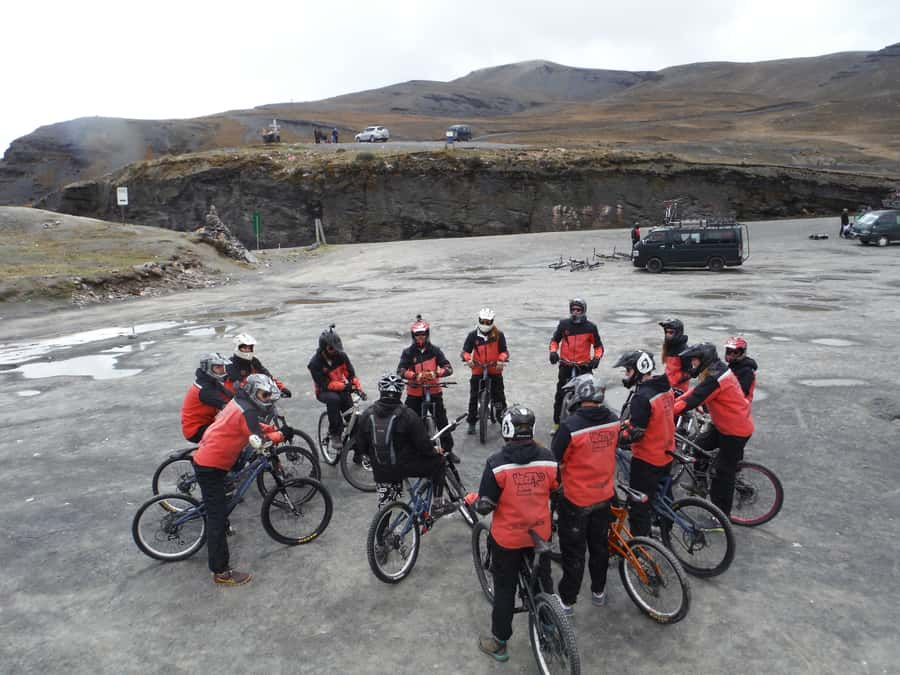
The first cycling section follows a paved road and lasts about an hour. You pass small villages and get used to the bike before reaching the more demanding dirt road.
This is a smart part of the route. At high altitude, with protective gear on and a full day ahead, you need time to find a comfortable riding position. The paved section gives you that chance. You can test the brakes, learn how the bike handles, and listen to further advice from the guides.
There are several pauses along the way. The guides use them to take photos, inspect the bikes, and explain what comes next. These stops also break up the descent and give you a chance to drink water or adjust clothing.
The early section is less dramatic than Death Road itself, but it has real value. If you are nervous, this is your chance to build confidence before the surface changes. If you already ride regularly, you can use it to settle into the group’s rhythm.
Chuspipata marks the real start
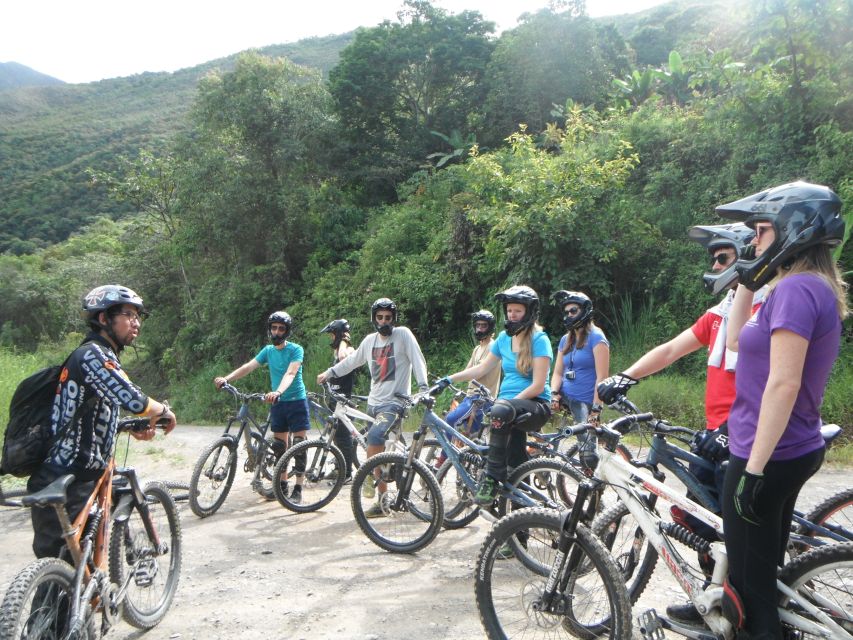
After the initial ride, transport takes the group for about 15 minutes to Chuspipata. This is the beginning of the actual Death Road section.
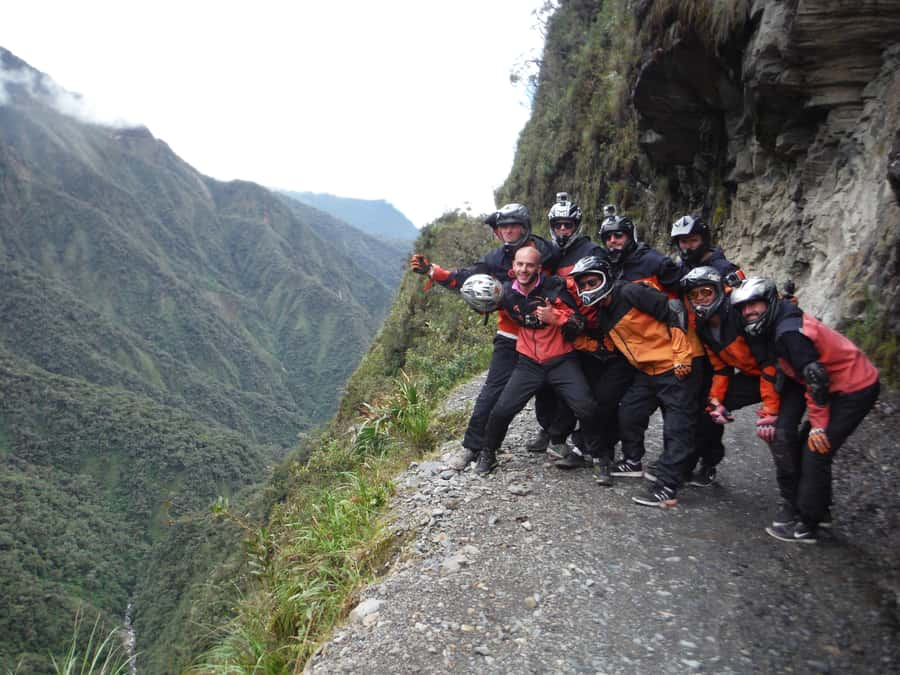
The change is immediate. Pavement gives way to dirt, and the cold, open high-altitude setting shifts toward trees, mist, and low cloud. The road winds through a much greener part of the Yungas, with water crossing the route in places.
The main Death Road riding section takes about four hours, including safety briefings, breaks, photo stops, and guided riding. You should not read that as four straight hours of hard pedaling. Much of the route is downhill, but you still need to manage your speed and position carefully.
This is where the protective equipment earns its place. The full-face helmet protects more than your head, and the elbow and knee pads make sense on a rough dirt surface. The gloves help with grip and comfort. Wear the provided jacket and pants at the start, then adjust as the weather warms.
The guides are central to the experience. Their job is not simply to lead the way. They check the bikes, explain tricky sections, watch the group, and help riders make sensible choices. Names associated with especially strong guide teams include Victor, Freddy, Chris, Maury, Javier, and Eddy. Victor has been praised for fluent English, cultural conversation, and careful attention, while Freddy has drawn special praise for safe driving and steady support.
Same handlebars, a completely different route:
- Small Group Guided Bike Tour of Amsterdam’s Hidden Gems
★ 5.0 · 3,936 reviews - 3-hour Complete Prague Bike Tour
★ 5.0 · 3,674 reviews - Bangkok: Temples, Canals & Local Life Bike Tour
★ 4.9 · 3,511 reviews - Lisbon: Hills, Alfama, and Mouraria Tour by Electric Bike
★ 4.8 · 3,438 reviews
Riding through mist, waterfalls, and changing weather
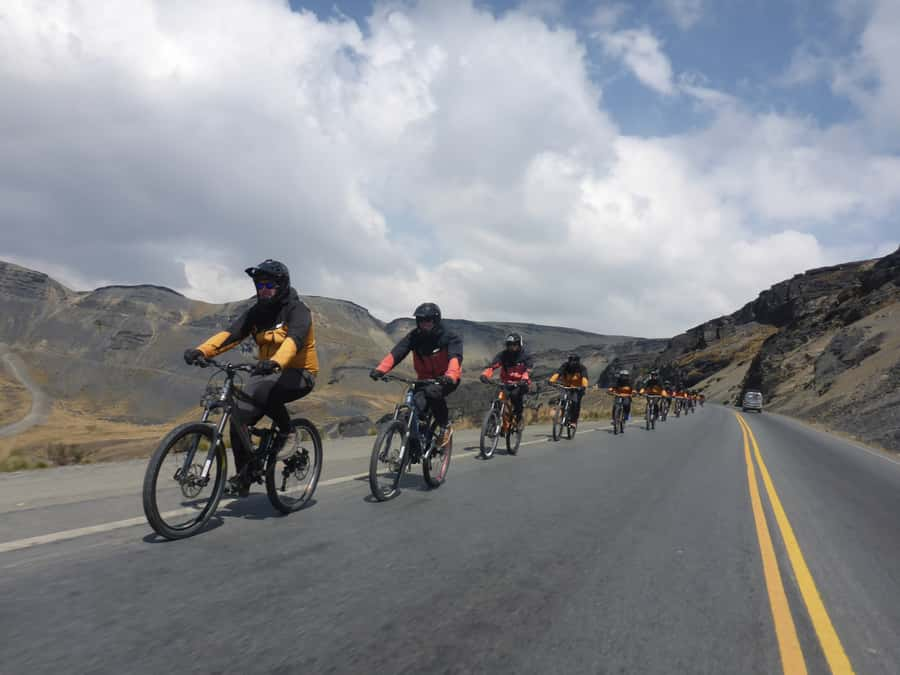
The weather changes as quickly as the road. You may begin in cold mountain air, pass through mist and low cloud, and finish in hot conditions. Small waterfalls cross or run beside the road, and tiny rivers add another wet stretch to the ride.
Bring a change of clothes. This is not a suggestion for neatness. You might be damp from spray, dirty from the road, and sweating heavily by the finish. Swimwear is also useful because the final hotel stop includes a swimming pool.
The scenery is one of the strongest reasons to do the tour. Snow-covered peaks give way to thick vegetation and steep mountain walls. The route feels like a journey between two different parts of Bolivia, not just a downhill cycling outing.
You should still keep your eyes on the road. The views are worth stopping for, and the guides schedule photo breaks, but trying to admire every waterfall while riding is a poor plan. Let the group stop, then look around without balancing on a moving bike.
Stops, viewpoints, and the end of the dirt road
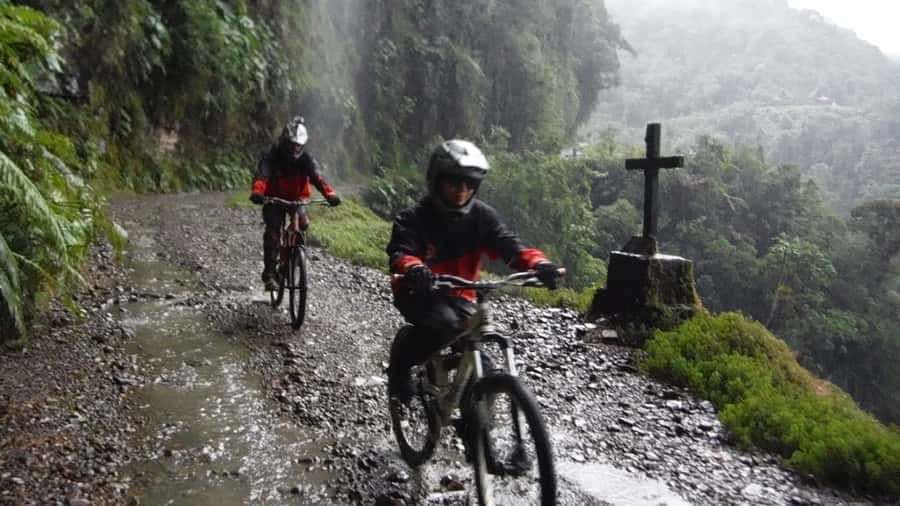
A viewpoint stop of about 15 minutes offers time for photos and sightseeing. It is a useful pause after the more concentrated riding. Use it to drink water, remove a layer, and check your gloves or helmet.
The route then continues to a traditional village, where you have around 30 minutes for another guided stop and photos. These pauses keep the day from becoming one long blur of brakes and bends. They also give you small glimpses of life along the road rather than reducing the trip to a pure adrenaline activity.
The riding ends at Yolosita, close to the entrance to the Bolivian Amazon region. At about 1,200 meters, the temperature can feel dramatically warmer than it did that morning.
By then, you will probably be dirty and ready for a shower. That is why the finish works so well. A 20-minute transfer takes you to the lunch stop and hotel or resort facilities, where you get free time for about 105 minutes.
A buffet, shower, and pool make a smart finish
The buffet lunch is included, along with unlimited water and snacks during the ride. After several hours outdoors, this is more than a convenient meal. It gives you a proper chance to recover before the long trip back to La Paz.
You can shower, swim, and change into dry clothes. The pool is a welcome luxury after the dusty road, and the hotel setting makes the end feel less rushed. You should pack swimwear, sunscreen, insect repellent, and a daypack with anything you need close at hand.
Photos and short videos from the day are uploaded to Dropbox. That saves you from trying to handle your phone on the roughest parts of the route. Still, bring a phone or camera only if you can keep it secure and dry.
There is also a zipline option for an extra payment on the day. The activity details do not specify its price or exact duration, so ask before choosing it. The 50-boliviano Death Road tax is also separate from the tour price.
The long return to La Paz
The return transfer takes about three hours. This is the least exciting part of the day, but it is useful to know before booking. You have already spent hours riding, so the long drive can feel tiring.
The transport is private, and the driver is part of the safety setup. Freddy has received particular praise for careful driving. Still, comfort can vary by vehicle and group, and one rider felt the van or bus could be improved.
Expect to return to the Vertigo Biking office after a full day away. The schedule combines transport, briefings, riding, meal time, and a long return, so avoid placing an important evening commitment too close to the expected arrival.
Is $129 good value?
At $129 per person, the tour costs more than simply hiring a basic bicycle, but the comparison is not fair. The price includes private transport, a full-suspension downhill bike, hydraulic disc brakes, full protective equipment, bilingual guides, snacks, unlimited water, buffet lunch, showers, pool access, and digital photos and videos.
The guides and support arrangements are especially important. You are riding a remote and demanding road, so mechanical checks, safety briefings, and a driver nearby have practical value. Several riders specifically praised the condition of the bikes, the guide support, and the feeling of safety.
You still need to budget for the 50-boliviano Death Road tax. The zipline costs extra if you choose it. Bring cash, as it is listed among the recommended items.
For a full-day activity from La Paz, the package is strong value if you want the complete experience rather than only the ride. The buffet, shower, and pool make the price easier to justify, especially because they solve the practical problem of what to do after getting wet and dusty.
Who should book this ride?
You should consider it if you can ride a bicycle confidently, handle a full day of changing conditions, and enjoy a controlled thrill. It suits active visitors who want scenery as much as speed.
It is not suitable for people who cannot ride a bike, wheelchair users, people with mobility impairments, or pregnant women. The minimum height is 155 centimeters, or 5 feet 1 inch, because the bikes and protective equipment need to fit properly.
You do not need to be an expert mountain biker based on the information provided, but you do need to listen to instructions and control the bike. The guides let riders go at their own pace, and patience is a repeated strength of the guide teams. That makes the tour more approachable for a careful first-timer than the name might suggest.
The tour leaves with a minimum of two people. Check that a group is confirmed for your date before making firm plans. English and Spanish are available, and cancellation is free up to 24 hours before departure.
What to pack for Death Road
Keep your packing simple and practical:
- Warm clothing for the high starting point
- Sunglasses and sunscreen
- Swimwear and a full change of clothes
- Insect repellent
- Cash for the tax and optional zipline
- A small daypack
- Passport or identity card, with a copy accepted
Wear clothing that can get dirty. Keep important items protected from water, and do not count on finishing in the same conditions in which you started. The day moves from cold to hot, dry to wet, and clean to dusty.
Should you book Vertigo Biking’s Death Road tour?
Book it if you want a well-supported adventure rather than a casual bike outing. The best parts are the huge change in scenery, the 64-kilometer descent, careful guides, solid protective equipment, and the welcome pool and shower at the end.
I would be cautious only if you dislike long vehicle transfers, rough roads, or activities that require constant attention. The return to La Paz takes about three hours, and the weather and road surface can make the ride demanding.
For most fit visitors who can ride a bicycle and want one memorable day outside La Paz, this is a strong choice. The name promises danger, but the real appeal is the controlled way you move from icy Andean heights to warm Yungas vegetation, with a capable team helping you along the way.
FAQ
How long does the Death Road biking tour take?
It is a full-day experience. The schedule includes transport from La Paz, briefings, riding, stops, lunch, hotel facilities, and a return journey of about three hours.
How far do you ride?
The biking route covers about 64 kilometers.
Where does the ride begin?
The ride begins at Cristo de la Cumbre, near La Cumbre, at about 4,700 meters above sea level.
Where does the ride finish?
The cycling ends at Yolosita, at about 1,200 meters, near the entrance to the Bolivian Amazon region.
Is the entire route on dirt?
No. The first part follows a paved road. The actual Death Road section begins at Chuspipata and follows a dirt road.
What safety equipment is included?
You receive a full-face helmet, protective pants and jacket, elbow and knee pads, mountain bike gloves, and a full-suspension downhill bike with hydraulic disc brakes.
Are food and drinks included?
Yes. Snacks during the ride, unlimited water, and a buffet lunch are included.
Can I use a pool after the ride?
Yes. The final hotel or resort stop includes shower access, a swimming pool, and time to relax.
Is the Death Road tax included?
No. The tax costs 50 bolivianos and is paid separately. A zipline is also available for an additional payment on the day.
What languages are available?
The tour is offered in English and Spanish, with bilingual guides.
What happens if I need to cancel?
You can cancel up to 24 hours in advance for a full refund. The reserve-now, pay-later option is also available.
Is there a minimum group size?
Yes. The tour leaves with a minimum of two people, so confirm that a group is scheduled for your chosen date.
Newly added rides around the world
- Half-Day Lanna Countryside Cycling Tour in Chiang Mai★ 4.5 · 24 reviews
- Full-day E-bike Countryside and Nam Phrae (flat-hilly, GUIDED)★ 5.0 · 11 reviews
- Full-Day Hike and Bike Tour from Chiang Mai★ 5.0 · 14 reviews
- Experience The Real Chiang Mai by Bike★ 4.5 · 36 reviews
- FIELDS OF GOLD Mountain Biking Tour Chiang Mai★ 5.0 · 18 reviews
- Half-Day Colors of Chiang Mai Biking Tour★ 5.0 · 105 reviews
- Chiang Mai City Culture Half-Day Cycling Tour★ 4.5 · 15 reviews
- Chiang Mai Night Bike Tour★ 5.0 · 69 reviews
Tours, compared.
Big Bike tour Amsterdam – See all in 3 unforgettable hours
Read our review →
3-Hour Porto Highlights on a Electric Bike Guided Tour
Read our review →
Small Group Guided Bike Tour of Amsterdam’s Hidden Gems
Read our review →
Hills, Alfama, and Mouraria Tour by Electric Bike
Read our review →