
REVIEW · HANOI BIKE TOURS
Hanoi: Bike Tour Through Hidden Gems and Banana Island
Hanoi traffic is part of the attraction. This bike tour gives you a close-up look at the city, from the Old Quarter and Train Street to the quiet farm paths of Banana Island. I like the sharp contrast between city commotion and open countryside, and I like that lunch or dinner features local dishes such as bun cha, pho, or banh mi. The drawback is clear: cycling through Hanoi is not a gentle sightseeing ride, and you need to be a confident cyclist.
The tour covers about 10 kilometers, though some recent outings reached roughly 15 kilometers. Guides such as Tee, Minh, Khoi, and T have earned strong praise for keeping groups together, explaining local history, and helping riders cross busy roads. The traffic can feel intense, especially at first, but a good guide makes it far easier to manage.
Key points to know before you book
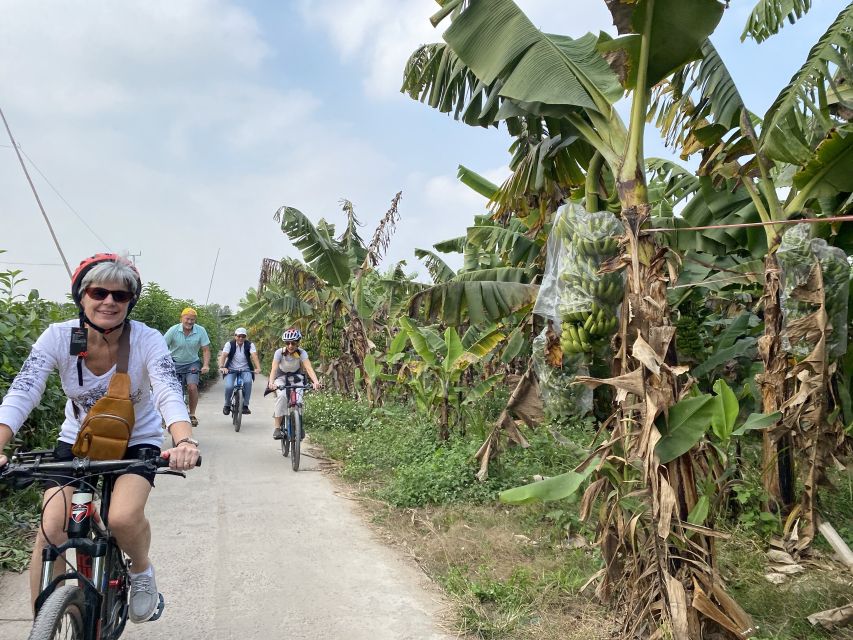
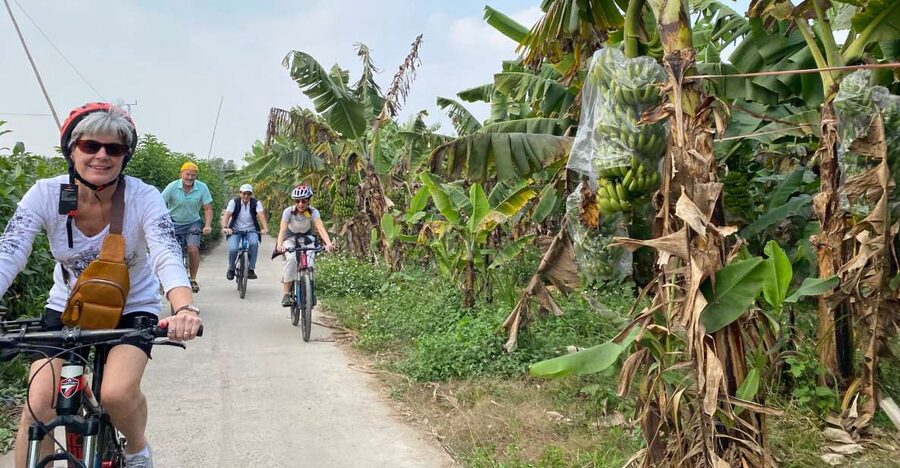
- Banana Island changes the mood completely: After the noise of central Hanoi, you reach a quieter area with gardens, banana plants, and a more rural view of daily life.
- Hanoi traffic is an active part of the tour: You will ride among scooters, cars, bicycles, and pedestrians, so regular cycling experience is required.
- Several guides are singled out for safety: Tee, Minh, Khoi, T, and others are praised for clear English, calm road guidance, and useful local explanations.
- Food is part of the experience: Expect a local meal or tasting, with bun cha, pho, banh mi, pho cuon, or other Vietnamese dishes depending on the route.
- The route mixes famous sights with quieter corners: Old Quarter streets, Ho Huu Tiep Lake, Long Bien Bridge, Train Street, and Banana Island can all feature.
- Small groups offer flexibility: Private outings are available, and some departures have ended up with only one or two participants.
Why this is a strong way to see Hanoi

Hanoi is a city you understand better from a bicycle seat. On foot, you can explore the Old Quarter. By car, you miss the small turns, the changing street sounds, and the way neighborhoods shift from commercial streets to narrow lanes. A bicycle gives you more reach without separating you from the city.
I like the way this tour combines two very different Hanois. One is crowded, noisy, and constantly in motion. The other appears around Banana Island, where the city feels farther away and agriculture still shapes the view. That contrast gives the outing more purpose than a standard ride between major sights.
The tour is listed at $34 per person. That includes hotel pickup and drop-off within Hanoi’s Old Quarter, a bicycle, helmet, English-speaking guide, food, entrance fees, cold water, and a raincoat if needed. For a half-day outing, that is a solid package, especially if you value local food and an informed guide rather than simply renting a bicycle.
The exact length varies from three to eight hours. This matters because the same basic outing can feel like a compact city ride or a longer route that adds more stops, food breaks, and time around Banana Island. Check the starting time and expected duration when booking.
More Coastal Bike Rides in Hanoi:
- Hanoi City Bike Tour through Banana Island & Food Tasting
★ 5.0 · 161 reviews - From Perth: Rottnest Island Full-Day Bike and Ferry Trip
★ 4.7 · 2,548 reviews - Valencia Bike Tour from the City to the Beach, plus Bike Guy App!
★ 5.0 · 1,187 reviews
Starting in the Old Quarter
Pickup is available from hotels in the Old Quarter, and you are asked to be ready in the lobby five minutes early. At the arranged meeting point, you choose a suitable bicycle and receive a helmet before setting off.
The Old Quarter is a sensible starting point because it gives you an immediate feel for Hanoi’s street rhythm. Shopfronts, scooters, food stalls, narrow lanes, and people moving in every direction create a busy first section. You are not simply looking at the city from the edge of the road. You are moving through it.
The first minutes may be the most demanding. You need to follow the guide closely, hold your line, watch for turns, and avoid sudden braking. The guides are used to leading riders through this setting, but they cannot remove the traffic. You still need to make decisions quickly.
Several riders appreciated guides who gave direct instructions about merging and crossing roads. Khoi was especially praised for showing people how to cross traffic coming from both directions, while Tee was noted for checking that riders felt comfortable. Those details matter more here than polished commentary.
The bicycles were generally described as being in fine condition, though one rider advised checking the bike carefully before leaving. I would inspect the brakes, tires, seat height, and gears before you start. A few minutes at the beginning can prevent a needless problem later.
Ho Huu Tiep Lake and the B-52 connection
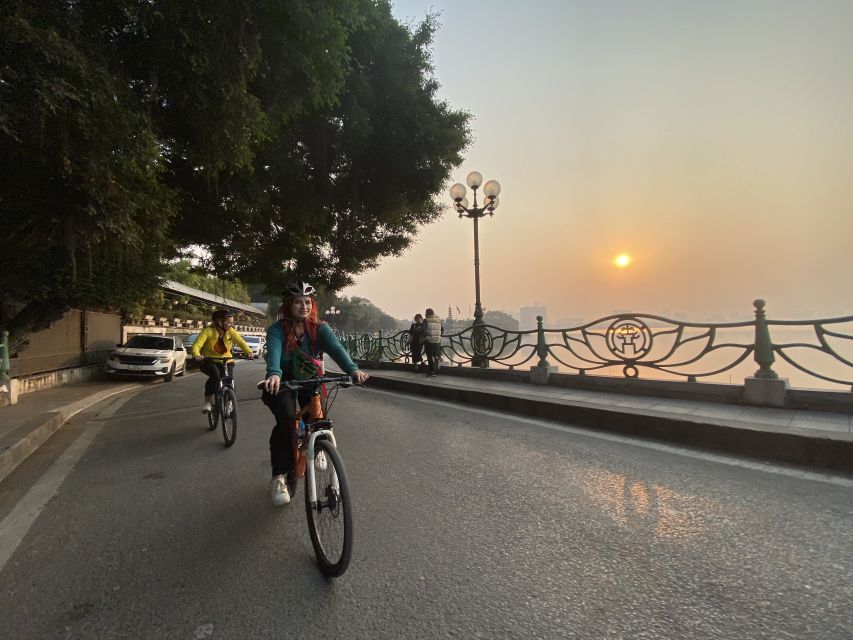
One listed stop is Ho Huu Tiep Lake, also known as Lake B52. It takes its name from an American B-52 bomber that crashed there during the Vietnam War. Today, the water is a quiet local place where people may fish, sit, and talk.
This stop gives the ride a more serious side. Hanoi’s wartime past is not presented only through formal museums or monuments. It is also found in ordinary neighborhoods, where a lake and nearby homes carry a difficult piece of history.
Expect about 45 minutes for a visit, photo stop, and guided explanation. The value comes from the guide’s ability to connect the location with Vietnamese history and present-day life. Guides T, Minh, and Khoi were repeatedly praised for answering questions and explaining how historical events still affect the city.
The lake is not a grand sightseeing venue. That is part of its appeal. If you prefer major monuments and formal displays, this may feel modest. If you like seeing historical places in their everyday setting, it is one of the more worthwhile pauses on the route.
Crossing Long Bien Bridge toward Banana Island

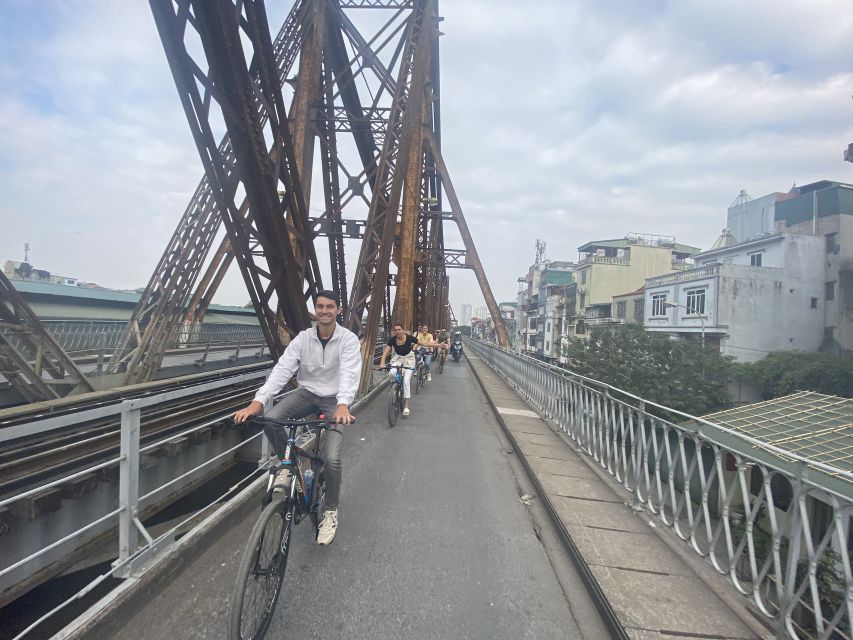
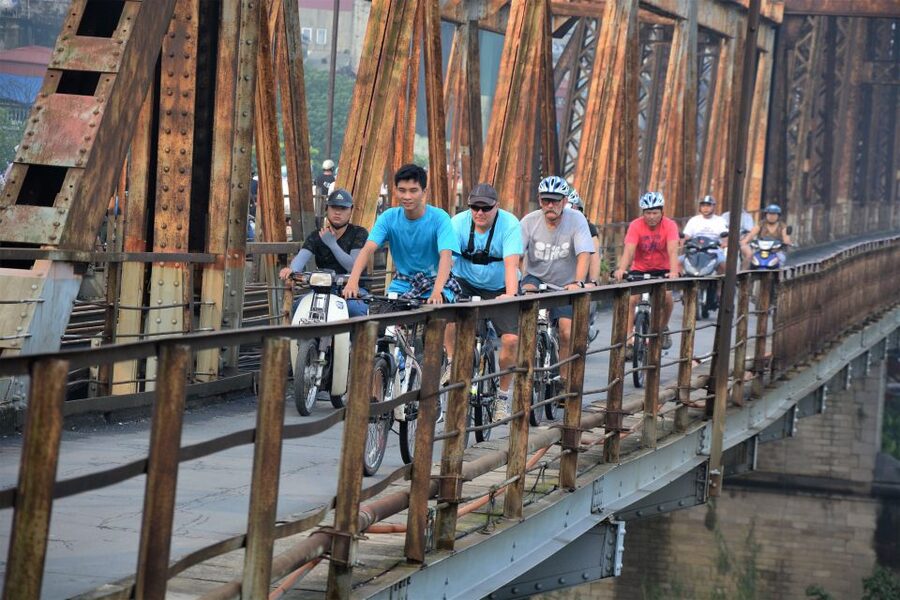
Long Bien Bridge is one of Hanoi’s best-known structures. Built by the French in 1903, it crosses the Red River and offers wide views of the water and surrounding areas. The bridge is also a practical link between the city and Banana Island.
Cycling across it adds a physical element that you do not get from a quick photo stop. You feel the movement of traffic, the height above the river, and the change from central streets to more open surroundings. The bridge also provides a useful history lesson, and one guide pointed out its connection with French engineers associated with the Eiffel Tower.
The approach and crossing require attention. You are still on a working route, not a closed cycling path. Stay behind the guide and avoid stopping in places that interfere with traffic. The bridge section may be exciting, but it is not the moment to take your best photograph while riding.
Once you reach Banana Island, the pace usually changes. The route can pass through quieter tracks and agricultural areas, with banana plants and gardens replacing dense shops and buildings. I especially like this part because it shows how close Hanoi’s city center can be to a very different way of life.
The tour description also presents a family-home visit as a chance to learn about everyday life. The precise stops can vary, so you should confirm whether that visit is part of your selected route. If included, it adds a personal element that a monument cannot provide. You see how local people live rather than only hearing dates and facts.
Banana Island is peaceful, but do not expect a remote escape. It is still part of the Hanoi area, and conditions may be simple. That is exactly why it works as a contrast to the Old Quarter.
A few more rides around Hanoi worth a look
- Ninh Binh Day Trip: Hoa Lu-Trang An/Tam Coc-Mua Cave-Cycling-Boat
★ 5.0 · 1,886 reviews - From Hanoi: Hoa Lu & Tam Coc with Buffet lunch & Cycling
★ 4.4 · 616 reviews - Ninh Binh Tour: Deluxe & Small Group Tam Coc Hoa Lu – Boat, Biking, Buffet Lunch
★ 5.0 · 178 reviews - Hoa Lu – Tam Coc – Ninh Binh Day Tour: Biking, Visit Local Family
★ 5.0 · 166 reviews
Train Street and Hanoi’s famous timing problem
Train Street is one of Hanoi’s most photographed sights. A railway line runs through a narrow residential area, with homes and small businesses close to the tracks. When a train passes, the space changes quickly.
A guide is especially useful here. Access and viewing conditions can change, and the important thing is to follow local instructions rather than wander onto the tracks. Several outings were timed to see a train pass, while one guide offered a rooftop bar as an alternative when Train Street was not suitable.
Do not assume every departure will catch a train. Timing depends on the day and the route, and the tour description does not promise a specific train passage. Still, guides such as Nathan and Tee were praised for arranging the timing when possible.
Train Street can feel like a quick photo stop, but it also shows how tourism and ordinary life overlap in Hanoi. You may have a cold drink nearby, watch the train move through the narrow corridor, and then continue by bicycle. Keep your expectations practical. This is not a leisurely railway museum visit.
Local food is more than a lunch break

Food is included, though drinks are not. The meal may feature bun cha, banh mi, pho, pho cuon, or another local dish. The exact restaurant and dish depend on the day and route.
I like that food is built into the tour rather than left as an optional extra. A good guide can explain how to approach the meal, what ingredients you are eating, and how the dish fits into everyday Vietnamese dining. One guide helped explain the traditional dining style, while another suggested bun cha as a particularly good choice.
Bun cha is a useful introduction to Hanoi food. It usually combines grilled pork, rice noodles, herbs, and dipping sauce. Banh mi chao, a plate-style version of the familiar sandwich flavors, was also recommended by a guide on one outing.
A food stop may be lunch or dinner, and some departures have included breakfast as early as 5 a.m. An early start can show you Hanoi waking up, with locals beginning their day and pho available near Ho Huu Tiep Lake. That timing will not suit everyone, but it offers a different view of the city.
Tell the provider about dietary needs before setting out. The supplied information confirms the food options but does not promise a particular vegetarian, vegan, or allergy-friendly menu. One guide did help arrange a vegan restaurant for a rider, but you should treat that as something to request, not an automatic feature.
How hard is the cycling?

The route is described as suitable for all fitness levels, but that should not be confused with being suitable for every cycling ability. The physical distance is moderate. The harder part is managing Hanoi’s traffic.
You should be comfortable riding regularly, braking smoothly, turning with confidence, and following instructions in a crowded street. People who rarely cycle, feel unsteady on two wheels, or dislike close traffic may find the ride stressful.
The positive side is that guides appear to take safety seriously. Riders repeatedly praised the way Tee, Minh, Khoi, Mark, and others led groups through traffic. Some people described the ride as scary at first but fun once they adjusted. That is a fair description.
The route includes quiet lanes and slower sections, so it is not a nonstop test of nerve. Still, the city roads are an essential part of the experience. You cannot book this expecting a protected recreational trail.
The tour is not suitable for children under eight, pregnant women, or people with mobility impairments. Alcohol and drugs are not allowed, and baby carriages are not suitable for the ride. The tour runs rain or shine, with raincoats available if needed.
Guide quality and group size
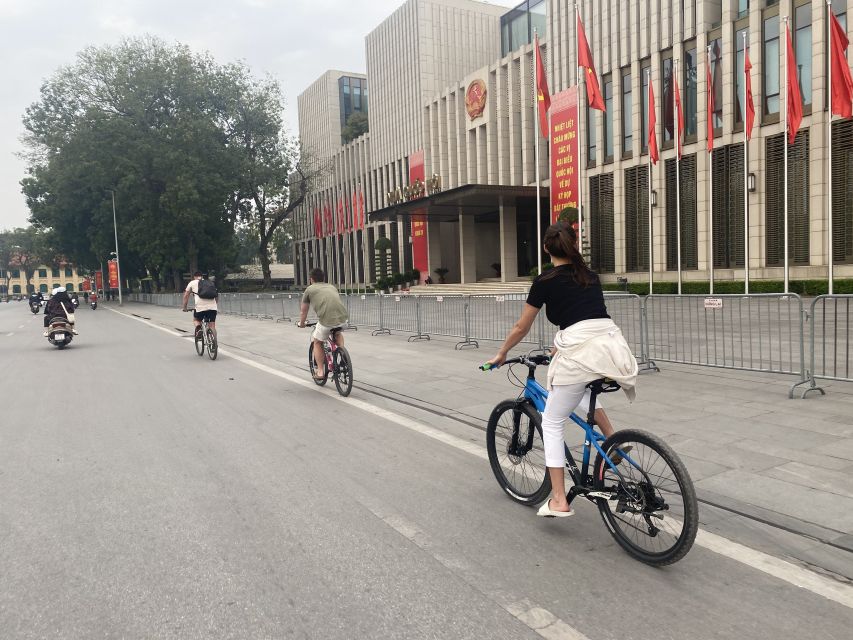
The strongest feature of this outing is the guide. The best guides do three jobs at once: they lead safely, explain what you are seeing, and adjust the pace to the group.
Tee is praised for enthusiasm, strong English, historical stories, and checking on riders. Minh is noted for calm road leadership, food knowledge, and easy conversation. Khoi is frequently praised for his road guidance, local history, and ability to explain everything from plants to the Vietnamese alphabet. T is also described as attentive and highly fluent in English.
Names can change with the departure, so do not book solely to receive one particular guide. The broader pattern is more useful: the experience depends heavily on who leads it, and the provider has several guides who appear comfortable with both cycling and storytelling.
Private and small-group options are available. Low-season departures have sometimes become private tours, while one group had only three riders. A small group makes it easier to receive road instructions and ask questions. It also allows the guide to adjust the pace or replace a stop when conditions change.
Price, timing, and practical value
At $34 per person, the tour offers good value if you want transportation, equipment, food, and guiding in one booking. You would otherwise need to rent a bicycle, find your own route, navigate the traffic, arrange food, and work out how to reach Banana Island.
The value is not just the number of sights. It comes from access and context. A guide can lead you across the city, explain Ho Huu Tiep Lake, help you manage Long Bien Bridge, and show you quieter areas that are awkward to reach on foot.
The package does not include beverages, and pickup outside the Old Quarter costs extra or is not included. There is also a $10 surcharge during New Year, Tet from February 8 to 12, Liberation Day and Reunification Day on April 30, International Workers’ Day on May 1, and National Day on September 2.
You can cancel up to 24 hours before departure for a full refund, and reserve now while paying later. Those policies are useful if your Hanoi schedule is still changing.
Who should book this Hanoi bike tour?
I would choose this tour early in a Hanoi visit if you want to get your bearings quickly. It helps you understand the city’s scale, traffic, food, history, and nearby countryside in one outing.
It suits confident cyclists, curious eaters, and people who prefer local streets to a polished sightseeing route. It is also a good match for visitors who want a guide to handle the difficult navigation while they concentrate on the city around them.
I would be cautious if you are nervous on a bicycle or strongly dislike traffic. The ride can be exhilarating, but it can also feel demanding. You should not book it because the distance looks short. The road conditions matter more than the kilometers.
Final verdict: book it if you want Hanoi in motion
I recommend this tour for confident cyclists who want more than the Old Quarter. The combination of Hanoi traffic, Long Bien Bridge, Banana Island, local food, and historical stops gives you a broad and memorable look at the city.
The experience is not perfectly predictable. Train Street may not align with the train schedule, weather can change the ride, and the precise route may vary. But that flexibility is part of the appeal, especially when a guide replaces one stop or adjusts the pace.
Book it if you want to see Hanoi from street level, eat somewhere you might not find alone, and accept a little controlled chaos. Skip it if you want a quiet, protected cycling path. For the right rider, $34 is a very fair price for a half-day introduction to the city and its less familiar edges.
FAQ
How long does the Hanoi bike tour last?
The tour duration can range from three to eight hours. Starting times and the exact length depend on availability and the selected route.
How far do you cycle?
The tour generally covers about 10 kilometers, or roughly 6 miles. Some outings have covered about 15 kilometers.
Is bicycle equipment provided?
Yes. A bicycle and helmet are included. You should check the brakes, tires, seat, and gears before leaving.
Is hotel pickup included?
Pickup and drop-off are included for hotels in Hanoi’s Old Quarter. Pickup outside the Old Quarter is not included.
Do I need to be an experienced cyclist?
You need to be a regular cyclist who feels comfortable riding in busy traffic. The tour is not suitable for people who are unsteady on a bicycle or uncomfortable sharing roads with many vehicles.
Is food included?
Yes. Lunch or dinner is included, and the meal may feature dishes such as bun cha, banh mi, pho, or pho cuon. Beverages are not included.
Newly added rides around Hanoi
- Ninh Binh Daily: Hoa Lu, Mua Cave, Tam Coc, Bike & Swimming★ 4.7 · 23 reviews
- 2 day Trang An – Mua cave – Cycling with Bungalow stay★ 4.8 · 18 reviews
- Hanoi: Ninh Binh, Tam Coc, Mua Cave & Hoa Lu with cycling★ 4.7 · 47 reviews
- Hanoi:Ninh Binh-Trang An-Mua Cave-Hoa Lu&Cycling BEST SELLER★ 4.8 · 20 reviews
- From Hanoi: Ninh Binh Trip with Cycling & Buffet Lunch★ 4.7 · 21 reviews
- From Hanoi: Hoa Lu, Tam Coc, Mua Cave & Cycling in Ninh Binh★ 5.0 · 12 reviews
- Explore Hanoi Old City By Cycling Tour With Small Groups★ 4.8 · 80 reviews
- Hanoi City Tours With Small Groups (By Bus/Jeep Car/Cycling)★ 4.9 · 13 reviews
Hanoi Bike Tours, compared.
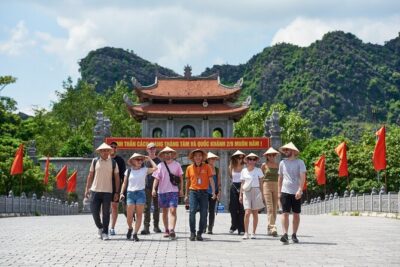
Ninh Binh Day Trip: Hoa Lu-Trang An/Tam Coc-Mua Cave-Cycling-Boat
Read our review →

Ninh Binh Tour: Deluxe & Small Group Tam Coc Hoa Lu – Boat, Biking, Buffet Lunch
Read our review →
Hoa Lu – Tam Coc – Ninh Binh Day Tour: Biking, Visit Local Family
Read our review →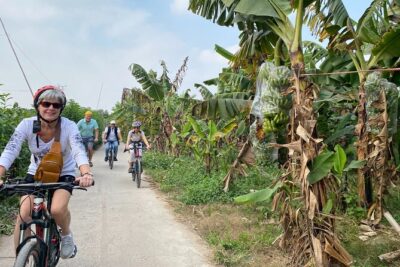
Hanoi City Bike Tour through Banana Island & Food Tasting
Read our review →
Explore Hanoi Old City By Cycling Tour With Small Groups
Read our review →
Ninh Binh, Tam Coc, Mua Cave & Hoa Lu with cycling
Read our review →
Ninh Binh Daily: Hoa Lu, Mua Cave, Tam Coc, Bike & Swimming
Read our review →Browse the lists this tour appears in