
REVIEW · USA BIKE TOURS
Historic Bike Tour in Tucson
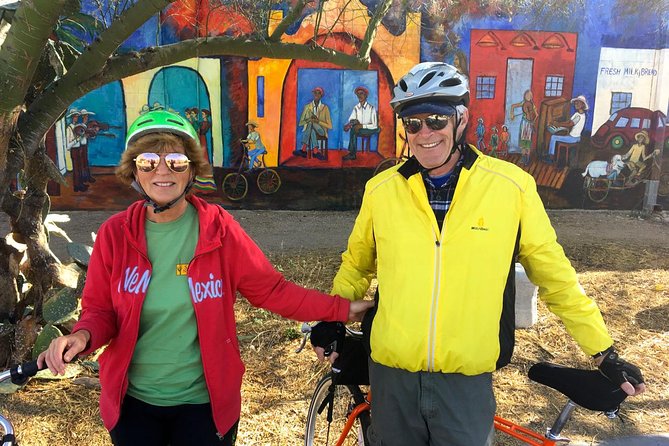
Tucson reveals itself best at bicycle speed. This two-hour-15-minute ride combines easy cycling with local history, taking you from the old train station to Barrio Viejo, the Santa Cruz River Trail, and colorful neighborhood streets. I like the frequent short stops, and I especially like the way guide Lorraine connects architecture, murals, shrines, bank robbers, and early Spanish settlers into one clear story.
The main tradeoff is Tucson’s heat, especially on afternoon departures. Parking near 215 N Hoff Avenue can also take some patience, so arrive early. Still, the small group, comfortable cruiser bikes, and relaxed pace make this a strong first activity for getting oriented.
Five reasons this Tucson bike tour works
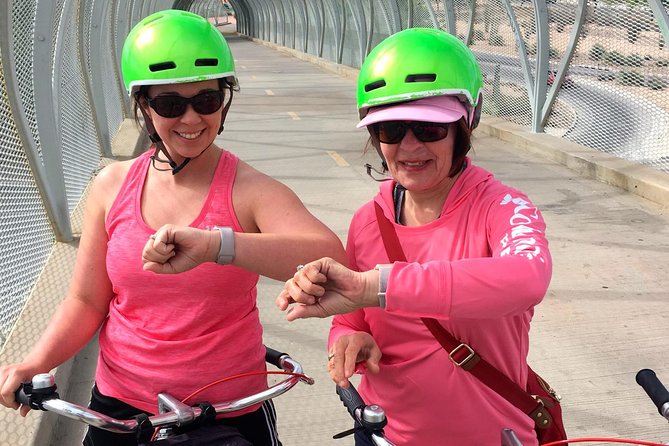
- Rattlesnake Bridge: Ride across a 28-foot downtown bridge shaped like a diamondback rattlesnake.
- Barrio Viejo streets: See colorful adobe homes, old shrines, murals, and some of Tucson’s most distinctive residential architecture.
- Short, regular stops: Pause often for photos, water, local stories, and a closer look at important buildings.
- A small group of eight: The limited size makes it easier to hear Lorraine, ask questions, and adjust the ride to the group.
- Mostly gentle riding: Quiet streets, bike lanes, and sections of The Loop keep the pace manageable for casual cyclists.
- Useful city orientation: You finish with a better sense of where to eat, what to visit, and how Tucson’s districts fit together.
Why exploring Tucson by bicycle makes sense
At $83 per person, this is not the cheapest way to see downtown Tucson, but it offers more than transportation between sights. You get a bicycle, helmet, guide, route planning, local stories, and a useful introduction to several central neighborhoods in just over two hours.
I see the value in the format. Walking between all these places would take longer and limit how far you could go. A car would cover the distance quickly, but it would hide the small details: adobe walls, murals, shrines, older homes, and the changing feel of each district.
The ride is designed for sightseeing, not speed. The bikes are described as light cruiser-style bicycles, and riders repeatedly praise how easy they are to handle. You should still be comfortable balancing and pedaling for more than two hours, but this is not presented as a demanding cycling workout.
The maximum group size is eight. That matters in a city tour because the guide can stop the group without creating a traffic jam, keep an eye on riders, and tailor the conversation to the people present. Lorraine receives especially strong praise for her local knowledge, warm manner, safety awareness, and ability to make the tour comfortable for less confident cyclists.
The tour is offered in the morning or afternoon. I would choose the morning if you have a choice. One family specifically recommended it because Tucson can be quite hot later in the day, and the morning also leaves you time for lunch and further exploring.
More Historic Bike Tours in the USA
- Asheville Historic Downtown Guided Electric Bike Tour with Scenic Views
★ 5.0 · 1,234 reviews - Palm Springs Modernism Architecture & History Bike Tour
★ 5.0 · 359 reviews - Historical Bike Tour of Savannah and Keep Bikes After Tour
★ 5.0 · 345 reviews
Starting at the old Southern Pacific station
The meeting point is at 215 N Hoff Avenue, and the tour returns there at the end. Your first stop is the Southern Arizona Transportation Museum, located in Tucson’s historic Southern Pacific train station.
The stop is brief, about five minutes, so do not expect a full museum visit. The point is to place Tucson in its transportation story and show you an important downtown building before the ride moves into the city streets.
You receive a bicycle suited to your height and a helmet, followed by a short safety briefing. Riders must be between 4 feet 8 inches and 6 feet 6 inches tall, with a maximum weight of 260 pounds. Riders 5 feet and taller are recommended, and open-toed shoes are not allowed.
These rules are practical rather than fussy. Correct bike fit makes a big difference on a casual ride, and closed shoes give you better control over the pedals. The tour is near public transportation, though parking deserves attention. One rider spent half an hour searching and ended up parking some distance away, so I would not cut arrival time close.
Downtown stories and Tucson’s Spanish roots
From the station, the route moves toward the Tucson Museum of Art and Historic Block in the El Presidio neighborhood. You stop for about five minutes at the heart of this older part of town.
The museum itself is not part of the admission, and the tour does not promise time inside. Instead, the guide gives you an outdoor introduction to the surrounding streets and architecture. This is one of the tour’s strengths: you are not simply checking off famous buildings. You are learning how Tucson’s older districts look, how they developed, and why the city feels different from a typical American downtown.
The route continues to the Pima County Courthouse, one of the city’s most striking buildings. The stop lasts only about two minutes, but that is enough for a quick exterior look and an explanation from Lorraine.
Next comes St. Augustine Cathedral, described as the spiritual center of town. Again, the stop is short. If you want to study the courthouse or cathedral interiors, plan a separate visit before or after the bike tour. A couple of extra interior stops or food tastings could make the outing longer, but adding them would also change the easy rhythm that makes this tour work.
This portion is especially useful for first-time visitors. You get major landmarks, but you also hear the stories that connect them to Tucson’s Spanish and Mexican roots, its religious life, and its later growth.
Rattlesnake Bridge and Tucson’s outlaw tales
One of the most unusual moments comes at Rattlesnake Bridge. The 28-foot bridge was completed in 2002 and shaped like a real diamondback rattlesnake.
You ride through the body of the snake, which makes this more memorable than a standard bridge crossing. Hold onto the handlebars and keep your attention on the path while Lorraine tells stories about bank robbers and outlaws who once lived in the area.
The bridge is a small feature, but it captures the playful side of Tucson. The tour is not only about dates and buildings. It uses odd details, local characters, and visual surprises to help the city stick in your memory.
This is also where the bike format adds something a walking tour cannot. You experience the bridge as a rider, not simply as a structure viewed from the sidewalk. The route gives you enough time to appreciate it without turning the stop into a technical cycling challenge.
Same handlebars, a completely different route:
- NYC: Central Park Bike Rentals
★ 4.2 · 2,528 reviews - Red Rock Canyon eBike Half-Day Tour
★ 5.0 · 1,870 reviews - NYC: Central Park Bike Rental
★ 4.1 · 1,651 reviews - Central Park Bike Rental
★ 4.7 · 1,509 reviews
Barrio Viejo, adobe homes, and small shrines
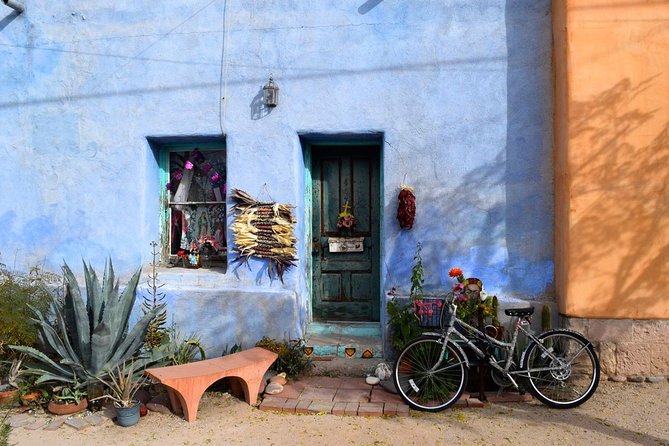
Barrio Viejo is the emotional center of the ride. Here, the group moves through streets lined with colorful adobe homes, murals, and small religious shrines.
The pace stays gentle, with regular stops for photos and explanations. Lorraine’s strength is particularly useful here because the neighborhood rewards close attention. You might notice a painted wall, an unusual doorway, or a shrine that would be easy to miss from a car.
The district also shows how Tucson’s identity is built from many layers. You see homes rather than only formal attractions, and the route helps you understand the area as a lived-in neighborhood. That gives the tour a more genuine feel than a simple downtown highlights loop.
Several riders praise the chance to see historic houses and colorful alleys. One person who had lived in Tucson for a year said the tour brought parts of the city to light that had never been explored before. That is a good reason to take this ride even if you already know Tucson a little.
You should not expect to go inside the homes or spend long periods at each site. The experience is an overview, with enough time to see details and hear stories, not a deep architectural study.
Mercado San Agustin and the city’s everyday side
The route includes Mercado San Agustin, an outdoor public space with a casual, social feel. The planned stop is about five minutes.
This gives the tour a welcome change of mood after the older residential streets. You see a place connected to food, gathering, and daily city life rather than only historic buildings.
The stop does not function as a scheduled meal break. If you want to eat there, you would need to return later or plan time before or after the ride. That limitation is worth noting because some riders would enjoy adding a food sample to the tour.
Still, the market works well as a point of orientation. Lorraine also gives practical suggestions about where to eat, which can help you make plans for the rest of the day. I would jot down those suggestions rather than assume you will remember every name once you are back on the bike.
Barrio Kroger Lane and the Santa Cruz River Trail
The final major section takes you along Barrio Kroger Lane and toward the Santa Cruz River. You get a closer view of the river and ride a short section of The Loop, Tucson’s 55-mile bike path system.
This section changes the focus from historic streets to open riding. It gives your legs a break from stop-and-start sightseeing and shows how Tucson connects neighborhoods with bike routes.
The ride is mostly flat, according to the tour details and rider feedback. Quiet roads and bike lanes are used where possible, and the route is planned to reduce the pressure of riding beside busy car traffic. Even so, you should pay attention to the guide, follow road rules, and stay alert around crossings and shared paths.
The river segment is not a long expedition. You will see part of the trail rather than cover a major portion of The Loop. That is enough to show how the path can fit into your own Tucson plans later, especially if you want to rent a bike or walk along the river on another day.
After this section, you ride back to the starting point. The regular stops and manageable distance mean you get a broad view of central Tucson without finishing exhausted.
What the guide adds to the ride
The strongest part of this experience is Lorraine’s guiding. She explains Tucson’s history, culture, architecture, neighborhoods, and murals in a way that makes the route feel personal rather than scripted.
She also receives praise for stopping often, looking after rider safety, and adjusting to the group. That matters if one person is nervous on a bicycle or if the group includes different fitness levels. One family described how she helped a 76-year-old rider who had not been on a bike for 20 years feel at ease.
The guide also makes the experience more useful beyond the two-hour ride. You receive suggestions for lunch and ideas about places to see on your own. If you are visiting Tucson for only a few days, that local orientation can save time.
The tour has a rating of 4.9 from 553 ratings, with 98 percent recommending it. Those numbers point to unusually steady satisfaction, especially for the guide, relaxed pace, comfortable bicycles, safety, and variety of neighborhoods.
Timing, fitness, and practical comfort
The tour lasts about two hours and 15 minutes, though short stops and traffic conditions can affect the exact timing. You should be ready to ride continuously between stops, but the route is described as gentle rather than strenuous.
Most people can participate if they meet the height and weight limits and can ride a bicycle. The tour is not suitable for open-toed shoes, and a helmet is provided with the bicycle.
The heat is the main practical concern. Choose the morning if you are sensitive to sun or high temperatures. Bring water, use sun protection, and dress for outdoor riding. The group makes stops for water and rest, but the tour is not a substitute for carrying what you personally need.
Weather can also affect the schedule. If poor weather forces a cancellation, you are offered another date or a full refund. You can cancel for a full refund up to 24 hours before the start time, but changes or cancellations inside that window are not refunded.
Who should book this Tucson ride?
I would recommend it to first-time visitors who want a clear introduction to central Tucson without spending the day in a vehicle. It also suits couples, families, solo riders, and anyone who prefers seeing a city through neighborhoods rather than only major attractions.
It is a good match if you enjoy local stories, architecture, murals, and a little gentle exercise. You do not need to be an experienced cyclist, but you should be comfortable on a bicycle and prepared for outdoor heat.
I would choose another activity if you want long museum visits, extended food tasting, or a serious cycling workout. The stops are intentionally brief, and the tour focuses on a wide overview rather than one subject in great depth.
Should you book this historic bike tour?
Yes, especially for a first day in Tucson. The route covers the old train station, El Presidio, the courthouse, cathedral, Barrio Viejo, Mercado San Agustin, Rattlesnake Bridge, and the Santa Cruz River Trail in one relaxed outing.
Book the morning when possible, arrive early for parking, wear closed shoes, and keep the afternoon free for returning to a favorite neighborhood or following Lorraine’s food suggestions. At $83, the price is fair for a small group, equipment, a careful guide, and a useful city introduction. The best reason to book is simple: you will see more than you could on foot, while still moving slowly enough to notice what makes Tucson itself.
FAQ
How long is the Historic Bike Tour in Tucson?
The tour lasts approximately 2 hours and 15 minutes.
How much does the tour cost?
The listed price is $83 per person.
Where does the tour begin?
The tour begins at 215 N Hoff Avenue, Tucson, Arizona 85705.
Where does the tour finish?
The tour ends back at the original meeting point.
Is the bicycle and helmet included?
Yes. The tour includes a bicycle suited to your height and a helmet.
What height and weight limits apply?
Riders must be between 4 feet 8 inches and 6 feet 6 inches tall, or 142 to 198 centimeters. A height of 5 feet or taller is recommended, and the maximum weight is 260 pounds.
Are morning and afternoon departures available?
Yes. You can choose between a morning or afternoon departure.
What happens if I need to cancel?
You can cancel at least 24 hours before the start time for a full refund. Cancellations or changes made less than 24 hours before the start time are not refunded. If poor weather or an insufficient number of participants cancels the tour, you are offered another date or a full refund.
More History Tours in the USA
- New Orleans History and Sightseeing Small-Group Bike Tour
★ 5.0 · 215 reviews - Savannah: Historical Bike Tour with Tour Guide
★ 4.8 · 140 reviews - Miami Beach Art Deco & History Bike Tour with Design Enthusiast
★ 5.0 · 135 reviews - History Ride: The Best of Buffalo by Bike
★ 5.0 · 94 reviews
Newly added rides around the USA
- Private North County San Diego Electric Bike and Hike Tour★ 5.0 · 10 reviews
- 1 Day Electric Bike Rental in Solana Beach★ 5.0 · 11 reviews
- Local Guided Electric Bike Tour from Solana Beach to Encinitas★ 5.0 · 51 reviews
- Carlsbad 3-Hour Electric Bike Rental★ 4.5 · 46 reviews
- Hourly Electric Bike Rental in Solana Beach★ 5.0 · 24 reviews
- Luxury Guided Electric Bike Tour to Downtown Encinitas★ 5.0 · 18 reviews
- Wine Country Half-Day Bike Tour from Solvang – w/o Lunch★ 5.0 · 12 reviews
- Waterfront Ride: Outer Harbor History Bike Tour★ 5.0 · 15 reviews
USA Bike Tours, compared.




Asheville Historic Downtown Guided Electric Bike Tour with Scenic Views
Read our review →
Browse the lists this tour appears in