
REVIEW · LISBON BIKE TOURS
Lisbon: Bike Tour from Lisbon to Belém + Liquor & Pastry
Lisbon’s hills are kinder on two wheels. This 3.5-hour bike tour begins high above the city and rolls downhill or along level ground to Belém, covering about 10 kilometers at a relaxed pace. I like the clever route, which lets you see central Lisbon without grinding up its famous slopes, and I like the mix of major sights, local history, ginjinha, and pastel de nata. The main thing to consider is that the tour ends in Belém, not back at the starting point, so you need to plan your afternoon from there.
I also like the way the ride connects parts of Lisbon that can feel scattered on foot. You move from Parque Eduardo VII through grand avenues and old squares, then follow the Tagus waterfront toward Belém. The ride is easy, but Lisbon traffic, bright sun along the river, and a possibly larger group mean you should stay alert and bring water.
The ride in five useful points
- The route is downhill or flat: You start at the top of Parque Eduardo VII, then descend toward downtown and continue on level streets and waterfront paths.
- You cover about 10 kilometers: The relaxed pace leaves room for stories, photos, and regular stops rather than turning the outing into a race.
- Two Lisbon tastes are included: You sample ginjinha, the city’s cherry liqueur, and a pastel de nata at a café.
- The tour ends in Belém: This is useful if you want to spend the rest of the day around Belém’s monuments, museums, and riverfront.
- The guides add local color: Guides including George, Jorge, Jenny, Filipe, Maia, and Vincent have been praised for clear history, humor, and restaurant advice.
- Families can be accommodated: Child seats, tag-a-longs, and smaller bikes are available upon request at booking.
Starting above Lisbon at Parque Eduardo VII
Meet your guide at Alameda Cardeal Cerejeira, at the top of Parque Eduardo VII. The nearest metro station is Parque on the Blue Line. This starting point matters because it solves Lisbon’s biggest cycling problem before you even begin: the hills.
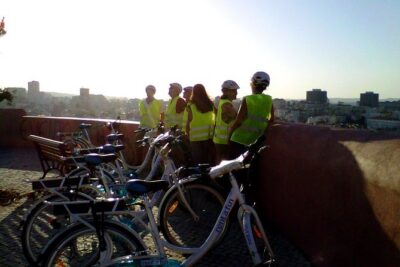
Parque Eduardo VII gives you a wide view over the city toward the Tagus River. It is a fitting place to get oriented, check your helmet, and hear how the route will work. The bicycles are regular bikes, and the supplier also provides helmets, insurance, and van assistance.
The ride is described as suitable for all skill levels, and the route avoids climbs. That does not mean you can switch off completely. You still need to handle a bike in a city, follow your guide, and watch the road surface. But you do not need strong cycling fitness. Several families and mixed-age groups have enjoyed it, including one group ranging from 14 to 70.
If you want an electric bike, ask about it when booking. One private outing used e-bikes, but the standard inclusion here is a regular bike.
A few more rides around Lisbon worth a look
- Lisbon: Hills, Alfama, and Mouraria Tour by Electric Bike
★ 4.8 · 3,438 reviews - Lisbon E-Bike Tour Commerce Square, Mouraria and Alfama
★ 4.5 · 1,688 reviews - Lisbon: 7 Hills Half-Day Electric Bike Tour
★ 4.9 · 1,592 reviews
Rolling past Marquês de Pombal and Avenida da Liberdade
From the park, the route passes Marquess of Pombal Square and continues down Avenida da Liberdade. This is one of Lisbon’s grandest corridors, lined with trees, patterned pavements, hotels, shops, and broad traffic lanes.
The downhill start gives you a pleasant introduction to the city. You are not stopping at every attraction for a full visit, but your guide pauses to explain what you are seeing. That approach works well if you want orientation rather than a museum-style tour.
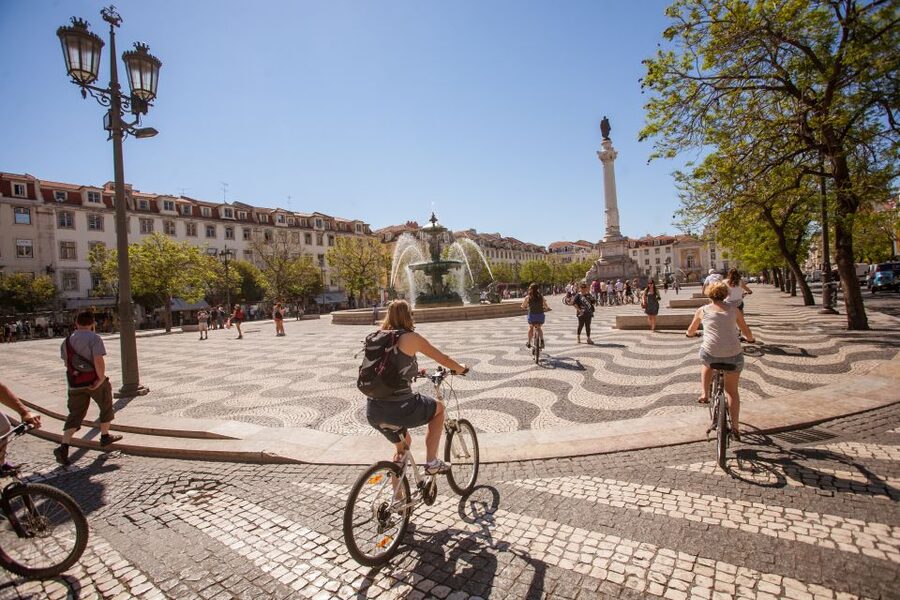
You then pass Restauradores Square, Praça Dom Pedro IV, also called Rossio, St. Dominic’s Square, and Praça da Figueira. These central spaces help you understand how Lisbon fits together. The route links the formal nineteenth-century avenue with older squares and streets where daily city life continues around cafés, shops, and public transport.
Expect a balance of riding and talking. A guide may stop the group in a suitable place, give the background, and allow time for photographs. The stories are a major part of the value here. Guides such as George, Filipe, Jorge, and Vincent have been praised for making Portuguese history understandable without turning the morning into a lecture.
The tradeoff is simple: you see many places from the bike, but most are pass-by sights. If you want to enter a church, museum, or monument, plan a separate visit later.
A small glass of ginjinha in central Lisbon
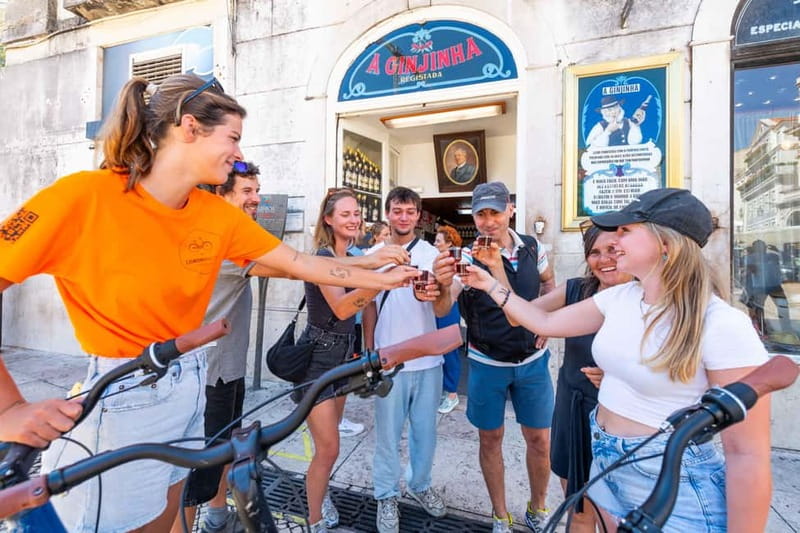
One of the tour’s most distinctive stops is a taste of ginjinha, usually shortened to ginja. This sweet cherry liqueur is closely tied to Lisbon, and trying it during the ride gives the city’s history a pleasant local flavor.
The stop is brief, so think of it as a sample rather than a tasting session. It is also an adult drink, so families should keep that in mind. The tour includes the local liquor, while any extra drinks are paid separately.
This is the kind of small stop that makes the route feel more personal. You are not only looking at Lisbon’s squares and buildings. You are also getting a taste associated with the city.
Praça do Comércio, Cais do Sodré, and the riverfront
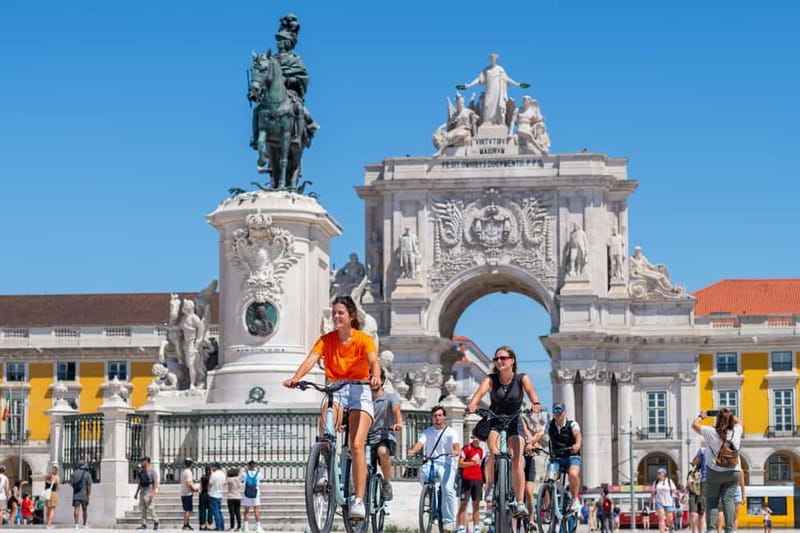
After the central squares, the ride continues toward Praça do Comércio. This vast waterfront square opens toward the Tagus and is one of Lisbon’s most recognizable public spaces. Its scale gives you a good sense of the city’s connection to the river and its maritime past.
From there, the route passes Cais do Sodré and heads toward Doca de Santo Amaro. This section changes character. The central streets give way to the waterfront, with open views and a more relaxed cycling rhythm.
This is one of the strongest parts of the tour for photographs. You can capture the river, bridges, boats, docks, and Lisbon’s changing shoreline without spending the day climbing between viewpoints. The route is still flat, but the riverfront can be exposed to full sun. Bring water, especially in summer, and wear sunscreen.
The waterfront portion also makes the tour feel longer than a simple city-center loop. You are gradually moving toward Belém rather than circling back to the starting point. That one-way design is useful, but it requires a little planning. You should not leave your return transport until the last minute if you have a train, dinner reservation, or timed admission elsewhere.
Same handlebars, a completely different route:
- Lisbon: City Highlights and Viewpoints E-Bike Tour
★ 4.9 · 1,556 reviews - Lisbon: 3-Hour Tour by E-Bike
★ 4.8 · 1,150 reviews - 3-Hour Lisbon 7 Hills Electric Bike Tour
★ 5.0 · 818 reviews - Bike Tours Lisbon – Center of Lisbon to Belém
★ 5.0 · 686 reviews
The café break and pastel de nata
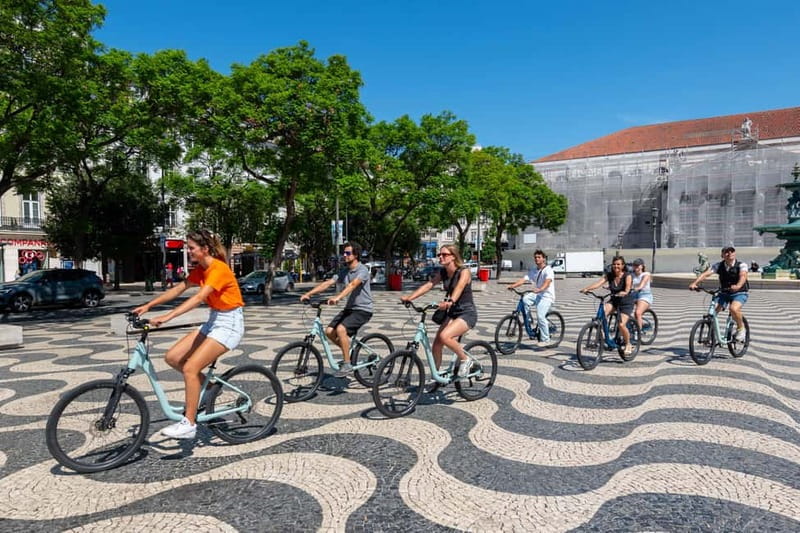
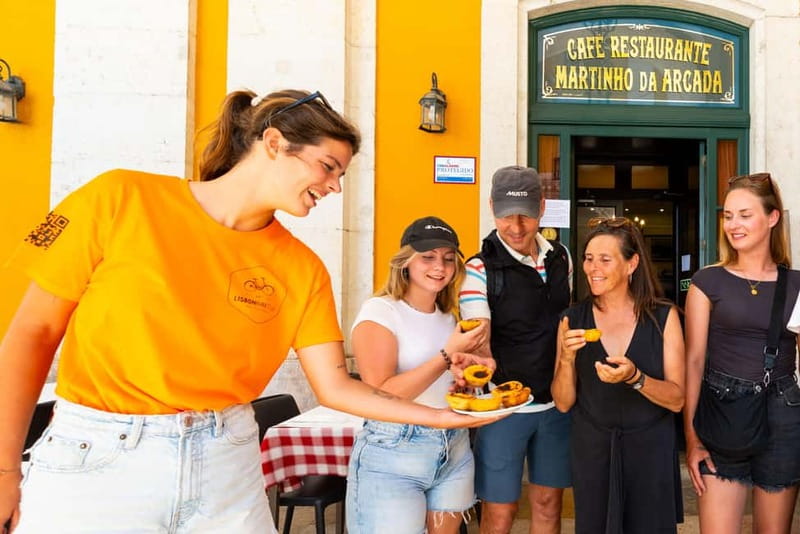
About halfway through, you stop at a local café for around 20 minutes. This is the practical pause in the middle of the ride. You can use the restroom, buy a drink, and eat the included pastel de nata.
The pastry is one of Portugal’s essential tastes: a small custard tart with flaky pastry and a sweet, creamy center. The tour’s pastry stop is convenient and adds another local food moment without taking too much time away from the ride.
This is also the one part where expectations should stay sensible. The included pastry is a sample, not a dedicated pastry tour, and one past participant thought it could have been better. If you have a favorite bakery in Lisbon, save room to compare it later.
The break gives the group time to reset before the waterfront stretch. You can also ask your guide for suggestions on restaurants, bars, viewpoints, and places to visit after the tour. That advice can be particularly useful early in your Lisbon stay, when you are still trying to understand the city’s layout.
Doca de Santo Amaro to MAAT
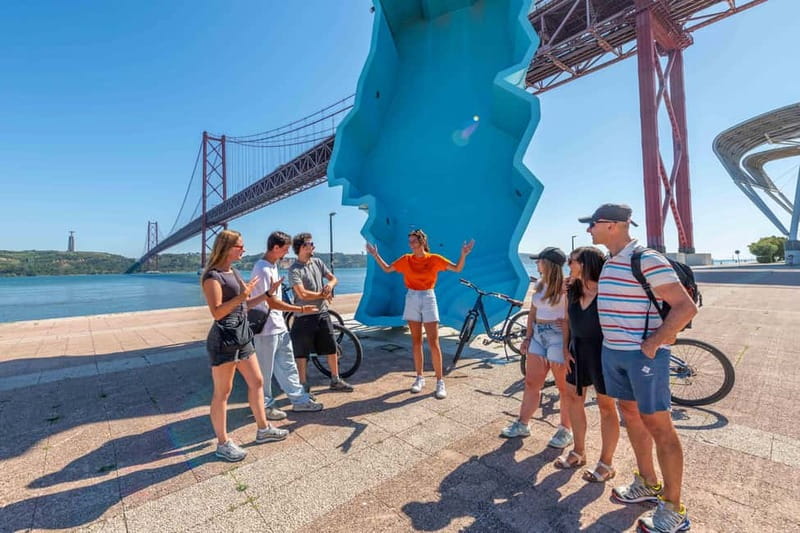
The final approach to Belém follows the river and passes the Museum of Art, Architecture and Technology, usually known as MAAT. The museum’s modern design makes a sharp contrast with Lisbon’s older monuments.
You pass by rather than enter, so do not book this tour expecting time inside MAAT. Still, seeing it from the bike helps show how Lisbon combines old architecture with newer cultural buildings.
The ride remains easy here, but the open riverfront can feel warm and bright. On a hot day, the lack of shade is more important than the lack of hills. Keep your water bottle handy instead of leaving it packed away.
The supplier provides van assistance, which adds some practical reassurance if a mechanical or logistical problem arises. It is not a substitute for preparing sensibly, but it is a useful inclusion on a one-way city ride.
Arriving among Belém’s major monuments
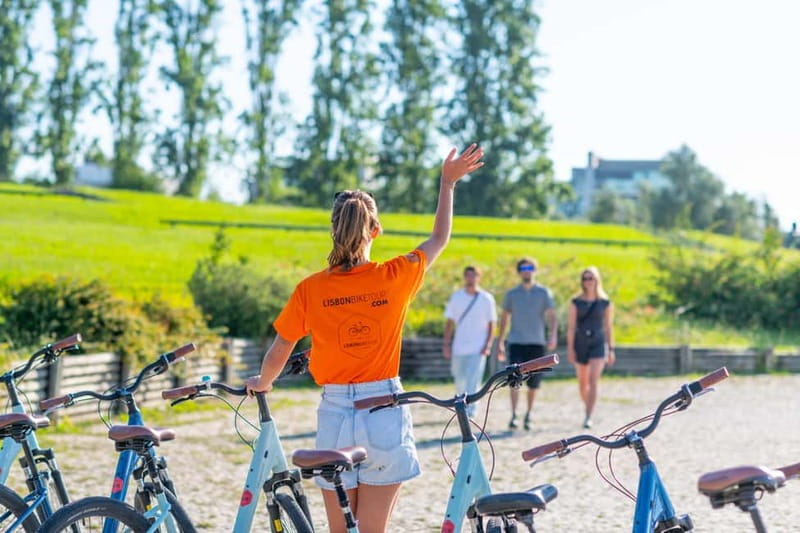
The route ends in Belém, near the Altis Belém Hotel & Spa. You pass the Monument to the Discoveries and Belém Tower before finishing.
The Monument to the Discoveries faces the river and recalls Portugal’s seafaring age. Belém Tower, one of the city’s best-known landmarks, gives the final stretch a clear visual payoff. The waterfront setting also makes this a good place to continue exploring on foot.
Again, the bike tour passes these sights rather than providing full interior visits. If you want to tour Belém Tower, visit the Jerónimos Monastery, enter a museum, or spend serious time at the Monument to the Discoveries, set aside additional hours after the ride.
Ending here is one of the tour’s best planning features. You do not retrace your route. Instead, you can have lunch in Belém and continue with the district’s monuments. From Belém, you can return downtown by bus, tram, train, or taxi. Your guide can suggest places for lunch and ideas for the afternoon.
What the guides add to the morning
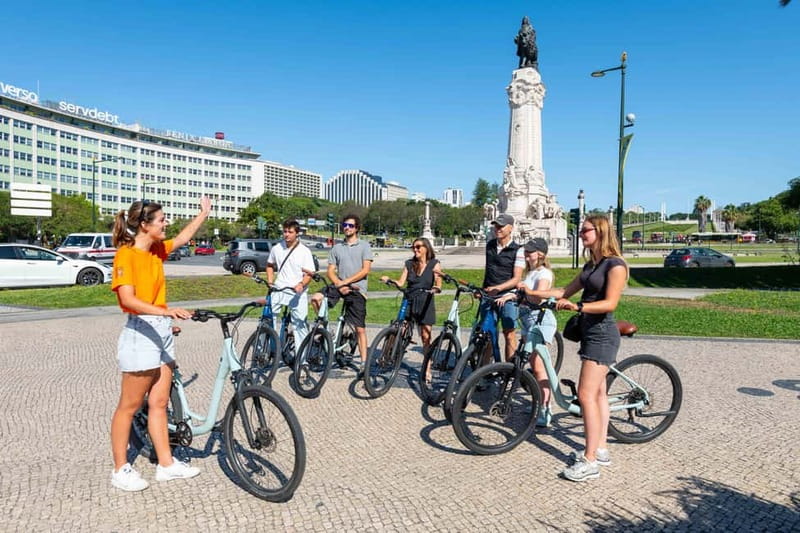
The route is carefully designed, but the guide makes the difference between a transfer with bicycles and a worthwhile city tour. The strongest praise has gone to guides such as George and Jorge for history, humor, and an easy manner. Jenny has also been praised for making Portuguese history fun, while Filipe and Philippe have been described as informative and entertaining.
Other guide names associated with especially warm experiences include Maia, Vincent, Sander, Xander, Ines, Beatrice, and Salo. Do not assume you will have one particular guide, but the pattern is clear: the tour depends heavily on a guide who can keep the group together, explain the city clearly, and make good use of the stops.
The guides also offer practical help beyond dates and buildings. They can point you toward restaurants, bars, viewpoints, and places worth revisiting. One private group received help finding an authentic seafood restaurant after the ride, while another guide suggested extra stops based on the group’s interests.
The exact group size can vary. Some outings have been very small, even private by chance, while an older booking had about 16 people. A smaller group makes stops and questions easier. A larger group may take longer to gather at crossings and viewpoints.
Who will enjoy this tour most?
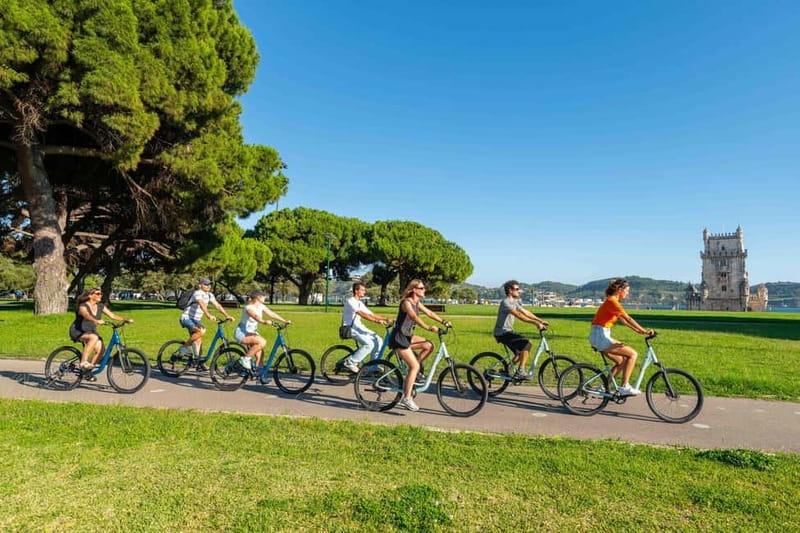
I would recommend it to first-time visitors who want a broad view of Lisbon without spending a morning on foot. It is especially useful near the start of a trip because you get a quick sense of the city’s main districts, and the guide can help you choose what to revisit.
It also suits families. Child seats are available for children from 1 to 3 years old and up to 22 kilograms, tag-a-longs with 20-inch-wheel bikes are available for ages 4 to 6, and 24-inch bikes are available for children from 7 to 9. These options must be requested when booking.
You do not need to be a serious cyclist. The route is downhill or flat, the pace is relaxed, and the tour covers about 10 kilometers over three and a half hours. Still, you should be comfortable riding a bike and listening to road instructions.
This is less suitable if you want a strenuous ride, a focused food tour, or long visits inside monuments. It is also not ideal if you need to finish back near Parque Eduardo VII, since the endpoint is in Belém.
Is $46 a good value?
At $46 per person, the price is fair for a guided half-day outing. You are paying for the bike, helmet, insurance, guide, van assistance, ginjinha, and pastel de nata. You also get a planned route that handles Lisbon’s hills and links the city center with Belém.
The value is strongest if you would otherwise spend money on separate transport between central Lisbon and Belém, while also wanting historical explanations and local advice. The ride saves effort and helps you see a large stretch of the city in one morning.
The price is less compelling if you already know Lisbon well, prefer to travel independently, or plan to enter several monuments during the same period. Admissions, meals, extra drinks, and transfers are not included. Treat the tour as a moving introduction, then budget separately for Belém’s indoor sights and lunch.
Free cancellation up to 24 hours before departure and a reserve-now, pay-later option make it easier to fit into a changing itinerary. If weather makes cycling unsuitable, the operator may offer another date, or a full refund is activated if no alternative works.
Small details that improve the day
Wear clothes you can pedal in and bring water for the sunny waterfront section. Closed shoes are sensible, and sunscreen will make the open river stretch more comfortable.
Arrive at the Parque Eduardo VII meeting point with enough time to find the guide. The starting location is at the top of the park, close to Parque metro station, but a large city park can still take a few minutes to cross.
Do not schedule a tight appointment immediately after the tour. The ride lasts about three and a half hours, and you will still need to decide whether to explore Belém, eat lunch, or travel back downtown.
If you want a certain child setup, language, or bike type, request it at booking. The stated tour languages are English and Dutch.
Should you book it?
Book this tour if you want an easy way to connect central Lisbon with Belém, especially early in your stay. The downhill route removes much of the worry about Lisbon’s hills, while the guide, ginjinha, pastry stop, and river views give the ride enough character to feel like more than simple transportation.
Skip it if your priority is entering monuments, sampling several foods, or riding at speed. For most first-time visitors, families, and anyone who wants a relaxed overview, the $46 price is reasonable. Just bring water, accept that the pastry stop is brief, and plan to enjoy Belém after the bicycles are parked.
FAQ
Where does the Lisbon to Belém bike tour start?
It starts at Alameda Cardeal Cerejeira, at the top of Parque Eduardo VII. The nearest metro station is Parque on Lisbon’s Blue Line.
How long is the bike tour?
The tour lasts about 3.5 hours and covers approximately 10 kilometers.
Is the route difficult?
The route is described as downhill or flat, with no climbs. It is intended for all skill levels, but you still need to be comfortable riding a bicycle in a city.
What food and drink are included?
The tour includes a taste of local ginjinha and one pastel de nata at a café. Additional drinks and meals are not included.
Does the tour finish where it starts?
No. The tour finishes in Belém, near the Altis Belém Hotel & Spa. You can return downtown by bus, tram, train, or taxi.
Can children join the tour?
Yes. Child seats, tag-a-longs with 20-inch-wheel bikes, and 24-inch bikes are available upon request at the time of booking.
Newly added rides around Lisbon
- South Lisbon: 3-Hour Christ the King Electric Bike Tour★ 4.8 · 97 reviews
- Lisbon: 7 Hills Panoramic Guided Tour by E-Bike★ 4.8 · 50 reviews
- Lisbon: E-Bike Adventure to Belém with Pastel Tasting★ 5.0 · 21 reviews
- Lisbon: Portuguese Petiscos Tasting Tour by E-Bike★ 5.0 · 16 reviews
- Lisbon: Bike Tour From City Center to Belem★ 4.8 · 212 reviews
- Lisbon: E-Bike Adventure Through the City of Seven Hills★ 5.0 · 28 reviews
- Lisbon: E-Bike Food Tour of Alfama and Old Town★ 4.7 · 50 reviews
- Lisbon Bike Tour: Langs de rivier van Belém naar Lissabon★ 4.7 · 59 reviews
Lisbon Bike Tours, compared.
Hills, Alfama, and Mouraria Tour by Electric Bike
Read our review →
Lisbon E-Bike Tour Commerce Square, Mouraria and Alfama
Read our review →

Browse the lists this tour appears in