
REVIEW · MUNICH BIKE TOURS
Munich Essentials Bike Tour
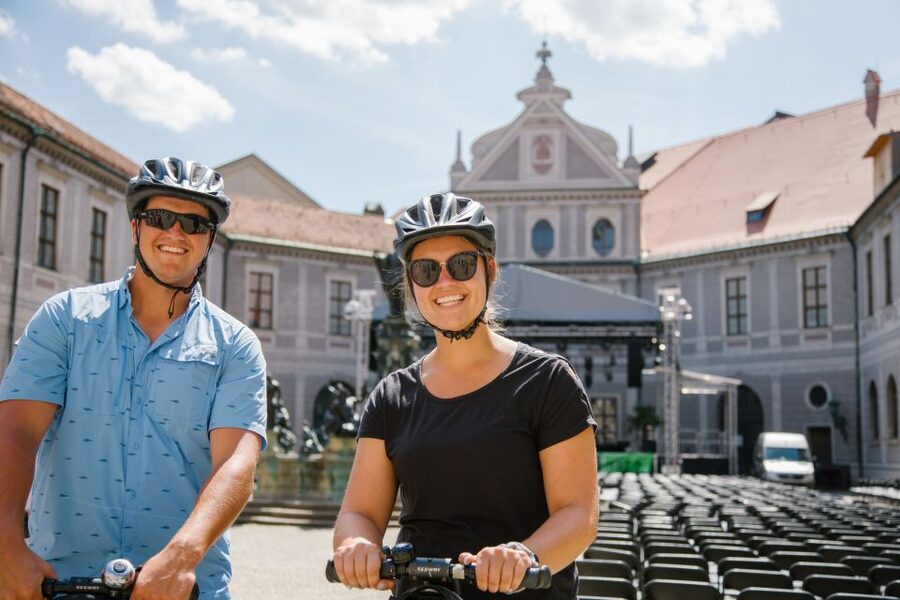
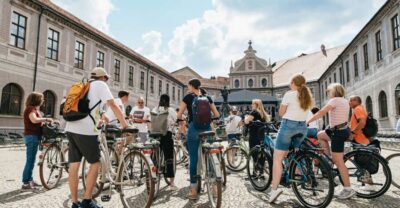
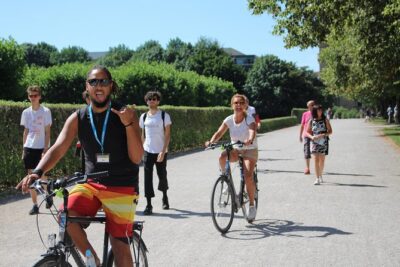
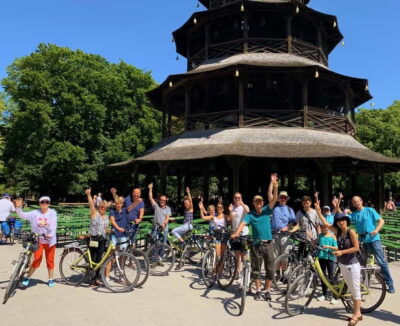
Munich reveals itself best on two wheels. This 150-minute bike tour links royal squares, Nazi-era landmarks, the English Garden, and the famous Eisbach Wave without demanding a full day. I like the efficient route and the chance to hear local stories while moving through the city, rather than simply passing sights from a bus window. The main consideration is that this is a brisk overview, and past customer comments refer to Segways, so you should confirm the exact vehicle and group setup when booking.
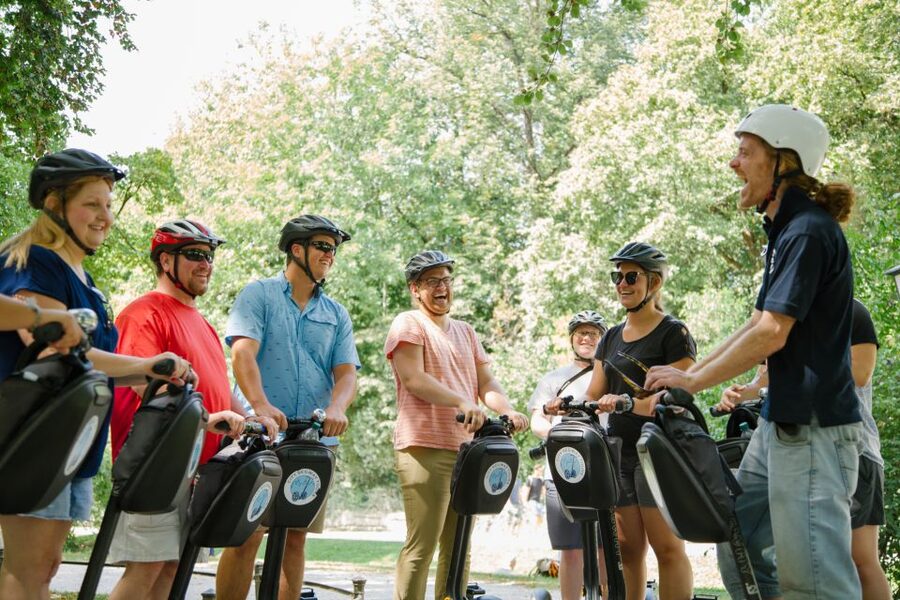
I also like the central meeting point at Karlsplatz, which is easy to reach from Munich Central Station or Marienplatz. Guides such as Rob, Dan, Achim, Michelle, Thorsten, and Jose have been praised for clear explanations, patience, humor, and good handling of mixed abilities. Open-toed shoes are not allowed, and rain will not normally cancel the ride.
Key points to know before you pedal
- A fast city introduction: In two and a half hours, you cover central Munich, Königsplatz, the Residenz, the Bavarian National Theatre, the English Garden, and the Eisbach Wave.
- History comes with the scenery: The route includes Munich’s royal past and its difficult connection to Adolf Hitler and National Socialism.
- A strong meeting point: Karlsplatz, also called Stachus, sits between Munich Central Station and Marienplatz and is served by the nearby metro station.
- The guide matters: Past guide names praised for humor, patience, and clear storytelling include Rob, Dan, Achim, Michelle, Thorsten, and Jose.
- Bike or eBike choice: A standard bicycle is included, with an eBike upgrade available.
- Plan for the weather: The tour runs in rain unless conditions become extremely severe, so dress for the forecast.
Why a bike is a smart way to meet Munich
Munich is large enough that walking between its main sights can eat up much of a short visit. A bicycle gives you a wider view of the center, while still allowing you to stop at important squares and buildings.
That balance is the real appeal here. You are not locked inside a vehicle, and you do not spend the entire afternoon marching from one monument to another. You ride through the city, pause for explanations, and then continue toward the next part of Munich’s story.
The 150-minute length suits a first morning or afternoon in town. I would use it near the start of a Munich visit, since the route can help you understand where the major central sights sit in relation to one another. Several past customers also used the experience as a way to get their bearings before exploring independently.
The route is described as a bike tour, with bicycles included and eBike upgrades available. However, several older comments describe Segway tours and praise the ease of learning to use the Segway. That suggests the provider has offered more than one type of two-wheel experience, or that some feedback belongs to a related tour. If the difference matters to you, confirm the vehicle before paying.
A few more rides around Munich worth a look
- Munich 3-Hour Guided Bike Tour
★ 4.5 · 1,731 reviews - Classic Mike’s Bike Tour daily @ 11.30 incl Beer Garden & Surfers
★ 5.0 · 1,246 reviews - Neuschwanstein Castle by Bus Incl. Bike Ride or Hohenschwangau
★ 5.0 · 607 reviews
Starting at Karlsplatz, Munich’s practical front door
The tour begins at Karlsplatz, commonly called Stachus. This is a lively square between Munich Central Station and Marienplatz, so it is a useful place to begin even if you are still learning the city.
The directions are specific. Stand by the fountain with your back to Karlstor and the pedestrian zone, then turn right onto Sonnenstraße. After about 50 meters, the shop at Karlsplatz 4 is on the right. Karlsplatz, or Stachus, is also the nearest metro station.
That central location is valuable for short visits. You do not need to cross town before an early departure, and you can reach the meeting point from either of Munich’s major visitor zones. Give yourself time to find the shop rather than arriving at the last minute. A bike tour begins with a short setup, and rushing in can make the first minutes needlessly tense.
You receive a bicycle and helmet. Helmet use is not mandatory, but I would wear one, especially if you are not used to riding in an unfamiliar city. Open-toed shoes are not permitted, so choose closed shoes with comfortable soles.
Königsplatz and Munich’s grand cultural face
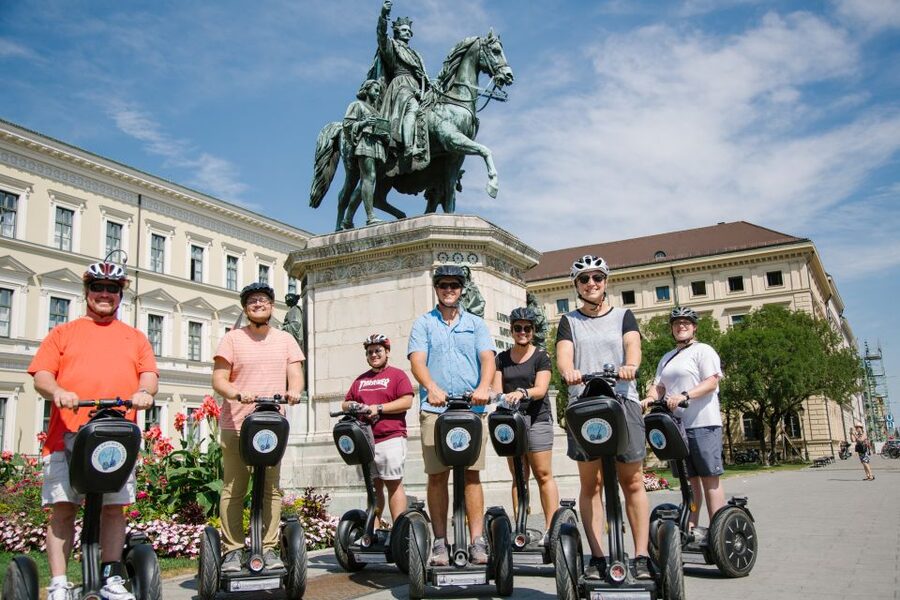
One of the first major stops is Königsplatz, a broad square known as a center of Munich’s cultural life. Its formal design gives the tour an immediate sense of scale and ceremony.
This is a good place for a guide to explain how Munich presents itself through architecture. The square is not just a place to take a photo. Its buildings and open space show how the city used classical forms to express power, culture, and civic identity.
The benefit of arriving by bike is that you see the transition into the square rather than simply appearing at the monument. You get a feel for how the area fits into the city around it. The tradeoff is that a 150-minute route cannot allow long museum visits or detailed architectural study. Treat Königsplatz as a strong introduction, not a replacement for returning later on foot.
Munich’s difficult chapter at the Führerbau
The route also addresses the Führerbau, a building connected with Hitler and the Nazi period. This part of the tour gives the historical program more weight than a standard sightseeing ride focused only on palaces and pretty streets.
A good guide can explain how Munich became tied to the rise of Hitler and National Socialism, while keeping the subject grounded in the actual places around you. That context matters because the city’s grand civic architecture and its political past are not separate stories.
You should expect this portion to be serious. The tour is not only a cheerful ride through parks and royal squares. It asks you to look at Munich’s past honestly, including the city’s unfortunate role in a movement that caused immense harm.
The exact amount of time spent at the site can vary with the group and guide. If this subject is important to you, listen closely and consider asking questions. The route offers an introduction, not a full specialist history tour.
Same handlebars, a completely different route:
- Munich: Guided City Tour by Bike with Beer Garden Stop
★ 4.7 · 604 reviews - Munich Small-Group Bike Tour
★ 4.5 · 510 reviews - Munich by Bike: Half-Day Tour with Local Guide
★ 4.7 · 417 reviews - Munich: Bike Tour with Beer Garden Break
★ 4.9 · 391 reviews
Odeonsplatz and the former royal residence
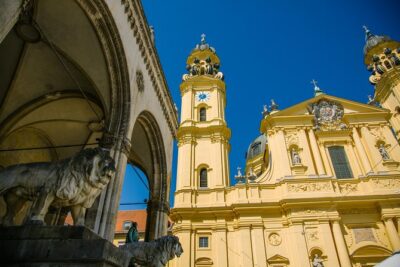
Odeonsplatz brings you into another of Munich’s grand central spaces. From here, the route reaches the Munich Royal Residence, the former palace of the Bavarian royal family.
The Residenz helps balance the earlier political history with Munich’s royal and artistic identity. You may get a glimpse of the building and its setting from outside, along with an explanation of how the Bavarian court shaped the city.
The description even leaves room for a light local joke: you might wave to the current royal family. Do not read that as a promise of a royal encounter. The useful part is the chance to connect the former palace with Munich’s continuing interest in Bavarian tradition.
Odeonsplatz and the Residenz are also places where a bike tour earns its keep. They can be busy and spread across an area that feels less clear when you first arrive. A guide can point out the main setting, give you the story, and keep the group moving without leaving you to work out the geography alone.
If you want a full visit inside the Residenz, plan that separately. The tour is designed to show and explain the exterior stops, not to provide a palace admission program.
The Bavarian National Theatre and Munich’s public grandeur
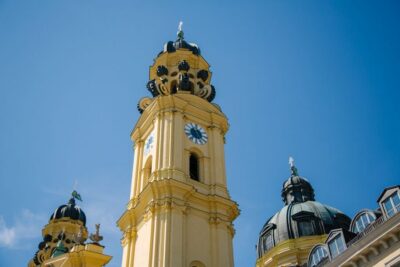
The Bavarian National Theatre is another important stop along the route. Its presence reinforces Munich’s reputation as a city of music, theater, and formal public buildings.
I like the way this stop broadens the tour beyond royal and political subjects. Munich is not defined by one era. You see a city that has been shaped by the Bavarian court, by cultural institutions, and by modern public life.
The theater also fits well into a bike itinerary because it can be appreciated from the outside without a long visit. You receive the setting and the story, then continue through the center. If you are an opera or theater fan, note the location so you can return later and explore the program or interior on your own.
This is one reason I would not judge the tour by how long you remain at each landmark. Its value comes from the links between places. You see enough to recognize the buildings later, then decide which ones deserve more of your time.
The English Garden and the Eisbach Wave
The ride into the English Garden changes the mood. After formal squares, palace buildings, and difficult political history, the park offers open space and a more relaxed view of Munich.
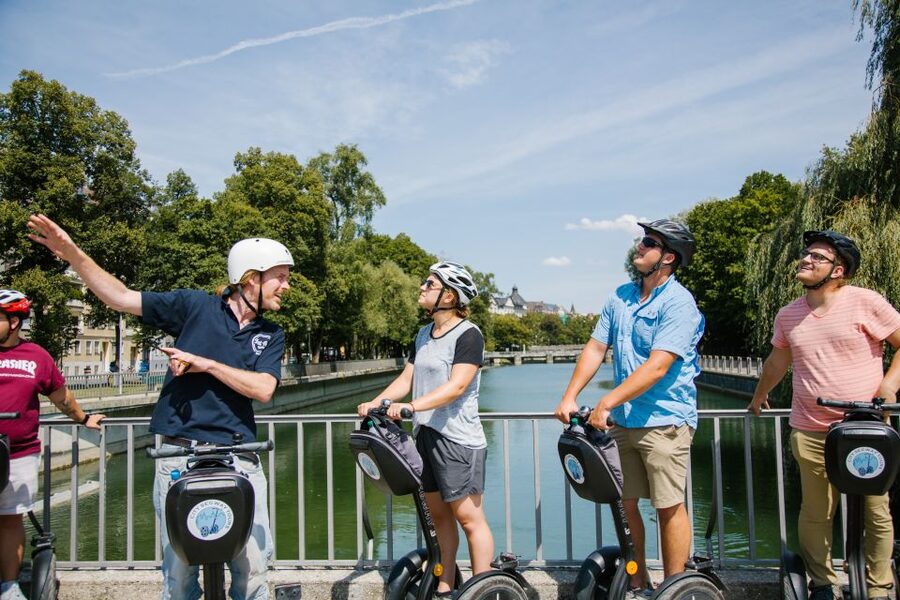
The tour’s highlight here is the Eisbach Wave, where river surfers ride a permanent standing wave. You have time to watch the surfers, and this is likely to be one of the most memorable visual moments of the route.
The Eisbach Wave is a useful reminder that Munich is not only about old buildings and royal ceremony. It is also a modern city with an unusual outdoor culture. The contrast makes the overall route more satisfying.
Do not expect a long park excursion. The tour has several major stops to cover, and the English Garden is one part of a tightly planned overview. Still, the park gives you a change of scenery and a chance to pause without losing the thread of the city tour.
The route’s mix of urban streets and park riding is also why the weather matters. The tour runs rain or shine except in extremely bad conditions. Wear layers, bring rain protection if needed, and avoid assuming that a sunny forecast at breakfast will last all afternoon.
The guides can shape the whole experience
The strongest praise attached to this experience concerns the guides. Rob is repeatedly described as an excellent storyteller who made the history exciting and enjoyable. Dan was praised for patience, clear explanations, and a professional attitude. Achim was remembered for being funny, clever, and deeply interested in history.
Other positive comments highlight Michelle’s ability to accommodate different riding abilities, Thorsten’s skill at showing familiar residents parts of Munich they did not know, and Jose’s engaging stories about the city.
These details matter more than a polished route map. A city ride succeeds when the guide explains what you are seeing, watches the group, and adjusts the pace when needed. Past comments also describe a useful safety briefing and a good introduction to the vehicle.
Still, you should keep expectations realistic. The named guides are not a guarantee that one particular person will lead your departure. The information is in English, and the tour is guided live in English, so it suits you best if you are comfortable listening while riding and stopping in an international group.
The comments about Segway instruction deserve special attention. People described patient teaching before setting off and said the vehicle was easy and fun to use. Since the current experience is presented as a bicycle tour with eBike upgrades, verify the exact format if you specifically want a pedal bike, an eBike, or a Segway.
Price, timing, and who gets good value
At $37 per person, the tour is reasonably priced for a 150-minute guided city experience that includes the bicycle, helmet, and a local English-speaking guide. The value comes from the amount of ground covered and the explanation attached to each stop.
You are not paying for food, museum admission, or a meal break. There is no food stop included, so eat before the tour if you tend to get hungry during active sightseeing. The lack of a meal stop also helps the route stay focused and on schedule.
An eBike upgrade is available. I would consider it if you are unsure about cycling for two and a half hours, if your group has mixed fitness levels, or if you simply want to save energy for the rest of the day. If you enjoy ordinary cycling and feel comfortable riding in a city, the standard bicycle should be enough.
This experience suits:
- First-time visitors who want a broad Munich introduction
- Short-break visitors with limited sightseeing time
- Families with older children and teenagers
- People who prefer active sightseeing to a walking lecture
- Anyone interested in seeing both royal Munich and the city’s modern side
It is less suitable if you want long museum visits, a dedicated Nazi-era history program, a food-focused outing, or a slow photographic tour. Minors under 18 must be accompanied by an adult, and unaccompanied minors are not permitted.
You can cancel up to 24 hours ahead for a full refund, and the reserve-now, pay-later option keeps your plans flexible. Those policies are useful if your Munich schedule may change.
Should you book the Munich Essentials Bike Tour?
I would book this tour if you want a fast, active first look at Munich and you value stories as much as photographs. The route covers an unusually broad mix: Königsplatz, the Führerbau, Odeonsplatz, the Residenz, the Bavarian National Theatre, the English Garden, and the Eisbach Wave.
The best reason to choose it is efficiency. In 150 minutes, you get a city framework that would take much longer to assemble by yourself. The strongest guide feedback also points to patient instruction, humor, and well-told history.
I would skip it if you need a slow pace, dislike cycling in a city, or want substantial time inside the Residenz and other buildings. Before booking, confirm whether your departure uses bicycles, eBikes, or another two-wheel format, since older comments refer to Segways.
For most active visitors, this is a strong-value introduction. Schedule it early in your stay, wear closed shoes, dress for rain or shine, and keep the rest of the day open for returning to the places that catch your interest.
FAQ
How long is the Munich Essentials Bike Tour?
The tour lasts 150 minutes, or two and a half hours.
What language is the tour conducted in?
The live tour guide speaks English.
What is included in the price?
A professional local tour guide, a bicycle, and a helmet are included. Helmet use is not mandatory.
Is an eBike available?
Yes. eBike upgrades are available.
Where does the tour meet?
The meeting point is at Karlsplatz 4 near Karlsplatz, also called Stachus, in Munich.
How do I find the meeting point?
Stand by the fountain at Karlsplatz with your back to Karlstor and the pedestrian zone. Turn right onto Sonnenstraße, and after about 50 meters the shop at Karlsplatz 4 is on the right.
Which sights are included?
The route includes Königsplatz, the Führerbau, Odeonsplatz, the Munich Royal Residence, the English Garden, the Eisbach Wave, and the Bavarian National Theatre.
Does the tour include food?
No. A food stop is not included.
What happens if it rains?
The tour operates in rain unless the weather is extremely severe. Dress appropriately for the conditions.
Newly added rides around Munich
- Munich: Street Art Bike Tour★ 4.6 · 66 reviews
- Munich: Mini Classic Bike Tour with Beer Garden Stop at 4 PM★ 4.8 · 28 reviews
- Best of Munich Electric Bike Tour★ 4.7 · 23 reviews
- Munich: Neuschwanstein Castle by Bus with Alpine Bike Ride★ 4.9 · 217 reviews
- Best of Munich Electric Bike Tour★ 5.0 · 38 reviews
- Munich City Bike Tour + Beer Garden Lunch Stop★ 5.0 · 283 reviews
- Munich: Bike Tour with Beer Garden Break★ 4.9 · 391 reviews
- Munich by Bike: Half-Day Tour with Local Guide★ 4.7 · 417 reviews
Munich Bike Tours, compared.
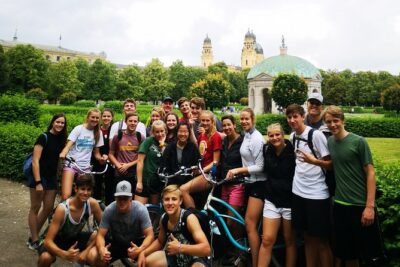
Classic Mike’s Bike Tour daily @ 11.30 incl Beer Garden & Surfers
Read our review →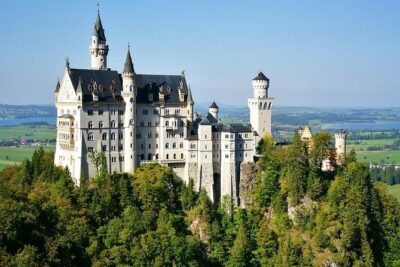
Neuschwanstein Castle by Bus Incl. Bike Ride or Hohenschwangau
Read our review →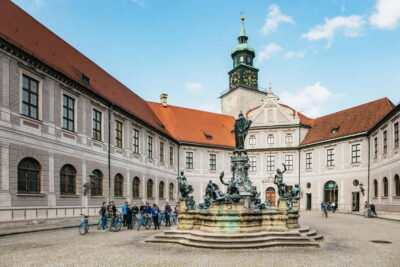
Browse the lists this tour appears in