
REVIEW · SEOUL BIKE TOURS
Seoul E-bike Tour
Seoul reveals itself quickly on two wheels. I like this tour because its electric bikes let you cover major sights without wearing yourself out, and because the route slips through older neighborhoods and market lanes that large vehicles cannot reach. The visit to Tongin Market, with local Korean snacks included, adds a welcome taste of everyday Seoul.
I also like the careful morning timing, the small groups, and the practical safety setup. Guides such as TJ, Harry, Vincent, Jun, Hagar, and Taejin have been praised for clear explanations, careful riding, helpful photos, and good restaurant suggestions. The main consideration is that this is still a three-hour ride through a busy city, with some hills and a moderate fitness requirement.
Key points to know before booking
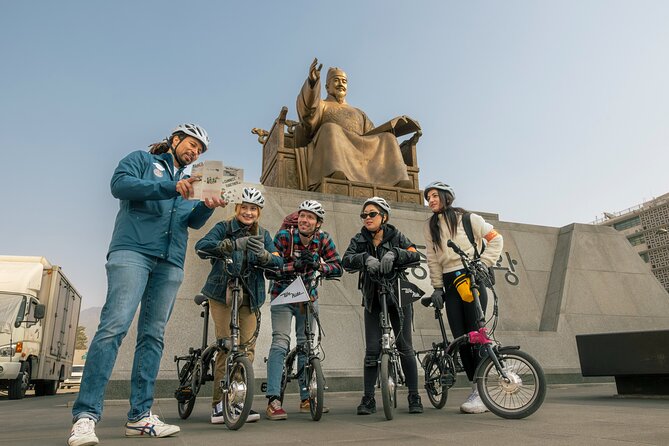
- Electric assistance makes Seoul’s hills manageable: The bikes help on climbs around Bukchon and older historic districts, so you can see more without turning the ride into a workout.
- The route covers Seoul’s essential historic core: You visit Cheonggyecheon Stream, Gyeongbokgung Palace, Tongin Market, Seochon, the Blue House, Bukchon Hanok Village, and Jogyesa Temple.
- Early timing can improve the whole experience: The tour aims to ride before traffic and large crowds become a problem, and you may catch the changing of the guard at Gyeongbokgung Palace.
- Food is part of the tour: Snacks from Tongin Market are included, with rice cakes and tteokbokki among the foods enjoyed along the route.
- The group size is limited to 15 people: Smaller groups make it easier to ask questions, keep together, and receive help with the bike.
- Arrive early and bring water: You must arrive 20 to 30 minutes before departure for bike fitting, safety instruction, and preparation.
Why an e-bike works so well in Seoul
Seoul is spread out, and its historic attractions are not all lined up along one easy pedestrian route. Walking between Gyeongbokgung Palace, Seochon, Bukchon, and Jogyesa Temple can take time, especially when summer heat or steep streets enter the picture.
An electric bike changes the pace. You still move under your own power, but the motor helps with hills and longer stretches. The result is a three-hour tour that feels active without being punishing. You see more neighborhoods than you could on foot, yet you are not sealed inside a bus.
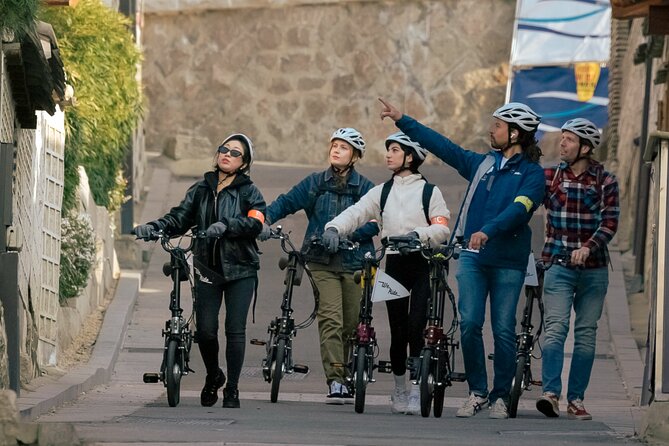
The route is planned around bike lanes and quieter back streets when possible. That matters in Seoul, where traffic can make a road crossing feel like a small negotiation. The guides ride at the front and back of the group, helping keep everyone together and safer in city traffic.
You should still have a moderate level of fitness. You need to balance, follow instructions, pedal at times, and manage a bike around other riders. The electric assistance reduces effort, but it does not remove the need to pay attention.
More E-Bike Tours in the world:
- 3-Hour Porto Highlights on a Electric Bike Guided Tour
★ 5.0 · 4,392 reviews - Lisbon: Hills, Alfama, and Mouraria Tour by Electric Bike
★ 4.8 · 3,438 reviews - Athens Scenic Electric Bike Tour with optional Acropolis visit
★ 5.0 · 3,350 reviews
Starting at Jongno with time to get ready
The meeting point is We Ride Korea Bicycle Tours and Rentals at Le Meilleur Jongno Town, 19 Jong-ro, in Seoul’s Jongno District. The tour ends back at the same place, which simplifies the rest of your day.
Plan to arrive 20 to 30 minutes early. This is not wasted time. The staff use it to fit your bike, provide a helmet and safety vest, explain how the e-bike works, and prepare you for riding in Seoul. The advertised three hours refers to riding and sightseeing, not this preparation period.
You receive safety equipment, comprehensive insurance, and the use of the e-bike. Bring a reusable water bottle. The company says you must bring one or buy one before departure, and the route has a refill station. There is also a bathroom break built into the ride, a small detail that makes the morning easier.
The maximum group size is 15, though some departures may be much smaller. A group of six was described as particularly comfortable, and a smaller group usually makes it easier to hear the guide and get help at crossings.
Cheonggyecheon Stream: Seoul’s former waterway
The first sightseeing stop is Cheonggyecheon Stream. Once a major waterway in the city, it now gives you a calm opening view of central Seoul.
You only spend about 10 minutes here, so think of it as an introduction rather than a long stroll. The stop helps explain how Seoul has changed over time, from an older urban waterway to a public stream and walking space in the city center.
This is one reason the bike format works. You get a quick look, hear the useful historical context, and then continue rather than spending the whole morning at one site.
Gyeongbokgung Palace and the changing guard
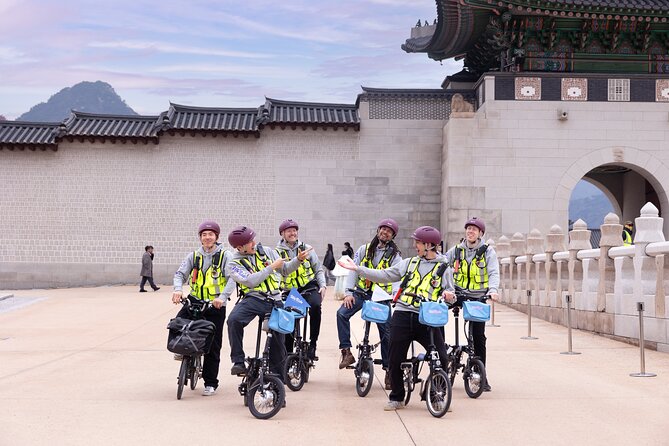
Gyeongbokgung Palace is one of Seoul’s defining sights. The tour pauses at the palace gate for photographs and a short explanation of its place in Korean history.
The listed stop is about 10 minutes, so this is not a full palace visit. You should not expect time to explore the entire complex, enter every building, or linger in the courtyards. Instead, you get a well-placed introduction to one of Seoul’s major landmarks.
Timing can be a real advantage. Some departures have arrived in time to see the changing of the guard from beginning to end. This is not something to treat as guaranteed, since ceremonies and timing can vary, but an early start gives you a better chance.
If you want a long palace visit, return later on your own. The bike tour is better for a first look, an exterior photo, and historical orientation.
A few more rides around the world worth a look
- Lion City Bike Tour of Singapore
★ 5.0 · 6,211 reviews - Big Bike tour Amsterdam – See all in 3 unforgettable hours
★ 4.7 · 4,929 reviews - Small Group Guided Bike Tour of Amsterdam’s Hidden Gems
★ 5.0 · 3,936 reviews - 3-hour Complete Prague Bike Tour
★ 5.0 · 3,674 reviews
Tongin Market and a taste of local Seoul

Tongin Market brings the tour down from royal architecture to everyday food culture. The guide recommends local street food, and included snacks from the market are part of the price.
The food element is one of the tour’s strongest touches. You may try tteokbokki, rice cakes, or several different types of Korean snacks. One stop included three varieties of rice cake, while another highlighted especially good tteokbokki. Vegetarian or vegan snack options have also been enjoyed on some tours, though you should ask the guide about current choices if you have dietary restrictions.
The visit lasts around 10 minutes, so this is a sampling stop, not lunch. Lunch is not included. If you expect a full meal, plan to eat after the tour.
I like this part because the market gives the route a more local feel. You are not only checking off monuments. You are also tasting something connected to the neighborhood and getting food advice from someone who knows Seoul.
Seochon, old walls, and a possible drink break
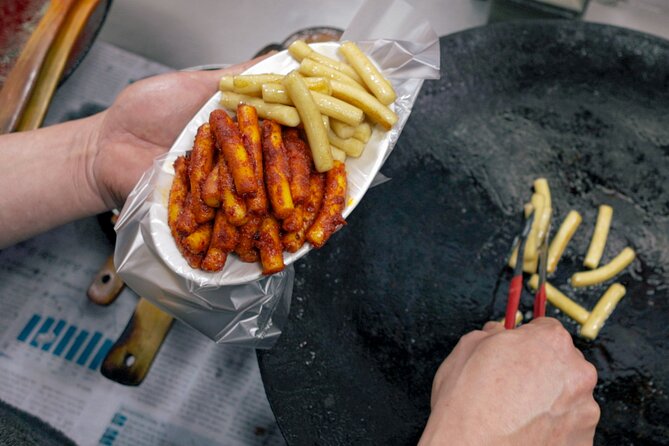
From the market, the route continues through Seochon, an older neighborhood near the palace district. The tour includes a look at ancient city defenses and a short walk along the area.
You also pass through the oldest surviving gate in the city wall, according to the tour description. This is the kind of detail that is easy to miss when you move only between major attractions. Seochon helps connect the palace area with the older shape of the city.
An optional hot drink stop may be available. It is a pleasant idea, particularly on a cool morning, but do not assume there will be time for a long café visit. The stop is short, and the main purpose remains seeing the neighborhood by bike.
The Blue House and Seoul’s modern political story
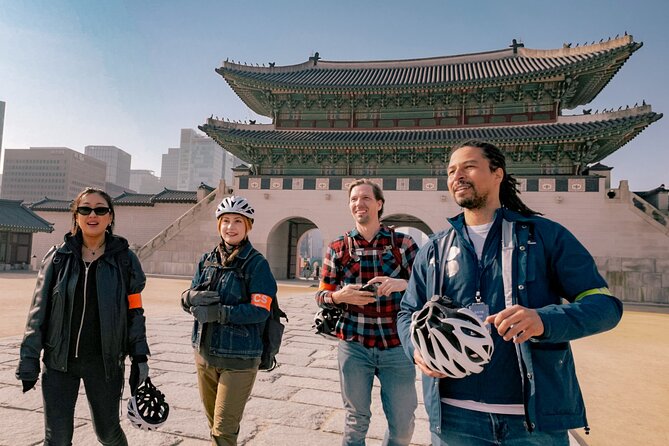
The route then reaches the Blue House, the former presidential residence. You see the exterior setting and learn about its role in South Korea’s recent political life.
This stop balances the older palace and village visits. Gyeongbokgung represents the royal past, while the Blue House belongs to the modern state. That contrast gives the route a useful historical range within a short morning.
The listed stop is about 10 minutes. It is mainly a viewing and explanation stop, not a long interior tour. Keep your expectations focused on the setting, photographs, and the guide’s account.
Bukchon Hanok Village: the tour’s most demanding section
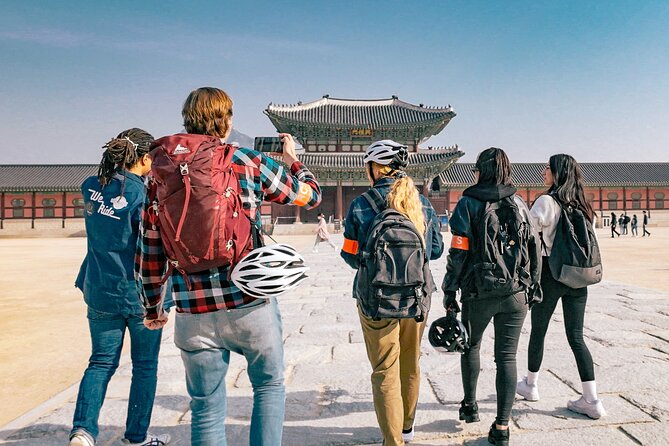
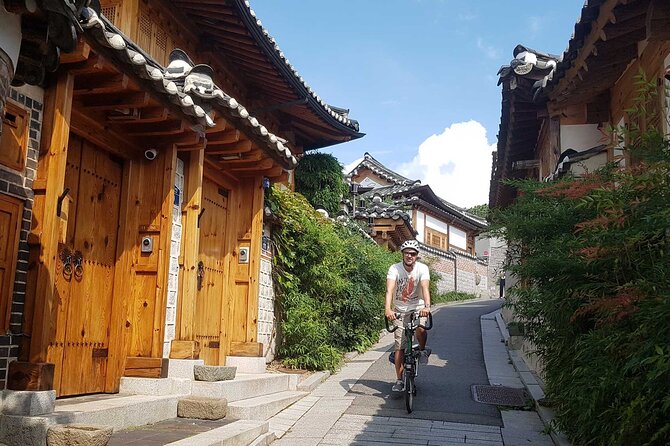
Bukchon Hanok Village is one of Seoul’s most photogenic districts, with traditional hanok houses climbing the hillside between major palace areas. The tour stops for about 15 minutes, giving you time for photographs and a closer look at the architecture.
This is also where the electric motor earns its keep. The streets can be hilly, and riding through the area gives you access without the long uphill walk. The bikes do not make the streets flat, but they make the effort far more manageable.
You should be respectful here. Bukchon is a lived-in neighborhood, not only a photo backdrop. Keep your voice down, follow the guide’s instructions, and avoid blocking narrow lanes.
A particularly useful detail from the tour’s guided experience is the chance to learn about traditional hanok design, including the underfloor heating system still used in Korean homes. That kind of explanation gives the buildings meaning beyond their appearance.
The short stop also means you will not spend hours wandering the village. If Bukchon is a major priority, plan to return later for more time on foot.
Jogyesa Temple and a quiet finish
Jogyesa Temple provides a peaceful final sightseeing stop. After the traffic, palace gates, market snacks, and hills of Bukchon, the temple offers a change of pace.
The visit lasts about 15 minutes. You can look around, take in the calm setting, and hear about the temple before riding back to the starting point.
Ending here works well. The tour finishes with a cultural site rather than another crowded street, and you return to the Jongno meeting point with the city center already familiar.
Guides, photos, and the small-group advantage
The guides are a major part of the value. TJ, Harry, Vincent, Jun, Hagar, Limmi, and Taejin have been praised for clear history lessons, calm leadership, humor, and careful handling of the group.
The strongest practical feature is the riding support. Guides position themselves at the front and back, watch the group, and help riders move through Seoul safely. That matters more than polished commentary when you are navigating a city on two wheels.
Several guides also take photographs during the ride and send them afterward. This lets you enjoy the stops instead of constantly reaching for your phone. The photos are an extra benefit, not the main reason to book, but they can be valuable if you are traveling as a couple or family and want pictures of everyone together.
The guides also offer suggestions for places to eat and visit after the tour. Some have helped riders understand how to reach their next destination. That kind of practical help is especially useful on your first morning in Seoul.
The $120 price and what you receive
At $120 per person, this is not the cheapest way to see Seoul. You are paying more than you would for a self-guided walk or ordinary public transportation.
The value comes from what is bundled into the morning: the e-bike, helmet, safety vest, insurance, guide, route planning, market snacks, and a small group capped at 15 people. You are also paying to avoid spending time working out an efficient route between districts.
I think the price makes the most sense if your time in Seoul is limited. In three hours, you get a useful overview of the historic center and several neighborhoods. You can then decide which places deserve a longer return visit.
The value is weaker if you already know Seoul well, dislike guided groups, or want long visits inside palaces and museums. This is a broad introduction, not a deep examination of any single site.
Timing, weather, and who should book
The early schedule is one of the tour’s best practical choices. Morning riding can mean less traffic, cooler conditions, and a better chance of seeing palace activity before the busiest part of the day.
Weather matters. The tour requires good weather, and a poor-weather cancellation offers you another date or a full refund. You can cancel for a full refund up to 24 hours before the start time, but changes or cancellations inside that window are not accepted.
I would recommend this for:
- First-time visitors who want a fast overview of central Seoul
- People with only a few days in the city
- Anyone who finds long walking tours tiring
- Families and mixed-age groups who can manage a bike
- Riders interested in food, neighborhoods, architecture, and history together
- People who enjoy active sightseeing but do not want a hard cycling workout
I would be more cautious if you have limited balance, are uncomfortable in city traffic, or want a slow palace and village visit. The company lists a moderate fitness level, and the route includes hills.
Should you book the Seoul E-bike Tour?
Book it if you want an efficient first look at Seoul with a local guide, market snacks, and manageable cycling. The e-bikes let you connect places that feel far apart on foot, while the route mixes famous sights with Seochon lanes, Tongin Market, and the quieter finish at Jogyesa Temple.
You should not book it expecting a full palace tour, a leisurely lunch, or three hours of continuous sightseeing at every stop. The strength is range. You get a taste of Seoul’s royal past, modern politics, food culture, traditional homes, and Buddhist life in one well-planned morning.
For a first visit, I would choose an early departure and use the tour as your orientation. Afterward, return to the palace, Bukchon, or the market that caught your interest. That is where the $120 begins to make sense: the tour does not try to replace Seoul. It helps you understand where to spend the rest of your time.
FAQ
How long is the Seoul E-bike Tour?
The tour lasts approximately three hours. You must also arrive 20 to 30 minutes before the start time for bike fitting, safety instruction, and preparation.
Where does the tour begin and end?
It begins at We Ride Korea Bicycle Tours and Rentals at Le Meilleur Jongno Town, 19 Jong-ro, Jongno District, Seoul. The tour ends back at the same meeting point.
What is included in the price?
The price includes use of an e-bike, helmet, safety vest, comprehensive insurance, a local guide, and Korean snacks from the traditional market visited during the tour.
Is lunch included?
No. Lunch is not included. The market stop includes snacks, but you should plan a separate meal if you want lunch after or before the tour.
Do I need to bring water?
Yes. You must bring a reusable water bottle or purchase one from the company before the tour. A refill station is available along the route.
What happens if the weather is bad?
The experience requires good weather. If poor weather causes a cancellation, you will be offered another date or a full refund. You can cancel for a full refund up to 24 hours before the start time.
Newly added rides around the world
- Half-Day Lanna Countryside Cycling Tour in Chiang Mai★ 4.5 · 24 reviews
- Full-day E-bike Countryside and Nam Phrae (flat-hilly, GUIDED)★ 5.0 · 11 reviews
- Full-Day Hike and Bike Tour from Chiang Mai★ 5.0 · 14 reviews
- Experience The Real Chiang Mai by Bike★ 4.5 · 36 reviews
- FIELDS OF GOLD Mountain Biking Tour Chiang Mai★ 5.0 · 18 reviews
- Half-Day Colors of Chiang Mai Biking Tour★ 5.0 · 105 reviews
- Chiang Mai City Culture Half-Day Cycling Tour★ 4.5 · 15 reviews
- Chiang Mai Night Bike Tour★ 5.0 · 69 reviews
Seoul Bike Tours, compared.
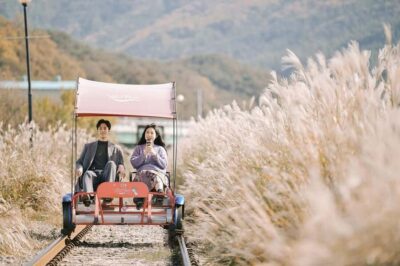
Nami Island, K-drama Garden & Rail Bike Day Tour
Read our review →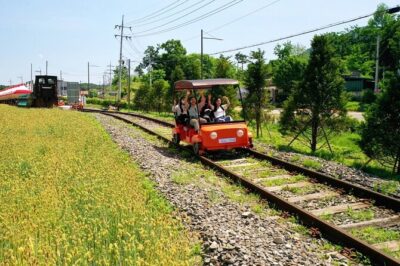
Day Trip to Nami Island with Rail bike and The Garden of Morning Calm
Read our review →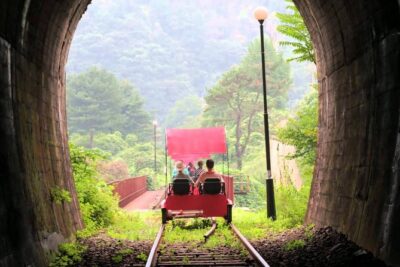
Nami Island & Garden of Morning Calm & Gangchon Railbike Tour
Read our review →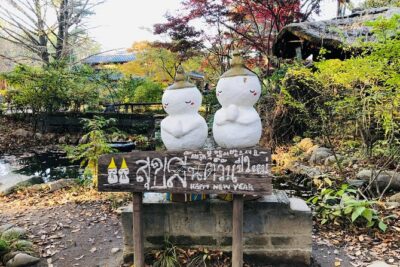
Nami+Alpaca+Garden of Morning Calm (+Rail Bike Option)
Read our review →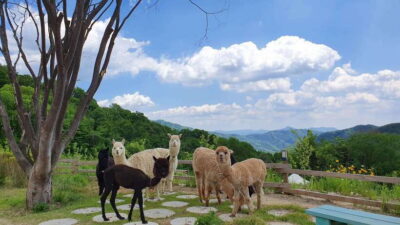
Alpaca, Nami, Morning Calm or Eobi (+Rail Bike)
Read our review →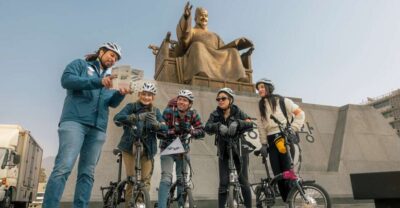
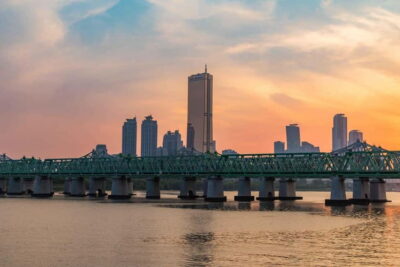
Han River Sunset Bike Tour with Rainbow Fountain Show
Read our review →Browse the lists this tour appears in