
REVIEW · VIENNA BIKE TOURS
Vienna by Bike 3-Hour All-In-One City Bike Tour in English
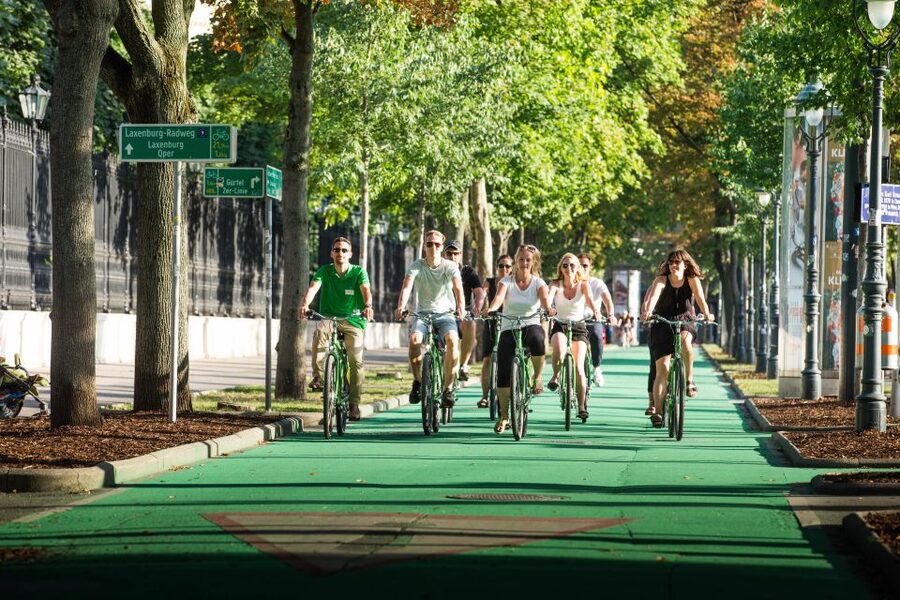
Vienna makes a fine city for two wheels. This three-hour ride links the Ringstrasse, grand imperial buildings, the Danube canal, Hundertwasserhaus, and Prater Park without making you slog between them on foot. I like the easy pace and the number of stops for photos and short talks. I also like the mix of famous sights and odd corners, from the Opera House to Vienna’s famously crooked, colorful apartment building.
The main tradeoff is that this is mostly a broad city overview, not an old-town walking tour. You will see the historic center from the bicycle, but one past rider correctly noted that the route focuses on the Ringstrasse and does not enter the oldest central lanes. At $55 per person, the price is fair if you want to cover ground quickly, though those seeking a very small group or a long stop at each monument may want something slower.
Key points at a glance
- A 10-kilometer route: One guide described a ride of more than 10 kilometers, mostly on good cycle paths and easy, flat streets.
- The imperial Vienna circuit: The Ringstrasse brings you past the Opera House, Rathaus, Parliament, University, Hofburg, and other grand buildings.
- More than monuments: The tour adds the Danube canal, Museum Quarter, Hundertwasserhaus, Karlskirche, and Prater.
- Guides set the tone: Guides including Lisa, Marco, Jan, Horst, Robert, Karl, and Clemens have been praised for humor, historical detail, and calm traffic handling.
- Rain does not cancel the ride: The tour operates in all weather, with rain ponchos supplied when needed.
- Good for first-day orientation: You see enough of Vienna to decide where to return for a closer look during the rest of your stay.
Why a bike works so well in Vienna
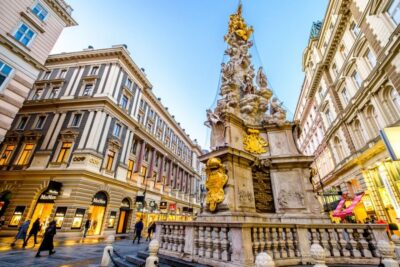
Vienna is spread out in a way that can make a first visit feel fragmented. The Opera House, Hofburg, Rathaus, Karlskirche, Prater, and Hundertwasserhaus are not all next door to one another. On foot, you can spend much of a day crossing the city. From a bike, you can connect these sights in one steady outing.
The ride also gives you a better feel for Vienna than a coach. You notice the change from ceremonial boulevard to canal bank, from formal imperial architecture to Hundertwasser’s playful colors, and then to the leafy amusement park setting of Prater. I like that contrast. Vienna is more than palaces and concert halls, and this route shows that.
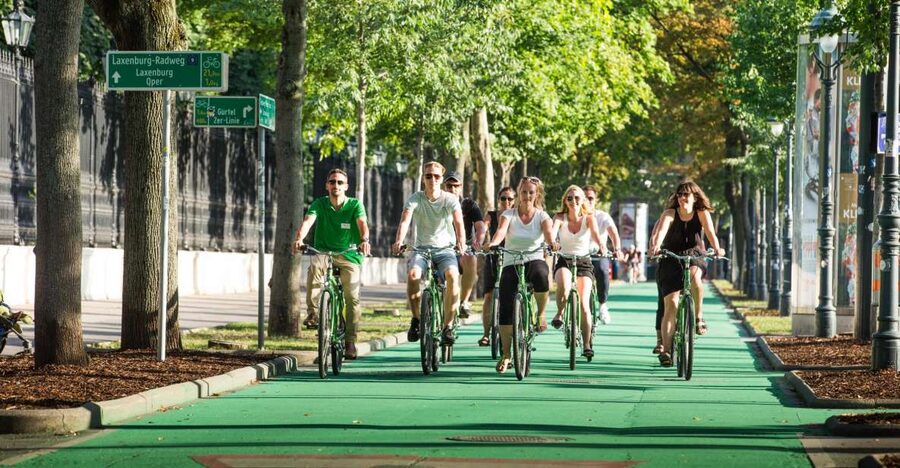
The cycling is described as safe and leisurely, with much of the route on cycle paths or well-surfaced roads. Guides watch the group at intersections and help older and younger riders manage traffic. You still need to be comfortable on a bicycle, but this is not presented as a race or a demanding athletic outing.
One review described a group of 14, which is manageable but not especially intimate. Larger groups can mean more waiting at crossings and fewer chances to ask private questions. The upside is that a good guide can keep the group moving while sharing information at selected stops rather than talking constantly while everyone rides.
More City Bike Tours in the world:
- Lion City Bike Tour of Singapore
★ 5.0 · 6,211 reviews - 3-Hour Porto Highlights on a Electric Bike Guided Tour
★ 5.0 · 4,392 reviews - Porto: City Highlights 3-Hour Guided Electric Bike Tour
★ 4.8 · 3,092 reviews
Starting at Franz Josefs Kai
The meeting point is Franz Josefs Kai, 45, in Vienna’s 1010 district. The nearest subway station is Schottenring, served by the U2 and U4 lines. Allow time to arrive early, especially because the setup includes choosing a bike and getting ready before departure.
The supplied bikes are modern city bikes described as comfortable and easy to ride. Helmets are available, and several riders specifically liked the bike condition and comfortable seats. One family review also noted that a guide patiently managed a fidgety 12-year-old, a useful sign for families with children who can ride confidently but may not enjoy a strict, formal tour.
Wear clothes you can pedal in. You do not need special cycling gear, but comfortable clothing matters more than looking polished. The ride lasts three hours, so shoes that are fine for pedaling and walking are a better choice than stiff dress shoes.
The Ringstrasse and imperial Vienna
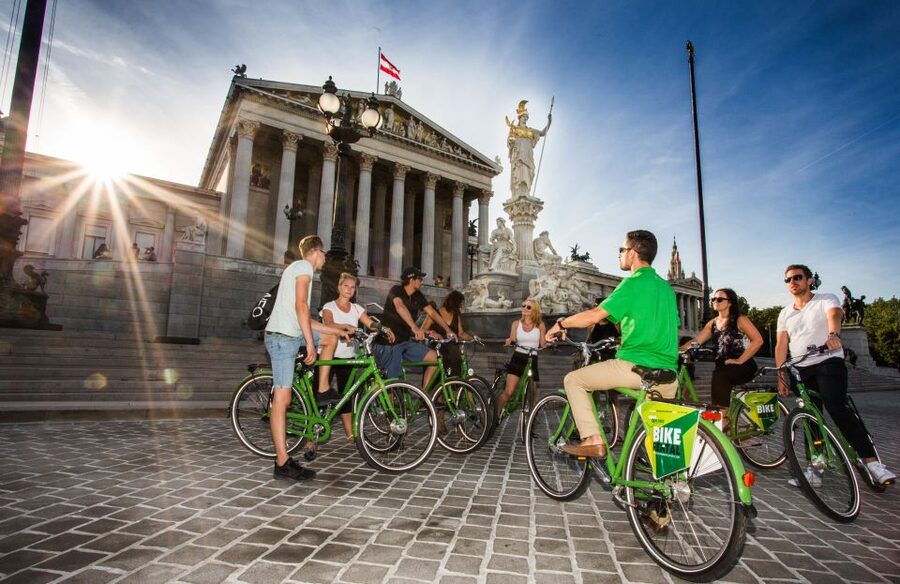
The first major section follows the Ringstrasse, the grand boulevard created around Vienna’s historic core after the old defensive walls were removed. This is where the former Habsburg capital puts its public face forward.
You will pass major buildings tied to the city’s imperial and civic identity, including:
- The Vienna State Opera, with its Neo-Renaissance design
- The Gothic Revival Rathaus, or City Hall
- Vienna University
- The Parliament buildings from the Austro-Hungarian period
- The Imperial Palace and Hofburg area
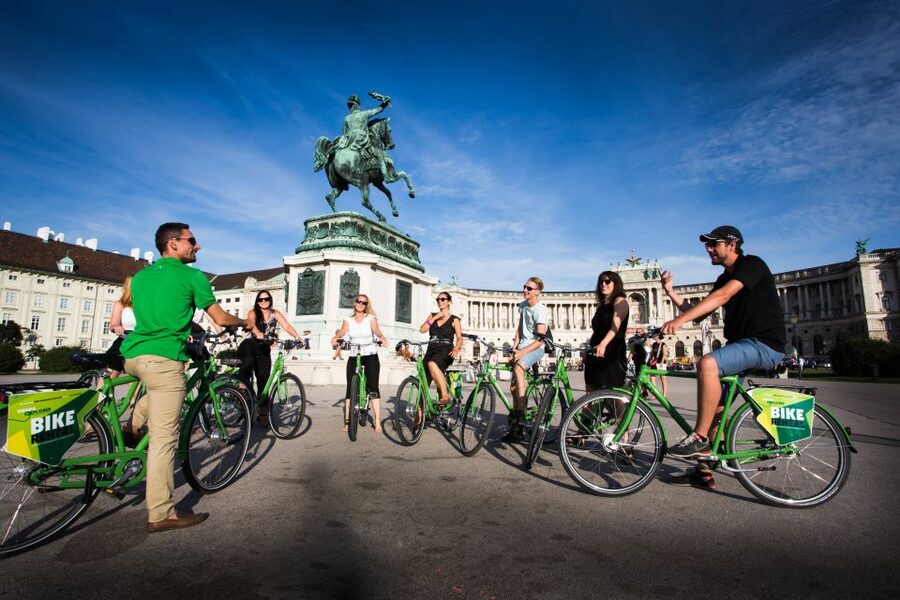
- Heroes’ Square
The benefit of seeing these buildings by bike is scale. You can move along the boulevard and understand how the monuments relate to one another, rather than viewing each one as an isolated stop. The guide’s talks help explain why this road became such a powerful display of government, culture, and imperial ambition.
At the Opera House, expect an exterior look rather than an indoor performance or backstage visit. The same applies to the Rathaus, Parliament, and Hofburg. The tour is about orientation, architecture, and history from the street. If one building catches your eye, mark it for a later visit.
Heroes’ Square adds a difficult political chapter. The site is connected with Hitler’s 1938 Anschluss speech, when Nazi Germany announced the annexation of Austria. The historical discussion is not limited to pretty façades and royal ceremony. Several guides have been praised for handling Austria’s wartime and political past with care, including family stories and the occupation of Hungary by the National Socialists. That makes the tour more useful than a string of dates and decorative details.
Karlsplatz and the grand Karlskirche
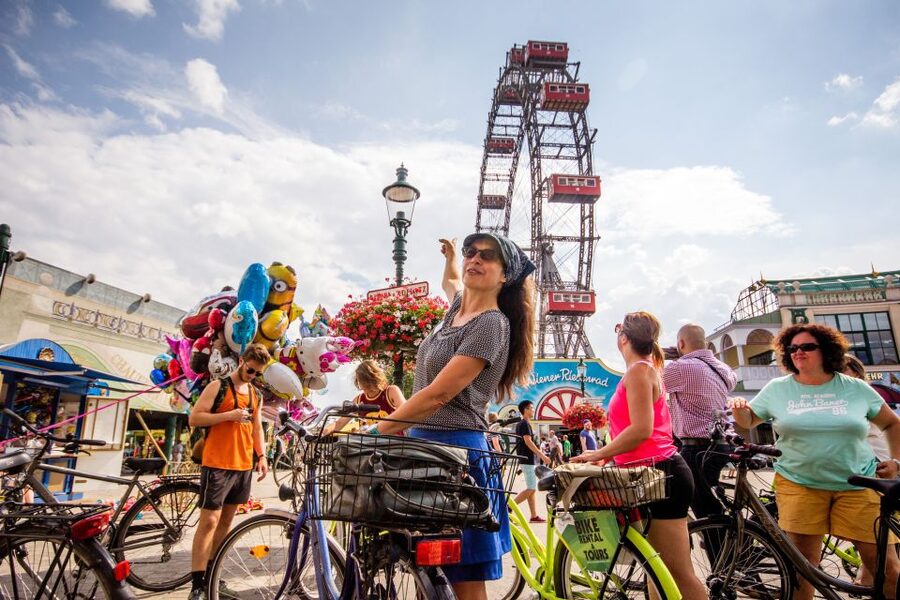
Karlskirche, on Karlsplatz, brings a different architectural mood. Its columns, domes, and broad open setting make it one of Vienna’s most striking church exteriors. From the bike, you can appreciate the composition as a whole, then stop for photographs and a short explanation.
This is one of the places where the stop matters. A quick pass would not do the church justice, and the route allows time to get off the saddle and look. The tour does not promise an interior visit, so plan a separate return if you want to go inside.
The area also helps connect imperial Vienna with the city’s cultural side. Depending on the precise route and guide, the ride may include views around the Museum Quarter. One rider particularly enjoyed cycling through that area, which makes sense if you like the way Vienna’s museums, public spaces, and historic buildings sit together.
A few more rides around the world worth a look
- 3-hour Complete Prague Bike Tour
★ 5.0 · 3,674 reviews - Copenhagen: Highlights 3 Hour Bike Tour with a Local Guide
★ 4.8 · 2,312 reviews - Classic Vienna: 3-Hour Guided Bike Tour
★ 4.7 · 2,146 reviews - Munich 3-Hour Guided Bike Tour
★ 4.5 · 1,731 reviews
Along the Danube canal
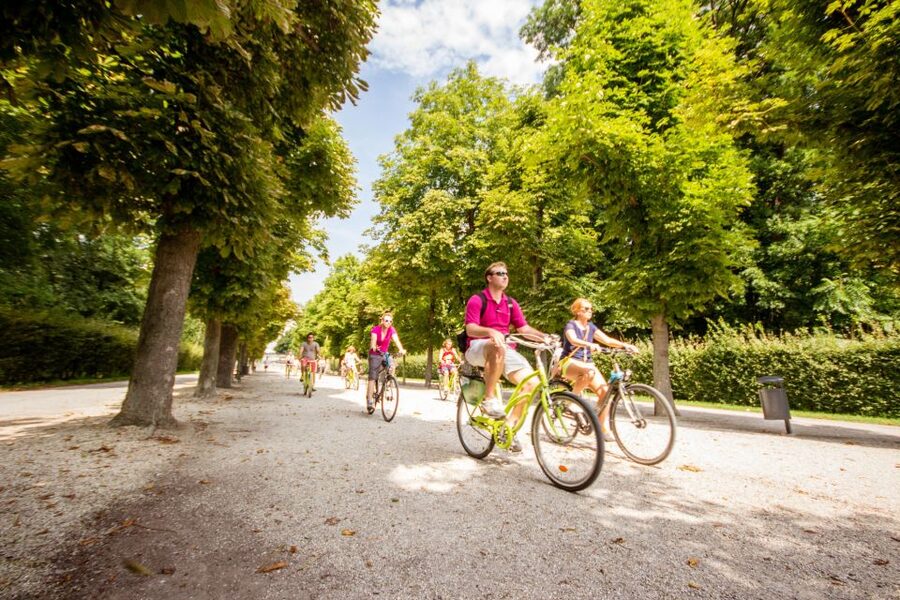
The Danube canal section gives your legs and eyes a break from monumental stone. You ride beside a sidearm of the Danube, with the city presented from a lower, more open angle. It is a welcome change after the formality of the Ringstrasse.
This part of the route also shows why biking is practical here. You can cover distance without giving up the pleasure of being outside. The canal ride is not a boat excursion and does not replace a full visit to the main Danube, but it adds a different view of Vienna’s urban life.
One review praised the canal and Museum Quarter as highlights. I would agree that these sections help prevent the tour from feeling like a nonstop parade of official buildings. The route has enough variety to keep three hours from becoming a lecture on one architectural style.
Hundertwasserhaus and Vienna’s playful side
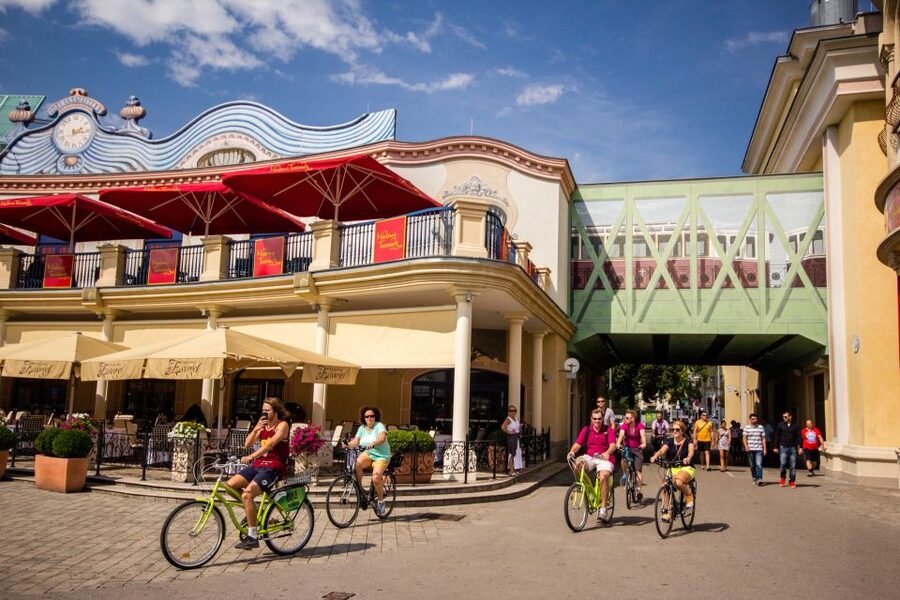
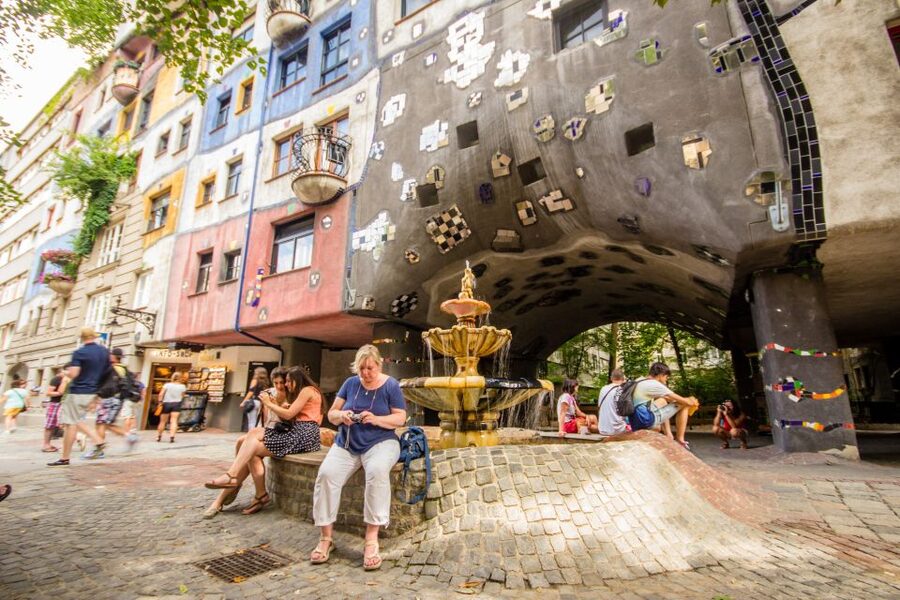
Hundertwasserhaus is the visual surprise of the ride. Designed in the 1980s by Friedensreich Hundertwasser with architect Joseph Krawina, the apartment complex is known for irregular lines, bright colors, uneven floors, and greenery integrated into the design. It looks nothing like the straight, disciplined façades of the Ringstrasse.
The tour stops so you can take it in properly. This is not simply a quick photo from a moving bike. You get a chance to appreciate the building’s crooked windows and colorful surfaces, then hear why it is such a memorable part of Vienna’s modern identity.
It is also a good reminder that Vienna is not frozen in its imperial past. The city can be formal, ornate, eccentric, and contemporary within the same afternoon. If you are mainly interested in palaces, this stop may feel less important. If you enjoy unusual architecture, it may be one of the most memorable parts.
Prater Park and the giant Ferris wheel
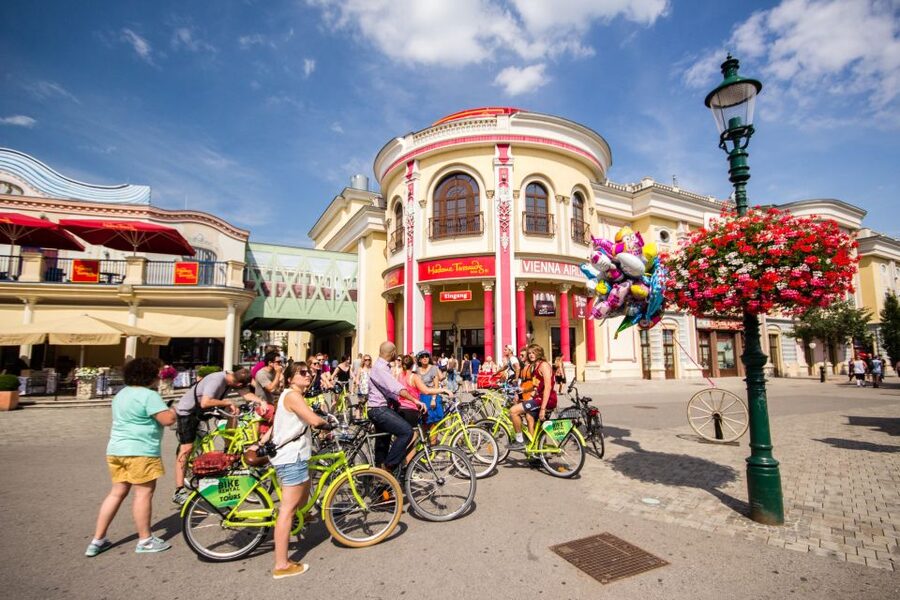
The final major sight is Prater Park, home to Vienna’s giant Ferris wheel. The park shifts the mood again. Instead of government buildings and churches, you get open space, trees, and the playful atmosphere of one of Vienna’s best-known recreation areas.
The Ferris wheel is a useful symbol of the city because it links leisure with history. You will see it from outside on the bike tour, not ride it as part of the experience. If you want a cabin ride and city views from above, save that for another time.
A particularly nice detail from one guide’s talk concerns why Prater has trees but no bushes. That kind of small observation is exactly what can turn a standard sightseeing circuit into a more memorable outing. It gives you something to notice after the tour, rather than just another name to forget.
From Prater, the ride returns along the banks of the canal or a nearby Danube waterway. The return section helps complete the loop and gives you more time in the saddle after the major stops.
The guides make the difference
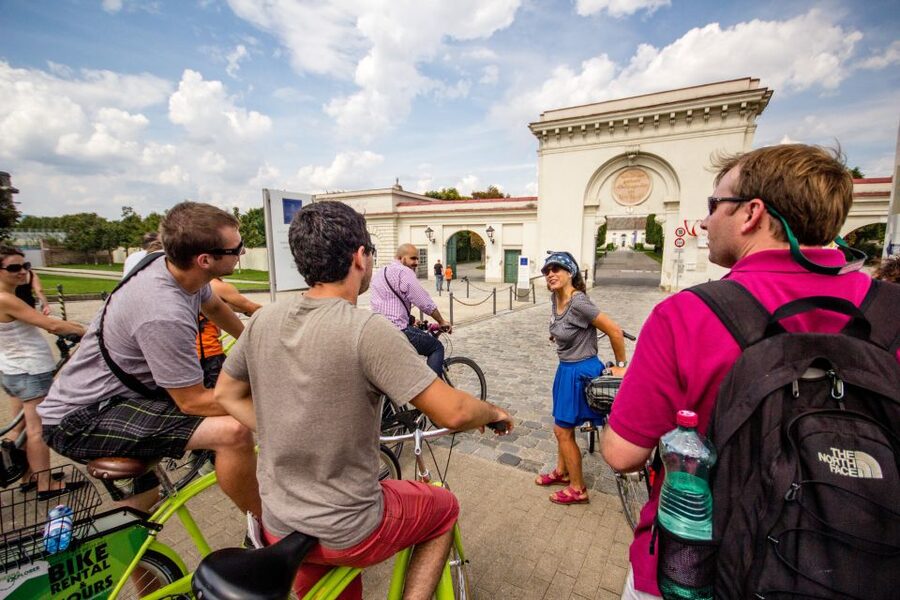
The strongest part of this experience is the guide quality. Lisa has been praised for her energy, humor, and ability to keep a group interested even in bad weather. Marco is frequently described as entertaining, careful, and able to answer both historical and everyday questions. Jan has a gift for explaining history in a clear way while looking after the oldest and youngest riders.
Horst is another name to look for. He has been praised for funny stories, local knowledge, and a good cycling speed. Robert has been noted for giving useful historical and political context without overwhelming the group. Karl, Clemens, and other guides have also received warm comments for patience, clear English, and good group care.
Guide quality can vary from one departure to another, of course. The consistent pattern is encouraging: the best guides do not deliver a long speech at every corner. They ride at a safe pace, stop at sensible locations, invite questions, and add local details that you would not pick up from a guidebook.
The tour is offered in English, with an English and German-speaking guide listed. English is the operating language for this experience. If English is your second language, fast speech or a strong accent may occasionally make details harder to catch. You can ask the guide to repeat information, but this is worth considering before booking.
Pace, fitness, weather, and comfort
The route is largely flat, and the riding pace is described as relaxed. One review called the balance between cycling and stops just right, with enough riding to feel active but enough breaks to listen and take photos. Another suggested that an additional comfort stop would be welcome during a three-hour outing.
You should be able to ride steadily for several hours and manage ordinary city cycling. The tour is not designed as a workout, though you will get some exercise. Families have enjoyed it, and one rider used an e-bike because of a sore foot. E-bike availability has been mentioned on past departures, but confirm it when booking rather than assuming it is included.
The tour operates in all weather. Rain ponchos are provided in wet conditions, and one group completed the ride during a downpour with the ponchos doing their job. Still, rain can affect visibility, comfort, and the length of stops. If the forecast is poor, wear clothes that dry reasonably quickly and accept that the city may look less polished through a wet lens.
Hot weather deserves attention too. A past afternoon ride in 32 C heat benefited from shaded sections. Bring water, since the tour information does not promise drinks or a dedicated refreshment stop.
Is $55 a fair price?
At $55, you are paying for three hours of bike use, a guide, route planning, and the chance to reach more sights than you could comfortably cover on foot. The price works best if this is your first or second day in Vienna and you want a broad picture of the city before choosing where to spend more time.
The tour does not list entry tickets, meals, or a Ferris wheel ride as inclusions. Think of it as an outdoor sightseeing circuit with historical commentary, not a package of admissions. Afterward, you may want to return to the Hofburg, Karlskirche, a museum, or the Prater wheel on your own.
I consider the value good for active visitors who would otherwise pay for several separate transport rides or lose hours walking between distant sights. It is less compelling if you already know Vienna well, dislike group activities, or want to spend 30 minutes inside each monument.
Free cancellation is available up to 24 hours before departure, and you can reserve now and pay later. Those policies reduce the risk of booking around uncertain plans.
Should you book this Vienna bike tour?
Book it if you want a lively first look at Vienna, enjoy light exercise, and prefer stories at selected stops rather than a constant spoken monologue. It is especially useful for a short visit, families with confident cyclists, and anyone who wants to connect the Ringstrasse with Prater and Hundertwasserhaus in one outing.
Skip it if your priority is the old town’s narrow lanes, museum interiors, or a very quiet private experience. For most first-time visitors, though, the route covers a lot of ground at a sensible pace. The 4.7 rating from 438 reviews fits the picture: strong guides, comfortable bikes, useful stops, and a practical way to get your bearings fast.
FAQ
How long is the Vienna bike tour?
The tour lasts three hours.
What language is the tour conducted in?
The live tour is conducted in English. The guide is also described as English and German-speaking.
Where does the tour meet?
Meet at Franz Josefs Kai, 45, 1010 Vienna. The closest subway station is Schottenring, served by lines U2 and U4.
What sights are included?
The route includes the Ringstrasse, Vienna Opera House, Rathaus, Vienna University, Parliament, Hofburg, Heroes’ Square, Hundertwasserhaus, Karlskirche, Prater Park, the giant Ferris wheel, and parts of the Danube canal.
Are bikes provided?
Yes. Comfortable, modern city bikes are provided. Helmets are also available according to past tour details.
Does the tour run in the rain?
Yes. The tour operates in all weather conditions, and rain ponchos are provided when it is wet.
What should I wear?
Wear comfortable clothes suitable for cycling.
Can I cancel the booking?
Yes. You can cancel up to 24 hours in advance for a full refund. Reserve now and pay later is also available.
Newly added rides around the world
- Half-Day Lanna Countryside Cycling Tour in Chiang Mai★ 4.5 · 24 reviews
- Full-Day Hike and Bike Tour from Chiang Mai★ 5.0 · 14 reviews
- Full-day E-bike Countryside and Nam Phrae (flat-hilly, GUIDED)★ 5.0 · 11 reviews
- Experience The Real Chiang Mai by Bike★ 4.5 · 36 reviews
- FIELDS OF GOLD Mountain Biking Tour Chiang Mai★ 5.0 · 18 reviews
- Half-Day Colors of Chiang Mai Biking Tour★ 5.0 · 105 reviews
- Chiang Mai City Culture Half-Day Cycling Tour★ 4.5 · 15 reviews
- Chiang Mai Night Bike Tour★ 5.0 · 69 reviews
Vienna Bike Tours, compared.
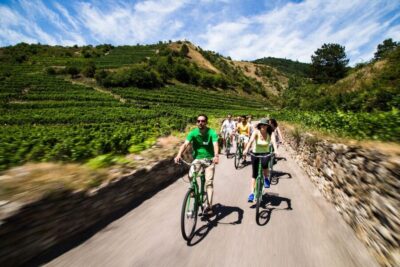
Wachau Valley Wine Tasting Bike Tour from Vienna
Read our review →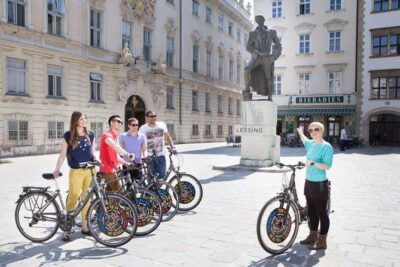
Grape Grazing: Wachau Valley Winery Biking Tour
Read our review →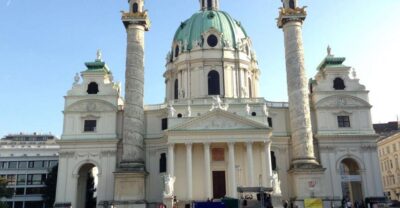
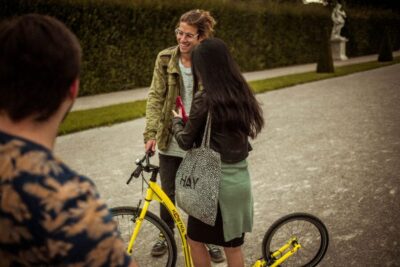
Guided Tour by Kick Bike or E-Scooter with a Local
Read our review →Browse the lists this tour appears in