
REVIEW · UBUD BIKE TOURS
Ubud: Rice Terraces & Villages Half-Day Fat Tire E-Bike Tour
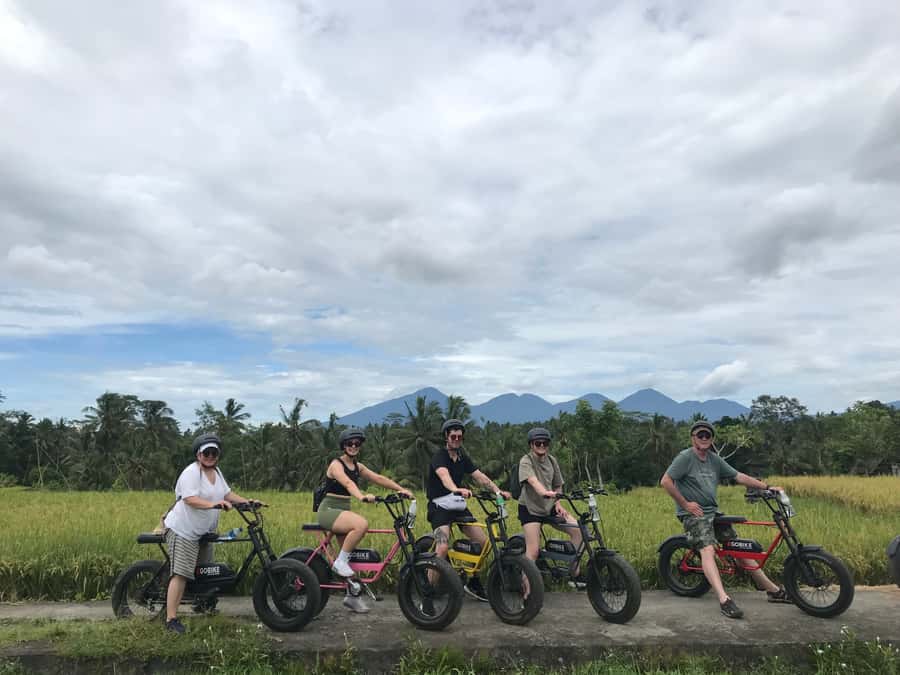
The countryside begins just beyond Ubud. This four-hour e-bike ride combines rice terraces, village lanes, temples, local stories, and lunch in a way that gives you far more than a quick photo stop. I especially like the small-group format, limited to 10 people, and the chance to ride on quiet back roads instead of spending the whole outing near Ubud’s traffic.
I also like how little effort the bikes require. Several riders who had not cycled for years found the electric assistance easy to use, and guides such as Wayan, Made, and Kadek were praised for calm instruction and careful riding. The main thing to consider is that you still need basic cycling ability, and a short section through Ubud traffic can feel less peaceful than the rice fields.
Key things to know before you book
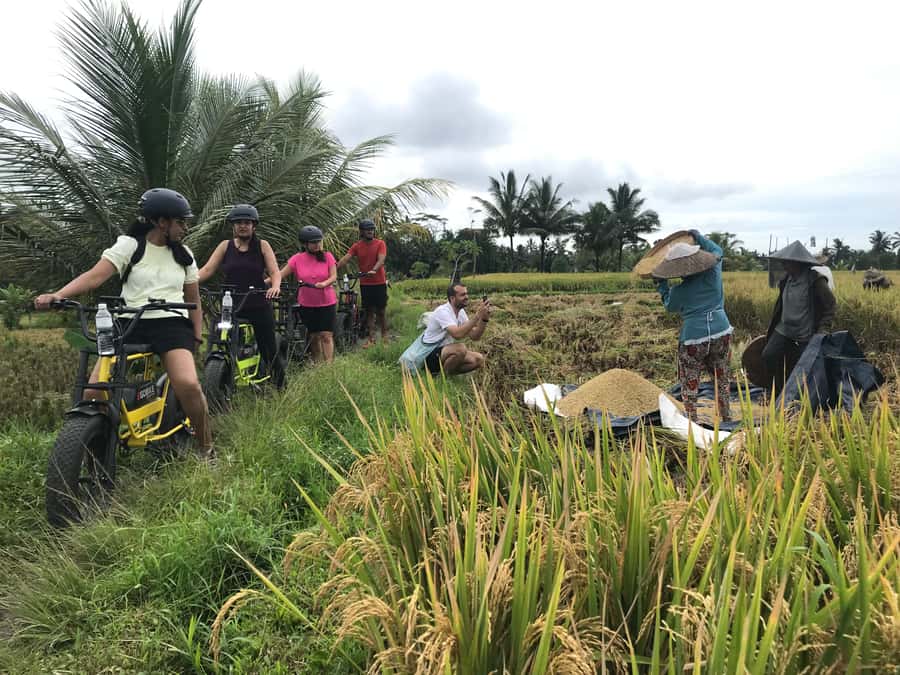
- The subak irrigation system is the star lesson: At Cekingan Rice Terrace, you learn how Balinese farmers share water through an old cooperative system recognized by UNESCO.
- Quiet lanes reveal daily life: The route passes rice paddies, traditional homes, village temples, and small roads that are difficult to reach by car.
- Electric assistance makes hills manageable: The fat-tire e-bikes do most of the hard work, though you still need to steer and handle the bike safely.
- Guides add real value: Wayan, Made, Kadek, and other guides are praised for patient coaching, cultural explanations, safety, and taking photos and videos.
- Lunch is part of the appeal: The tour ends at a local Ubud restaurant or warung with a Balinese meal included.
- Plan for an early pickup: Hotel collection is within 5 kilometers of central Ubud, but pickup is scheduled about an hour before the activity begins.
Why an e-bike is a smart way to see Ubud
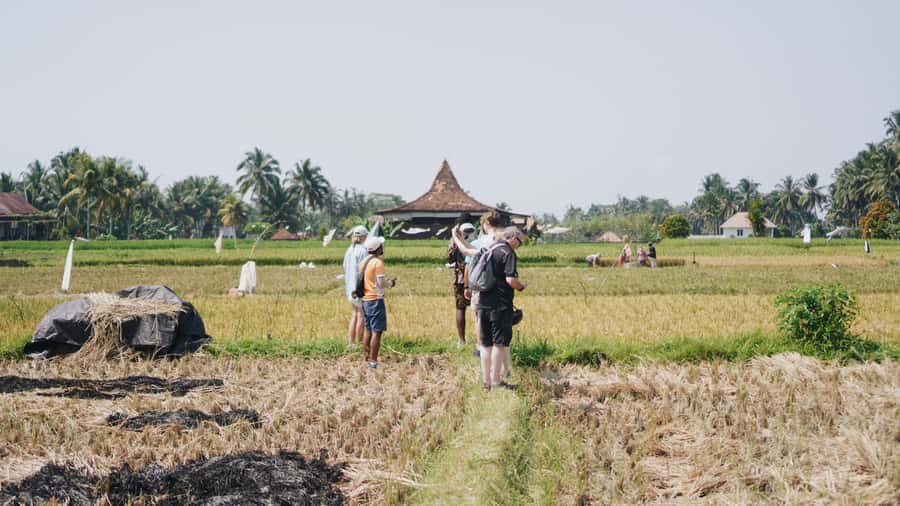
Ubud is easy to admire from a car, but a car keeps you behind glass and limits where you can stop. On a bicycle, you notice the changes as the town gives way to fields, shrines, family compounds, and narrow country lanes.
The electric motor matters here. Ubud’s countryside is not flat, and cycling in Bali’s heat can quickly turn a pleasant outing into hard exercise. The fat tires help the bike feel steady, while the motor gives you a push on inclines. Several people who were nervous about cycling found the controls simple after a short practice period.
You still need to ride a bicycle confidently enough to steer, brake, and follow directions. The tour is not suitable for anyone who cannot ride, for people under 4 feet 9 inches, or for anyone over 260 pounds. If you have not cycled in a long time, tell your guide at the start. Guides have helped hesitant riders build confidence, and one person who could not manage the bike was moved to a scooter with another guide so she could continue enjoying the route.
The group size, capped at 10, is another plus. It gives the guide room to watch the riders and adjust the pace. Some outings use two guides, one leading and one riding behind, which adds reassurance on busier sections.
More Countryside Bike Tours in Indonesia
- Ubud: Downhill Bike Tour with Rice Fields, Volcano and Meal
★ 5.0 · 267 reviews - Bali Countryside Cycling Tours
★ 5.0 · 246 reviews - Ubud : PRIVATE Bike Tour inside Rice Field Ubud Countryside
★ 4.9 · 118 reviews
Pickup from Ubud and the ride to the starting point
Hotel pickup is included for accommodations within 5 kilometers of central Ubud. You should wait in the lobby about 60 minutes before the scheduled activity time. That sounds early, but it allows time for the transfer and the drive to the cycling start point.
The transfer is practical rather than scenic. Once you arrive, you receive a helmet, water, and a maintained fat-tire e-bike. Raincoats are available if needed, which is useful in Bali, where a dry morning can change quickly.
The tour operators take safety seriously, but you should still bring sunscreen. One person specifically wished they had remembered it, and the open fields provide little shade. Comfortable clothes, closed shoes, and a secure phone or camera are sensible choices.
Jalan Cinta and the first rice-field views
The cycling begins around Jalan Cinta, or Street of Love, where the route passes fields of ripening rice. This is where the tour starts feeling different from a standard Ubud sightseeing drive.
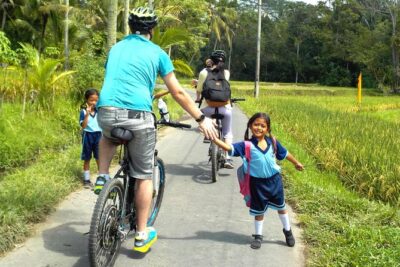
You may see farmers working, local people going about their routines, and children greeting the group as it passes. The pace allows for stops, questions, and photographs rather than a quick look through a vehicle window. The narrow roads also bring you closer to the irrigation channels and field edges.
The rice changes appearance with the season. At times, you may see bright green plants. At other times, the paddies may be closer to harvest, with golden tones replacing the fresh green. The appeal is not only the view. Your guide explains how the fields function and how farming fits into village life.
This section is generally easy because the motor handles much of the work. Still, do not expect a completely effortless sightseeing ride. You need to pay attention to turns, other road users, and changes in the surface.
Tegalalang village and a closer look at local life
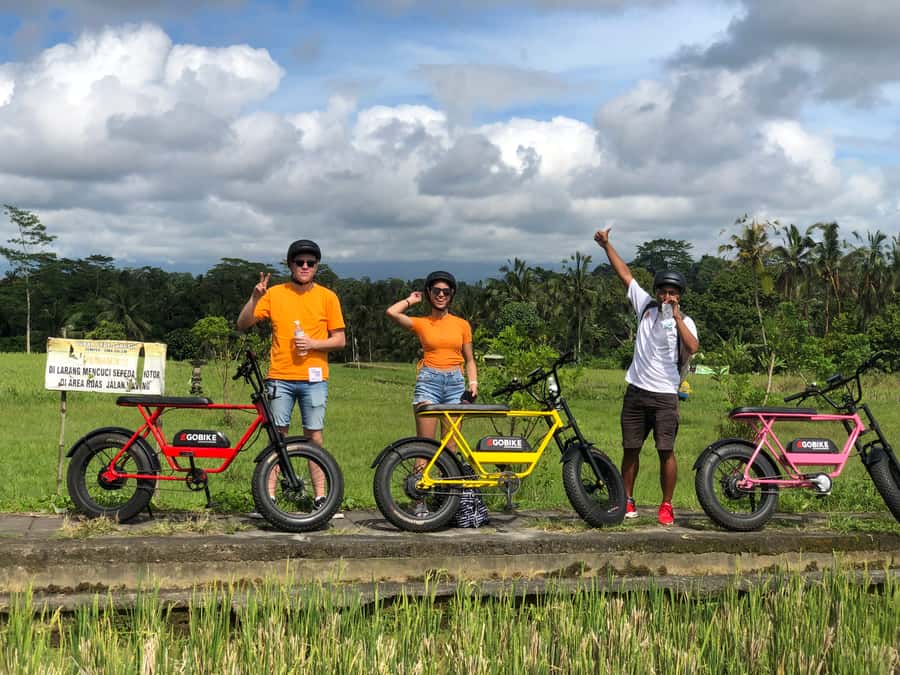
The stop in Tegalalang adds human scale to the scenery. Instead of seeing Bali only as a series of terraces, you get a chance to hear about household customs, village life, and Balinese family arrangements.
Some departures include a visit to a traditional family compound. This was one of the most meaningful parts for many people because the guide could explain how the home is organized and discuss everyday customs. The experience is more useful when you ask questions rather than simply walk around taking pictures.
The exact stops can vary. Some groups have visited a coffee and tea tasting, while others have skipped it and spent more time at a family home or with a local farmer. A swing stop may also be offered, but it is not the main reason to book this activity. If you have already done a coffee plantation or do not want a tourist-style swing, tell your guide. The staff have shown flexibility when groups preferred a quieter stop.
That flexibility helps keep the outing personal. You are not locked into every optional attraction, although the core rice-field and village ride remains the main structure.
More E-Bike Tours in Indonesia
- Ubud eBikes Tour to Tegallalang Rice Terrace
★ 5.0 · 507 reviews - Electric Bike Tour in Ubud
★ 5.0 · 281 reviews - E-Bike: Ubud Rice Terraces & Traditional Villages Cycling
★ 4.6 · 37 reviews - Private Fat Tire E-Bike Tour in Ubud
★ 5.0 · 25 reviews
Temples, countryside lanes, and the Cekingan Rice Terrace
Village temples give the ride a cultural layer. Guides explain elements of Hindu practice and Balinese traditions, helping you understand why shrines and ceremonial spaces appear throughout the countryside. The visits are short, but they make the ride more than a scenic bike trip.
The most important viewpoint is Cekingan Rice Terrace. Here you learn about the subak irrigation system, a cooperative method through which farmers manage water for the paddies. It is not simply an old canal network. It links farming, village organization, religious practice, and the care of a shared water supply.
The subak system is recognized as part of a UNESCO World Heritage site. That designation makes more sense after seeing the fields themselves. From the terrace, you can appreciate how much planning is hidden inside what first looks like a natural green valley.
Bring a camera, but do not rush the stop. The best value here comes from combining the view with the explanation. You may also find that the walking surface around a terrace is uneven, so sensible footwear is better than flip-flops.
The route through the countryside is one of the tour’s strongest features. Guides take small tracks and quieter roads that a car could not use easily. One rider described this as a way to reach views unavailable by other transport, while another liked getting away from the main tourist areas.
There is one practical warning: around 10 percent of the ride may involve cycling through Ubud itself. Compared with the quiet fields, this section can feel busy and intimidating, especially if you are a cautious cyclist. The guides generally ride at the front and back, give directions, and focus closely on safety, but you should be prepared for that change of pace.
What the guides add to the experience
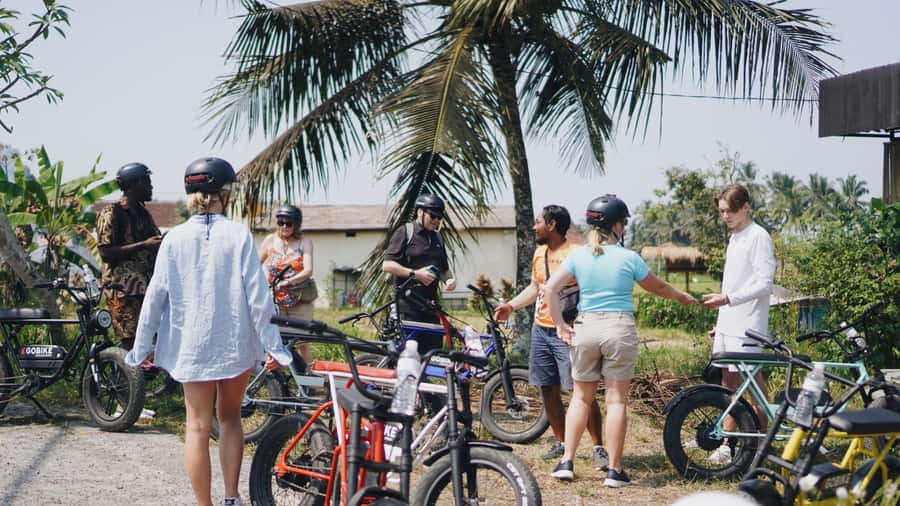
The guide can make or break a cycling tour. Here, the strongest praise goes to the people leading the rides.
Wayan is described as friendly, funny, patient, and good at explaining local life. Made has been praised for careful support and for keeping riders safe. Kadek is known for adapting the route to the group and encouraging people who need extra time with the controls. Other guides, including Inyoman, have also been praised for sharing personal stories about Balinese families and village life.
The guides often take photos and short videos during the ride. Some people received a finished video summary afterward, while others received the original images as well. This is a thoughtful extra, especially if you do not want to stop constantly to manage your own camera.
You should not assume every group receives exactly the same photo service, but it is clearly part of the team’s style. More important is the attention to safety. Guides have changed bikes after a flat tire, helped nervous riders, and used more than one guide when needed.
English is the tour language. The guides are praised for clear communication, although the depth of explanation can vary by person and group. You will get the most from the cultural side if you ask questions about the temples, homes, farming, and family customs.
Balinese lunch in Ubud
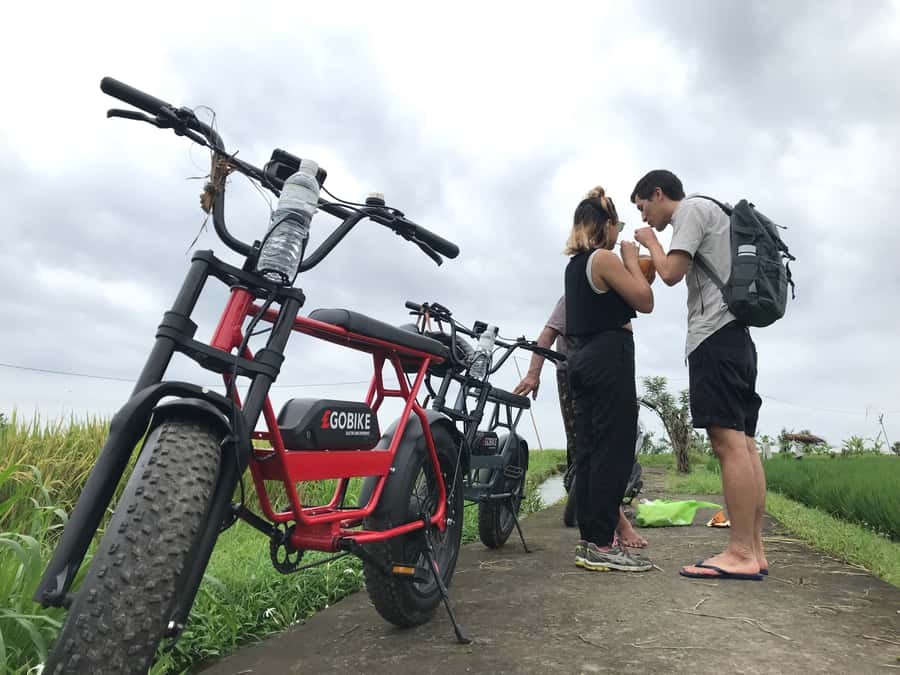
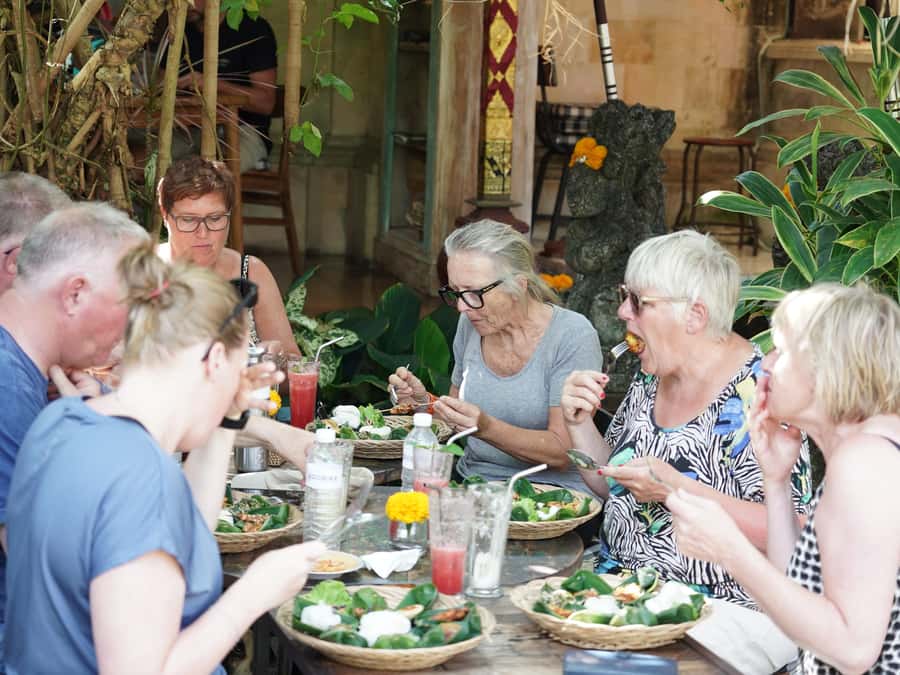
The ride ends with a Balinese lunch at a local restaurant or warung in Ubud. This is more than a convenient meal after exercise. The food gives the outing a satisfying local finish, and the setting may be a small back-street place you would not find on your own.
The meal is included in the $33 price, along with hotel pickup and drop-off within the service area, the e-bike, helmet, guide, water, and a raincoat if needed. Lunch has been described as delicious and, for many people, one of the highlights.
Do keep expectations sensible. The information provided does not specify a fixed menu, so the meal may differ from one departure to another. If you have dietary needs, ask before booking rather than assuming the restaurant can accommodate them.
The schedule allows about 45 minutes for lunch. That is enough time to eat and talk with the group, though it is not a long food tour. The meal closes the day neatly, and you return to your Ubud hotel afterward.
Is $33 good value for four hours?
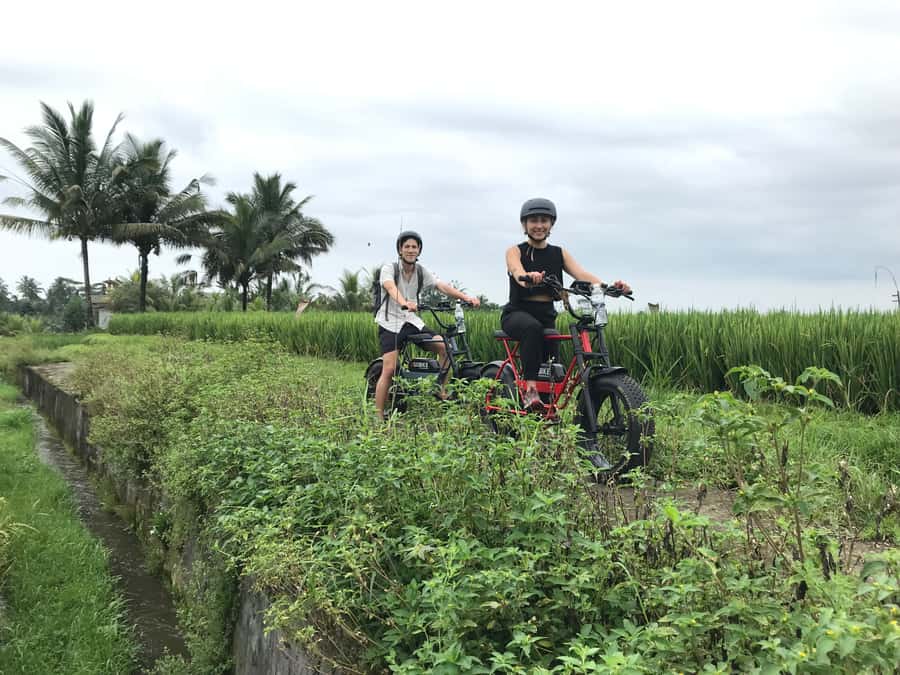
Yes, provided you want a guided countryside outing rather than a serious cycling workout. For $33, you receive transport within the Ubud area, equipment, a guide, water, lunch, and access to rural routes that would be awkward to arrange independently.
The value is even clearer when you count the range of stops. In roughly four hours, you can see rice fields, Cekingan Rice Terrace, Tegalalang, village temples, traditional homes, and parts of the countryside outside Ubud. You also avoid the cost and effort of organizing separate transport for each place.
The main limitation is time. Four hours gives you a useful introduction, not a slow rural exploration. Optional coffee, swing, or home visits may be adjusted depending on the group. If you want long walks through the terraces, extended photography, or a full cultural workshop, you will need a different kind of tour.
The high overall rating of 4.9 from 602 bookings fits the strongest pattern here: people value the guides, the easy bikes, the variety of stops, and the lunch. No activity is perfect, and the traffic section, changing optional stops, heat, and need for basic cycling skill are worth weighing honestly.
Who should book this ride?
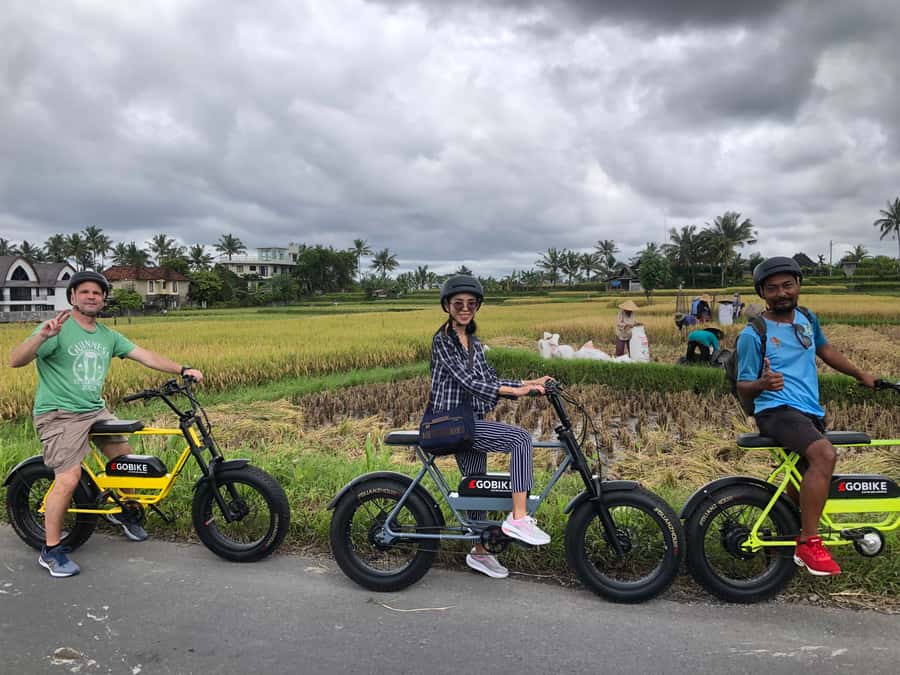
I would choose this for a first or second day in Ubud. It helps you understand the area quickly, and the guides can give you a sense of local customs before you spend more time exploring on your own.
It suits couples, families with cycling-capable children, solo visitors, and active older people. The e-bike assistance makes it less demanding than a normal bicycle tour, while the small group keeps the experience social without making it unwieldy.
You may want to skip it if you cannot ride a bicycle, dislike traffic, or want a fully private schedule with no optional stops. It is also not the best fit if you are looking for an intense workout. The motor does much of the pedaling work.
Book an early start if possible. Morning departures help you avoid the worst heat, and you will have more energy for the ride. Pack sunscreen, water is supplied, and wear clothes you can comfortably cycle in.
Final verdict: a strong half-day choice in Ubud
I would book this tour if I wanted to see the countryside without giving up comfort. The ride delivers the parts of Bali that many people hope to find: rice fields, village roads, temples, family homes, and a guide who can explain what you are seeing.
The best moments are not limited to the famous terrace viewpoint. They come from gliding along small roads, learning how subak works, hearing a guide explain family life, and finishing with a local meal. At $33, that is a useful amount of Bali for one half-day.
Choose it for scenery, culture, easy cycling, and friendly guidance. Just remember that you need basic bike skills, the Ubud traffic section is real, and some extra stops may change. With those points in mind, this is a particularly good-value way to get beyond central Ubud.
FAQ
How long does the Ubud e-bike tour last?
The tour lasts four hours, including the ride, sightseeing stops, and lunch.
What is included in the price?
The price includes an e-bike, helmet, cycling guide, Balinese lunch, water, a raincoat if necessary, and hotel pickup and drop-off within the Ubud service area.
How much does the tour cost?
The listed price is $33 per person.
Where is hotel pickup available?
Pickup is available from hotels within a 5-kilometer radius of central Ubud.
How early should I wait for pickup?
You should wait in your hotel lobby 60 minutes before the scheduled activity start time.
Is the tour conducted in English?
Yes. The live tour guide language is English.
How many people are in the group?
The tour is limited to 10 participants.
Do I need to know how to ride a bicycle?
Yes. The activity is not suitable for people who cannot ride a bike. You also need to meet the stated minimum height of 4 feet 9 inches and maximum weight of 260 pounds.
Is lunch included?
Yes. A Balinese lunch at a restaurant in Ubud is included, with about 45 minutes allowed for the meal.
Can I cancel the booking?
You can cancel up to 24 hours in advance for a full refund. Reserve now and pay later is also available.
More Countryside Bike Tours in Ubud
- Cai Be Mekong Delta Tour: Cooking Class, Cycling & Craft Villages
★ 5.0 · 1,881 reviews - Countryside Bike Tour from Amsterdam: Cheese, Clogs & a Windmill
★ 5.0 · 1,485 reviews - Amsterdam: Windmill, Cheese, and Countryside E-Bike Tour
★ 4.5 · 1,308 reviews - Siem Reap Countryside Bike Tour / E-Bike or Tuk Tuk
★ 5.0 · 935 reviews
More E-Bike Tours in Ubud
- 3-Hour Porto Highlights on a Electric Bike Guided Tour
★ 5.0 · 4,392 reviews - Lisbon: Hills, Alfama, and Mouraria Tour by Electric Bike
★ 4.8 · 3,438 reviews - Athens Scenic Electric Bike Tour with optional Acropolis visit
★ 5.0 · 3,350 reviews - Porto: City Highlights 3-Hour Guided Electric Bike Tour
★ 4.8 · 3,092 reviews
Newly added rides around Ubud
- E-Bike: Ubud Rice Terraces & Traditional Villages Cycling★ 4.6 · 37 reviews
- Ubud: Downhill Cycling with Volcano, Rice Terraces, and Meal★ 4.9 · 189 reviews
- Private Fat Tire E-Bike Tour in Ubud★ 5.0 · 25 reviews
- Ubud: Zipline, Bali Swing, and Sky Bike in a Private Rice Terrace★ 4.5 · 60 reviews
- Ubud : PRIVATE Bike Tour inside Rice Field Ubud Countryside★ 4.9 · 118 reviews
- Bali Downhill Cultural Cycling Tour★ 5.0 · 224 reviews
- Electric Bike Tour in Ubud★ 5.0 · 281 reviews
- Bali Countryside Cycling Tours★ 5.0 · 246 reviews
Ubud Bike Tours, compared.
Electric Cycling Tour of Ubud with Free Hotel Transfer and Lunch
Read our review →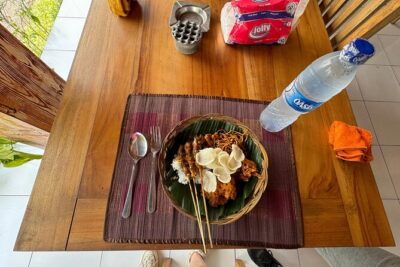
Downhill Cycling with Volcano, Rice Terraces and Meal
Read our review →
Half-Day Ubud Electric Cycling Tour to Tirta Empul Water Temple
Read our review →
Downhill Bike Tour with Rice Fields, Volcano and Meal
Read our review →
Browse the lists this tour appears in