
REVIEW · INDONESIA BIKE TOURS
Kuta: Kintamani Culture and Nature Guided Cycling Tour
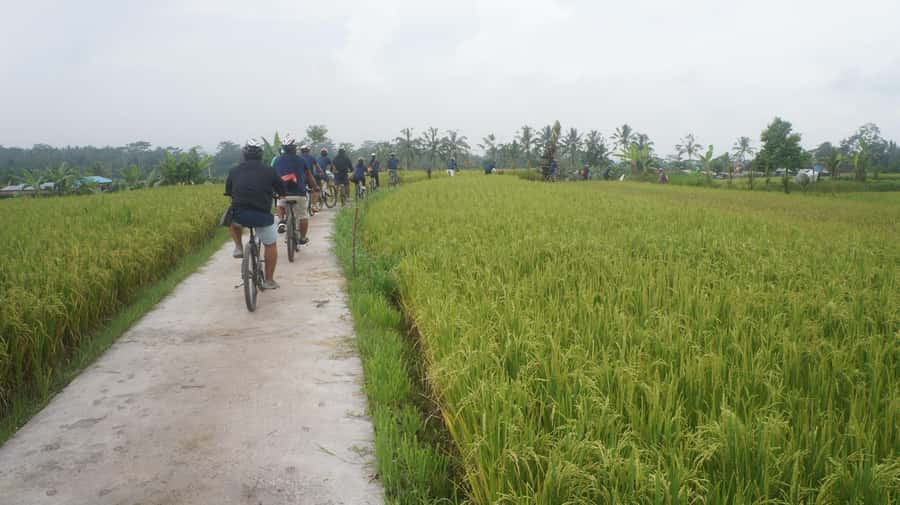
Bali rolls downhill beautifully. This $36 guided cycling tour pairs an easy 22-kilometer route with Balinese homes, gardens, rice fields, and village life. I like the gentle downhill ride and the stops that bring you into ordinary local settings, especially the traditional house and palm garden coffee break. The main consideration is that the day lasts about seven hours, with hotel transfers taking up part of that time.
I also like the small-group format, limited to six people, and the lunch served at Greenkubu Cafe among the rice fields. The route is not a hard athletic challenge, but you still need comfortable clothes, closed shoes, and enough confidence to ride for roughly three hours.
Key points at a glance
- Mostly downhill for about 22 kilometers: The ride begins in Abuan Kintamani village and follows a route through villages, gardens, forest trails, and rice fields.
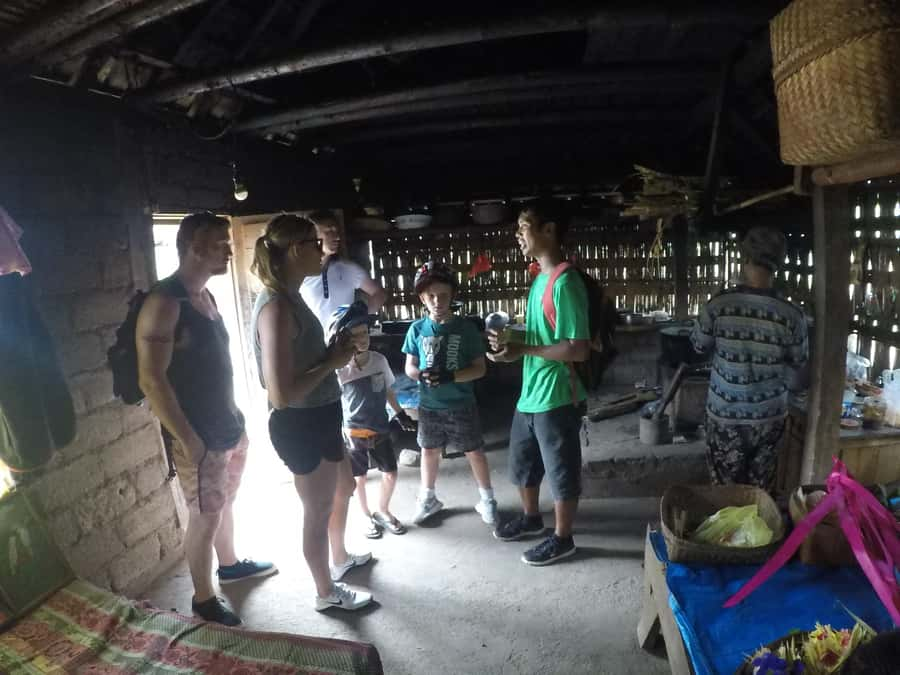
- A real Balinese compound: You stop at a traditional Balinese house while the guide explains how the compound is arranged and used.
- Coffee beneath palm trees: The break includes coffee and a traditional Balinese cake in a palm garden.
- A scenic rice-field stop in Bresela: This is one of the best points for photographs and a quiet look across the fields.
- Lunch in the rice fields: The tour finishes at Greenkubu Cafe, with lunch included and soft drinks available at your own cost.
- Small groups and full equipment: No more than six people join, and the price includes a bike, helmet, mineral water, wet-weather gear, insurance, guide, and transfers.
Why this cycling route works so well
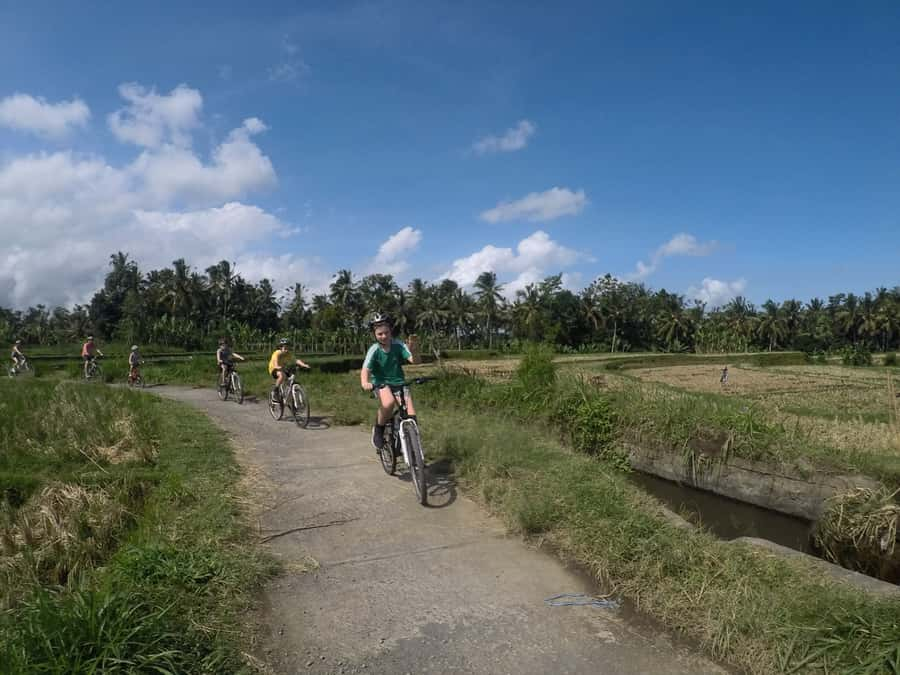
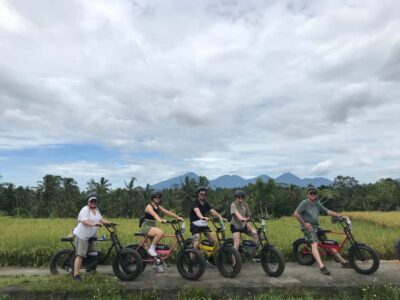
Many Bali day trips keep you inside a vehicle, looking out at villages through a window. This tour gives you time to notice smaller details. You ride past gardens and rice fields, stop to look at a Balinese family compound, and take breaks where the setting matters as much as the activity.
I like that the route is built around local life rather than a long list of major attractions. You are not racing from one famous photo stop to another. Instead, the guide has time to explain what you are seeing and let you pause for pictures.
The ride covers about 22 kilometers and is described as mostly gentle downhill. That makes it approachable for many people who want to cycle in Bali but do not want a punishing mountain ride. Still, three hours on a bicycle is not nothing. You should be comfortable steering, braking, and riding on changing surfaces.
The route includes some off-road sections and forest trails, according to the detailed experience account. The group stayed away from busy roads and felt safe, helped by the guides and maintained equipment. That is important in Bali, where road traffic can make independent cycling stressful.
A few more rides around Indonesia worth a look
- 3-Hour Porto Highlights on a Electric Bike Guided Tour
★ 5.0 · 4,392 reviews - Small Group Guided Bike Tour of Amsterdam’s Hidden Gems
★ 5.0 · 3,936 reviews - Porto: City Highlights 3-Hour Guided Electric Bike Tour
★ 4.8 · 3,092 reviews
Hotel pickup from five Bali areas
Pickup is available from Seminyak, Ubud, Nusa Dua Beach, Kuta, and Sanur. You wait in your hotel lobby, then ride to the starting point in Abuan Kintamani village.
Your total day is listed as seven hours, but the exact amount of time in the vehicle depends on your pickup and drop-off area. A start from Ubud may involve less transfer time than a start from Kuta, Seminyak, Sanur, or Nusa Dua Beach.
The early part of the outing is practical rather than exciting. At the starting point, the guides give a quick safety explanation before you get on the bike. You receive a helmet, and wet-weather gear is available if needed.
Because the group is limited to six people, the guide can keep an eye on the pace and help with basic riding concerns. That small size is particularly useful if your group has mixed cycling ability.
Starting in Abuan Kintamani village
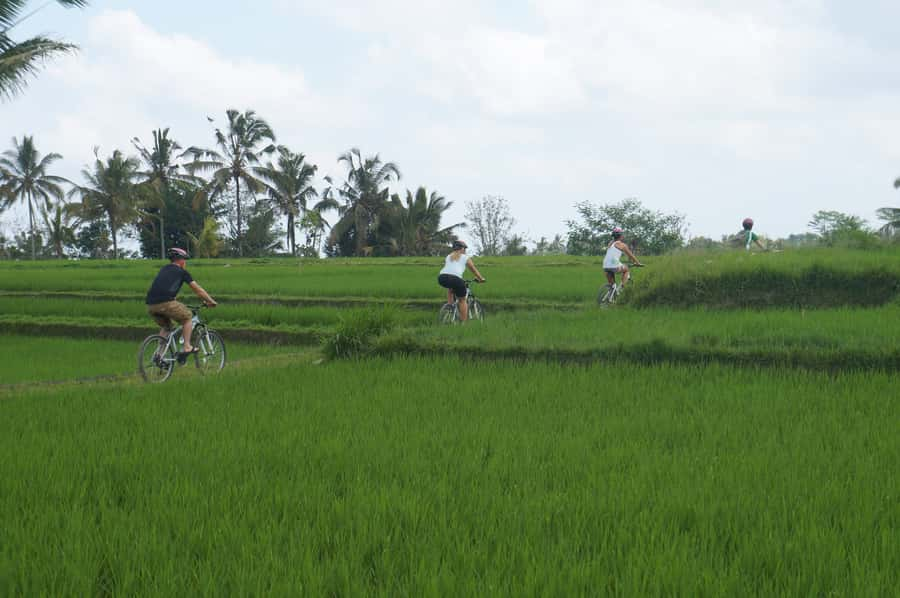
The ride begins in Abuan, in the Kintamani area. This starting point puts you away from the coast and into Bali’s rural interior before the cycling begins.
The first stretch sets the tone for the day. You pass through villages, gardens, and rice fields, with much of the route heading gently downhill. The route is not presented as a race, so you have time to look around and take photographs during planned stops.
You may find the ride more comfortable than expected because the route is mostly downhill. Even so, downhill riding requires attention. Keep your hands ready on the brakes, listen to the guide, and avoid treating the easy grade as permission to speed.
The tour includes mineral water, which is useful in Bali’s warm climate. Bring a small daypack for personal items, a camera, cash, and a change of clothes. Comfortable shoes and clothing matter more than stylish sightseeing outfits here.
A traditional Balinese house and compound
One of the most useful stops is at a traditional Balinese house. The guide explains the Balinese compound, giving you context for the buildings and the way the household space is arranged.
This is more valuable than simply photographing an attractive gate. A traditional compound reflects family life, religious practice, and the organization of domestic space. The stop gives you a chance to see Bali as a lived-in place rather than only as a collection of temples and resorts.
The wording of the experience refers to a traditional Balinese house, not a museum display. That means you should approach the visit respectfully. Listen to the guide, follow any local instructions, and ask before photographing people or private areas.
This is also where the tour differs from a standard recreational bike ride. You are not only passing through the countryside. You are given a short explanation of how local people live, which helps the later village and rice-field views make more sense.
Same handlebars, a completely different route:
- Electric Cycling Tour of Ubud with Free Hotel Transfer and Lunch
★ 5.0 · 1,397 reviews - From Ubud: Downhill Bike Tour with Rice Terraces and Meal
★ 4.9 · 664 reviews - Menoreh Village Cycling
★ 5.0 · 611 reviews - Ubud: Rice Terraces & Villages Half-Day Fat Tire E-Bike Tour
★ 4.9 · 602 reviews
Coffee and Balinese cake under the palms
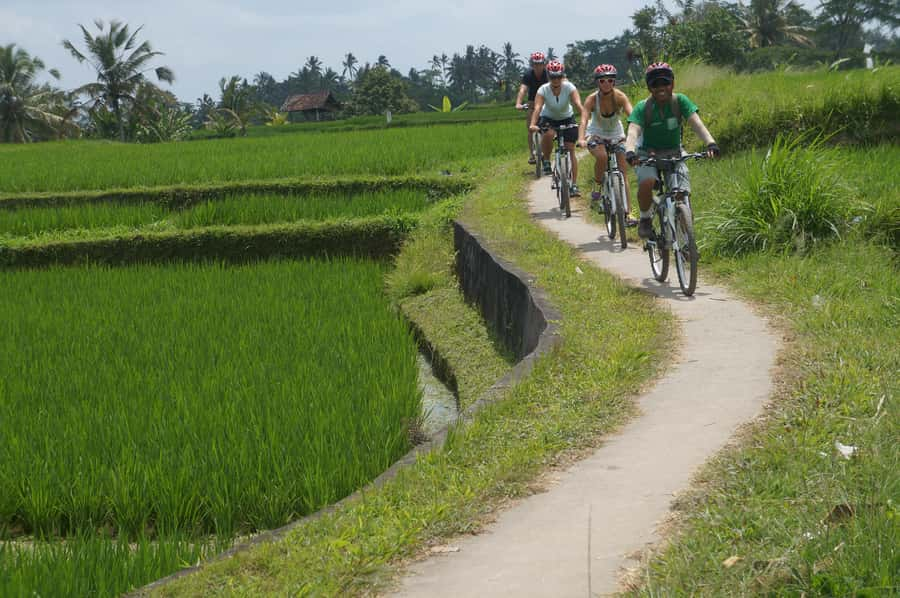
The next break takes place in a palm tree garden. You stop for coffee and a traditional Balinese cake beneath the palms.
It is a simple pause, but it serves two purposes. First, it gives your legs a rest after the opening section. Second, it lets you enjoy a local snack in a setting connected to the countryside around you.
The coffee break is included. Soft drinks at lunch are not, so bring cash if you want something beyond the included meal and water. The tour information does not specify the exact cake or coffee preparation, so you should treat this as a local tasting stop rather than expect a fixed café menu.
I like this part because it slows the day down. A cycling tour can become a checklist of sights if every stop is rushed. Sitting under the palms gives the group a natural chance to recover, talk with the guide, and take photographs.
Gunung Raung Temple in Taro
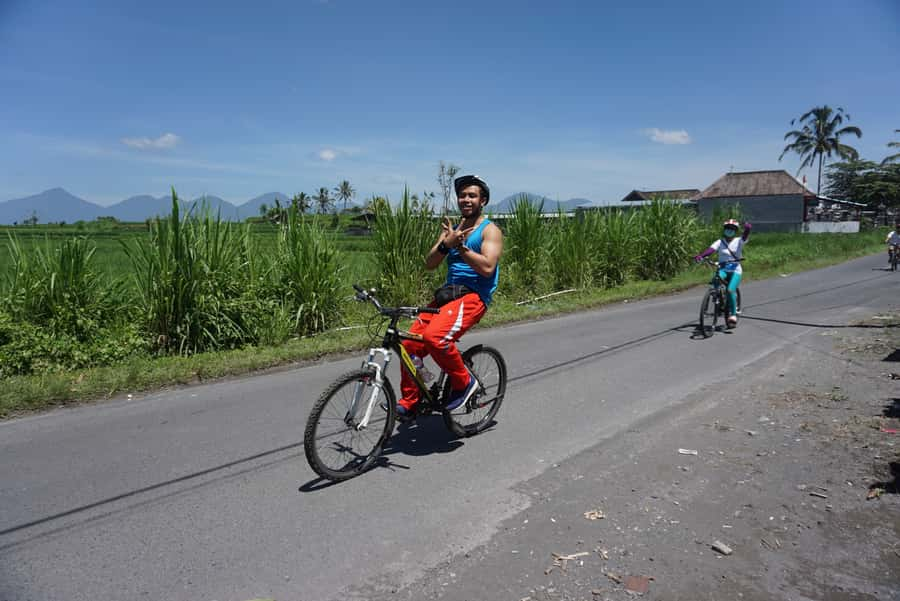
The route continues to Taro village, where you stop in front of the historical Gunung Raung Temple.
The temple stop is brief, but it adds a cultural layer to the ride. You are not spending the entire morning on a bicycle without context. The guide can help explain what you are seeing, while the setting gives you another view of Bali’s religious life.
The available information does not promise an interior visit or a long temple tour. Plan on viewing the temple from the outside and listening to the guide’s explanation. Wear clothing suitable for a cultural stop, and be respectful if ceremonies or local religious activity are taking place.
This is one reason I prefer the guided format. A temple can be easy to pass without understanding its importance. Even a short stop becomes more useful when someone points out what deserves your attention.
Bresela village and the rice-field view
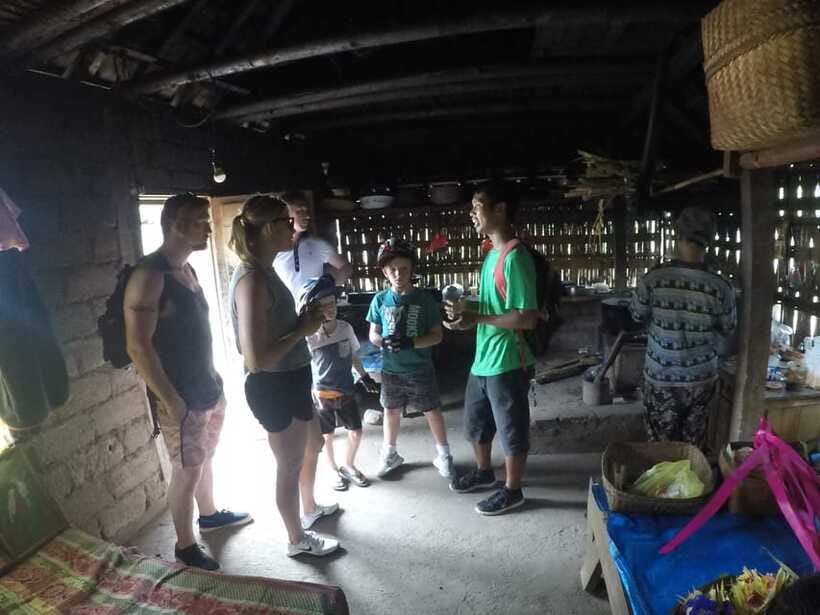
The final major stop before lunch is in Bresela village. This is described as the most striking rice-field viewpoint on the route.
You will want your camera ready here. The stop is designed for photographs and for taking in the broad view across the fields. It also gives you another break from the saddle before the final ride toward lunch.
Rice terraces and fields are central to the familiar image of Bali, but seeing them from a village route is different from viewing them from a packed roadside lookout. The cycling route lets you reach the scenery at a slower pace, with the guide pointing out the setting rather than simply giving you a few minutes to snap a picture.
The view is weather dependent. Clouds, rain, or strong sunlight can change the appearance of the fields, so do not judge the stop only by photographs you have seen online. Bring biodegradable sunscreen, and use the wet-weather gear if conditions turn damp.
Lunch at Greenkubu Cafe
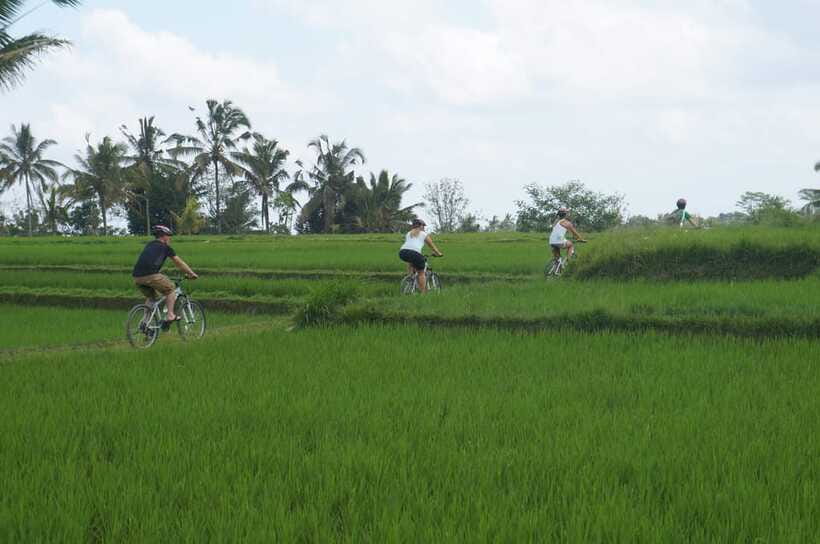
The cycling portion ends at Greenkubu Cafe in the Tegallalang area. The café is situated in the middle of a rice field, making it a fitting final stop after the morning ride.
Lunch is included in the $36 price. Mineral water is included as well, while soft drinks cost extra. The supplied details do not specify the exact lunch menu, so you should not book this tour expecting a particular dish.
The setting is the main appeal. After riding through fields and villages, you get to eat in a place surrounded by the same rural scenery you have been seeing from the bicycle. It is a more satisfying finish than returning immediately to a bus and stopping at a generic restaurant.
The lunch break lasts about one hour. That gives you time to eat and rest before the return transfer. If you are choosing between a short cycling activity and a full-day sightseeing trip, this meal and the café setting help make the tour feel like a complete outing rather than a quick add-on.
What the $36 price really includes
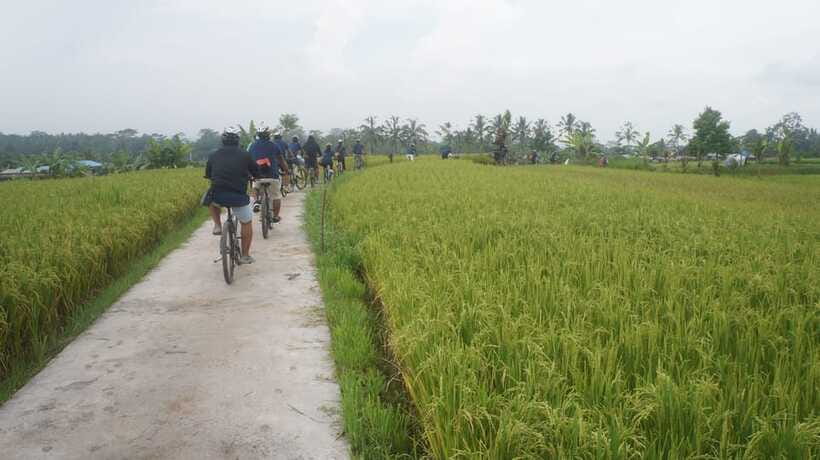
At $36 per person, this tour offers solid value for a seven-hour outing. The price covers hotel pickup and drop-off, the bicycle, helmet, guide, insurance, mineral water, coffee break, wet-weather gear, and lunch.
You are also paying for the route planning and support. Riding independently through rural Bali may cost less in theory, but it would not provide the same local explanations, arranged stops, safety briefing, or transport from your hotel.
The value is strongest if you need pickup from one of the listed areas and want a guided day without arranging several separate services. It is also a good deal for solo visitors because the small-group setup gives you company without the feel of a large coach excursion.
There are a few costs to remember. Soft drinks at lunch are not included, and you may want cash for drinks or personal purchases. The experience does not include a long list of extras, but the main practical needs are already covered.
Free cancellation is available up to 24 hours before the activity for a full refund. You can also reserve now and pay later, which helps if your Bali plans are still moving around.
How difficult is the riding?
The route is mostly gentle downhill, and one account describes it as easy to manage for the whole group. Another describes the ride as very safe and not physically difficult. That makes the tour suitable for people who want active sightseeing without a serious cycling workout.
Still, I would not call it effortless. You ride for around three hours, and parts of the route include off-road surfaces and forest trails. You need basic bike control and enough stamina to stay comfortable for the full ride.
The tour is not suitable for pregnant women, people with heart problems, vertigo, or epilepsy. It is also not suitable for people over 110 kilograms, or 243 pounds, or people over 95 years old.
If you have any doubt about your fitness or balance, ask the operator before booking. A mostly downhill route can be easy on the legs, but it still involves braking, steering, and handling uneven sections.
The guides and group atmosphere
The guide is central to this experience because the stops are what make the tour more than a bicycle rental. Guides explain the Balinese compound, help with safety, and provide context at the cultural sites.
Kadek received especially strong praise for guiding one group, while Jack was praised for clear explanations and making the ride feel safe and easy. Names can vary by departure, but these accounts suggest that the company’s guides are an important part of the experience.
With a maximum of six people, you should get more personal attention than on a large group ride. The format also works well for solo participants, couples, and small family or friend groups.
The trade-off is that a small group can still have different riding speeds. Follow the guide’s pace and use the planned stops to catch your breath. The ride is built around sightseeing, not speed.
What to pack for the day
Wear comfortable clothes and shoes that work for cycling. You may want a change of clothes, especially in warm or wet weather.
Bring a camera, biodegradable sunscreen, cash, and a small daypack. Mineral water is included, but your own bag makes it easier to carry personal items during the ride.
Wet-weather gear is provided, which is useful in Bali’s changeable conditions. Even so, a dry change of clothes is a sensible choice. Avoid bringing alcohol or drugs, which are not allowed.
A helmet is provided, but you should still make sure it fits properly before setting off. Take the safety briefing seriously, particularly if you are not used to cycling on mixed surfaces.
Who should book this tour?
I would recommend this tour if you want to see rural Bali actively but do not want a demanding uphill ride. It suits people who value local homes, village scenery, rice fields, and food stops more than a packed schedule of major attractions.
It is also a strong choice for solo visitors or small groups. The limit of six participants keeps the outing personal, and the included transfers remove much of the planning work.
I would choose another activity if you want a serious mountain-bike challenge, a long temple visit, or complete control over your route. This is a guided cultural ride with scenic stops, not an endurance event or private sightseeing car.
The tour is rated five out of five from 14 ratings, and the strongest praise centers on the gentle route, safe riding, good equipment, clear guides, and value. Those are exactly the points I would use when deciding. The scenery is attractive, but the real strength is the combination of easy cycling and useful contact with local life.
FAQ
How long does the Kintamani cycling tour last?
The full experience lasts about seven hours, including hotel pickup, the cycling route, lunch, and drop-off.
How far do you cycle?
The cycling route covers about 22 kilometers.
Is the route mostly downhill?
Yes. The route from Abuan Kintamani village is described as mostly gentle downhill.
Where does the cycling begin?
The ride begins in Abuan Kintamani village after the hotel pickup and safety explanation.
Where does the tour finish?
The cycling ends at Greenkubu Cafe in the Tegallalang area, where lunch is served in the middle of a rice field.
Is lunch included?
Yes, lunch is included. Soft drinks at lunch are not included.
Is the coffee break included?
Yes. The coffee break includes coffee and a traditional Balinese cake.
What pickup areas are available?
Pickup is available from Seminyak, Ubud, Nusa Dua Beach, Kuta, and Sanur.
Is the tour suitable for pregnant women?
No. The activity is not suitable for pregnant women.
How many people can join the group?
The tour is limited to six participants.
What equipment is provided?
The price includes a bike, helmet, mineral water, wet-weather gear, insurance, and a guide.
Can I cancel for a refund?
You can cancel up to 24 hours in advance for a full refund.
Should you book the Kintamani cycling tour?
Book it if you want a low-pressure way to see Bali beyond the main resort areas. The route gives you countryside, a traditional house, palm gardens, a temple, rice fields, and a local lunch without demanding a hard climb.
At $36, the included transport, bike, helmet, food, guide, and small group make the price attractive. I would especially choose it for a first visit to Bali, a solo day out, or a group with mixed cycling ability.
Skip it if you dislike cycling for several hours, have any of the listed health restrictions, or want a private itinerary with long stops at each temple. For everyone else, this is a practical and friendly way to trade Bali’s traffic for village lanes and rice-field views.
Newly added rides around Indonesia
- Scenic Cycling Tours Through Bali’s Sidemen Countryside★ 5.0 · 12 reviews
- Mount Batur: Black Lava Cycling Tour w/ Natural Hot Spring★ 3.8 · 63 reviews
- Bali: Jatiluwih Rice Terraces 1 Hour Electric Bike Tour★ 4.7 · 41 reviews
- Jatiluwih (UNESCO Site) 2-Hour E-Bike Cycling Tour★ 4.3 · 49 reviews
- E-Bike: Ubud Rice Terraces & Traditional Villages Cycling★ 4.6 · 37 reviews
- Jogja Hidden Gems – Cycling Tour★ 5.0 · 12 reviews
- Ubud: Downhill Cycling with Volcano, Rice Terraces, and Meal★ 4.9 · 189 reviews
- Bali: Kintamani Downhill Bike Tour, Jungle and Waterfalls★ 4.9 · 20 reviews
Indonesia Bike Tours, compared.
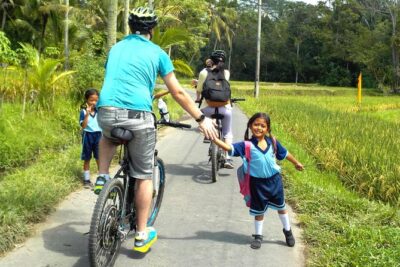
Electric Cycling Tour of Ubud with Free Hotel Transfer and Lunch
Read our review →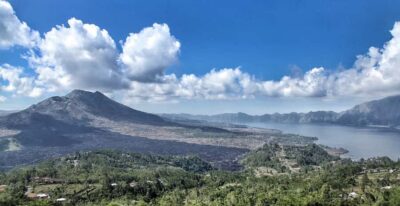
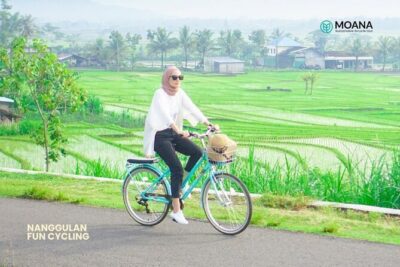
Rice Terraces & Villages Half-Day Fat Tire E-Bike Tour
Read our review →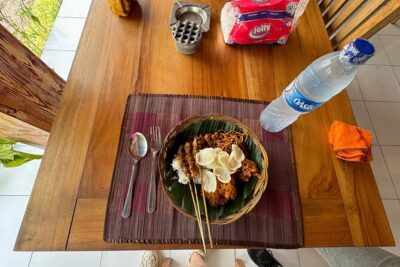
Downhill Cycling with Volcano, Rice Terraces and Meal
Read our review →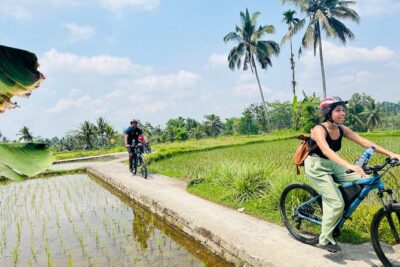
Half-Day Ubud Electric Cycling Tour to Tirta Empul Water Temple
Read our review →Browse the lists this tour appears in