
REVIEW · ROME BIKE TOURS
Rome: Appian Way, Catacombs & Roman Aqueducts Top EBike Tour
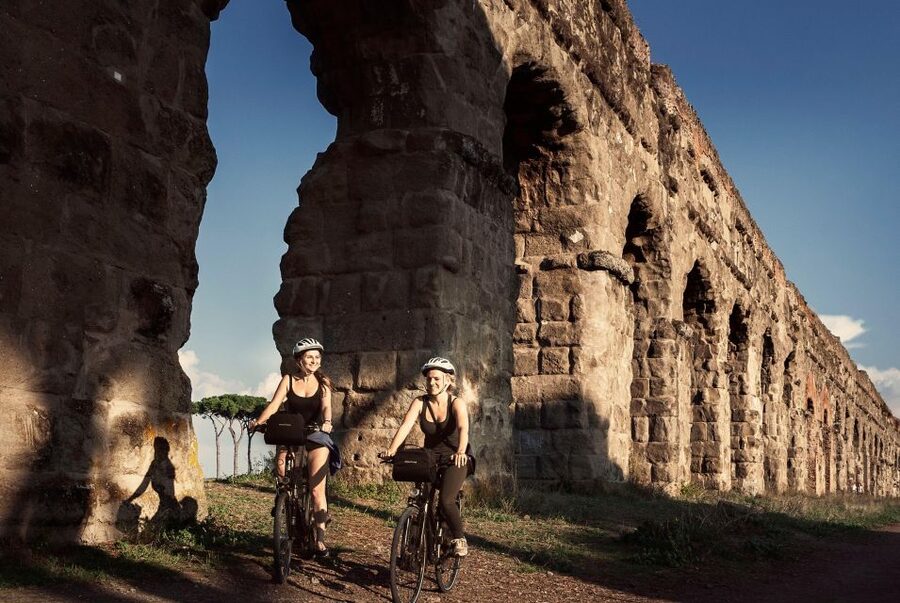
Ancient Rome feels better on two wheels. This 27-kilometer e-bike ride takes you beyond the Colosseum and into Rome’s old countryside, where the Appian Way, Roman tombs, catacombs, aqueducts, and green parks form one long outdoor history lesson. I like the careful route planning and the excellent Cannondale e-bikes, which make a demanding day possible for riders who are not regular cyclists. I also like the small groups, capped at 10 people, and the calm, safety-minded guides who help with Rome’s traffic.
The main consideration is the physical level. The route is intermediate, with about 60 percent off-road riding and some unavoidable city traffic. The electric assist helps a lot, but this is still a long ride, not a gentle sightseeing spin. The six-hour version adds a 45-minute catacomb visit and offers more historical depth, while the shorter option is better if you want the ride without the underground stop.
Key points at a glance
- A 27-kilometer route beyond central Rome: Ride from Via Labicana through the Aurelian Walls, Appian Way, Caffarella Park, and the Aqueducts Park.
- New Cannondale e-mountain bikes: Anti-puncture tires, comfortable saddles, and electric assistance make hills and rough paths far easier.
- A genuine countryside break: The route leaves dense Rome behind for open parks, old stone roads, umbrella pines, and monumental aqueduct arches.
- Catacombs only on the six-hour tour: The underground visit lasts about 45 minutes and adds an important Early Christian chapter.
- Safety is a major strength: Guides lead groups of no more than 10 and help riders through the trickier city crossings.
- Best for active sightseers: You need confidence on a bicycle and enough stamina for a four to six-hour outing, even with electric support.
Why this side of Rome deserves a full day
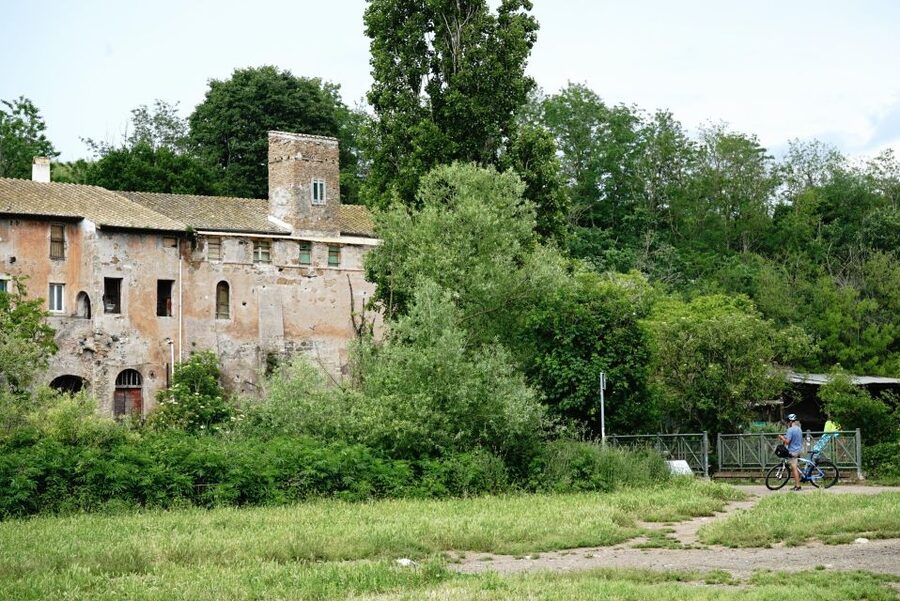
Rome’s famous center is packed with monuments, churches, fountains, and people. The Appian Way offers a different kind of Roman experience. Instead of moving from one indoor sight to another, you ride through an open archaeological zone where ruins appear beside fields and quiet park paths.
The Appian Way was begun more than 2,300 years ago. It carried people, goods, armies, and messages toward southern Italy, and its route became lined with tombs and villas. Today, the ancient road gives you a sense of Rome’s size and power in a way a single monument cannot.
I especially like the change of pace. You leave the city near St. Sebastian’s Gate, pass ancient walls, and gradually trade traffic and apartment blocks for stone paving, grass, trees, and ruined masonry. The route does not present Rome as a polished museum. It shows a rougher, broader version of the city.
The tour costs about $100 per person. That is not a budget activity, but the price includes the e-bike, helmet, water, guide, and, on the six-hour outing, the catacomb visit. You are also paying for route planning and traffic management. Riding this circuit alone would require careful navigation, confidence in city cycling, and a good deal of research. For many people, the cost is fair because the tour combines transport, interpretation, and access to a wide area in one outing.
More E-Bike Tours in Italy
- Rome EBike Tour: Appian Way, Catacombs & Roman Aqueducts
★ 5.0 · 1,766 reviews - Rome: Top Highlights & Hidden Gems Tour by Cannondale E-Bike
★ 4.9 · 1,760 reviews - Rome: Appian Way & Aqueducts E-Bike Tour (Catacombs & Food)
★ 4.9 · 1,498 reviews
Starting near the Colosseum at Via Labicana 49
The meeting point is the operator’s shop at Via Labicana 49, about a five-minute walk from the Colosseum. This is useful if you are already sightseeing near the ancient center, though you should allow time to find the shop and get fitted to your bicycle.
The group is limited to 10 participants. That size matters on a ride like this. A guide can check that everyone is comfortable, keep the group together at crossings, and adjust the pace when needed. Several guides have been singled out for their calm leadership and strong presentation, including Claudia, Fabio, Megan, Meghan, Zak, Areia, and Caterina.
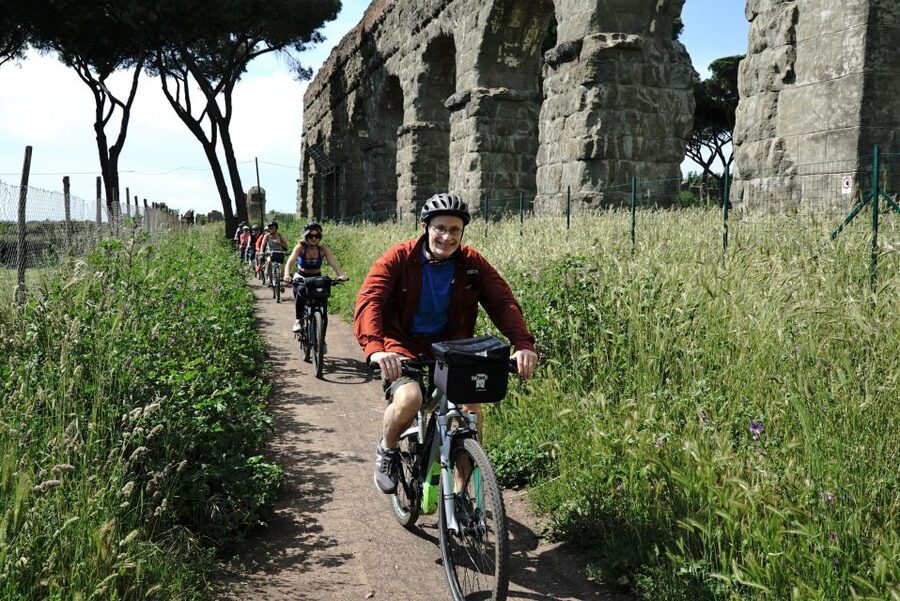
Your helmet is mandatory, and you receive a bottle of water. The bicycles are Cannondale e-mountain bikes with anti-puncture tires and comfortable saddles. Electric assistance is not a gimmick here. It makes the route much more approachable, especially on uneven ground, slight climbs, and a long day in the saddle.
Take a few minutes to learn the controls before leaving. One rider particularly enjoyed using the stronger Turbo setting, but you should use the assist level that lets you ride smoothly and preserve your energy. The point is not to race. It is to enjoy the route without arriving at the aqueducts exhausted.
Passing through the Aurelian Walls and St. Sebastian’s Gate
The ride begins in modern Rome, then moves toward the ancient defensive walls. The Aurelian Walls were built in the third century when the empire faced growing threats. They enclosed a much larger area than the earlier city boundary and still give you a strong sense of Rome as a fortified capital.
The route passes through St. Sebastian’s Gate toward the Appian Way. This transition is one of the tour’s useful moments. You see how quickly Rome changes once you leave the central streets. The city does not disappear at once, but the buildings thin out and the ancient road begins to take over.
Some city riding is unavoidable. Around 40 percent of the full route takes place in Rome or on connecting streets, including the link between the Appian Way and the Aqueducts Park. Guides work hard to choose manageable roads, but you should not expect a traffic-free ride from start to finish.
This is where the guide’s skill matters most. Fabio was praised for keeping riders safe while explaining the past, and Claudia received similar praise for handling busy streets with confidence. If you feel nervous cycling in traffic, tell the guide early. The route has been chosen with safety in mind, but the guide can only help if you communicate your comfort level.
The Appian Way: Rome’s oldest long-distance road
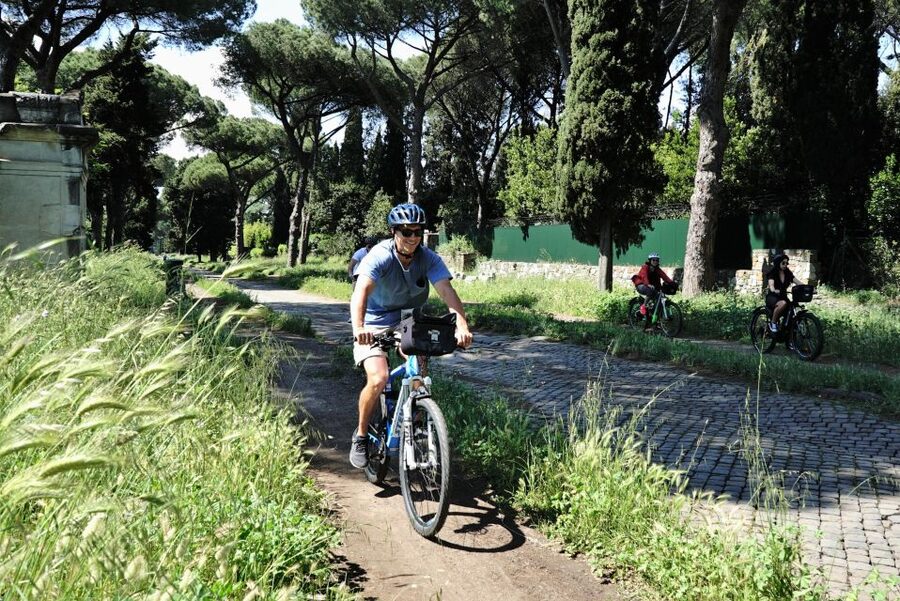
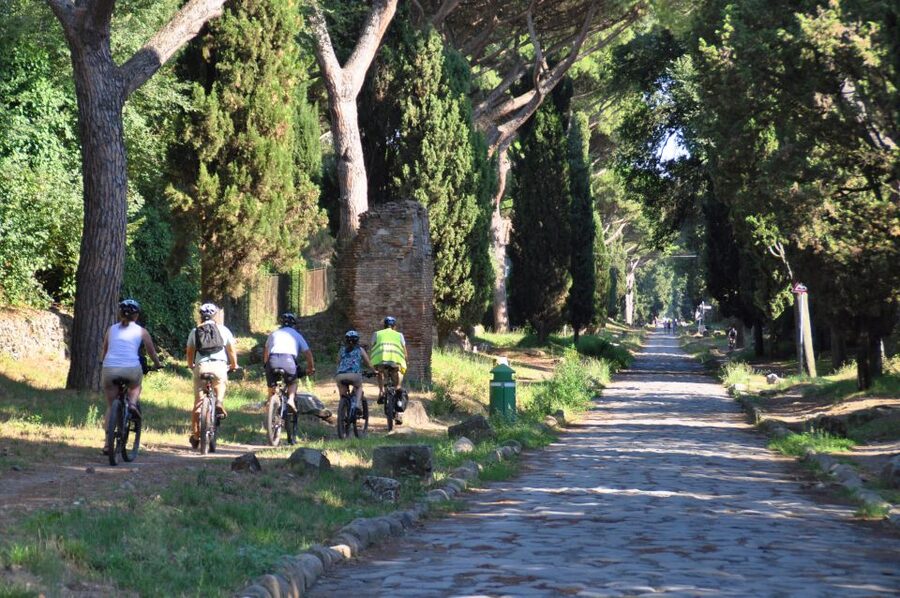
Once you reach the Ancient Appian Way, the ride becomes more peaceful and more atmospheric. The road is famous for its large paving stones, though the surface can be uneven. You will feel the route through the bicycle, especially if you are used to smooth urban paths.
The road is lined with tombs, mausoleums, villas, and scattered remains. These are not all presented as complete monuments. Some are partial, weathered, or easy to miss without explanation. That is why the guide’s commentary adds real value here. A good guide helps you understand how funerary monuments were placed along roads and how the Appian Way connected Rome to the wider Roman world.
You will also encounter the remains of Imperial villas and Roman burial practices. The setting lets you think about ancient life beyond emperors and battles. Families displayed status through tombs, travelers passed these monuments on their journeys, and the road carried the daily business of an expanding empire.
Do not expect every stop to be a spectacular structure. One family felt some of the individual remains were modest, but still enjoyed the ride and the effort the guide made to keep the group away from heavier traffic. I think that is a fair way to judge this section. The pleasure comes from the whole route, not from a series of perfectly preserved monuments.
More E-Bike Tours in Rome
- Rome: Appian Way, Catacombs, & Roman Aqueducts E-bike Tour
★ 4.9 · 1,421 reviews - Rome City Small Group Bike Tour with quality Cannondale EBike
★ 5.0 · 1,380 reviews - Rome by Night – Ebike Small Group Tour – Food and Wine (Option)
★ 5.0 · 1,275 reviews - Rome by Night: E-bike Small Group Tour -Food & Wine (Option)
★ 4.9 · 1,233 reviews
Catacombs of Rome: choose the six-hour version carefully
The catacomb visit is available only on the six-hour tour. The guided underground portion lasts about 45 minutes and takes you into the early Christian burial tunnels beneath the countryside.
This adds a different kind of history to the ride. Above ground, you see roads, villas, tombs, and imperial infrastructure. Underground, you encounter the burial world of early Christian communities and the maze of tunnels cut into the soft rock.
The catacomb stop is not for everyone. One family found it boring, especially for their children. That reaction is worth taking seriously. The corridors can feel dark, quiet, and repetitive compared with the open-air Appian Way and the huge aqueducts. If your children need constant visual action, the longer tour may test their patience.
For adults interested in religious history, archaeology, or ancient burial customs, the visit can be the most unusual part of the day. It also breaks up the cycling with a structured indoor visit. If you want the fullest historical version of the tour, choose six hours. If your priority is scenery and movement, the shorter ride may suit you better.
Circus of Maxentius and the Tomb of Cecilia Metella
The route continues past the Circus of Maxentius, a second-century complex associated with the emperor Maxentius. Its remains help show the scale of Roman entertainment buildings beyond the better-known Colosseum.
You also pass the Tomb of Cecilia Metella, one of the Appian Way’s most recognizable monuments. The massive cylindrical tomb was built for a prominent Roman woman and later became part of a medieval fortified complex. It is a good example of how Roman remains were reused and adapted long after the empire changed.
These stops are generally sightseeing points rather than long formal visits. You should expect the guide to explain what you are seeing while the group pauses, rather than spend a large amount of time inside each site. That keeps the route moving and allows you to cover the full circuit.
Villa dei Quintili and the reach of imperial Rome
The Villa dei Quintili adds another look at Roman luxury outside the city center. The remains belonged to wealthy owners and later came into imperial hands. Even from the route, the site helps you picture the scale of country estates built by Rome’s powerful families.
This is one reason the e-bike format works so well. The villa, tombs, Appian Way, parks, and aqueducts are spread across a large area. Walking between them would take far too long, and a bus would remove much of the open-air experience. The bike lets you connect the sites while seeing the spaces between them.
You are not simply being transported from monument to monument. You see fields, trees, ruins, and modern Rome sharing the same territory. That mixture is the point.
Aqueducts Park and the tour’s biggest visual reward
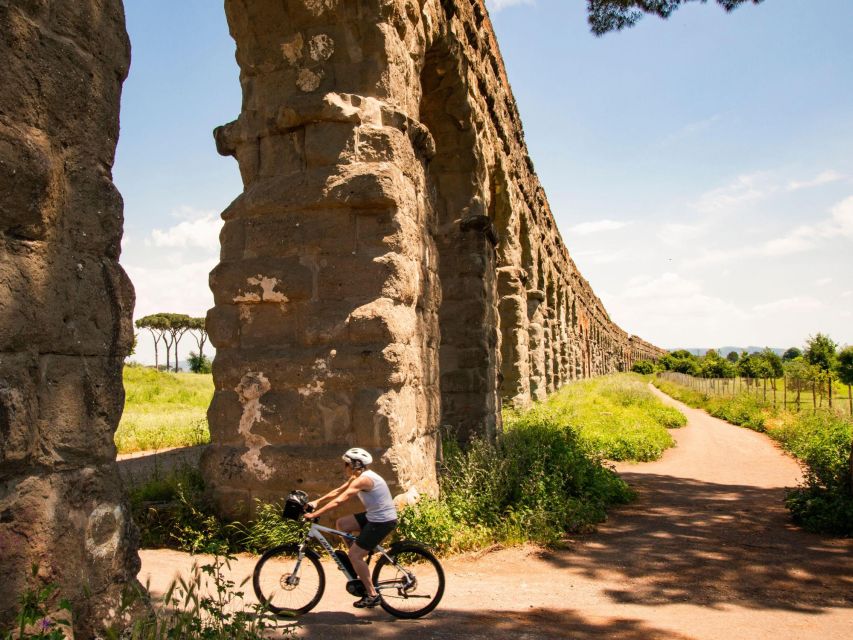
For many riders, Parco degli Acquedotti is the highlight. Here, enormous Roman arches cross the open ground, once carrying water into the city from distant sources. Their height, repetition, and setting make them easy to appreciate even if you are not an archaeology specialist.
The aqueducts also explain one of Rome’s great practical achievements. The city needed vast quantities of clean water for homes, fountains, baths, and public buildings. These structures were engineering projects on a huge scale, and seeing them outside the dense center gives you a better sense of their size.
The afternoon light can be especially pleasant around the arches, though the tour operates at set times and the exact light will depend on the day. The park is a good place to pause, take photos, and let the group spread out a little.
The paths are not always perfectly smooth. Electric assistance helps with effort, but it does not turn rough tracks into pavement. Keep both hands ready, watch the surface, and follow the guide’s line through uneven sections.
Caffarella Park and the return toward Rome
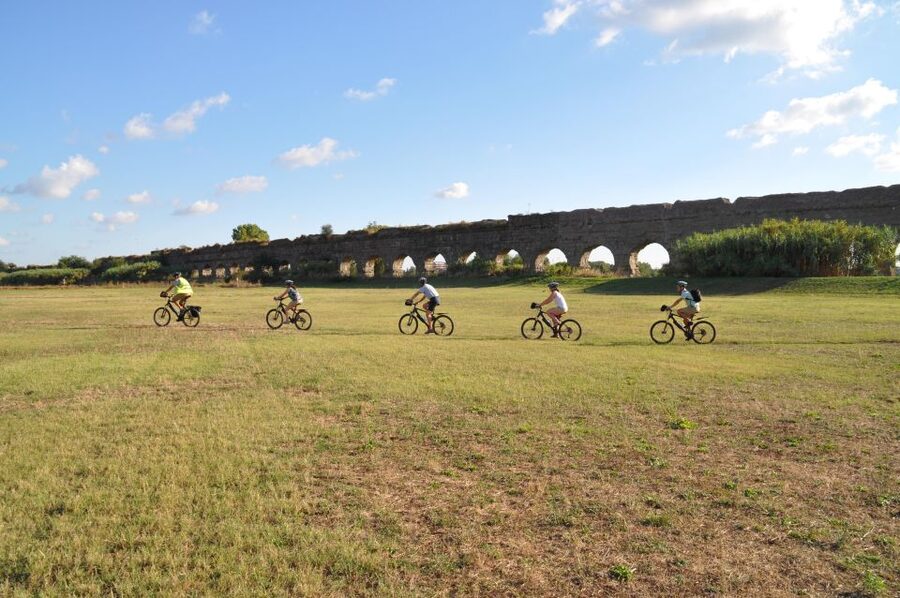
Caffarella Park provides the final countryside stretch. It is a rare open area inside Rome, with green fields and a distinctly rural feel. After the archaeology and aqueducts, this section gives you room to breathe before the route heads back toward the city.
I like this part because it keeps the tour from becoming a nonstop sequence of ruins. You get a sense of how much open space survives within Rome and how the city’s ancient infrastructure still shapes its edges.
The ride returns toward the city and passes the Baths of Caracalla. These massive public baths once served thousands of people and show the scale of Roman public life. The baths are not the main stop on this tour, but seeing them near the end gives you one last reminder that the countryside you have crossed was tied directly to the urban center.
You then return to Via Labicana 49. The full circuit takes about four to six hours, depending on the option selected and the pace of the group. On Wednesdays, and during the stated period from January 14 to February 11, 2026, the outing may run up to 30 minutes longer.
How difficult is the 27-kilometer ride?
The tour is rated intermediate. The distance is about 27 kilometers, or 17 miles, with roughly 60 percent off-road riding. That is manageable for many people because of the electric assist, but it is still a serious half-day or full-day activity.
You need to be able to ride a bicycle confidently, brake, steer over uneven surfaces, and remain alert near traffic. One family had riders from age 13 to 70, and the older rider completed the route comfortably with the e-bike. Another rider who did not cycle often managed it, though the ride felt taxing in places.
Children ages 1 to 4 can ride free in a child seat if they weigh under 22 kilograms, or 49 pounds. Children ages 5 to 8 use a child extension. Children age 9 and above, and taller than 140 centimeters, or 55 inches, can ride an e-bike. The route is considered difficult with a child seat or extension, so families should think carefully before choosing it for very young children.
The equipment has a total weight limit of 300 pounds, or 136 kilograms. Babies under one year old cannot join.
Weather, food, and what to bring
Rome’s heat matters on a long ride. A July outing felt warm, and one rider would have preferred not to go much later in the summer. Spring, autumn, and cooler winter days may be more comfortable, but you should still check the forecast and dress for several hours outdoors.
Food and drinks are not included. The route offers opportunities to buy something, and one group stopped for pizza, but you should not assume a meal is built into the schedule. Eat before departure and carry the supplied water. You may also want sunscreen, sunglasses, and clothing that works for both cycling and the catacombs.
Wear shoes suitable for cycling and walking. The catacomb visit, when included, takes you underground, while the route itself includes uneven ground and park paths.
Who will enjoy this tour most?
I would choose this tour if you want to see a side of Rome that is difficult to reach on foot and less crowded than the central monuments. It suits active couples, families with older children, and adults who enjoy history but do not want to spend all day indoors.
It is also a strong option for anyone uneasy about cycling in a major city. The guides have been praised repeatedly for careful crossings, patient instruction, and a reassuring presence. Areia, Zak, Meghan, and Megan were all praised for combining warmth with practical leadership.
I would think twice if you dislike bicycles, struggle with uneven surfaces, or want a slow, stop-heavy archaeological visit. The route covers a lot of ground, and some sites receive only a short explanation. You should also be realistic about city traffic. The guides reduce the stress, but they cannot remove it.
The multilingual guide service is offered in English, Italian, Dutch, French, German, and Spanish. A minimum of four participants applies, and the group can include up to 10 people.
Should you book the Appian Way e-bike tour?
Book it if you want Rome to feel larger, older, and more open than the area around the Colosseum. The combination of the ancient road, Roman tombs, aqueducts, Caffarella Park, and a careful guide gives you a memorable view of the city’s outer edges.
Choose the six-hour option if the catacombs appeal to you and you want the fullest historical program. Choose the shorter ride if you mainly want the Appian Way, parks, and aqueducts without an underground stop.
At $100, this is best viewed as a full experience rather than a simple bicycle rental. You receive a quality bike, safety equipment, water, route support, historical interpretation, and access to an area too spread out for a practical walking tour. The only real warning is the length and riding level. If you are prepared for 27 kilometers and some traffic, this is one of the most rewarding ways to get beyond Rome’s crowded center.
FAQ
Where does the Rome Appian Way e-bike tour begin?
The meeting point is the operator’s shop at Via Labicana 49, about a five-minute walk from the Colosseum.
How long does the tour last?
The tour lasts four to six hours, depending on the option you choose. On Wednesdays, and from January 14 to February 11, 2026, it may last up to 30 minutes longer.
How far do you ride?
The route covers about 27 kilometers, or 17 miles. Around 60 percent of the route is off-road.
Is the catacomb visit included?
The guided catacomb visit is included only in the six-hour version. The underground visit lasts about 45 minutes.
What kind of bicycle is provided?
You ride a Cannondale e-mountain bike with anti-puncture tires and a comfortable saddle. Electric assistance helps with hills and longer sections.
Is the tour suitable for children?
Infants aged 1 to 4 can ride in a child seat if they weigh under 22 kilograms. Children aged 5 to 8 use a child extension. Children aged 9 and above, and taller than 140 centimeters, can ride an e-bike. The route is considered difficult with a child seat or extension.
How much traffic is involved?
About 40 percent of the route takes place in the city, and some traffic is unavoidable while connecting the Appian Way to the Aqueducts Park. The park portions have no traffic.
What is included in the price?
The price includes the Cannondale e-bike, guide, helmet, and a bottle of water. The catacomb visit is included only with the six-hour option. Food and drinks are not included.
Newly added rides around Rome
- Rome: Guided eBike Evening Tour with italian Aperitif★ 5.0 · 16 reviews
- Rome: Villa Borghese, Villa Ada, and Coppedè E-Bike Tour★ 4.8 · 78 reviews
- Rome: Villa Borghese E-Bike Tour (Small Group or Private)★ 4.9 · 92 reviews
- Rome: Appian Way, Aqueducts, & Catacombs E-Bike Guided Tour★ 4.9 · 54 reviews
- Rome: Top 10 Highlights Guided Tour by Bike or E-Bike★ 4.4 · 15 reviews
- Sunrise in Rome: Small Group E-Bike Tour & Italian breakfast★ 4.9 · 177 reviews
- Rome: Panoramic Off-the-beaten-track Cannondale E-Bike tour★ 5.0 · 71 reviews
- Rome: Piazza Venezia E-Bike Rental★ 4.4 · 10 reviews
Rome Bike Tours, compared.

Rome EBike Tour: Appian Way, Catacombs & Roman Aqueducts
Read our review →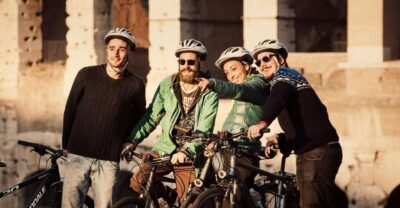
Top Highlights & Hidden Gems Tour by Cannondale E-Bike
Read our review →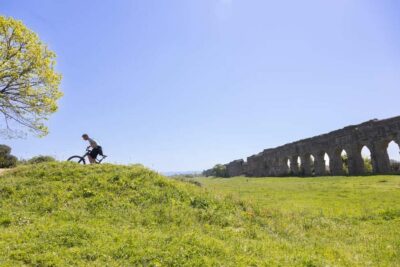
Appian Way & Aqueducts E-Bike Tour (Catacombs & Food)
Read our review →
Appian Way, Catacombs, & Roman Aqueducts E-bike Tour
Read our review →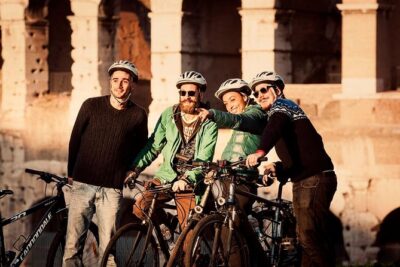
Rome City Small Group Bike Tour with quality Cannondale EBike
Read our review →
Rome by Night – Ebike Small Group Tour – Food and Wine (Option)
Read our review →
Rome by Night: E-bike Small Group Tour -Food & Wine (Option)
Read our review →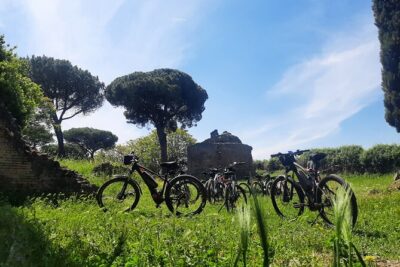
Appian Way Aqueducts Bike Tour (Catacombs & Lunch Option)
Read our review →Browse the lists this tour appears in