REVIEW · ROME BIKE TOURS
Rome E-Bike Highlights Tour & Tasting in Secret Cave
Rome rewards a little speed. This four-hour ride links major sights with a rare food stop beneath Monte Testaccio, so you cover far more ground than on foot. I especially like the pedal-assist bikes, which make long stretches along the Tiber and between distant squares manageable, and the cheese-and-wine tasting inside an archaeological cave, an unusual setting with real local flavor. The main catch is that you need solid bike skills, and the tasting is a generous snack, not lunch.
The route also has a strong human touch. Guides such as Giorgio, Alessio, and Alberto have earned praise for lively stories, warm personalities, food knowledge, and help with photos. Still, Rome traffic is never entirely absent, and the tour may not suit anyone who is pregnant, unable to ride, or uncomfortable cycling in town.
Key points to know before booking
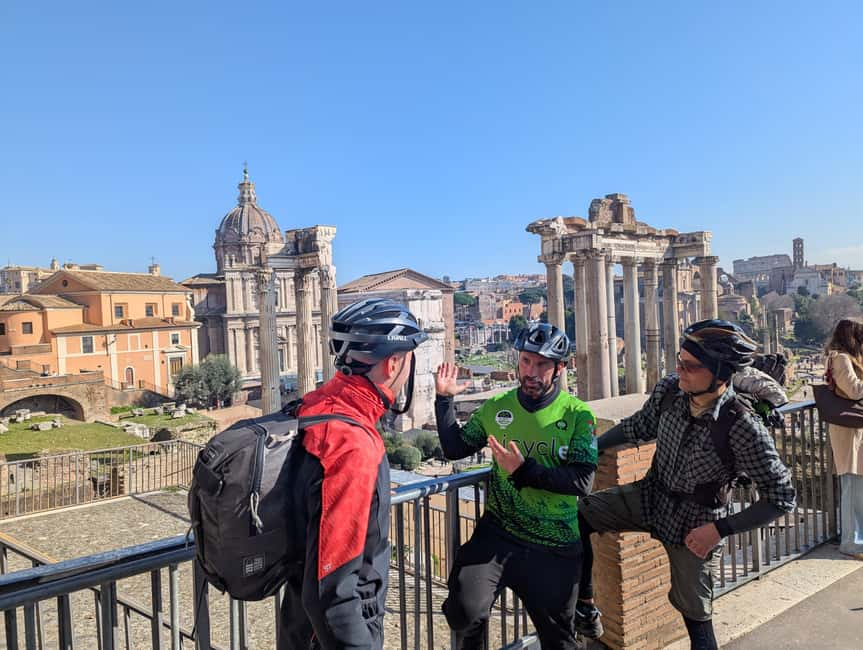
- Monte Testaccio cave tasting: Sample four cheeses, four cured meats, local wine, and crispy pizza scrocchiarella in a former commercial area beneath the hill.
- A lot of Rome in four hours: The route connects Castel Sant’Angelo, Tiber Island, Piazza Venezia, the Jewish Ghetto, Campo de’ Fiori, Circus Maximus, Piazza Navona, Piazza di Spagna, and Piazza del Popolo.
- Pedal-assist helps on the long route: You still pedal, but the electric motor cuts down effort and lets you keep moving between major sights.
- Small-group feel: No more than eight people per guide, with private tours available and occasional flexibility to keep a booking party together.
- Minimum riding ability matters: You take a pre-ride test, and the guide can refuse participation if you cannot safely manage the bike.
- Best for first-time Rome orientation: It gives you a broad look at the city, but it does not provide extended interior visits to monuments or museums.
Why an e-bike makes sense in Rome
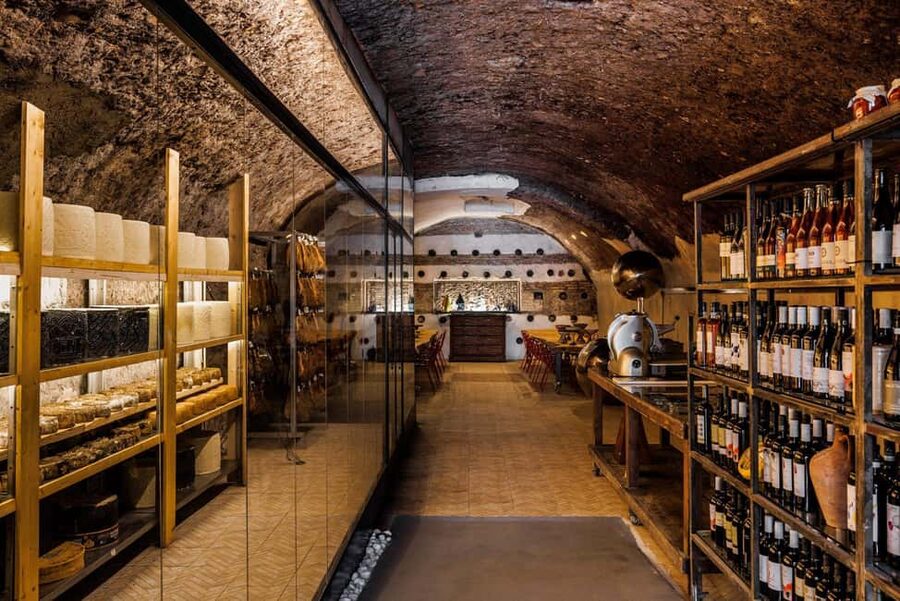
Rome’s sights are spread across a large historic center. Walking between the Vatican-side Tiber, the Jewish Ghetto, Testaccio, Piazza di Spagna, and Piazza del Popolo can eat up much of a day. An e-bike changes the rhythm. You can pedal along the river, cross central neighborhoods, and reach a distant square without arriving worn out.
The electric assistance does not turn this into a motorized sightseeing trip. You still ride, steer, stop, and pay attention to the road. The benefit is that hills, longer connections, and repeated starts are less tiring.
The route uses the Tiber River bike path for part of the ride, but light traffic is sometimes unavoidable. That matters in central Rome, where scooters, cars, pedestrians, cobblestones, and sudden turns can all appear. You should already be comfortable riding a bicycle and following a guide through an urban setting.
The guide provides a quality e-bike, helmet, and lock. Before departure, the guide checks your ability to handle the bike. This is sensible, but it also means you should not book casually if you have little recent riding experience. If the guide decides you are not fit to participate, the stated policy allows refusal without a refund.
More City Bike Tours in Italy
- Rome: Top Highlights & Hidden Gems Tour by Cannondale E-Bike
★ 4.9 · 1,760 reviews - Rome: Standard or E-Bike Highlights Guided Tour
★ 4.7 · 777 reviews - Rome: City Highlights Electric Bike Tour
★ 4.9 · 343 reviews
Starting beside the Tiber River
The meeting point is generally at Lungotevere delle Armi, 44, though the exact starting point can depend on the option you book. Check the confirmation carefully. The same address is also listed as the usual return point.
The opening stretch follows the Tiber. This is a useful way to begin because the river gives you a calmer riding corridor before the tour moves through busier central streets. The waterway also helps explain Rome’s shape. The river was a transport route, a defensive line, and a practical link between neighborhoods long before modern roads took over.
You get about ten minutes of guided cycling here. That is enough to settle onto the bike, check the motor assistance, and get used to the pace. I would use this early section to ask the guide how the bike’s power settings work and what to expect in traffic.
Castel Sant’Angelo and the river corridor
Castel Sant’Angelo appears as one of the first major landmarks. The huge cylindrical fortress began as the mausoleum of Emperor Hadrian and later served as a papal stronghold and prison. This tour does not include entry, so you see it from the outside and hear the guide’s explanation rather than touring the rooms.
That limitation is worth understanding. The stop is about orientation and atmosphere, not a full monument visit. You might want to return another day if the castle interests you, but the quick exterior view works well on a ride focused on range.
From here, the route continues toward Tiber Island. This small island has long been tied to healing and medicine, and its position in the river gives the ride a pleasing change of scenery. The route allocates about ten minutes to this section, so expect a moving view and short commentary rather than a long stop.
Tiber Island, Piazza Venezia, and the Jewish Ghetto
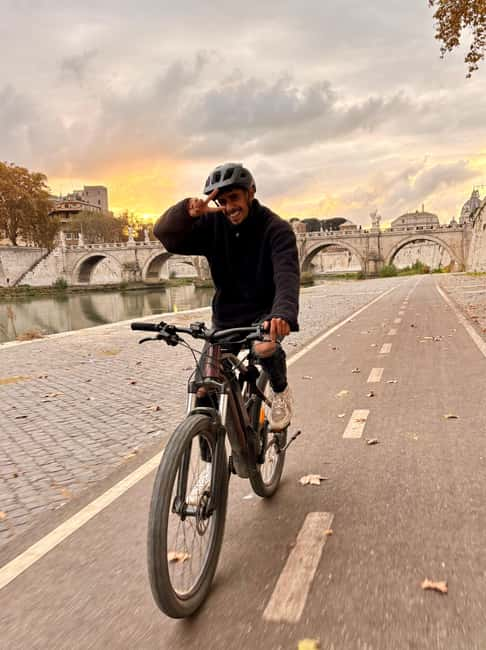
Tiber Island leads toward Piazza Venezia, one of Rome’s busiest central spaces. The broad square is dominated by the Vittoriano, the white marble monument to Victor Emmanuel II. You may also catch sight of the road leading toward the Roman Forum and the Capitoline Hill area.
The twenty-minute ride through this part of the city helps connect ancient and modern Rome. You see how major roads, monumental buildings, and archaeological zones sit almost side by side. The tradeoff is noise and traffic, so stay close to the guide and do not treat the city streets like a quiet cycle path.
The Jewish Ghetto receives another twenty-minute section. This is one of the most meaningful parts of the route because the neighborhood carries centuries of Jewish Roman life, religious tradition, and difficult history. The guide can add context that a quick walk-by would miss.
The area is also a good example of why a local guide matters. A bike lets you move through it efficiently, but the stories give the streets their meaning. Do not expect a synagogue tour or a museum visit, since admission to monuments and museums is not included.
More City Bike Tours in Rome
- Highlights & Hidden Gems Tour with Top E-bike
★ 5.0 · 300 reviews - Rome’s Best by E-bike: Guided City Tour (Small Group or Private)
★ 5.0 · 207 reviews - Private Rome City Bike Tour with quality Cannondale EBike
★ 5.0 · 176 reviews - Rome: Panoramic Off-the-beaten-track Cannondale E-Bike tour
★ 5.0 · 71 reviews
Campo de’ Fiori and the ride toward Testaccio
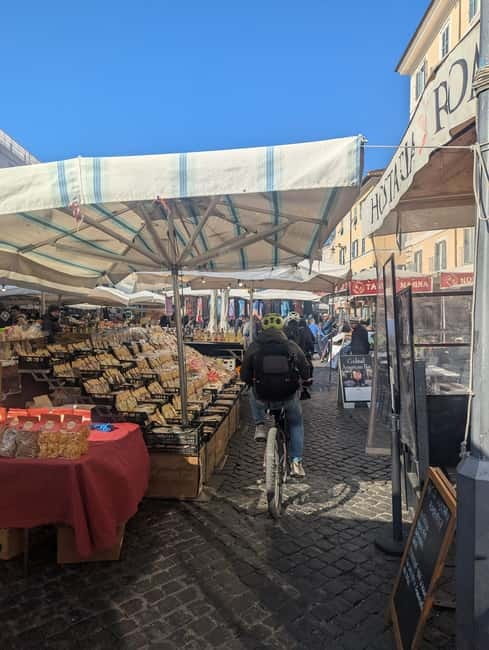
Campo de’ Fiori comes next, with about twenty minutes of cycling. The square is known for its market activity by day and its restaurants and bars later on. At its center is the statue of philosopher Giordano Bruno, executed there in 1600.
The stop gives you a taste of Rome’s public life, but it is not a dedicated market tour. If you want time to browse stalls or shop, you may find the schedule too tight. The strength here is variety: within a few minutes, you move from river views to grand monuments, a historic neighborhood, and a famous civic square.
Then the ride heads toward Monte Testaccio. This artificial hill was formed from millions of broken Roman olive-oil jars, stacked over generations near the ancient port. The hill is one of Rome’s most unusual reminders that daily commerce shaped the city as much as emperors and temples did.
The archaeological cave tasting at Testaccio
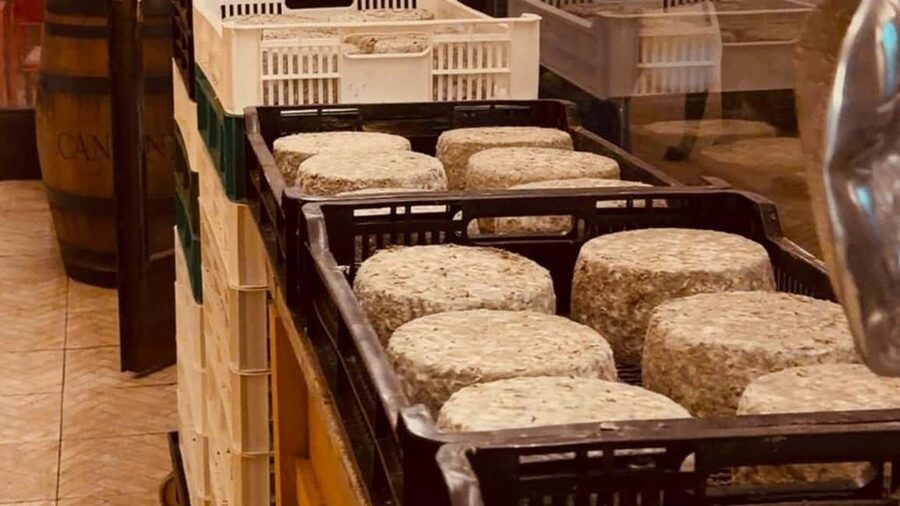
This is the tour’s most distinctive stop. Beneath Monte Testaccio, you enter an archaeological food-aging cave described as Europe’s first Urban Aging Cave. The setting is not a standard wine bar or restaurant. It is a vault cut into the layers of a hill created by Roman trade.
The food is built around Lazio products:
- Four types of cured meats
- Four varieties of cheese aged inside the cave
- A glass of local wine
- Crispy pizza scrocchiarella
The pairing makes sense. Salumi and cheese provide the main savory flavors, wine cuts through the richness, and the crisp pizza adds texture. The food is presented as a tasting of shared samples, not a complete meal. If you usually need a full lunch, eat something beforehand or plan food afterward.
There is one practical point to clarify. The experience is described with four cheeses and four cured meats, but one booking party received three tasting portions, with the final serving still described as substantial. If the exact number of samples matters to you, ask the operator to confirm the current tasting format before you go.
The forty-minute food stop breaks up the cycling well. It gives you a chance to sit, talk, and enjoy Rome through taste instead of monuments. I also like that the location ties the food to Testaccio’s old commercial role rather than placing the tasting somewhere generic.
Wine is included, but additional food and drinks are not. Alcohol and drugs are not allowed outside the stated tasting arrangements, and the tour is not suitable for vegans. Anyone with serious dietary restrictions should ask before booking, since the listed menu centers on meat, cheese, wine, and pizza.
Circus Maximus and Rome’s imperial scale
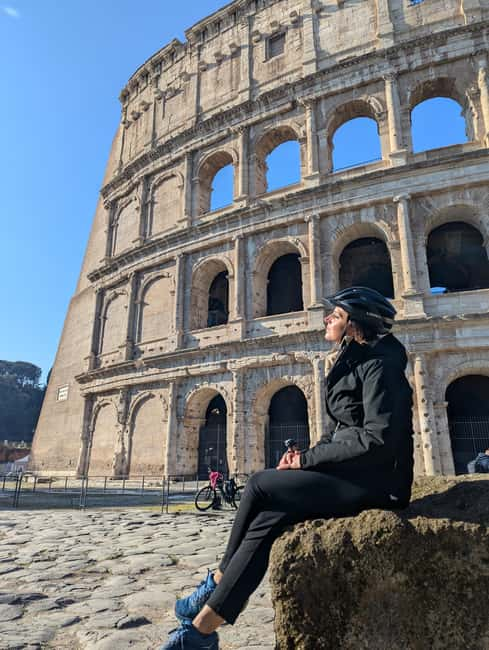
After Testaccio, the route moves to Circus Maximus. The enormous valley once hosted chariot races and public spectacles for huge crowds. Today, its open space helps you understand the scale of ancient Rome better than a photograph can.
The tour allows around twenty minutes for a guided visit, bike ride, and photo stop. This is a good place for pictures because the broad area gives you room to take in the Palatine Hill side of Rome. Again, the focus is exterior viewing and explanation. Entry to archaeological sites is not included.
Circus Maximus also provides a welcome contrast with the tighter streets of the historic center. You can appreciate why an e-bike is useful here: the route links large open areas and central landmarks without requiring you to retrace your steps.
Piazza Navona, Piazza di Spagna, and Piazza del Popolo
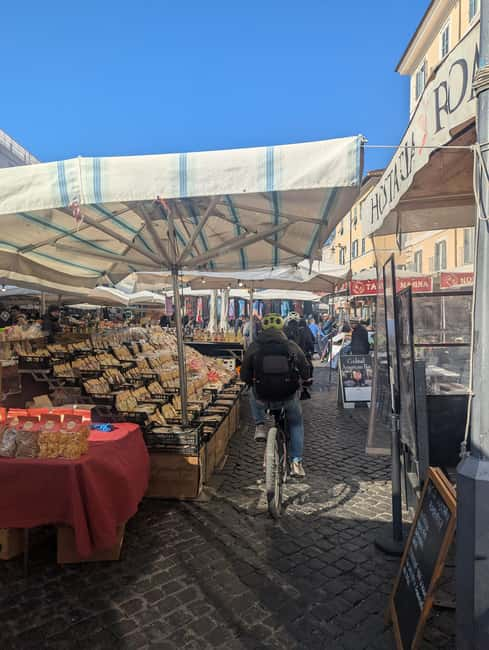
The ride continues to Piazza Navona, one of Rome’s great Baroque spaces. Its long oval shape follows the outline of an ancient stadium, while fountains and church architecture give the square its later character. You have about twenty minutes for guided cycling and sightseeing.
Piazza Navona is a place where the guide’s timing matters. The square can be crowded, and bikes may need to be walked in busy areas. You should expect a moving visit rather than a long pause at every fountain.
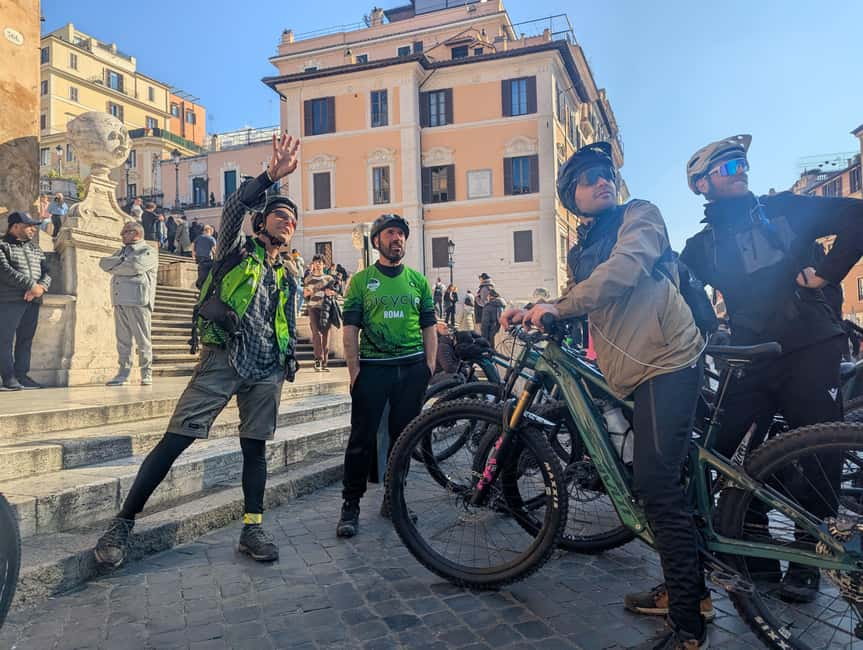
Next comes Piazza di Spagna, home to the Spanish Steps and one of the city’s most photographed meeting points. The twenty-minute section lets you see the square and reach the area efficiently. Bikes may not be ridden everywhere around crowded pedestrian spaces, so be prepared to follow the guide’s instructions.
The final major stop is Piazza del Popolo, with about ten minutes of guided cycling. Its large oval layout, twin churches, central obelisk, and location at the northern entrance to the old city make it a fitting endpoint for a tour built around Rome’s major public spaces.
The exact order or time at a stop can shift with traffic, group pace, and local conditions. That is normal for a city ride. You should value the wide view of Rome more than the promise of standing for a fixed number of minutes at every landmark.
What the guides add to the ride
The guide is central to the experience. You are not simply renting an e-bike and following a map. A certified local guide leads the group, explains the places you pass, manages the route, and watches the road.
Giorgio received especially strong praise for his energy, historical storytelling, warmth, and pride in Rome. One account also noted that he stopped to pick up litter, a small detail that suggests genuine care for the city. Alessio was praised for adjusting the balance between food stops and sightseeing for a two-person booking, as well as taking photos and videos. Alberto was noted for connecting street food with food history.
Those details point to an important strength: the tour can feel personal when the guide reads the group well. If you want more time at food stops, more sightseeing, or extra photo help, say so early. Private and small-group options give you the best chance of that flexibility.
The standard maximum is eight people per guide. The operator may add one or two people to keep a booking group together, or run with fewer than six. That is still a much more manageable size than a large coach group, especially on bikes.
Price, timing, and who gets good value
At $80 per person, the tour is not the cheapest way to see Rome, but the price covers four hours of e-bike use, a helmet, lock, guide service, and the cave tasting. You are paying for transportation between far-flung sights as well as food and interpretation.
I see the value most clearly if you have limited time in Rome. In one morning or afternoon, you cover the Tiber, Castel Sant’Angelo, Tiber Island, Piazza Venezia, the Jewish Ghetto, Campo de’ Fiori, Testaccio, Circus Maximus, Piazza Navona, Piazza di Spagna, and Piazza del Popolo. Doing that independently by foot would require much more time and energy.
The value is weaker if your priority is extended time inside monuments. No museum or archaeological entrance fees are included, and the schedule favors breadth. I would book this early in a Rome visit, then return on foot to the places that deserve a longer look.
The experience is offered in English, Italian, Spanish, and French. A minimum of four participants is required for a group tour. If that number is not reached, an alternative or full refund is offered.
You can cancel up to 24 hours in advance for a full refund, and reserve now while paying later. That flexibility helps if your Rome schedule is still moving around.
Practical advice before you ride
Wear comfortable shoes and clothes. Bring a passport or ID card, since identification is listed among the required items. The route lasts four hours, so avoid carrying anything bulky that could make cycling awkward.
The tour is not suitable for wheelchair users, pregnant women, people who cannot ride a bike, or vegans. Children up to 20 kilograms can ride free in a child seat. Children under 139 centimeters must use a tag-along extension, and the minimum age to operate an e-bike is 12.
I would also plan a proper meal later. The cave tasting includes a good range of savory food, but it is still a shared tasting. The person who expects a restaurant lunch may leave disappointed, while someone looking for a distinctive mid-tour food break will likely find it satisfying.
Should you book the Rome e-bike and cave tasting?
Book it if you want a broad first look at Rome, enjoy cycling, and like the idea of pairing famous sights with a food stop few standard tours offer. The e-bike cuts down the effort, the route covers an impressive stretch of the city, and the Monte Testaccio cave gives the experience a clear identity.
Skip it if you dislike riding in traffic, need a wheelchair-accessible activity, want long interior visits, or require a full meal and plant-based menu. For confident cyclists who have only a few days in Rome, I think the $80 price is fair, especially when a warm, adaptable guide such as Giorgio, Alessio, or Alberto turns the ride into more than a checklist of monuments.
FAQ
How long does the Rome e-bike tour last?
The tour lasts four hours, including the cycling route, guided stops, and the food tasting at Testaccio.
How much does the experience cost?
The listed price is $80 per person.
Where does the tour begin?
The usual meeting point is Lungotevere delle Armi, 44, but the exact starting point can vary by booking option. Check your booking details before arriving.
What food and drink are included?
The tasting includes four local cheeses aged in the cave, four types of cured meats, a glass of local wine, and pizza scrocchiarella. It is a shared tasting rather than a full meal.
Is the e-bike rental included?
Yes. A quality pedal-assist e-bike, helmet, and bike lock are included.
Do I need previous cycling experience?
Yes. A minimum level of riding experience is required. The guide performs a pre-departure test and can refuse participation if you are not considered able to ride safely.
What languages are available?
Live guides are available in English, Italian, Spanish, and French.
Can children join the tour?
Infants up to 20 kilograms can ride free in a child seat. Children under 139 centimeters must use a tag-along extension. The minimum age to operate an e-bike is 12.
Can I cancel the booking?
You can cancel up to 24 hours before the experience for a full refund. You can also reserve now and pay later.
More E-Bike Tours in Rome
- Rome by Night – Ebike Small Group Tour – Food and Wine (Option)
★ 5.0 · 1,275 reviews - Rome by Night: E-bike Small Group Tour -Food & Wine (Option)
★ 4.9 · 1,233 reviews - Appian Way, Catacombs and Aqueducts Park Tour with Top E-Bike
★ 5.0 · 735 reviews - Rome: Appian Way E-Bike Tour Catacombs, Aqueducts & Picnic
★ 4.6 · 727 reviews
More E-Bike Tours in Italy
- Rome EBike Tour: Appian Way, Catacombs & Roman Aqueducts
★ 5.0 · 1,766 reviews - Rome: Appian Way & Aqueducts E-Bike Tour (Catacombs & Food)
★ 4.9 · 1,498 reviews - Rome: Appian Way, Catacombs, & Roman Aqueducts E-bike Tour
★ 4.9 · 1,421 reviews - Rome City Small Group Bike Tour with quality Cannondale EBike
★ 5.0 · 1,380 reviews
Newly added rides around Rome
- Rome: Guided eBike Evening Tour with italian Aperitif★ 5.0 · 16 reviews
- Rome: Villa Borghese, Villa Ada, and Coppedè E-Bike Tour★ 4.8 · 78 reviews
- Rome: Villa Borghese E-Bike Tour (Small Group or Private)★ 4.9 · 92 reviews
- Rome: Appian Way, Aqueducts, & Catacombs E-Bike Guided Tour★ 4.9 · 54 reviews
- Rome: Top 10 Highlights Guided Tour by Bike or E-Bike★ 4.4 · 15 reviews
- Sunrise in Rome: Small Group E-Bike Tour & Italian breakfast★ 4.9 · 177 reviews
- Rome: Panoramic Off-the-beaten-track Cannondale E-Bike tour★ 5.0 · 71 reviews
- Rome: Piazza Venezia E-Bike Rental★ 4.4 · 10 reviews
Rome Bike Tours, compared.

Rome EBike Tour: Appian Way, Catacombs & Roman Aqueducts
Read our review →
Top Highlights & Hidden Gems Tour by Cannondale E-Bike
Read our review →
Appian Way & Aqueducts E-Bike Tour (Catacombs & Food)
Read our review →
Appian Way, Catacombs, & Roman Aqueducts E-bike Tour
Read our review →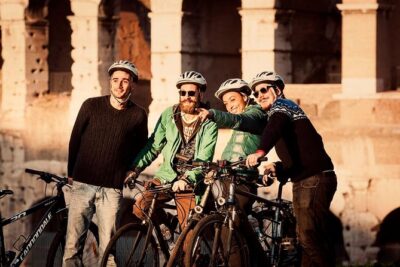
Rome City Small Group Bike Tour with quality Cannondale EBike
Read our review →
Rome by Night – Ebike Small Group Tour – Food and Wine (Option)
Read our review →
Rome by Night: E-bike Small Group Tour -Food & Wine (Option)
Read our review →