
REVIEW · POLAND BIKE TOURS
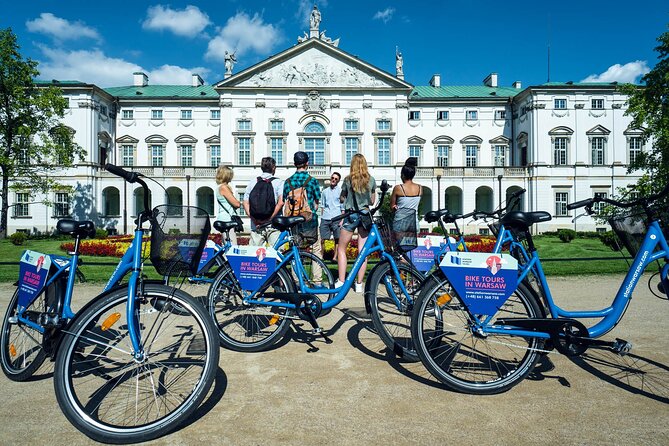
Secrets of Warsaw 4-hour Bike Tour
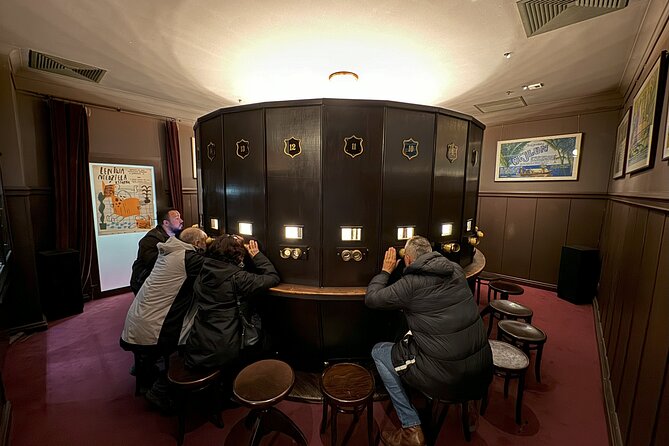
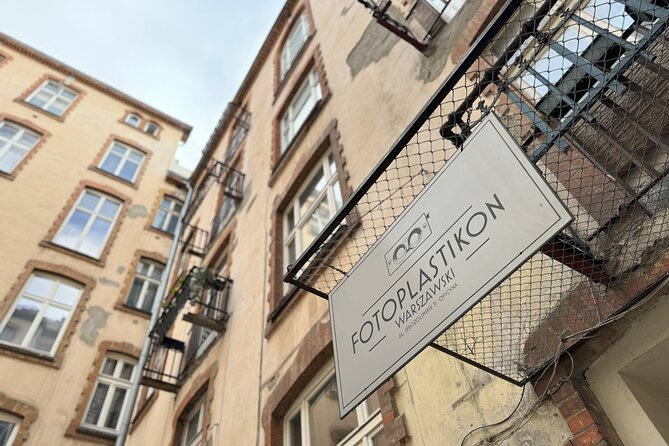
Warsaw reveals itself best on two wheels. This four-hour ride connects vanished neighborhoods, quiet parks, communist-era landmarks, river paths, and the creative Praga district in one well-planned loop. I especially like the stop at the Warsaw Fotoplastikon, where old images make prewar Warsaw feel close again, and the chance to see places many first-time visitors miss, including Otwarty Jazdów and Skaryszewski Park.
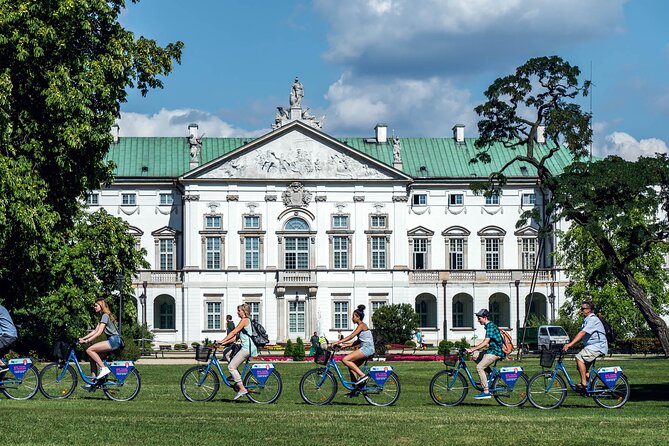
I also like the way the tour moves between Warsaw’s many identities. You pass the former Jewish district, modern office towers, Parliament, wooden Finnish cottages, the National Stadium, and Wedel’s historic chocolate works in a single outing. The main consideration is stamina: you must already be comfortable riding a bicycle, and the route may feel long if you are unused to city cycling.
The guide can make a real difference here. Marcin has earned especially warm praise for his humor, historical explanations, and ability to adjust the experience to meaningful moments, such as the August 1 sirens honoring the 1944 Warsaw Uprising. Rain and even a flat tire did not stop one outing, though you should still dress for changing weather and bring a sensible attitude toward cycling.
Key points at a glance
- Prewar Warsaw in the Fotoplastikon: Your ticket includes entry to this unusual viewing theater, one of the tour’s most distinctive historical stops.
- A city of sharp contrasts: The route links the lost Jewish district, communist landmarks, glass skyscrapers, wooden cottages, royal gardens, and Praga.
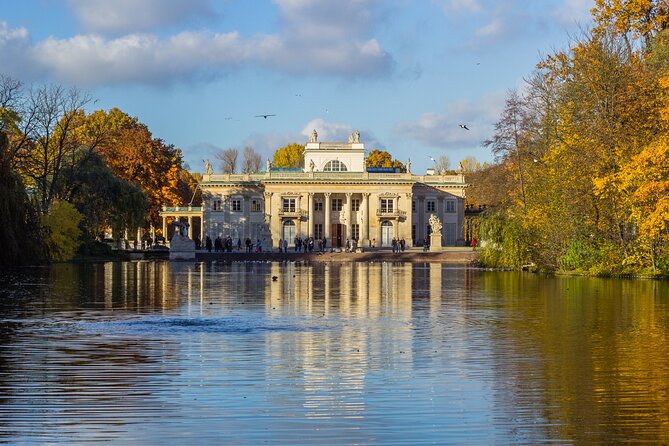
- Two major parks by bicycle: Royal Łazienki Park and Skaryszewski Park add trees, water, wildlife, and a welcome change from city streets.
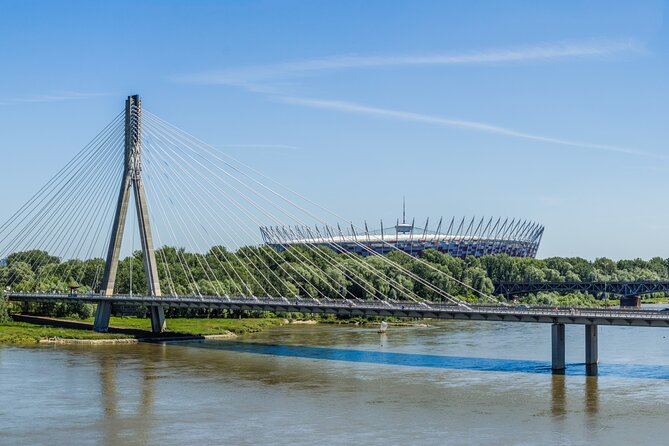
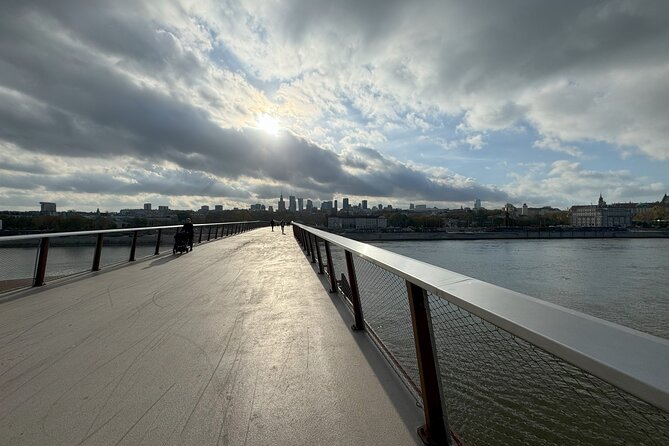
- A full crossing of the Vistula: You ride over Świętokrzyski Bridge and later finish with broad views from Warsaw’s newest bridge.
- A taste of Wedel: The 30-minute break at Poland’s oldest chocolate factory gives the ride a pleasant pause.
- Best for confident cyclists: Children under 10 cannot join, and the guide may refuse anyone who appears unfit to ride.
Why this bike route gives you a wider Warsaw
Warsaw is not a city you understand from the Old Town alone. Its rebuilt historic center is handsome, but the city’s character becomes clearer when you see the gaps, scars, postwar additions, and districts on both sides of the Vistula.
This route does exactly that. You begin near the Old Town, then move through former Jewish Warsaw, central government and business areas, green spaces, the riverfront, and Praga. Instead of spending four hours circling one famous square, you get a broad introduction to how Warsaw changed before, during, and after the Second World War.
The tour costs $57 per person. That is a fair price if you value a live English-speaking guide, bicycle rental, the Fotoplastikon ticket, and a route that would be difficult to plan efficiently on your own. You are also covering a large part of the city in 210 minutes.
The value is less convincing if you want a slow, detailed visit inside museums or landmark buildings. Most stops are viewed from the bicycle, often for about 10 minutes. Think of this as an active city orientation with selected visits, not a museum tour on wheels.
A few more rides around Poland worth a look
- Complete Cracow Bike Tour (small group of maximum 15 people!)
★ 5.0 · 1,322 reviews - Krakow: Bike Tour of Old Town, Jewish Quarter and the Ghetto
★ 4.9 · 1,155 reviews - Highlights of Krakow Bike Tour – Small group
★ 5.0 · 662 reviews
From Krasiński Park to the lost Jewish district
The meeting point is at 16/18 Koźla Street, about 1 kilometer from Sigismund’s Column in the Old Town and Royal Castle Square. The nearest metro station is Metro Ratusz Arsenał, roughly 1.2 kilometers away, so allow time to reach the start.
The ride begins around Krasiński Park, a pleasant place to get moving before the route turns toward Stare Nalewki. This part of Warsaw carries the memory of the former Jewish district, much of which was destroyed during the war. Your guide helps connect the streets you see today with the city that existed before the destruction.
From there, you pass Bank Square and Lubomirski Palace. These early stops help show the contrast between Warsaw’s formal public spaces and the traces of neighborhoods that once surrounded them. The pace is practical: you pause, listen, and continue rather than stopping for long photo sessions at every corner.
The advantage is momentum. You cover ground and keep the story moving. The drawback is that anyone wanting an in-depth account of each site may wish for more time at individual locations.
Prewar photographs at the Warsaw Fotoplastikon
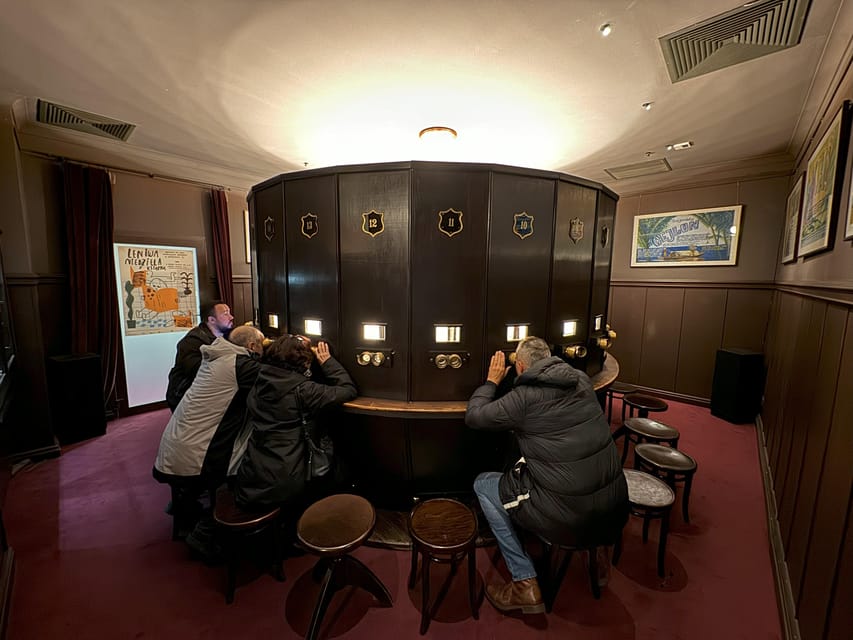
The Fotoplastikon is one of the tour’s best choices. This historic viewing device presents three-dimensional images that bring earlier Warsaw into focus. You receive a ticket, so this is more than a quick look from the street.
The stop is scheduled for around 30 minutes, giving you time to appreciate the photographs and the unusual machinery. It also changes the rhythm of the ride. After several outdoor landmarks, you get a compact historical visit that helps you picture streets, buildings, and daily life before the war.
I would pay close attention here, even if you have limited interest in old photographs. The rest of the route shows present-day Warsaw, while the Fotoplastikon supplies a direct visual link to the city that was largely lost.
Afterward, the ride passes the Centrum Bankowo Finansowe area. Modern towers and office blocks make the city’s post-1989 changes easy to see. Warsaw’s skyline is not simply old versus new. It is a collection of eras pressed together.
Communist power, Parliament, and Finnish cottages
The route continues past the former Communist Party headquarters and toward the Polish Parliament, or Sejm. These are useful outdoor stops because they place Poland’s political story within the streets you are cycling through.
You also pass Congress Hall and the John III Sobieski Monument. These locations give the guide room to explain the country’s changing political symbols, royal memory, and the public architecture of the communist period.
Then comes Otwarty Jazdów, a surprising pocket of wooden Finnish houses near the city center. The small cottages feel far removed from the offices and government buildings nearby. Their modest scale is part of the appeal. You see an entirely different side of Warsaw without leaving central districts.
This is one of the tour’s strongest details because it rewards curiosity. Many city tours stick to grand buildings. Here, you get a small residential corner that makes Warsaw feel more personal.
Same handlebars, a completely different route:
- 3-Hour Guided Cycling Tour of Warsaw
★ 4.9 · 624 reviews - Full Bike Tour – the Old Town, Jewish Qtr & the Ghetto NEW BIKES
★ 5.0 · 437 reviews - Krakow: Highlights of Krakow Bike Tour – Small Group
★ 4.9 · 421 reviews - Hidden Krakow Bike Tour
★ 5.0 · 275 reviews
Royal Łazienki Park and the Vistula crossing
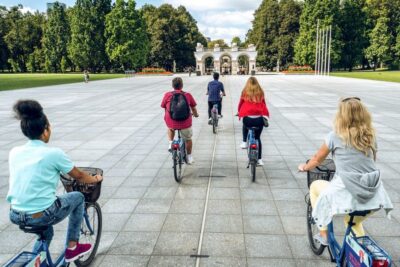
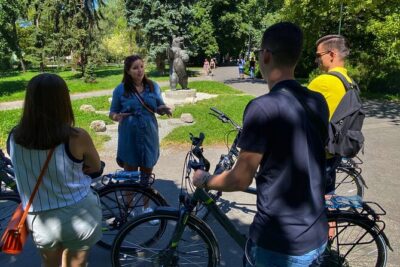
The ride continues through Royal Łazienki Park, one of Warsaw’s most attractive green spaces. You pass the John III Sobieski Monument and trade traffic for trees, open paths, and a calmer setting.
The tour description highlights wildlife and enchanting parks, but it does not promise a particular animal sighting. You should treat nature as part of the setting rather than a guaranteed feature. The park still provides a welcome break from masonry and traffic.
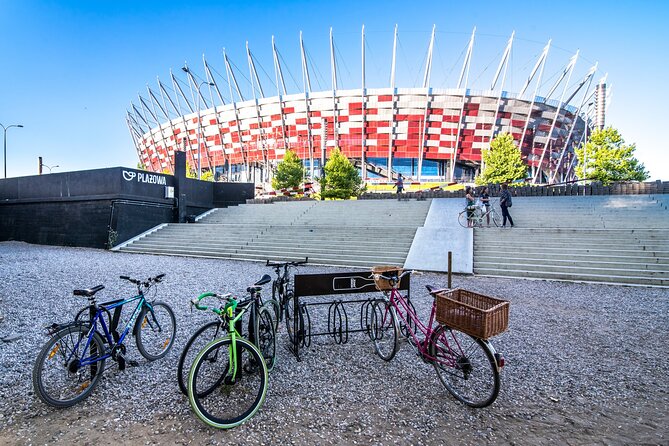
Next, you cross the Vistula on Świętokrzyski Bridge. The bridge gives you a useful view of the river and the city’s contrasting banks. You then reach Poniatówka, a city beach area, before continuing toward PGE Narodowy, the National Stadium.
This section is especially good for showing Warsaw as a river city. The Vistula is not just a background feature. It shapes the route, separates districts, and gives you long views that are hard to get from street level.
Skaryszewski Park and the Wedel chocolate stop
On the eastern side of the river, you enter Skaryszewski Park, Warsaw’s second-largest park. It offers a different feel from Royal Łazienki Park, with more space and a notable lake.
The park is a good place to slow down briefly. You can see another side of Warsaw’s public green spaces and, depending on conditions, catch glimpses of local wildlife. The route does not turn this into a nature walk, but the park adds variety and keeps the day from becoming a string of buildings.
The scheduled 30-minute break at E. Wedel is one of the tour’s most practical features. Wedel is Poland’s oldest chocolate factory, and the stop gives you time to rest after a long ride. Refreshments are not included, so budget separately for anything you want to buy.
This pause matters more than it may seem. Four hours on a bicycle is manageable for a confident rider, but a proper break helps. If you are sensitive to sweets or want a full meal, remember that the stop is centered on Wedel rather than described as a lunch break.
Praga, Brzeska, and the city’s less polished character
The route then enters Praga, one of Warsaw’s most distinctive districts. Brzeska and the surrounding streets offer a rougher, more local feel than the carefully restored Old Town or central business quarter.
Praga is known for its mysteries, creative energy, and strong local character. The ride gives you a useful introduction without pretending that every corner is polished or arranged for sightseeing. That is precisely why this part works. You see a district with its own identity rather than another uniform center.
From Brzeska, you continue to Port Praski and the Metropolitan Cathedral of Saint Mary Magdalene. These stops help connect Praga’s street life with its religious and riverfront landmarks.
You should listen closely to the guide here. The value of Praga is not just in taking photographs. It comes from understanding how the district fits into Warsaw’s wider story and why it feels different from the western side of the river.
Finishing above the Vistula
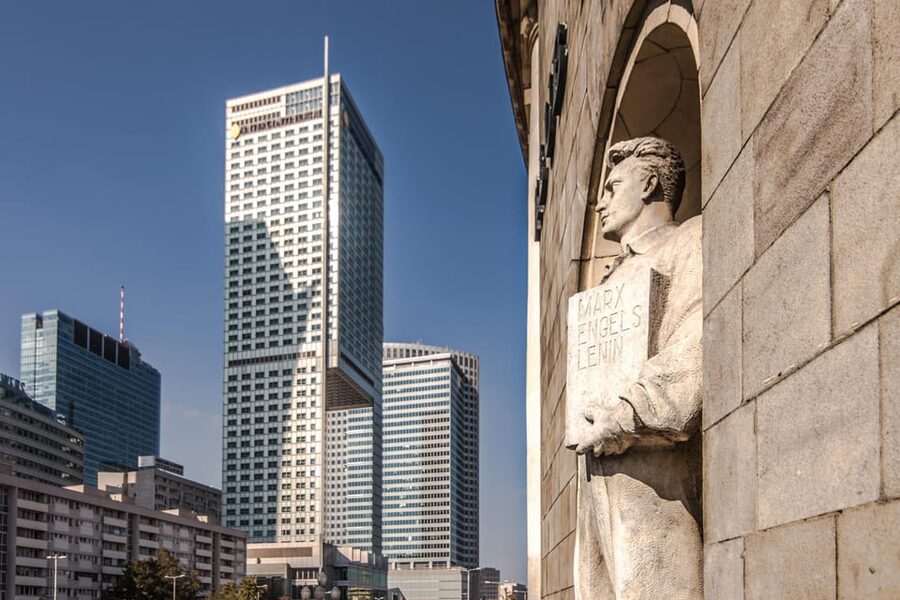
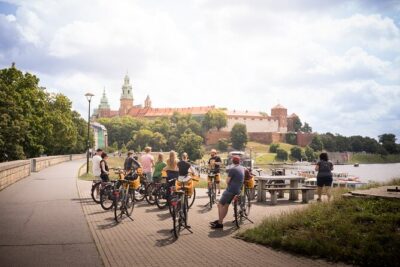
The final stretch brings you to Most Na Prage, described as Warsaw’s newest bridge, before returning to Station Warsaw Tours. The ending gives you broad views of the skyline, river, and mixture of old and new city districts.
After seeing Warsaw from parks, side streets, bridges, and neighborhood roads, this final outlook helps tie the route together. Glass towers, riverbanks, historic buildings, and Praga all become part of one view.
The return to the starting point is useful. You do not need to arrange transport from a distant neighborhood at the end, and you finish close to where you began.
How difficult is the ride?
You need to confirm that you can ride a bicycle. This is not suitable for children under 10, and anyone who appears unfit to cycle may be refused participation for safety reasons, without a refund.
The route lasts 210 minutes, with many cycling segments listed at about 10 minutes and two longer visits or breaks. You do not need to be a competitive cyclist, but you should be comfortable riding for several hours with stops.
The safety rules are strict about alcohol and drugs. Drinking just before or during the tour is forbidden. You are also expected to know Polish road rules for bicycles.
Weather deserves attention. A rain poncho costs 5 PLN, and one outing continued through constant rain, so a waterproof layer is a smart addition. A basket costs 5 PLN if you need one. Bring water and any snacks you want, since refreshments along the way are not included.
Guide quality and the value of local stories
The guide is central to this experience. Marcin has been praised for explaining Warsaw’s past clearly, using humor, and adapting the ride to important local events. On August 1, the tour was adjusted so the group could experience the sirens marking the Warsaw Uprising.
That example shows why a live guide adds value. A bicycle rental alone can take you from point to point, but it cannot easily explain why a certain street matters or respond to a meaningful moment in the city calendar.
The English-language format suits international visitors. The rating is 5 out of 5 from 25 reviews, with repeated praise for the route, the guide, and the amount of the city covered. One particularly useful detail is that a flat tire and steady rain did not end one outing, though that should not be taken as a promise that every weather problem will be handled the same way.
Who should book this Warsaw bike tour?
I would choose this tour if you want an active introduction to Warsaw and prefer local corners to a checklist of famous sights. It is especially useful early in a stay because it helps you understand how the Old Town, central Warsaw, the river, parks, and Praga relate to one another.
You will get the most from it if you enjoy history told outdoors, can ride comfortably, and do not mind seeing some sites from the saddle. Families with children under 10 need another plan, and anyone looking for a slow museum-focused experience should choose a different activity.
The route also suits repeat visitors. Even if you already know the Old Town, the former Jewish district, Finnish houses, Skaryszewski Park, Wedel, and Praga offer plenty of material beyond the standard city circuit.
Should you book it?
Book this tour if you want broad city coverage, unusual stops, and a strong historical thread in one active outing. The included bicycle, English-speaking guide, and Fotoplastikon ticket make $57 reasonable for a 210-minute experience.
Skip it if you dislike cycling, need guaranteed dry weather, or prefer spending an hour inside each attraction. For a confident rider who wants Warsaw’s less obvious stories, this is one of the better ways to see how the city’s old, damaged, rebuilt, green, and modern sides fit together.
FAQ
Where does the Warsaw bike tour start?
It starts at Station Warsaw Tours, located at 16/18 Koźla Street. The meeting point is about 1 kilometer from Sigismund’s Column in the Old Town and Royal Castle Square.
How long does the tour last?
The tour lasts 210 minutes, or three and a half hours.
What language is the tour conducted in?
The tour has a live English-speaking guide.
Is bicycle rental included?
Yes. Bicycle rental is included in the price.
Is entry to the Warsaw Fotoplastikon included?
Yes. The ticket to the Fotoplastikon is included.
Are refreshments included?
No. Refreshments along the route are not included. The tour includes a 30-minute break at E. Wedel.
Can children under 10 join the tour?
No. The tour is not suitable for children under 10.
What happens if I cannot safely ride a bicycle?
You must confirm that you can ride a bicycle. If the guide considers you unfit to cycle, participation may be refused for safety reasons, and that refusal is not grounds for a refund.
Newly added rides around Poland
- Krakow: 3-Hour Small Group Tour on E-Bike★ 4.8 · 135 reviews
- Krakow: Old Town Bike Tour with a Guide★ 4.5 · 54 reviews
- Krakow: Complete Bike tour with all the highlights★ 4.9 · 90 reviews
- Gdansk Private Bike Tour★ 5.0 · 21 reviews
- Gdańsk: Highlights Bike Tour★ 4.9 · 173 reviews
- Hidden Krakow Bike Tour★ 5.0 · 275 reviews
- Krakow: Highlights of Krakow Bike Tour – Small Group★ 4.9 · 421 reviews
- Full Bike Tour – the Old Town, Jewish Qtr & the Ghetto NEW BIKES★ 5.0 · 437 reviews
Poland Bike Tours, compared.
Complete Cracow Bike Tour (small group of maximum 15 people!)
Read our review →
Bike Tour of Old Town, Jewish Quarter and the Ghetto
Read our review →
Full Bike Tour – the Old Town, Jewish Qtr & the Ghetto NEW BIKES
Read our review →
Browse the lists this tour appears in