
REVIEW · CAMBODIA BIKE TOURS
Cultural Cycling Tour – half day (8:00-11:30)
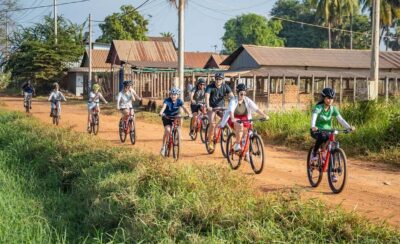
Battambang opens up on two wheels. This morning ride takes you beyond the town center to family workshops, a historic pagoda, a prahok market, and roadside food makers. I like the direct contact with everyday Cambodian work, especially watching rice paper discs made by hand and tasting Kralan cooked in bamboo. I also like the small group size, with no more than 10 people and the possibility of a tuk tuk if cycling is not suitable for someone in your group.
The main consideration is the heat. The ride begins early, but Cambodia gets hot quickly, and the route includes outdoor stops with little mention of shade. The $16 price is excellent for a bicycle, guide, bottled water, snacks, tastings, entrance fees, and local transport support, though you should bring suncream and sunglasses.
Key points at a glance
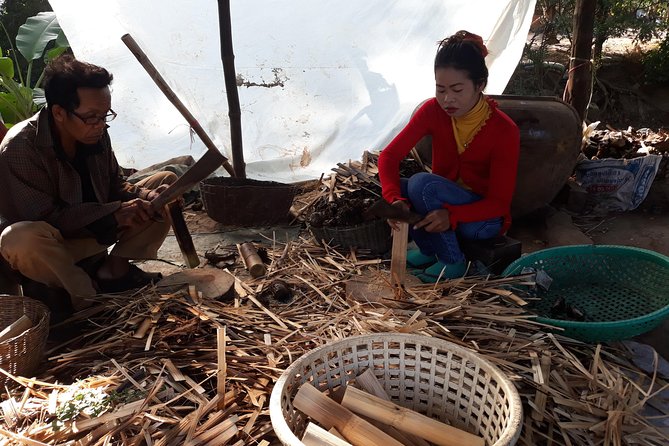
- Rice paper made by hand: Watch local women, called Ming, produce the thin discs used for spring rolls.
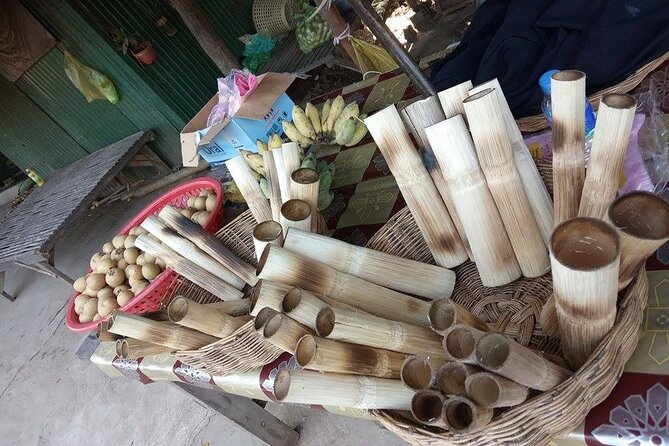
- Kralan in bamboo: At Samrong Knong, taste sticky rice cooked with black beans, coconut milk, and salt inside bamboo over charcoal.
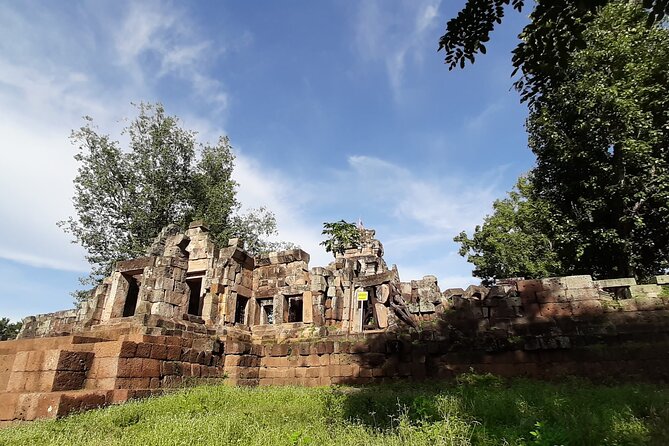
- Wat Samrong Knong: Visit Battambang’s oldest pagoda and a site connected with the Killing Fields.
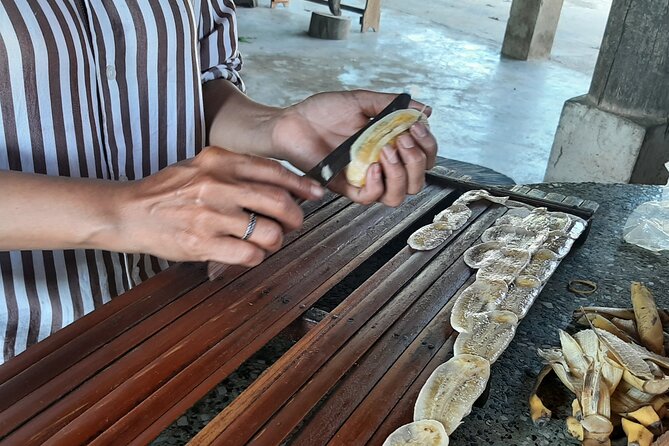
- Real food production: See prahok fermenting in jars, along with rice wine and dried banana chips.
- Small-group feel: The tour accepts a maximum of 10 people, and past departures have sometimes been private or nearly private.
- Early timing: The 8:00 start helps you avoid the worst heat and leaves the afternoon free.
Why this bicycle tour feels different from a standard city ride
Many cycling tours show you temples and scenery from the road. This one puts local production at the center. You are not simply passing rice fields or taking photographs of a pagoda. You stop to see how familiar Cambodian foods are made, then taste some of them while your guide explains the process.
That difference matters in Battambang. The town is well known for its connection to farming and food, and this ride gives you a closer look at the work behind the snacks sold at markets and roadside stalls. Rice paper, prahok, rice wine, banana chips, and Kralan are not just souvenirs or menu items. They are part of daily life and local income.
Your Khmer guide acts as both host and interpreter. That is important because the artisans may not speak English, and the guide can explain what you are seeing without turning the visit into a staged performance. The strongest praise for this experience centers on guides such as Paov and Sothea, who were described as friendly, funny, clear in English, and able to connect food production with Cambodian history and ordinary life.
Guide assignments can change, so you may not meet those particular people. Still, the operation places a strong emphasis on local guides, including Raksa, who has also led or organized tours. The personal approach is one of the main reasons this small ride has earned a 5.0 rating from 26 ratings, with 100 percent recommending it.
A few more rides around Cambodia worth a look
- Siem Reap Countryside Bike Tour / E-Bike or Tuk Tuk
★ 5.0 · 935 reviews - Angkor Sunrise Bike Tour / E-Bike or Tuk Tuk
★ 5.0 · 615 reviews - Phnom Penh Silk Island Bike Tour/ E-Bike or Tuk Tuk
★ 5.0 · 495 reviews
8:00 departure and the rhythm of the ride
The tour begins at 8:00 and lasts about a half day. The stated finish is 11:30, while the duration is also described as approximately four hours. Allow some flexibility because cycling time and conversations at the stops can vary.
The early start is practical, not merely convenient. You get cooler conditions than you would later in the day, and you finish with time for lunch, a rest, or another Battambang activity. Bring water even though bottled water is included. Suncream and sunglasses are not included, and both are useful in an exposed outdoor setting.
You receive a bicycle for the tour, with a local guide leading the way. The group limit of 10 keeps the ride more personal than a large coach excursion. If someone in your group has a problem that makes cycling difficult, the operator says a tuk tuk can be included. You should explain that need in advance rather than assuming a vehicle will automatically be waiting.
The ride is presented as easy and moderate in pace. One useful point is that it is not designed as a race. You can expect a morning focused on observing, tasting, and asking questions rather than covering a huge distance.
Wat Samrong Knong and Battambang’s painful past
The first listed stop is Wat Samrong Knong, described as Battambang’s oldest pagoda. You have about 20 minutes here, with admission included.
The pagoda visit has two sides. One is religious and architectural, giving you a look at a long-standing Buddhist site. The other is much darker: the location is associated with the Killing Fields and Cambodia’s Khmer Rouge period.
Your guide’s role is especially valuable here. A brief stop can easily become confusing if you do not know what you are seeing or why the place matters. Guides such as Sothea have been praised for explaining Khmer Rouge history along with present-day culture and daily life. That combination can help you place the site in context without treating a painful subject as a quick photo stop.
Twenty minutes is not enough for a full historical visit. If you want extensive information about the period, you will need a separate museum or memorial visit elsewhere. On this tour, the pagoda works as an introduction, connecting the countryside route with Battambang’s difficult past.
The Khmer prahok market and the smell of fermentation
The second stop takes about 20 minutes at a Khmer prahok market. Here, you can see fish fermenting in jars for the production of prahok, one of Cambodia’s most important and strongly flavored foods.
This is a useful stop for anyone curious about how Cambodian meals are built. Prahok is more than a pungent market item. It is a preserved fish product used to add salt and depth to food, and its preparation shows how preservation remains tied to local cooking.
You should be ready for a strong smell. That is part of the experience, not a fault in the tour. If you are sensitive to fermented fish, this may be the least comfortable stop, but it is also one of the most honest. You are seeing a real food process rather than a polished tasting designed for visitors.
The guide interprets the process and helps you understand what you are looking at. Since the admission fee is free, this stop adds cultural value without raising the cost. It is short, so you will not be committed to a long market visit if the aroma proves too much.
Same handlebars, a completely different route:
- Siem Reap: Bike the Angkor Temples – Full-Day 30km Tour
★ 5.0 · 463 reviews - Siem Reap: Angkor Wat Sunrise Bike Tour & Jungle Breakfast
★ 5.0 · 415 reviews - Phnom Penh: Silk Islands Half-Day Bike Tour
★ 4.9 · 315 reviews - Siem Reap: Guided Countryside Bike Tour
★ 4.9 · 294 reviews
Ek Phnom and the work behind familiar snacks
The longest stop is at Ek Phnom, where you spend about one hour seeing traditional production. The activities listed here include rice wine, rice paper, and dried banana chips.
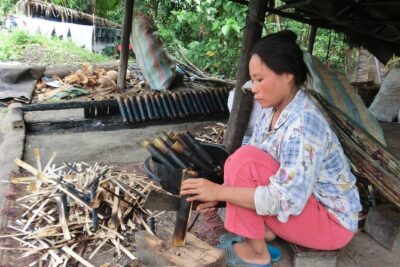
The rice paper demonstration is likely to be a highlight. Local women, referred to as Ming, make the thin discs used to wrap spring rolls. Watching the work gives you a better sense of the skill involved in a product that can look simple once it reaches a restaurant table.
The guide serves as interpreter between you and the makers. That can turn a passive demonstration into a conversation about ingredients, methods, and daily work. You can ask questions through the guide and gain a clearer picture of how these small businesses operate.
Rice wine offers another look at local production. You will see how rice is turned into a drink sold by roadside vendors and small producers. The information provided does not promise a large tasting or a formal distillery visit, so keep your expectations modest. This is a working stop, not a polished beverage attraction.
Dried banana chips complete the food-focused visit. Along with rice wine and rice paper, they show how ordinary ingredients become products with a longer shelf life and a place in local commerce. The more you look, the more this tour becomes a lesson in preservation: fermenting fish, drying bananas, cooking rice in bamboo, and turning rice into paper or wine.
Kralan, banana chips, and the best part of the tasting
At Samrong Knong, you sample Kralan, a traditional sticky rice mixture made with black beans, coconut milk, and a little salt. It is cooked inside a bamboo tube over charcoal.
Kralan is the sort of food that makes a short stop memorable. The bamboo is not just decoration. It is part of the cooking method and the presentation, giving you a direct link between local materials and local food. The combination of sweet coconut milk, sticky rice, beans, and salt offers a simple but satisfying taste.
The tour also includes tastings of products made by the artisans you visit. These can include rice wine and banana chips, with the exact tasting sequence depending on the morning’s stops. Bottled water and snacks are included, which is useful because the ride takes place during the warmer part of the day.
If you prefer to choose your own food or drink, there is no pressure to sample everything. Beer, personal shopping, suncream, and sunglasses are not included. Bring cash if you want to buy products directly from roadside sellers, but treat shopping as optional rather than part of the core value.
What the $16 price really covers
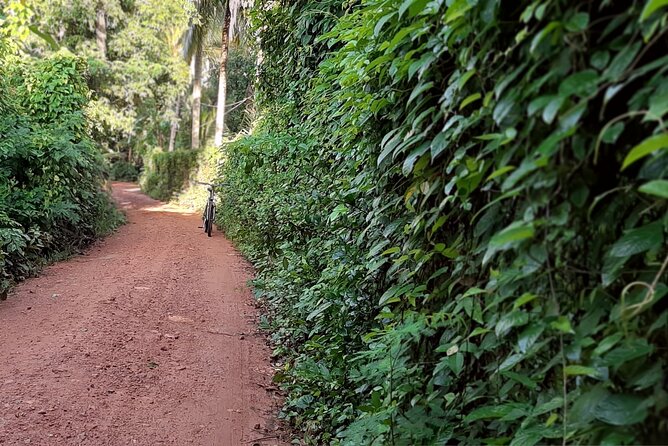
At $16, this is one of those tours where the inclusions matter more than the headline price. You receive the bicycle, an experienced local guide, bottled water, snacks and tastings, entrance fees, and taxes. You are also paying for interpretation, which is the part that turns a series of roadside stops into a cultural experience.
A private tuk tuk tour might cover more ground, but it would not necessarily give you the same close view of local work. A large group trip might cost more while giving you less time to ask questions. Here, the maximum group size is 10, and some departures have operated with only one participant. That creates the possibility of a very personal morning, although you should not book on the assumption that every date will be private.
The price is especially strong for first-time visitors to Battambang who want more than temples. You get history, food, transport support, and a gentle activity in one package. The value is weaker only if you dislike cycling, have no interest in food production, or want a long temple-focused tour.
Who should book this morning?
I would choose this tour for you if you want to see how people work, cook, preserve food, and earn a living outside the main tourist routes. It suits curious eaters, couples, solo visitors, and anyone who prefers conversation over a checklist of monuments.
It also works well for people who enjoy cycling but do not want a demanding athletic outing. The pace is described as moderate, and the route is built around stops. If your group includes someone who cannot cycle, ask about the tuk tuk option before departure.
Families may appreciate the food demonstrations and short stops, though the prahok market’s smell could be challenging for young children. History-minded visitors will value the Killing Fields connection at Wat Samrong Knong, but anyone needing a detailed account of Cambodia’s modern history should plan a separate visit.
You may want to skip it if you need a highly structured schedule with exact timing. Three main stops, food production, cycling, and conversations can make the morning feel flexible. That is part of the charm, but it also means the tour is less like a timed museum visit.
Practical advice before you go
Wear light clothing and bring suncream, sunglasses, and extra water if you drink often. The included bottle is helpful, but the heat and cycling can make more hydration useful.
Use the 8:00 start to your advantage. Eat something beforehand if you need a substantial breakfast, since the included food is described as snacks and tastings rather than a full meal.
Keep an open mind at the prahok market. Fermented fish has a powerful aroma, and the point is to see how it is made, not to expect a mild tasting. At the food stops, listen to the guide’s explanation before deciding what you want to sample or buy.
The tour requires good weather. If poor weather cancels the outing, you can choose another date or receive a full refund. You can cancel for a full refund up to 24 hours before the start time. Cancellations or changes made within 24 hours are not refunded or accepted.
Should you book the Cultural Cycling Tour?
Book it if you want a low-cost, small-group morning that connects Battambang’s history with its food and working life. The strongest reasons are the local guide interpretation, the chance to meet artisans through that interpretation, and the unusual access to rice paper, prahok, rice wine, banana chips, and Kralan.
I would not choose it for a long-distance cycling challenge or a full historical tour. But for $16, the balance is hard to beat. You get a bicycle ride with purpose, not just exercise, and you finish with a better understanding of what local families make, eat, and sell.
FAQ
Where does the Cultural Cycling Tour take place?
The tour takes place in Battambang, Cambodia, with stops at Wat Samrong Knong, a Khmer prahok market, and Ek Phnom.
What time does the tour start and finish?
It starts at 8:00. The scheduled end is 11:30, while the duration is described as approximately four hours.
How much does the tour cost?
The price is $16.
Is bicycle use included?
Yes. Use of a bicycle is included in the tour price.
Is a guide included?
Yes. A local experienced guide is included, and the guide acts as an interpreter when you meet local artisans.
What food and drinks are included?
Bottled water, snacks, and tastings of traditional food products made by the artisans are included. Kralan, rice wine, and banana chips are among the products connected with the tour.
Are entrance fees included?
Yes. All fees and taxes are included, and admission to Wat Samrong Knong and Ek Phnom is included.
Can someone use a tuk tuk instead of cycling?
If someone in your group has a problem that makes cycling difficult, the operator says a tuk tuk can be included. You should raise this need when arranging the tour.
What is the cancellation policy?
You can cancel at least 24 hours before the start time for a full refund. Cancellations or changes made less than 24 hours before the start time are not accepted or refunded. If poor weather cancels the tour, you will be offered another date or a full refund.
Newly added rides around Cambodia
- Phnom Penh: Cycling Adventure on Islands of the Mekong★ 5.0 · 225 reviews
- Explore local livelihood & countryside (Half-Day Cycling Tour)★ 5.0 · 19 reviews
- Local Livelihood Full Day Bike Tour in Battambang★ 5.0 · 37 reviews
- Customs and Culture Half Day Walk and Bike Tour in Battambang★ 5.0 · 23 reviews
- Siem Reap: Bike the Angkor Temples – Full-Day 30km Tour★ 4.9 · 159 reviews
- Siem Reap: Bike Rental★ 4.7 · 12 reviews
- Siem Reap: Countryside Cycle and Local Village Life Tour★ 4.7 · 32 reviews
- Kampong Phluk: Floating Village Sunset Bike Tour or E-Bike★ 5.0 · 11 reviews
Cambodia Bike Tours, compared.
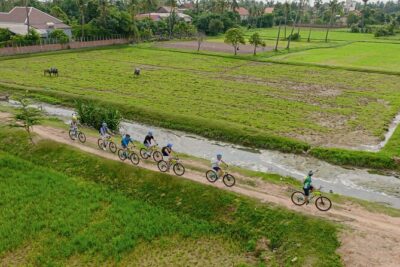
Siem Reap Countryside Bike Tour / E-Bike or Tuk Tuk
Read our review →
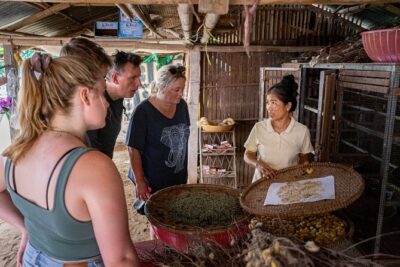
Phnom Penh Silk Island Bike Tour/ E-Bike or Tuk Tuk
Read our review →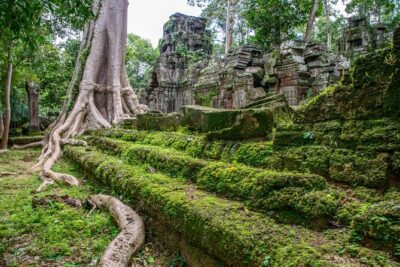

Angkor Wat Sunrise Bike Tour & Jungle Breakfast
Read our review →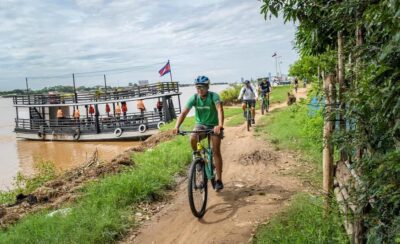
Local Livelihood Half Day Bike Tour in Battambang
Read our review →Browse the lists this tour appears in