
REVIEW · KRAKOW BIKE TOURS
Hidden Krakow Bike Tour
See Krakow from street level. The Hidden Krakow Bike Tour links Kazimierz and Podgórze, two districts where Jewish life, Nazi occupation, resistance, and postwar memory come together. I like the route for two clear reasons: it takes you beyond the Old Town, and it gives difficult history a physical setting you can understand while moving through the city. The ride also earns high marks for comfortable bikes, a friendly pace, and guides such as Bram Hoffman and Nikki.
The main consideration is the subject matter. Much of the tour focuses on World War II, the Jewish ghetto, and the communist period, so this is not a light sightseeing ride. The two-hour-45-minute section in Podgórze may also feel long if you want a quick overview rather than a serious look at Krakow’s past.
Key points to know before you book
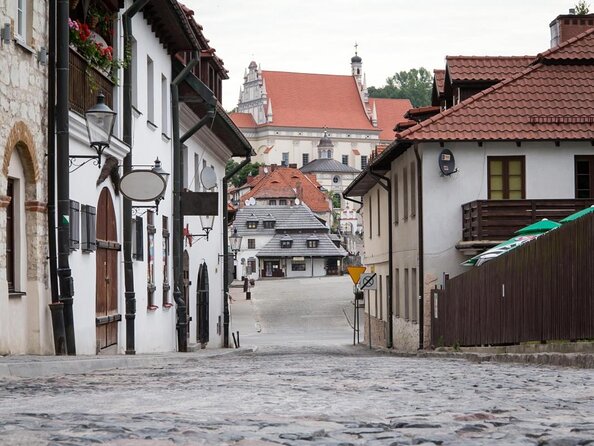
- Kazimierz begins the story: You visit the Skalka Basilica and receive a short introduction to Schindler’s List and its Krakow setting.
- Podgórze receives most of the time: The route spends about two hours and 45 minutes exploring former ghetto sites and wartime landmarks.
- The group is capped at 15 people: That keeps the ride smaller than a standard city excursion and should make it easier to hear the guide.
- The route starts and ends at Józefa Dietla 59: The meeting point is in Krakow’s Kazimierz area, and the activity begins at 2:00 pm.
- The price is $39.32 per person: For a three-hour guided ride, that is a fair price if you want context rather than only exercise.
- The tour is offered in English: Mobile tickets, nearby public transportation, group discounts, and free cancellation up to 24 hours before departure add useful flexibility.
Why a bicycle works so well in Krakow
Krakow is compact enough to explore on foot, but a bicycle changes the rhythm. You can cover the gap between Kazimierz and Podgórze without spending much of the afternoon on public transportation. You also see how the districts connect, rather than treating each one as a separate stop on a map.
I especially like the balance of movement and explanation here. You are not simply pedaling past landmarks while a guide lists dates. The route pauses at places tied to Jewish life and wartime events, giving each location a name and a purpose. Then you ride on, which keeps the three-hour experience from feeling like a lecture.
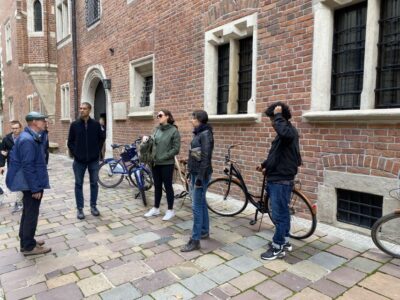
The tour has a maximum of 15 people. That is not a private ride, but it is small enough to feel more personal than a large bus group. Based on the available tour feedback, the bikes are comfortable, easy to ride, and feel safe. That matters because a poor bicycle can turn an interesting outing into a battle with the equipment.
You should still choose this tour for its subject matter first and its cycling second. The ride is a way to reach the sites, not a sporting challenge. The supplied details do not give a distance, terrain profile, or bicycle model, so I would not book it if you need a precise athletic route or a guaranteed type of bike.
A few more rides around Poland worth a look
- Complete Cracow Bike Tour (small group of maximum 15 people!)
★ 5.0 · 1,322 reviews - Krakow: Bike Tour of Old Town, Jewish Quarter and the Ghetto
★ 4.9 · 1,155 reviews - Highlights of Krakow Bike Tour – Small group
★ 5.0 · 662 reviews
Meeting in Kazimierz at 2:00 pm
The tour begins at Józefa Dietla 59, 31-054 Kraków, at 2:00 pm. It ends at the same place, which makes the practical side simple. You do not need to arrange a separate ride back from Podgórze or guess where the group will finish.
The start point is near public transportation. That is useful if you are staying elsewhere in Krakow, though you should allow enough time to find the exact address and arrive before the afternoon departure. A mobile ticket is accepted, so you can keep the booking on your phone rather than print paperwork.
An afternoon start has one advantage: you can use the morning for Krakow’s Old Town, Wawel, or a museum, then spend the later part of the day in Kazimierz and Podgórze. The trade-off is that the tour may occupy much of your afternoon. With a duration of about three hours, it is best treated as one of the day’s main activities.
Kazimierz and the Skalka Basilica
The first named stop is Kazimierz, Krakow’s former Jewish district. The planned stop at the Skalka Basilica lasts about 15 minutes, with free admission. That is a short visit, but it gives the tour a clear starting point.
The basilica helps set up the larger story of the district. Kazimierz is not presented only as a collection of cafés, bars, and attractive streets. The guide places it within the older Jewish and Christian life of Krakow before moving toward the events of the 20th century.
You also receive a short introduction to Schindler’s List. The film is closely linked with Krakow, and this context can help you separate the movie’s dramatic scenes from the actual places and events behind them. I like that the film reference appears as part of a broader explanation, rather than becoming the entire focus of the ride.
The drawback is time. Fifteen minutes is enough for an introduction and a look at the basilica, but not enough for a full visit inside or a detailed study of Kazimierz. If you want to explore the district’s synagogues, museums, restaurants, and side streets, plan a separate visit before or after the tour.
This brief first stop also tells you where the tour’s emphasis lies. Kazimierz is the opening chapter. Podgórze, not Kazimierz, receives the bulk of the afternoon.
Crossing into Podgórze and the former ghetto
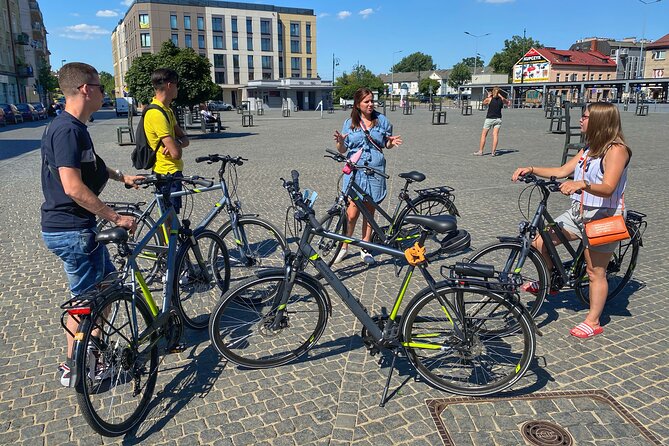
The tour then turns to Podgórze, the district associated with the Jewish ghetto during World War II. This is where the experience becomes more serious and more substantial. About two hours and 45 minutes are assigned to Podgórze, including several locations tied to the war.
The length matters. You have time to connect individual sites rather than see one memorial and move on. The guide can explain how the district functioned, where people were gathered, and how the remaining physical traces fit into the wartime story. The supplied description does not give a full list of every stop, so you should expect a guided selection of important locations rather than a complete survey of Podgórze.
One named stop is Ghetto Heroes Square. Its name points to the people who were imprisoned in the ghetto and to the memory of those who suffered there. A visit here can be powerful because the square is an actual civic space, not an isolated display behind museum glass. You encounter the memorial in the middle of the district where the events occurred.
The route also includes a remnant of the wall that once surrounded the ghetto. This is one of the most useful kinds of historical evidence in a city tour. A surviving fragment gives you a physical sense of separation and confinement that a general explanation cannot provide. It also shows how much of the past can disappear from ordinary streets unless someone points it out.
Another stop is the former headquarters of the resistance. The details provided do not identify the building or explain the full role it played, so the guide’s explanation will be important. This is a good example of why a guided ride adds value: without context, an unmarked building may look like any other part of the neighborhood.
The material can be difficult. You will hear about war, persecution, resistance, and the destruction of a community. I would not choose this ride as a carefree way to pass a sunny afternoon. I would choose it if I wanted to understand Krakow beyond its handsome center and was ready to give the subject proper attention.
Same handlebars, a completely different route:
- 3-Hour Guided Cycling Tour of Warsaw
★ 4.9 · 624 reviews - Full Bike Tour – the Old Town, Jewish Qtr & the Ghetto NEW BIKES
★ 5.0 · 437 reviews - Krakow: Highlights of Krakow Bike Tour – Small Group
★ 4.9 · 421 reviews - Gdańsk: Highlights Bike Tour
★ 4.9 · 173 reviews
The human pace of a small group
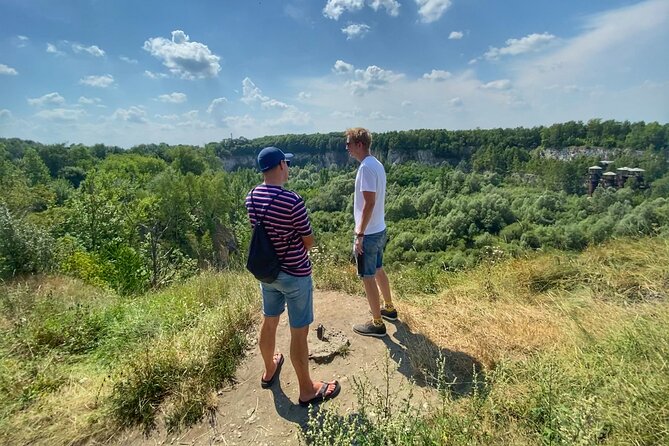
A maximum group size of 15 is one of the tour’s strongest practical features. With a group this size, you are more likely to hear the guide clearly when the bicycles are stopped. It should also be easier to stay together than in a large cycling procession.
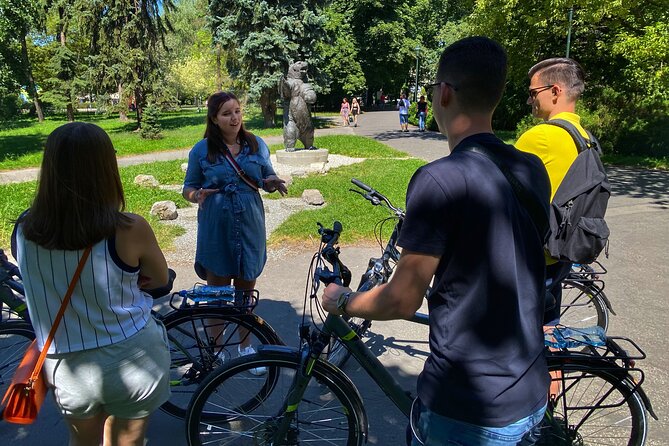
Past comments give special praise to the guides’ attitude. Bram Hoffman is described as informative and fun, while Nikki is praised for combining World War II and communist-era material with a pleasant ride through green parts of Krakow. Those details suggest a useful balance: serious information without a grim, monotonous delivery.
The guide makes a large difference on a tour like this. The places matter, but the connections between them matter more. A good explanation can show how Kazimierz, Podgórze, the ghetto, resistance activity, and later political change fit into the city’s story.
The tour is offered in English. That makes it a clear choice for English-speaking visitors, though the details do not state how much explanation is given at each stop or whether printed material is provided. If you prefer a very quiet ride with little commentary, this is probably not the right format.
Bikes, comfort, and the physical effort
The available feedback describes the bicycles as comfortable and easy to ride. That is encouraging for anyone who feels uncertain about joining a cycling tour in an unfamiliar city. The same comments also describe the ride as safe, which is especially important when you are moving through urban streets in a group.
Still, the published details do not state the route distance, the number of hills, or the minimum cycling ability. You should be comfortable riding a bicycle for roughly three hours, with stops for explanations. The note that most people can participate is helpful, but it does not replace an honest assessment of your own balance, stamina, and comfort in city traffic.
Because the tour is designed around historic locations, expect frequent pauses. You will not be pedaling continuously for three hours. The schedule includes a short stop at the Skalka Basilica and a much longer period in Podgórze, where the guide explains several sites.
The ride also offers a pleasant change from Krakow’s most visited central streets. One piece of tour feedback points to the city’s surprisingly green character and its less obvious corners. That is a useful benefit: you get historical context and a wider view of Krakow’s neighborhoods, not just the famous square and castle.
Is $39.32 a fair price?
At $39.32 per person, the tour sits in a reasonable range for a three-hour guided activity. The price includes the guide-led route and the use of a bicycle, with admission free at the listed stops. You are paying less for entry tickets and more for the time, route planning, bicycle, and explanation that ties the locations together.
The value is strongest if you would otherwise wander through Kazimierz and Podgórze without knowing what you were seeing. A wall remnant, square, or former headquarters can be easy to overlook. The guide turns those fragments into a connected account of Krakow’s wartime past.
It is less compelling if you only want casual cycling or if you plan to visit Podgórze independently with a detailed guidebook. In that case, you may prefer to rent a bicycle and set your own pace. The tour earns its price through interpretation and structure, not through expensive admissions.
Group discounts may reduce the cost for people booking together. Since the tour has a 15-person maximum, larger parties should check how the discount applies and whether everyone can join the same departure.
The experience receives a 5 out of 5 rating from 275 ratings, with 100 percent recommending it. That is a strong signal, especially alongside repeated praise for the small group, comfortable bicycles, clear information, and enjoyable guides. It does not remove the need to consider the serious subject matter, but it supports the tour’s basic value.
Who should book this Krakow ride?
I would recommend it to first-time visitors who have already seen, or plan to see, the main Old Town sights and want a fuller picture of Krakow. It suits people who learn best by moving through real places rather than sitting in a museum for several hours.
It is also a good fit for visitors interested in World War II, Jewish heritage, the Holocaust, resistance movements, and the communist period. The tour does not treat these subjects as a brief side note. Podgórze occupies most of the scheduled time, so the historical focus is clear.
Couples, friends, and families with older children may find the format easier than a long walking tour. The bicycle helps cover ground, while the group limit keeps the experience manageable. Group discounts may also make it attractive for people traveling together.
I would think twice if you have limited cycling experience, need specific accessibility arrangements, or want a gentle route focused on architecture and food. The available information says most people can participate, but it does not provide detailed accessibility information or technical route details.
Book carefully around the cancellation deadline. You can cancel for a full refund up to 24 hours before the local start time, but cancellations or changes inside that window are not refunded or accepted. The tour also requires a minimum number of participants. If that minimum is not met, you are offered another date or experience, or a full refund.
Should you book the Hidden Krakow Bike Tour?
Book it if you want Krakow’s difficult stories tied to actual streets, squares, walls, and buildings. The route’s best feature is its focus: a short opening in Kazimierz, followed by a sustained look at Podgórze and the former Jewish ghetto. Add a small group, comfortable bicycles, English-language guiding, and a fair price, and this becomes a strong choice for an active history lesson.
Skip it if your idea of a bike tour is a quick ride past pretty buildings with minimal commentary. This experience asks for attention and gives most of its time to World War II and its aftermath. For the right mood, it is one of the more useful ways to see a side of Krakow that is easy to miss on your own.
FAQ
How long is the Hidden Krakow Bike Tour?
The tour lasts approximately three hours.
Where does the tour begin and end?
It begins at Józefa Dietla 59, 31-054 Kraków, Poland, and ends back at the same meeting point.
What time does the tour start?
The scheduled start time is 2:00 pm.
Which parts of Krakow does the tour visit?
The tour visits Kazimierz, the former Jewish district, and Podgórze, including Ghetto Heroes Square, a remaining section of the ghetto wall, and the former headquarters of the resistance.
Is the tour offered in English?
Yes. The experience is offered in English.
How large is the group, and what is the cancellation policy?
The group can have a maximum of 15 people. You can cancel up to 24 hours before the start time for a full refund. Cancellations or changes made less than 24 hours before the start time are not refunded or accepted.
Newly added rides around Poland
- Secrets of Warsaw 4-hour Bike Tour★ 5.0 · 25 reviews
- Krakow: 3-Hour Small Group Tour on E-Bike★ 4.8 · 135 reviews
- Krakow: Old Town Bike Tour with a Guide★ 4.5 · 54 reviews
- Krakow: Complete Bike tour with all the highlights★ 4.9 · 90 reviews
- Gdansk Private Bike Tour★ 5.0 · 21 reviews
- Gdańsk: Highlights Bike Tour★ 4.9 · 173 reviews
- Krakow: Highlights of Krakow Bike Tour – Small Group★ 4.9 · 421 reviews
- Full Bike Tour – the Old Town, Jewish Qtr & the Ghetto NEW BIKES★ 5.0 · 437 reviews
Krakow Bike Tours, compared.
Complete Cracow Bike Tour (small group of maximum 15 people!)
Read our review →
Bike Tour of Old Town, Jewish Quarter and the Ghetto
Read our review →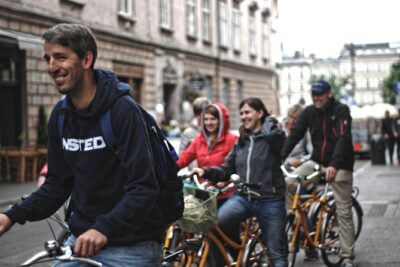
Full Bike Tour – the Old Town, Jewish Qtr & the Ghetto NEW BIKES
Read our review →
Browse the lists this tour appears in