
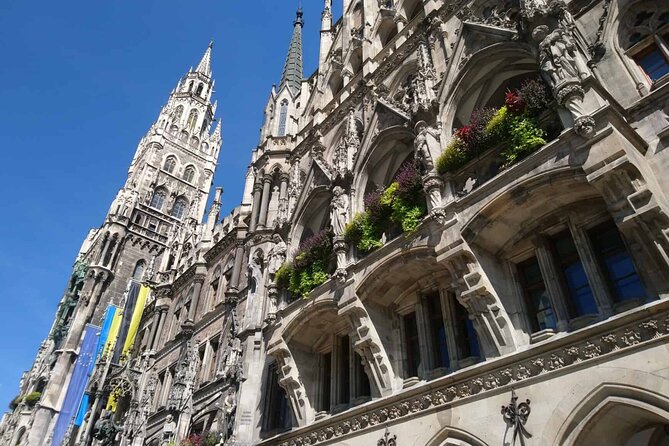
REVIEW · MUNICH BIKE TOURS
Best of Munich Electric Bike Tour
Munich makes a fine city for two wheels. The Best of Munich Electric Bike Tour links royal squares, art museums, Nazi-era sites, the English Garden, and the famous Eisbachwelle in about four hours. I like the easy, guide-led route and the chance to pause at the Chinese Tower beer garden, where beer and food cost extra. My other favorite is the mix of big sights and smaller details, from a monumental fountain to the modern Jewish quarter.
The main thing to consider is group size. Up to 20 people may ride together, and one guide must keep everyone safe through city streets. The group can also include standard bicycles, since the e-bike may be an upgrade. Still, the route is mostly flat, the pace is described as comfortable, and guides such as Canaan, Susanna, Karl, Mark, Rob, and Dan have earned especially warm praise for their storytelling and care.
Key points to know before you book
- Four hours covers a remarkable sweep: You see Munich’s royal center, museum quarter, English Garden, Isar sights, market, and Jewish quarter without arranging the route yourself.
- The e-bike helps, but it is not essential for everyone: Munich’s center is fairly flat, and the group stops often. The electric assist is useful if you prefer less effort.
- The Chinese Tower beer garden is the social highlight: You get about 40 minutes there, but food and drinks are not included.
- History is the tour’s strongest thread: The route connects Bavaria’s monarchy, art, the Nazi period, postwar peace, science, Jewish life, and modern city culture.
- The guide makes or breaks the day: Canaan, Susanna, Karl, Mark, Rob, and Dan are specifically praised for clear explanations, humor, safety, and local suggestions.
- Expect some walking as well as riding: One account describes the outing as a fair amount of walking, so decent mobility helps.
Starting at Karlsplatz and the Wittelsbacherbrunnen
The tour begins at Karlsplatz 4, near public transportation, and returns to the same meeting point. That makes it simple to fit into a day of sightseeing, especially if you want an early orientation before choosing which museums or historic buildings deserve more time.
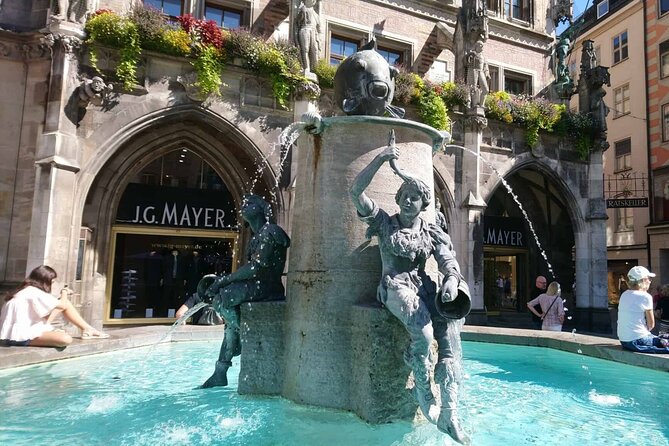
The first point is the Wittelsbacherbrunnen, at the edge of the city center between Lenbachplatz and Maximiliansplatz. Built from 1893 to 1895 by sculptor Adolf von Hildebrand, the Neo-Classical fountain turns water into an allegory of primal forces. It is a good opening stop because it introduces Munich’s fondness for grand civic design without requiring an indoor visit.
You should expect short explanations rather than long museum sessions. Most stops last about five minutes, so this is a city overview, not a substitute for entering every museum or palace. That is also the appeal: you can cover far more ground than you could on foot.
More E-Bike Tours in Germany
- Best of Munich Electric Bike Tour
★ 4.7 · 23 reviews - Best of Berlin E-Bike Tour
★ 5.0 · 77 reviews - Berlin: E-Bike Tour of the Berlin Wall and Mitte Highlights
★ 4.7 · 60 reviews
Karolinenplatz, Königsplatz, and Munich’s art quarter
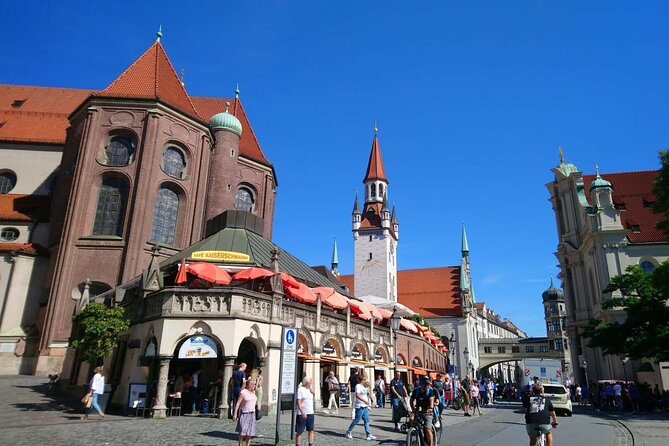
Karolinenplatz is a five-minute stop in Maxvorstadt, a district strongly linked with Munich’s museums and universities. Its radial design was the first of its kind in Munich, and its name honors Queen Caroline of Bavaria. The square also points to the close relationship between Bavaria and France in the early 19th century.
From there, the route continues to Königsplatz, one of Munich’s grandest urban spaces. The Propyläen Gate faces the Glyptothek and the Staatliche Antikensammlungen, creating a formal Classical setting that feels very different from the older lanes near the central market.
Königsplatz also puts you beside the Kunstareal, Munich’s museum quarter. You will not have time to visit the collections during this tour, but the guide can help you decide what to return to. That is one of the practical strengths of a fast city ride: you get a useful preview before spending half a day inside the Alte Pinakothek or Pinakothek der Moderne.
The Alte Pinakothek is one of the world’s oldest galleries and holds major Old Master paintings. The Pinakothek der Moderne brings several collections into one building, including modern and contemporary art, graphic works, design, and architecture. Both receive only brief exterior attention on the ride, so art lovers should treat these stops as planning help, not museum visits.
Nazi-era Munich at the Führer Building and Odeonsplatz
The Führer Building, built between 1933 and 1937, is one of the more serious stops. Adolf Hitler used the building extensively during the Nazi period, and it still exists today as part of the University of Music and Performing Arts Munich.
That continued use gives the site a complicated quality. The tour can point out how ordinary modern Munich exists alongside places tied to dictatorship and violence. If you want a focused study of Nazi history, this short stop will not be enough on its own, but it gives you useful bearings for further visits.
At Siegestor, a three-arched monument crowned by Bavaria with a lion quadriga, the meaning shifts. Originally dedicated to the Bavarian army, it was restored after World War II as a reminder of peace. This change in meaning is a useful example of how Munich handles monuments shaped by war.
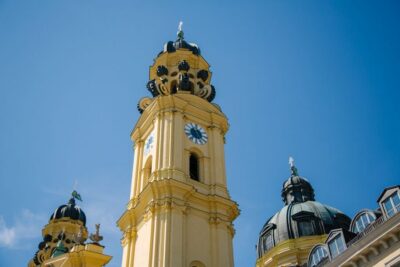
Odeonsplatz brings the story back to the early 19th century. Leo von Klenze developed the square and Ludwigstrasse in a grand Classical style, with the Theatine Church, Feldherrnhalle, and former Odeon defining the setting. The square also recalls the failed 1923 Beer Hall Putsch, when a fatal gun battle ended the march at the Feldherrnhalle.
The route then passes the Residenz, the former palace of Bavaria’s Wittelsbach rulers. It is Germany’s largest city palace and now contains rooms, architecture, and former royal collections open to the public. Five minutes is enough to mark it on your map, but not enough to appreciate the palace interiors. I would save a separate visit if royal history interests you.
Hofgarten and the Bavarian State Chancellery
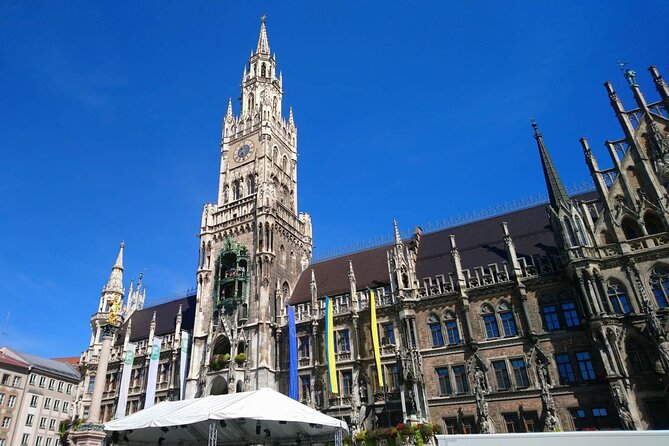
The Hofgarten provides a calmer stretch after the dense history of the city center. Built between 1613 and 1617 in the style of an Italian Renaissance garden, it sits between the Residenz and the English Garden. At its center is a pavilion dedicated to Diana, built in 1615.
The Bavarian State Chancellery follows. Its current building was constructed from 1989 to 1993 around the surviving dome of the former Bavarian Army Museum. The juxtaposition is worth noting: a modern government building incorporates part of an older structure damaged during World War II.
These stops are short, but the bicycle makes them work well. You are not spending your energy walking from one formal square to the next. Instead, you get a quick explanation, a look around, and another easy ride.
More E-Bike Tours in Munich:
- 3-Hour Porto Highlights on a Electric Bike Guided Tour
★ 5.0 · 4,392 reviews - Lisbon: Hills, Alfama, and Mouraria Tour by Electric Bike
★ 4.8 · 3,438 reviews - Athens Scenic Electric Bike Tour with optional Acropolis visit
★ 5.0 · 3,350 reviews - Porto: City Highlights 3-Hour Guided Electric Bike Tour
★ 4.8 · 3,092 reviews
The English Garden and a 40-minute beer garden break
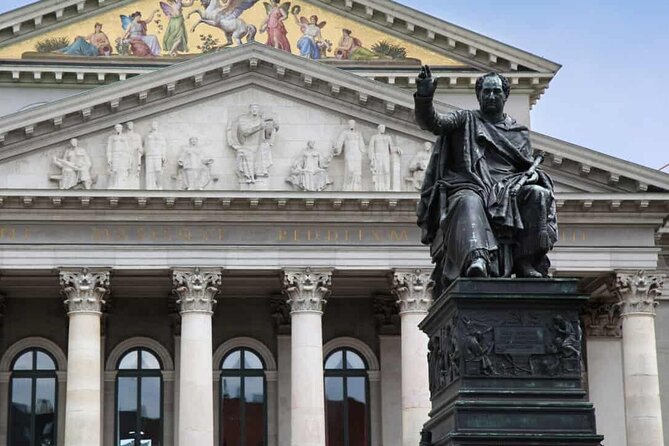
The Englischer Garten is one of the world’s largest urban public parks, covering about 3.7 square kilometers. Its name comes from the informal English garden style popular in the 18th and early 19th centuries. The park gives the tour room to breathe after the city’s museums, monuments, and traffic.
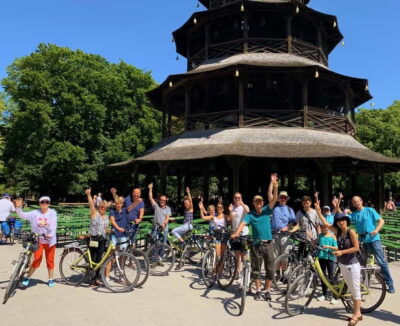
The main pause comes at Biergarten am Chinesischen Turm. With about 7,000 seats, it is one of Munich’s best-known beer gardens and serves Hofbräu beer. The stop lasts around 40 minutes, making it the longest break of the day.
Food and drinks are not included, so bring money if you want to make the most of it. This is not a formal tasting, and you choose what to buy. I like that arrangement because it lets you decide how much to spend, though the advertised price of $71.90 does not cover this part of the experience.
The beer garden is also where the tour feels most distinctly Bavarian. Shared tables, outdoor seating, local beer, and a relaxed meal offer a more grounded experience than simply photographing another palace facade. One guide even received praise for making lunch a strong part of the outing and for offering useful restaurant suggestions.
Eisbachwelle, the Isar, and Munich’s eastern side
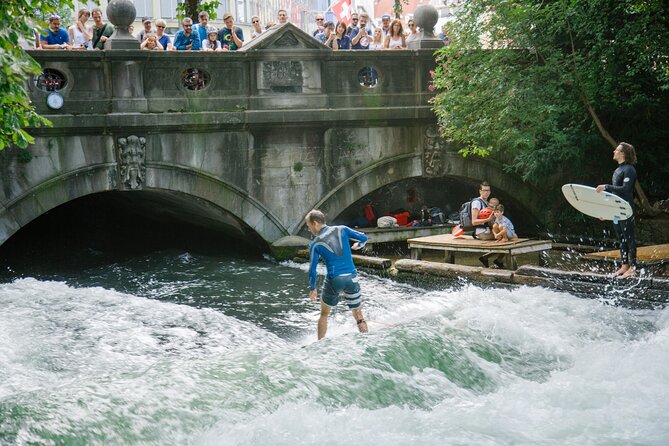
After the beer garden, the route reaches Eisbachwelle near the Haus der Kunst. Here, the river forms a standing wave about one meter high, drawing experienced river surfers. The water is cold and shallow, sometimes only about 40 centimeters deep, so this is a viewing stop, not an invitation to try the sport.
The Friedensengel, or Angel of Peace, gives you one of the route’s best monument views. The column rises 38 meters, with a six-meter statue above it, and the site includes a fountain and observation deck beside the Isar. The monument forms the eastern end of the sightline along Prinzregentenstrasse.
Nearby, the Maximilianeum is a palatial building created as a foundation for gifted students. Since 1949, it has housed the Bavarian State Parliament. These eastern-city stops show a different side of Munich, with broad avenues, river views, formal monuments, and government buildings replacing the tight museum quarter.
The Deutsches Museum comes next. It is the world’s largest museum of science and technology, with roughly 125,000 objects from 50 fields. Again, the tour only gives you a short outside orientation. If science, engineering, or transport interests you, mark this as another place to return to independently.
Viktualienmarkt and Munich’s Jewish quarter
Viktualienmarkt is the city’s famous food market, developed from a farmers’ market into a gourmet center. Its roughly 140 stalls and shops sell flowers, fruit, game, poultry, spices, cheese, fish, and juices.
A five-minute stop cannot do justice to the market’s food selection, but it can help you locate it for a later visit. I would return without a schedule if you want to browse slowly or assemble a picnic.
The final listed sight is the Ohel Jakob Synagogue on Sankt-Jakobs-Platz. Built between 2004 and 2006 as the main synagogue for Munich’s Jewish community, it was inaugurated on November 9, 2006, the 68th anniversary of Kristallnacht.
That date gives the stop real weight. The tour’s historical range is one of its best features: you move from Bavarian monarchy and military monuments to Nazi persecution, Jewish life, postwar remembrance, and modern civic Munich. The synagogue is not just another building on a route. It helps connect the city’s past with its present.
How the electric bike changes the experience
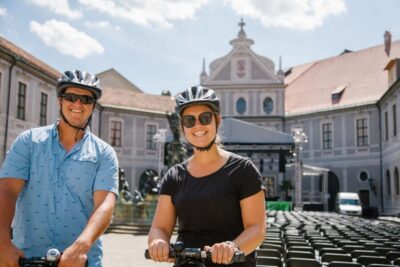
The electric bike and helmet are included, though the group may contain people on standard bicycles. The supplied experience information also notes that the e-bike can be an upgrade. Confirm exactly what your booking includes if the electric assist is important to you.
You may not need much help on the hills because central Munich is fairly flat. Several descriptions of the ride call the pace easy, with frequent stops and a manageable distance. Still, the motor can make the day more comfortable, especially if you want to save energy for museums, evening plans, or a long walk afterward.
This is not a pure cycling workout. You ride between sights, stop often, listen to the guide, and sometimes walk around the site. One account specifically cautions that the experience includes a fair amount of walking, so the e-bike does not remove every physical demand.
Weather matters. The ride has been enjoyable in rain and cold, but wet conditions are less pleasant on a bicycle. A guide named Rob was praised for helping the group stay warm in cold weather, while Mark received similar praise despite leading through rain. The tour can still work in poor weather, but a dry day will make the parks and beer garden more enjoyable.
Guide quality, group size, and value at $71.90
At $71.90 per person, the price is reasonable if you value a clear route, bike equipment, and four hours of live commentary. You are paying for access to many parts of Munich in one outing, not for museum admission or a meal. Food and drinks at the beer garden are extra.
The strongest part of the experience is the guide. Canaan is repeatedly praised for being friendly, funny, careful with the group, and generous with restaurant and activity suggestions. Susanna is described as warm, well organized, and good at balancing history with local detail. Karl receives praise for answering questions and making the city feel familiar.
Mark, Rob, and Dan also receive strong marks for historical explanations, safety, pacing, and practical recommendations. Dan was especially good at reading the group and suggesting places to eat. These details matter because a route with 19 stops could easily feel like a rushed checklist. A good guide turns it into a connected story.
The tradeoff is the maximum group size of 20. One account found the group too large for one guide to oversee comfortably on city roads. If you prefer very personal attention or quiet museum discussion, a smaller group would be better. If you want a broad first look at Munich and can accept some crowd management, the value is strong.
Free cancellation is available up to 24 hours before the start time. If the operator cancels because the minimum number of participants is not reached, you are offered another date or experience, or a full refund. Because one cancellation caused serious disruption for a participant, I would check for any same-day updates before leaving for the meeting point.
Who should book this Munich ride?
I would choose this tour for a first visit, especially if you want to understand how Munich’s major districts fit together. It suits history fans, architecture lovers, beer enthusiasts, families with teenagers, and anyone who wants a useful list of places to revisit.
It is also a good choice if you like a structured day. You do not need to plot a route across Maxvorstadt, the old royal center, the English Garden, the Isar, and the market. The guide handles the sequence while you focus on the city.
I would hesitate if you dislike riding in a group, need a slow indoor sightseeing pace, or want detailed time inside museums and palaces. You should also think twice if walking is difficult, since the day includes stops on foot as well as cycling.
FAQ
How long is the Best of Munich Electric Bike Tour?
The tour lasts approximately four hours. Some descriptions place the actual outing closer to three and a half hours, so allow a little flexibility in your schedule.
What is included in the price?
A live English-speaking guide, an electric bicycle, and a helmet are included. Food and drinks are not included.
Where does the tour begin and end?
It begins at Karlsplatz 4, 80335 München, Germany, and ends back at the same meeting point.
Is the tour offered in English?
Yes. The experience is offered in English and includes a live guide.
Can people using standard bicycles join the group?
Yes. The group may include people riding standard bicycles, and the electric bike may be an upgrade. Confirm your exact bike option when booking.
What happens if I need to cancel?
You can cancel for a full refund up to 24 hours before the experience starts. Cancellations or changes made less than 24 hours before the start time are not accepted for a refund. If the tour is canceled because the minimum number of participants is not met, you are offered another date or experience, or a full refund.
Should you book it?
Book it if you want a lively first look at Munich, useful historical context, and a chance to cover far more ground than walking allows. The beer garden break, English Garden ride, and Eisbachwelle add local flavor, while the royal and Nazi-era stops give the day real substance.
Skip it if your priority is long museum visits, a tiny group, or a quiet private guide. For most visitors, though, the route offers solid value at $71.90, especially when Canaan, Susanna, Karl, Mark, Rob, or Dan is leading. You will finish with a clearer map of Munich and a much better idea of where to spend the rest of your trip.
Newly added rides around Munich
- Munich: Street Art Bike Tour★ 4.6 · 66 reviews
- Munich: Mini Classic Bike Tour with Beer Garden Stop at 4 PM★ 4.8 · 28 reviews
- Best of Munich Electric Bike Tour★ 4.7 · 23 reviews
- Munich: Neuschwanstein Castle by Bus with Alpine Bike Ride★ 4.9 · 217 reviews
- Munich City Bike Tour + Beer Garden Lunch Stop★ 5.0 · 283 reviews
- Munich: Bike Tour with Beer Garden Break★ 4.9 · 391 reviews
- Munich by Bike: Half-Day Tour with Local Guide★ 4.7 · 417 reviews
- Munich Essentials Bike Tour★ 4.9 · 401 reviews
Munich Bike Tours, compared.
Classic Mike’s Bike Tour daily @ 11.30 incl Beer Garden & Surfers
Read our review →
Neuschwanstein Castle by Bus Incl. Bike Ride or Hohenschwangau
Read our review →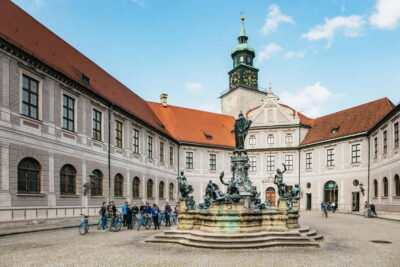
Browse the lists this tour appears in