
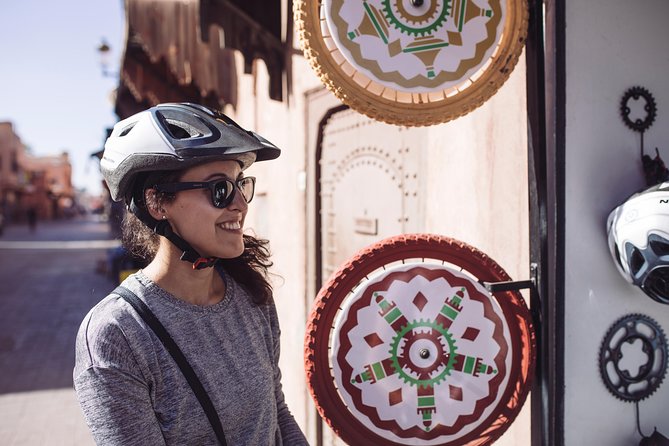
REVIEW · MARRAKECH BIKE TOURS
Marrakech’s Best Cycling Tour: Culture, Colors, and Charm
Marrakech reveals itself quickly on two wheels. This three-hour ride links Gueliz and the Medina, giving you a useful first look at the city’s modern streets, old lanes, major landmarks, and everyday life.
I like the way the tour moves beyond postcard sights, with stops around the Koutoubia Mosque, spice souk, and Mellah Jewish quarter. I also like the small-group safety plan, with one guide for every eight cyclists. The main caution is traffic: riding through the Medina calls for confidence, alertness, and comfort with tight turns, pedestrians, scooters, donkeys, and cars.
Key points to know before you book
- You see old and new Marrakech in one ride: The route connects Gueliz with the historic Medina and Mellah.
- The guide-to-cyclist ratio is reassuring: One guide is assigned for every eight cyclists, with extra support used when needed.
- The Medina is the thrilling part: You may ride among people, bicycles, scooters, tuk-tuks, donkeys, and delivery traffic.
- The tour covers a lot of ground: The ride can reach about 20 kilometers, so it works best as a city orientation rather than a slow, detailed monument tour.
- Your basics are supplied: A bicycle, helmet, bottled water, and tea or orange juice during a break are included.
- The timing can affect comfort: Evening rides offer reflective vests, while hot daytime conditions make water and sun protection especially important.
Why cycling works so well in Marrakech
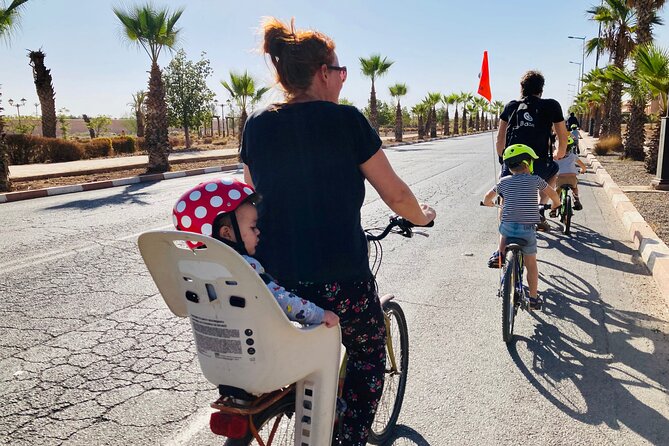
Marrakech is not a city that reveals itself best from a single viewpoint. The old quarter is too tangled for a standard vehicle tour, while the newer districts can feel disconnected from the famous red walls and souks. A bicycle helps bridge that gap.
In roughly three hours, you move from the broad streets of Gueliz to the tighter lanes of the Medina. That change is the heart of the experience. One minute, you are seeing the newer face of Marrakech. Soon after, you are negotiating old streets where people carry bread, shopkeepers arrange goods, and local traffic squeezes through spaces that seem too narrow for wheels.
I see this as a first-day tour, not a full cultural course. It helps you understand where the main parts of Marrakech sit and gives you reference points for the rest of your stay. Afterward, walking through the souks or finding your way back toward Koutoubia should feel less confusing.
The tradeoff is pace. The route is designed to cover ground, and the ride may run close to 20 kilometers. You will stop to hear about places and local life, but this is not a tour where you spend half an hour inside every landmark.
A few more rides around the world worth a look
- Lion City Bike Tour of Singapore
★ 5.0 · 6,211 reviews - Big Bike tour Amsterdam – See all in 3 unforgettable hours
★ 4.7 · 4,929 reviews - 3-Hour Porto Highlights on a Electric Bike Guided Tour
★ 5.0 · 4,392 reviews
Starting at Marrakech Green Wheels
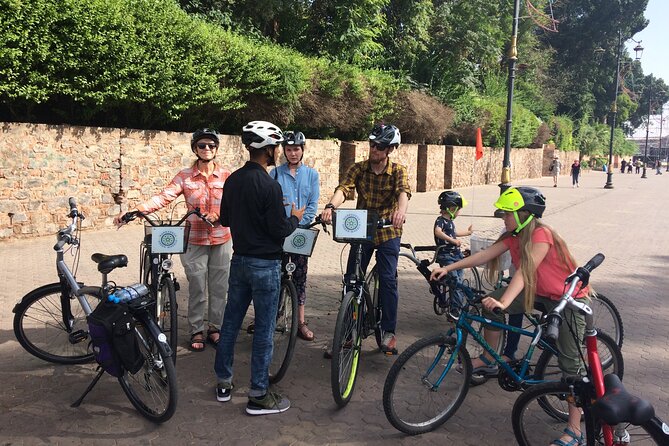
The tour begins at Marrakech Green Wheels, at 240 Tariq Makhzen in Marrakech. You finish at the same meeting point, which makes the start and end simple to manage.
Bikes and helmets are included. Bottled water is also provided, followed by tea or orange juice during a break. Suncream is not included, so you should bring your own. That is an especially useful tip for daytime departures, when the combination of sun, pale city walls, and steady pedaling can catch you out.
Groups of five or more can request free pick-up. The supplied information does not list a general hotel transfer for smaller parties, so do not assume transport is included unless it is confirmed when you book.
The group limit is 50 people, but the safety plan calls for one guide per eight cyclists. In a large departure, that should mean several guides rather than one person trying to control a long line. Smaller groups may feel more personal, and some departures can be very small, even down to one or two participants.
Gueliz: Marrakech’s newer face
The ride includes Gueliz, the newer part of Marrakech. This section gives you a useful contrast with the Medina. Streets are generally broader, the city feels more open, and modern Marrakech comes into view alongside the old red-walled core.
The guides use this contrast to explain how Morocco balances tradition and modern life. That human angle is one of the stronger parts of the tour. Guides talk about growing up in Marrakech, family and social relationships, and the way daily life connects old customs with newer habits.
This is also where you begin to learn how the city is arranged. A traditional walking tour might focus tightly on monuments, while the bicycle route shows the relationship between districts. You get a sense of how far the newer quarters are from the old center and how the city changes from one neighborhood to another.
Do not expect a long architectural lecture at every stop. The tour is more conversational and practical. You may hear about a building, pause for a landmark, then continue through streets that show ordinary city life.
Koutoubia Mosque and the famous city center
Koutoubia Mosque is one of the key landmarks along the route. Its minaret is among Marrakech’s best-known visual markers, and it helps you orient yourself around the old city.
The tour does not include monument entry fees, so think of Koutoubia as an exterior sight on this cycling experience. The value here is seeing how the mosque relates to the surrounding streets and central areas, not spending extended time inside a religious site.
A bicycle also gives you a practical advantage near the center. You can cover the distance between major areas faster than on foot, but you are still moving slowly enough to notice changing street scenes. That balance makes the mosque more than a quick photo stop.
Your guide may pause to explain the site or nearby buildings. Guides including Amina, Amena, Sofiane, Hanan, and Soufian have been praised for keeping the ride friendly, clear, and attentive. Names and team members can change, but the tour’s strongest quality is the local guide’s ability to connect landmarks with personal knowledge of Marrakech.
Same handlebars, a completely different route:
- Small Group Guided Bike Tour of Amsterdam’s Hidden Gems
★ 5.0 · 3,936 reviews - 3-hour Complete Prague Bike Tour
★ 5.0 · 3,674 reviews - Bangkok: Temples, Canals & Local Life Bike Tour
★ 4.9 · 3,511 reviews - Lisbon: Hills, Alfama, and Mouraria Tour by Electric Bike
★ 4.8 · 3,438 reviews
The Medina and spice souk
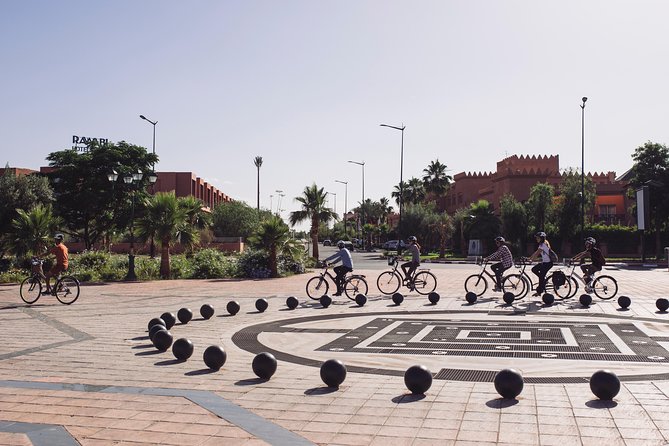
The Medina is where this tour becomes a real cycling challenge. The lanes can be tight, and you may share them with pedestrians, scooters, tuk-tuks, donkeys, cars, and other cyclists. It is exciting, but it is not a place to switch off.
You need to be a confident cyclist. Tight turns and sudden movement are part of the setting, and one account described a collision with a car in the newer town. That is not a reason to reject the tour, but it is a reason to take the safety warning seriously.
Guides work to choose safer routes and manage the group. One guide can lead while another watches the rear, especially when children or less experienced riders are present. Guides have also been praised for checking that nobody falls behind and for finding extra water when needed.
The spice souk adds color and scent to the route, though you should keep your expectations realistic. You are passing through a working market area, not taking a dedicated shopping tour. The cycling format lets you see how the souk connects with the wider Medina, but stopping time may be limited.
This is also the section where you see the city at close range. You might pass a bakery, artisans, or local shops that you could easily miss from a vehicle. One memorable touch has been a stop for bread at a local bakery. It is a small moment, but it gives the outing a more local feel than a simple landmark checklist.
Mellah and Marrakech’s layered past
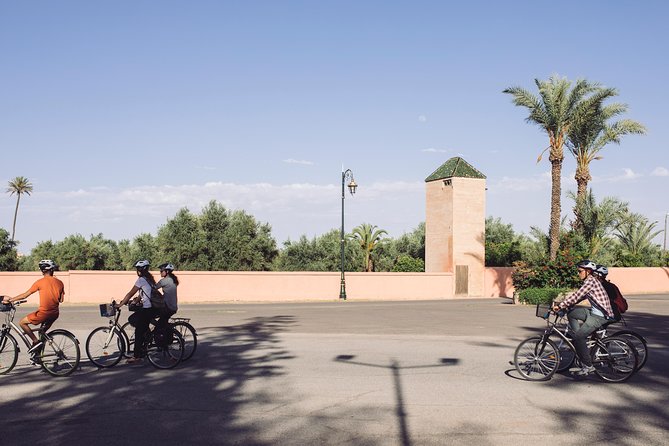
The Mellah Jewish quarter adds another part of Marrakech’s story. Its inclusion makes the route more than a tour of the best-known attractions. You get a look at a historic district and a reminder that the city’s identity has been shaped by different communities over time.
The visit is still part of a moving route, so do not expect the depth of a specialist heritage walk. You will gain an introduction and a sense of place, then continue through the city. If you want detailed synagogue history or extended time inside historic buildings, plan a separate visit.
That limitation is also part of the tour’s purpose. The bicycle outing gives you a broad city map in a short time. It shows how Gueliz, the Medina, central landmarks, markets, and Mellah fit together. Later, you can choose which areas deserve a slower return.
Local stories, artisans, and the tea break
The best part of the experience may be the space between official sights. Guides share stories about Moroccan life, relationships, work, and the pressures of modern change. These conversations give the ride a human scale.
Some groups visit artisans along the way. The exact stops can vary, but the idea is useful: you see people making and selling things rather than only looking at old walls. The route can also include local details such as a bakery visit, which helps you notice the everyday economy of the city.
A break includes Moroccan tea or orange juice. In the heat, this is practical as well as pleasant. It gives you time to drink, listen, and catch up with the group before getting back on the bike.
The quality of this part depends on the guide and group size. A smaller outing can leave more room for questions. In a larger group, you may need to stay close to hear everything. One participant found it difficult to hear a guide at times, so position yourself near the guide whenever possible.
Safety, heat, and the actual effort
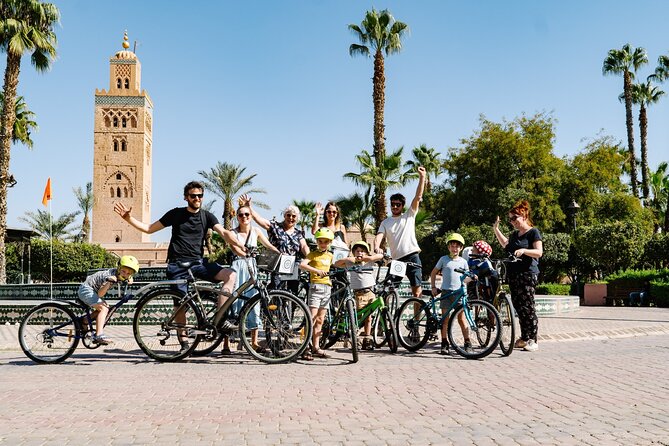
The tour is advertised at about three hours, and the cycling can be substantial. The operator has described a route of about 20 kilometers over roughly two and a half hours of riding. That is not an extreme workout for a regular cyclist, but it is more than a casual spin around one square.
Marrakech heat changes the difficulty. Bring suncream, drink water before you start, and use the supplied bottle wisely. If you are choosing between departure times, an evening tour may be more comfortable. Reflective vests are available for evening rides.
The main skill you need is traffic awareness. You should be comfortable braking, turning, stopping quickly, and holding your line around other road users. If you rarely cycle or feel nervous around traffic, a walking tour may suit you better.
The guide ratio is a real benefit. One guide for every eight cyclists offers better control than a single leader at the front of a large group. Still, no guide can remove the need for attention. Keep your eyes ahead, follow instructions, and do not assume that other road users will behave predictably.
Price and value at $32.75
At $32.75 per person, this is a reasonable price for a three-hour guided city ride with a bicycle, helmet, bottled water, and a drink break. You are paying for access to a local guide and a practical route through several different parts of Marrakech, not just for bicycle rental.
The value is strongest if you take the tour early in your stay. You get a working map of the city and can return later to the Medina, Mellah, Gueliz, or other areas on foot. The tour can also help you decide which landmarks deserve entry fees on another day, since those fees are not included here.
The price is less attractive if you want a slow cultural tour with long explanations at each stop. In that case, the distance and moving pace may feel rushed. You are buying range and orientation rather than exhaustive detail.
Group discounts may improve the value for larger parties. Groups of five or more can also request free pick-up, which may save both time and taxi cost, depending on where you are staying.
Who should book this ride?
I would choose this tour for confident cyclists who want a quick, useful introduction to Marrakech. It suits couples, families with capable young riders, and small groups that want to see both the new city and the old quarter without spending the entire day on foot.
It is especially useful if you like local conversation, changing scenery, and the small surprises of city riding. The guides are praised for warmth, humor, and personal attention. Names such as Amina, Ameena, Abdul, Sofiane, Sofia, Soufian, and Hanan appear among the guide teams, and the strongest feedback consistently points to friendly staff who take safety seriously.
I would hesitate if you dislike traffic or have little cycling experience. I would also choose a walking or traditional cultural tour if your main goal is detailed history. This ride gives you a broad introduction, not a scholarly examination of every district.
Free cancellation is available up to 24 hours before the start time. Changes or cancellations inside that window are not accepted for a refund. The experience depends on good weather and a minimum number of participants, so poor conditions or low enrollment can lead to a new date, another experience, or a full refund.
Should you book Marrakech’s Best Cycling Tour?
Book it if you want to get your bearings fast, enjoy riding in busy city streets, and prefer local stories to a polished bus tour. The combination of Gueliz, Koutoubia, the spice souk, Medina, and Mellah gives you a useful first portrait of Marrakech.
Skip it if traffic makes you anxious, or if you want long, quiet visits inside monuments. For the right cyclist, this is an energetic and good-value way to see how old and new Marrakech connect. Bring water, sun protection, sensible expectations, and enough confidence to share the road.
FAQ
How long does the cycling tour last?
The tour lasts approximately three hours. The operator has also described the ride as covering about 20 kilometers over roughly two and a half hours of cycling.
What is included in the price?
The price includes a bicycle, helmet, tour leader, bottled water, and tea or orange juice during a break.
Are monument and garden entry fees included?
No. Entry fees to monuments and gardens are not included.
Where does the tour start and finish?
The tour starts at Marrakech Green Wheels, 240 Tariq Makhzen, Marrakech 40000, Morocco. It ends back at the same meeting point.
Is hotel pick-up available?
Free pick-up is available for groups of five or more. The supplied tour information does not state that general pick-up is included for smaller groups.
Can I cancel for a full refund?
Yes. You can cancel at least 24 hours before the experience start time for a full refund. Cancellations or changes made less than 24 hours in advance are not refunded.
Newly added rides around the world
- Pikes Peak Summit Downhill Bike Tour★ 5.0 · 51 reviews
- Garden of the Gods Original Electric e-Bike Tour★ 5.0 · 45 reviews
- Garden of the Gods Highlights and Gems Guided E-Bike eBike Tour★ 5.0 · 117 reviews
- Gold Camp Road by E-Bike★ 5.0 · 21 reviews
- Ebike Tour: Garden of the Gods★ 5.0 · 65 reviews
- Ebike 2 Hour Rental Experience in Manitou Springs, Colorado★ 5.0 · 33 reviews
- EBIKE Mountain Adventure in Colorado Springs: Gold Camp Road★ 5.0 · 16 reviews
- 3-Hour Cologne Street Art Bike Tour in Small Group with Guide★ 4.5 · 20 reviews
Marrakech Bike Tours, compared.
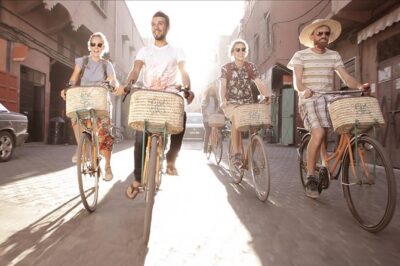
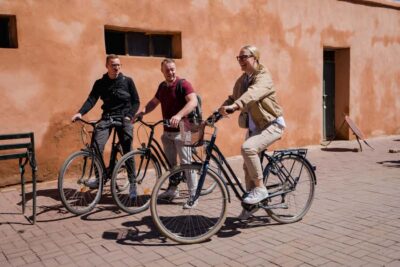
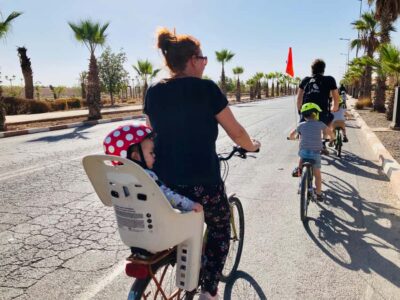
Guided City Cycling Tour – Culture, Colors & Charm
Read our review →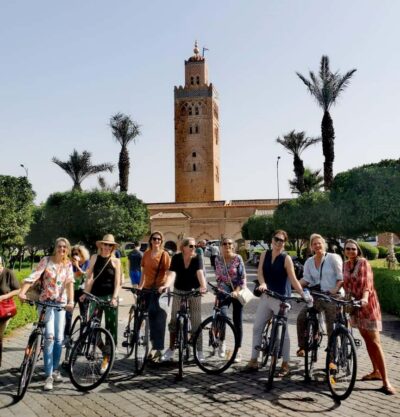
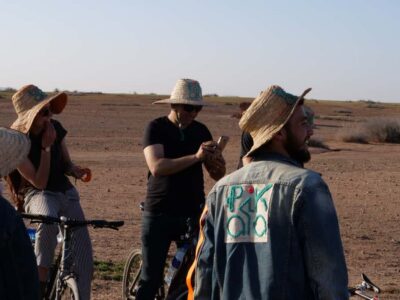
Cycling Tour in Palm Groove with Local Breakfast
Read our review →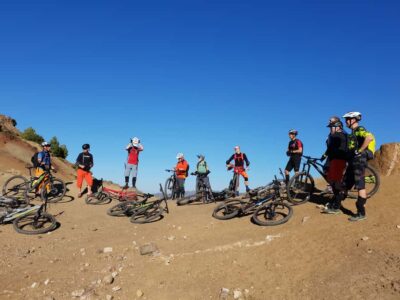
Marrakesh: Toubkal National Park Mountain Bike Trip w/Lunch
Read our review →
Browse the lists this tour appears in