
REVIEW · SEVILLE BIKE TOURS
Seville: Historic Center Bike Tour
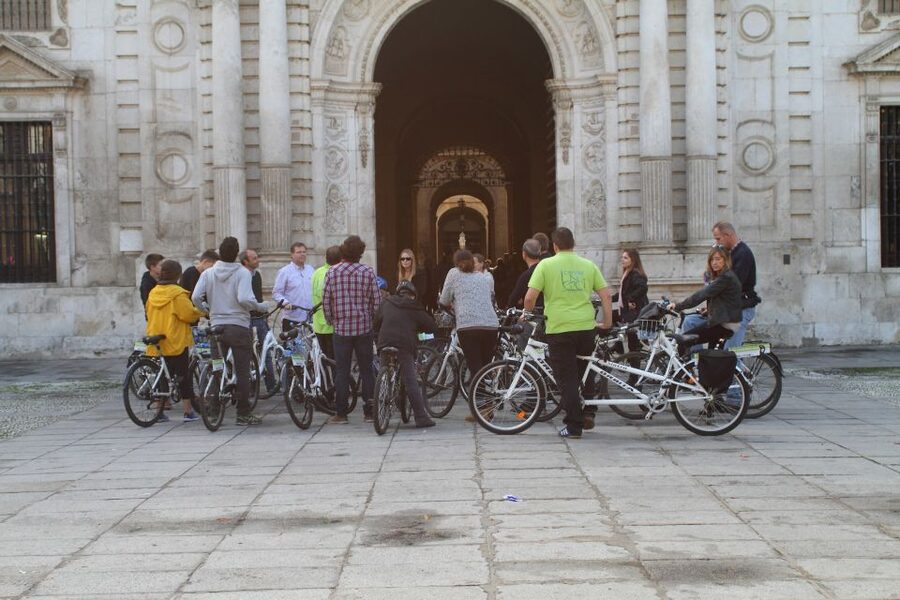
Seville’s old defenses make a smart cycling route. This 2.5-hour tour traces the city’s former walls, historic gates, and major architectural sights while a guide explains how Seville grew from Roman beginnings into one of Spain’s most important cities. I like the way the route links visible remains with larger events, including the Almoravid period, the riots of 1868, and the Glorious Revolution.
I also like the reasonable $35 price, which includes the bike, a water bottle, and a map. The guides receive especially strong praise for their care and language skills. Luca is fluent in French, Italian, and Spanish, while Daniel and Sébastien are also singled out for warm, capable guiding. The main consideration is the bike condition: one participant found the bicycles somewhat worn, though not unusable.
Key points at a glance
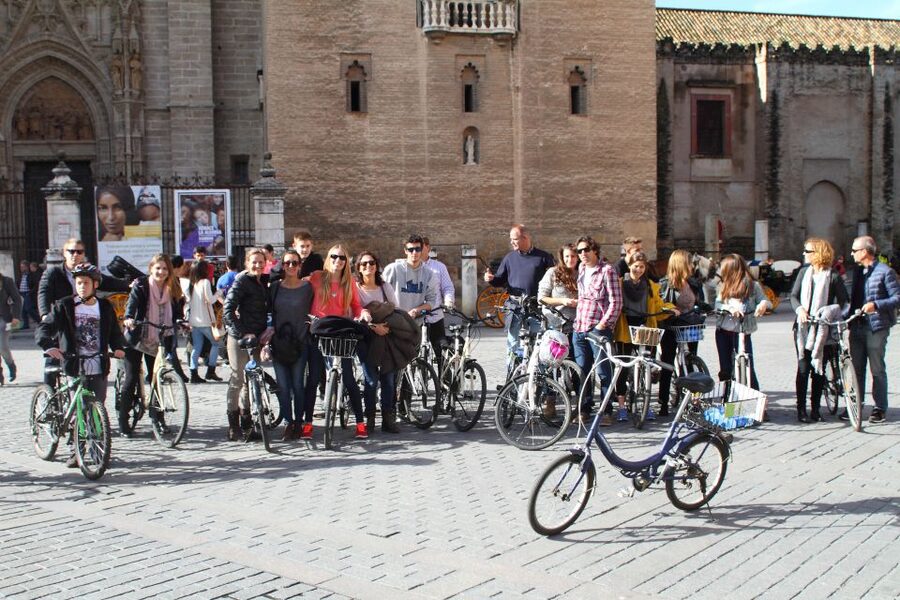
- A route built around Seville’s old defensive line: Cycle beside surviving sections of the walls and connect them with former gates.
- A history lesson with real places attached: The guide links Roman, Carthaginian, Tartessian, Almoravid, and 19th-century Seville to what you see on the street.
- Three memorable gates: Puerta Carmona, Puerta Osario, and Puerta Triana each bring different stories about movement, trade, carriages, and city life.
- Strong multilingual guiding: Tours are offered in Spanish, English, and French, with especially warm praise for guides such as Luca, Daniel, and Sébastien.
- Good value for a short introduction: At $35, you get a bike, guide, water bottle, and map during a focused 2.5-hour ride.
- Best for active sightseers: You need to be comfortable cycling, and the tour is not suitable for people with mobility impairments.
Why Seville’s walls make a useful first ride
Many city tours jump from cathedral to palace without explaining how the city was organized. This one uses Seville’s old defensive route as its spine. That gives you a clear way to understand the historic center instead of collecting disconnected facts.
Seville was not simply a Roman settlement that became a modern Spanish city overnight. The area was associated with the Tartessians and Carthaginians before Roman rule, and later cultures reshaped its streets, defenses, and monuments. A guide can turn those broad periods into a story you can follow as you pedal from one surviving structure to the next.
The Almoravid period is especially important to this route. Seville became known as one of Europe’s best-walled cities, and sections of that defense still help explain the city’s old limits. You will not see a complete medieval wall circling the center. Instead, you encounter fragments, gates, and traces that make more sense when placed on the former defensive line.
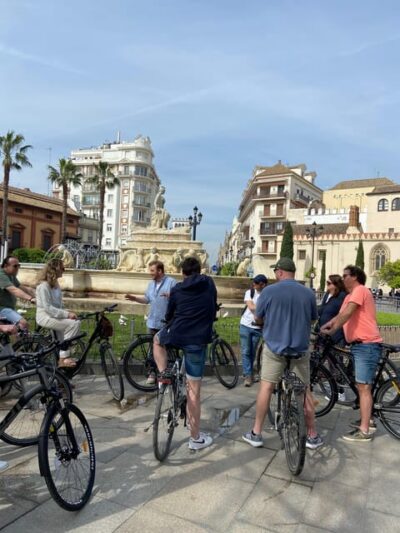
I like this approach because a bicycle lets you cover more ground than walking while still moving slowly enough to notice details. You are not being rushed between distant sights in a vehicle. You are following the shape of the old city, with the guide providing the historical links.
More Historic Bike Tours in Seville:
- Historical Singapore Bike Tour on Full-Sized Bicycles
★ 5.0 · 1,421 reviews - Barcelona: 2.5-Hour Bike or E-Bike Historical Tour
★ 4.5 · 1,262 reviews - Asheville Historic Downtown Guided Electric Bike Tour with Scenic Views
★ 5.0 · 1,234 reviews
Starting at Centerbici on C/ Espronceda
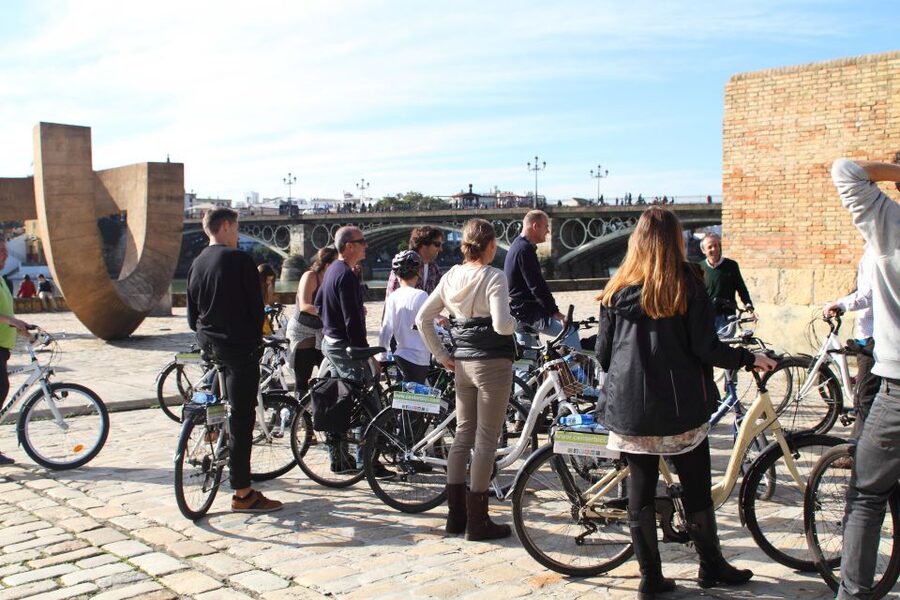
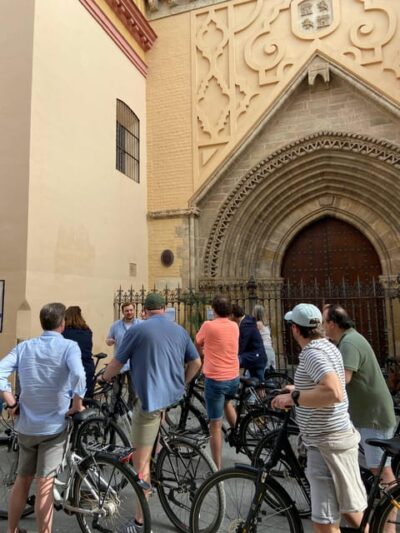
The meeting point is Centerbici Store at C/ Espronceda, 5, in Seville’s 41004 district. You meet the guide there, collect your bike, and begin the ride through the historic center.
The activity includes the bike rental, a water bottle, and a map. A helmet rental is listed for children, so families should clarify helmet arrangements for adults before setting out if that matters to them. The tour is guided live in Spanish, English, or French, depending on the selected language and guide.
The ride lasts 2.5 hours. That is long enough for a useful orientation without taking up an entire day. I would place it early in a Seville visit if possible, since the route can help you understand where the old gates and defensive edges fit before you return to explore individual monuments on foot.
The activity also lists skip-the-ticket-line access. Since the tour is primarily a cycling and city-history experience rather than an indoor monument visit, do not book it expecting a long palace or museum entrance. Its value is in the guided route and the outdoor sights.
From Roman origins to the Almoravid walls
The opening history gives the ride useful scale. You hear how Tartessians, Carthaginians, and Romans settled or shaped the area, then how Seville developed into a major city in Spain.
That sequence matters because Seville’s appearance can otherwise seem like a jumble of periods. Roman foundations, Islamic defenses, later Christian structures, and 19th-century political change all overlap. The guide’s job is to show how the city changed hands and grew without reducing the story to a list of dates.
The Almoravid chapter gives the tour its strongest physical theme. Under Almoravid rule, Seville’s defenses became extensive enough to earn a reputation as one of Europe’s best-walled cities. As you cycle along remaining sections, you get a sense of how gates controlled access and how the wall separated the protected city from the surrounding area.
Only parts of the old system remain, so expectations matter. You will not be cycling beside a perfectly preserved medieval fortification for the entire 2.5 hours. The experience works best when you treat the walls as clues. A fragment here, a gate there, and a changed street pattern together reveal the former city.
Macarena, Puerta de Córdoba, and the surviving defenses
The route includes sections of the walls near Macarena, Puerta de Córdoba, and the Alcázar. These are not just scenic pauses. They help show the different roles played by fortifications, gates, and royal architecture.
Macarena is associated with one of the better-known surviving areas of Seville’s defensive system. The remaining wall sections give you a physical look at the city’s former perimeter. At Puerta de Córdoba, the gate itself helps explain how people entered and left the fortified center.
The Alcázar adds another layer. Its buildings reflect the long political and architectural development of Seville, and viewing it as part of the old defensive route gives the palace a wider setting. You are not simply looking at a grand building in isolation. You are considering how royal power, defense, and urban growth occupied the same city.
The 1868 riots are also part of the story. Those disturbances and the Glorious Revolution changed Spain’s political direction, and some parts of Seville’s walls and gates were lost or altered during the upheaval. That detail gives the route a useful reminder: historic buildings are not always preserved by accident. Politics, redevelopment, and public unrest can erase parts of a city just as quickly as war can.
More History Tours in Seville:
- Historic Athens: Small Group Electric Bike Tour
★ 4.9 · 966 reviews - Bordeaux: Historic Center & Chartrons District Bike Tour
★ 4.8 · 709 reviews - Intramuros, Manila: Historical Bamboo Bike Tour
★ 4.8 · 583 reviews - Historic Bike Tour in Tucson
★ 5.0 · 553 reviews
Puerta Carmona and the stories of the gates
Puerta Carmona is one of the stops where the city’s traffic becomes part of the history. Gates were practical choke points. Carriages were stopped, watched, and controlled as they entered or exited Seville.
That makes the gate stories more useful than a simple architectural description. You begin to picture the city as a place where goods, officials, visitors, and residents passed through selected openings rather than moving freely through today’s open street network.
The tour also visits Puerta Osario. Its name and history connect with the old defensive edge, and the stop adds another example of how Seville’s gates carried memories that went beyond their stonework. The guide may explain the mysteries and stories attached to these places, linking local legends with the hard facts of urban control.
Puerta Triana completes the gate-focused portion of the route. This was a key approach toward the Triana area, and it helps show how Seville’s historic center related to neighborhoods beyond the immediate walls.
I like the gate stops because they keep the tour grounded. Political history can feel remote when you hear it in a classroom. At a city gate, ideas about authority, commerce, security, and rebellion become easier to picture. You can see why certain entrances mattered and why their loss changed the way Seville functioned.
Architecture beyond one single style
The route promises a look at Seville’s varied architecture rather than one narrow period. That variety is one of the ride’s strengths. Roman beginnings, Islamic defensive works, later Christian construction, royal buildings, and 19th-century changes all leave different marks.
A bicycle is well suited to this kind of comparison. You can move from a surviving wall section to a gate, then toward the Alcázar and other historic structures without spending the whole time walking between them. The guide can point out how buildings belong to different periods and how the city kept adapting around older structures.
You should not expect an interior architecture tour. The information provided centers on cycling through the historic center and viewing important gates, walls, and structures from the route. If you want detailed access inside the Alcázar or another monument, you will need a separate visit.
Still, the outdoor format has a practical advantage. You see how architecture sits within the city rather than only how it looks room by room. Streets, entrances, walls, and routes all become part of the picture.
The guides are a major part of the value
The strongest praise goes to the guides, and that matters because a history-focused ride depends heavily on clear explanation. Luca receives especially warm approval for his cultural knowledge, attention to comfort, and command of French, Italian, Spanish, and likely English. That combination is useful if your group has mixed language needs.
Daniel is described as an excellent guide, and Sébastien is also praised highly. One French-speaking participant found the guide so helpful in English that he used a phone translation tool when needed. That is a small but telling detail: language support may be flexible, but the exact experience can depend on who leads your departure.
The listed tour languages are Spanish, English, and French. If you specifically need French, confirm the language at booking rather than assuming every departure will be led in French. One participant had hoped for French but still found the English explanations manageable because the guide made an effort to help.
The best guides on this kind of outing do more than recite dates. They explain why a gate mattered, how a wall shaped the city, and what changed after 1868. The praise for personal attention suggests that this tour may feel more tailored than a rigid audio-style route, though the available information does not specify group size.
Bikes, comfort, and the physical side of the tour
This is an active sightseeing experience. You ride for 2.5 hours through Seville’s historic center, so you should be comfortable cycling for that length of time. The activity is not suitable for people with mobility impairments.
The bike rental is included, along with a water bottle and map. Those simple additions are useful in Seville, where a drink and a route reference can make a short ride more comfortable. The tour does not list an electric bike option, bike specifications, or detailed safety arrangements, so ask Centerbici if you need a particular bicycle.
One participant found the bikes somewhat near the end of their working life. The same comment made clear that this was not a serious problem, but it is worth keeping in mind. At the shop, check the saddle height, brakes, and tires before leaving. If something feels wrong, say so immediately. A small adjustment can make a big difference over two and a half hours.
Families should note that helmet rental is specifically listed for children. Adults who prefer to wear helmets should ask about availability before the tour. The route is designed for people who can ride comfortably, not for visitors seeking a gentle, fully accessible sightseeing option.
Is $35 a fair price?
At $35 per person, the tour is priced sensibly for a guided half-day-style city introduction. You receive a bicycle, live guide, water bottle, and map, while covering a good stretch of the historic center in 2.5 hours.
The real value is the interpretation. Renting a bike alone would let you move around Seville, but it would not necessarily show you how the defensive walls, gates, Roman past, Almoravid period, and 1868 upheaval fit together. Paying for a guide makes the route more than transportation.
The price also compares well with the time commitment. You are not giving up a full day of sightseeing, yet you cover several distinct areas and receive a city orientation. I would consider it particularly good value if you are new to Seville or want historical context before visiting the Alcázar and other major sights on your own.
The value is lower if you dislike cycling, want long interior visits, or expect a polished modern bicycle. The single negative comment about bike condition is enough reason to inspect your bicycle carefully at the start.
Who should book this Seville ride?
I would recommend it to active adults, couples, families with cycling children, and anyone who wants an overview of Seville’s historic center without spending hours on foot. It suits people who enjoy understanding how a city developed, not just photographing its most famous buildings.
It is also a good fit for French, English, or Spanish speakers who appreciate a live guide. Luca’s language ability is a particular plus for multilingual groups, while Daniel and Sébastien also receive strong praise for their guiding.
I would skip it if you cannot ride comfortably for 2.5 hours or have mobility limitations. I would also choose a different activity if your main goal is interior access to the Alcázar, a food tasting, or a quiet walking tour focused on one neighborhood.
Cancellation is free up to 24 hours before departure, and you can reserve now and pay later. Those terms help if your Seville plans are still moving around, but the more important decision is practical: choose a day when you feel ready to cycle and when the historic center can be enjoyed at an unhurried pace.
Final verdict: a smart way to read Seville
I would book this tour for its clear route and strong guiding. The old walls and gates give the ride a purpose, while the stories of Roman Seville, Almoravid defenses, the Alcázar, and the 1868 riots keep it from becoming a simple bicycle loop.
The tour is not perfect. The bicycles may show wear, and the experience depends partly on the language and personality of your guide. Yet $35 buys a useful 2.5-hour introduction, practical equipment, and a better sense of how Seville grew behind its former defenses.
Book it if you want history attached to real streets and structures. Skip it if cycling is uncomfortable or if you need a detailed indoor monument visit. For an active first look at Seville, this is a well-priced choice.
FAQ
How long is the Seville Historic Center Bike Tour?
The tour lasts 2.5 hours.
How much does the bike tour cost?
The listed price is $35 per person.
Where does the tour meet?
You meet at Centerbici Store, C/ Espronceda, 5, 41004 Seville.
What languages are available?
The live tour guide is available in Spanish, English, and French.
Is the bicycle included?
Yes. Bike rental is included in the tour price.
What else is included?
The tour includes a water bottle and map. Helmet rental is listed for children.
Which historic places does the route visit?
The route includes sections of Seville’s old walls, Macarena, Puerta de Córdoba, the Alcázar area, Puerta Carmona, Puerta Osario, and Puerta Triana.
Is the tour suitable for people with mobility impairments?
No. The activity is not suitable for people with mobility impairments.
Can I cancel the booking?
Yes. You can cancel up to 24 hours in advance for a full refund. You can also reserve now and pay later.
Newly added rides around Seville
- Seville: Relaxing Electric Bike tour with Tour Guide★ 4.8 · 31 reviews
- Seville City Bike Tour: Top Seville’s Monuments★ 4.7 · 28 reviews
- Seville: Electric Stand-Bike Tour★ 5.0 · 18 reviews
- Seville: Electric Bike City Tour★ 4.7 · 188 reviews
- Seville: Highlights & Hidden Gems – Unique NL Bike Tour★ 4.7 · 11 reviews
- Seville: 2.5-Hour Private City Tour by Bike★ 4.8 · 45 reviews
- Sevilla: 100% Nederlandstalige Highlights Tour op E-BIKE★ 4.9 · 54 reviews
- Seville: Dutch Cycling Highlights Tour with local guide★ 4.7 · 163 reviews
Seville Bike Tours, compared.
Browse the lists this tour appears in