
REVIEW · HISTORICAL TOURS
Medellín: History & Local Life Essentials Tour on an E-Bike
Medellín reveals itself quickly on two wheels. I like this tour for its wide sweep of the city, from Ciudad del Río and the Creative District to Plaza Botero and Parques del Río, and for its warm local guides, including Dayana, Dani, Toto, and Andrés. The electric bikes make the distance manageable, while the stops give you more than a quick ride-by view.
I also like the human side of the tour. Guides explain how Medellín’s past affected local people, not just what a building looks like. The main caution is city traffic: some crossings are busy, and cycle paths can be crowded with pedestrians. One larger group found 15 riders too many, so ask about group size if that matters to you.
Key things to know before you ride
- You cover Medellín’s center and southern districts in 210 minutes, making this a useful first-day orientation.
- The route mixes art, public spaces, architecture, and local stories, rather than focusing on one neighborhood.
- Electric bikes are easy for beginners, and guides allow time to get comfortable before riding into busier streets.
- Dayana, Dani, Toto, Andrés, and other local guides receive strong praise for humor, care, and personal knowledge of Medellín.
- The tour includes a Colombian drink, helmet, rain jacket, insurance, and technical assistance, which adds practical value.
- The ride is mainly flat, so experienced cyclists may not need motor assistance, but the e-bike still helps you cover more ground with less effort.
Why an e-bike is a smart way to meet Medellín
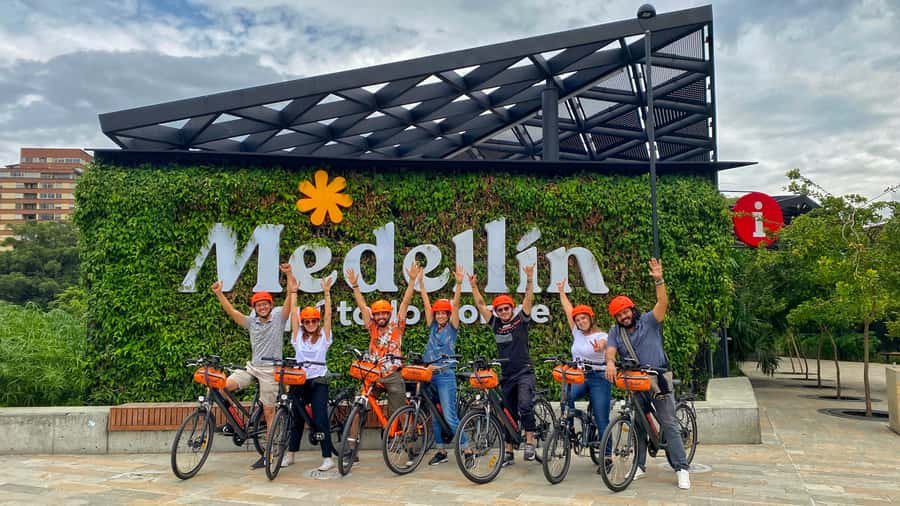
Medellín is spread through a long valley, with busy central districts, newer public spaces, and residential areas climbing the hillsides. Seeing it from a car gives you the broad outline. Walking gives you close detail. An e-bike offers a useful middle ground.
You move far enough to compare different parts of the city, but slowly enough to notice murals, statues, street life, and the changing feel of each district. I like that balance. You are not sealed behind glass, yet you are not spending the whole morning on foot.
The electric assistance is especially useful for beginners or anyone unsure about cycling in a new city. The guides explain how to use the bikes and give riders time to adjust. Several people with no previous e-bike experience found the machines easy to handle, and one first-time rider felt confident by the end.
Still, do not picture a quiet countryside ride. The route passes busy junctions and streets with pedestrians. Your guide leads the group and watches the traffic, but you need to follow instructions, keep your eyes ahead, and be comfortable riding in an urban setting.
More E-Bike Tours in the world:
- 3-Hour Porto Highlights on a Electric Bike Guided Tour
★ 5.0 · 4,392 reviews - Lisbon: Hills, Alfama, and Mouraria Tour by Electric Bike
★ 4.8 · 3,438 reviews - Athens Scenic Electric Bike Tour with optional Acropolis visit
★ 5.0 · 3,350 reviews
Starting at NOI coworking in Ciudad del Río
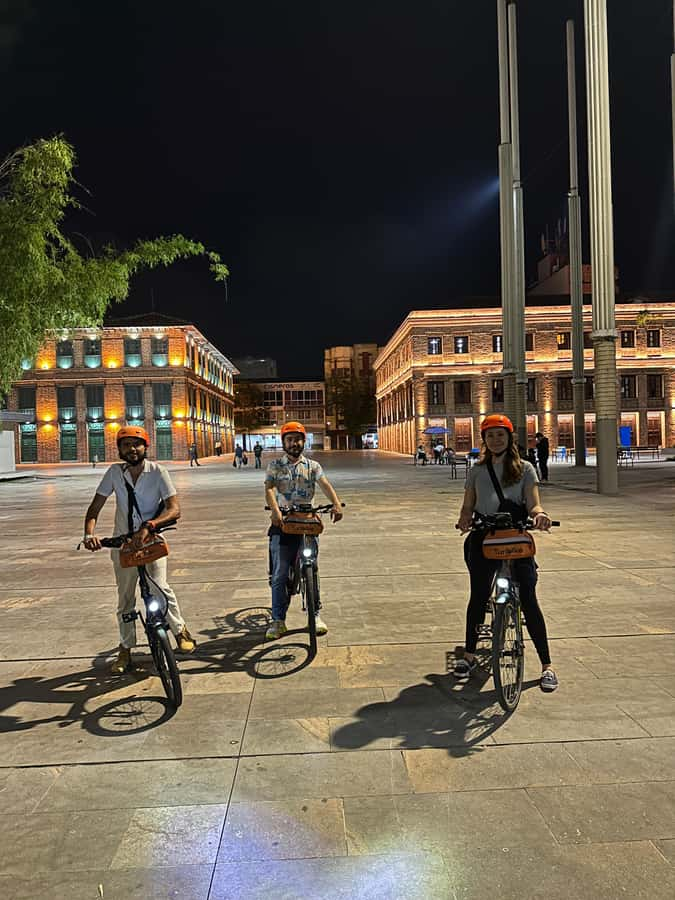
The meeting point is NOI coworking at Calle 17 # 43F-287. It is about a 10-minute walk from Poblado metro station or a 10-minute drive from Parque Lleras. Plan your arrival with enough time to check the bike, adjust the helmet, and listen to the safety instructions.
Ciudad del Río makes a fitting starting point. This modern district combines cultural spaces, public areas, and new development. It also places you close to Medellín’s southern side before the route heads toward the center.
The tour begins near the Museum of Modern Art of Medellín, known as MAMM. Its concrete, industrial look reflects the city’s mix of rough edges and modern ambition. The building is also a useful visual introduction to Medellín’s geography, where dense urban areas rise toward steep hillsides.
You may not have time for an inside visit to the museum, so think of this stop as an architectural and cultural orientation rather than a museum tour. The value is in seeing how the city uses art and public design to reshape former industrial areas.
The Creative District and Medellín’s changing identity
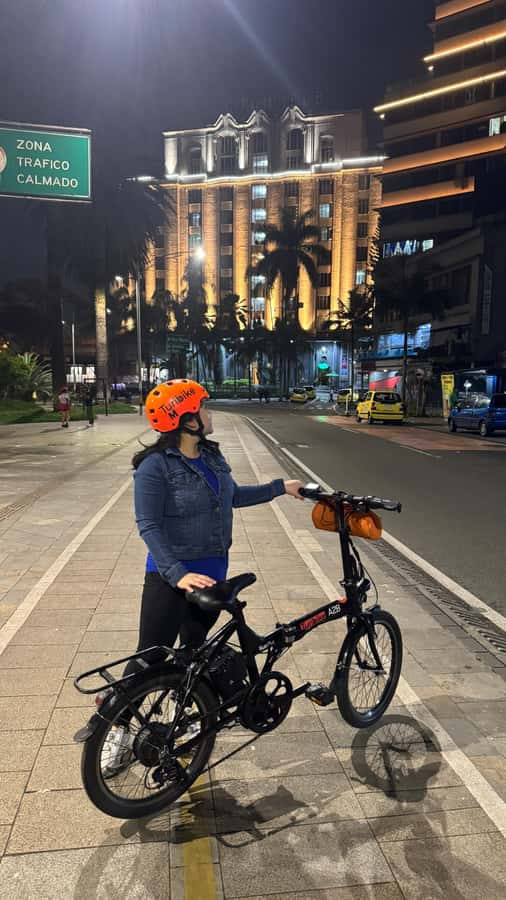
From Ciudad del Río, the ride passes through the Creative District and Perpetuo Socorro. This area represents a newer side of Medellín, with murals, studios, creative projects, and renovated spaces.
The contrast matters. Medellín is not presented only through stories of violence and hardship. You also see the city trying new ideas and building a future around design, culture, technology, and public life.
Perpetuo Socorro is a pass-by stop rather than a long visit, so keep your eyes open as you ride. You might find this portion more interesting if you enjoy urban change and street art. It is less about one famous monument and more about seeing how a district can shift in purpose and mood.
Your guide helps connect the visual details to local life. Dayana, in particular, has been praised for explaining culture, history, and the people of Medellín with real feeling. Dani is also known for mixing useful facts with humor, which keeps the ride from becoming a string of dry dates and names.
San Antonio Park and the story of Botero’s birds
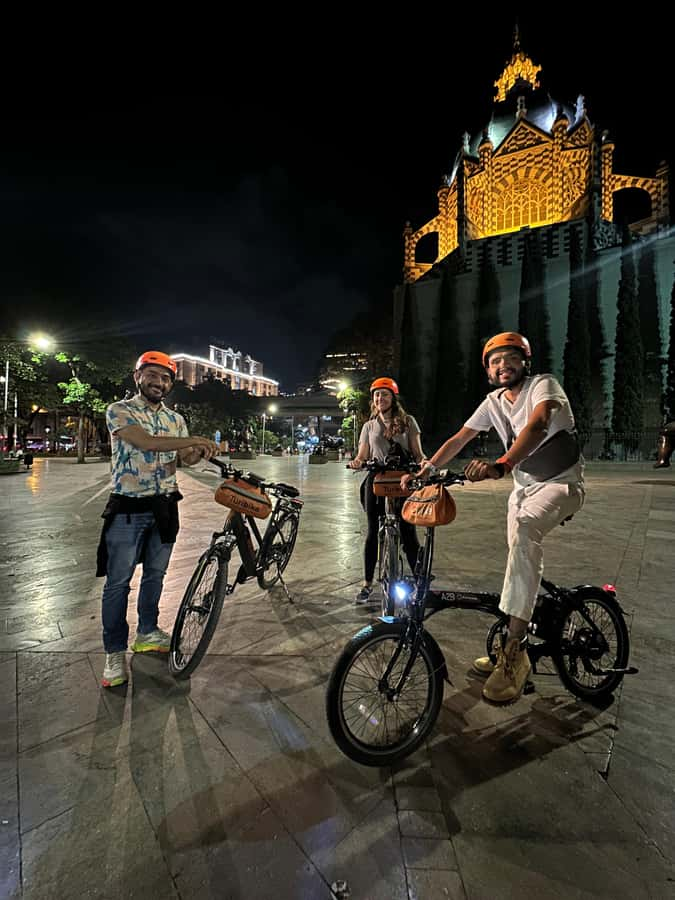
As the ride reaches San Antonio Park, the tour takes a darker and more emotional turn. Two sculptures by Medellín artist Fernando Botero are central here.
The pair tells a story of destruction and renewal. One bird was damaged by a bomb attack, while the other remains part of the public space. The sculptures are not simply pieces of oversized Colombian art. Together, they show how Medellín has chosen to remember violence while continuing to use public places for everyday life.
This is one of the strongest stops because the guide can explain the meaning behind what you see. You are not just photographing a statue. You are hearing how an event affected the city and how art helped carry that memory forward.
San Antonio Park can also feel busy and noisy. That is part of its character, but it may not be the calmest stop for long reflection. Listen closely when the guide gathers the group, and stay aware of bikes, pedestrians, and surrounding activity.
More Historic Bike Tours in the world:
- Historical Singapore Bike Tour on Full-Sized Bicycles
★ 5.0 · 1,421 reviews - Barcelona: 2.5-Hour Bike or E-Bike Historical Tour
★ 4.5 · 1,262 reviews - Asheville Historic Downtown Guided Electric Bike Tour with Scenic Views
★ 5.0 · 1,234 reviews - Krakow: Bike Tour of Old Town, Jewish Quarter and the Ghetto
★ 4.9 · 1,155 reviews
Riding through the center toward Plaza Botero
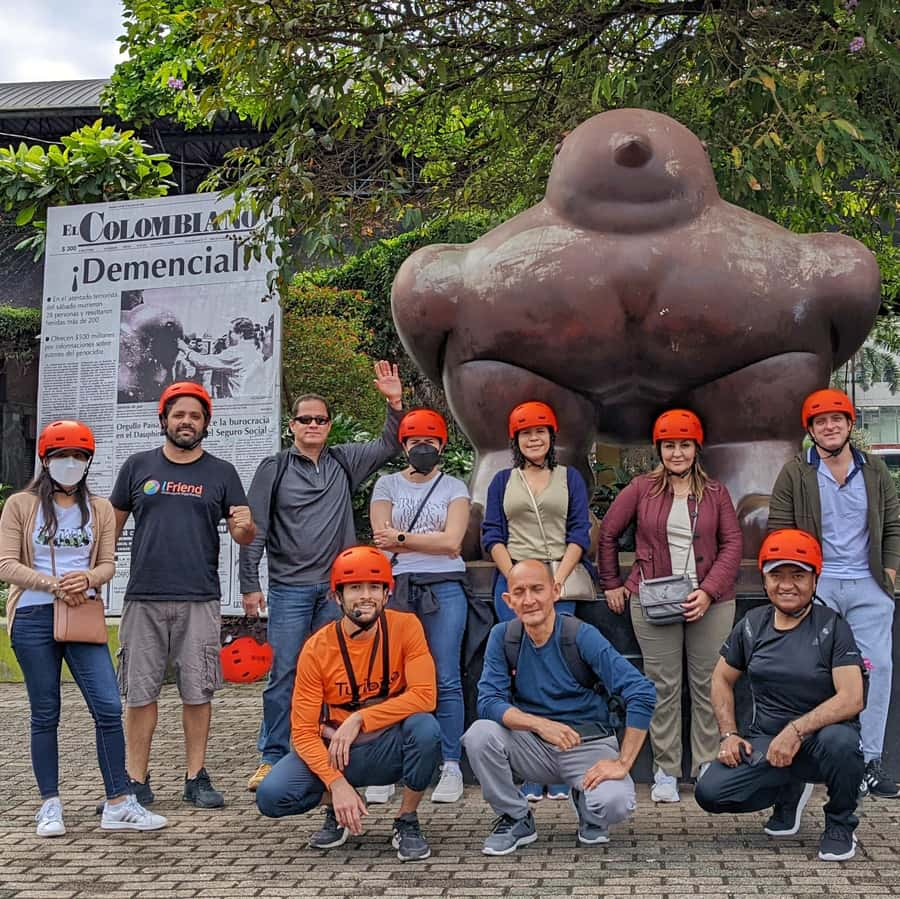
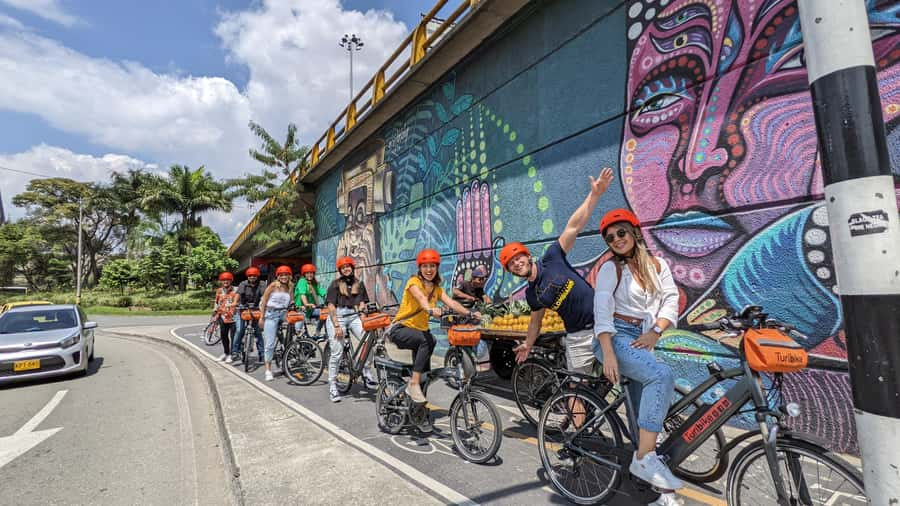
The route then moves through central Medellín, including the area beneath and around the metro viaduct. This is where the city feels most intense. Trains, traffic, pedestrians, shops, and public spaces all press together.
I like this section because it shows Medellín as a working city, not a polished attraction made only for sightseeing. You see the city’s transportation system and daily rhythm up close. You also get a better sense of why the metro is such an important part of Medellín’s public life.
The ride requires attention. Busy road crossings and crowded cycle paths can make this part less relaxing than the parks. One person found the pedestrian traffic on some bike paths frustrating, while another praised the guide for handling the traffic safely. Both points are useful: the route can be exciting, but it demands active riding.
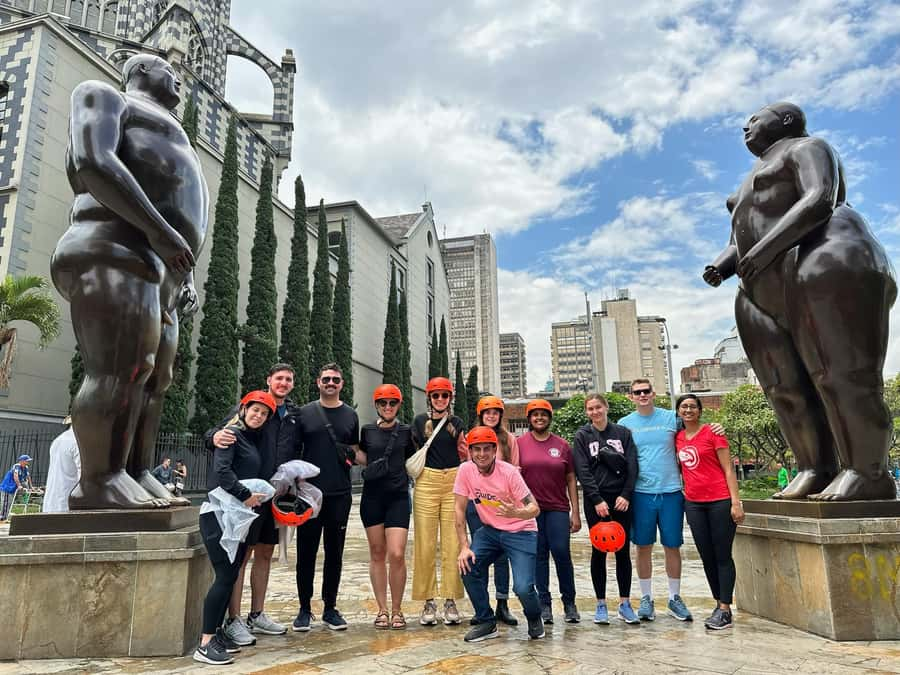
Plaza Botero is the main art stop. The square is filled with Botero’s large bronze figures, famous for their rounded forms and playful proportions. Here, you have time to stop, look around, and hear how the artist’s work connects to Medellín.
The plaza shows how public art can change the feel of a city center. The sculptures are approachable, funny, and memorable, but the surrounding area is not a quiet gallery. Expect an open urban square with plenty of movement and noise.
Parque de las Luces and the city’s public spaces
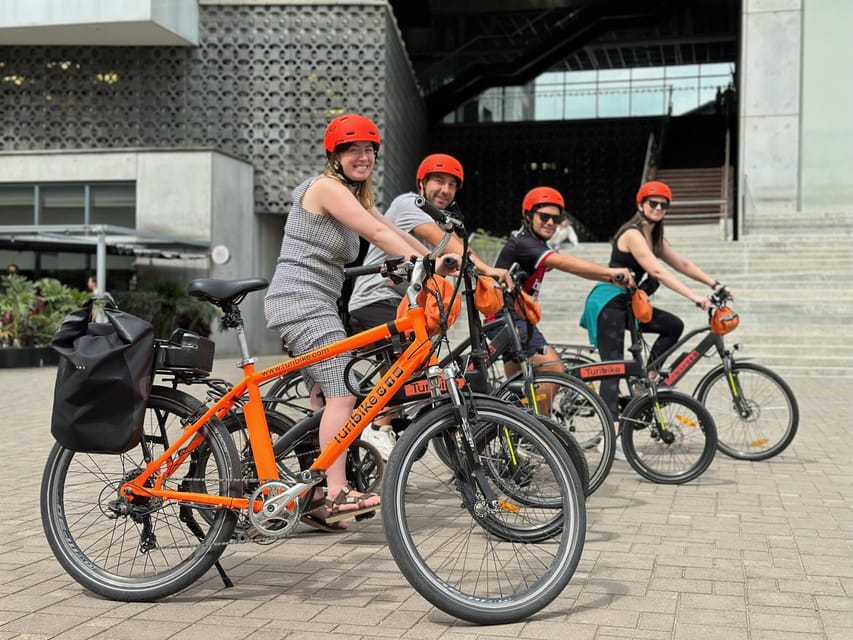
Next comes Parque de las Luces, or the Park of Lights. Its tall illuminated structures give the area a distinctive look, especially when viewed as part of the city center’s larger public renewal efforts.
This stop helps you see Medellín’s approach to public space. Areas that once felt neglected have been given new features, gathering places, and visual markers. The tour does not ask you to ignore the city’s problems. Instead, it shows how design, transport, art, and civic projects can change how people use central areas.
The stop is relatively brief, so do not expect a long guided visit. Its strength is context. You are seeing another piece of the city’s effort to make the center more welcoming and usable.
Plaza Mayor and a short walk off the bike
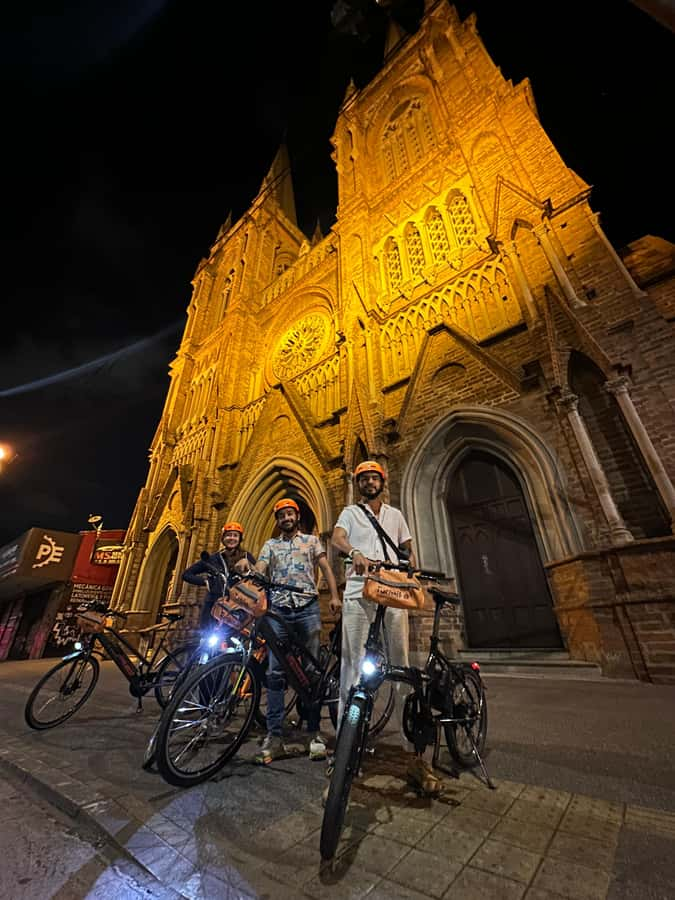
At Plaza Mayor Medellín, you leave the bikes briefly and walk. This change of pace is welcome after several hours of cycling.
Plaza Mayor is a major events and convention complex. The stop gives you another look at modern Medellín and its public architecture. It also breaks up the ride so the morning does not feel like one continuous stretch in the saddle.
The walking portion is short, but it adds variety. You get a chance to straighten your legs, listen without watching the road, and take in the surrounding buildings from ground level.
Finishing at Parques del Río
The final major stop is Medellín River Parks, or Parques del Río. This urban park system offers a more open setting after the tight streets of the center.
Here, the city feels less compressed. You can see how Medellín has tried to reconnect public life with the river and create space for walking, resting, and gathering. It is a fitting end because the tour moves from industrial and central districts toward a public area designed for breathing room.
The route returns to NOI coworking after this stop. By then, you have seen old and new parks, major squares, public art, transport infrastructure, and creative districts. You will not know every corner of Medellín, but you will understand its basic structure and several of the forces shaping it.
The guides make or break the morning
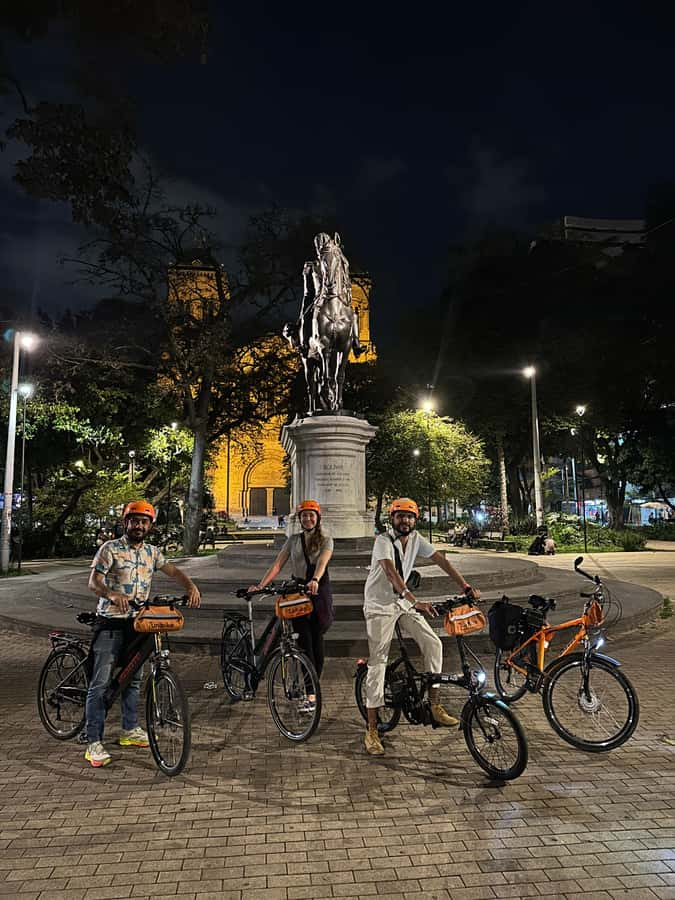
The strongest part of this tour is the guiding. The route has plenty of stops, but the city becomes more meaningful when someone explains why those places matter.
Dayana receives repeated praise for riding cautiously, making beginners feel safe, and speaking with passion about Medellín’s people and culture. Dani is described as funny, professional, patient, and good at explaining the local impact of historical events. Toto is praised for his friendly energy, strong cycling, and ability to make the city feel personal.
Andrés has also led rides that included coffee, fruit, local businesses, Plaza Botero, the Tree of Life, and Casa de la Memoria. Those particular additions are not guaranteed on every departure, so do not book expecting the same route details. Still, they show the kind of local storytelling the company can offer.
The guides also take photographs and, in at least one case, compiled a short video for the rider afterward. That is a nice personal touch, though it should be treated as an extra rather than a promised part of every tour.
The bilingual format works in Spanish and English. If you have a strong preference, confirm the language when booking.
What is included, and what the $48 price buys you
The price is $48 per person for about three and a half hours. That is not the cheapest way to see Medellín, but the value is solid if you want to cover many districts without hiring a private car or spending the day walking.
Your price includes:
- Electric bike
- Helmet
- Bilingual guide
- Rain jacket
- Colombian refreshing drink
- Medical insurance
- Technical assistance
A sugar cane drink, coffee, or fruit snack may appear during the ride, depending on the departure and guide. One person especially enjoyed the fresh sugar cane juice. The advertised inclusion is a refreshing Colombian drink, so consider any additional tasting a pleasant bonus.
Transportation to the meeting point is not included. From Poblado, the walk from the metro station is manageable, while a taxi or ride-hailing service from Parque Lleras takes about 10 minutes according to the provided directions.
The tour gets better value if this is your first morning in Medellín. You can use the route to decide which areas deserve a longer visit later. It is less useful if you already know the central districts well or want a quiet, athletic bike ride. The route is mainly flat, and one experienced cyclist felt the motor was unnecessary.
Group size, comfort, and practical limits
A small group will make this tour more enjoyable. One person had a nearly private departure with only two riders and a guide, while another found a group of 15 too large for an urban bike tour. A big group can make road crossings slower and explanations harder to hear.
Wear comfortable closed shoes. Sandals and flip flops are not allowed. Bring your passport or identification card, as requested by the operator, and avoid alcohol or drugs before the ride.
You need to know how to ride a bicycle. The tour is not suitable for people who cannot cycle, wheelchair users, pregnant women, or anyone under 4 feet 6 inches, or 140 centimeters.
Rain is possible, and a rain jacket is provided. That helps, but you should still dress for changing weather. The operator also includes medical insurance and technical assistance, useful safeguards for a city ride.
The bikes are generally well maintained, although one rider reported a gear problem that had been known before departure. Check the gears and brakes during the initial fitting. If something feels wrong, speak up before leaving.
Who should book this Medellín e-bike tour?
I would recommend it most strongly to first-time visitors who want a fast, active introduction. You see enough of Medellín to understand the relationship between the southern districts, downtown, public art, transport corridors, and river parks.
It also suits people who want local context rather than a simple photo ride. The best guides explain how history affected ordinary residents, then connect that past to the city’s present-day projects.
Beginners should not be put off by the e-bikes. The guides explain the controls and allow time to adjust. You still need basic cycling ability and comfort around traffic, but you do not need to be an experienced rider.
I would be more cautious if you dislike urban riding, have balance or mobility limitations, or prefer long stops at each attraction. This is a moving overview. You will see many places, but only a few receive extended attention.
Should you book it?
Book this tour if you want to get your bearings fast, hear Medellín explained by someone who lives its story, and cover more ground than you could on foot. The 4.9 rating from 130 reviews reflects a consistent pattern: excellent guides, easy-to-use bikes, strong local storytelling, and a welcoming atmosphere.
Before paying, ask about the expected group size and confirm the language of your guide. Check the bike carefully, wear closed shoes, and accept that central Medellín includes traffic, noise, and crowded paths.
For $48, this is a good-value introduction, especially near the start of your stay. It will not show every neighborhood or replace a longer cultural visit, but it gives you a useful first map of the city and plenty of ideas for what to explore next.
FAQ
Where does the Medellín e-bike tour start?
It starts at NOI coworking, Calle 17 # 43F-287. The meeting point is about a 10-minute walk from Poblado metro station or a 10-minute drive from Parque Lleras.
How long does the tour last?
The tour lasts 210 minutes, or about three and a half hours.
What languages are available?
The tour is offered with a live guide in Spanish or English.
Is an e-bike included in the price?
Yes. The price includes an electric bike, helmet, and technical assistance.
What else is included?
You also receive a bilingual guide, rain jacket, refreshing Colombian drink, and medical insurance.
Do I need previous e-bike experience?
No previous e-bike experience is required. The guides explain how to use the bikes and help beginners get comfortable before riding through the city.
What should I bring?
Bring your passport or identification card and wear comfortable shoes. Sandals and flip flops are not allowed.
Who should not take this tour?
The tour is not suitable for pregnant women, people who cannot ride a bike, wheelchair users, or people under 140 centimeters, or 4 feet 6 inches.
More History Tours in the world
- Historic Athens: Small Group Electric Bike Tour
★ 4.9 · 966 reviews - Bordeaux: Historic Center & Chartrons District Bike Tour
★ 4.8 · 709 reviews - Intramuros, Manila: Historical Bamboo Bike Tour
★ 4.8 · 583 reviews - Historic Bike Tour in Tucson
★ 5.0 · 553 reviews
Newly added rides around the world
- Half-Day Lanna Countryside Cycling Tour in Chiang Mai★ 4.5 · 24 reviews
- Full-Day Hike and Bike Tour from Chiang Mai★ 5.0 · 14 reviews
- Full-day E-bike Countryside and Nam Phrae (flat-hilly, GUIDED)★ 5.0 · 11 reviews
- Experience The Real Chiang Mai by Bike★ 4.5 · 36 reviews
- FIELDS OF GOLD Mountain Biking Tour Chiang Mai★ 5.0 · 18 reviews
- Half-Day Colors of Chiang Mai Biking Tour★ 5.0 · 105 reviews
- Chiang Mai City Culture Half-Day Cycling Tour★ 4.5 · 15 reviews
- Chiang Mai Night Bike Tour★ 5.0 · 69 reviews
Historical Tours, compared.
Historical Singapore Bike Tour on Full-Sized Bicycles
Read our review →
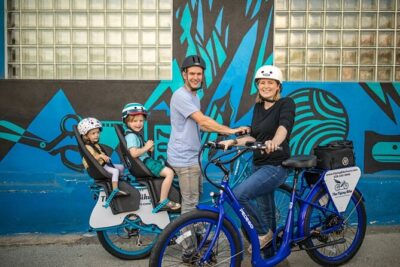
Asheville Historic Downtown Guided Electric Bike Tour with Scenic Views
Read our review →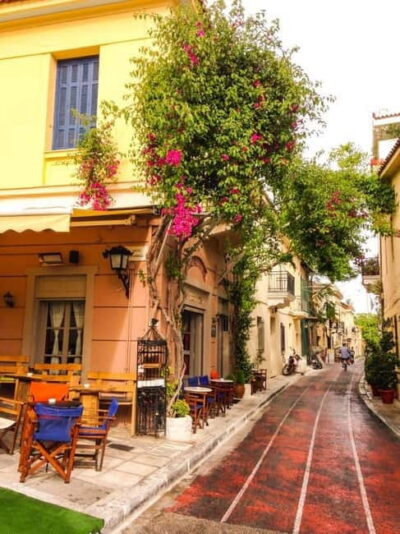
Historic Athens: Small Group Electric Bike Tour
Read our review →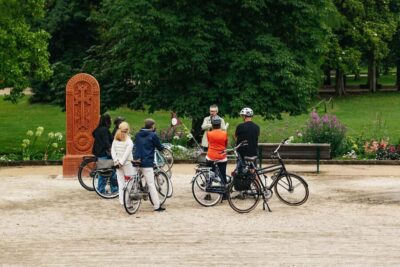
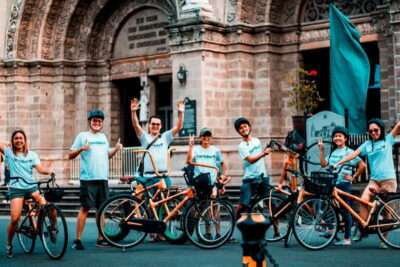
Intramuros, Manila: Historical Bamboo Bike Tour
Read our review →
Cold War & Berlin Wall History Guided Bike Tour
Read our review →Browse the lists this tour appears in