
REVIEW · MARRAKECH BIKE TOURS
Marrakech: Cycling Tour in Palm Groove with Local Breakfast
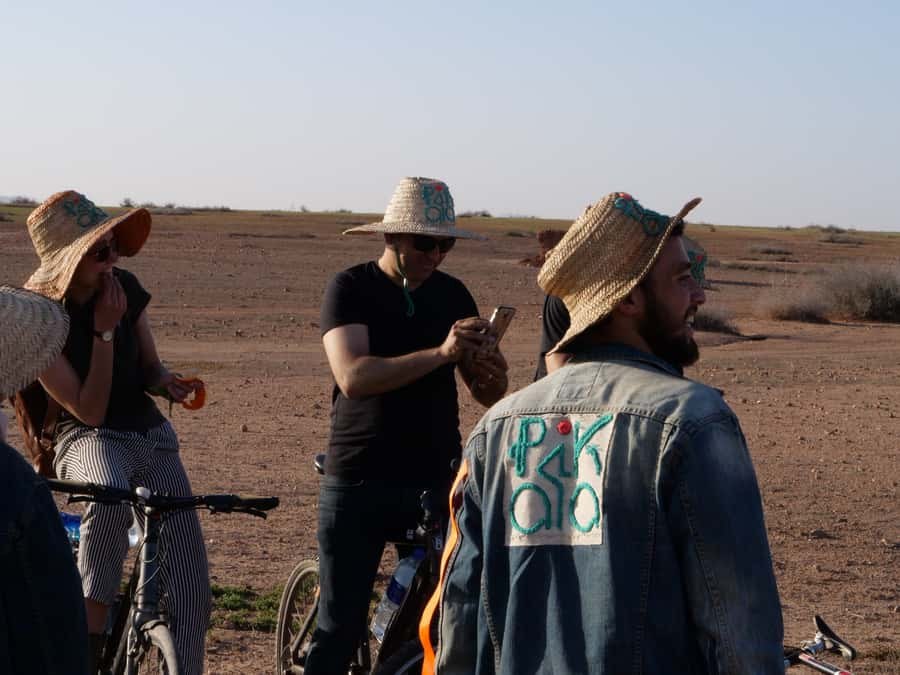
Leave Marrakech’s walls behind on two wheels. This 150-minute ride takes you from the city center into the Palmeraie, where grand villas give way to palm groves, small villages, irrigation channels, and family workshops. I especially like the chance to meet host Aziz over fresh bread, butter, olive oil, tea, and pastries, and the way the young guides explain daily life rather than simply pointing out scenery.
I also like the tour’s practical purpose. You learn why water and date palms matter here, see how bread is baked in a village oven, and get a look at Moroccan zellige tile work. The main drawback is the ride through and out of the Medina. It can feel tricky at first, so this is better for cyclists who can handle narrow streets and a little urban traffic.
The $34 price is fair for a bike, water, guide, breakfast stop, and several local visits. The ride is described as fairly gentle and flat, with about 17 kilometers covered by some groups, but the cycling out of and back into the Medina may be the hardest part. The meeting point is Pikala Bikes headquarters, and hotel or riad transport is not included.
Key points to know before you book
- Aziz’s tea stop feels personal: Expect fresh bread, butter, olive oil, tea or juice, and Moroccan pastries in his atelier.
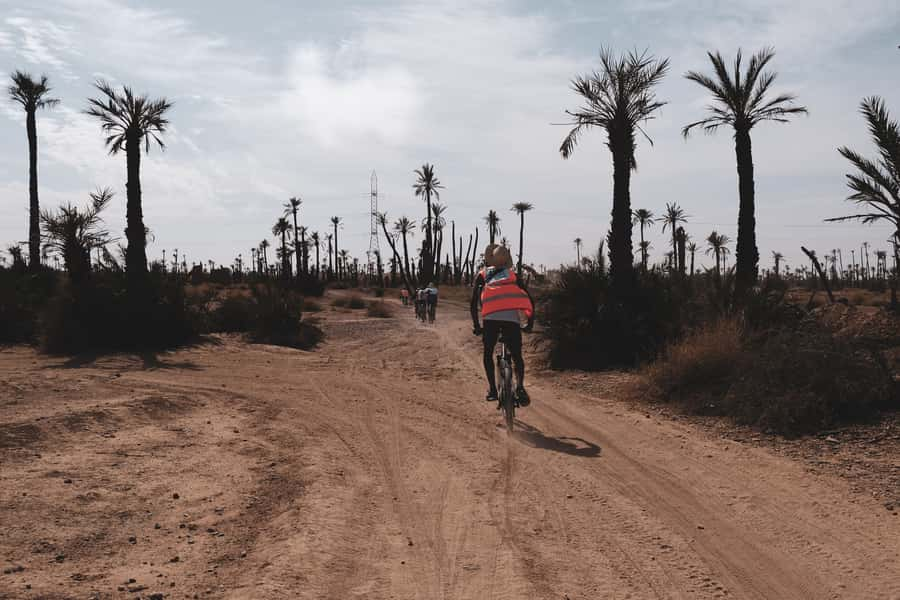
- The ride changes character quickly: You move from city streets and luxury villas to quiet tracks and village lanes in the Palmeraie.
- Water is part of the story: Your guide explains the old irrigation system and why water remains so important to oasis communities.
- You visit working craft spaces: Stops may include a zellige tile workshop and a village oven where bread is baked.
- The Medina section needs attention: The route is mostly gentle and flat, but narrow streets can make the beginning and end more demanding.
- The guides are a major strength: Ahmed, Yassim, Khawla, and Ayoub have been praised for patience, cultural insight, safety, and friendly company.
From Pikala Bikes into Marrakech’s palm oasis
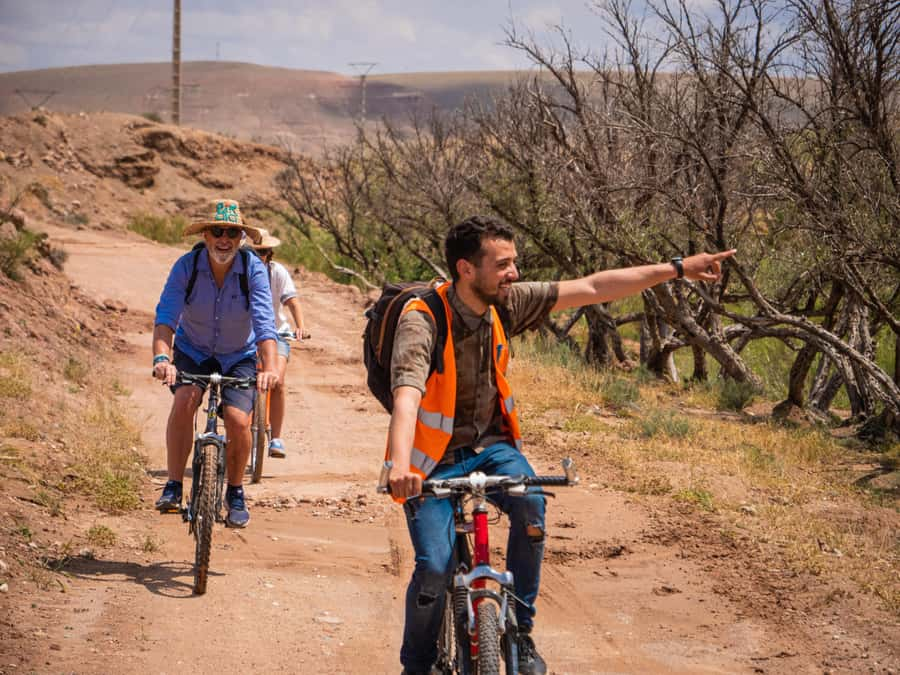
Your ride begins at Pikala Bikes headquarters, not at your hotel. That makes the starting point simple if you are already near the center, but you need to allow time to reach it yourself. Hotel and riad pickup are not included.
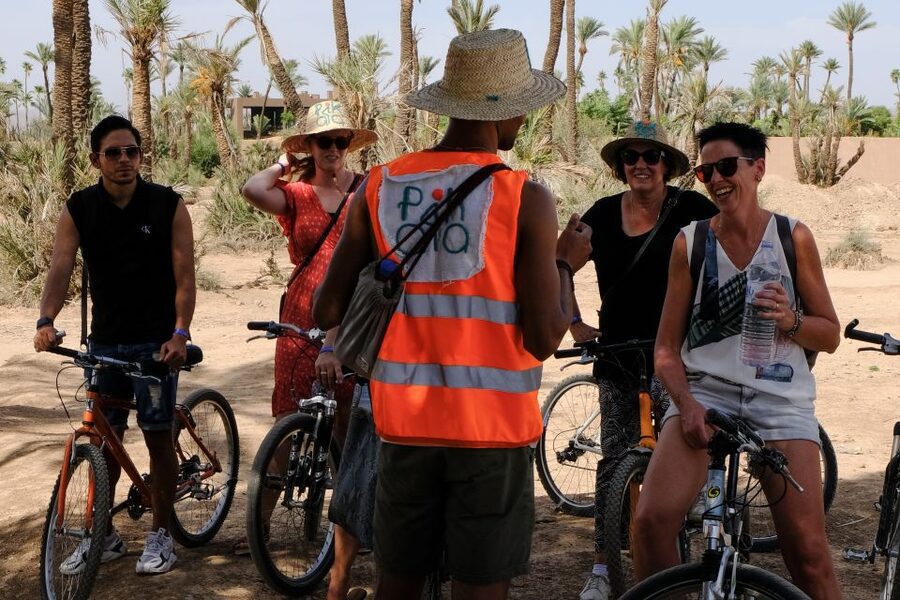
The first 15 minutes take you from the city center toward the Palmeraie. This is the least peaceful part of the route. You are still dealing with Marrakech streets, and a few riders have found the Medina section challenging, especially when getting used to the bike and local traffic.
That said, the guides take this opening seriously. Sarah, one rider who was nervous about cycling in the Medina, found that her guide’s calm advice helped her feel in control. Another cyclist who rides often at home said the bikes were good quality, though leaving and re-entering the Medina still required care.
I would treat this part as a short urban cycling lesson. Stay close to the guide, watch the road, and do not expect a quiet country ride from the first minute. Once you clear the city streets, the pace becomes more relaxed.
A few more rides around the world worth a look
- Lion City Bike Tour of Singapore
★ 5.0 · 6,211 reviews - Big Bike tour Amsterdam – See all in 3 unforgettable hours
★ 4.7 · 4,929 reviews - 3-Hour Porto Highlights on a Electric Bike Guided Tour
★ 5.0 · 4,392 reviews
Villas, castles, and village roads in the Palmeraie
One of the most interesting parts of the trip is the sharp change in surroundings. You pass fancy villas and large private homes before turning onto rougher, less-used roads leading into the palm oasis.
This contrast tells you more about modern Marrakech than a polished sightseeing route would. The Palmeraie is not simply an open palm park. It is also home to villages, local families, workshops, and communities that continue to live alongside the city’s luxury developments.
The route is generally flat and fairly gentle. One account describes a ride of about 17 kilometers, which gives you a useful idea of the physical effort. The total time is two and a half hours, but that includes stops, conversations, food, and visits, so you are not pedaling hard for the entire time.
You may notice several types of scenery during the ride. Palm trees are central, but the route also includes village lanes, open areas, private villas, and old water infrastructure. The young guides connect these sights to local life, explaining why the palms are treated with respect and why the oasis has survived only through careful management of water.
Learning how an oasis stays alive
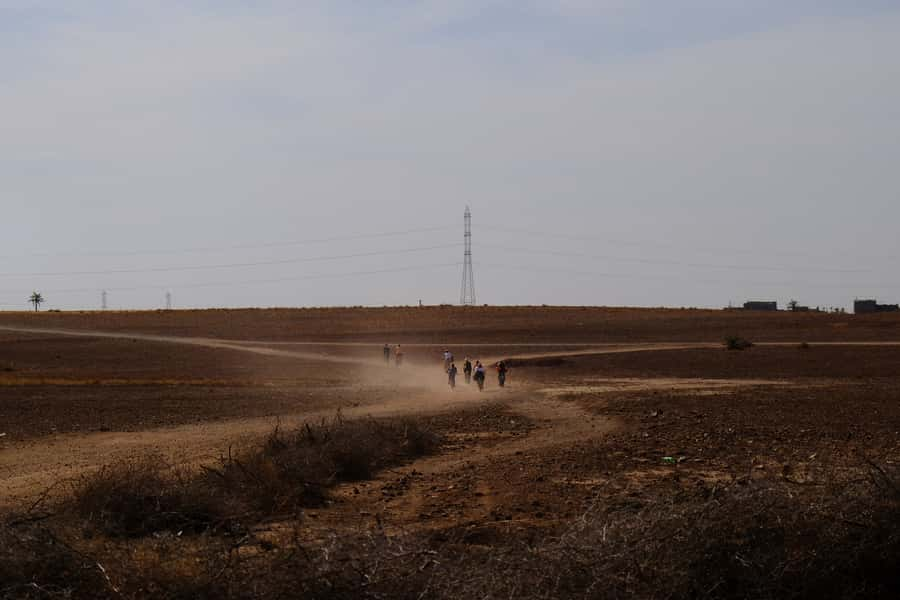
The irrigation stop gives the ride its strongest sense of place. Marrakech’s palm oasis exists in a difficult setting, and the community has long depended on ways to move and share limited water.
Your guide introduces an old irrigation system and explains how the community has managed this basic resource. The point is not only to look at an old channel or structure. It is to understand that every palm, garden, and settlement in the oasis depends on planning and cooperation.
This is where a local guide adds real value. A map can show you the Palmeraie, but it cannot easily explain what water means to families living there. The young guides also discuss their culture and their own experience of growing up in Morocco. Yassim, in particular, has been praised for sharing both local traditions and his perspective as a young Moroccan.
Do not expect a long museum-style presentation. The information comes through stops and conversation. You can ask questions, and the guides are happy to explain details along the way. English and French tours are available.
One important note: the Water Museum is not included. The tour visits and explains an old irrigation system, but you should not expect admission to the museum as part of the $34 price.
Breakfast with Aziz in a village atelier
The food stop is more than a quick snack. At host Aziz’s place, you sit down for Moroccan tea or juice with fresh bread, butter, olive oil, and pastries.
This simple breakfast is one of the tour’s best features because it gives you time to stop pedaling and talk. The food is not presented as a formal restaurant meal. It is a local welcome in an atelier, with Aziz sharing stories about the place and his work.
For me, this kind of stop is more useful than another photo break. Bread, tea, olive oil, and pastries are everyday parts of Moroccan hospitality, and sharing them in a quieter setting helps you understand how food connects people here.
The setting also changes the rhythm of the morning. Instead of rushing from one sight to the next, you get a pause in the oasis. Several riders have described the breakfast as a highlight, with one noting the friendly people and another praising the peaceful surroundings.
The exact drink may be tea or juice, and the food includes Moroccan pastries. If you need a large meal after exercise, keep your expectations sensible. This is a fresh local breakfast stop, not a full restaurant lunch. Bring your appetite, but consider arranging another meal later if you normally eat heavily in the morning.
Water is included, and suncream is also provided. Even so, I would still bring a bottle if you prefer to drink often and use your own sun protection if you have a favorite brand.
Same handlebars, a completely different route:
- Small Group Guided Bike Tour of Amsterdam’s Hidden Gems
★ 5.0 · 3,936 reviews - 3-hour Complete Prague Bike Tour
★ 5.0 · 3,674 reviews - Bangkok: Temples, Canals & Local Life Bike Tour
★ 4.9 · 3,511 reviews - Lisbon: Hills, Alfama, and Mouraria Tour by Electric Bike
★ 4.8 · 3,438 reviews
Watching bread baked in a village oven
The village oven visit adds a useful cultural detail to the route. You see local women cooking bread in an open-air setting and learn why bread carries such importance in Moroccan culture.
Bread is not treated as a minor side dish here. It is part of the daily table and an important part of hospitality. Seeing it made in a local oven helps you connect the bread at Aziz’s table with the work that goes into producing it.
This stop is also a reminder that the tour is not built around grand monuments. You are seeing ordinary processes that continue to matter in village life. The visit may be brief, but it gives you a better understanding of the people who live in the oasis.
The setting can be simple rather than polished. That is part of the appeal, but it means you should come prepared for an authentic working environment instead of a staged demonstration. Your guide will help explain what is happening and how bread fits into local customs.
A close look at Moroccan zellige tiles
The route includes stops at small Moroccan tile workshops, where you can learn about zellige, the patterned tile art associated with Moroccan architecture.
Zellige is easy to admire in a palace or riad, but seeing the craft in a tiny atelier gives you a better sense of the labor behind the finished design. The guide introduces the artisans and explains the cultural and architectural role of the tiles.
This is a good counterpoint to the natural parts of the ride. You move from palms and irrigation channels to a highly precise craft tradition. It also gives you another look at how local skills support village life.
The visit is not described as a long workshop or a hands-on class, so book this for cultural context rather than for making your own tile. If you enjoy architecture, Moroccan interiors, or decorative arts, this stop may be especially rewarding.
What the guides add to the ride
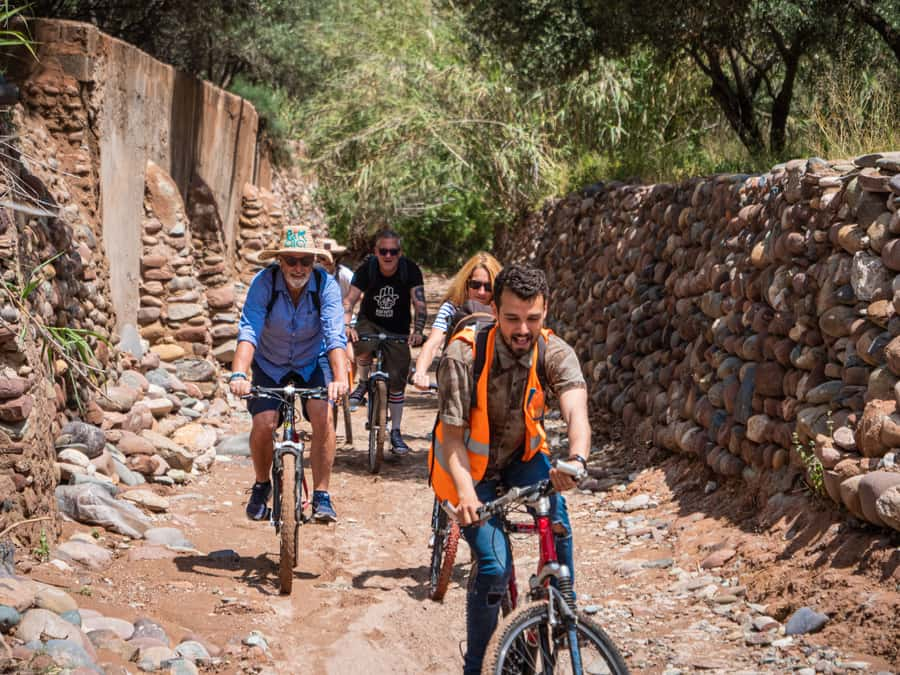
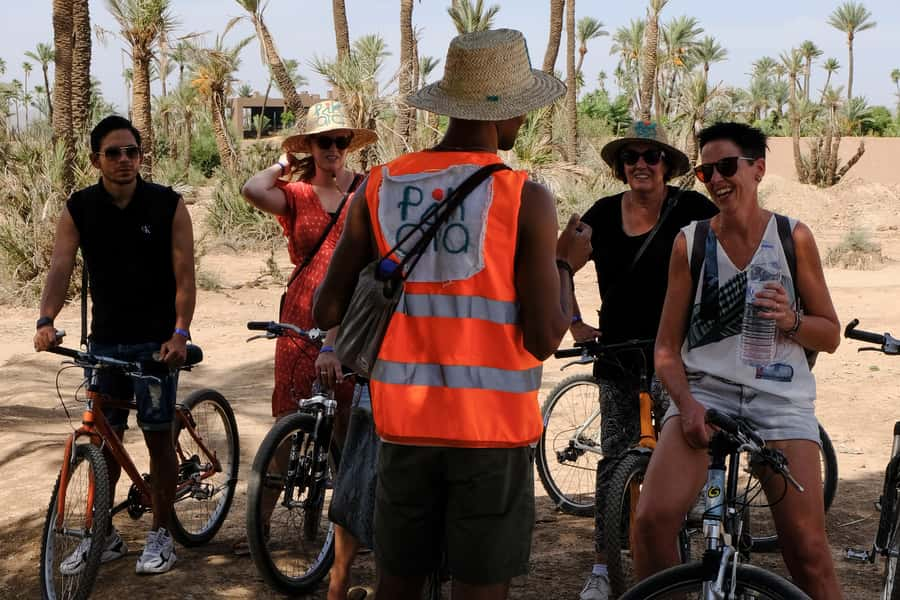
The guides are young, trained, and central to the quality of the experience. Their job is not just to lead the way. They also explain local customs, answer questions, watch the group’s safety, and help you manage the city streets.
Ahmed has been praised for being patient, humble, attentive, and careful with riders’ needs. Yassim has been singled out for explaining Moroccan culture and sharing his own experience as a young man growing up in Morocco. Khawla has been described as enthusiastic, with a strong eye for culture and architecture, while Ayoub has been appreciated for his pleasant manner.
Guide quality can vary from one departure to another, so the individual guide is not something you can always choose. Still, the repeated praise for patience, safety, and cultural information is encouraging.
I would not book this expecting a fast athletic ride led by a racing cyclist. The mood is relaxed and social. The guides stop often, explain what you are seeing, and let the route unfold at a manageable pace.
Is $34 good value?
At $34 per person, the tour offers more than a basic bicycle rental. You receive the bike, water, suncream, a live guide, the breakfast stop, and visits connected to irrigation, bread baking, and zellige tiles.
The strongest value comes from the range of experiences packed into 150 minutes. A city bike ride alone might show you the streets, while a standard oasis visit might show you the palms. This combines both with food and local meetings.
The price also includes the guide’s help through the Medina, which matters if you are uneasy about cycling in Marrakech. You are paying for route planning and local knowledge, not just equipment.
There are limits. Transport to Pikala Bikes is your responsibility. The Water Museum is not included. The breakfast is generous in character but simple in style, so anyone seeking a full meal or a luxury food experience may find it modest.
For most visitors, the combination of cycling, cultural stops, and food makes the cost reasonable. It is particularly good value if you want to support a local organization and see parts of Marrakech beyond the main tourist sights.
Who should book this Marrakech cycling tour?
I would recommend it to active visitors who want a look at everyday Moroccan life and do not mind some city cycling. You do not need to be a serious cyclist, since the route is mostly flat and gentle, but you should feel comfortable riding a bike and handling narrow streets.
It suits couples, families with confident older children, and small groups looking for a morning or afternoon activity. It also works well for repeat visitors who have already seen the Medina and want a different side of Marrakech.
You should think twice if you dislike cycling in traffic, need hotel pickup, or want a completely smooth and quiet route. The opening and closing sections can be more stressful than the Palmeraie itself.
The tour is offered in English and French. Free cancellation is available up to 24 hours before the start, and you can reserve now and pay later, which is useful when your Marrakech plans are still moving around. Check the available start times because the duration is fixed at 150 minutes.
My verdict on the Palmeraie ride
I would book this tour if I wanted an active way to see Marrakech’s oasis without spending a full day away from the city. The most memorable parts are not simply the palm trees. They are the explanation of water use, the bread oven, the zellige workshops, and the relaxed breakfast with Aziz.
The main warning is clear: cycling through the Medina takes attention. If you accept that short challenge, the rest of the route rewards you with quieter roads, friendly local contact, and a better understanding of how the Palmeraie works.
For $34, this is a strong choice for curious, reasonably fit visitors who value local stories over a polished sightseeing circuit.
FAQ
Where does the cycling tour begin?
You meet at the Pikala Bikes headquarters in Marrakech.
Is hotel or riad pickup included?
No. Hotel and riad pickup and drop-off are not included.
How long does the tour last?
The tour lasts 150 minutes, or two and a half hours.
What languages are available?
The live tour guide is available in English and French.
What food is included?
The stop at Aziz’s place includes tea or juice, Moroccan pastries, fresh bread, butter, and olive oil.
Are bikes provided?
Yes. Bikes are included in the tour price.
Is water provided?
Yes. Water is included.
Is the Water Museum included?
No. A visit to the Water Museum is not included, though the tour does introduce an old irrigation system.
Can I cancel for a full refund?
Yes. You can cancel up to 24 hours in advance for a full refund.
Newly added rides around the world
- Half-Day Lanna Countryside Cycling Tour in Chiang Mai★ 4.5 · 24 reviews
- Full-day E-bike Countryside and Nam Phrae (flat-hilly, GUIDED)★ 5.0 · 11 reviews
- Full-Day Hike and Bike Tour from Chiang Mai★ 5.0 · 14 reviews
- Experience The Real Chiang Mai by Bike★ 4.5 · 36 reviews
- FIELDS OF GOLD Mountain Biking Tour Chiang Mai★ 5.0 · 18 reviews
- Half-Day Colors of Chiang Mai Biking Tour★ 5.0 · 105 reviews
- Chiang Mai City Culture Half-Day Cycling Tour★ 4.5 · 15 reviews
- Chiang Mai Night Bike Tour★ 5.0 · 69 reviews
Marrakech Bike Tours, compared.
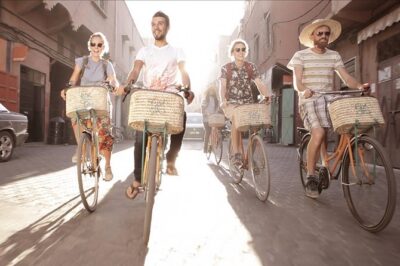
Guided City Cycling Tour – Culture, Colors & Charm
Read our review →
Marrakech’s Best Cycling Tour: Culture, Colors, and Charm
Read our review →
Marrakesh: Toubkal National Park Mountain Bike Trip w/Lunch
Read our review →
Browse the lists this tour appears in