
REVIEW · BERLIN BIKE TOURS
Berlin: Guided Bike tour of the Berlin Wall and Third Reich
Berlin’s past makes more sense on two wheels. This three-hour ride links the Berlin Wall, Nazi-era sites, Jewish history, and today’s government district in a way that helps you understand how the city fits together. I especially like the local guides’ personal stories and the chance to reach places that a standard sightseeing bus misses.
I also like the practical setup: a city bike, helmet, and basket are included, and the mostly flat route suits many casual cyclists. Guides such as Paul, Simon, Juliette, Theo, and Simone have been praised for clear storytelling and careful riding. The main drawback is that the Free Berlin route can change, so you may not visit every advertised stop, including Checkpoint Charlie or the Holocaust Memorial.
Key points to know before you ride
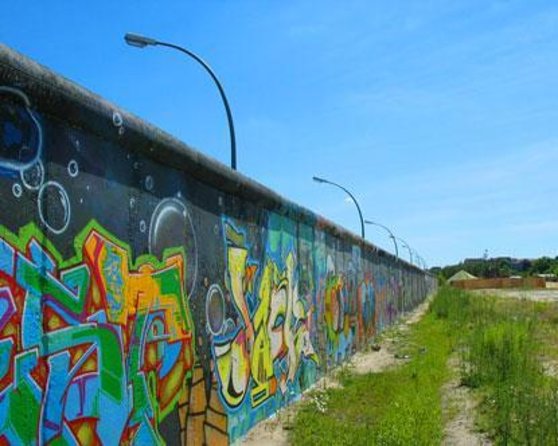
- Berlin’s history comes in layers: The ride connects the Wall, the Third Reich, Jewish persecution, postwar division, and modern Germany.
- The route is flexible: Each guide creates a route around the themes, so must-see stops are not guaranteed.
- You cover ground efficiently: One family reported riding about 13 kilometers at an easy pace with frequent breaks.
- The guides make the difference: Personal memories, thoughtful questions, and local context are among the strongest parts of the tour.
- It is good value at $42.34: Bike, helmet, guide, and three hours of sightseeing are included.
- Reserve ahead: The tour is booked an average of 17 days in advance, and groups range from 4 to 15 people.
Why Berlin works so well by bicycle
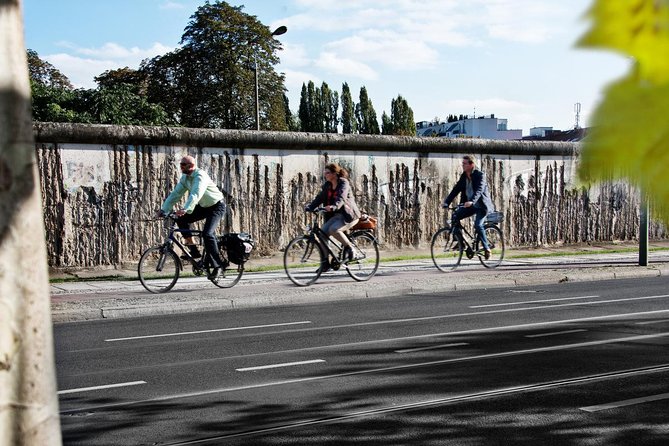
Berlin is unusually friendly to this kind of history tour. The city is flat, major sights are spread out, and the former Wall zone cuts through many different districts. On foot, you would spend much of your time walking between sites. On a bike, you can see the connections.
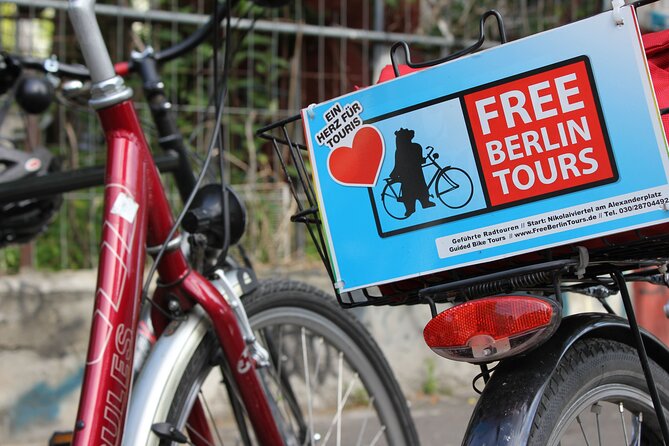
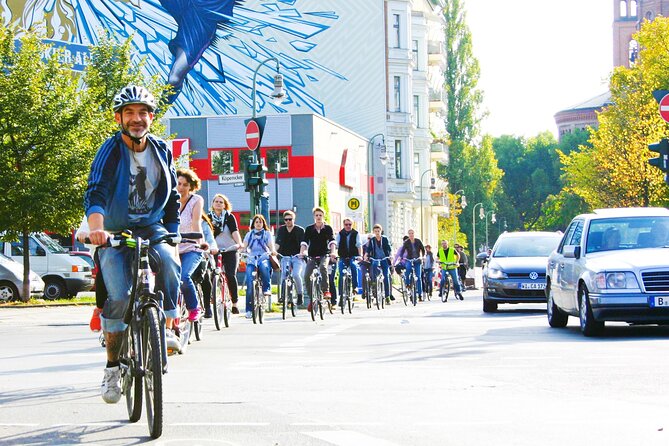
The ride is not a race. The group stops often for short talks, usually around five to ten minutes at a time. You listen, ask questions, then get back in the saddle. One family described covering about 13 kilometers with children aged 10, 14, and 17, and found the pace easy because of the frequent stops.
You do need to be comfortable riding in city traffic. One rider found the main roads and cycle lanes a little daunting, though the guide gave clear instructions and waited at red lights. Other guides used park routes when possible. The experience depends partly on your guide and the day’s route, but you should expect urban riding rather than a quiet countryside cycle.
The standard group limit is 15 people, with a minimum of four. A group of 12 felt large to one rider, while another group was split into smaller units when the numbers grew. A smaller group is easier to hear, easier to keep together, and less awkward at busy crossings.
A few more rides around Berlin worth a look
- Berlin: Sights and Highlights Bike Tour with a Local Guide
★ 4.8 · 2,698 reviews - Berlin: The Wall and Third Reich Guided Bike Tour
★ 4.8 · 578 reviews - Berlin: Guided Bike Tour to Explore the Highlights
★ 4.8 · 506 reviews
Starting in Nikolaiviertel, Berlin’s carefully rebuilt old quarter
The tour begins at Poststraße 11, near Nikolaiviertel. This area is presented as Berlin’s only real old town, though its current appearance raises a useful question: how old is old when a city suffered heavy wartime bombing and later rebuilding?
That opening sets the tone. You are not just shown a pretty square and handed a date. You are encouraged to think about what survived, what was reconstructed, and how Berlin uses its past today. The stop is brief, around ten minutes, so return later if you want to explore the quarter at a slower pace.
The meeting point is near public transportation, and the activity ends back there. That makes it easy to continue your sightseeing afterward without arranging a second pickup.
Jewish history and an act of courage at the Neue Synagoge
At the Neue Synagoge, the guide tells the story of civil courage during the Night of Broken Glass. A police officer helped protect this important building, a small but powerful reminder that individual choices mattered during a period when public resistance was dangerous.
The stop lasts only about five minutes. That is enough for a focused explanation, but not enough for an extended visit inside or a detailed museum tour. Think of this as historical orientation, not a synagogue admission.
The subject fits well with the later stops because the ride does not treat Berlin’s past as one single story. Jewish life, Nazi persecution, wartime destruction, Cold War division, and modern democracy are connected, but they are not interchangeable. Good guides keep those differences clear.
The Berlin Wall Memorial and the meaning of the death strip
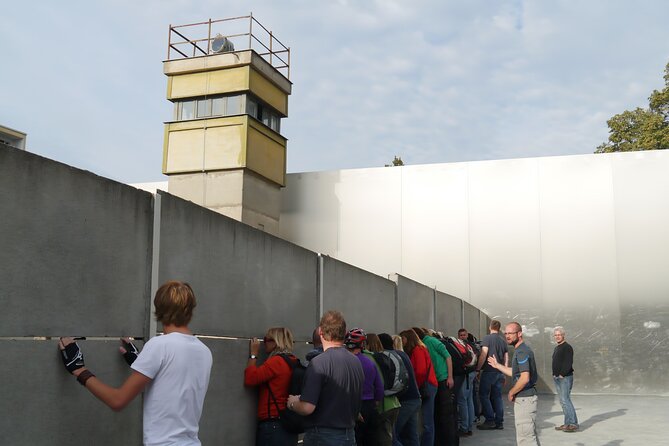
The Wall Memorial is one of the most important sections of the ride. The guide explains that Berlin has three places where the Wall remains especially understandable, and this is the site where you can best grasp how the barrier worked.
You are not simply looking at a preserved slab of concrete. The focus is on the full border system, including the space between barriers, watch areas, and the effect on daily life. The phrase death strip becomes more than a term from a history book when you see how the border divided streets, homes, cemeteries, and families.
The planned stop is around ten minutes, so you will get an overview rather than a full museum visit. If the Wall is your main reason for booking, ask at the start which Wall locations your guide intends to include. The route is flexible, and the guide may choose a different section.
Same handlebars, a completely different route:
- Berlin Highlights 3-Hour Bike Tour
★ 5.0 · 948 reviews - Berlin City Bike Tour with Beer Garden Stop
★ 5.0 · 917 reviews - Berlin Highlights: 3-Hour Bike Tour
★ 4.9 · 809 reviews - Berlin Highlights Sightseeing Bike Tour in Small Groups
★ 5.0 · 652 reviews
Mauerpark shows what the Wall zone became
Mauerpark offers a sharp change in mood. The area is now associated with a Sunday flea market and free expression, but it once formed part of the divided city. The guide uses it to show how a place shaped by fear and restriction became a public space for music, markets, and ordinary city life.
This is one of the tour’s more useful contrasts. Berlin’s story is not only about memorials and tragedy. It is also about what people do with difficult places after the political system that created them disappears.
The stop is short, about ten minutes. If you want the Sunday market, check your tour date and timing separately, since this experience itself is not a flea-market visit.
Nazi architecture and the view from Humboldthain
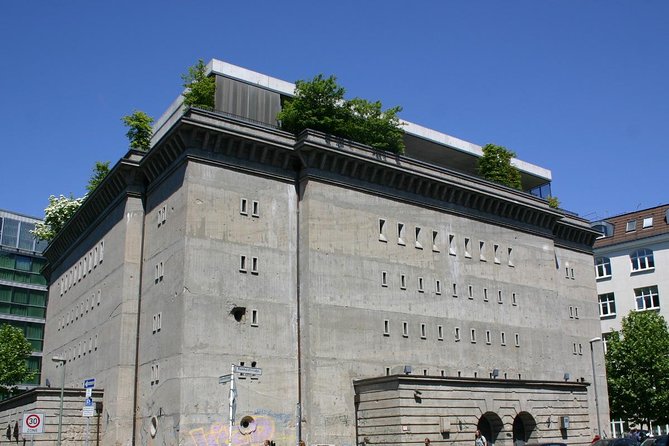
Humboldthain Flak Tower combines wartime engineering with a broad city view. The structure was built as a huge fortress and air-raid shelter during the Nazi period. From the area, the guide discusses Nazi architecture and the scale of the regime’s building plans.
The viewpoint gives you a useful change of angle. Instead of hearing about Berlin as a map of separate attractions, you see how the city’s districts relate to one another. The guide can point out the physical setting while explaining why these massive structures were built.
The stop is around ten minutes, and the attraction is free. Do not expect a long climb or a formal interior tour as part of this experience. The main value here is the combination of place, view, and explanation.
Günter Litfin and the human cost of the Wall
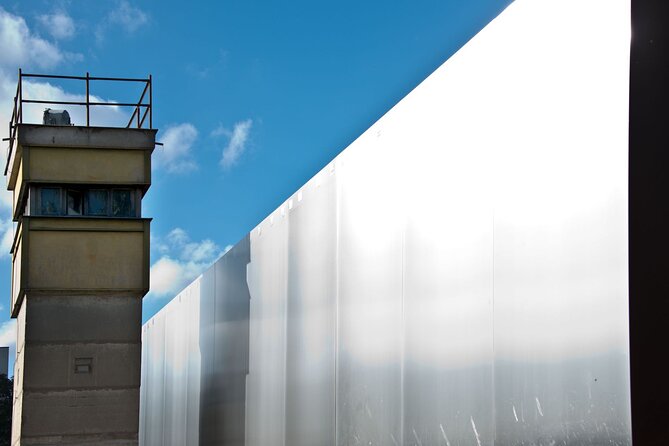
The Günter Litfin Memorial preserves an original watchtower and remembers Günter Litfin, described as the first person shot at the Wall. This is a small stop, around five minutes, but it puts a name and a face to the border’s human cost.
That personal scale matters. Large political events can feel distant. A preserved tower and one individual’s story make the consequences easier to grasp. The guide may also connect the site to escape attempts and the different ways people tried to cross the border.
The stop is brief, so you will not spend long examining the tower. Its value comes from the explanation and its place within the larger route.
Invalidenfriedhof and escape stories along the former border
Invalidenfriedhof is a cemetery with an unusually complicated past. It was established for Prussian military figures, then cut through by the Berlin Wall. Its location near former checkpoints and a canal adds another layer to the story.
Here the focus turns toward escape attempts. Natural features such as the canal could form part of the border, while nearby checkpoints created points of intense control. The cemetery also shows how political division could cut directly through places meant for memory and burial.
This is one of the less obvious stops and a good example of the tour’s off-the-main-route character. The planned visit is about five minutes, so do not expect a full cemetery walk. You get a precise historical explanation, then continue by bike.
Spreebogenpark and the plans for Hitler’s Berlin
From Spreebogenpark, you look toward the government district and discuss Albert Speer’s plans for Berlin under Hitler. The guide explains the proposed Great Hall, a structure intended to hold 180,000 people.
This stop helps you understand the scale of the architectural ambitions behind the dictatorship. The plans were not merely about buildings. They were designed to express power, obedience, and the intended role of Berlin as the center of a new order.
The view today is especially useful because modern Germany’s democratic institutions occupy the same broad city area. The contrast between the planned authoritarian capital and the present government district is one of the ride’s strongest visual ideas.
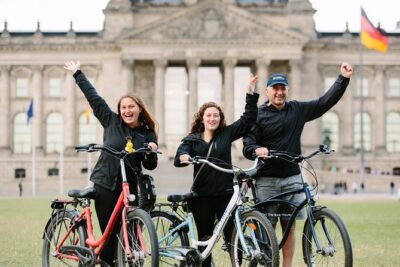
Reichstag, democracy, and the change in Berlin’s center
At the Reichstag, the guide discusses Hitler’s rise to power and Germany’s democratic history. You do not go inside during the tour, but the exterior is enough for a short explanation of the building’s political importance.
This stop works best as a bridge between past and present. The building is not treated only as a photo stop. You hear how Germany’s political system was damaged, how dictatorship took hold, and how the country later rebuilt democratic institutions.
Allow yourself extra time to return to the Reichstag after the ride if you want to explore it further. The bike tour offers context from outside, not an interior visit.
Holocaust memorials and the weight of memory
The route can include one or more memorials connected with the Holocaust. The most prominent is the Memorial to the Murdered Jews of Europe near Brandenburg Gate, a large field of concrete blocks that invites different reactions as you walk among them.
The guide gives you room to think about the memorial rather than treating it as a quick photo stop. One particularly useful approach is to discuss how the design affects each person differently. The site is powerful because it does not reduce remembrance to a single message.
The tour may also discuss other memorials for major victim groups, including a memorial designed during the East German period. Its appearance and political setting differ sharply from the better-known memorial near Brandenburg Gate. That contrast raises questions about how different governments chose to remember the same crimes.
The planned stop at the main Holocaust Memorial is about ten minutes. You will not have time for a long, quiet visit. If this is important to you, return independently after the tour.
The Führerbunker and why a parking lot matters
The former Führerbunker is now marked by an ordinary parking area. That plain setting is deliberate. The guide explains why there is no grand monument and identifies the location where Hitler spent his final weeks before committing suicide.
The absence of visible ruins is part of the lesson. A dramatic memorial could turn the place into a shrine or spectacle. Instead, you get a short explanation of what happened and why the site looks so unremarkable today.
This is a five-minute stop, but it often stays with you. Berlin frequently makes you work a little to understand what you are seeing. A parking lot can carry historical meaning when the guide supplies the missing context.
Checkpoint Charlie and the Cold War’s most famous crossing
Checkpoint Charlie appears on the English version of the tour. It was the best-known border station and the only crossing shared by American and Soviet forces. The guide explains how a confrontation here once brought the United States and Soviet Union close to a far larger crisis.
The site is famous, but the modern setting can feel commercial and crowded. The value of the stop lies less in the current display and more in understanding its role in the divided city.
This is also the stop you should ask about before departure. Because guides design their own routes, Checkpoint Charlie is not guaranteed on every ride, even though it appears in the advertised sequence. If it is essential to you, say so at the start.
The Free Berlin approach: useful freedom, real uncertainty
The provider gives guides freedom to design their own route. That can make each ride more personal and responsive. A guide might adjust the plan for a marathon, road closures, group interests, or weather, and one group enjoyed an alternative route arranged around the Berlin Marathon.
The tradeoff is predictability. You may hear excellent history and see worthwhile places, yet miss several stops you expected. One rider specifically booked the experience for Third Reich sites and was disappointed after missing the Reichstag, Holocaust Memorial, Führerbunker, Invalidenfriedhof, Spreebogenpark, and Checkpoint Charlie.
I suggest telling your guide your must-see sites before setting off. The guide may not be able to include everything in three hours, but the conversation gives you a better chance of seeing the places that matter most to you.
Guides, bikes, weather, and family planning
The guides are the strongest part of this experience. Paul, a native of West Berlin, has shared personal memories about life before the Wall fell and the differences between East and West Berlin. Simon has been praised for making a rainy ride enjoyable, while Theo received credit for clear safety instructions and confident answers.
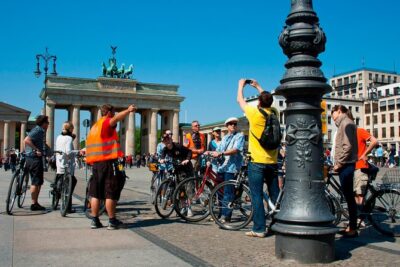
Juliette has handled larger groups by splitting them into smaller units and has adjusted routes to include Brandenburg Gate. Simone has been praised for thoughtful questions and for making difficult history accessible to children. These examples show why the guide’s style matters as much as the route.
A city bike and helmet are included. Reviews also describe rear baskets or basket carriers, useful for a water bottle, coat, or small bag. Infant seats can be provided on request, and children are welcome, but anyone under 18 must be accompanied by an adult.
The tour operates in English or German, depending on the option selected. It runs in all weather, so dress for rain or cold rather than counting on a cancellation. Food and drinks are not included.
Is $42.34 a fair price for three hours?
At $42.34 per person, I consider this good value if you want both transportation and historical interpretation. You receive a bike, helmet, guide, and three hours of sightseeing. You also cover more ground than you would on foot without committing to a full-day activity.
The price is less attractive if you already plan to visit each museum or memorial at length. The stops are short, and the tour does not include interior admissions or food. Think of it as a city orientation with serious historical content, not a substitute for visiting Berlin’s major museums.
The 4.8 rating from 160 reviews and recommendation rate of 94 percent suggest a strong overall experience, but the lower scores point to the key risk: route variation. The money is well spent when you value a good guide and broad context. It is a weaker choice if you require a fixed checklist.
Should you book the Berlin Wall and Third Reich bike tour?
Book it if you want to understand how Berlin’s Wall, Nazi past, Jewish history, and modern government district relate to one another. It suits curious adults, families with older children, and visitors who prefer seeing a city rather than sitting in a bus.
I would choose it early in a Berlin visit, then return on foot to the places that catch your attention. Before the bikes roll out, tell the guide your priorities, especially Checkpoint Charlie, the Wall Memorial, the Holocaust Memorial, or the Führerbunker.
Skip it if cycling in city traffic makes you uneasy, or if missing a specific stop would ruin the day. For most people who accept the flexible route, the combination of easy cycling, strong storytelling, and hard history makes this a worthwhile three hours.
FAQ
How long does the bike tour last?
The tour lasts approximately three hours.
What is included in the price?
The experience includes use of a bicycle, a helmet, and a professional guide. Food and drinks are not included unless specifically stated.
Is the tour offered in English?
Yes. The experience is offered in English, and German is also available depending on the option selected.
Does the tour visit Checkpoint Charlie?
Checkpoint Charlie is included only in the English version and is part of the possible route. Because guides design their own routes, it is best to ask about it before departure.
Are children allowed to join?
Yes. Children are welcome, but they must be accompanied by an adult. Infant seats can be provided on request.
How many people are in each group?
The minimum group size is four and the maximum is 15 participants.
Can I cancel for a full refund?
Yes, if you cancel at least 24 hours before the experience start time. Cancellations made less than 24 hours in advance are not refunded.
Newly added rides around Berlin
- Potsdam Bike Tour with Rail Transport from Berlin★ 4.5 · 81 reviews
- Berlin: Guided Private Bike Tour to Explore the Highlights★ 5.0 · 12 reviews
- Alternative Berlin Bike Tour – Off the Beaten Tracks in Small Groups★ 5.0 · 99 reviews
- Small-Group Historical Bike Tour in Berlin★ 4.5 · 103 reviews
- Berlin Wall and Cold War Bike Tour in Small Groups★ 5.0 · 114 reviews
- Berlin : The best bike tour with a Berlin guide and insider tips★ 5.0 · 14 reviews
- Half-Day Bike Tour of Berlin’s Lesser Known And Historical Sites★ 5.0 · 10 reviews
- Berlin : Guided Private Sightseeing Tours with Funbikes, Teambikes★ 5.0 · 20 reviews
Berlin Bike Tours, compared.
Sights and Highlights Bike Tour with a Local Guide
Read our review →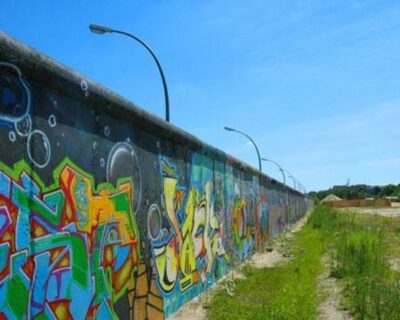
Berlin Highlights Sightseeing Bike Tour in Small Groups
Read our review →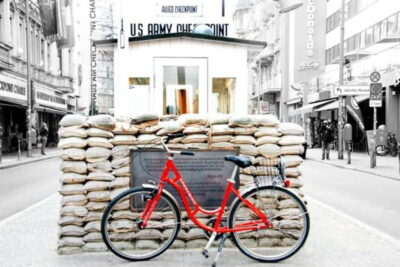
Alternative Bike Tour of Kreuzberg & Friedrichshain
Read our review →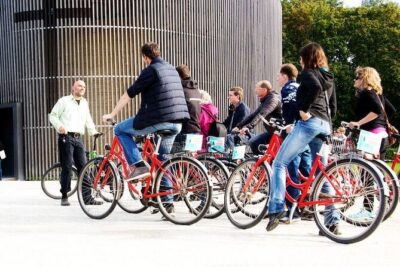
Browse the lists this tour appears in