
REVIEW · BERLIN BIKE TOURS
Best of Berlin E-Bike Tour
Berlin is made for seeing by bike. This three-hour ride covers the city’s major historical sights without asking you to march from one far-flung site to the next. Your electric bike does much of the work, while your guide fills in the difficult, fascinating story behind Berlin’s streets and monuments.
I like the small-group format, capped at 15 people, and the way the route connects Nazi history, the Cold War, Prussian Berlin, and today’s capital in one outing. I also like that you finish where you started at Alexanderplatz, a handy spot for public transport and further sightseeing. The main drawback is that this is still a bike tour, so you must ride alone and feel comfortable around city traffic.
Key points to know before you book
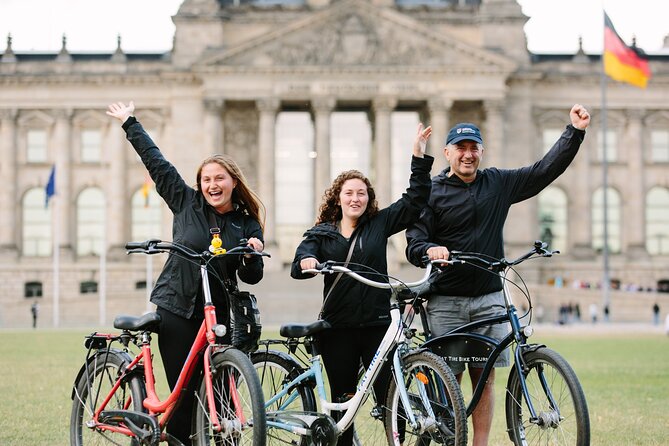
- A lot of Berlin in three hours: The route links Alexanderplatz, the Reichstag, Brandenburg Gate, Bebelplatz, Gendarmenmarkt, the Holocaust Memorial, and Checkpoint Charlie.
- Electric assistance, not an electric scooter: You still pedal, but the motor takes much of the strain, especially useful if you want to cover ground without arriving worn out.
- History is the main event: Cold War Berlin receives special attention, with added context on Hitler’s rise, Nazi propaganda, Jewish persecution, and Germany’s way of remembering.
- A small group helps: With no more than 15 riders, it is easier to hear the guide and ask questions at the stops.
- Plan for the weather: The experience requires good weather, and you should bring water. Helmets and bikes are supplied.
- Best for first-time visitors: The tour gives you a useful city overview before you return to selected museums and memorials on your own.
Why an e-bike works so well in Berlin
Berlin is broad, flat, and spread out. A walking tour can show you one district well, but it takes time to move between the main sights. An ordinary bike covers more ground, yet some people find a long ride tiring. The e-bike sits nicely between the two.
You still pedal, so you remain part of the ride, but the motor helps when your legs start to complain. One participant who had never used an e-bike found it easy and came away wanting one. Another rider in their sixties found the bike comfortable and manageable.
That does not mean you can switch off completely. Everyone must be able to ride alone, and there are no child seats or tag-alongs. You will also need to pay attention while riding, especially when moving through city streets. The guide handles the route and keeps the group together, but you remain responsible for operating your bike.
The ride is not designed as a high-speed athletic outing. The pace is relaxed, with regular stops for short talks and photographs. That makes it suitable for many casual cyclists, including beginners who can ride a standard bicycle confidently.
More E-Bike Tours in Germany
- Best of Berlin E-Bike Tour
★ 5.0 · 77 reviews - Berlin: E-Bike Tour of the Berlin Wall and Mitte Highlights
★ 4.7 · 60 reviews - Berlin Bike and Electric Bike Rentals
★ 4.5 · 12 reviews
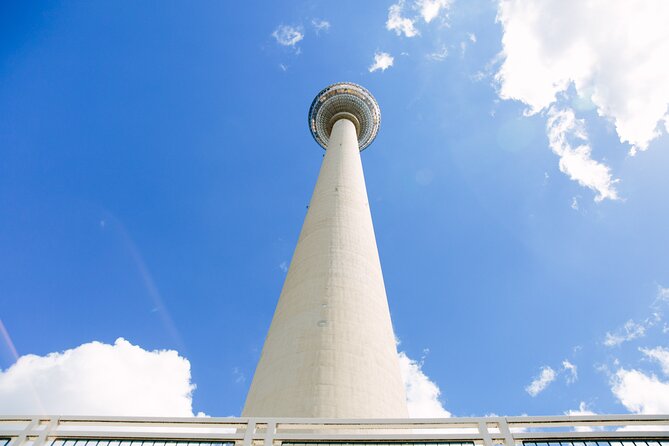
Starting beneath the TV Tower at Alexanderplatz
The meeting point is the Unlimited Biking shop at Panoramastraße 1A, beside the base of the Berlin TV Tower. This is an easy place to find in central Mitte, and the Alexanderplatz transport hub makes the start practical if you are staying elsewhere in Berlin.
Alexanderplatz itself gives you an immediate lesson in the city’s layers. It is a broad central square shaped strongly by the former East German period, but its story reaches much further back. The square has links to different eras of Berlin, and the guide uses it as a way to explain how the city keeps changing while carrying its past with it.
After bike fitting and a safety introduction, the group sets off. The tour includes the use of an electric bike and helmet, but food and drinks are not included. Bring a bottle of water, especially in warm weather. Three hours on a bike can pass quickly, but it is still enough time to get thirsty.
The Reichstag and Brandenburg Gate: power, defeat, and renewal
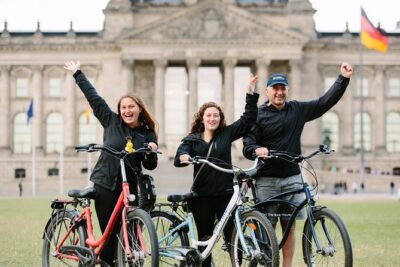
The Reichstag is one of Berlin’s essential stops because its walls are tied to the country’s most painful political turning points. Here, your guide explains Hitler’s rise to power and how modern Berlin discusses the Nazi period.
That last point matters. Berlin does not present its history as a polished succession of victories. The city’s public spaces often ask you to consider responsibility, memory, and how a democracy can fail. A five-minute stop cannot explain every detail, but it gives you a framework for later visits to museums and memorials.
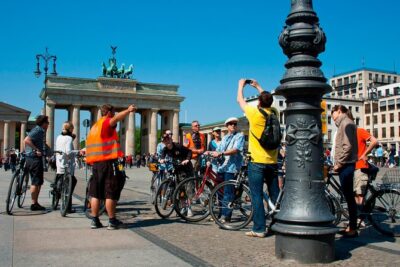
The nearby Brandenburg Gate is more immediately familiar. Its chariot-topped figure of Victoria was created as part of a Prussian monument, yet the gate later became a symbol of division and reunification. It once sat beside the Berlin Wall and is now one of the clearest images of a city made whole again.
The stop is short, so expect an introduction rather than an extended architectural study. That is the pattern of this tour: see the place in person, hear why it matters, and make a note to return if it catches your interest.
Gendarmenmarkt and Bebelplatz reveal older Berlin
Gendarmenmarkt shifts the focus away from the 20th century. It is one of central Berlin’s elegant squares, with a story shaped in part by French Protestant refugees. After the Thirty Years’ War damaged Berlin’s population, Huguenots were invited from France to help rebuild the city.
That detail gives the square more meaning than its handsome buildings alone provide. Berlin was never formed by one culture or one political age. Migration, royal ambition, religious conflict, and rebuilding all helped shape the capital.
At Bebelplatz, the tour returns to the Nazi era. The square was created under Frederick the Great and is home to Humboldt University and one of Berlin’s opera houses. It also carries a stark memorial to the Nazi book burning of 1933.
Your guide discusses how propaganda damaged public life and how Berlin marks that damage today. The stop lasts about 10 minutes, enough for context and a close look, though not enough for a full visit to the nearby institutions. If you want to explore the university or opera house, save that for another time.
More E-Bike Tours in Berlin:
- 3-Hour Porto Highlights on a Electric Bike Guided Tour
★ 5.0 · 4,392 reviews - Lisbon: Hills, Alfama, and Mouraria Tour by Electric Bike
★ 4.8 · 3,438 reviews - Athens Scenic Electric Bike Tour with optional Acropolis visit
★ 5.0 · 3,350 reviews - Porto: City Highlights 3-Hour Guided Electric Bike Tour
★ 4.8 · 3,092 reviews
The Holocaust Memorial asks for quiet attention
The Memorial to the Murdered Jews of Europe is one of Berlin’s most powerful places. Its field of concrete slabs is intentionally open to interpretation, and walking among the changing heights and narrow passages can feel unsettling.
The guide uses this stop to discuss the Holocaust and the different ways Germany remembers the crime in the present day. That is important context, particularly for a first visit. The memorial is not meant to replace a museum or a detailed study of Jewish life and Nazi persecution, but it makes the subject physically present in the city center.
You receive about 10 minutes here. That is enough for an introduction and some personal reflection, but you should not expect a long guided visit. I would treat the stop as an orientation, then return later if you want more time. Keep your voice low and remember that this is a memorial, not simply a photo stop.
Checkpoint Charlie puts the Cold War at street level
Checkpoint Charlie is the tour’s clearest Cold War stop. This former crossing point once separated the Soviet and American sectors of divided Berlin. The guide explains how the city was split and why this particular location became a symbol of the confrontation between East and West.
The modern surroundings can feel busy and commercial, and the checkpoint booth itself is a reconstruction rather than an untouched relic. That is precisely why the guide’s explanation helps. Without context, you might see a small guardhouse and a few signs. With context, you can picture the tense border crossing, the competing political systems, and the wall that cut through daily life.
The stop is listed for about 10 minutes. You will not receive a full Cold War lecture, but you will gain enough background to make later sights, museums, and remnants of the Wall easier to understand.
Cold War Berlin receives special attention throughout the ride, not just at Checkpoint Charlie. That focus is one of the tour’s strongest features because the physical border has mostly disappeared. Much of what you need to understand now lives in the guide’s explanations.
The riding itself: easy pace, city views, and safety
The route gives you a useful sense of Berlin’s scale. You see how the grand central avenues connect, how memorials sit among ordinary city life, and how quickly the character of the streets changes as you pedal from one district to another.
Several guides receive especially warm praise for making the ride both safe and engaging. Sam is described as calm, patient, and happy to answer questions, even on a cold, wet day. Thor is praised for managing traffic carefully while keeping the group together. Michelle is noted for setting a pace that worked well for beginners, including a group using both electric and regular bikes.
Those details tell you what to look for in this experience. The guide matters as much as the bicycle. A strong guide turns a sequence of famous buildings into a connected story. A careful guide also makes the ride feel less intimidating if you are not used to cycling in a capital city.
The city’s generally flat terrain helps. One person who rented an e-bike felt the motor was not really needed, while another valued the assistance for covering more ground. Your own need will depend on your fitness, the weather, and how comfortable you are riding for three hours.
What the three-hour schedule really includes
The named stops add up to roughly 40 minutes of formal explanation:
- Reichstag Building, about 5 minutes
- Brandenburg Gate, about 5 minutes
- Gendarmenmarkt, about 5 minutes
- Alexanderplatz, about 5 minutes
- Bebelplatz, about 10 minutes
- Holocaust Memorial, about 10 minutes
- Checkpoint Charlie, about 10 minutes
- Bike shop, about 5 minutes
The rest of the time is spent riding, gathering the group, crossing streets, and moving between locations. That is why the tour can show you so much without feeling like a series of rushed museum visits.
You should not book this expecting long periods inside buildings. The listed attractions are viewed from outside, and admission is not charged for these stops. This is a city orientation by bike, not a ticketed museum tour.
Some longer bike outings connected with the company include more time and may reach places such as the former Tempelhof airport runway. That is not part of the published three-hour route, so confirm the exact departure and route if Tempelhof is important to you. Do not assume that every comment about a longer ride applies to this shorter outing.
The guide can make or break the history lesson
The subject matter is serious, but the best guides keep it clear and human. Sam is praised for historical detail and a calm manner. Thor is described as entertaining as well as informed. Marco, Carlo, Binti, Alex, Allister, Neil, Craig, and Tom are also singled out for clear explanations, humor, safety, or useful local suggestions.
Neil, in particular, is described as impartial and good at making complicated history easy to follow. One longer account also mentions receiving a useful restaurant suggestion after the ride. That kind of local help can be valuable, especially if this is your first day in Berlin.
The guide’s style will vary, of course. The common thread is strong historical preparation and attention to the group. You should expect the commentary to be in English, with an emphasis on facts, anecdotes, and the political story of the city.
The tour has a 4.9 rating from 37 published ratings, with 100 percent recommending it. That is a strong record, but I would still keep your expectations sensible. A three-hour ride cannot cover every period of Berlin’s past, and the experience is best seen as a well-chosen introduction.
Is $65.90 good value?
At $65.90 per person, the price is reasonable if you value time and orientation. You receive an e-bike, helmet, and a professional guide, and you cover far more ground than on foot. The bike also saves you from paying for separate short taxi or public transport trips between central sights during the tour.
The value is strongest for first-time visitors with limited time. In three hours, you can see the central landmarks that many people want to find, while also learning how Nazi and Cold War history shaped modern Berlin.
The value is weaker if you want inside visits, long photography stops, or a slow examination of each memorial. You will need to return independently to the places that interest you most. Food, drinks, hotel pickup, and drop-off are not included, so add those costs to your plans.
Free cancellation is available up to 24 hours before the start time. Changes or cancellations made less than 24 hours before departure are not accepted for a refund. The experience depends on good weather, and if poor weather cancels it, you are offered another date or a full refund.
Who should book this Berlin bike tour?
I would choose this ride for a first or second day in Berlin. It gives you a mental map of Mitte, shows you which landmarks deserve more time, and helps you understand the city before you start visiting museums on your own.
It suits adults, older riders who are comfortable on a bicycle, and families with children who can ride independently. It also works well for people who want history without spending an entire morning indoors.
I would think twice if you dislike city cycling, cannot ride alone, or want a gentle sightseeing vehicle with no physical effort. You should also reconsider if your main aim is to enter the Reichstag, visit the Holocaust museum, or spend an hour at each memorial.
Should you book it?
Yes, if you want a lively introduction to Berlin and like the idea of seeing the city from street level. The combination of electric assistance, a manageable three-hour route, and serious historical commentary gives you a lot for the price.
Book it early if your dates are fixed, since it is commonly reserved well ahead of time. Bring water, wear clothes suited to the weather, and leave room in your schedule to revisit the Holocaust Memorial, Bebelplatz, or Checkpoint Charlie after the ride.
I would book this tour for the overview, the guide, and the chance to connect places that can feel scattered on a map. I would not book it as a substitute for Berlin’s museums. Think of it as the first chapter, not the whole book.
FAQ
How long is the Best of Berlin E-Bike Tour?
The tour lasts approximately three hours and finishes at the same Alexanderplatz meeting point where it begins.
Where does the tour start?
It starts at Unlimited Biking, formerly Fat Tire Tours, at Panoramastraße 1A, 10178 Berlin. The shop is located at the base of the TV Tower in Alexanderplatz.
What is included in the price?
The price includes use of an electric bike, a helmet, and a professional English-speaking guide.
Can children use a child seat or tag-along?
No. Every participant must be able to ride a bicycle alone, and child seats and tag-alongs are not available.
How many people can join the tour?
The group has a maximum of 15 participants, allowing for a smaller group experience.
What happens if the weather is poor?
The tour requires good weather. If it is canceled because of poor weather, you are offered a different date or a full refund. You can cancel for a full refund up to 24 hours before the start time.
Newly added rides around Berlin
- Potsdam Bike Tour with Rail Transport from Berlin★ 4.5 · 81 reviews
- Berlin: Guided Private Bike Tour to Explore the Highlights★ 5.0 · 12 reviews
- Alternative Berlin Bike Tour – Off the Beaten Tracks in Small Groups★ 5.0 · 99 reviews
- Small-Group Historical Bike Tour in Berlin★ 4.5 · 103 reviews
- Berlin Wall and Cold War Bike Tour in Small Groups★ 5.0 · 114 reviews
- Berlin : The best bike tour with a Berlin guide and insider tips★ 5.0 · 14 reviews
- Half-Day Bike Tour of Berlin’s Lesser Known And Historical Sites★ 5.0 · 10 reviews
- Berlin : Guided Private Sightseeing Tours with Funbikes, Teambikes★ 5.0 · 20 reviews
Berlin Bike Tours, compared.
Sights and Highlights Bike Tour with a Local Guide
Read our review →
Berlin Highlights Sightseeing Bike Tour in Small Groups
Read our review →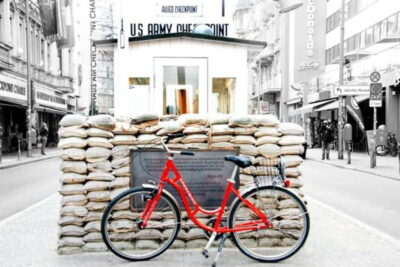
Alternative Bike Tour of Kreuzberg & Friedrichshain
Read our review →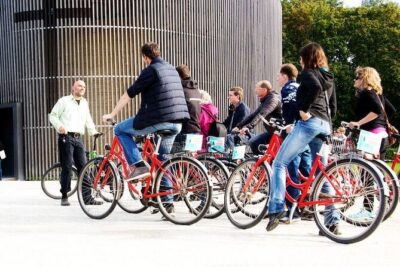
Browse the lists this tour appears in