
REVIEW · SIEM REAP BIKE TOURS
Cycle Angkor Backroad Bike Tour / E-Bike or Tuk Tuk
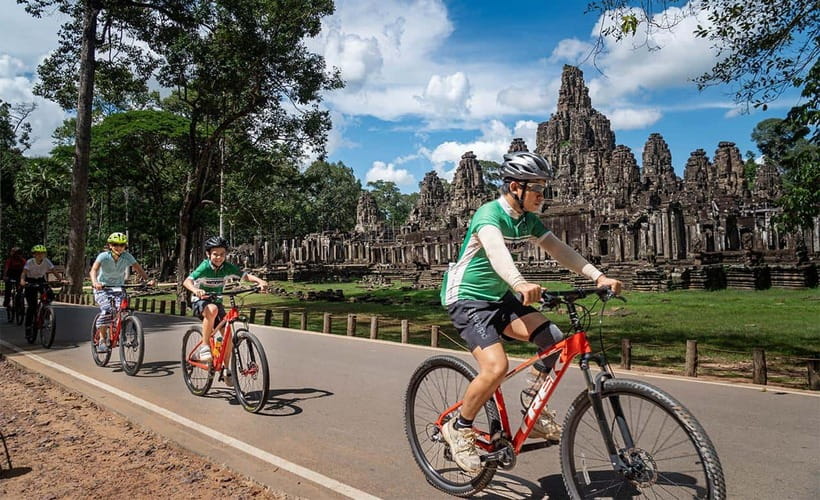
Angkor is better on two wheels. This $55 day tour trades crowded roads for shady forest tracks, linking Angkor Thom, Bayon, Ta Prohm, and Angkor Wat with a friendly English-speaking guide. I especially like the quiet backroads and the chance to stop for Cambodian food, fruit, and snacks along the way. The one drawback is the length: eight hours and as much as 45 kilometers can feel demanding in Cambodia’s heat.
I also like the small-group setup, capped at 12 people, and the care given to bike fit and safety. Guides including Voleak, Sotin, Steven, Mony, and Muniz have received praise for adapting the pace, explaining temple history clearly, and taking good photos. Still, you should be comfortable cycling for much of the day, and the tour runs rain or shine.
Key points to know before booking
- Quiet temple access: Forest trails and less-used paths help you escape much of the road traffic around Angkor.
- A full temple day: Angkor Thom, Bayon, Ta Prohm, and Angkor Wat are all included, with plenty of time for walking and photos.
- Around 45 kilometers is possible: The route is mostly flat and often shaded, but this remains an active day.
- Good food is part of the experience: Lunch, bottled water, fruit, and local snacks are included.
- Small groups help: With no more than 12 participants, your guide can adjust the pace and answer questions.
- The park pass costs extra: You must buy Angkor Archaeological Park admission separately.
Why cycling Angkor works so well
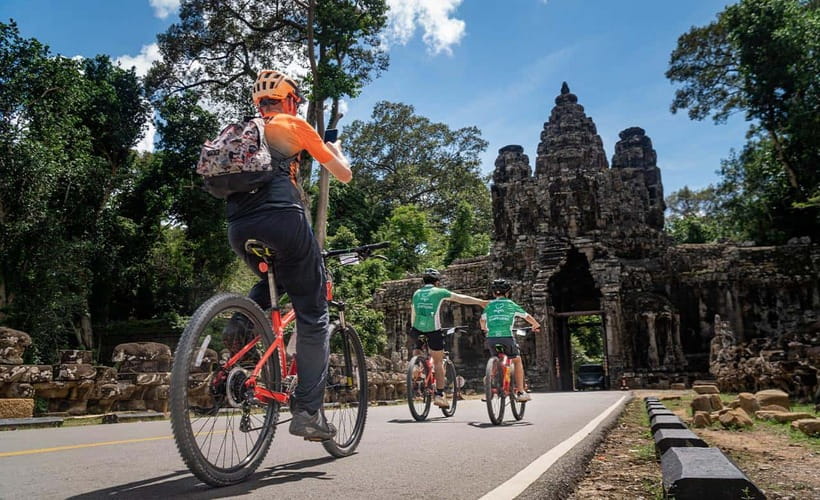
The temples of Angkor are spread across a large area. A vehicle gets you from one monument to the next, but a bicycle lets you feel the space between them. You pass beneath trees, hear the forest around you, and approach the ruins at a calmer pace.
That matters most in the quieter sections of the park. Main roads can be busy with cars, tuk tuks, and tour buses, while the backroad route uses forest paths and smaller tracks. You will still visit the major monuments, but the day does not feel like a string of hurried roadside stops.
The route is described as mostly flat and often shaded. That makes it friendlier than a hillier cycling excursion, though flat does not mean effortless. In strong heat, even a gentle ride becomes work. A report of roughly 45 kilometers gives you a useful idea of the possible distance, so bring cycling clothes and be honest about your fitness level.
Your guide meets you after morning pickup and takes you to the Siem Reaper shop. There, you receive your bicycle and helmet, review the plan, and go over safety details before setting off. The bikes have been praised for being clean, well maintained, and in good working order.
The experience is designed for a small group of up to 12 people. That is a sensible size for narrow paths and temple stops. If the group is smaller, your guide may be able to adjust the speed and spend more time on subjects that interest you. One solo participant found the guide still ran the tour rather than canceling, which shows useful flexibility, though you should not assume every departure will operate privately.
More E-Bike Tours in Siem Reap:
- Siem Reap Countryside Bike Tour / E-Bike or Tuk Tuk
★ 5.0 · 935 reviews - Angkor Sunrise Bike Tour / E-Bike or Tuk Tuk
★ 5.0 · 615 reviews - From Siem Reap: Angkor Wat Sunrise and Temples E-Bike Tour
★ 5.0 · 52 reviews
Entering Angkor Thom through the elephant gate
Your first major temple area is Angkor Thom, the ancient city entered through a dramatic gate carved with elephants and topped by four giant faces. Cycling toward it gives you a gradual introduction to the scale of the old Khmer capital.
The gate is an excellent first photo stop, but do not rush past the details. Your guide can explain the meaning of the carvings and place the gate within the wider plan of Angkor Thom. The large entrance also gives you a sense of how ceremonial this city once was.
From the gate, you continue to Bayon Temple, located near the center of Angkor Thom. Bayon is famous for its serene stone faces, which look down from the towers in different directions. The setting can feel crowded around the most photographed areas, but the bicycle route helps you arrive without spending the whole morning in vehicle traffic.
Allow time to look closely at the reliefs and towers. Bayon is not just a quick photo stop. Its carved scenes show daily life, battles, processions, and courtly activity. A good guide makes the stone easier to read, especially when the towers begin to blend together.
The stated schedule allows about two and a half hours for this part of the park, including Bayon and nearby sights. That is generous compared with a rushed transport-based visit. The tradeoff is that you need to manage your energy early, since there is still a long ride and more temples ahead.
Terraces and Baphuon, a short look at Khmer power
After Bayon, the ride continues through the Terrace of the Elephants and Baphuon Temple. These stops add variety because they are not simply another set of towers surrounded by jungle.
The Terrace of the Elephants is known for its long sculpted frontage and images of elephants. It served as a ceremonial platform, and its scale makes more sense when you view it from a distance before walking closer.
Baphuon offers a different architectural experience. Its raised form and stonework show the ambition of Angkor’s builders, while the approach gives you good views across the surrounding area. You may find the walking surfaces uneven around the temple complex, so shoes with secure soles are wise.
This part of the morning is valuable because it widens the story beyond the three famous names. Angkor is not one monument. It is a huge former city, and the terraces, gates, walls, reservoirs, and smaller paths help explain how the major temples fit together.
Forest tracks to Ta Prohm
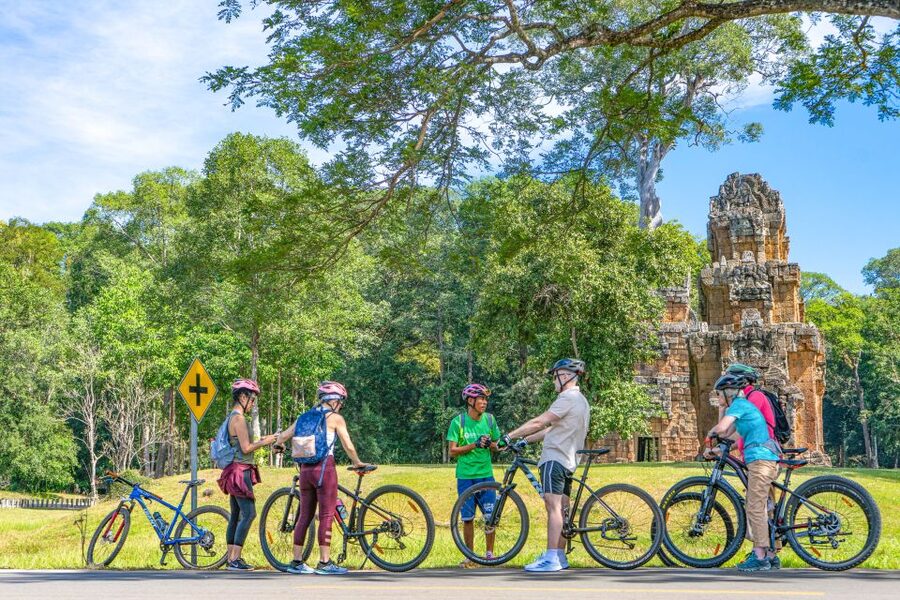
The ride to Ta Prohm is one of the strongest parts of the day. Instead of staying on the busiest roads, you continue along forest trails where shade makes the cycling more pleasant and the journey itself becomes part of the visit.
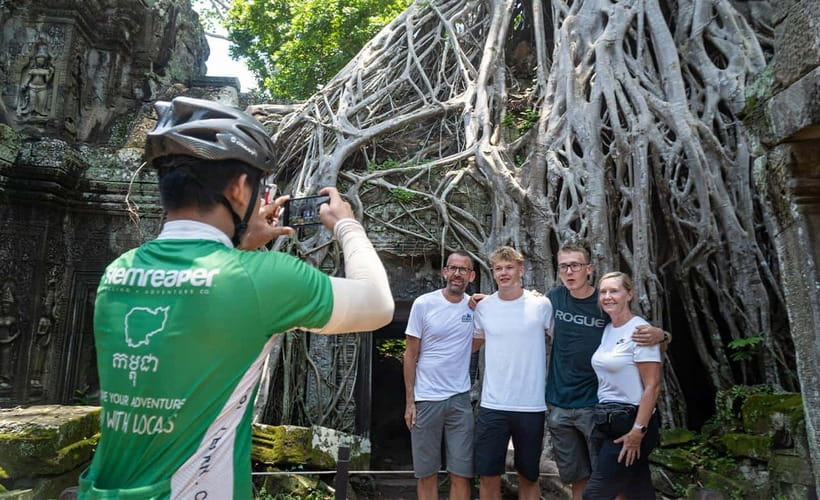
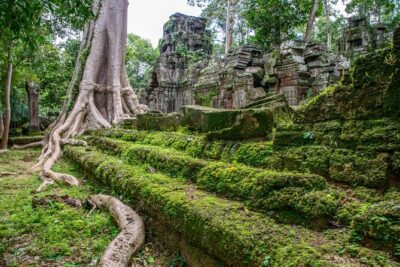
Ta Prohm is the temple most closely linked with the film Tomb Raider. Its appeal comes from the way trees press against the stone, with roots winding over walls and doorways. The jungle growth is dramatic, but the temple is not simply a movie backdrop. You can see how nature and architecture have been left in close contact, creating a place that feels different from the more open Angkor Wat.
Your guide will lead you through the temple and explain its purpose, design, and place in Angkor’s story. Take care on the stone surfaces, especially if rain has passed through. The tour operates in all weather, so the paths may not feel equally easy every day.
The schedule gives Ta Prohm about two hours. That is enough for a proper visit, but the cycling means you should resist trying to see every corner at top speed. Stop for the details: carved figures, root-covered galleries, and views through broken doorways.
More Tuk-Tuk Rides in Siem Reap:
- Siem Reap: Countryside Sunset Bike Tour / E-Bike or Tuk Tuk
★ 4.7 · 13 reviews - Phnom Penh Silk Island Bike Tour/ E-Bike or Tuk Tuk
★ 5.0 · 495 reviews
Cambodian lunch beside a tropical garden
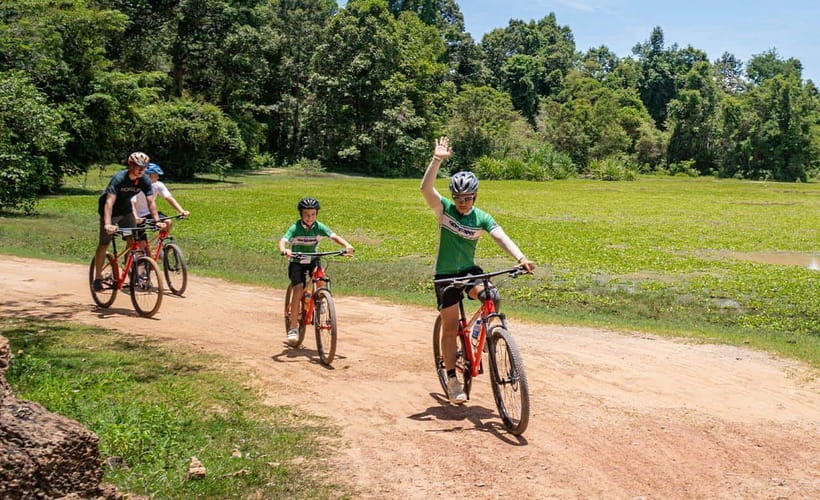
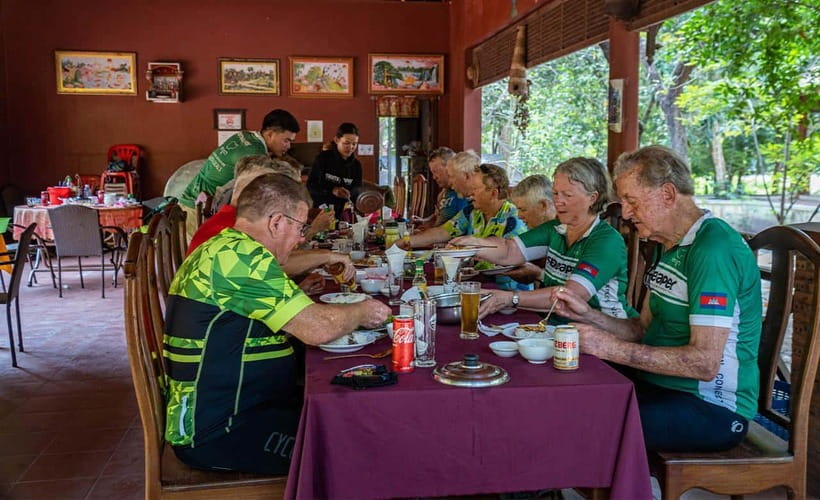
Lunch comes at a local restaurant by a tropical garden with a view over a pond. That setting gives you a proper pause rather than a quick meal squeezed between monuments.
The meal is Cambodian style, and the food is included along with bottled water and snacks. Fruit is also part of the day, and one guide introduced a participant to street food and helped collect cashews. Those small additions can make the outing feel more connected to local life instead of being only an archaeological tour.
You should treat lunch as an important rest period. Eight hours on a bike is a long day, even with frequent stops. Eat, refill your water, and let your legs recover before the final temple visit.
The food has received strong praise, but keep in mind that exact dishes can vary. The supplied details promise Cambodian-style lunch, local snacks, fruit, and bottled water, not a fixed menu. If you have food restrictions, ask about them when booking.
Angkor Wat late in the afternoon
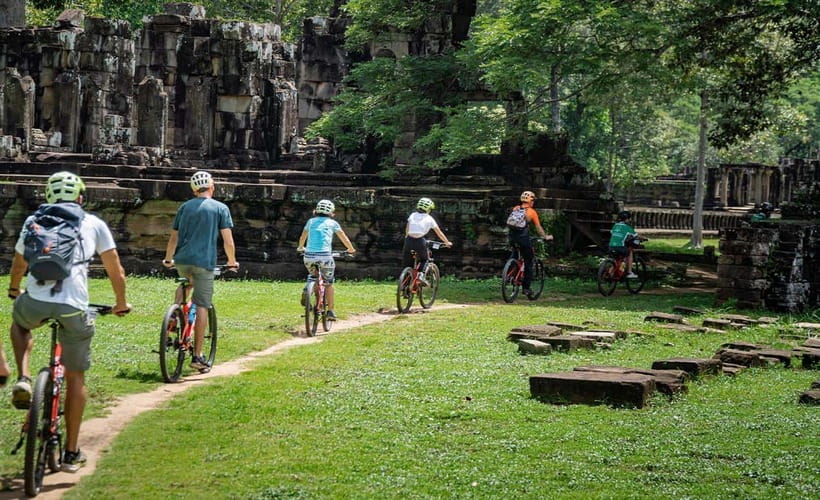
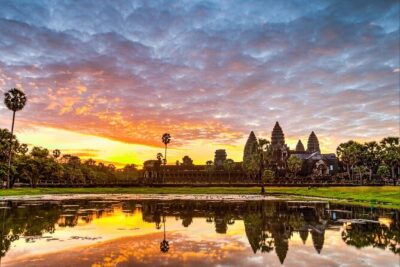
The final major visit is Angkor Wat, the largest religious monument in the world and the best-known example of Khmer architecture. Reaching it later in the day is a smart part of the plan. The morning crowds have often thinned, and the lower light can make the stone towers and galleries look softer.
Angkor Wat rewards patience. Begin with the broad view, then move through the galleries and reliefs at a steady pace. Your guide can explain the temple’s symbolism, layout, and religious purpose, helping you see more than a famous outline on a postcard.
The afternoon timing also changes the mood. After seeing smaller forest temples and the busy stonework of Bayon, Angkor Wat feels broad, ordered, and monumental. You have already spent hours moving through the park, so this final stop may be physically tiring. The advantage is that you arrive with a better sense of how Angkor’s different temple styles relate to one another.
The schedule allows about two and a half hours for Angkor Wat. That is enough time for a substantial visit, though the exact order and pace can change with weather, group ability, and temple conditions. Return to Siem Reap is expected around 4 p.m.
What the guides add to the day
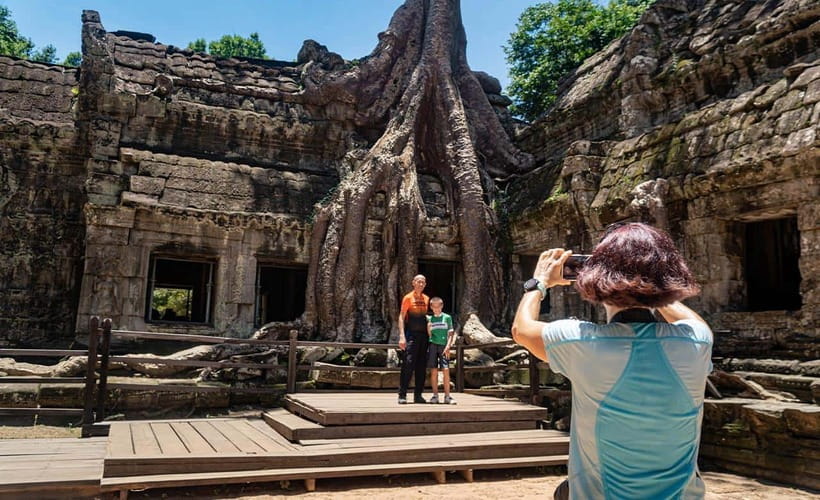
The guide can make or break a temple tour, and this experience has a strong record on that point. Voleak was praised for quickly judging cycling ability, adapting the explanation to personal interests, and answering questions in excellent English. He also paid close attention to safety and helped with photographs.
Sotin gave a full safety briefing before departure. Steven was praised for explaining both Angkor and everyday life in Cambodia, while keeping the route comfortable and supplying cool water. Mony and Muniz also received warm praise for their friendly, capable approach.
You should still treat these names as examples, not a guarantee of your assigned guide. The important point is the role the guide is expected to play: route leader, temple interpreter, safety check, and practical helper. In a small group, you have a better chance to ask questions than on a large bus tour.
Cost, equipment, and what is not included
At $55 per person, the tour offers good value if you want transport, a guide, a bicycle, lunch, water, snacks, and hotel pickup and drop-off in one package. You are also paying for the backroad route and the time saved by linking several major temples efficiently.
The key extra cost is the Angkor Archaeological Park entrance ticket. That is not included, so add it to your daily budget before comparing this tour with a tuk tuk or private car. The $55 price is especially appealing for people who would otherwise need to arrange a vehicle, guide, food, and bike separately.
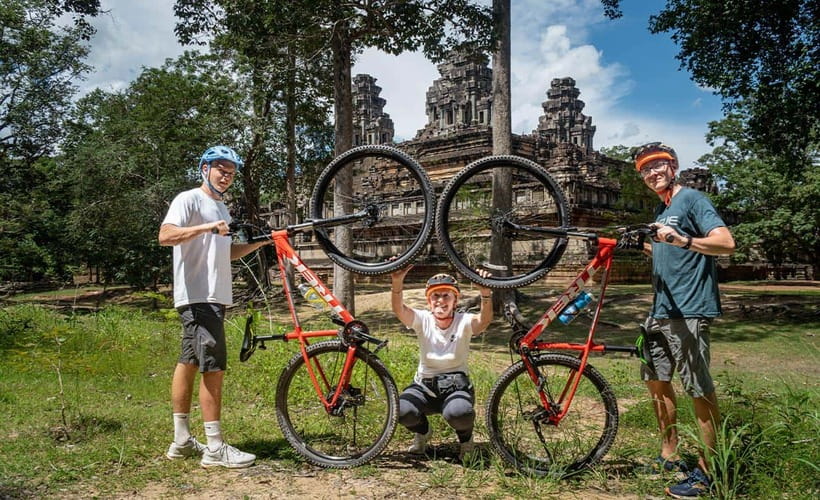
The included bicycle and helmet are important. The equipment has been described as high quality, and the bikes were reported to work well. The activity information also presents e-bike or tuk tuk options in its title, but the included equipment specifically lists a bicycle and helmet. If you want an e-bike or tuk tuk instead of a standard bicycle, confirm that option before paying.
Wear proper cycling clothing, bring sunglasses, and carry a camera if you want photographs. Bottled water and snacks are supplied, but Cambodia’s heat can be tiring, so use every water stop. Pregnant women should not book this activity.
Free cancellation is available up to 24 hours before departure, and you can reserve now and pay later. Hotel pickup is optional, and if you use it, wait in the lobby 15 minutes before the scheduled time.
Who should book this Angkor bike tour?
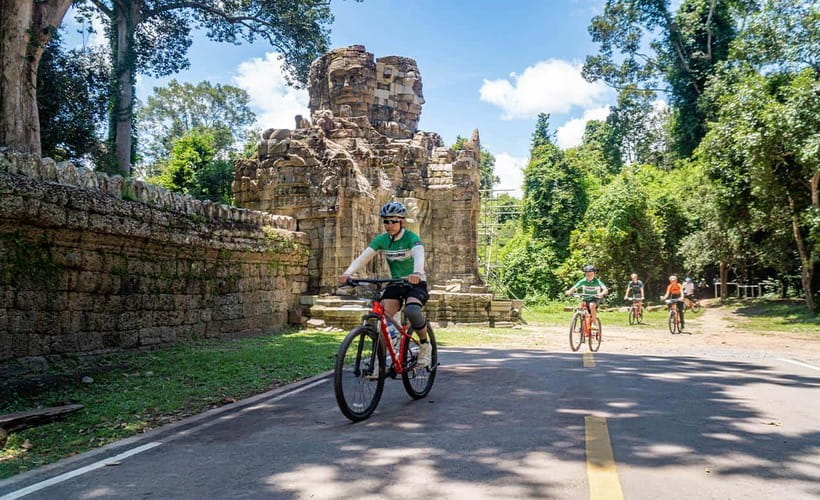
I would recommend it to active visitors who want to see the major temples without spending the whole day inside a vehicle. It suits people who enjoy the journey between sights, want a quieter route, and like having a guide explain the carvings and history along the way.
It is also a good choice for a first Angkor visit. You cover the big names, but the forest paths and extra stops give you a broader view than a simple Angkor Wat and Ta Prohm transfer.
I would think twice if you dislike heat, long bike rides, or uneven temple paths. The day can be shortened in places only if the guide and group agree, and the route is built as a full eight-hour outing. Pregnant women should choose another way to see the temples.
FAQ
How long does the Cycle Angkor Backroad Bike Tour last?
The activity lasts eight hours, with pickup in the morning and an expected return to Siem Reap around 4 p.m.
What temples are included?
The route includes Angkor Thom, Bayon Temple, the Terrace of the Elephants, Baphuon Temple, Ta Prohm, and Angkor Wat.
Is lunch included?
Yes. A Cambodian-style lunch at a local restaurant is included, along with bottled water, snacks, and fruit.
Is the Angkor park entrance ticket included?
No. Entrance to the Angkor Archaeological Park must be paid separately.
Is bicycle equipment provided?
Yes. A bicycle and helmet are included. The equipment has been described as clean and well maintained.
How far might I cycle?
The route is mostly flat and often shaded, but one account recorded about 45 kilometers. You should be prepared for a substantial day on a bicycle.
What language does the guide speak?
The live guide speaks English.
How large is the group?
The group is limited to 12 participants. On some departures, the group may be much smaller.
Can I cancel the booking?
Yes. You can cancel up to 24 hours in advance for a full refund, and the reserve-now, pay-later option keeps payment flexible.
Should you book it?
Book this tour if you want Angkor with fresh air, quiet forest paths, and a bit of exercise between the monuments. The combination of good bikes, careful guides, included lunch, and access to the four major temple areas makes $55 a fair price, as long as you budget separately for park admission.
Skip it if you want a short, effortless temple day. For everyone else, especially cyclists who want a more personal look at Angkor, this is a strong way to cover a lot of ground without feeling locked inside a vehicle.
Newly added rides around Siem Reap
- Siem Reap: Bike the Angkor Temples – Full-Day 30km Tour★ 4.9 · 159 reviews
- Siem Reap: Bike Rental★ 4.7 · 12 reviews
- Siem Reap: Countryside Cycle and Local Village Life Tour★ 4.7 · 32 reviews
- Kampong Phluk: Floating Village Sunset Bike Tour or E-Bike★ 5.0 · 11 reviews
- Siem Reap: Countryside Sunset Bike Tour / E-Bike or Tuk Tuk★ 4.7 · 13 reviews
- Siem Reap: Angkor Sunset Bike & Boat Tour /E-Bike Available★ 4.9 · 23 reviews
- From Siem Reap: Angkor Wat Sunrise and Temples E-Bike Tour★ 5.0 · 52 reviews
- Siem Reap: Angkor Wat Sunrise Bike Tour & Jungle Breakfast★ 4.9 · 141 reviews
Siem Reap Bike Tours, compared.
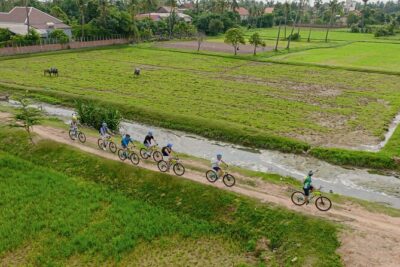
Siem Reap Countryside Bike Tour / E-Bike or Tuk Tuk
Read our review →
Angkor Wat Sunrise Bike Tour & Jungle Breakfast
Read our review →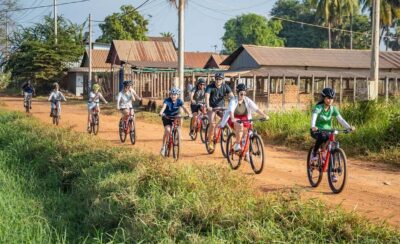
Angkor Wat Sunrise Bike Tour & Jungle Breakfast
Read our review →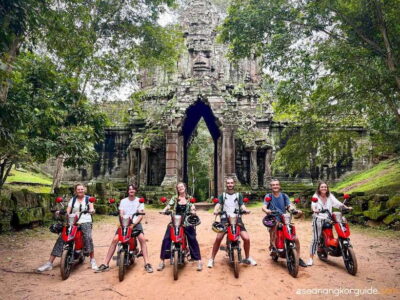
Browse the lists this tour appears in