
REVIEW · SIEM REAP BIKE TOURS
From Siem Reap: Angkor Wat Sunrise and Temples E-Bike Tour
Wake up early, ride farther, see more. This nine-hour Angkor tour combines sunrise at Angkor Wat with electric-bike routes through forest roads, village lanes, and temple entrances that larger vehicles cannot reach. I like the mix of major sights and local stops, especially the Khmer breakfast in Preah Dak village and the chance to sample snacks at a Siem Reap market.
I also like the practical support. A tuk-tuk collects you at 4:40 am, follows the group during much of the bike route, carries backpacks, and provides cold water, coconut, seasonal fruit, and chilled towels. The main consideration is the early start, plus the extra cost of the Angkor pass. At $85, this is not the cheapest temple tour, and the required one-day pass adds $37 per person.
The guides are a major part of the experience. Mr August, Raman, Sa, Jan, Mr Ho, and Makara have all been praised for temple knowledge, photography, patience, and careful routing. Since private and small-group options are available, you get a more personal day than you usually would on a large bus tour.
Key points to know before booking
- Sunrise begins at 4:40 am: You leave Siem Reap by tuk-tuk and walk toward Angkor Wat in darkness, so expect a long wait before the sun appears.
- The bikes are easy electric scooters: They require little effort, but some temple roads are rocky or sandy, so confidence on two wheels helps.
- Breakfast is genuinely local: In Preah Dak village, you can try Khmer rice noodles with fish green curry, palm cake, and steamed rice dumplings with palm sugar.
- The route avoids some crowds: E-bikes can reach smaller entrances and forest paths near Ta Prohm, Ta Nei, and other temple areas.
- The tuk-tuk stays useful all day: It follows when possible, helps shield riders from traffic, stores bags, and supplies cold drinks and towels.
- Budget $122 before lunch: The tour costs $85, and the one-day Angkor pass costs another $37. Lunch and drinks beyond the supplied refreshments are not included.
Why the 4:40 am start is worth considering
The day begins before most sensible people have finished sleeping. Your guide and tuk-tuk driver collect you from your hotel lobby at 4:40 am, and the ride to Angkor Wat takes roughly 20 to 30 minutes depending on the starting point and traffic.
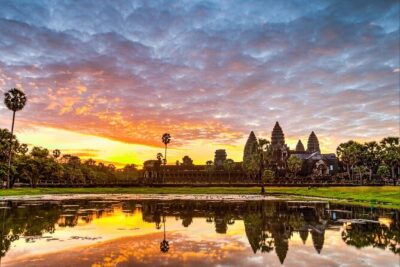
You then walk through the entrance area toward the temple and reflecting pool. The grounds are dark, and a flashlight from the guide may be useful as you find a position near the water. The wait can be long. One outing involved arriving around 5 am for a sunrise at about 6:30 am, so bring patience along with your camera.
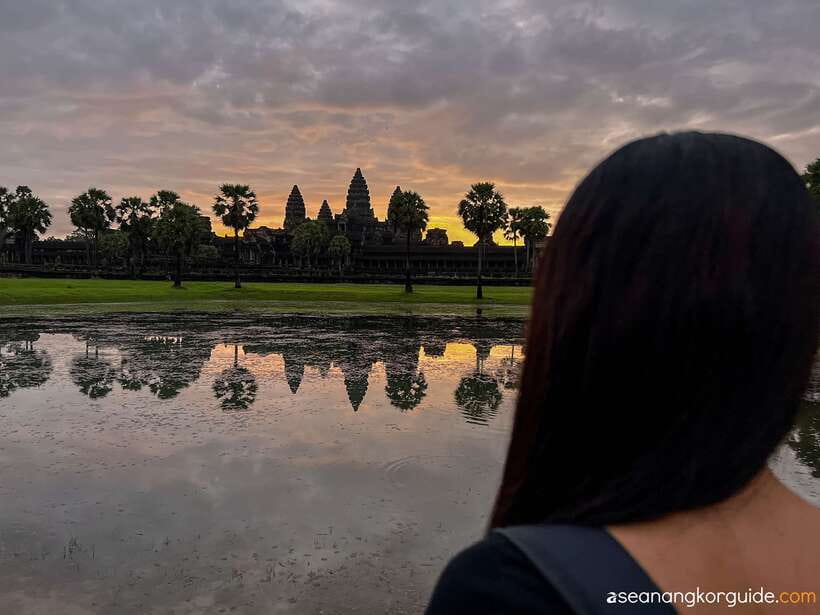
That waiting time is the tradeoff for a good viewing position. Angkor Wat’s towers gradually appear as the sky brightens, and the reflection pool gives you the classic temple image. Clouds can soften or partly hide the sunrise, as happened on one visit, but the temple itself remains impressive in the changing light.
After sunrise, allow about an hour and a half to explore Angkor Wat. Your guide can explain the galleries, carvings, religious symbols, and construction details instead of leaving you to wander through a huge monument with no context. This is where guides such as August, Raman, and Ho have been especially praised for clear English and careful explanations.
More E-Bike Tours in Siem Reap:
- Siem Reap Countryside Bike Tour / E-Bike or Tuk Tuk
★ 5.0 · 935 reviews - Angkor Sunrise Bike Tour / E-Bike or Tuk Tuk
★ 5.0 · 615 reviews - Siem Reap: Angkor Sunset Bike & Boat Tour /E-Bike Available
★ 4.9 · 23 reviews
Angkor Wat with a guide who knows where to pause
Angkor Wat is not a quick photo stop. The scale is hard to grasp from the outside, and the carvings and galleries reward a slower look. You will encounter steps, long corridors, and uneven surfaces, so the day requires some mobility.
A good guide also helps with the rhythm of the morning. You can spend enough time on the central temple without burning all your energy before the bike ride. Several guides have also been praised for taking photos, including finding good angles and sending the images later. That can be useful for solo visitors, who otherwise have to rely on a stranger or a timer.
The guide service is more than historical commentary. Mr Ho helped a visitor with temple steps, while other guides adjusted the order of stops to reduce crowding. That flexibility matters because the Angkor complex can feel very different depending on when you arrive.
Trading the tuk-tuk for an e-bike
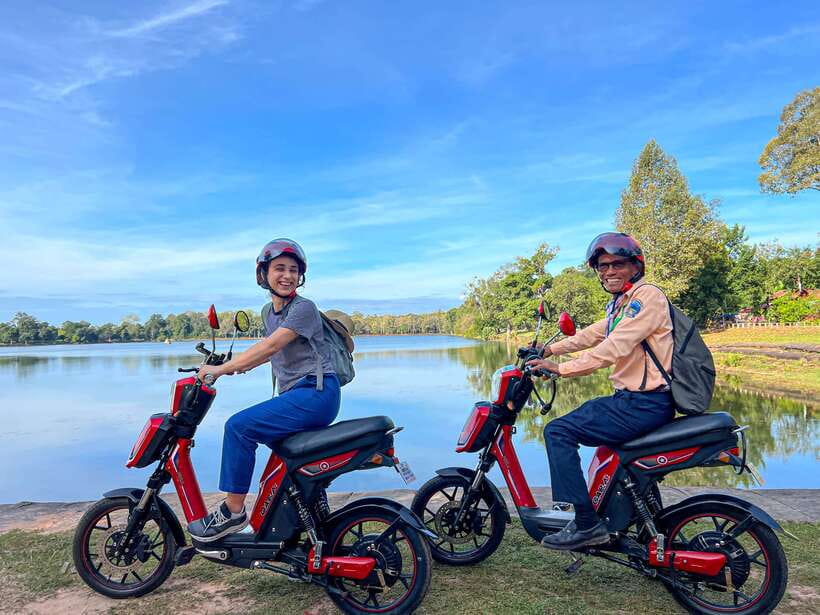
After Angkor Wat, you switch to an e-bike and head toward Preah Dak village. The bikes are described by one rider as more like electric scooters than conventional pedal-assist bicycles. They are easy to operate and require little physical effort, which makes them a practical way to cover a large park in hot weather.
You still need to be comfortable steering, braking, and riding near other traffic. Some smaller routes are rocky, sandy, or uneven. One rider who mountain bikes would likely feel at home, while anyone nervous on two wheels may prefer the tuk-tuk backup.
The support arrangement is one of the strongest features. The tuk-tuk follows the group on the public roads when possible and can wait at the next stop when the bikes use narrow paths. Drivers have been praised for riding behind the group to help protect riders from traffic, carrying bags, and providing cold bottles of water and towels.
This is not a completely independent cycling trip. You are guided, supported, and directed through the park. That makes it less adventurous than setting out alone, but much easier and safer for a first visit.
Preah Dak village and a breakfast worth waking for
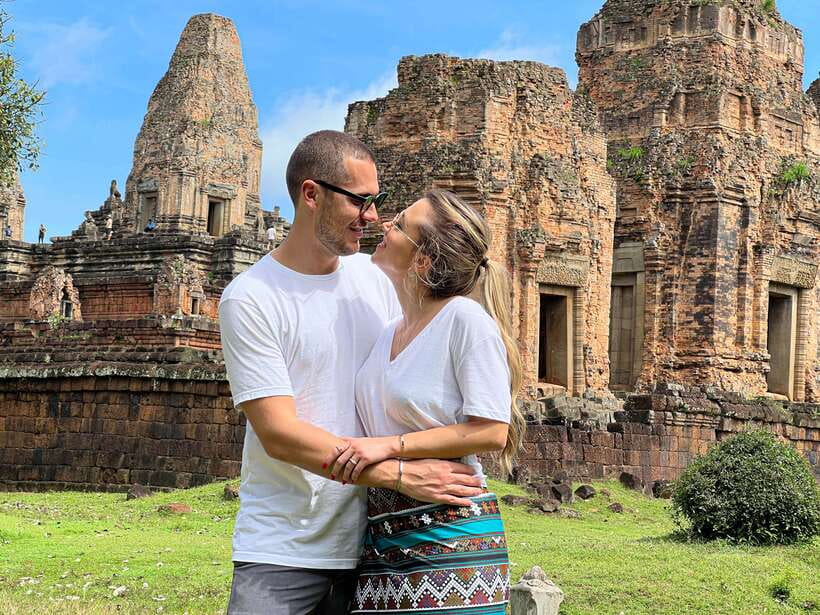
The breakfast stop gives the day a welcome change of pace. In Preah Dak village, you can eat Khmer rice noodles served with fish green curry soup, followed by traditional sweets such as palm cake and steamed rice dumplings with palm sugar.
This is a better introduction to Cambodian food than a standard hotel buffet. You get familiar dishes in a local setting, with your guide explaining what you are eating. Homemade desserts and palm sugar also connect the meal to ingredients and food traditions found around the villages near Angkor.
The tour includes breakfast, seasonal fruit, coconut, and water. Lunch is not included, so do not assume the morning meal will carry you through the full nine hours. Bring some cash for extra food or drinks, especially if you know you need a substantial midday meal.
More Sunset Bike Tours in Siem Reap:
- Siem Reap: Angkor Wat Sunrise Bike Tour & Jungle Breakfast
★ 5.0 · 415 reviews - Siem Reap: Angkor Wat Sunrise Bike Tour & Jungle Breakfast
★ 4.9 · 141 reviews - Angkor Wat: Guided Sunrise Bike Tour w/ Breakfast and Lunch
★ 4.8 · 48 reviews - Siem Reap: Countryside Sunset Bike Tour / E-Bike or Tuk Tuk
★ 4.7 · 13 reviews
A local market stop with some brave snack choices
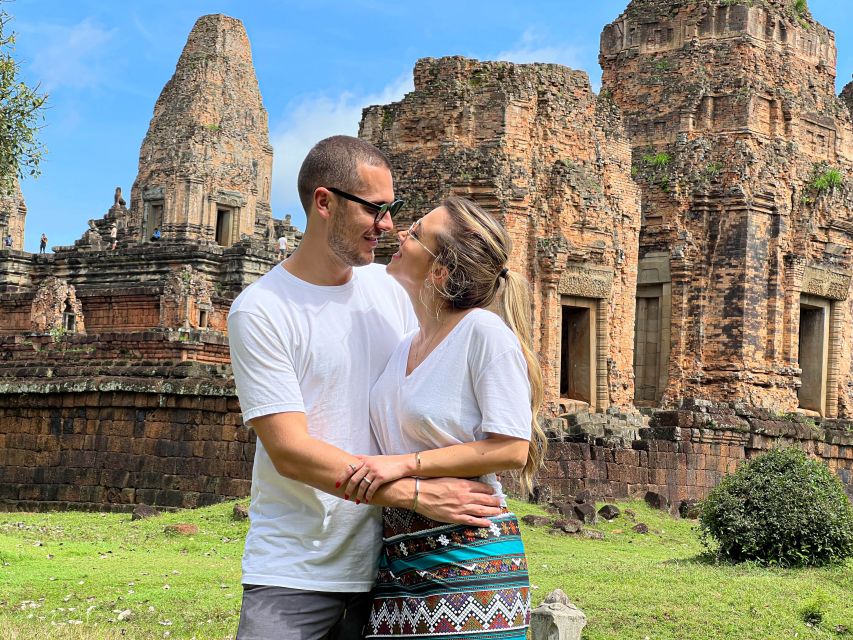
Before the next temples, the route includes a local market in Siem Reap. You can walk between food stalls and look at sticky rice, cakes, fruit, egg noodles, and other Cambodian specialties.
The market stop is useful because it shows ordinary food shopping rather than only monuments. You might also see fried spiders and scorpions. Sampling them is optional, and nobody should feel obliged to turn breakfast into a stunt. The value is in seeing the range of foods and deciding for yourself what looks appealing.
The market can also be a good place to notice the difference between a packaged sightseeing stop and a real local food area. Prices are described as fair, and the atmosphere is friendly rather than pushy. Still, tastes, cleanliness standards, and comfort levels vary, so choose food sensibly and follow your guide’s advice.
Ta Prohm and Ta Nei by the back routes
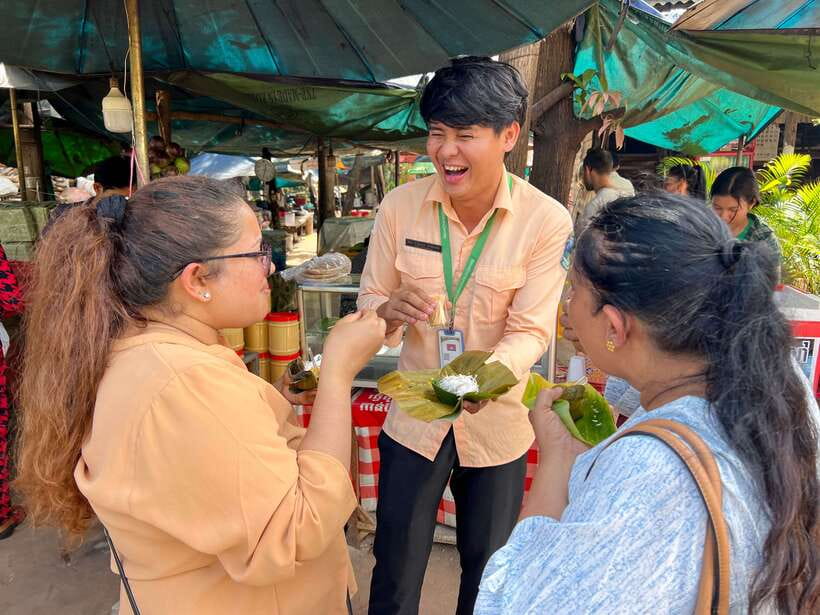
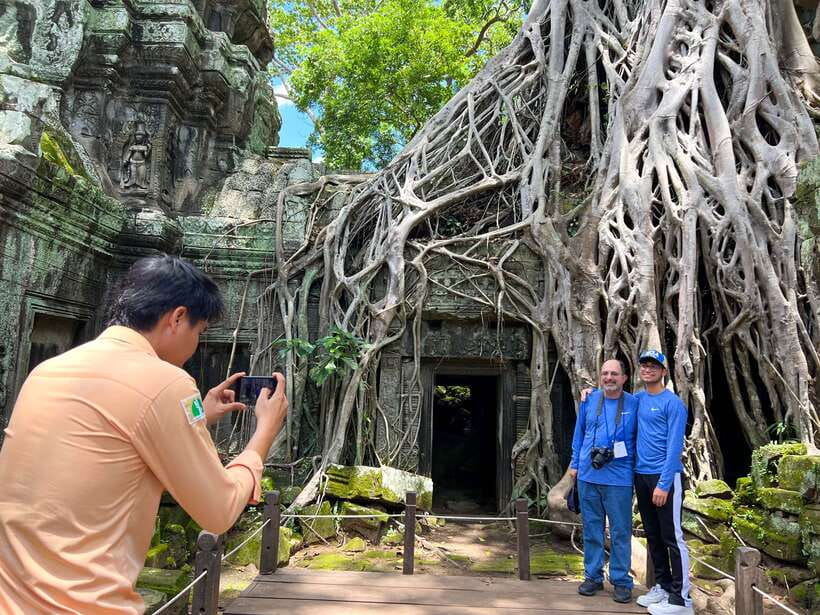
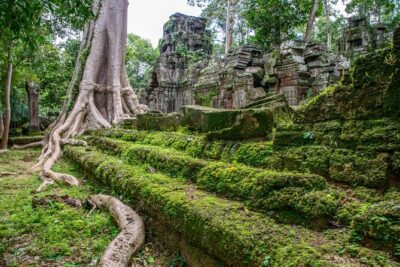
Ta Prohm is the temple most people associate with trees growing over stone. Huge roots wrap around walls and doorways, while sections of the complex remain partly overgrown. It is atmospheric, but also one of the best-known stops in the Angkor Park.
The e-bike helps you approach from less-used entrances and forest routes. You can sometimes get closer to temple access points than visitors arriving by bus, and you avoid turning every transfer into a long walk under the sun. Guides also know how to adjust the order if crowds build up.
Ta Nei is smaller and quieter, and its partly overgrown setting gives it a rougher feel. The contrast with Angkor Wat is part of the appeal. Angkor Wat shows grand planning and scale, while Ta Nei offers a more secluded look at stonework being slowly reclaimed by trees.
Do not expect a smooth cycle path throughout this section. Sand, stones, and uneven ground are part of the route. The tuk-tuk can support you on the road portions, but this is still a poor match for anyone who cannot comfortably manage an e-bike.
Bayon and the Victory Gate of Angkor Thom
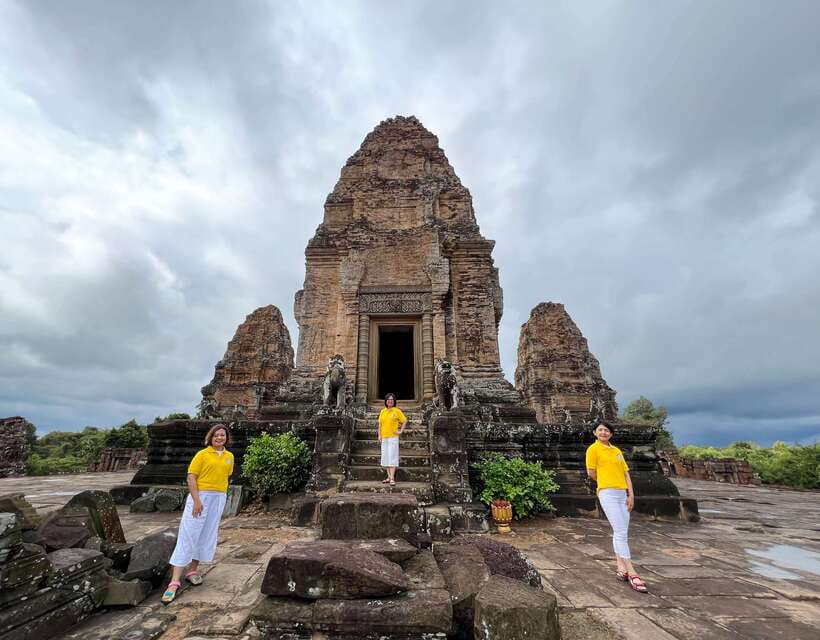
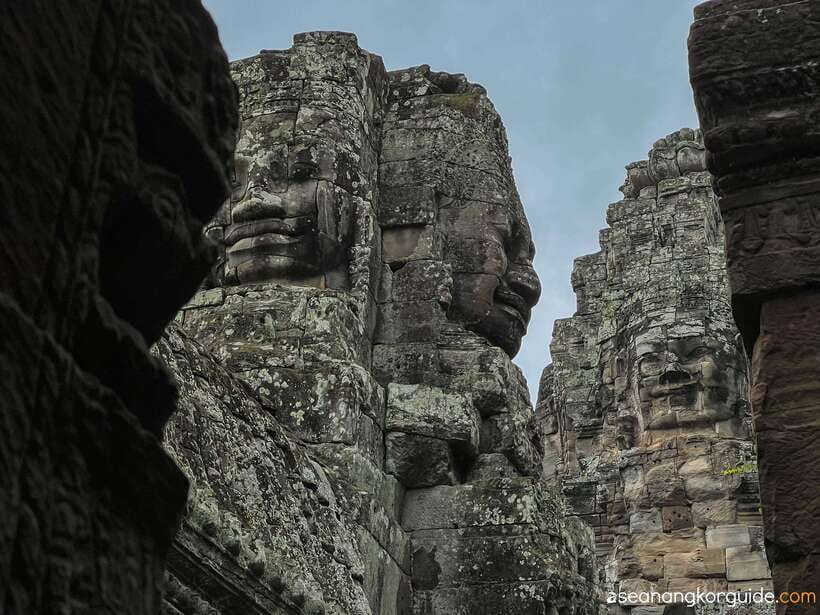
The Bayon brings you back to one of the park’s major landmarks. Its carved Buddha faces are famous for their calm, smiling expressions, and the close-set towers can feel confusing until a guide points out the design and meaning.
Your guide can explain the role of Bayon within Angkor Thom and discuss King Jayavarman VII, the Mahayana Buddhist ruler associated with the temple. Bayon served religious, educational, and administrative functions, so it was more than a ceremonial monument.
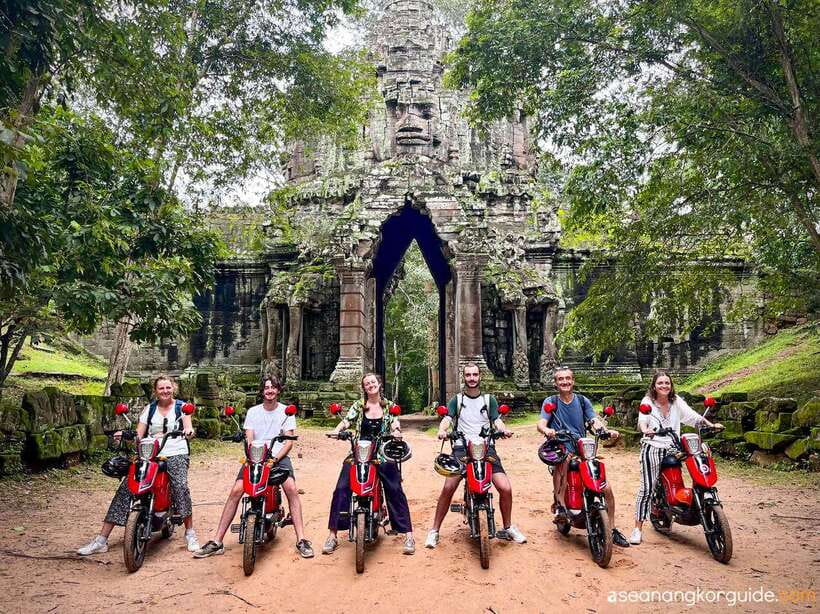
The route also includes the Victory Gate of Angkor Thom. It is a worthwhile stop because the gate helps you understand the scale and planning of the old city. Rather than seeing Bayon as an isolated ruin, you begin to see it as part of a larger urban and religious center.
The temples involve steps and uneven stone. Mr Ho was praised for helping with difficult sections, but you should still wear secure shoes and move at your own pace. Sleeveless shirts are not allowed, so dress modestly from the start. Loose, breathable clothing with covered shoulders is the sensible choice.
What the $85 price really covers
The listed price is $85 per person. That includes an English-speaking guide, the e-bike, hotel pickup and drop-off by tuk-tuk, breakfast, water, coconut, seasonal fruit, and towels.
You must add the one-day Angkor pass, priced at $37 per person. That brings the known cost to $122 before lunch and any additional drinks. The price is therefore much higher than a basic tuk-tuk loop or large group bus outing.
I think the extra cost makes sense if you care about three things: a private or small-group pace, access to quieter routes, and personal guidance at the temples. It also helps that the tuk-tuk remains with you rather than leaving you to manage bags, water, and transport alone.
The value is weaker if you only want to see Angkor Wat quickly, dislike early mornings, or have no interest in local food and riding. A cheaper transport option may suit you better. You are paying for the combination of support, flexibility, food, and access, not simply for entry to the temples.
Who will enjoy this day most
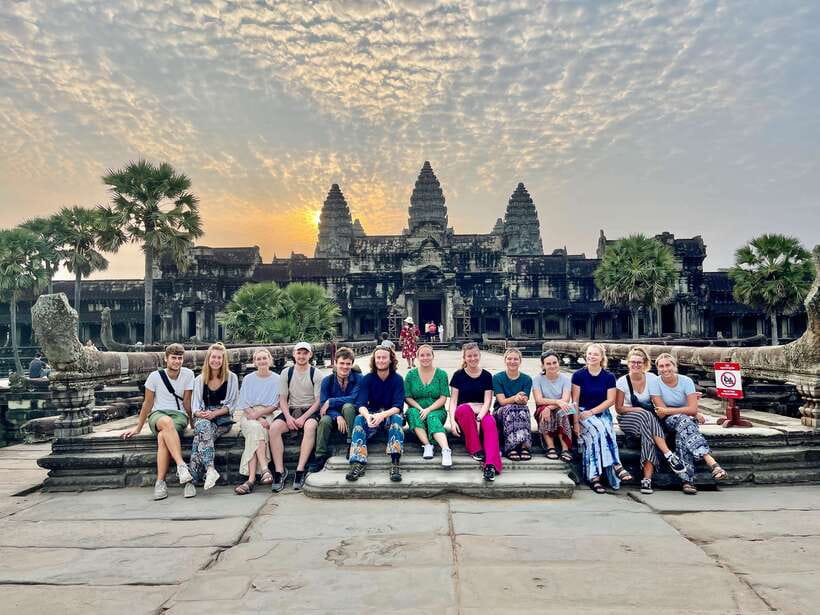
I would choose this tour for a first visit to Angkor when you want the famous sights but do not want to spend the entire day in a vehicle. It suits couples, families with older children, solo visitors, and small groups who enjoy moving at a lively pace.
The e-bikes were a hit with children aged 14, 15, and 17, and several solo visitors appreciated having a guide who could take photos. The private format also lets the guide respond to your interests. If you have already seen the main temples, tell the guide in advance. Mr August adjusted one outing for people who had already completed a two-day temple visit and created a different route.
This is not suitable for pregnant people or anyone over 70 according to the activity information. The operator also advises against the tour for people who may struggle with the early start, temple steps, or rough bike paths.
Practical details to handle before you go
Wear covered shoulders, comfortable shoes, and clothing suited to heat. Sunscreen and insect repellent were useful recommendations from previous outings, particularly because some riding takes place near forested areas.
Keep your morning schedule clear. The tour lasts nine hours, beginning at 4:40 am, and the combination of sunrise waiting, walking, riding, and temple visits can be tiring. Cold towels, water, coconut, and fruit help, but they do not replace rest.
The tour offers free cancellation up to 24 hours in advance and lets you reserve now and pay later. Pickup is included, and you should wait in your hotel lobby about 10 minutes before the scheduled time.
Should you book the Angkor sunrise e-bike tour?
Book it if you want Angkor Wat at sunrise, local breakfast, smaller temple routes, and a guide who stays involved all day. The strongest reasons are the flexible routing, the e-bike access near Ta Prohm and Ta Nei, and the tuk-tuk support that keeps the ride comfortable.
Skip it if $122 before lunch feels too high, if you dislike riding, or if a 4:40 am pickup sounds unbearable. For everyone else, this is a well-rounded way to meet Angkor: grand temple first, village food next, then forest roads and famous ruins by electric bike.
FAQ
What time does the tour start?
Pickup begins at 4:40 am from your hotel in Siem Reap. You should wait in the hotel lobby about 10 minutes before the scheduled pickup time.
How long does the tour last?
The activity lasts nine hours.
Is the Angkor pass included?
No. The one-day Angkor pass costs $37 per person and is paid separately from the $85 tour price.
What food is included?
Breakfast includes local Khmer food and homemade dessert. The stated examples include rice noodles with fish green curry soup, palm cake, and steamed rice dumplings with palm sugar.
Is lunch included?
No. Lunch and additional beverages are not included.
What transportation is provided?
Hotel pickup and drop-off are provided by tuk-tuk. You use an e-bike for much of the route through Angkor Park, while the tuk-tuk follows when possible and meets you at later stops.
Are the e-bikes difficult to ride?
The bikes are described as easy to operate and more like electric scooters than traditional bicycles. Some routes near the temples are rocky or sandy, so you should be comfortable steering and riding on uneven surfaces.
What should I wear?
Sleeveless shirts are not allowed. Wear clothing that covers your shoulders and comfortable shoes suitable for temple steps and uneven ground.
Is the tour suitable for everyone?
The activity is not suitable for pregnant women or people over 70. Private and small-group options are available, and an English-speaking guide leads the tour.
More Morning Departures in Siem Reap
- 3-Hour Morning Bike Tour of Jaipur
★ 5.0 · 1,253 reviews - Haleakala Sunrise Best Self-Guided Bike Tour
★ 4.5 · 745 reviews - Hiroshima in a Nutshell: Morning Bike Adventure
★ 5.0 · 524 reviews - Day Trip to Nami Island with Rail bike and The Garden of Morning Calm
★ 4.5 · 459 reviews
Newly added rides around Siem Reap
- Siem Reap: Bike the Angkor Temples – Full-Day 30km Tour★ 4.9 · 159 reviews
- Siem Reap: Bike Rental★ 4.7 · 12 reviews
- Siem Reap: Countryside Cycle and Local Village Life Tour★ 4.7 · 32 reviews
- Kampong Phluk: Floating Village Sunset Bike Tour or E-Bike★ 5.0 · 11 reviews
- Siem Reap: Countryside Sunset Bike Tour / E-Bike or Tuk Tuk★ 4.7 · 13 reviews
- Siem Reap: Angkor Sunset Bike & Boat Tour /E-Bike Available★ 4.9 · 23 reviews
- Cycle Angkor Backroad Bike Tour / E-Bike or Tuk Tuk★ 4.9 · 16 reviews
- Siem Reap: Angkor Wat Sunrise Bike Tour & Jungle Breakfast★ 4.9 · 141 reviews
Siem Reap Bike Tours, compared.
Siem Reap Countryside Bike Tour / E-Bike or Tuk Tuk
Read our review →
Angkor Wat Sunrise Bike Tour & Jungle Breakfast
Read our review →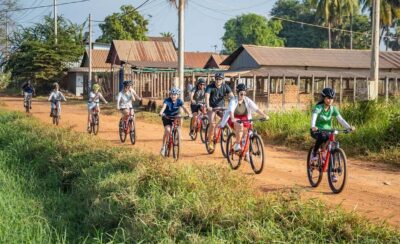
Angkor Wat Sunrise Bike Tour & Jungle Breakfast
Read our review →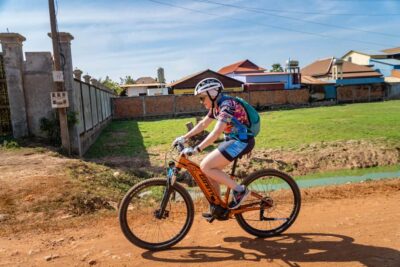
Angkor Wat: Guided Sunrise Bike Tour w/ Breakfast and Lunch
Read our review →Browse the lists this tour appears in