
REVIEW · SIEM REAP BIKE TOURS
Siem Reap: Angkor Wat Sunrise Bike Tour & Jungle Breakfast
Sunrise makes ancient stones feel new. I like this tour for its quiet forest cycling and the unusually thoughtful jungle breakfast, served after Angkor Wat rather than rushed into a roadside stop. The main caution is the length: nine hours in Cambodia’s heat, with some sand, roots, and rough patches, can leave you pleasantly worn out.
You begin before dawn, visit Angkor Wat in the cool morning light, then ride through forest paths to Bayon and Ta Prohm. I also like the practical backup: good bicycles, an air-conditioned minivan, cold water, snacks, and guides such as Seng, Chen, Moon, and Bunvath, who have earned praise for history, pacing, and photo help.
Why this Angkor bike tour is worth your morning
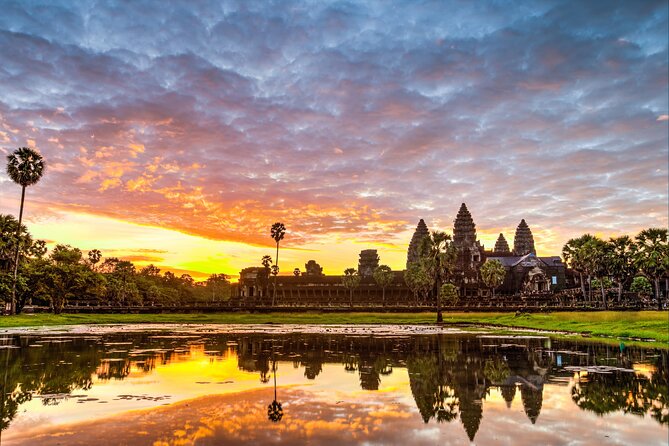
- Sunrise before the crowds build: Arrive early for silhouettes of Angkor Wat’s lotus towers and a prime viewing position.
- A proper breakfast in the forest: A private picnic setting gives you time to rest after the temple visit.
- Quiet routes between major temples: Forest roads and ancient gateways let you see Angkor from a slower, more personal angle.
- Three essential temple stops: Angkor Wat, Bayon, and Ta Prohm each offer a different look at Khmer architecture.
- Support without pressure: A van follows the route, so you can rest when the heat or cycling becomes too much.
- Strong value at $75: The price covers guiding, bikes, hotel transfers, breakfast, snacks, water, and transport support, though the Angkor pass costs extra.
Before dawn at Angkor Wat
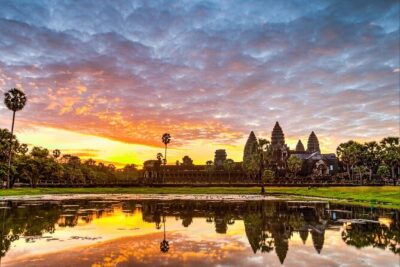
The day starts with hotel pickup in Siem Reap and a transfer of about 30 minutes to Angkor Archaeological Park. The early departure matters. It gives you time to reach the temple before sunrise and find a good place near the reflecting pools.
As the sky brightens, Angkor Wat’s five lotus-shaped towers appear in silhouette. This is one of the classic Cambodian views, but the timing changes the experience. The air is cooler, the stone is softer in the first light, and the complex feels less pressured than it will later in the morning.
Sunrise is not guaranteed to produce a dramatic sky, of course. Clouds, haze, and seasonal weather have their say. Still, the setting is worth the early alarm even on an ordinary morning.
After the sunrise viewing, your guide takes you inside Angkor Wat for about an hour. The focus is not just on taking photographs. You walk through galleries and courtyards while hearing about the 12th-century temple, the Khmer Empire, and its original dedication to Vishnu.
Angkor Wat is vast and detailed. A guide helps you notice carvings, layout, religious symbols, and the way the temple was planned. Without that help, it is easy to admire the towers while missing the ideas behind them.
You should dress for both the sacred site and the bike ride. Sleeveless shirts are not allowed, so bring clothing that covers your shoulders. Comfortable shorts or light trousers, closed shoes, sunscreen, and insect repellent are sensible choices, although only the shoulder-covering rule is specifically required.
More Nature Bike Tours in Siem Reap:
- Siem Reap: Angkor Wat Sunrise Bike Tour & Jungle Breakfast
★ 5.0 · 415 reviews - NYC: Central Park Bike Rentals
★ 4.2 · 2,528 reviews - NYC: Central Park Bike Rental
★ 4.1 · 1,651 reviews
Breakfast beneath the trees
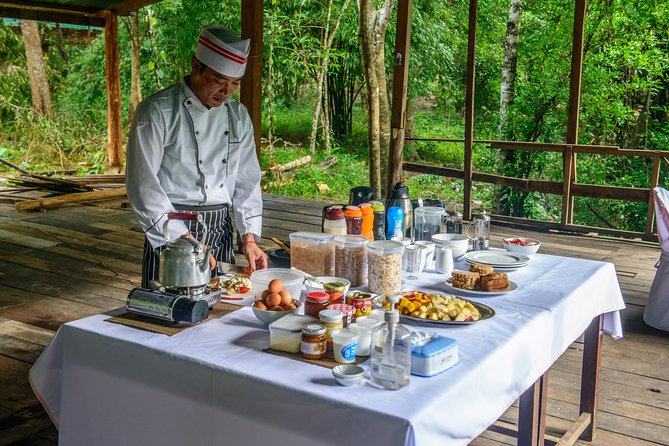
After Angkor Wat, you ride or transfer for about 20 minutes to a quiet breakfast area within the temple complex. This meal is one of the best reasons to choose this tour instead of a basic temple shuttle.
The breakfast is prepared for the group and served in a calm forest setting. Depending on the arrangement, you can expect a proper meal rather than a packaged snack. Past menus and meals described by participants include omelets, fruit, local dishes, and generous portions.
The setting matters. You have already been awake for hours, and breakfast gives you time to slow down before the cycling section. A small pond, a tented picnic area, or a quiet clearing may form part of the setup, depending on the day.
Dietary needs should be given when you book. One earlier guest needed vegan options and received help communicating with the restaurant team, but it is still better to arrange this ahead of time.
The meal is also a practical break. Angkor’s temples require plenty of walking, and the bike route still has several hours to go. Use this stop to refill your water, adjust your helmet, and tell the guide if you need a gentler pace.
Forest roads, gateways, and the Bayon faces
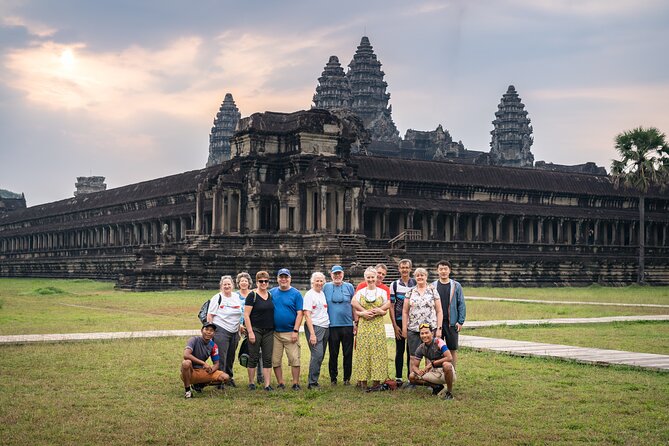
Once breakfast is finished, the cycling becomes the heart of the day. The routes use park roads, shaded tracks, and forest paths that connect the major temple areas.
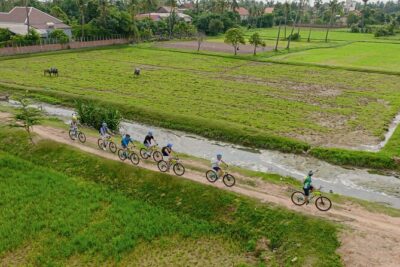
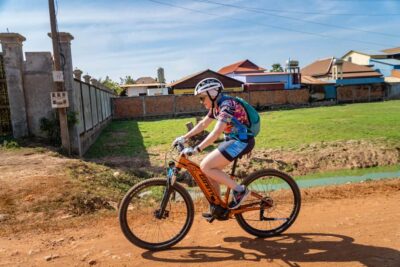
This is not a demanding mountain-bike expedition, but it is not a smooth city ride either. The terrain is mostly flat, and many sections are easy. You may also encounter loose sand, mud, roots, or uneven ground. One participant needed to get off the bicycle because of an old injury and continued in the support vehicle, which shows why the backup van is useful.
If you are comfortable on a bicycle and can manage occasional rough ground, the route should feel manageable. You do not need to race. Guides have been praised for keeping a comfortable pace and adapting to different abilities.
The forest helps with the heat. Several people appreciated that much of the route stayed shaded, though Cambodia can still be hot and humid even under the trees. In warmer months, the exercise adds up. Drink often, use the support van without embarrassment, and save some energy for the temple walks.
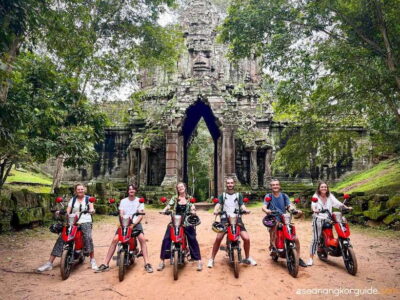
The route can pass through old gateways and quieter parts of the Angkor complex before reaching Bayon. This is a major advantage of cycling. Instead of simply stepping out of a tuk-tuk or minivan at each monument, you see the spaces between them.
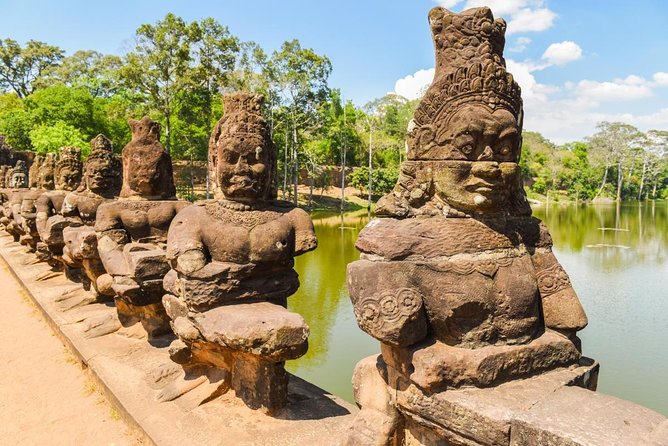
Bayon was the centre of Angkor Thom, the great city associated with King Jayavarman VII. Its towers carry more than 200 large stone faces, often linked with the king or with Avalokiteshvara, the compassionate Buddhist figure.
Your guide can explain how the faces fit into the temple’s design and why Bayon feels different from Angkor Wat. Angkor Wat is orderly and monumental. Bayon is more inward, crowded with towers and expressions that appear from different angles.
Plan on about an hour here. The stop includes both walking and explanation, with time for photographs. Guides such as Davith, Sarak, and Chen have been praised for explaining the site clearly and knowing useful photo positions.
The Elephant Terrace and the road to Ta Prohm
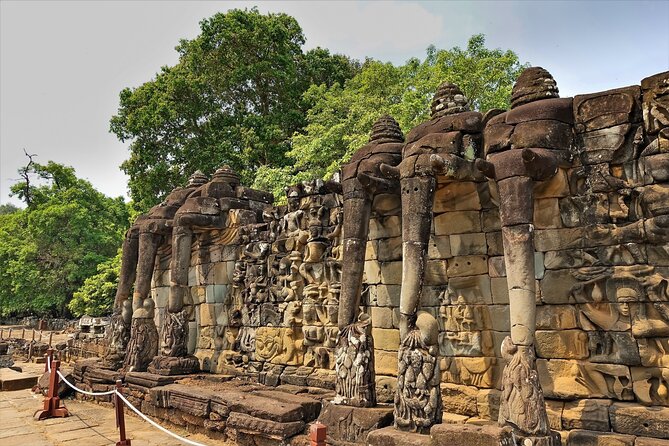
The route then continues through Angkor Thom, including the Terrace of the Elephants. This section combines sightseeing with cycling, so you are not simply standing at one monument for the whole hour.
The terrace was used as a ceremonial viewing platform, and its carved elephants give the structure its name. Your guide can connect the terrace to the former royal city and help you picture how this part of Angkor functioned when it was active.
For many people, this is where the tour feels most different from a standard temple circuit. You are moving through the area under your own power, passing from one historical site to another. The ride adds distance and context, not just another photo stop.
The support driver is usually important here. Past guests have praised drivers for waiting at the right places, setting up bicycles, keeping drinks cold, and offering cool towels. The exact service may vary, but the design of the tour gives you a way to pause without abandoning the route.
After the Terrace of the Elephants, you continue toward Ta Prohm. Expect another substantial temple visit, with about 90 minutes allocated to the site.
More Sunset Bike Tours in Siem Reap:
- Angkor Sunrise Bike Tour / E-Bike or Tuk Tuk
★ 5.0 · 615 reviews - From Siem Reap: Angkor Wat Sunrise and Temples E-Bike Tour
★ 5.0 · 52 reviews - Angkor Wat: Guided Sunrise Bike Tour w/ Breakfast and Lunch
★ 4.8 · 48 reviews - Siem Reap: Angkor Sunset Bike & Boat Tour /E-Bike Available
★ 4.9 · 23 reviews
Ta Prohm and nature taking back the stones
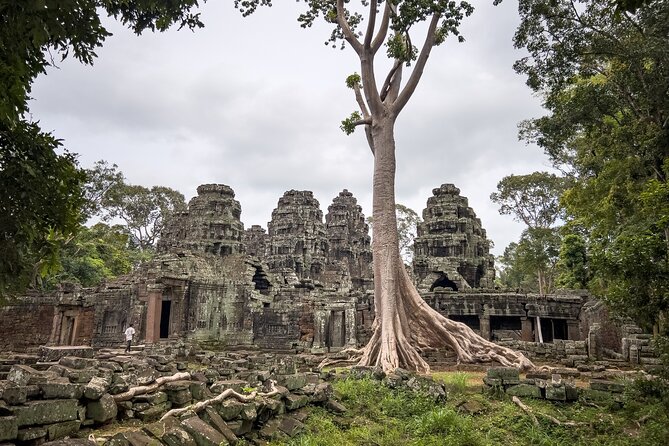
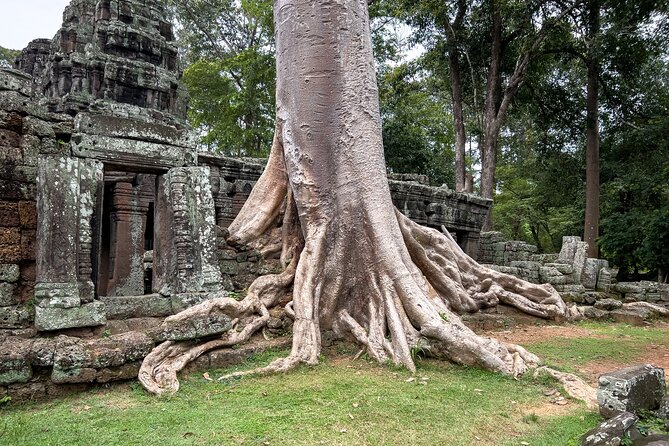
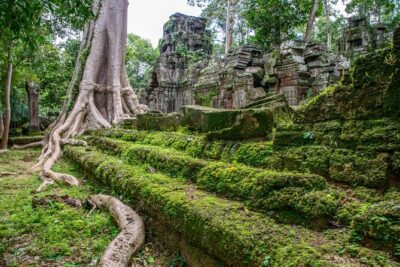
Ta Prohm is often called the Tomb Raider Temple, but its appeal is older than the film connection. Silk-cotton and strangler-fig trees grow through walls, doorways, and galleries, creating the famous scene of roots wrapped around ancient stone.
The temple is visually dramatic, but it can also be crowded. A bicycle tour does not make Ta Prohm empty. What it can do is bring you there as part of a carefully timed morning, after you have already seen the complex by bike rather than spending the whole day in vehicle traffic.
Your guide’s explanation helps here. Ta Prohm is not just a ruin with large trees. It shows what happens when a built religious centre is left to weather, vegetation, and time. The mix of architecture and forest gives it a different mood from Bayon and Angkor Wat.
Watch your footing. Temple floors can be uneven, and the roots and stones are not a place for hurried walking. The bike itself will not take you through the temple, so the day alternates between riding and walking.
After Ta Prohm, the van returns you to Siem Reap in roughly 30 minutes. The full day is listed as nine hours, although the precise finish can shift with group pace, weather, and time spent at each temple.
Bikes, guides, food, and backup
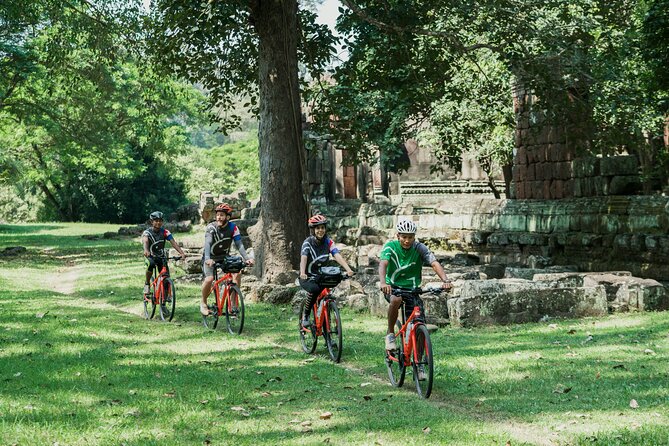
The equipment is a strong part of the package. The bicycles are described as good-quality mountain bikes, and many people found them well maintained or close to new. Helmets are included, and your height should be supplied when booking so the operator can prepare a suitable bike.
Child seats are available on request for children weighing up to 14 kilograms. Children aged 12 and under can receive discounts when using children’s bikes. Pregnant women should not book this activity, and anyone with an injury or uncertain cycling ability should ask about the route before committing.
The guides make a major difference. Seng has been praised for care and detailed cultural explanations. Chen is repeatedly noted for historical knowledge, humor, and a good sense of timing. Moon, Bunvath, Sambo, Chantha, Sarak, and Davith have also received praise for friendliness, photography, and patient pacing.
Guide quality can vary from person to person, but the repeated pattern is encouraging. You are not handed a bicycle and left to follow a flag. The guide leads the route, gives temple context, watches the group, and can adjust the day to your pace.
Water, fruit, and snacks are included. The driver may meet you at intervals with cold drinks, and some groups received chilled lemongrass towels. In a hot park, these details are not decoration. They help you keep going.
Lunch requires a small clarification. The tour information lists lunch for private tours, while many private-tour experiences include a Cambodian meal after the cycling. If lunch matters to your budget or schedule, confirm the exact arrangement when booking.
Is $75 a fair price?
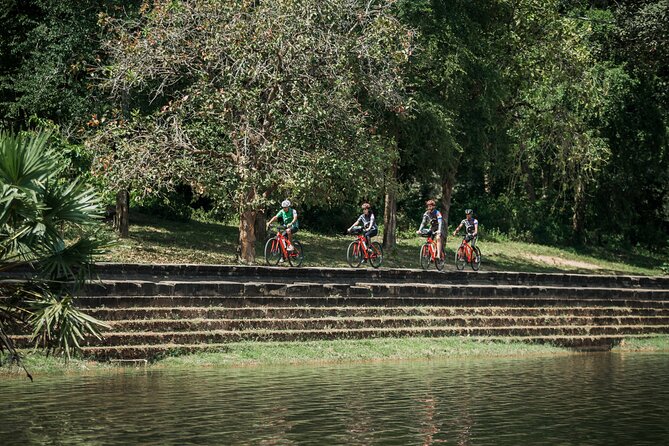
At $75 per person, this is not the cheapest way to see Angkor. A tuk-tuk and a basic guide can cost less, especially if you are traveling with several people and splitting transport.
The comparison is not quite equal, though. This price includes hotel pickup and drop-off, an English-speaking guide, bicycle and helmet, breakfast, snacks, bottled water, and an air-conditioned support vehicle. You are also paying for a route that links temple visits with forest riding, rather than only moving between parking areas.
The value is strongest if you want an active day and would otherwise pay separately for transport, a guide, meals, and bike hire. It is less compelling if you dislike cycling, want a short temple visit, or plan to spend several days exploring slowly on your own.
The Angkor Wat pass is not included. You must budget for that separately. The activity offers free cancellation up to 24 hours before departure and a reserve-now, pay-later option, which helps if your Siem Reap schedule is still shifting.
Who should book this tour?
I would choose it for a first visit when you want the three headline temples but do not want to experience them entirely from a vehicle. It suits couples, families with capable older children, and small groups who enjoy a little exercise with their history.
You should be reasonably comfortable on a bicycle. The route is mostly flat, but the occasional sandy or rough section asks for balance and confidence. You can use the van if needed, but the main appeal is the ride.
This may not suit you if you need a fully air-conditioned day, have a serious mobility limitation, are pregnant, or strongly dislike early starts. The nine-hour schedule is full, and you will likely feel tired by the time you return to Siem Reap.
Bring shoulder-covering clothes, comfortable footwear, sunscreen, water-friendly patience, and a willingness to get dusty. Tell the operator your height and dietary needs in advance. If you have a favorite guide from the names praised above, you can ask, but guide assignment cannot be assumed.
Should you book the Angkor sunrise bike tour?
Book it if you want Angkor to feel like a place you move through, not just a set of monuments viewed from a vehicle. The sunrise, jungle breakfast, shaded cycling, strong bicycles, and support van make this a well-balanced day.
I would skip it if your priority is maximum comfort or a short sightseeing schedule. For active visitors, though, $75 buys more than temple access. It buys time in the forest, useful historical context, generous food and drink, and a practical way to connect Angkor Wat, Bayon, and Ta Prohm in one memorable morning.
FAQ
How long does the Angkor sunrise bike tour last?
The tour lasts about nine hours, including hotel pickup, temple visits, breakfast, cycling, and the return transfer to Siem Reap.
What time does the tour start?
The starting time depends on availability and the season. Pickup takes place before sunrise so you can reach Angkor Wat in time for the morning view.
Is hotel pickup included?
Yes. Pickup and drop-off in Siem Reap are included. You need to provide your hotel name and address when booking.
Is the Angkor Wat pass included?
No. The Angkor Wat pass is required but is not included in the tour price.
What temples are visited?
The route includes Angkor Wat, Bayon Temple, the Terrace of the Elephants, and Ta Prohm Temple.
Is the cycling difficult?
The route is mostly flat and is described as manageable, with many shaded roads and paths. Some sections can include sand, mud, roots, or uneven ground, so you should be comfortable riding a bicycle off smooth pavement.
What food and drinks are included?
A private breakfast picnic, snacks, fruit, and bottled water are included. Lunch is listed for private tours, so confirm the lunch arrangement when booking.
Can children join the tour?
Yes. Children’s bikes and discounts for children aged 12 and under are available. A child seat can be requested for a child weighing up to 14 kilograms.
More Morning Departures in Siem Reap
- 3-Hour Morning Bike Tour of Jaipur
★ 5.0 · 1,253 reviews - Haleakala Sunrise Best Self-Guided Bike Tour
★ 4.5 · 745 reviews - Hiroshima in a Nutshell: Morning Bike Adventure
★ 5.0 · 524 reviews - Day Trip to Nami Island with Rail bike and The Garden of Morning Calm
★ 4.5 · 459 reviews
Newly added rides around Siem Reap
- Siem Reap: Bike the Angkor Temples – Full-Day 30km Tour★ 4.9 · 159 reviews
- Siem Reap: Bike Rental★ 4.7 · 12 reviews
- Siem Reap: Countryside Cycle and Local Village Life Tour★ 4.7 · 32 reviews
- Kampong Phluk: Floating Village Sunset Bike Tour or E-Bike★ 5.0 · 11 reviews
- Siem Reap: Countryside Sunset Bike Tour / E-Bike or Tuk Tuk★ 4.7 · 13 reviews
- Siem Reap: Angkor Sunset Bike & Boat Tour /E-Bike Available★ 4.9 · 23 reviews
- Cycle Angkor Backroad Bike Tour / E-Bike or Tuk Tuk★ 4.9 · 16 reviews
- From Siem Reap: Angkor Wat Sunrise and Temples E-Bike Tour★ 5.0 · 52 reviews
Siem Reap Bike Tours, compared.
Siem Reap Countryside Bike Tour / E-Bike or Tuk Tuk
Read our review →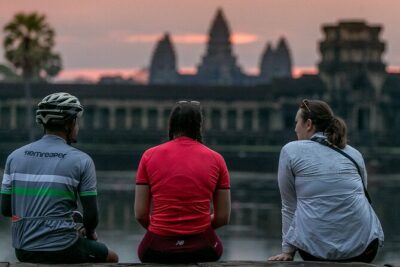
Angkor Wat Sunrise Bike Tour & Jungle Breakfast
Read our review →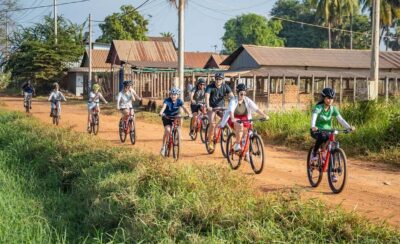
Angkor Wat: Guided Sunrise Bike Tour w/ Breakfast and Lunch
Read our review →Browse the lists this tour appears in