
REVIEW · HIROSHIMA BIKE TOURS
Hiroshima in a Nutshell: Morning Bike Adventure
See Hiroshima beyond the usual bus route. This three-to-four-hour morning ride links the Peace Memorial Park, Atomic Bomb Dome, Hiroshima Castle, and Shukkei-en Garden with quiet canal paths and city streets that are hard to cover on foot. I like the efficient route and the personal feel of a group capped at eight people. The ride also includes a bike, helmet, bottled water, and an English-speaking guide, so you can arrive ready to go.
I also like how the tour handles Hiroshima’s difficult past without making the whole morning feel heavy. Guides such as Awais, James, Melissa, Yuki, Levi, and Ihsan have been praised for clear explanations, careful pacing, humor, and genuine care. The main consideration is that this is not a pure sightseeing cruise on two wheels. You will stop often, get on and off the bike, and spend real time listening and reflecting.
Key points to know before booking
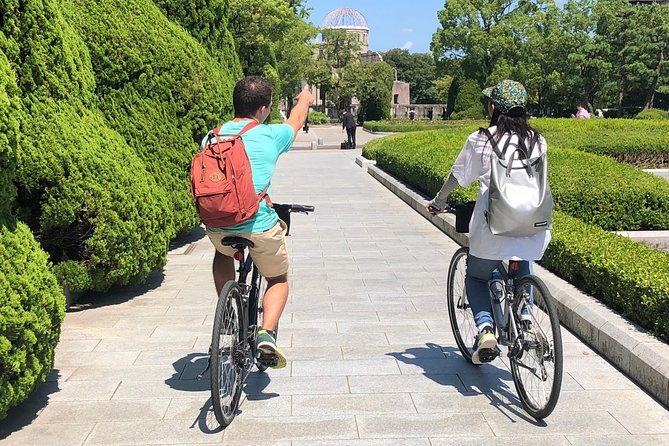
- A compact route covers Hiroshima’s essential sights: Peace Memorial Park, the Atomic Bomb Dome, Hiroshima Castle, and Shukkei-en Garden.
- The mostly flat ride suits many casual cyclists: Reviews describe a steady pace, though you still need to be comfortable riding in a city.
- Small groups make the history personal: The maximum group size is eight, allowing time for questions and help with bike adjustments.
- The peace sites are treated with care: Expect quiet pauses, old photographs, and thoughtful discussion of Hiroshima before and after 1945.
- E-bikes cost extra: A regular bike is included, while an e-bike may be available for an additional 2,000 yen, with limited supply.
- The meeting point is central: You start and finish at Cycle Hiroshima, 4-chōme-5-4 Ōtemachi, at 10:00 a.m.
Why a bicycle works so well in Hiroshima
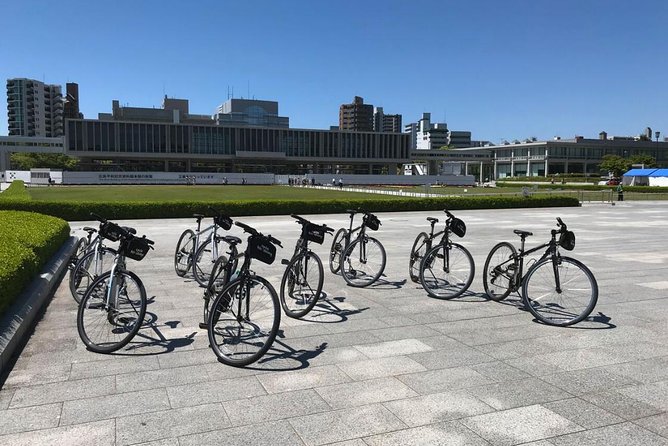
Hiroshima’s major sights are spread across the city. Walking between them can eat up much of a short visit, while a bus or car can leave you watching the streets through a window. A bicycle gives you a better middle ground. You cover useful ground, stop easily, and see the canals, side streets, and everyday parts of the city between the major monuments.
The ride is described as mostly flat and not demanding. One recorded route covered about 6.81 miles over more than four hours, including stops and explanations. That gives you a useful sense of the pace: this is a sightseeing ride, not a fitness challenge.
I would still treat the cycling seriously. You ride as part of a group and need to follow the guide’s hand signals. The guides explain those signals at the start, check the bikes, and adjust details such as seat height. The bikes have been described as being in good condition, and helmets and water are supplied.
The group limit of eight is important. In a large bike group, the ride can become a stop-and-go parade. Here, the guide can watch the riders, answer questions, and help anyone who needs a small adjustment. That personal attention is one reason guides such as Awais, Melissa, James, and Ihsan receive such warm praise.
More Morning Departures in Japan:
- Kyoto: Arashiyama Bamboo Forest Morning Tour by Bike
★ 5.0 · 115 reviews - Private-group Morning Cycling Tour in Hida-Furukawa
★ 5.0 · 105 reviews - 3-Hour Morning Bike Tour of Jaipur
★ 5.0 · 1,253 reviews
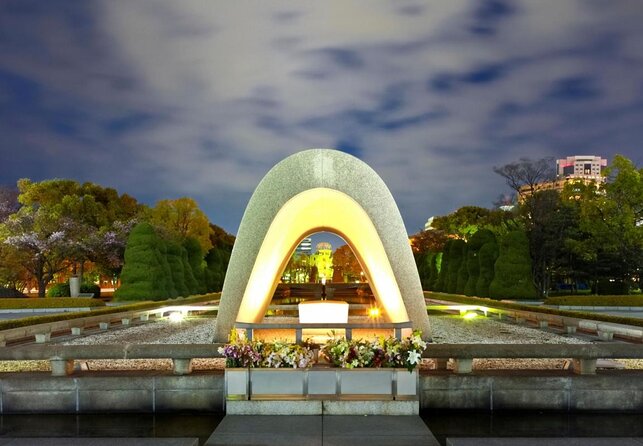
Peace Memorial Park: a quiet beginning
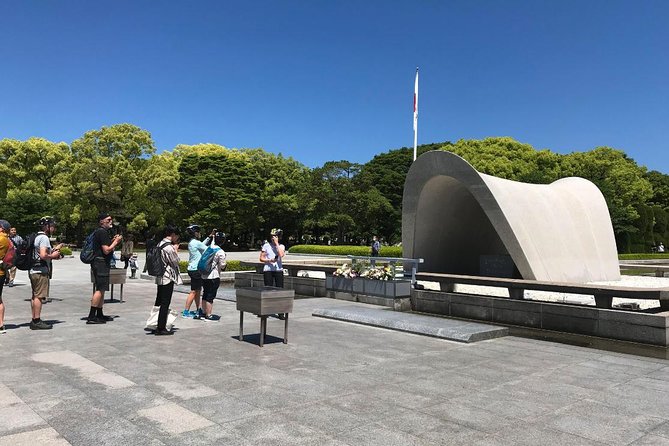
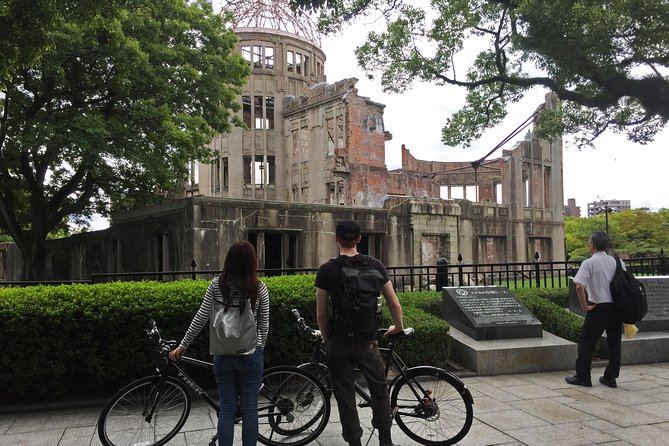
The first stop is Hiroshima Peace Memorial Park, where you spend about 20 minutes riding slowly and pausing for commentary. This is the right place to begin. The park asks for a quieter mood, and the bicycle lets you move through it at a measured pace rather than rushing from one sign to the next.
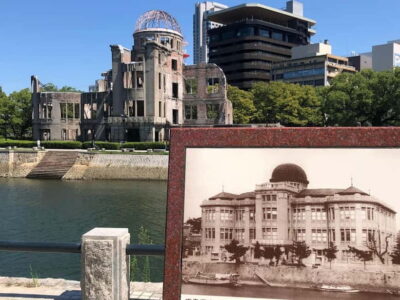
You can expect the guide to use old pictures to show what this part of Hiroshima looked like before the bombing. That comparison gives the place a human scale. You are not only hearing about a historic event. You are seeing how an ordinary city area changed, and how Hiroshima chose to remember it.
This part of the tour can be emotional. The best guides keep the tone respectful while also explaining the city’s rebuilding and its message of peace. One guide, Amy, has also included the chance to make paper cranes connected with the Children’s Peace Monument. That activity is not listed as a guaranteed part of every departure, so you should not count on it, but it shows the kind of thoughtful detail that may appear during the morning.
The 20-minute stop is useful as an introduction, but it is not enough time to see every part of the park. If you want the full museum experience, return later on your own. The bike tour works better as an orientation and historical overview than as a substitute for a longer museum visit.
Atomic Bomb Dome: Hiroshima’s most familiar image
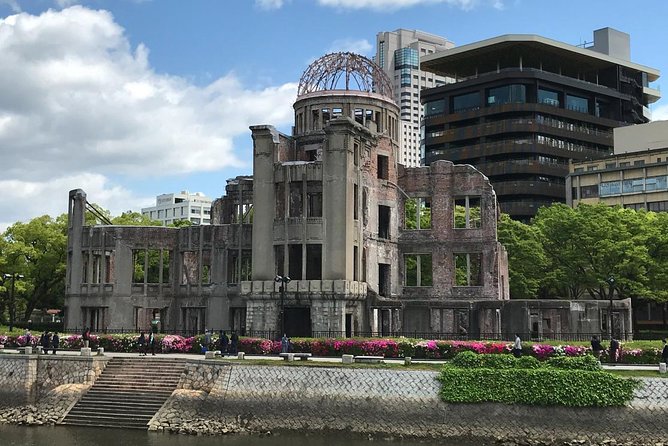
The ride continues to the Atomic Bomb Dome for roughly 10 minutes. You have time for photographs and quiet reflection beside one of the city’s most recognizable sites.
This stop is short by design. The Dome is visually powerful, but a brief pause can feel abrupt if you want a long explanation or extended time at the riverfront. I suggest treating it as a first look. Note what interests you, then return later if you want to spend more time reading, photographing, or considering the structure from different angles.
The strongest guides connect the Dome to the wider story rather than reducing it to a photo stop. Awais, Levi, Amy, and others have been praised for explaining the events of 1945, the effects that followed, and the ways Hiroshima remembers those who died. Expect a serious subject, but not a one-note presentation. The tour aims to show both the tragedy and the city’s decision to build a future around peace.
One point deserves a little care. A past rider felt that some discussion became political and uncomfortable from an American point of view. That is a reminder that this history can touch national responsibility and personal identity. If you want a strictly neutral or very brief presentation, say so politely or save the detailed discussion for the museum.
Hiroshima Castle: gardens, photos, and a change of mood
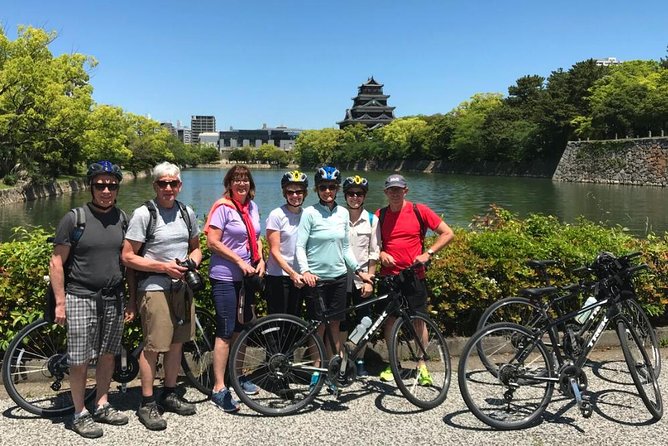
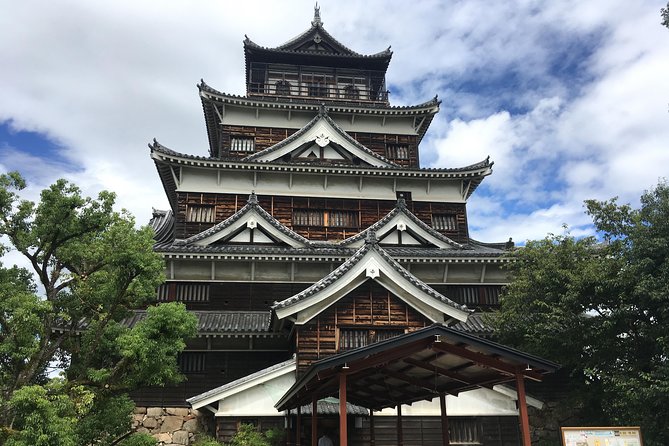
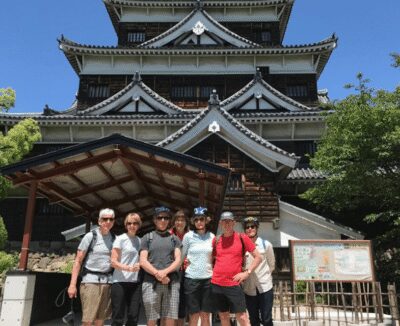
After the peace sites, Hiroshima Castle gives the morning a different rhythm. You ride close to the castle, pass through landscaped gardens, and spend about 25 minutes learning about its story and taking photos.
The contrast is helpful. Hiroshima is not only a city defined by the atomic bombing. The castle points to the city’s older political and cultural life, giving you a wider sense of place. You get a chance to move from solemn memorials to gardens and architecture without losing the historical thread.
The itinerary focuses on seeing the castle from the outside and riding through the grounds. The information provided does not promise interior admission, so if you want to explore the castle building itself, plan extra time separately. That is a small but important distinction for anyone expecting a full castle visit.
This stop also helps break up the listening. Twenty-five minutes of moving, photographing, and looking around feels easier after the more serious first half. You may find the castle especially useful for photos, since the surrounding greenery offers a softer setting than the stark Atomic Bomb Dome.
A few more rides around Japan worth a look
- Hidden Kyoto E-Biking tour
★ 5.0 · 1,843 reviews - Tokyo Guided Small-Group Biking Tour
★ 5.0 · 1,250 reviews - Bike Tour Exploring North Kyoto plus Lunch
★ 5.0 · 1,087 reviews - Tokyo Great Cycling Tour
★ 5.0 · 811 reviews
Shukkei-en Garden: a graceful final stop
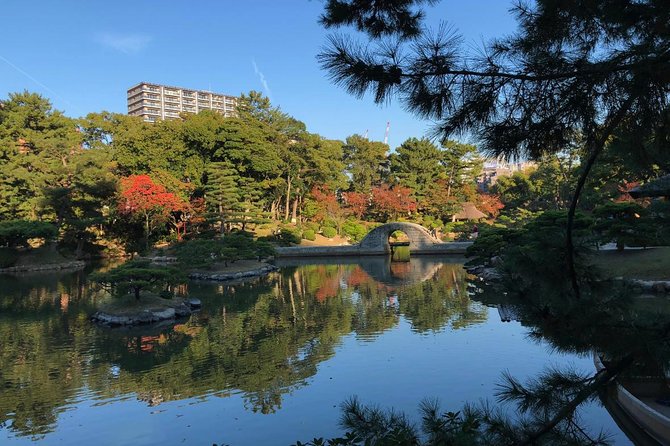
The last planned stop is Shukkei-en Garden, with about 25 minutes inside and admission included. This is one of the tour’s best choices because it adds Japanese garden design to a morning otherwise centered on war and memory.
You will see carefully arranged greenery, water, and paths designed to create balance and changing views. The guide explains how the garden was constructed and how its elements work together. That makes the visit more rewarding than simply taking a quick walk among plants.
The garden is also a good final stop because it leaves you with a calmer mood. Hiroshima’s past remains present, but the garden shows another side of the city: patient design, seasonal beauty, and an appreciation for small changes in space.
Twenty-five minutes is enough for an introduction, not a full garden visit. If gardens are a priority for you, return later at a slower pace. Admission is included during the tour, which removes one small expense and makes this stop easy to enjoy.
The guides make the difference
The strongest part of this experience is the guiding. The names that appear repeatedly in positive accounts include Awais, James, Melissa, Ihsan, Yuki, Amy, and Levi. You may not know who will lead your departure, but the pattern is clear: guides are expected to do more than point at monuments.
Awais is praised for detailed explanations, friendly conversation, local insight, and taking photographs for the group. James is described as careful with safety, clear with hand signals, and especially supportive when a rider faced a tight train connection after the tour. Melissa has been praised for energy, warmth, and making the experience work well for a family of four. Levi reportedly began with a history lesson, while Amy connected the morning to paper-crane traditions.
The guides also seem willing to give the group time. One morning ran beyond the planned duration because the guide wanted to explain the sites properly. That is good news if you value context, but it can matter if you have a train, cruise departure, or timed reservation soon afterward. Keep a buffer after the advertised three to four hours.
The quality of the experience will depend partly on your guide’s style. Some guides give a constant stream of facts. Others add more humor and conversation. If you enjoy asking questions, this small group format should suit you well.
Pace, bikes, and physical effort
The regular bike is included, as is the helmet. You also receive bottled water, which matters on a hot day. Several accounts describe a comfortable, steady pace rather than a race between sights.
You will not pedal continuously. The ride includes frequent stops, short walks, photographs, and explanations. One person felt the group got on and off the bikes many times and suggested that some stops could be combined. That is fair criticism, but the interruptions are also what let you see the monuments properly.
The city route is mostly flat. Still, I would not book this if you are uneasy on a bicycle or have not ridden for a long time. An e-bike may be available for an extra 2,000 yen, but supply is limited, so arrange it ahead of time rather than assuming one will be waiting.
The stated rules say the tour is not recommended for children aged 12 and under, and riders under 140 centimeters cannot participate. A separate account describes a 12-year-old managing a regular bike on a hot day, but the official age guidance should be your starting point. Families should also consider the serious subject matter, not just the cycling.
Rain changes the plan. One departure became a walking tour because of wet weather and was still considered worthwhile, but you should expect cancellation or an alternative date if conditions are poor. Wear comfortable clothes and shoes, and plan for sun or heat if the forecast calls for it.
What the $72.96 price gives you
At $72.96 per person, this is not the cheapest way to see Hiroshima’s center. You can reach many sights by public transport or on foot for less money. The value comes from combining transport, equipment, guiding, and historical interpretation in one compact morning.
You are paying to avoid working out the route yourself. You do not need to rent a bicycle, find a helmet, study the canal paths, or decide how to connect four different sights. You also get a guide who can explain why each place matters, not just identify it.
For a first visit lasting one or two days, that efficiency is strong value. A short visit can otherwise turn into a string of navigation decisions. The tour gives you a city overview, then leaves you free to return to the Peace Museum, castle, or garden that caught your attention.
The price is harder to justify if you already know Hiroshima well, dislike group activities, or want long uninterrupted visits at individual sites. It also does not include hotel pickup, drop-off, alcoholic drinks, or an e-bike upgrade. The experience starts and ends at Cycle Hiroshima in Ōtemachi, so you must make your own way there.
Who should book this morning ride?
I would recommend it most strongly to first-time visitors, cruise passengers with limited time, and anyone staying only a day or two. It is also a good fit if you learn best by asking questions while moving through a place.
History-minded families with older children may enjoy the mix of cycling, gardens, photographs, and storytelling. The serious subject is handled with care, but parents should judge for themselves if their children are ready for Hiroshima’s wartime history.
You may want a different plan if you are under 140 centimeters, uncomfortable on a bike, looking for a private tour, or determined to spend hours inside the castle or Peace Museum. The ride gives you an overview, not a full-day study of each attraction.
The current score is 4.9 from 524 ratings, with 98 percent recommending the experience. Those numbers fit the main strengths: careful guides, a useful route, good bikes, and a strong balance between information and fresh air. The occasional concerns are practical, mainly frequent stops, variable guide style, weather, and the extra fee for e-bikes.
Final verdict: a smart first morning in Hiroshima
Book this tour if you want to understand Hiroshima quickly without flattening its story into a checklist. You will cover the major peace sites, see a castle and Japanese garden, and travel through parts of the city that buses may skip.
I would book it early in a short Hiroshima stay, then use the rest of your time to revisit the places that affected you most. Leave a little space after the tour in case the guide runs long, and consider the e-bike surcharge if your fitness or cycling confidence is limited.
For most first-time visitors who can ride comfortably, this is a practical and thoughtful way to begin.
FAQ
How long does the Hiroshima bike tour last?
The tour lasts approximately three to four hours. Some departures may run longer if the guide takes extra time with explanations.
What time and where does the tour begin?
It begins at 10:00 a.m. at Cycle Hiroshima, 4-chōme-5-4 Ōtemachi, Naka Ward, Hiroshima, 730-0051, Japan.
Where does the tour finish?
The activity ends back at the meeting point at Cycle Hiroshima.
Are the bicycle and helmet included?
Yes. Bike rental and a helmet are included, along with bottled water and an English-speaking guide.
Can I use an e-bike?
An e-bike may be available for an additional 2,000 yen. Supply is limited, so arrange this ahead of time if you need one.
Is the tour suitable for children?
The tour is not recommended for children aged 12 and under. Riders under 140 centimeters cannot participate.
Newly added rides around Japan
- Private E-MTB guided cycling around Mt. Aso volcano & grasslands★ 5.0 · 16 reviews
- Tokyo Bay Area: Sunset Night View 3h E-bike Guided Bike Tour★ 5.0 · 11 reviews
- Tokyo: West-Side Cycling and Food Tour with Guide★ 5.0 · 37 reviews
- Tokyo: Private Cycling Tour with cute E-bike★ 5.0 · 11 reviews
- Tokyo: 3h Private E-bike Tours, Starting at Your Hotel★ 5.0 · 36 reviews
- Tokyo: 3-hour Guided E-Bike Tour of the City’s Hidden Gems★ 4.8 · 251 reviews
- Tokyo Bike Tour: Shibuya, Harajuku & Hidden Gems★ 5.0 · 20 reviews
- Tokyo: Hidden Gems Guided Bike Tour with Lunch★ 4.5 · 30 reviews
Hiroshima Bike Tours, compared.
Hiroshima 2hr Peace Cycling Tour with Local Guide
Read our review →
Peace Park, Castle, and Mitaki Temple E-Bike Tour
Read our review →Browse the lists this tour appears in