
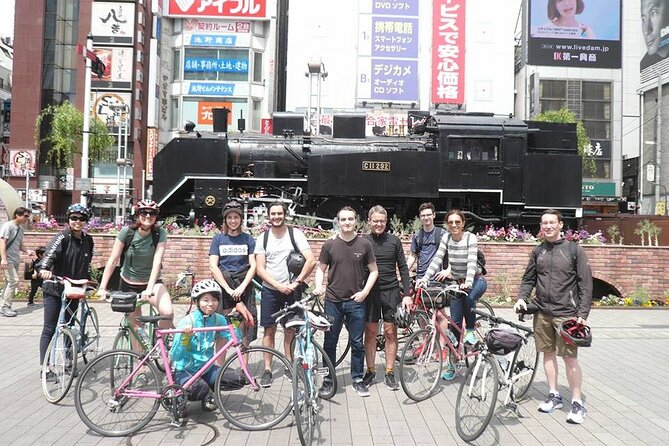
REVIEW · TOKYO BIKE TOURS
Tokyo Great Cycling Tour
Tokyo rewards two wheels.
I like how this six-hour ride links major sights with ordinary city scenes, from the Tsukiji Jogai Market to quiet temple grounds, fashionable districts, and the Imperial Palace. I also like the small maximum group of 12, which gives guides room to watch the road, explain local customs, and help riders who need it. The main consideration is physical effort: you need a moderate fitness level, and hot or wet weather can change the plan.
The route covers a lot of ground without turning the day into a bus window tour. Guides including Toshi, Nick, and Naoko have earned strong praise for safety and care, and one especially useful detail is that a picnic may be changed to an izakaya lunch when heat makes outdoor eating a poor idea. At $99.49 per person, this is not a cheap bike rental, but it can be good value if you want several Tokyo districts tied together by local context.
The Tokyo ride in five useful points
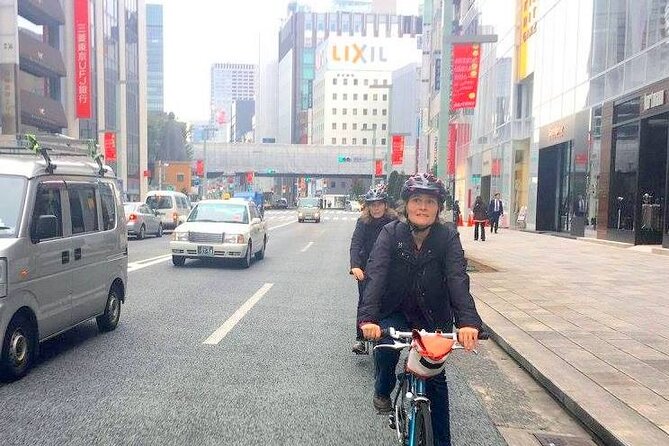
- Six hours on two wheels: You cover much more ground than on foot, with time at four major sights and several city neighborhoods between them.
- A small group of up to 12: The size allows for a more personal pace and closer attention from the guides.
- A route built around contrasts: Expect markets, temples, shrines, high-rise apartments, offices, expensive shopping areas, cemeteries, and imperial grounds.
- A practical way through central Tokyo: Bikes can reach streets and areas that large buses cannot, giving the day a more direct feel.
- Guides who focus on safety: Toshi, Nick, and Naoko are specifically praised for looking after riders and checking that bikes run smoothly.
- Weather can affect the day: Poor weather can cancel the tour, and extreme heat may change the planned picnic into a meal at an izakaya.
Why cycling works better than walking in Tokyo
Tokyo is enormous, and its famous sights are spread across districts that do not always connect neatly on foot. A walking tour can show you one neighborhood well, but it cannot easily pair Tsukiji, Zojo-ji, Meiji Jingu, and the Imperial Palace in one half-day.
This ride solves that problem. You move through the city at street level, but you are not limited to a single compact area. Bikes let you pass from commercial streets to religious sites and residential zones without spending much of the day underground or waiting in traffic.
I like this format because the journey between sights is part of the experience. You see the changing scale of Tokyo directly. One stretch may include high-rise apartments and office buildings, while the next brings you to a cemetery in the middle of an upscale district. That contrast tells you more about the city than a list of famous landmarks alone.
The group limit matters, too. A maximum of 12 people is still large enough for a social outing, but small enough for the guide to keep an eye on the group. Safety is especially important when cycling in a major city. The praise for Toshi, Nick, and Naoko focuses on exactly that point: riders felt looked after, and one rider specifically noted that the bike was running smoothly.
A few more rides around Tokyo worth a look
- Tokyo Guided Small-Group Biking Tour
★ 5.0 · 1,250 reviews - Tokyo Top Highlights 3h Guided E-bike Tour
★ 5.0 · 714 reviews - 3h Tokyo E-Bike Tour: Hidden Gems, and Local Life with guide
★ 5.0 · 670 reviews
Starting at Tsukiji Jogai Market
The tour begins at the Tokyo Great Tours office at 1-chōme-3-2 Shinkawa, Chuo City. The start time is 9:00 a.m., so plan your morning around reaching the meeting point before then. The location is near public transportation, which helps, but you should still allow enough time to find the office and get ready.
The first stop is Tsukiji Jogai Market, the outer market area that remains active after Tokyo’s inner market moved to Toyosu. This is a good opening scene because it introduces Tokyo through food, shopping, and daily commerce rather than ceremony.
You have about 15 minutes here, with no admission charge. That is enough for a quick look at the market atmosphere, but not enough for an extended food crawl or a relaxed meal. Think of it as an orientation stop. You get a sense of the area, then continue before the morning schedule slips.
The short visit is also a reminder that this is a cycling tour first, not a market tour with a bike ride attached. If Tsukiji is high on your personal list, you may want to return on another morning and give it more time. On this route, the value comes from seeing it as one piece of a much larger Tokyo day.
Zojo-ji Temple and Tokyo Tower
Zojo-ji Temple offers one of the clearest visual contrasts on the route. The temple represents old Buddhist Tokyo, while Tokyo Tower rises behind it as a bright reminder of the modern city.
You have around 15 minutes at the temple, and admission is free. That time works well for seeing the main setting and hearing the guide explain the relationship between traditional buildings and the surrounding city. It is not enough for a slow architectural study, a long prayer, or a detailed exploration of every corner.
Still, this stop has strong photographic value. The pairing of the temple and tower gives you an instant picture of Tokyo’s character: old and new occupying the same frame without needing to be separated into different parts of town.
I would pay attention to the guide here rather than rushing through photos. The tour’s appeal is not only reaching landmarks. It is learning how those landmarks fit into the city around them. The guide can add meaning to what might otherwise be a quick stop between traffic lights.
High-rises, shopping streets, and an urban cemetery
Some of the most useful parts of the tour are not formal stops. The route passes high-rise apartment buildings, expensive shopping areas, and office districts. These sections show how central Tokyo works as a place to live and work, not just a collection of attractions.
You may find these stretches less immediately dramatic than a temple or shrine, but they are important to the day. On a bus, you would pass them as scenery. On a bike, you move at a slower pace and can notice how the city changes block by block.
The route also includes a cemetery set in the middle of fashionable areas. That detail may seem small, but it captures a common Tokyo contrast. Older religious and burial spaces remain woven into districts filled with modern buildings, shops, and expensive homes.
This is where cycling offers its best advantage. The route can include places that do not justify a full stop but still help you understand the city. You get a broader picture without sacrificing the major sights.
Same handlebars, a completely different route:
- Tokyo: 3-Hour Bike or E-Bike City Highlights Tour
★ 4.8 · 435 reviews - Tokyo: 3-hour Guided E-Bike Tour of the City’s Hidden Gems
★ 4.8 · 251 reviews - 3-Hour Tokyo Private E-Bike Tour Starting from Your Hotel
★ 5.0 · 117 reviews - 5-Hour Tokyo & Edo Hidden Gem Bike Tour with Lunch
★ 5.0 · 113 reviews
Meiji Jingu Shrine among the city trees
Meiji Jingu is described as Tokyo’s most popular Shinto shrine, and the visit lasts about 20 minutes. Of the main stops, this is the one that may feel most separated from the city, even though it sits in central Tokyo.
The shrine gives the ride a different mood after the market, temple, towers, apartments, and offices. Here, your attention shifts toward Shinto practice and the cultural role of a major shrine. The guide can explain customs and history while you take in the setting.
Twenty minutes is enough for an introduction, but again, this is not a long independent visit. If you want to examine every gate, prayer area, or surrounding path, you will need to return separately. The tour keeps moving because the Imperial Palace still lies ahead.
The shrine is also a place where group behavior matters. You will be visiting a functioning religious site, not a stage set. Follow the guide’s instructions, keep your voice low, and allow space for people who come to pray. The compact stop makes this easy if everyone stays attentive.
The Imperial Palace as the final major sight
The Imperial Palace is the final listed stop, with about 15 minutes set aside. It is associated with Japan’s Emperor and Empress, giving the tour a chance to discuss the country’s modern imperial institution alongside the temples and shrine seen earlier.
Do not expect a lengthy palace visit within this format. The short stop is designed to give you a sense of the place and its importance, not to provide an extended tour of palace interiors. The value is in placing the Imperial Palace within the wider route and seeing how imperial grounds fit into central Tokyo.
By this point, the cycling itself has become part of the story. You have moved through commercial, religious, residential, and official parts of the city. The palace works well as a closing landmark because it brings the route back to national identity and public history.
The activity ends back at the original meeting point. That makes the post-tour plan fairly simple, since you are not left in a different part of Tokyo with a bicycle to return.
What the six-hour schedule feels like
The advertised duration is about six hours, which makes this a serious half-day outing rather than a quick morning activity. The listed sightseeing stops total about 65 minutes, so much of the remaining time goes toward cycling, moving between districts, safety checks, explanations, and possible food arrangements.
That balance is worth understanding before you book. You are not spending six hours at attractions. You are using a bicycle to connect them, with the streets between the landmarks providing much of the experience.
The day can also change with conditions. One rider described a very hot day when a planned picnic became lunch at an izakaya instead. That sounds like a sensible adjustment. Tokyo heat can make outdoor eating unpleasant, and changing the plan can protect the rest of the ride.
The tour requires good weather. If rain or other poor conditions force cancellation, you are offered another date or a full refund. The same applies if the minimum number of participants is not reached. For a fixed Tokyo schedule, keep this in mind and avoid placing the ride on your only possible sightseeing day.
Is $99.49 good value?
At $99.49 per person, the price is higher than simply renting a bicycle and riding around on your own. But a rental does not provide a planned route, a guide, safety support, cultural explanations, or a group moving efficiently between major sights.
I see the value in the amount of Tokyo you can cover. In six hours, you visit Tsukiji Jogai Market, Zojo-ji Temple, Meiji Jingu Shrine, and the Imperial Palace, while also passing districts you might otherwise miss. The small group adds something that a large sightseeing bus cannot offer.
The price makes less sense if you already know Tokyo well, dislike fixed schedules, or want long visits at each landmark. Independent cyclists may prefer to choose one district and explore it slowly. You should also consider the physical cost. A low price is not a bargain if the ride leaves you too tired for the rest of your day.
For a first visit, I think the price is reasonable if your main goal is efficient orientation. You pay for access to a wider slice of the city and for someone else to handle the route.
Who should book this ride?
This experience suits people who can comfortably ride a bicycle and want to see many sides of Tokyo in one day. It is a particularly good match for first-time visitors, active couples, families with older children, and anyone who finds long walking tours tiring or repetitive.
The experience may also suit solo riders. A group of no more than 12 gives you company without the scale of a large coach outing. The guides can help keep the day organized, and the reviews specifically praise their care and attention.
You should think twice if you have limited cycling ability, need a slow sightseeing pace, or strongly dislike traffic and city riding. The available information only confirms a moderate fitness requirement, so you should not treat this as a gentle sightseeing stroll.
Heat is another real factor. Choose clothing and hydration with the weather in mind, and remember that the food plan may change. The tour can adapt, but Tokyo in hot weather still demands energy.
Booking timing and cancellation basics
This experience is often booked about 46 days ahead, so early planning is sensible if your Tokyo dates are fixed. Confirmation arrives within 48 hours of booking, subject to availability.
You can cancel for a full refund up to 24 hours before the local start time. Changes or cancellations inside that 24-hour window are not accepted and are not refunded. Since weather can affect the ride, check the forecast before the cutoff and keep a little flexibility if possible.
Should you book the Tokyo Great Cycling Tour?
Book it if you want a broad, active introduction to Tokyo and like the idea of seeing the spaces between famous sights. The strongest reasons are the efficient route, the group limit of 12, and the mix of market, temple, shrine, imperial grounds, modern districts, and quieter urban corners.
I would skip it if you want deep time inside each landmark, a relaxed café-focused day, or a completely independent route. The six-hour schedule keeps moving, and moderate fitness is part of the bargain.
For most first-time visitors who can ride confidently, this is one of the more useful ways to get oriented. You see Tokyo as a connected city rather than a checklist of isolated attractions, and the guides add the safety and local explanation that make the price easier to justify.
FAQ
Where does the Tokyo Great Cycling Tour start?
It starts at Tokyo Great Tours, 1-chōme-3-2 Shinkawa, Chuo City, Tokyo 104-0033, Japan.
What time does the tour begin?
The start time is 9:00 a.m.
Where does the tour end?
The activity ends back at the original meeting point.
How long does the tour last?
The tour lasts approximately six hours.
What is the maximum group size?
The tour has a maximum of 12 participants.
What sights are included?
The route includes Tsukiji Jogai Market, Zojo-ji Temple, Meiji Jingu Shrine, and the Imperial Palace. It also passes high-rise buildings, shopping and office areas, and a cemetery in a fashionable district.
Is admission to the stops included?
The listed stops have no admission charge.
How physically demanding is the tour?
Participants should have a moderate level of physical fitness and be able to ride a bicycle.
What happens if the weather is poor?
If poor weather causes cancellation, you can receive a different date or a full refund.
Can I cancel for a full refund?
Yes. You must cancel at least 24 hours before the local start time to receive a full refund.
Newly added rides around Tokyo
- Tokyo: Private Cycling Tour with cute E-bike★ 5.0 · 11 reviews
- Tokyo Bay Area: Sunset Night View 3h E-bike Guided Bike Tour★ 5.0 · 11 reviews
- Tokyo: West-Side Cycling and Food Tour with Guide★ 5.0 · 37 reviews
- Tokyo: 3h Private E-bike Tours, Starting at Your Hotel★ 5.0 · 36 reviews
- Tokyo: 3-hour Guided E-Bike Tour of the City’s Hidden Gems★ 4.8 · 251 reviews
- Tokyo Bike Tour: Shibuya, Harajuku & Hidden Gems★ 5.0 · 20 reviews
- Tokyo: Hidden Gems Guided Bike Tour with Lunch★ 4.5 · 30 reviews
- Tokyo: 3-Hour Bike or E-Bike Tour of City’s Hidden Gems★ 4.7 · 81 reviews
Tokyo Bike Tours, compared.
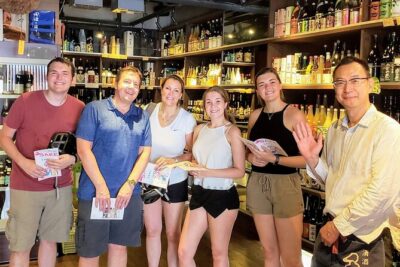
3h Tokyo E-Bike Tour: Hidden Gems, and Local Life with guide
Read our review →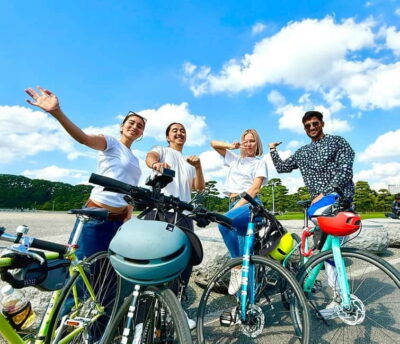
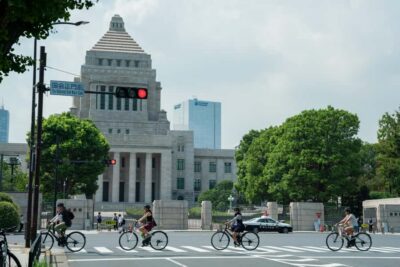
3-hour Guided E-Bike Tour of the City’s Hidden Gems
Read our review →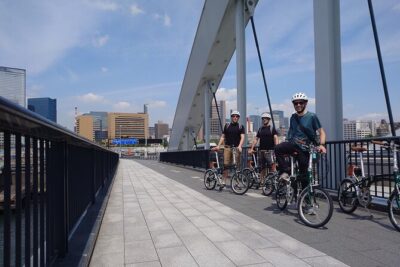
3-Hour Tokyo Private E-Bike Tour Starting from Your Hotel
Read our review →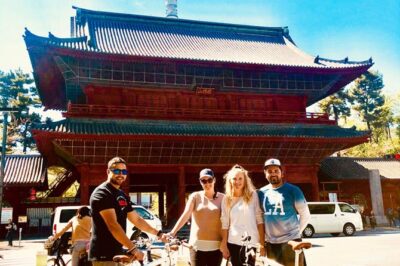
5-Hour Tokyo & Edo Hidden Gem Bike Tour with Lunch
Read our review →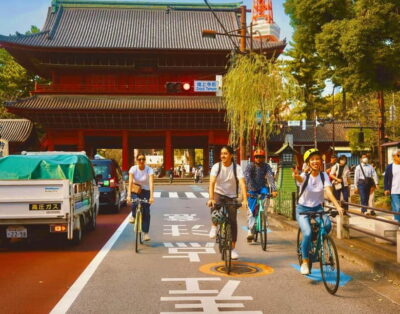
3-Hour Bike or E-Bike Tour of City’s Hidden Gems
Read our review →Browse the lists this tour appears in