
REVIEW · TOKYO BIKE TOURS
Tokyo: 3-Hour Bike or E-Bike Tour of City’s Hidden Gems
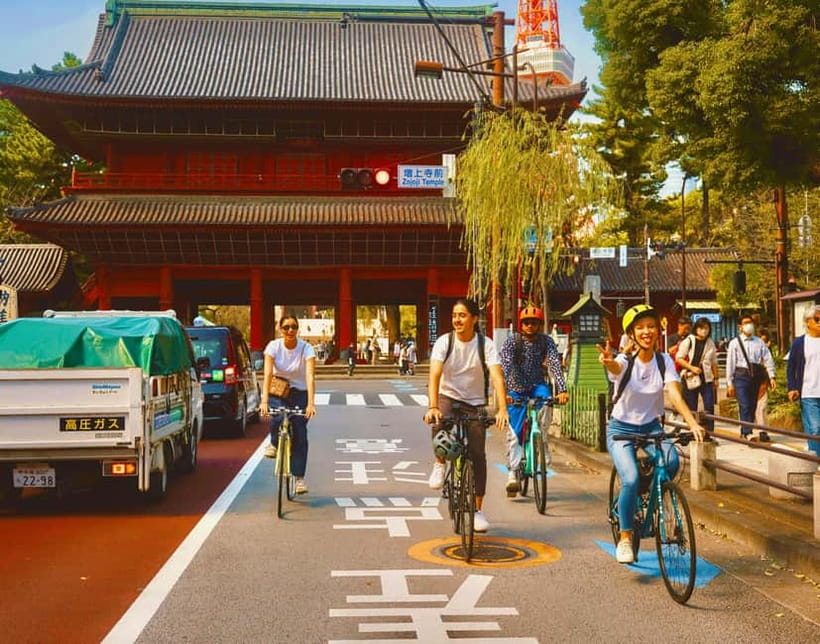
Tokyo is easier to understand on two wheels. This three-hour ride links Zojo-ji Temple, the Imperial Palace, Akasaka, Aoyama, and Shibuya, giving you a useful look at both old Tokyo and its modern streets. I like the quality Bianchi and Fuji bikes, and I like the small-group feel that lets guides such as Casey, Shin, Naoki, Marika, Miguel, and KG adjust the pace and share local context. The main consideration is that this is a sightseeing ride with short stops, not a series of long temple or museum visits.
I also like the e-bike option, especially if you do not cycle often or worry about Tokyo’s distance and summer heat. The route covers far more ground than you could manage on foot in three hours, but you should expect a real workout on a standard cross bike and bring water. Helmets cost an extra ¥1,000 in cash, so that small add-on deserves attention before you set off.
Key points to know before booking
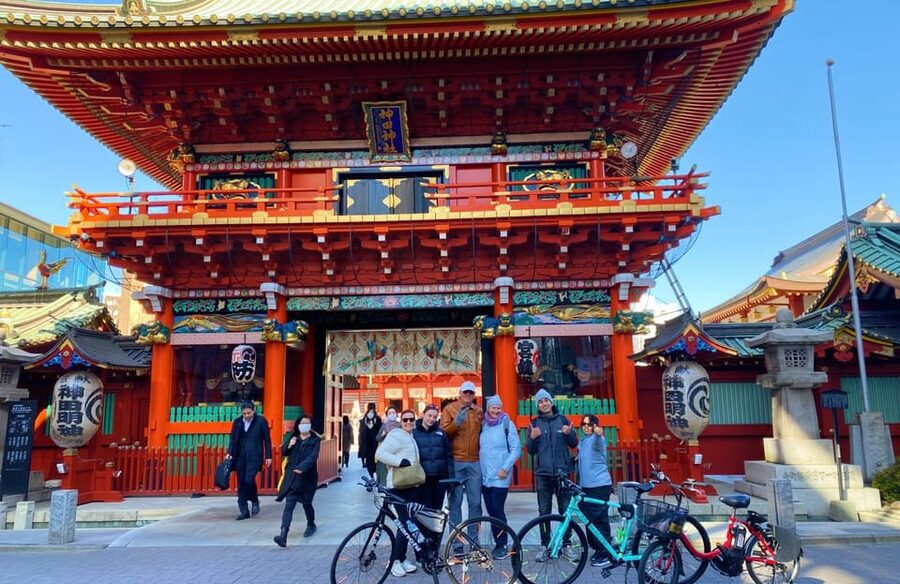
- A useful cross-section of Tokyo: The route moves from Shiba Park and Zojo-ji to the Imperial Palace, Akasaka, Aoyama, and Shibuya.
- Good bikes matter here: Bianchi and Fuji cross bikes are supplied, with an e-bike choice for riders who lack stamina or do not cycle regularly.
- Most stops are brief: Expect photo stops and short guided talks rather than long interior visits.
- Small groups improve the ride: Guides can help with traffic, take photos, and sometimes adjust the route to suit your interests.
- The route is active: You will cycle through central Tokyo for an extended period, so comfortable clothes, shoes, and water are essential.
- Budget for the helmet: Helmets are not included and cost ¥1,000 each, payable in cash on site.
Why a bicycle works so well in central Tokyo
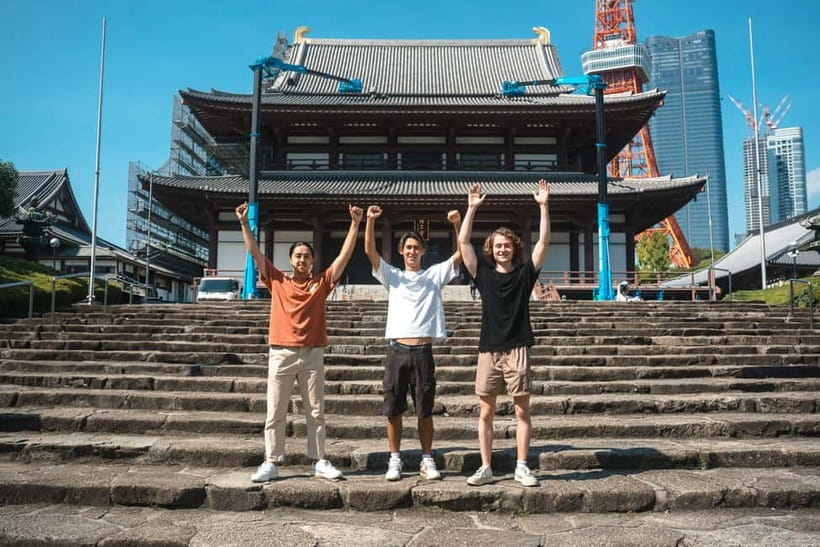
Tokyo is vast, and its best-known sights are spread across several districts. Trains connect them quickly, but a train window gives you little sense of how one neighborhood changes into the next. A bicycle lets you notice the quieter streets, office districts, parks, temples, and shopping lanes between the headline sights.
This route covers a substantial part of central Tokyo in three hours. That is its chief value. You will not study every stop at length, but you will get a clear first look at several districts and a useful sense of the city’s scale.
The tour is also more engaging than simply following a map. Guides explain what you are seeing, stop at suitable points, and help you move through busy streets. Casey was praised for looking after riders, stopping for photos, and offering the right amount of information. Shin was noted for adapting the route to the interests of his group and helping riders through crowded areas.
That personal attention matters on a city ride. You are not only pedaling from point to point. You are learning how Tokyo’s imperial, religious, sporting, shopping, and residential areas fit together.
More E-Bike Tours in Japan
- Tokyo Top Highlights 3h Guided E-bike Tour
★ 5.0 · 714 reviews - 3h Tokyo E-Bike Tour: Hidden Gems, and Local Life with guide
★ 5.0 · 670 reviews - Tokyo: 3-Hour Bike or E-Bike City Highlights Tour
★ 4.8 · 435 reviews
Starting near the Statue of Commodore Perry
The meeting point is around the Statue of Commodore Perry, about a three-minute walk from Daimon Station’s A6 exit. The statue is a useful landmark, but one rider found the meeting point difficult to locate, so give yourself extra time and look carefully around the statue rather than arriving at the last minute.
This starting point places you near Tokyo Tower and Zojo-ji Temple. It also gives the tour an immediate historical frame. Commodore Matthew Perry’s arrival helped force Japan to open to foreign trade in the nineteenth century, making the statue a fitting place to begin a ride that links Japan’s past and present.
The exact starting time varies, so check availability when booking. The tour lasts three hours, and private or small-group arrangements are available.
Zojo-ji Temple and the Shiba Park area
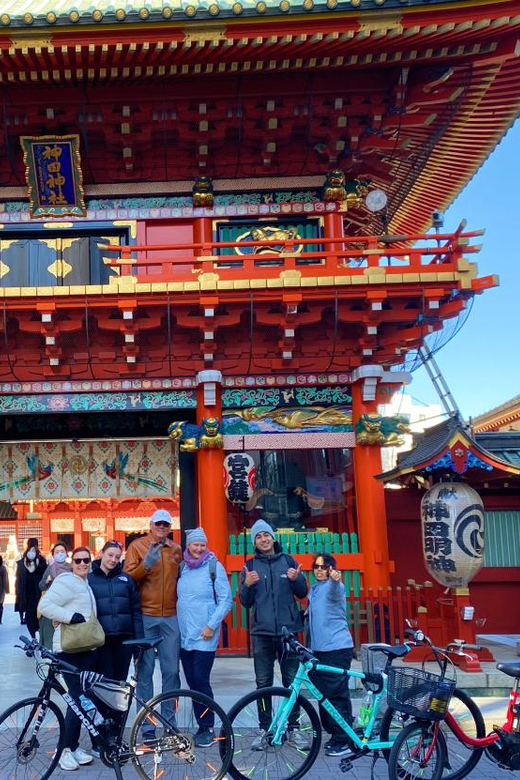
Zojo-ji is the first major stop, with about 15 minutes for a guided visit and photos. The temple sits beside Tokyo Tower, creating one of the city’s most recognizable contrasts: a major Buddhist temple in the foreground and a red communications tower rising behind it.
This is a strong early stop because it introduces Tokyo’s religious traditions without requiring a long detour. Your guide can explain the difference between temples and shrines, a subject that one January rider found especially useful on a similar route through the city’s historic areas.
Do not expect a full temple visit or extended quiet time. Fifteen minutes is enough for orientation, photos, and a short explanation. If you want to explore the temple grounds slowly, return later on your own.
The Imperial Palace and Ote-mon Gate
The ride then heads toward the Imperial Palace, with about 10 minutes for a guided photo stop, followed by another five minutes at Ote-mon Gate. These are important places for understanding Tokyo’s political and imperial center, but the schedule is designed for an outside view.
Ote-mon Gate gives you a strong sense of the old palace defenses and the formal approach to the palace grounds. The route does not promise entry into the palace buildings, and much of the experience here is about seeing the exterior, hearing the context, and taking photographs.
This section also shows why the bicycle is useful. The palace area is broad, and walking from one side to another takes time. A bike helps you cover the surrounding streets without spending the whole morning on foot.
A rider once happened to see the emperor during a visit, but that was a lucky event, not something you should expect. The value of this stop lies in the setting and the explanation, not in a guaranteed special sighting.
More E-Bike Tours in Tokyo:
- Tokyo: 3-hour Guided E-Bike Tour of the City’s Hidden Gems
★ 4.8 · 251 reviews - 3-Hour Tokyo Private E-Bike Tour Starting from Your Hotel
★ 5.0 · 117 reviews - Tokyo: 3h Private E-bike Tours, Starting at Your Hotel
★ 5.0 · 36 reviews - Tokyo: Private Cycling Tour with cute E-bike
★ 5.0 · 11 reviews
Akasaka Palace and the New National Stadium
The next stops shift the focus from imperial Tokyo to official and sporting Tokyo. The State Guest House Akasaka Palace receives about 10 minutes for photographs. Its formal architecture gives the ride another visual change after the temple and palace grounds.
The New National Stadium follows, with about 10 minutes for photos. This part of the route connects the city to modern sporting events and Tokyo’s recent urban development. It also helps break up the older historical stops with a large, modern landmark.
Both stops are short. I would treat them as outdoor viewing points rather than planned tours of the buildings. If you enjoy architecture and city planning, you will get more from the guide’s explanation. If you prefer long visits inside major sights, this format may feel rushed.
The quieter stops between major sights
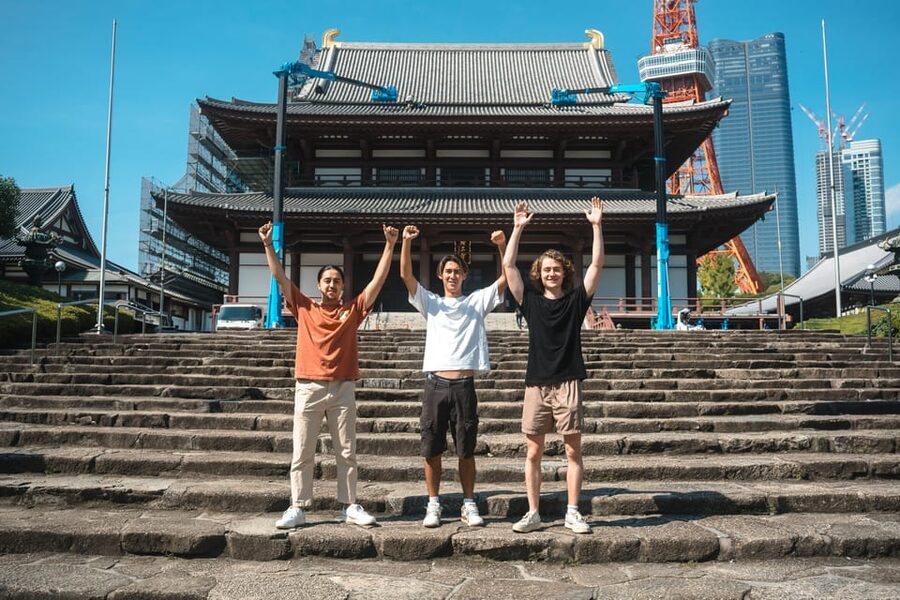
The itinerary includes a stop described simply as a hidden gem, with about 15 minutes to visit, followed by brief visits around Minamiaoyama 3-chome and Cat Street. Since the exact quiet stop can vary, you should think of this part as a chance to see a less formal side of Tokyo.
Minamiaoyama has a different feel from the palace district, with design, shopping, and residential streets close together. Cat Street brings you into one of the city’s better-known youth and fashion areas, linking Harajuku and Shibuya. The five-minute stop is short, but cycling through the area gives you a useful sense of its position between major neighborhoods.
This is where the tour earns its title. The famous sights are easy to find in a guidebook. The smaller streets and changing neighborhood character are harder to understand if you only move by train between major stations.
Miyashita Park and Shibuya Crossing
Miyashita Park receives only about three minutes, so expect a quick look rather than time to shop, eat, or explore the park’s facilities. Its place on the route is mainly practical, showing how Tokyo has reused and redesigned central urban space.
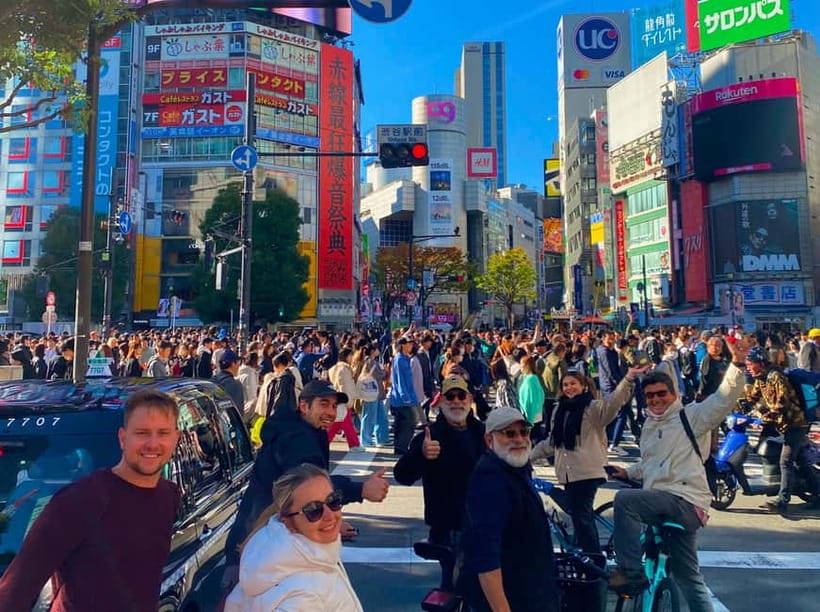
The final major stop is Shibuya Crossing, with about five minutes for photos and a short visit. You get the classic view of people moving in all directions, tall signs, and one of Tokyo’s most recognizable city scenes.
Five minutes is enough for a first look, but not enough to experience Shibuya fully. You may want to return later to explore the shops, cafés, department stores, and surrounding streets. Ending nearby is useful if you want to continue your day in Shibuya instead of heading straight back to the starting point.
The tour finishes at the Bell of Peace. From there, you can continue exploring, although the provided details do not specify a return transfer to Daimon.
What the bikes and e-bike choice mean
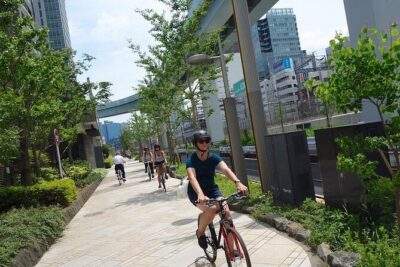
The standard bikes are high-quality cross bikes from Bianchi and road bikes from Bianchi and Fuji. One rider specifically praised a Bianchi cross bike for being easy to ride around the city, while another said the quality of the bikes added to the enjoyment.
That is not a minor detail. Tokyo’s central streets require frequent slowing, turning, and stopping for signals and group movement. A dependable, comfortable bike makes a long ride much less tiring than a basic rental bicycle.
Choose the e-bike if you rarely cycle, have limited stamina, or feel unsure about riding for three hours. The provider specifically recommends it for people who do not cycle often. It can also be a smart choice during hot weather, since one rider completed the route during record-breaking Tokyo summer heat but still noted the conditions.
If you are fit and cycle regularly, the standard bike should be enjoyable. One rider described the route as extended cycling and advised preparing for a workout. That is the honest expectation: this is not a gentle sightseeing spin with only a few minutes in the saddle.
The supplied mini pouch is useful for a phone, wallet, or key. Bike insurance is included. Helmets are available for ¥1,000 per unit, paid in cash, but they are not included in the stated price. If you want one, bring the cash and request it before leaving.
How good is the guiding?
The guiding is one of the strongest parts of the experience. The tour is offered in English or Japanese, and the English-speaking guides have been praised for clear explanations, friendliness, humor, and care with the group.
Different guides have received positive attention for different reasons. Casey was described as attentive and well organized. Shin was flexible and able to shape the route around his group’s interests. Naoki, Marika, Nouchi, Georgie, Miguel, and KG were also singled out for being friendly and professional.
The practical benefit is more important than the names. A good guide makes Tokyo’s traffic feel more manageable, points out where to stop, explains cultural details, and can take photos for you. The route includes enough short stops that the guide’s timing affects the whole experience.
The schedule does not allow lengthy historical lectures. Instead, you receive short explanations at several points. I think that is the right balance for a bicycle tour, as long as you understand that this is an overview rather than a detailed temple or palace study.
Price, pace, and overall value
At $60 per person, the tour offers reasonable value if you want to see several central districts in one morning or afternoon. You receive a quality bike, a guide, local stories, a mini pouch, and bike insurance. The e-bike option adds practical value for riders who might otherwise struggle with the distance.
The price becomes less attractive if you want long visits at each sight. Zojo-ji gets about 15 minutes, the Imperial Palace about 10, and several other stops only three to 10 minutes. You are paying for the route, the guidance, the equipment, and the ability to cover ground, not for admission to attractions.
The small-group format can make the price feel worthwhile. It is easier to keep moving, stop for photos, and ask questions than it would be with a large coach group. Private groups are also available if you want a more personal schedule.
Free cancellation is available up to 24 hours in advance, and you can reserve now and pay later. Those terms help if your Tokyo plans are still changing.
Who should book this Tokyo bike tour?
I would recommend it to first-time visitors who want a broad introduction to central Tokyo. It suits people who enjoy being active, want more than a train-based view, and do not mind short visits at major landmarks.
It is also a good match for couples, friends, and small groups with different interests. The route mixes temples, imperial sites, architecture, fashion streets, parks, and Shibuya, so you are unlikely to spend all three hours looking at the same type of sight.
The e-bike makes it more accessible for casual cyclists, but you still need to be able to ride a bicycle. The tour is not suitable for children under 12, pregnant women, people with back problems, or anyone who cannot ride.
I would skip it if you dislike city cycling, want a slow cultural tour, or hope to enter and explore each major attraction. You should also reconsider during difficult weather unless you are comfortable riding in the conditions. Comfortable shoes, practical clothes, and water are essential.
Should you book it?
Book this tour if you want to cover a lot of Tokyo in three hours and prefer local streets to a bus or train window. The best reasons are the quality bikes, strong guide support, e-bike option, and mix of old and modern districts.
Choose the e-bike if you rarely ride, confirm the bike type before booking, and bring ¥1,000 cash if you want a helmet. For a first look at Tokyo, this is an efficient and enjoyable way to get your bearings. Just keep your expectations clear: you will see many places, but you will not linger long at any one of them.
FAQ
How long does the Tokyo bike tour last?
The tour lasts three hours.
How much does the tour cost?
The listed price is $60 per person.
Where does the tour begin?
The meeting point is around the Statue of Commodore Perry, about a three-minute walk from Daimon Station’s A6 exit.
Where does the tour finish?
The tour finishes at the Bell of Peace.
Which types of bicycles are available?
The tour provides high-quality cross bikes from Bianchi, along with Bianchi and Fuji road bikes. An e-bike option is also available.
Are helmets included?
No. Helmets are available for ¥1,000 per unit, payable in cash on site.
What languages are offered?
The tour is available in English and Japanese.
Is the tour suitable for children?
The tour is not suitable for children under 12. It is also not suitable for pregnant women, people with back problems, or people who cannot ride a bike.
Can I cancel or pay later?
You can cancel up to 24 hours before the activity for a full refund. Reserve now and pay later is also available.
More 3-Hour Experiences in Tokyo
- Tokyo Bay Area: Sunset Night View 3h E-bike Guided Bike Tour
★ 5.0 · 11 reviews - 3-Hour Porto Highlights on a Electric Bike Guided Tour
★ 5.0 · 4,392 reviews - 3-hour Complete Prague Bike Tour
★ 5.0 · 3,674 reviews - Porto: City Highlights 3-Hour Guided Electric Bike Tour
★ 4.8 · 3,092 reviews
Newly added rides around Tokyo
- Tokyo: Private Cycling Tour with cute E-bike★ 5.0 · 11 reviews
- Tokyo Bay Area: Sunset Night View 3h E-bike Guided Bike Tour★ 5.0 · 11 reviews
- Tokyo: West-Side Cycling and Food Tour with Guide★ 5.0 · 37 reviews
- Tokyo: 3h Private E-bike Tours, Starting at Your Hotel★ 5.0 · 36 reviews
- Tokyo: 3-hour Guided E-Bike Tour of the City’s Hidden Gems★ 4.8 · 251 reviews
- Tokyo Bike Tour: Shibuya, Harajuku & Hidden Gems★ 5.0 · 20 reviews
- Tokyo: Hidden Gems Guided Bike Tour with Lunch★ 4.5 · 30 reviews
- Tokyo: 2-Hour Night Bike Tour of the City’s Hidden Gems★ 4.9 · 25 reviews
Tokyo Bike Tours, compared.
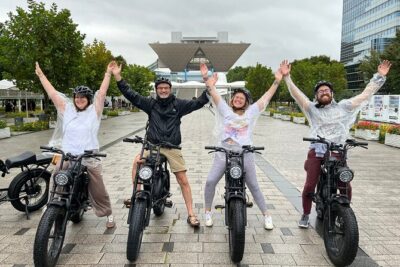
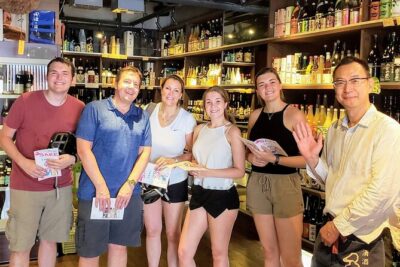
3h Tokyo E-Bike Tour: Hidden Gems, and Local Life with guide
Read our review →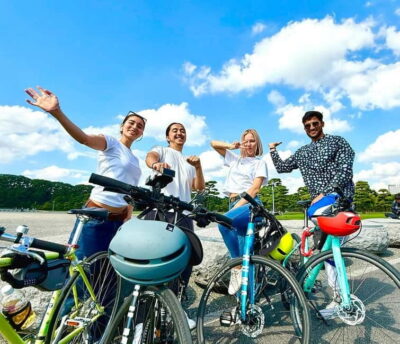
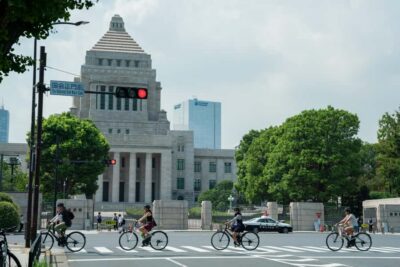
3-hour Guided E-Bike Tour of the City’s Hidden Gems
Read our review →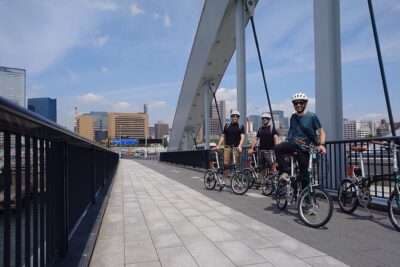
3-Hour Tokyo Private E-Bike Tour Starting from Your Hotel
Read our review →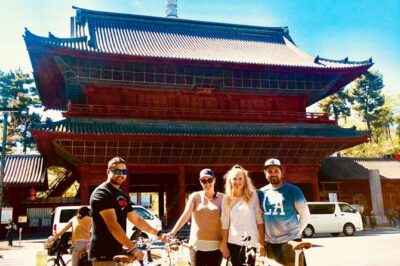
5-Hour Tokyo & Edo Hidden Gem Bike Tour with Lunch
Read our review →Browse the lists this tour appears in