
REVIEW · TOKYO BIKE TOURS
Tokyo: West-Side Cycling and Food Tour with Guide
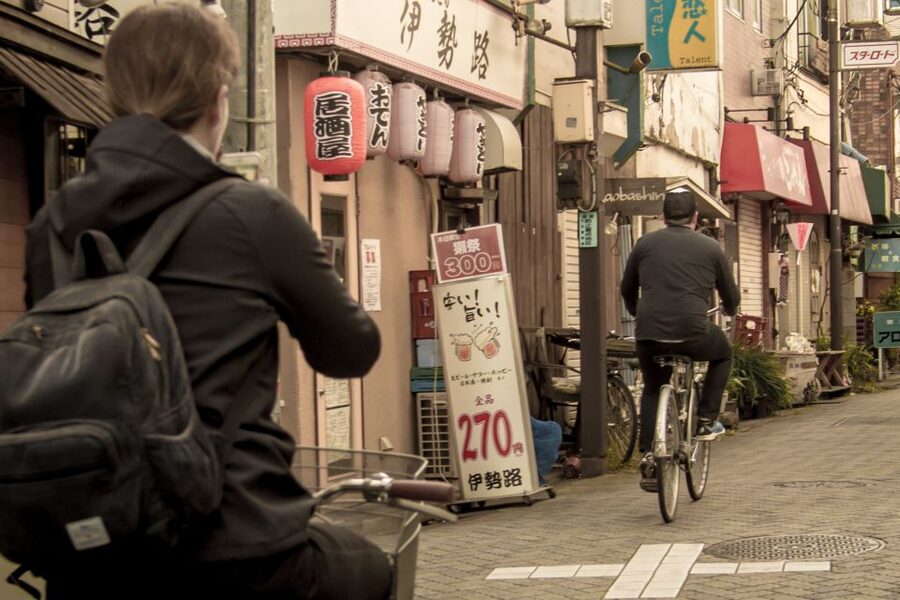
Tokyo gets more interesting after the big sights. This 3.5-hour ride takes you through Nakano, Koenji, and Asagaya on old-fashioned mamachari bicycles, using narrow lanes and riverside paths that reveal a calmer, more ordinary side of the city. I like the easy pace and the chance to see how local people actually move, eat, shop, and park their bikes.
I also like the personal touch from Andy, an Australian guide with strong local knowledge and a warm sense of humor. The noodle lunch, two street eats, and bottled drink make the $110 price easier to justify. The main catch is simple: you need to ride confidently for 12 to 15 kilometers, and the tour usually runs in rain, so this is not a good pick if you want a dry, effortless sightseeing outing.
Key points at a glance
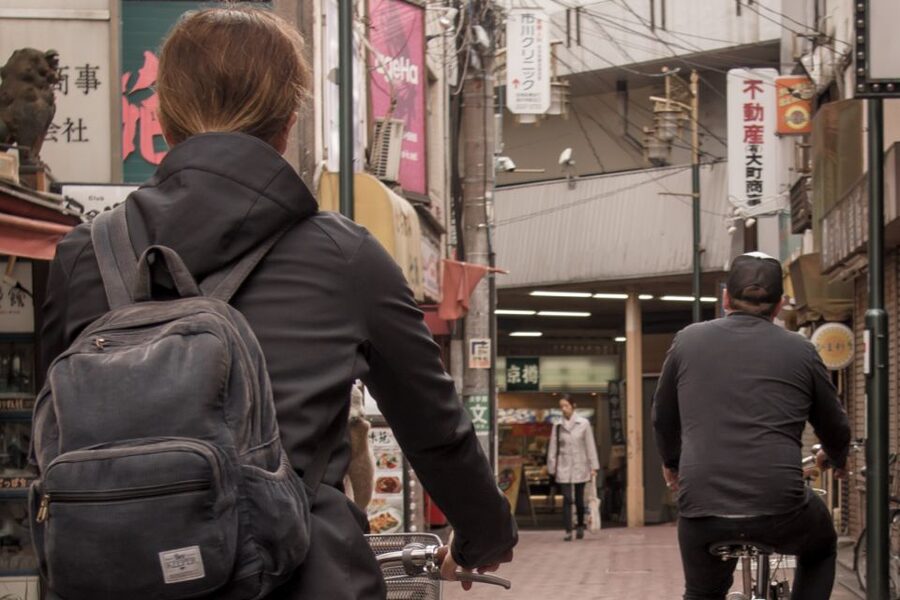
- Ride a real mamachari: These practical city bicycles have front baskets and may creak or squeak, but they are carefully maintained and easy to handle.
- See three west Tokyo neighborhoods: Nakano, Koenji, and Asagaya offer back streets, local shops, riverside routes, and daily life away from the main sightseeing circuit.
- Eat like a local: The tour includes a simple lunch, two street food items, and a bottled drink, with a noodle bar featured on some outings.
- Learn the small stuff: Andy explains Japanese customs, vending machine drinks, bicycle parking, architecture, and neighborhood habits.
- Expect real city riding: Narrow lanes, crowded sections, sharp turns, and uneven surfaces are part of the experience.
- Meet at Koenji Station: The station is only six minutes from Shinjuku by JR train, but the group leaves on time, so arrive early.
Why this west Tokyo ride feels different
Most first visits to Tokyo focus on Shibuya, Shinjuku, Asakusa, or the Imperial Palace. Those places deserve their time, but they can leave you with a polished picture of the city. This tour gives you something more domestic and less staged.
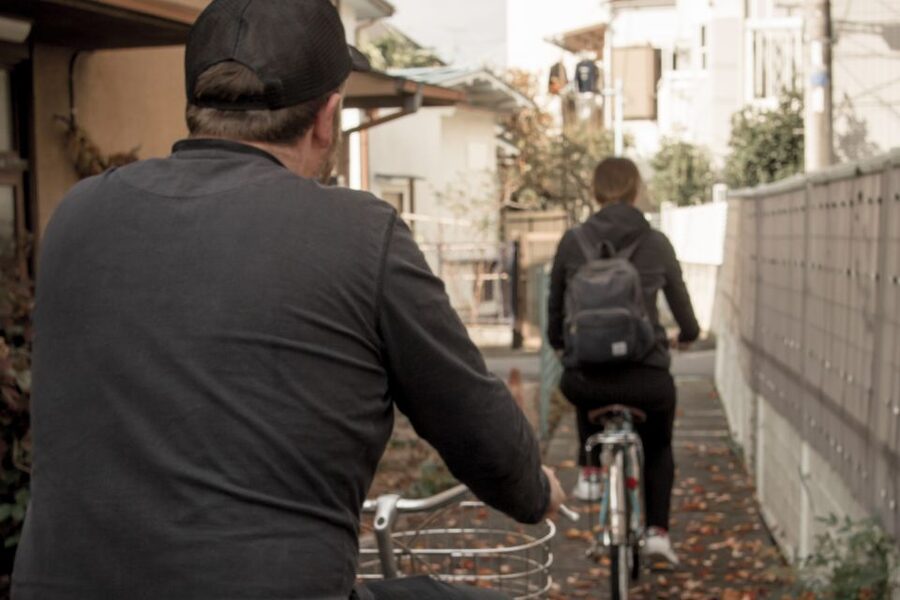
You pedal through inner west Tokyo, where the reward is not one famous monument. It is the changing rhythm of the neighborhoods. One moment you may be tracing a quiet back street. Soon you are crossing a busier activity hub, passing small businesses, or stopping to watch the careful system used to store bicycles.
The route covers Nakano, Koenji, and Asagaya. Each area has its own feel, but the tour treats them as connected parts of everyday Tokyo. You are not simply transported between sights. You travel at street level, which lets you notice details that disappear from a train window or a tour bus.
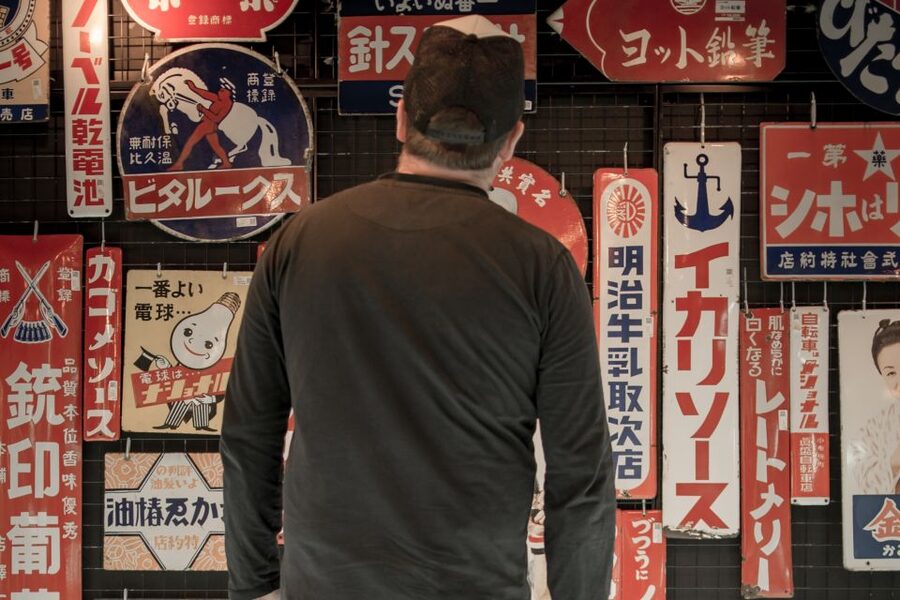
That is the real value here. You learn how Tokyo works in small pieces. The guide can explain why a street is arranged as it is, how people use public space, and what certain food or drinks mean in daily life. Andy’s strength, according to the experience, is making those details easy to understand without turning the ride into a classroom.
More Food Bike Tours in Tokyo:
- Versailles Palace Bike Tour with Market & Marie-Antoinette hamlet
★ 5.0 · 2,680 reviews - Madrid: 3 h. Guided Highlights Bike Tour with Optional Tapas
★ 4.9 · 1,623 reviews - Rome: Appian Way & Aqueducts E-Bike Tour (Catacombs & Food)
★ 4.9 · 1,498 reviews
Starting at Koenji Station
The meeting point is directly outside the ticket gates at Koenji Station on the JR network. Koenji is six minutes from Shinjuku and about 18 minutes from Shibuya, so reaching the start is fairly easy from central Tokyo.
The guide wears a baseball cap and waits five minutes before departure. That detail matters because the tour leaves on time. Tokyo’s trains are efficient, but you still need to allow time to find the platform, ride to Koenji, exit the station, and locate the guide.
I would arrive at least 10 to 15 minutes early. Use the spare time to find the station exit and get settled rather than arriving breathless just as the bikes roll away. The tour operator is clear that it will not wait for late arrivals.
The starting area also gives you a useful first clue about the tour. Koenji is not presented as a grand sightseeing zone. It is the kind of place where you begin to notice ordinary storefronts, local traffic patterns, and the close mix of homes, shops, and small businesses.
Getting used to the mamachari
The bicycle is part of the point. A mamachari is a practical Japanese city bike, usually built for short neighborhood trips rather than speed. These bikes have front baskets, which are handy for small personal items and give the ride a distinctly local feel.
The bicycles may be creaky or squeaky, but they are described as well maintained and easy to ride. One useful feature is that they are not racing bikes. You are not expected to pedal hard or cover huge distances at speed.
You should still take the riding requirement seriously. The route covers roughly 7.5 to 9.5 miles, or 12 to 15 kilometers, at a leisurely pace. You will use narrow and sometimes crowded streets, uneven surfaces, twisting lanes, and occasional sharp turns.
That makes this a good choice for a competent city cyclist, not a complete beginner. You need to brake, steer, and balance comfortably around other people. The minimum height is about 140 centimeters, or 4 feet 7 inches, for a comfortable fit. Children under 10 are not accepted.
Bicycle parking fees and cycling liability insurance are included. Those inclusions remove a couple of small costs and give you some peace of mind, though you remain responsible for riding carefully.
Nakano, Koenji, and Asagaya at street level
The route through Nakano, Koenji, and Asagaya is less about checking off landmarks and more about reading the city around you. You may ride through back streets where the buildings sit close to the road and daily errands happen within a few minutes of home.
The narrow lanes are one of the tour’s strongest features and one of its practical challenges. They show you a side of Tokyo that is hard to appreciate from a main avenue. They also demand attention, particularly when pedestrians, bikes, and cars share limited space.
Riverside bike paths offer a change of pace. These sections give you room to ride more comfortably and see the city from a less crowded angle. The route also passes activity hubs, where you can sense the energy of the neighborhoods without spending your whole day in a major tourist district.
Koenji is especially useful as a base for this kind of outing because it combines easy rail access with local streets close at hand. Nakano and Asagaya add variety, so the three-hour route does not feel like a loop around one small area.
The guide’s explanations add the context you would miss on your own. Andy has been praised for explaining Japanese customs, social habits, food, architecture, and practical details such as vending machine drinks. He also answers questions, including the odd ones that come up when you are trying to make sense of everyday life in Japan.
More Food Experiences in Tokyo:
- Rome by Night – Ebike Small Group Tour – Food and Wine (Option)
★ 5.0 · 1,275 reviews - Rome by Night: E-bike Small Group Tour -Food & Wine (Option)
★ 4.9 · 1,233 reviews - Bangkok: Must-Try Hidden Bike & Food Experience
★ 4.9 · 613 reviews - Appian Way & Aqueducts small group e-bike tour(catacombs & food)
★ 5.0 · 531 reviews
Food stops that make the ride worthwhile
The food is not a luxury meal, and that is fine. The tour includes a simple local lunch, two popular street food items, and one bottled drink. The idea is to sample everyday eating rather than sit down for a long formal meal.
A small noodle bar has been part of the lunch stop, with the group sharing counter space alongside hungry salarymen. That setting is valuable because it shows how quick, practical meals fit into working life. You are not just tasting noodles. You are seeing the kind of place people use during an ordinary day.
The street snacks add variety and give the guide a chance to explain familiar Japanese foods in context. Sweet treats have been part of the stops, and the food is paired with conversation about customs and local habits.
The meal is included in the price, which helps the overall value. You do not need to hunt for lunch midway through a cycling route, and you get several small tastes rather than one meal chosen from a standard tourist menu.
There is an important limitation. The experience does not cater to personal tastes, dietary requirements, or allergies. Vegans and people with food allergies should not book this tour. The supplied information does not promise substitutions, so you should treat the food as fixed rather than customizable.
What Andy adds to the ride
A bicycle route can be useful on its own, but the guide is what turns this into a cultural outing. Andy is an English-speaking Australian guide who has lived long enough in Japan to explain both the visible details and the less obvious social habits behind them.
His style appears to suit people who like questions and conversation. He has been described as patient, funny, friendly, and willing to explain things clearly. That matters in Tokyo, where small rules about space, queues, trash, food, and public behavior can be hard to read at first.
I particularly like the practical focus. Learning how to interpret vending machine drinks or how bicycle parking works may sound minor, but those details help you feel less like an outsider during the rest of your trip.
Andy has also sent recommendations after the tour, which can be useful if you want to continue exploring the west side. Do not expect a formal lecture or a script packed with dates. Expect a guide who points out details as they appear and responds to what interests you.
Private and small-group formats are available. A smaller group should make it easier to hear explanations, ask questions, and move through narrow streets without creating a large cluster of bikes.
Weather, comfort, and the right pace
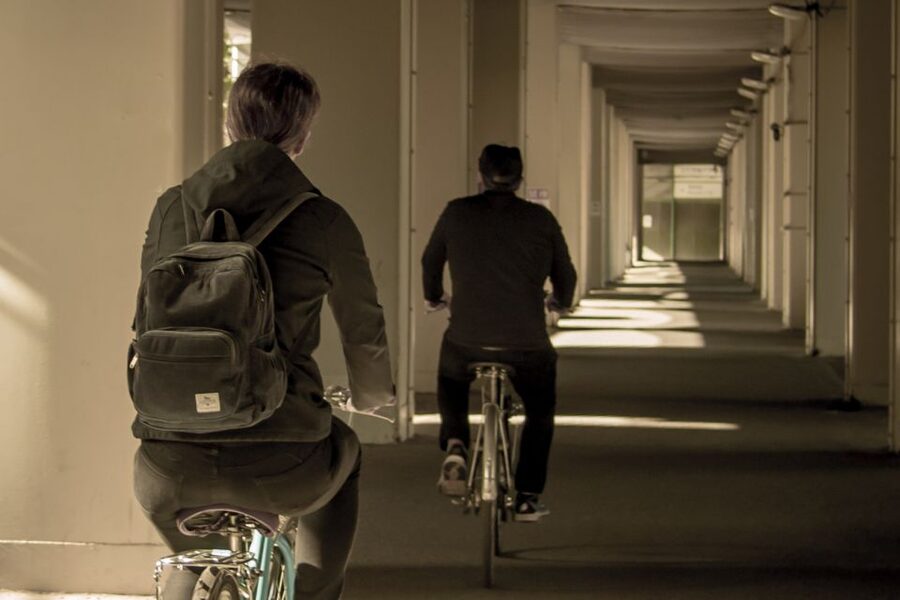
This is an outdoor activity, and the tour generally proceeds in rain. Bring a rain jacket or another way to stay reasonably dry, and expect that the route may feel less comfortable in wet conditions. The supplied advice also recommends hand sanitizer or tissues and a garbage bag.
The garbage bag is a practical item for carrying waste when no bin is nearby. Tokyo is famously tidy, but that does not mean you will always find a public trash can exactly when you need one.
The leisurely pace helps, but three and a half hours on a bike is still active. You will be outdoors for the full experience, with stops for food and explanations rather than constant riding. Wear comfortable clothes and shoes suitable for pedaling and walking.
Hot or wet weather can change the feel of the outing. On a pleasant day, the open-air format is a major advantage. In rain, you should be ready for damp clothes and slippery or uneven surfaces. The tour is designed to run in all seasons, but that does not make bad weather disappear.
Is $110 a fair price?
At $110 per person, this is not the cheapest way to spend half a day in Tokyo. You could rent a bicycle and explore on your own for less, especially if you already understand local traffic and know where you want to go.
The comparison is not quite fair, though. The fee includes the bicycle, liability insurance, bicycle parking fees, a local lunch, two street food items, a bottled drink, and an English-speaking guide. You are also paying for the route planning and the cultural explanation that turns random streets into a readable part of Tokyo.
The value is strongest if you want an introduction to neighborhoods you would not confidently reach alone. It is also good for a first or last day in Tokyo. Early in a trip, it helps you understand local customs and get oriented. Near the end, it gives you a final look at a quieter side of the city after the major sights are done.
The value is weaker if you dislike group activities, have strict food needs, or want a polished sightseeing ride with no traffic concerns. The bicycle is functional rather than fancy, and the route includes real city conditions.
Who should book this experience?
I would recommend it to active adults, older children who meet the age and height rules, couples, friends, and solo visitors who enjoy learning through conversation. It suits people who want local context more than famous photo stops.
It is also a smart choice for anyone who has already seen the central highlights and wants a different angle on Tokyo. The route shows how ordinary neighborhoods connect and how much life exists beyond the main stations.
I would skip it if you are not comfortable on a bicycle, cannot ride for 12 to 15 kilometers, or dislike narrow streets. I would also skip it if you need vegan food, allergy-safe meals, or complete control over what you eat.
Book with enough time to reach Koenji Station early. The tour leaves on schedule, and nobody wants to spend the afternoon trying to catch up with a small bicycle group.
Should you book the west-side cycling tour?
Book this tour if you want Tokyo to feel less like a list of attractions and more like a city where people actually live. The strongest parts are the mamachari ride, the three local neighborhoods, Andy’s explanations, and the simple food stops that put daily life in front of you.
Skip it if you want luxury, dry-weather certainty, or a route free from traffic and uneven streets. For the right rider, though, $110 buys more than a bicycle trip. It buys a guided introduction to the habits, food, and quiet corners that make west Tokyo easier to understand.
FAQ
Where does the Tokyo cycling and food tour begin?
It begins directly outside the ticket gates at Koenji Station on the JR Train Network.
How far is Koenji Station from Shinjuku?
Koenji Station is about six minutes from Shinjuku by train.
How long does the experience last?
The tour lasts 210 minutes, or about three and a half hours.
What neighborhoods does the route visit?
The route explores Nakano, Koenji, and Asagaya in west Tokyo.
What food and drinks are included?
The price includes a simple local lunch, two street food items, and one bottled drink.
Is bicycle rental included?
Yes. A mamachari bicycle is provided, along with bicycle parking fees and cycling liability insurance.
Do I need to be an experienced cyclist?
You should be comfortable riding in narrow, crowded streets and on uneven surfaces for roughly 12 to 15 kilometers at a leisurely pace.
Can people with food allergies or vegan diets join?
No. The experience does not cater to personal tastes, dietary requirements, or allergies, and it is not suitable for vegans or people with food allergies.
What happens if it rains?
The tour generally proceeds in rainy weather, so you should be prepared to get wet.
Newly added rides around Tokyo
- Tokyo Bay Area: Sunset Night View 3h E-bike Guided Bike Tour★ 5.0 · 11 reviews
- Tokyo: Private Cycling Tour with cute E-bike★ 5.0 · 11 reviews
- Tokyo: 3h Private E-bike Tours, Starting at Your Hotel★ 5.0 · 36 reviews
- Tokyo: 3-hour Guided E-Bike Tour of the City’s Hidden Gems★ 4.8 · 251 reviews
- Tokyo Bike Tour: Shibuya, Harajuku & Hidden Gems★ 5.0 · 20 reviews
- Tokyo: Hidden Gems Guided Bike Tour with Lunch★ 4.5 · 30 reviews
- Tokyo: 3-Hour Bike or E-Bike Tour of City’s Hidden Gems★ 4.7 · 81 reviews
- Tokyo: 2-Hour Night Bike Tour of the City’s Hidden Gems★ 4.9 · 25 reviews
Tokyo Bike Tours, compared.
3h Tokyo E-Bike Tour: Hidden Gems, and Local Life with guide
Read our review →
3-hour Guided E-Bike Tour of the City’s Hidden Gems
Read our review →
3-Hour Tokyo Private E-Bike Tour Starting from Your Hotel
Read our review →
5-Hour Tokyo & Edo Hidden Gem Bike Tour with Lunch
Read our review →Browse the lists this tour appears in