
REVIEW · HIROSHIMA BIKE TOURS
Hiroshima: Best of Hiroshima Guided Bike Tour
Hiroshima is easier on two wheels. This 210-minute bike tour links the Peace Memorial Park, Atomic Bomb Dome, Gokoku Jinja, Hiroshima Castle, and Shukkei-en Garden without making you cross the city on foot. I like the flat route and the chance to reach quiet riverside paths and smaller sites that buses and cars cannot reach easily. I also like the small group, limited to eight people, which gives your guide time for questions and personal stories.
The main consideration is that this is not a casual sightseeing option for everyone. You need to be comfortable riding a bicycle, and the tour is not suitable for children under 12, people under 140 centimeters, pregnant women, or people with certain medical conditions. Hot, wet, or otherwise poor weather can also cancel the outing.
Key points at a glance
- A thoughtful 3.5-hour route: Connect Hiroshima’s most important memorial sites with its castle, shrine, and traditional garden.
- Almost entirely flat: The ride is designed for an easy pace, with several stops for stories, photos, and rest.
- A small group of eight maximum: Your guide can answer questions and adjust the rhythm better than on a large bus tour.
- More than the Peace Park: The route gives you a wider look at Hiroshima, including its samurai-era past and Edo-period garden design.
- Good bikes for different riders: Trek bikes, step-through bikes, e-bikes, and child-sized bikes are available, along with helmets and bottled water.
- Strong guide-led storytelling: Guides such as Awais, Aimee, Miyu, James, Ehsan, and Melissa have been praised for clear explanations and personal connections to the city.
Why cycling works so well in Hiroshima
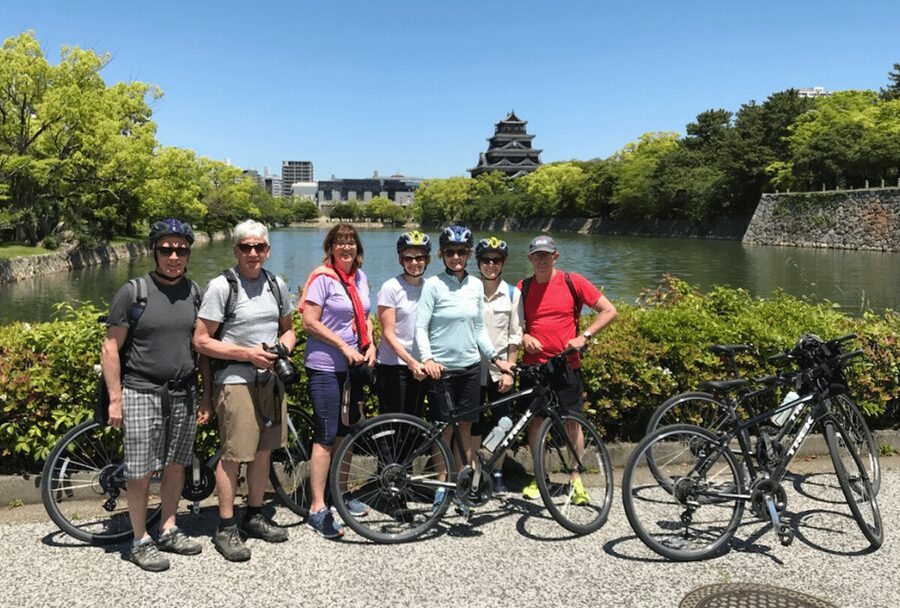
Hiroshima’s central sights are close enough to connect by bicycle, but far enough apart to make walking tiring. The Peace Memorial Park alone can take a while to absorb, and adding Hiroshima Castle and Shukkei-en Garden can turn a simple sightseeing day into a lot of pavement.
That is where this tour earns its price of $70. You are paying for a bike, helmet, English-speaking guide, garden entry, water, and a planned route that covers several major places in one morning or afternoon. A self-guided rental would cost less in some cases, but you would need to plan the route, find the right paths, and supply the historical context yourself.
I especially like the way the ride mixes serious history with ordinary city scenery. You are not sealed inside a vehicle. You move beside the rivers, pass through public spaces, and get a better sense of how Hiroshima functions today.
The route is reported to cover about 10 kilometers, though the exact distance and pace can vary. Several people found it leisurely, including riders who had not been on a bicycle for years. That said, leisurely does not mean completely effortless. You still need to pedal for several hours and follow the group safely.
A few more rides around Japan worth a look
- Tokyo Guided Small-Group Biking Tour
★ 5.0 · 1,250 reviews - Tokyo Top Highlights 3h Guided E-bike Tour
★ 5.0 · 714 reviews - 3h Tokyo E-Bike Tour: Hidden Gems, and Local Life with guide
★ 5.0 · 670 reviews
Starting at Cycle Hiroshima HQ
The meeting point is Cycle Hiroshima HQ, marked by a large Cycle Hiroshima sign. Plan to arrive with comfortable clothing and shoes, and give yourself enough time for the short orientation and bike fitting.
The fitting matters. A poorly adjusted saddle can make a flat route feel much longer, so speak up if the bike does not feel right. The shop has Trek bikes in different sizes, plus step-through models, e-bikes, and child-sized bikes. Helmets and bottled water are included.
An e-bike is available if you want extra help, though the route is about 98 percent flat according to one rider who upgraded. That makes the standard bike a sensible choice for many people. If you are less confident on a bicycle, ask about the step-through option and make sure you are comfortable before leaving the shop.
The group limit of eight is a real advantage. Your guide can keep an eye on the riders, stop when needed, and handle questions without a microphone. Some outings have been even smaller, with only four people, creating a relaxed and friendly feel.
Along the riverside to Peace Memorial Park
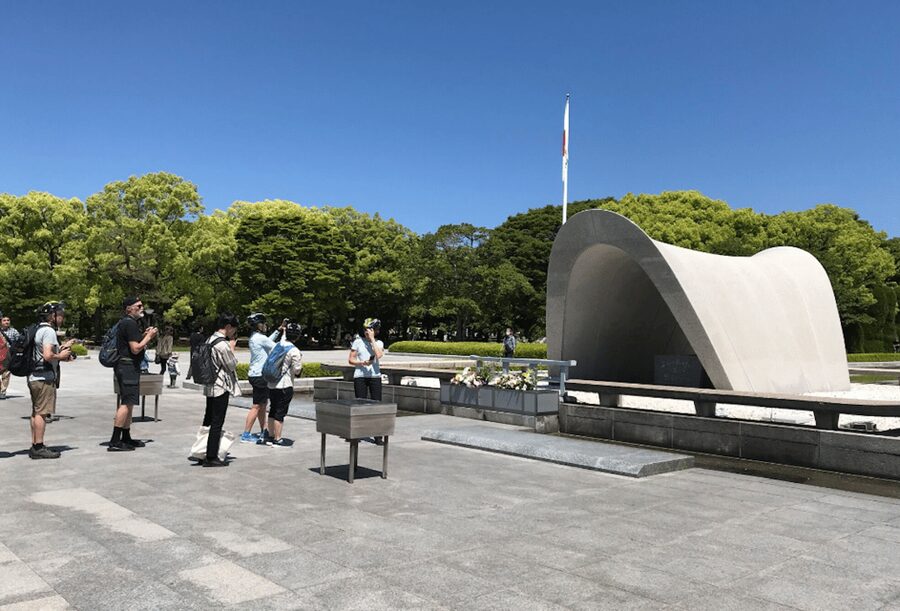
The tour begins with a gentle riverside ride toward Peace Memorial Park. This opening section gives you time to settle into the bicycle before the more emotional part of the day begins.
The riverside setting also helps you see Hiroshima as a living city rather than only as a place of remembrance. You pass through open public spaces and approach the memorial district at a calm pace. Because bicycles can use routes that are less practical for cars and buses, the ride avoids some of the stop-and-start feeling of motor transport.
Once you reach the park, the guide pauses at several key monuments. The exact order can vary, but the focus is the atomic bombing of August 6, 1945, and the people affected by it. This is not a quick photo stop. You are given time to listen, ask questions, and take in the setting.
The best guides handle this section with care. Aimee has been praised for being respectful while still warm and approachable. Miyu has shared family stories that helped connect the past to local life. Other guides, including Ehsan, Awais, and James, have been singled out for clear explanations and thoughtful answers.
That personal element is important. A guide can point out a monument, but a strong guide helps you understand why it matters. You may hear about the bombing, the destruction, recovery, and the city’s later identity as the City of Peace. The tone is serious without becoming stiff.
The Atomic Bomb Dome and the meaning of the park
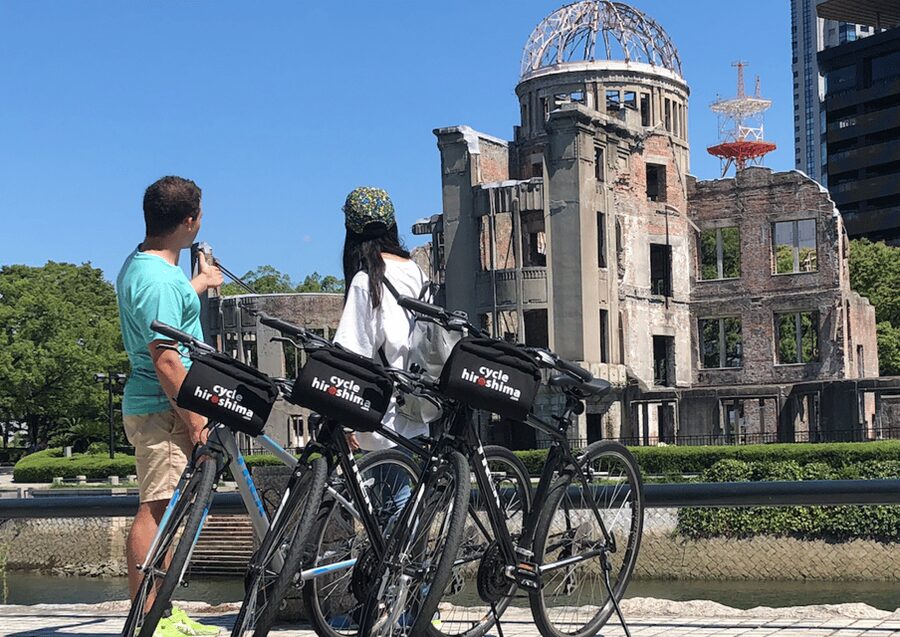
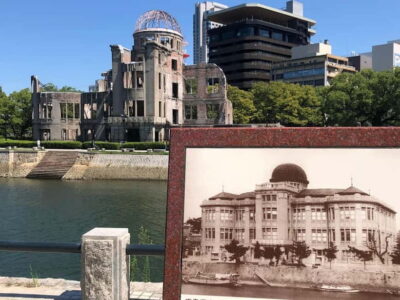
The Atomic Bomb Dome is the tour’s most recognizable stop. Its damaged structure is a UNESCO World Heritage Site, and seeing it in person is different from viewing photographs. The building’s survival amid such destruction makes it a powerful marker of what happened in 1945.
Your guide provides context while leaving room for quiet thought. That balance matters here. You should expect a moving visit, not a light sightseeing stop, and you may want to return later on your own for more time inside the wider memorial area.
The tour can also include discussion of Sadako Sasaki and the paper cranes associated with her story. This adds a personal human scale to the history. Instead of only thinking about buildings and dates, you are reminded of individual lives and the long effects of the bombing.
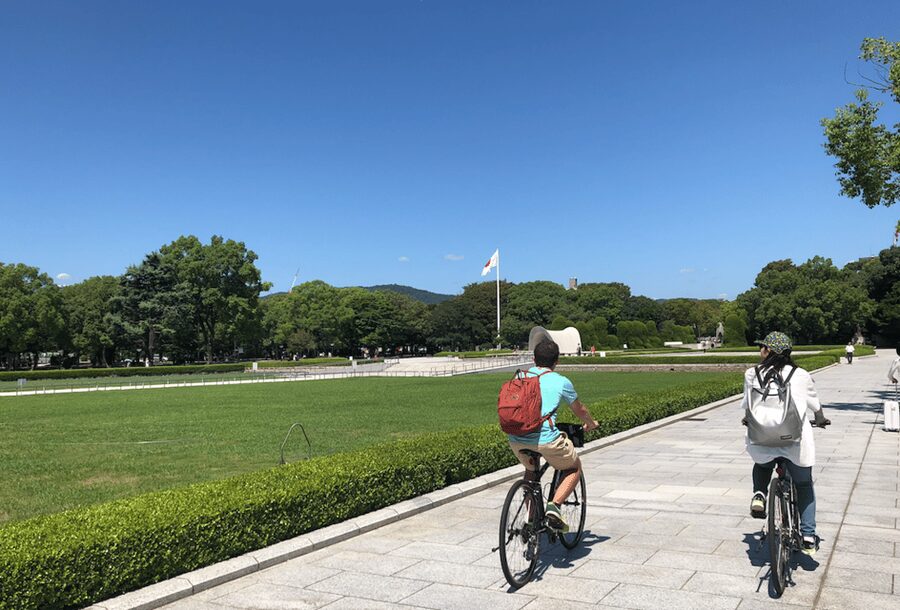
The bicycle is useful in the Peace Park because it lets you move between important points without wearing out your feet. Still, do not expect to roll through every memorial area at speed. You will stop often, park the bikes, listen, and take photographs.
Same handlebars, a completely different route:
- Hidden Kyoto E-Biking tour
★ 5.0 · 1,843 reviews - Bike Tour Exploring North Kyoto plus Lunch
★ 5.0 · 1,087 reviews - Tokyo Great Cycling Tour
★ 5.0 · 811 reviews - Arashiyama Bamboo Forest & Hidden Gems Bike Tour (Early Bird)
★ 5.0 · 613 reviews
Gokoku Jinja and Hiroshima Castle
After the Peace Memorial Park, the route heads north toward Gokoku Jinja, one of Hiroshima’s most popular Shinto shrines. The shift in mood is noticeable. You move from a modern memorial district to a place shaped by Japanese religious tradition and local custom.
A shrine visit is a good reminder that Hiroshima is not defined only by 1945. You can observe the setting, listen to the guide’s explanation, and see how the city’s older cultural life continues alongside its peace memorials.
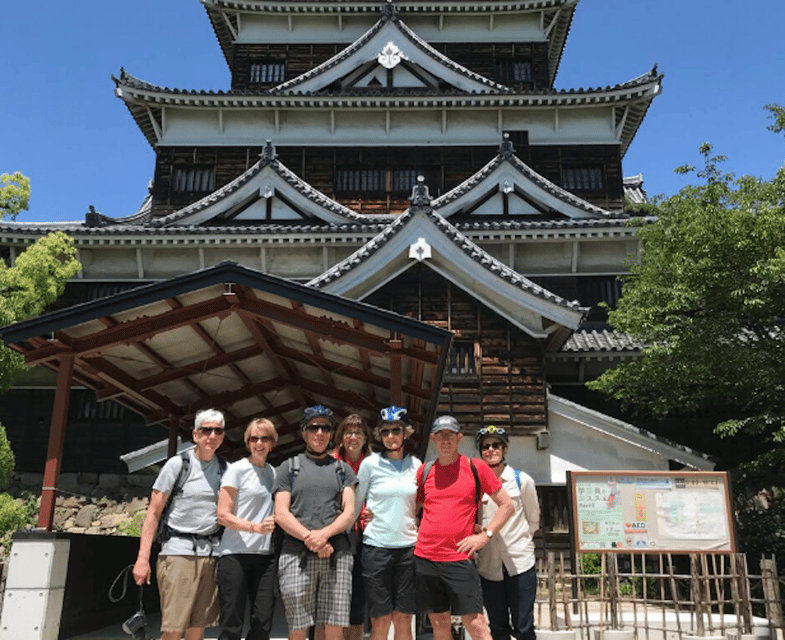
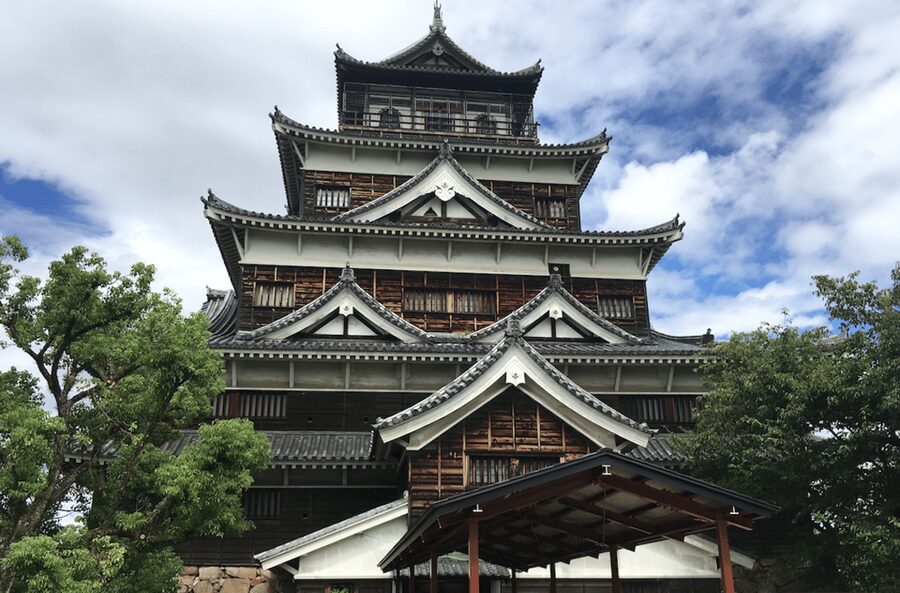
The tour then enters the grounds of Hiroshima Castle. The castle offers a glimpse into the city’s samurai-era past and gives the route a wider historical range. Hiroshima’s story did not begin with the atomic bombing, and this stop helps put the modern city into a longer timeline.
The grounds are more important here than simply ticking off a castle photo. You are seeing where power, administration, and warrior culture once shaped the area. The contrast with the Peace Park is one of the strongest features of the itinerary.
Because the stops are linked by bicycle, you do not need to choose between Hiroshima’s wartime history and its earlier past. A walking tour may focus mainly on the Peace Park, while a bus tour can feel too removed from the streets. This route gives you both context and movement.
Shukkei-en Garden is a calm final stop
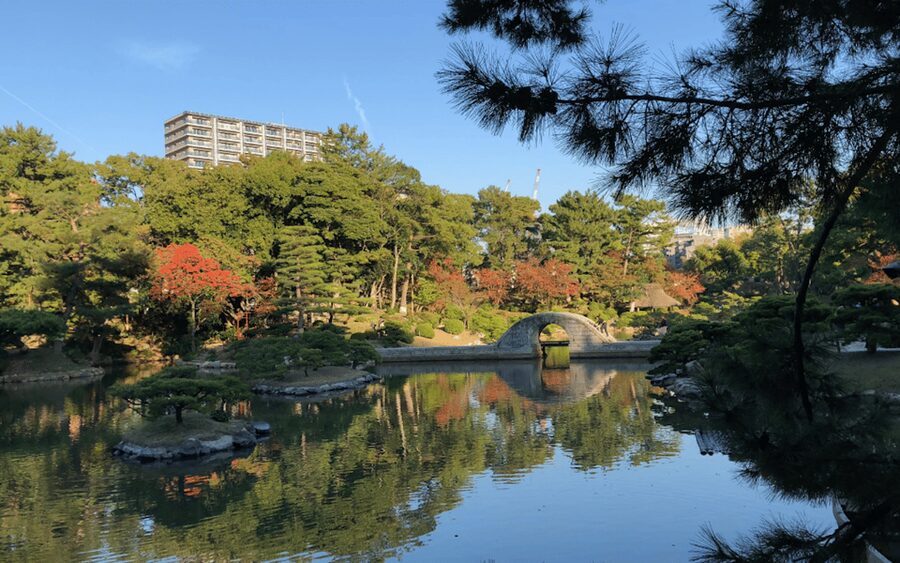
The final major stop is Shukkei-en Garden, a traditional garden built during the Edo Period. Entry is included, which adds useful value to the $70 price.
The garden is a welcome change after the emotional weight of the Peace Park. Its carefully arranged scenery is made for slow looking, with water, plants, paths, and changing views. I like ending here because it gives you a quiet place to process the earlier stops rather than finishing at another busy landmark.
One rider called the garden a treat, and that is a fair description. It may also be the part of the tour you most appreciate if you want some beauty and calm mixed into a history-focused outing.
Do not expect a long independent garden visit. The tour has a fixed duration, so your time there will be limited by the group schedule. If Shukkei-en is high on your personal list, you may want to return separately for a slower visit.
What the guides add to the experience
The route is useful, but the guide makes the difference. The strongest feedback has focused on clear English, personal stories, patience, and a respectful approach to difficult subjects.
Awais has repeatedly been praised for his explanations, bike setup, local context, and friendly manner. Aimee is noted for regular breaks in hot weather, photo help, humor, and local food recommendations. Miyu has brought family stories into her explanation of 1945, while James has taken extra time to answer questions and occasionally extend the route.
Those details tell you what to look for. A good guide here should not simply recite dates. You want someone who explains the meaning of the monuments, knows how to pace the group, and treats the Peace Park with respect.
Guide assignments can change, so you cannot book a particular person based on these names. Still, the repeated praise across several guides suggests that the company has built a strong guiding team.
The tour is in English only. If you need another language, this experience will not meet that need.
Heat, rain, and the practical comfort level
Weather matters. The tour requires good conditions, and poor weather can lead to a different date or a full refund. Even when the tour operates, summer heat can affect your comfort.
On hot days, the guides have used regular breaks, which is helpful. Bring comfortable clothes, comfortable shoes, and be ready to drink the supplied water. You may also want sun protection, though that is not listed as an included item.
Rain can make the outing less pleasant even if it does not stop the tour. One rider described a rainy day that still went well because the guide kept the group moving and spirits up. That is encouraging, but you should still check the forecast and avoid booking this as your only possible Hiroshima activity if your schedule is tight.
The route is flat, but the tour is not suitable for people with back or heart problems, pregnant women, people with pre-existing medical conditions, children under 12, or anyone under 140 centimeters. These restrictions are worth taking seriously. The tour operator also requires riders to be able to ride a bike.
Is $70 a fair price?
For a 3.5-hour guided outing, $70 is a reasonable mid-range price. The bike, helmet, water, English guide, small group, and Shukkei-en admission are included. You also save the effort of planning a route between five different kinds of sights.
The value is highest if you have only one day in Hiroshima. You can cover the major memorial area, a shrine, a castle, and a garden without spending most of the day walking between them. It is also a good choice if you want historical explanation rather than simply collecting photographs.
The value is lower if you already know Hiroshima well, dislike group activities, or want long, quiet visits at each site. You will follow the guide’s rhythm, and the 210-minute schedule cannot give every stop unlimited time.
Free cancellation up to 24 hours before departure and the option to reserve now and pay later make the booking less risky. Still, weather may affect your plans, so keep some flexibility if possible.
Who should book this Hiroshima bike tour?
I would choose this tour for a first visit, especially if you have limited time and want a clear introduction to Hiroshima. It suits adults, older children who meet the age and height requirements, couples, solo visitors, and families who would rather cycle than walk all day.
It is also a strong option for people who want serious history presented in a human way. The route does not reduce Hiroshima to the bombing, since it includes the shrine, castle, and garden. That broader view is one of its best qualities.
I would skip it if you are not comfortable on a bicycle, have a condition listed in the restrictions, or need a fully weatherproof plan. I would also choose a slower private experience if you want extensive time at every memorial.
Should you book it?
Book this tour if you want to see Hiroshima’s main sights efficiently without spending the day on foot. The flat route, good bikes, small group, and careful guiding make it more than a simple rental.
The strongest reason to book is the combination of movement and meaning. You get the Atomic Bomb Dome and Peace Memorial Park, but also Gokoku Jinja, Hiroshima Castle, and Shukkei-en Garden. That mix gives you a fuller picture of Hiroshima.
Arrive early for the bike fitting, wear comfortable clothes, and leave room in your schedule for the tour’s serious moments. If the weather is good and you can ride confidently, this is one of the better ways to connect Hiroshima’s past and present in a single half-day.
FAQ
How long does the Hiroshima bike tour last?
The tour lasts 210 minutes, or about three and a half hours.
What sights are included?
The route includes the Peace Memorial Park, Atomic Bomb Dome, Gokoku Jinja, Hiroshima Castle, and Shukkei-en Garden.
Is entry to Shukkei-en Garden included?
Yes. Admission to Shukkei-en Garden is included in the tour price.
What kind of bike is provided?
The company provides high-quality Trek bikes in several sizes, plus step-through bikes, e-bikes, and child-sized bikes. A helmet is included.
Is the route difficult?
The route is completely flat and is described as suitable for anyone who can ride a bicycle. Reviews also describe the pace as leisurely, with regular stops.
How many people are in the group?
The group has a maximum of eight participants.
What happens if the weather is poor?
The experience requires good weather. If it is canceled because of poor weather, you will be offered another date or a full refund.
Who cannot join this tour?
The tour is not suitable for children under 12, pregnant women, people with back or heart problems, people under 140 centimeters, or people with pre-existing medical conditions.
Newly added rides around Japan
- Private E-MTB guided cycling around Mt. Aso volcano & grasslands★ 5.0 · 16 reviews
- Tokyo: Private Cycling Tour with cute E-bike★ 5.0 · 11 reviews
- Tokyo Bay Area: Sunset Night View 3h E-bike Guided Bike Tour★ 5.0 · 11 reviews
- Tokyo: West-Side Cycling and Food Tour with Guide★ 5.0 · 37 reviews
- Tokyo: 3h Private E-bike Tours, Starting at Your Hotel★ 5.0 · 36 reviews
- Tokyo: 3-hour Guided E-Bike Tour of the City’s Hidden Gems★ 4.8 · 251 reviews
- Tokyo Bike Tour: Shibuya, Harajuku & Hidden Gems★ 5.0 · 20 reviews
- Tokyo: Hidden Gems Guided Bike Tour with Lunch★ 4.5 · 30 reviews
Hiroshima Bike Tours, compared.
Hiroshima in a Nutshell: Morning Bike Adventure
Read our review →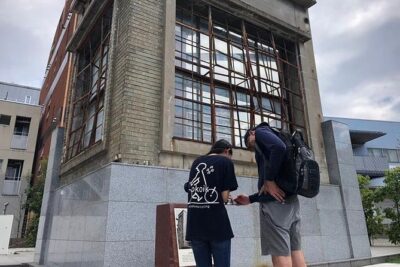
Hiroshima 2hr Peace Cycling Tour with Local Guide
Read our review →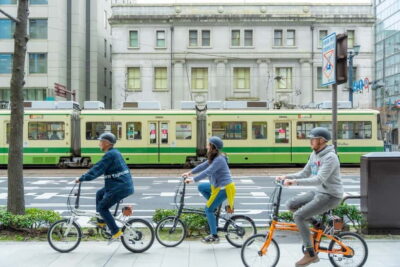
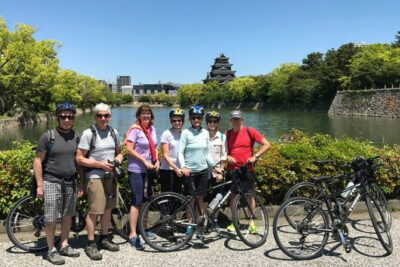
Peace Park, Castle, and Mitaki Temple E-Bike Tour
Read our review →Browse the lists this tour appears in