
REVIEW · HIROSHIMA BIKE TOURS
Hiroshima: City and Miyajima Bike and Boat Tour
One day, two very different Hiroshimas. I like the flat bike route around Peace Park and the A-bomb Dome, and I like how the day adds Miyajima’s wooded island paths and Itsukushima Shrine. The small group, limited to eight people, also gives the guide room to answer questions rather than rush you along.
The main consideration is the length. At 450 minutes, this is a full day with cycling, walking, train travel, and a ferry ride. You need to be comfortable riding a bicycle, and rain can change the cycling portion to a walking tour or lead to a full refund.
Key points to know before booking
- The cycling is flat and slow-paced, making it suitable for anyone who can ride a bike.
- You see Hiroshima through two lenses, from the difficult memory of Peace Park to the city’s feudal past at Hiroshima Castle.
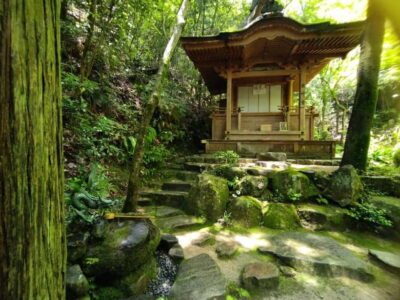
- Miyajima is the day’s big change of scene, with forested slopes, orange Shinto buildings, and old religious traditions.
- The group is capped at eight, a useful size for listening, asking questions, and keeping the ride together.
- Trek bikes, helmets, lunch, and water are included, with step-through and child-sized bikes available.
- The guide can make or break a history-heavy day, and guides such as Ishan, Melissa, Sage, and Aimée-Linh have been praised for clear explanations, humor, and patient support.
Why this Hiroshima day works so well
Hiroshima and Miyajima are often paired on a first visit, but seeing both in one day can feel like a logistical puzzle. This tour makes the connection simple. You begin in the city on a bicycle, take public transport toward the water, and finish on an island where religious buildings and wooded paths replace city streets.
I like the balance. Hiroshima’s Peace Park asks you to slow down and think. Miyajima gives the day more air, color, and movement. Hiroshima Castle adds another layer by showing that the city’s story did not begin or end with 1945.
The format also suits you if you want more than a checklist of famous places. A guide provides context at the stops, points out details you might otherwise pass, and handles the basic flow of the day. With only eight people, you should have a better chance to ask about the bombing, Hiroshima’s earlier history, or the island’s religious role.
Still, this is not a relaxed island outing. You are moving for most of the day, and the train and ferry connections take time. The tour is best for someone who wants a broad first look at the area and is happy to trade independence for a well-organized route.
More Bike and Boat Tours in Japan:
- Hiroshima and Miyajima by Bike and Boat
★ 5.0 · 172 reviews - From Perth: Rottnest Island Full-Day Bike and Ferry Trip
★ 4.7 · 2,548 reviews - Ninh Binh Day Trip: Hoa Lu-Trang An/Tam Coc-Mua Cave-Cycling-Boat
★ 5.0 · 1,886 reviews
Cycling through Peace Park and the A-bomb Dome
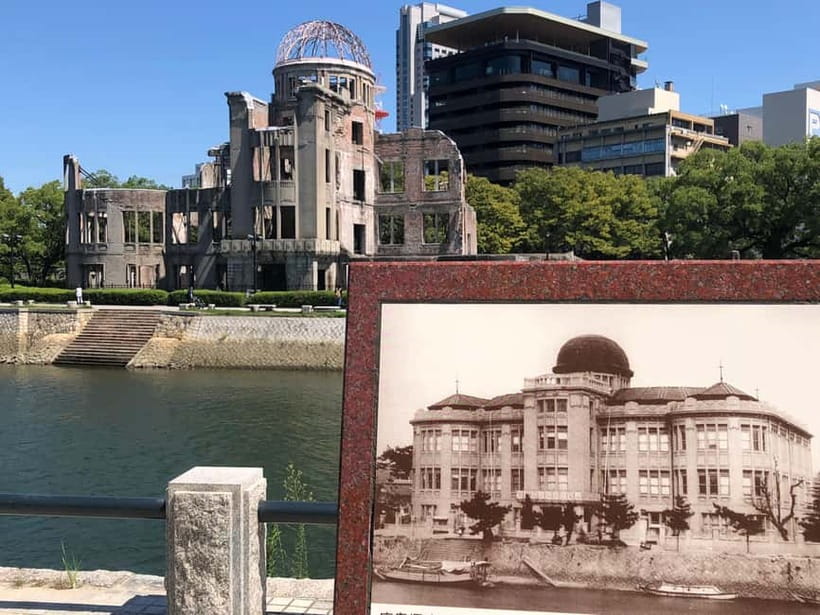
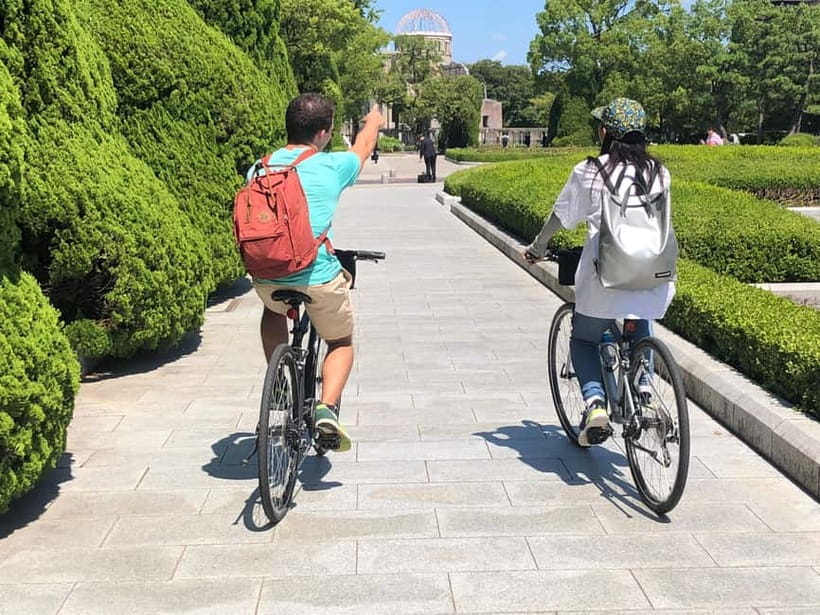
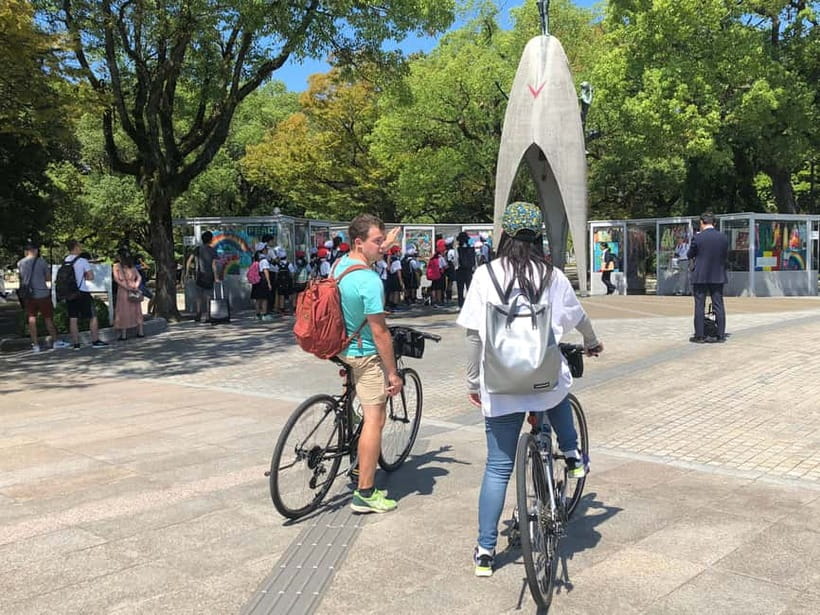
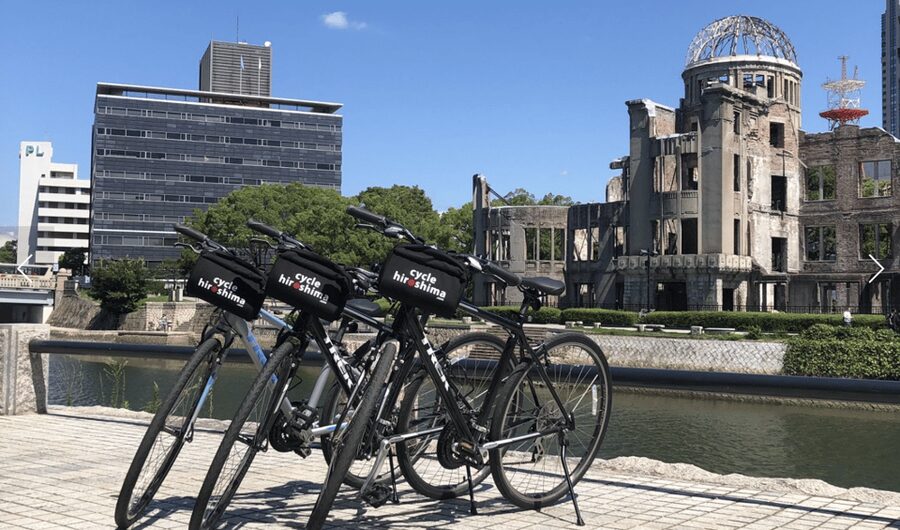
The day begins with a guided bike ride around Hiroshima’s Peace Park and the A-bomb Dome. This is a powerful way to see the area because the bicycle keeps you moving at street level without turning the visit into a hurried march from one monument to the next.
The A-bomb Dome is one of Hiroshima’s most recognizable sights. Its damaged structure gives the history a physical focus, while the surrounding park provides space for reflection. Your English-speaking guide explains the setting and the bombing’s effect on the city, so you are not left trying to piece together the meaning from signs alone.
This part can be emotionally heavy. That is not a flaw, but you should know what kind of morning you are choosing. The guide commentary is intended to cover both the terrible side of the atomic explosion and the way Hiroshima remembers it today. Melissa, one of the named guides, was especially praised for presenting both aspects with care.
The route itself is forgiving. It is completely flat and suitable for all riding levels, though you still need to be able to ride a bicycle. The pace supports slower riders, and the bike fleet includes Trek bicycles in different sizes, plus step-through models and child-sized bikes.
I would still wear comfortable clothes and shoes. You are not signing up for a sporting event, but you will spend a substantial part of the day seated on a bicycle and later walking around Miyajima. A helmet is provided.
Hiroshima Castle and the city before 1945
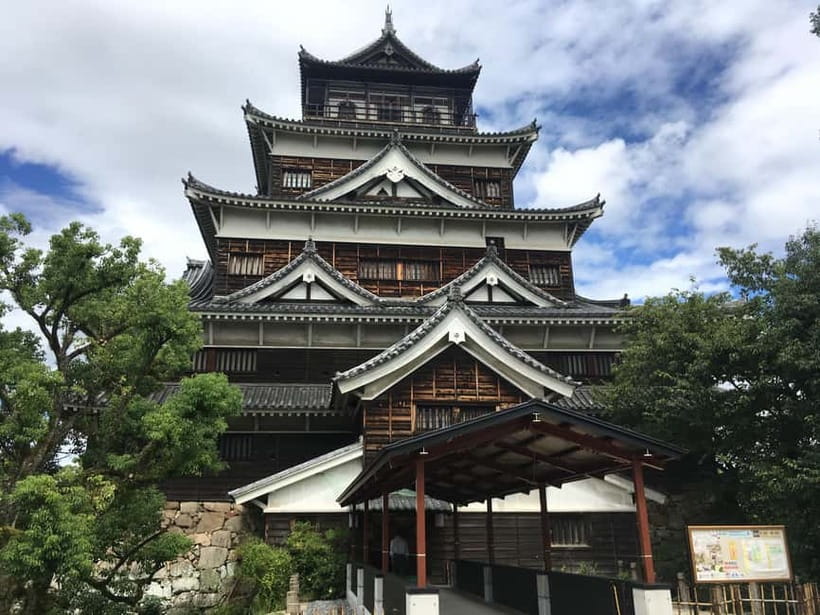
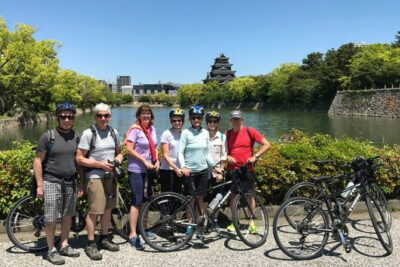
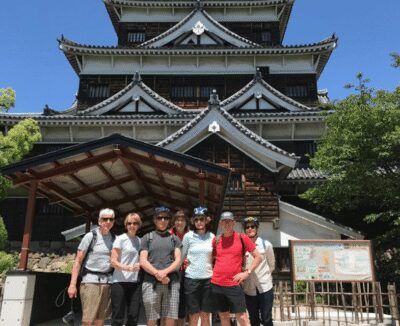
After Peace Park, the route turns to Hiroshima Castle. This change is important. If you only visit the memorial area, you may leave with an understandably narrow picture of the city. Hiroshima Castle brings in the feudal period and shows you that Hiroshima had a long political and cultural story before the modern tragedy.
The tour includes a visit rather than simply a photo stop, with the guide explaining Hiroshima’s feudal past. That historical shift can help you read the city with more depth. The castle is not included merely to fill time between Peace Park and Miyajima. It adds a second historical frame.
You should expect the subject matter to remain educational rather than theatrical. The value comes from the guide’s explanations and the contrast between the castle and the memorial district. Sage, another guide named in the feedback, was praised for covering the bombing, Peace Park, Hiroshima Castle, and pre-Meiji history in one coherent day.
This is also where the bicycle format earns its keep. You can cover more ground than on foot without committing to a long, strenuous ride. The cycling section is slow, flat, and supported, so the castle visit fits naturally into the morning.
Train and ferry to Miyajima
From the city, you travel by train and then board a ferry for Miyajima. The train and ferry transfers are part of the tour, and the boat ticket is included. That matters because the second half of the day would be harder to manage if you had to arrange each connection yourself.
The ferry ride also creates a clear change in mood. You leave Hiroshima’s urban streets and arrive at an island known for its religious buildings, greenery, and picture-friendly lanes. The contrast is one of the strongest reasons to choose this experience instead of spending the whole day in the city.
Keep your camera ready, but do not expect the ferry to be the main event. It is a transfer with scenic value, leading you to the island portion of the tour. The schedule depends on the day’s transport flow, so this is not the time to plan a separate appointment immediately afterward.
The long day is worth keeping in mind here. By the time you reach Miyajima, you have already covered Peace Park and Hiroshima Castle. If you prefer to explore every place at your own pace, the group timetable may feel restrictive. If you want the major pieces connected for you, the transport plan is a strong advantage.
A few more rides around Japan worth a look
- Hidden Kyoto E-Biking tour
★ 5.0 · 1,843 reviews - Tokyo Guided Small-Group Biking Tour
★ 5.0 · 1,250 reviews - Bike Tour Exploring North Kyoto plus Lunch
★ 5.0 · 1,087 reviews - Tokyo Great Cycling Tour
★ 5.0 · 811 reviews
Walking Miyajima’s religious heart
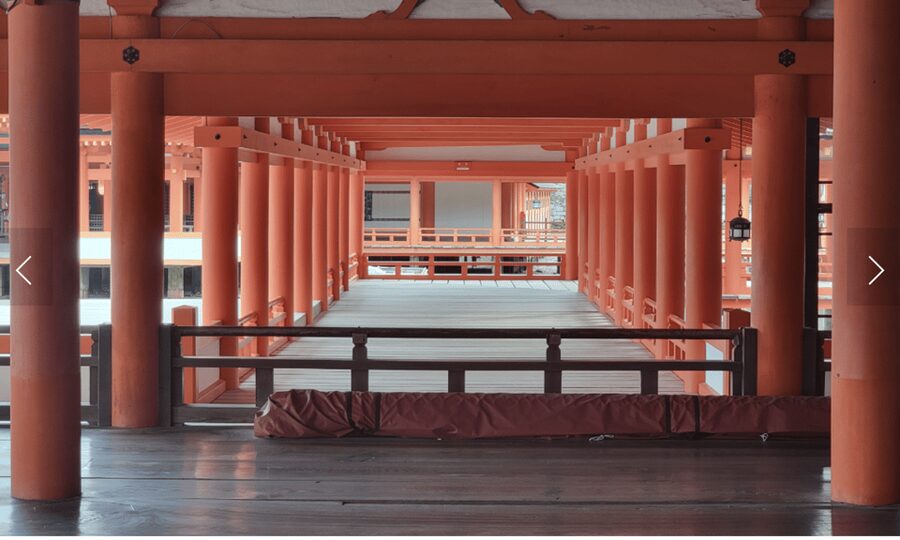
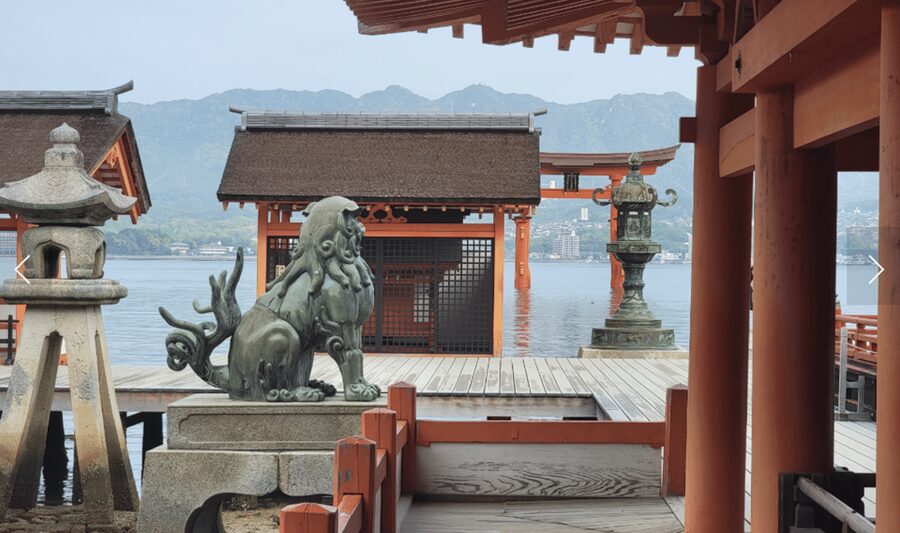
Miyajima brings a different kind of history. The walking tour explains how the island developed as a religious center, then leads you through lanes and scenic areas toward Itsukushima Shrine.
The island’s orange Shinto buildings look especially striking against the greenery. That visual contrast is part of the appeal, but the guide’s explanation gives the scenery more meaning. You are not only looking at a famous shrine. You are learning why the island mattered as a sacred place and how its religious identity shaped what was built there.
Itsukushima Shrine is included, giving you a clear centerpiece for the island visit. The tour also leaves room for smaller impressions along the way: lanes, views, buildings, and places where you will want to stop for a photograph.
I like this section because it slows the day down after the urban cycling. You trade the bike for walking shoes and get to see Miyajima at a human pace. The island is also the point where the tour feels most visually different from Hiroshima. The city’s memorial spaces are open and deliberate; Miyajima feels greener, more enclosed, and rooted in religious tradition.
Do not expect unlimited free time. The island visit is part of a larger seven-and-a-half-hour schedule, so you will follow the guide’s route rather than wander everywhere. That is a fair trade if your goal is a first introduction to Miyajima rather than a detailed independent visit.
What the small group changes
A maximum of eight people is one of the better features of this tour. A large group would make cycling less comfortable and make it harder to hear history lessons at busy sights. With fewer people, the guide can check the pace, answer questions, and help slower riders stay with the group.
The personal quality comes through in the guide feedback. Ishan was praised for enthusiasm and for answering a large number of questions. Aimée-Linh was described as combining strong historical knowledge with humor, which can help keep a serious day from becoming grim and exhausting.
Melissa was also praised for being well prepared and for handling questions clearly. On a rainy day, Sage helped the group stay mostly dry while still providing detailed historical commentary. These names do not guarantee who will lead your tour, but they show what the operator appears to value: history, patience, and a friendly manner.
A small group cannot solve every issue. If you dislike fixed schedules, public transport, or sharing a full day with other people, this may not be your ideal format. For most first-time visitors, though, eight people is a sensible middle ground between a private tour and a crowded coach.
Price, lunch, and what you receive
At $138 per person, the price is not low, but the day includes a great deal: bike, helmet, English guide, Peace Park cycling, Hiroshima Castle, train and ferry transfers, ferry ticket, Miyajima walking tour, Itsukushima Shrine, lunch, and water.
The value depends on how you normally travel. If you are comfortable mapping public transport, renting a bicycle, researching the memorial sites, and arranging Miyajima on your own, you could likely spend less. You would also need to provide your own historical background and keep an eye on the clock.
I see the price as reasonable for a first visit if you value structure and explanation. You are paying for transport connections, equipment, a small group, and a guide who can connect Hiroshima’s modern history with its feudal and religious past. The included lunch and water remove a little more planning from a day that already has several moving parts.
Dietary restrictions should be provided in advance. You should also send the heights of everyone in your group, since the operator uses that information to prepare suitable bicycles.
Weather, fitness, and practical limits
The cycling route is flat, so hills are not the concern. The basic requirement is that you can ride a bike. The tour is not suitable for people who cannot ride, wheelchair users, or pregnant women.
Rain is handled clearly. If the weather turns poor, the operator may offer a walking tour around Peace Park instead of cycling, or provide a full refund. You need to remain reachable because the change may be arranged before the start.
Bring comfortable shoes, comfortable clothing, and a camera. Smoking is not allowed. Hotel pickup and drop-off are not included, so you need to reach the starting point yourself and make your own way back afterward.
The full schedule lasts 450 minutes, or seven and a half hours. I would avoid booking a tight evening reservation, especially if you are visiting during a busy period or want to spend extra time on Miyajima after the guided portion.
Who should book this tour?
I would choose this tour if you have one main day for Hiroshima and want the city and Miyajima handled together. It is particularly useful for first-time visitors who want historical explanation rather than a simple transfer between famous sights.
You will probably enjoy it most if you:
- Can ride a bicycle and are comfortable with a full active day
- Want a small group rather than a large coach
- Prefer guided context at Peace Park and Itsukushima Shrine
- Like mixing difficult history with older cultural sites
- Want train and ferry connections arranged for you
- Appreciate a flat route and supportive pacing
I would look elsewhere if you cannot ride, use a wheelchair, are pregnant, or want a slow, independent Miyajima visit. You may also prefer separate city and island days if you want extended time at museums, the castle, or the island’s lanes.
With free cancellation up to 24 hours in advance and a reserve-now, pay-later option, the booking terms are flexible. The more important decision is your energy level. This tour covers a lot, and that is both its strength and its main drawback.
Should you book it?
Book it if you want an efficient, thoughtful introduction to Hiroshima and Miyajima in one day. The flat cycling, small group, included transport, and strong guide feedback make it a practical choice for many first-time visitors.
Skip it if you want complete control over your timing or cannot ride a bicycle. For everyone else, the route offers a useful balance: Peace Park and the A-bomb Dome for modern memory, Hiroshima Castle for the feudal past, and Miyajima for religious history and green island scenery.
FAQ
How long does the Hiroshima and Miyajima tour last?
The tour lasts 450 minutes, which is seven and a half hours.
Is the cycling route difficult?
The cycling route is completely flat and suitable for anyone who can ride a bike. Slower riders are supported.
Are bikes and helmets included?
Yes. The tour provides Trek bikes in a range of sizes, along with helmets. Step-through and child-sized bikes are also available.
Does the tour visit the A-bomb Dome and Peace Park?
Yes. The guided cycling portion covers Peace Park and the A-bomb Dome, with English commentary about Hiroshima’s history.
Is Hiroshima Castle included?
Yes. The itinerary includes a visit to Hiroshima Castle and an explanation of Hiroshima’s feudal past.
Are the train and ferry to Miyajima included?
Yes. Train and ferry transfers are included, and the boat ticket is covered.
Does the tour visit Itsukushima Shrine?
Yes. The walking tour of Miyajima includes Itsukushima Shrine and discusses the island’s development as a religious center.
What happens if it rains?
The operator may offer a walking tour around Peace Park instead of cycling, or offer a full refund. You should remain reachable in case the plan changes.
Newly added rides around Japan
- Private E-MTB guided cycling around Mt. Aso volcano & grasslands★ 5.0 · 16 reviews
- Tokyo: Private Cycling Tour with cute E-bike★ 5.0 · 11 reviews
- Tokyo Bay Area: Sunset Night View 3h E-bike Guided Bike Tour★ 5.0 · 11 reviews
- Tokyo: West-Side Cycling and Food Tour with Guide★ 5.0 · 37 reviews
- Tokyo: 3h Private E-bike Tours, Starting at Your Hotel★ 5.0 · 36 reviews
- Tokyo: 3-hour Guided E-Bike Tour of the City’s Hidden Gems★ 4.8 · 251 reviews
- Tokyo Bike Tour: Shibuya, Harajuku & Hidden Gems★ 5.0 · 20 reviews
- Tokyo: Hidden Gems Guided Bike Tour with Lunch★ 4.5 · 30 reviews
Hiroshima Bike Tours, compared.
Hiroshima in a Nutshell: Morning Bike Adventure
Read our review →
Hiroshima 2hr Peace Cycling Tour with Local Guide
Read our review →
Peace Park, Castle, and Mitaki Temple E-Bike Tour
Read our review →Browse the lists this tour appears in