
REVIEW · HIROSHIMA BIKE TOURS
Hiroshima: Peace Cycling Tour with Local Guide
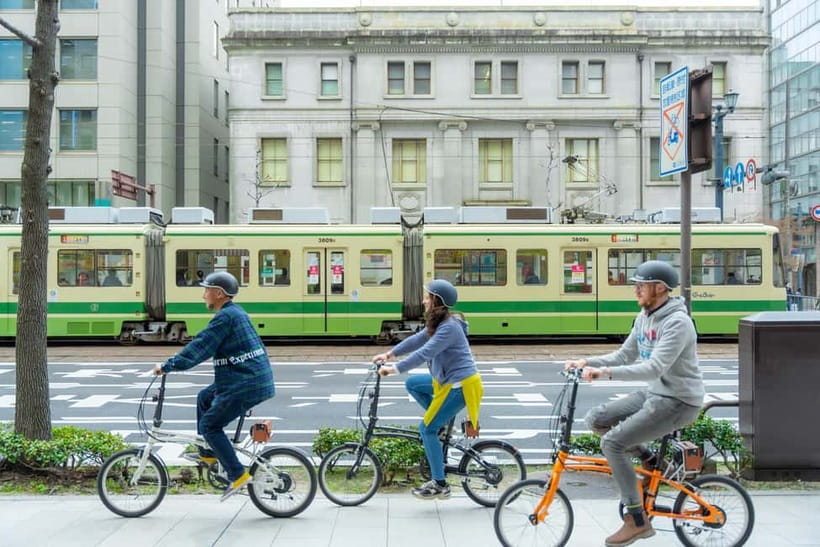
Hiroshima’s story reaches beyond the Peace Park. This small-group electric-bike tour links the Atomic Bomb Dome with streets, bridges, hospitals, parks, and surviving trees that help you understand how the bombing affected the wider city. I like the combination of personal local stories and easy cycling, and I also like that the route moves beyond the usual memorial stops. The main consideration is that the subject is emotionally heavy, and the ride still requires basic cycling confidence.
You pay $52 for two or three hours, with a bicycle, English-speaking guide, and bicycle accident insurance included. That is fair value if you want context rather than a quick photo stop. The tour is limited to 10 people, but the pace can change if children or less experienced cyclists are in the group, so do not expect a fast ride.
Key points at a glance
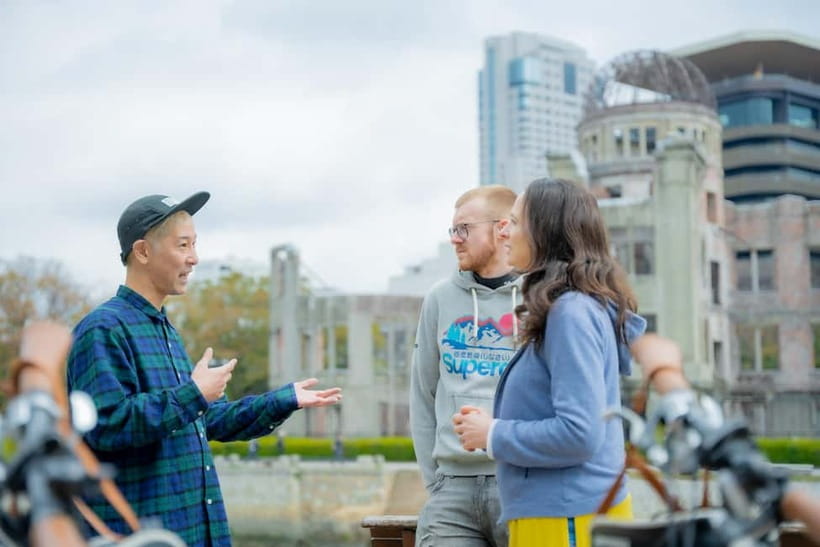
- Local stories give the memorials a human voice: Guides such as Shin, Kana, Moe, and Mai have shared family connections, memories, or stories passed down through Hiroshima families.
- Electric bikes make a wider route practical: You can reach sites beyond the central Peace Park without needing strong cycling fitness.
- The three-hour route covers more ground: Hiroshima Castle, Aioi Bridge, the Atomic Bomb Dome, Red Cross Hospital, surviving trees, bridges, and Peace Boulevard all appear on the longer ride.
- The A-bombed streetcars add a living link to 1945: You may see a tram that survived the bombing and still runs today.
- Small groups help with questions: The tour accepts up to 10 people, and guides typically leave room for conversation at key stops.
- Summer comfort is taken seriously: Past guides have carried cold towels, salt candies, ice packs, wet wipes, and umbrellas during hot weather.
Why cycling adds something to Hiroshima
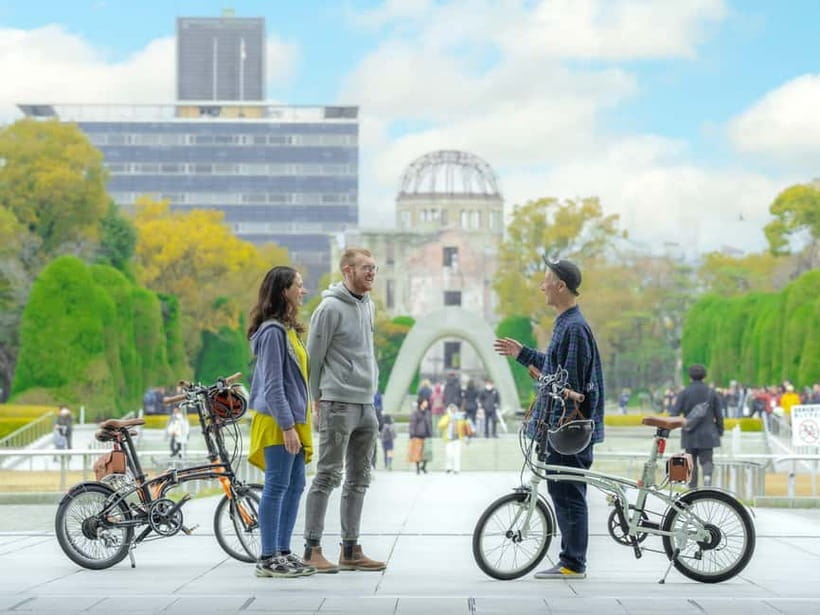
The Peace Memorial Park is essential, but it can also make Hiroshima feel like a collection of monuments. Cycling changes that. You move from the park into ordinary streets, cross rivers, pass working neighborhoods, and see how the city rebuilt itself around places marked by the bombing.
That movement matters. The bomb destroyed the area within roughly 2.5 kilometers of the hypocenter, and the tour uses several surviving structures and sites to explain the scale of that damage. You are not only hearing what happened at a single memorial. You are seeing how far the destruction reached and how the city now functions around those memories.
The electric bicycle is a practical choice. You do not need to be especially fit, though you do need to know how to ride a bicycle. Several people have described the bikes as comfortable and easy to operate, with a manageable pace and short distances between stops. The ride is not a cycling workout. It is a moving history lesson.
A few more rides around Japan worth a look
- Tokyo Guided Small-Group Biking Tour
★ 5.0 · 1,250 reviews - Tokyo Top Highlights 3h Guided E-bike Tour
★ 5.0 · 714 reviews - 3h Tokyo E-Bike Tour: Hidden Gems, and Local Life with guide
★ 5.0 · 670 reviews
Choosing the two-hour or three-hour route
The two-hour option meets at 11:00 or 15:00 and begins at Hiroshima Peace Memorial Park. You spend about an hour learning about the park, its monuments, the Atomic Bomb Dome, and the memories attached to the area. The group then rides into the suburbs for another hour before returning to the meeting point at 13:00 or 17:00.
This shorter route makes sense if you have only a limited window in Hiroshima, want to visit the Peace Memorial Museum separately, or are traveling with children who may tire after several stops. It still includes the important shift from the tourist center to less visited parts of town.
The three-hour route starts at 10:00 or 14:00 and adds a much fuller circuit. It is the better choice if Hiroshima is a major purpose of your trip and you want to connect the main memorials with places you might otherwise pass without understanding.
The timetable can change on the day. The group may also slow down when children or inexperienced cyclists are present. I see that as a sensible safety measure, but it means the advertised times should be treated as a guide rather than a strict schedule.
Hiroshima Castle to the Atomic Bomb Dome
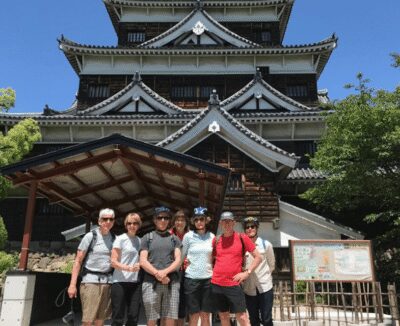
The longer ride begins at Hiroshima Castle, where the guide introduces the city before moving toward Hiroshima Gokoku Shrine and its gate. These opening stops help establish Hiroshima as a living Japanese city, not only a place defined by August 6, 1945.
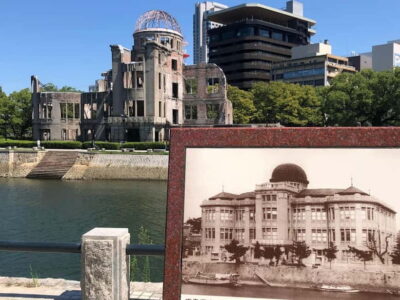
You then pass through Hiroshima Central Park before reaching Aioi Bridge. The bridge is important because of its distinctive shape and its connection with the bombing target area. From here, the Atomic Bomb Dome comes into view.
At the Dome, expect a careful explanation of what happened and why this ruined building remains such a powerful symbol. The stop is not just a chance to take pictures. The guide places it within the wider city and explains the memories carried by the surrounding Peace Park.
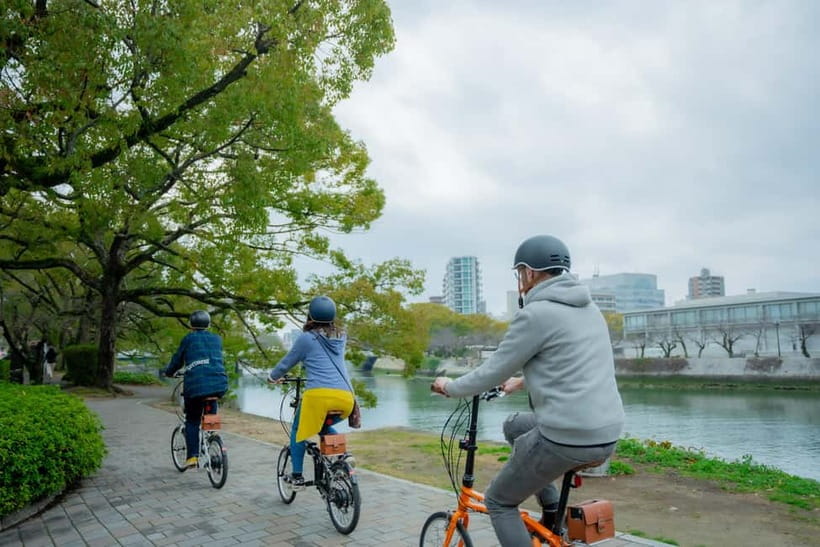
The route then follows the Motoyasu River and crosses or visits the Peace Bridge. Waterways are a recurring part of Hiroshima’s geography, and cycling beside them helps you understand how the city is arranged. The ride also gives you a physical sense of the short distances between major memorial sites.
Beyond the park: hospitals, bridges, and surviving trees
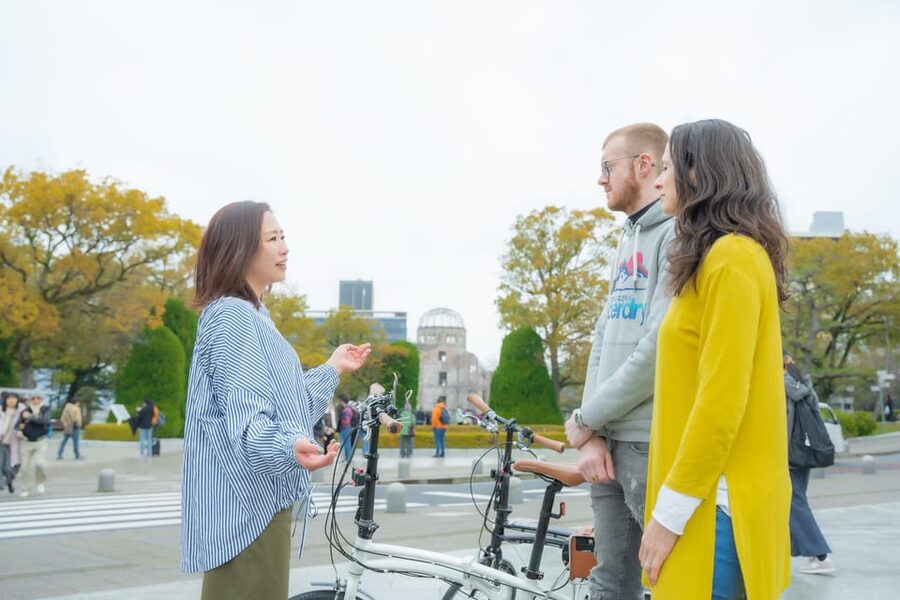
The three-hour itinerary continues to Higashisenda Park and Hiroshima Red Cross Hospital. These stops are valuable because they shift the focus from famous monuments to medical care, rescue, and the practical crisis faced by people after the bombing.
The Hiroshima Railway section includes the story of a surviving streetcar. Hiroshima still has a tram that endured the atomic bombing, often referred to as an A-bombed streetcar. Seeing or discussing a working part of the transport system creates a different kind of connection. This is not a relic locked behind glass. It is part of the city’s daily life.
The route continues to Miyuki Bridge and the Kobayashi River, then to a surviving weeping willow tree. Trees can be easy to overlook in a museum, but outside, a surviving tree offers a direct reminder that some living things endured amid the destruction.
The ride finishes along Peace Boulevard. The boulevard’s greenery and open space show the city as it is now, while the earlier stops explain what had to be overcome. The contrast is one of the strongest parts of the experience.
Same handlebars, a completely different route:
- Hidden Kyoto E-Biking tour
★ 5.0 · 1,843 reviews - Bike Tour Exploring North Kyoto plus Lunch
★ 5.0 · 1,087 reviews - Tokyo Great Cycling Tour
★ 5.0 · 811 reviews - Arashiyama Bamboo Forest & Hidden Gems Bike Tour (Early Bird)
★ 5.0 · 613 reviews
The guides are the heart of the tour
The route matters, but the guide can shape the entire morning or afternoon. Names frequently associated with especially strong experiences include Shin, Kana, Moe, Mai, Bella, and Hugo.
Shin has been praised for his energy, clear English, humor, and family connection to the bombing. He has shared stories passed down through grandparents and parents, along with reflections on how Hiroshima’s approach to peace has been carried forward. That sort of family perspective can make the subject feel immediate without turning the tour into a lecture.
Kana has also received strong praise for combining facts, warmth, and personal stories. Her tours have been described as thoughtful and well paced, with a good balance between difficult history and messages of hope. Moe has similarly shared family experiences and helped keep the tone respectful while pointing toward the city’s recovery.
The personal material varies by guide. Do not book this expecting the exact same story every time. You can count on an English-speaking local guide, but the examples, family connections, and style will differ.
That variation is not necessarily a weakness. One guide may focus more on family memory, another on the city’s physical rebuilding, and another on small details you would miss on foot. The best guides appear to do more than recite dates. They connect each stop to people, places, and present-day Hiroshima.
A thoughtful tone for a difficult subject
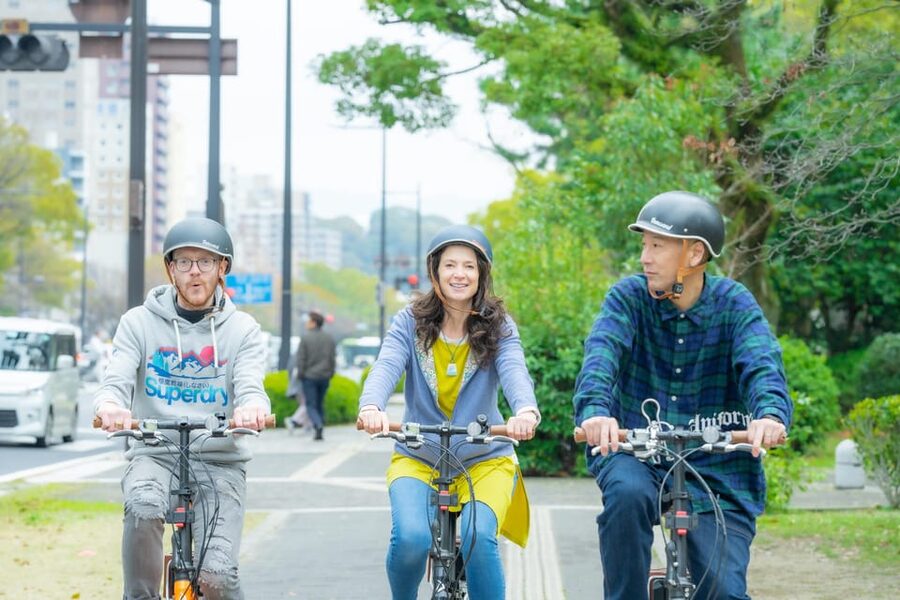
This is not a light sightseeing ride, though it is not presented as unrelentingly bleak. The guides describe the destruction and the human cost, then place those facts alongside Hiroshima’s recovery and its continuing message of peace.
That balance matters. The subject deserves seriousness, but a tour that offers only horror can leave you overwhelmed rather than informed. The strongest descriptions of this experience point to a combination of sadness, reflection, humor, hope, and courage.
You should allow yourself some emotional space afterward, especially if you plan to visit the Peace Memorial Museum on the same day. The cycling format keeps you moving, but it does not make the content less powerful. In some ways, seeing the wider city can make it more affecting because you understand that the bombing was not confined to one famous building.
What the cycling is really like
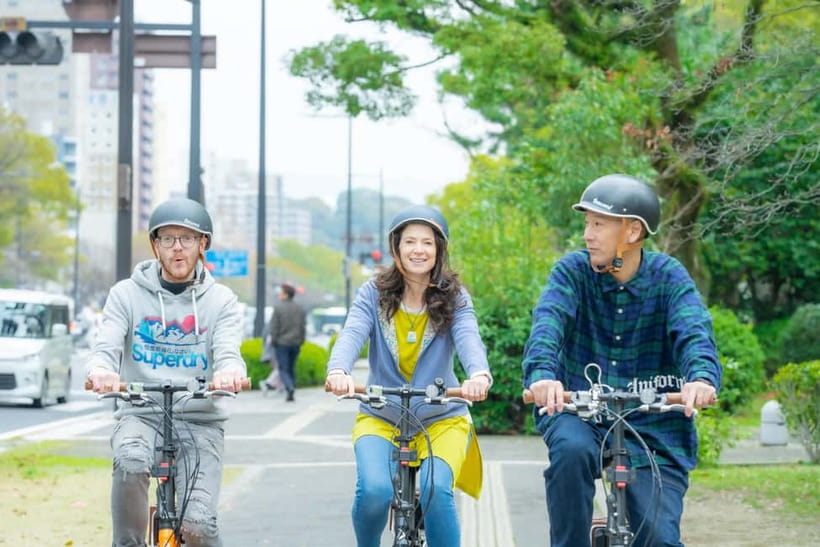
You receive a rental electric bicycle and bicycle accident insurance. Adult electric bikes are intended for people at least 145 centimeters tall, or about 4 feet 8 inches. People below that height are not suitable for the tour under the stated rules.
Children have several options, but you need to arrange them ahead of time. Electric bicycles with child seats are available for children under 22 kilograms and under 115 centimeters. Children between 110 and 145 centimeters may use one of the limited children’s cross bikes, and children under 15 can pay the child rate when using either children’s or adult bicycles.
The supplied information says infants from age one can be reserved, with infant seats and child bicycles subject to availability. Contact the operator before booking if you need one. This is particularly important for families, since only a limited number of child setups are available.
Tall riders should pay attention to bike sizing. One rider who was 6 feet 1 inch found the bicycle small framed. That does not mean the bikes are unsuitable for taller people, but you should ask about fit before committing if you are long-legged.
You should bring comfortable clothing, shoes, a towel, and drinks. High heels are not allowed. Hiroshima can be hot, and one guide helped a struggling rider by stopping near a convenience store. Other practical touches reported on hot days included shade at traffic lights, salt candies, cold towels, wet wipes, umbrellas, and ice packs. These are useful signs that guides pay attention to comfort, though you should still arrive prepared for heat.
Meeting point and timing
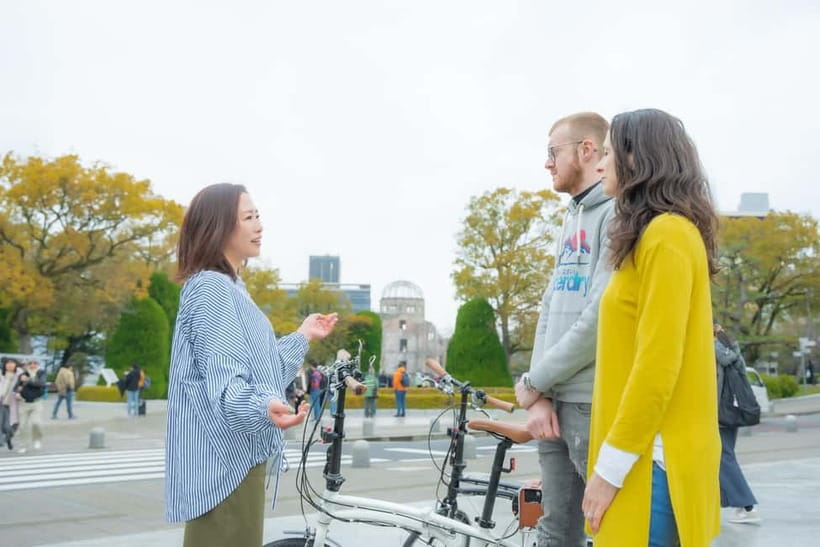
The meeting point is the Rest House in Hiroshima Peace Park. From Hiroshima Station, take the Hiroshima Electric Railway tram to Atomic Bomb Dome Station. The ride takes about 20 minutes, followed by a walk of roughly five minutes.
Build in extra time. If you arrive late without contacting the operator, the tour can be canceled and the same-day fee is nonrefundable. This is not the kind of activity where you should rush in from a train platform at the last second.
The tour ends where it begins. That makes it easy to continue sightseeing in the Peace Park, visit the museum, or return toward Hiroshima Station. If you choose the afternoon departure, remember that your three-hour ride may finish around 17:00.
Is $52 a fair price?
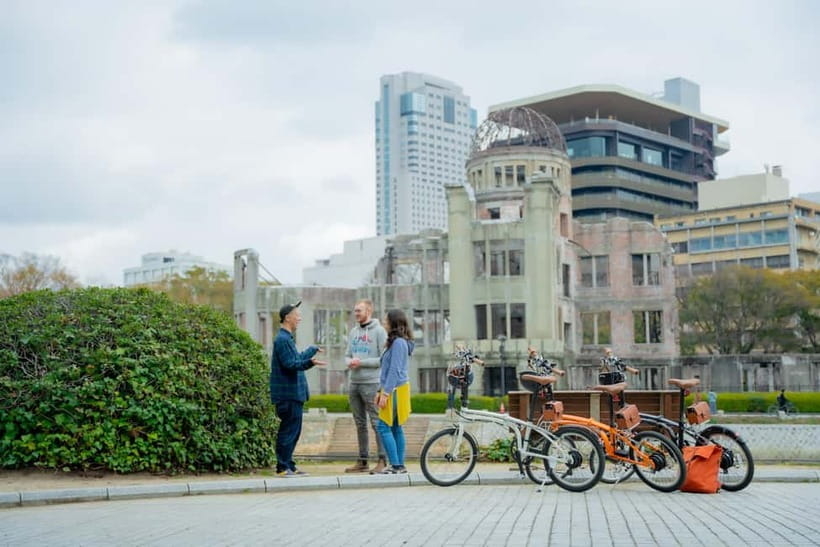
At $52 per person, the value depends on how you normally explore a city. A bicycle rental alone would not provide the local explanation, route planning, insurance, or family stories. A walking guide could explain the same central sites, but would cover less ground and might not reach the suburbs as efficiently.
The electric bike is the key to the price. It lets you visit more than the Atomic Bomb Dome and Peace Park without spending a full day on public transport. For a first visit, especially if you have only one day in Hiroshima, this can be an efficient way to understand the central city.
The value is lower if you dislike bicycles, want a slow museum-focused experience, or already plan to visit every site with a private guide. You will also need to budget separately for food and drinks. Those are not included.
The small group size helps. With a maximum of 10 people, you have a better chance to ask questions than on a large bus tour. Still, the exact experience depends on group makeup and guide style.
Who should book this experience?
I would recommend it to first-time visitors who want a clear introduction to Hiroshima, active families with older children, solo visitors who like small groups, and anyone who wants to see beyond the standard memorial circuit.
It suits people who can ride a bicycle but do not want strenuous exercise. The electric assistance and short distances keep the physical side manageable, while the guide does the work of connecting the sites.
I would think twice if you are uncomfortable cycling in a group, cannot ride at all, are under 145 centimeters without a suitable child setup, or want a private and highly flexible itinerary. The tour is shared, and the pace may adjust to other participants.
Should you book the Hiroshima Peace Cycling Tour?
Book it if you want Hiroshima explained through both places and people. The strongest reason to choose it is the combination of the Peace Park, less familiar A-bomb sites, easy electric bicycles, and guides who can add family stories passed down through the city.
Choose the three-hour option if you want the fuller picture, including Hiroshima Castle, the surviving streetcar, Red Cross Hospital, bridges, and the weeping willow tree. Choose two hours if you need a compact introduction or want to leave time for the Peace Memorial Museum.
This is not simply a way to check off Hiroshima sights. It is a respectful, practical tour that shows how a damaged city rebuilt itself while keeping its memories in view. For $52, that is a strong use of a few hours.
FAQ
How long does the Hiroshima Peace Cycling Tour last?
You can choose a two-hour or three-hour route. The two-hour departures are listed at 11:00 and 15:00, while the three-hour departures are listed at 10:00 and 14:00.
Where does the tour meet?
The meeting point is the Rest House in Hiroshima Peace Park. From Hiroshima Station, take the Hiroshima Electric Railway to Atomic Bomb Dome Station, then walk about five minutes.
Is the tour conducted in English?
Yes. The tour includes a live English-speaking guide.
How many people can join the tour?
It is a shared small-group tour for up to 10 participants.
Are electric bicycles included?
Yes. Rental bicycles are included, along with bicycle accident insurance.
What height is required to ride an adult electric bicycle?
Adult electric bicycles are for people at least 145 centimeters tall. Limited child seats and children’s bicycles are available for eligible children, but you should contact the operator before booking if you need one.
Can I cancel for a full refund?
Yes. You can cancel up to 24 hours in advance for a full refund. Food and drinks are not included.
Newly added rides around Japan
- Private E-MTB guided cycling around Mt. Aso volcano & grasslands★ 5.0 · 16 reviews
- Tokyo: Private Cycling Tour with cute E-bike★ 5.0 · 11 reviews
- Tokyo Bay Area: Sunset Night View 3h E-bike Guided Bike Tour★ 5.0 · 11 reviews
- Tokyo: West-Side Cycling and Food Tour with Guide★ 5.0 · 37 reviews
- Tokyo: 3h Private E-bike Tours, Starting at Your Hotel★ 5.0 · 36 reviews
- Tokyo: 3-hour Guided E-Bike Tour of the City’s Hidden Gems★ 4.8 · 251 reviews
- Tokyo Bike Tour: Shibuya, Harajuku & Hidden Gems★ 5.0 · 20 reviews
- Tokyo: Hidden Gems Guided Bike Tour with Lunch★ 4.5 · 30 reviews
Hiroshima Bike Tours, compared.
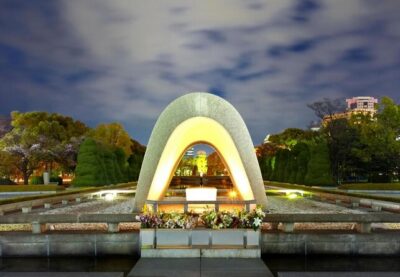
Hiroshima in a Nutshell: Morning Bike Adventure
Read our review →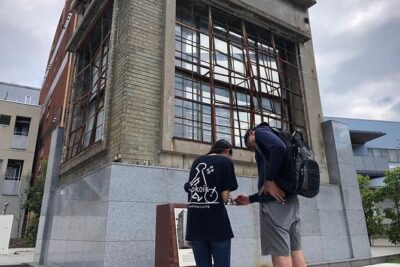
Hiroshima 2hr Peace Cycling Tour with Local Guide
Read our review →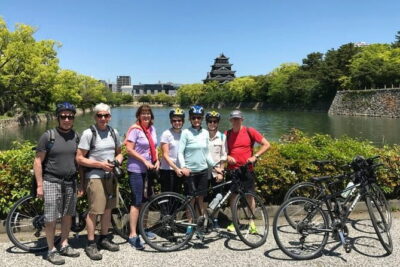
Peace Park, Castle, and Mitaki Temple E-Bike Tour
Read our review →Browse the lists this tour appears in