
REVIEW · SIEM REAP BIKE TOURS
Siem Reap: Countryside Cycle and Local Village Life Tour
Leave the temples behind for a few hours. This four-hour ride takes you from Siem Reap’s busy streets onto small farm paths, rice fields, and village lanes where daily life moves at a slower pace. I like the easy, flat 15 to 20-kilometer route and the chance to stop at family-run places instead of simply pedaling past them.
I also like the guides. Ron, Ti, Sai, Ty, Sokha, Sary, and Sokha Kim have all been praised for friendly conversation, clear English, and thoughtful answers about Cambodian life. The main point to consider is that some farm roads are uneven, and you need to be a reasonably confident cyclist. Most of the route is easy, but a short section can require more care.
The tour costs $32 per person, including a trail bike, guide, water, snacks, and hotel pickup in Krong Siem Reap. For a half-day activity that gives you countryside access, local introductions, and return transport, that is a fair price. It is not a sightseeing sprint, and that is the point.
Key points to know before you book
- About 15 to 20 kilometers on mostly flat roads: The ride is manageable for regular cyclists, though some narrow farm tracks are less smooth.
- Small groups of up to 10 people: You get more chances to ask questions and stop for photos than on a large bus tour.
- Palm wine and duck farming: These stops give you a direct look at rural work and local food traditions.
- Local guides make the experience: Guides such as Sai, Ti, Ron, Ty, and Sokha are praised for their English and warm conversation.
- A lotus field at sunset: The final stop adds a quiet, scenic finish before you return to Siem Reap.
- Hotel pickup and a four-hour schedule: It fits neatly into a busy Siem Reap visit, especially if you want a break from temple touring.
Leaving Siem Reap by bicycle
Your hotel pickup gets the day moving without the usual trouble of finding the meeting point. From there, you set off by trail bike with an English-speaking local guide. Helmets and bike adjustments are handled before the ride begins, which matters if you are particular about saddle height or handlebar position.
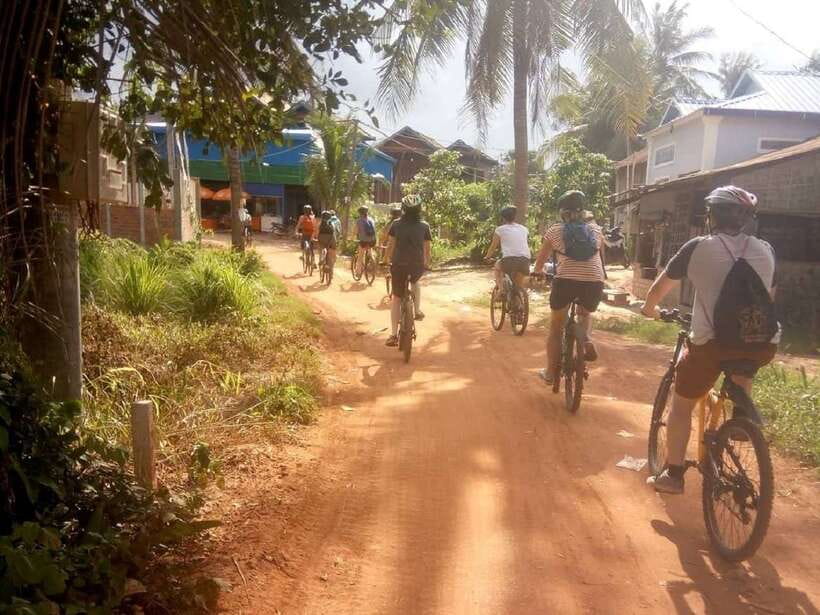
The first part takes you through the outskirts of Siem Reap. You may begin on busier roads, but the ride gradually moves toward quieter lanes and open rice-growing areas. This change is one of the pleasures of the trip. You see the city thin out in real time, rather than being driven straight to a countryside stop with no sense of how the two areas connect.
The guides are a major part of the experience. Several have been praised for being easy to talk to, and that is useful here because the ride is built around questions. You can ask about farming, family life, local customs, plants, animals, or the way rice is grown. Guides have also helped visitors greet local people appropriately, which gives the meetings a more respectful feel.
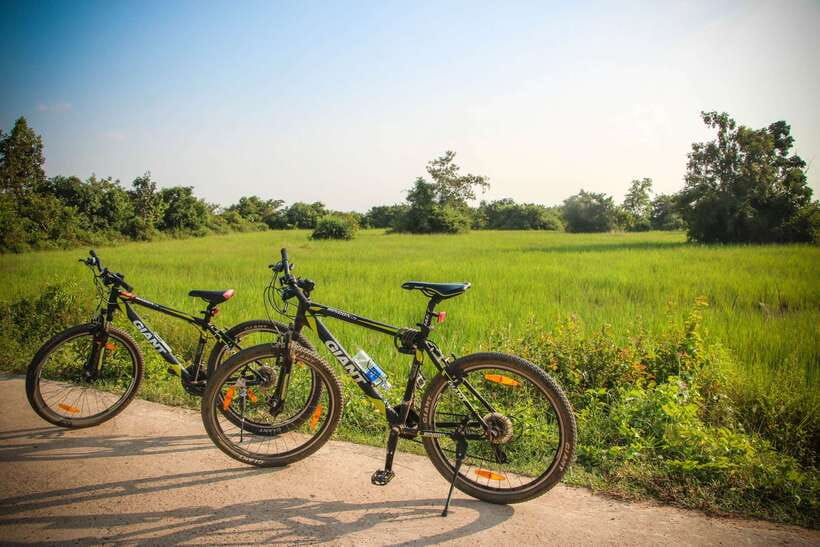
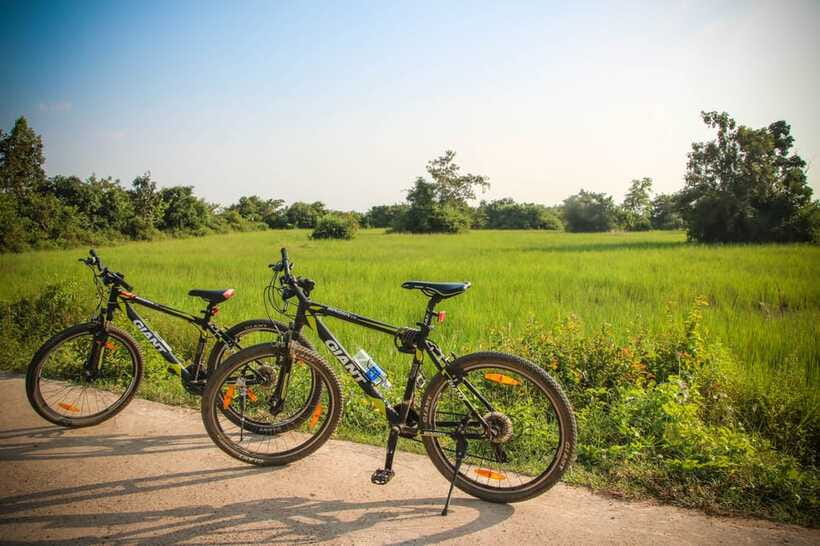
The bikes are described as good quality and suitable for the off-road parts. One tall cyclist, at 6 feet 4 inches, found the bike a little small but still usable. If you are unusually tall, mention it when booking or at pickup so the guide can help you find the best available adjustment.
More Countryside Bike Tours in Siem Reap:
- Siem Reap Countryside Bike Tour / E-Bike or Tuk Tuk
★ 5.0 · 935 reviews - Siem Reap: Guided Countryside Bike Tour
★ 4.9 · 294 reviews - Siem Reap: Countryside Sunset Bike Tour / E-Bike or Tuk Tuk
★ 4.7 · 13 reviews
Rice fields and the meaning of Cambodia’s staple crop
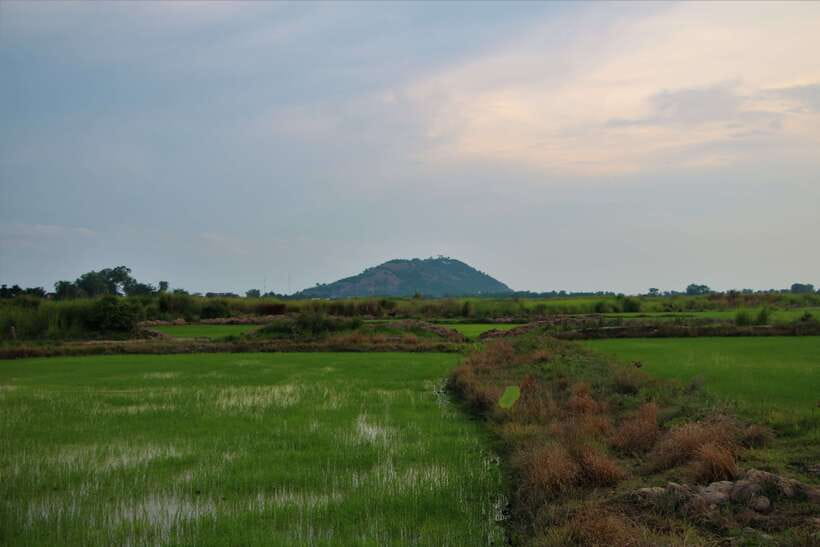
The rice fields are not just a pleasant backdrop for photographs. Rice is Cambodia’s staple food, and the ride gives you a chance to understand how closely rural life is tied to its growth. Your guide explains the process and points out the work that supports village households.
The value here is simple: you are not looking at countryside from a van window. You are moving slowly enough to notice the paths, fields, homes, animals, and people around you. The guide can stop when something raises a question, and several guides have been praised for taking time rather than rushing from one place to the next.
The route is mainly flat, so you do not need mountain-bike fitness. Still, do not read easy as effortless. Fifteen to twenty kilometers is a proper half-day ride, especially in Cambodian heat. Wear light, comfortable clothing, use sunscreen, and bring sunglasses and a sun hat. Water and snacks are provided, but you should still arrive ready to cycle outdoors for several hours.
The farm roads are the one part that deserves an honest warning. Most of the ride is straightforward, but some narrower tracks can be trickier. You do not need advanced cycling skills, yet you should feel comfortable steering on uneven ground and slowing down when needed.
Meeting families beyond the tourist route
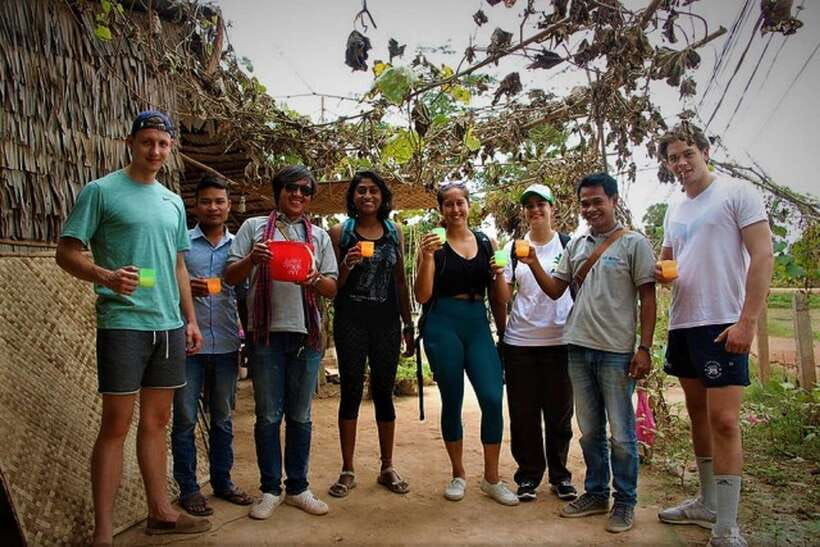
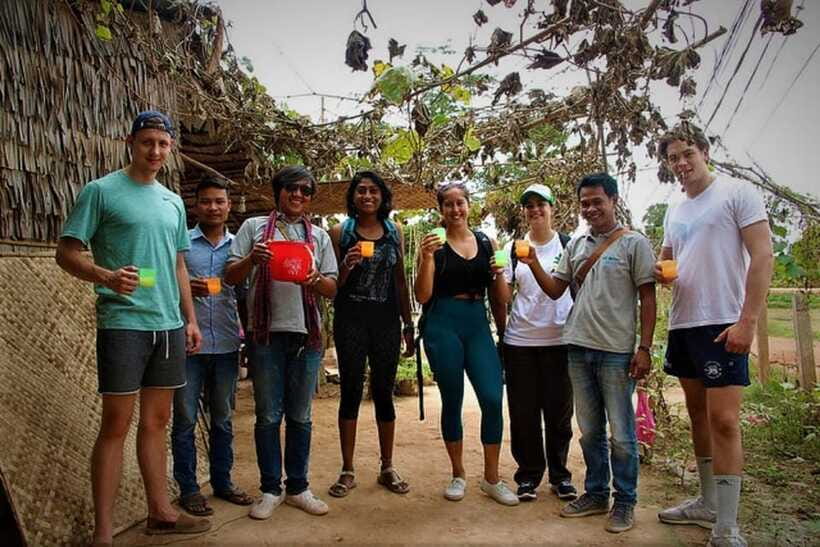
The village stops give the tour its strongest sense of place. You visit a typical Cambodian village and meet local people rather than passing through without contact. The conversations are guided by your English-speaking host, who helps explain what you are seeing and translates when needed.
This is also where the small-group format matters. With a limit of 10 people, the ride feels more personal than a large organized excursion. If you book a private option, you have even more room to ask questions or adjust the pace within the limits of the four-hour schedule.
Several guides have taken time to personalize the experience. Ty, for example, has been praised for sharing her own perspective on daily life and for pointing out plants and animals along the way. One private outing ended with a visit to her village and a meeting with her grandmother, a memorable touch that shows how much the experience can depend on the guide and the group size.
You should keep your expectations sensible. This is not a formal cultural performance, and there is no promise that every visit will unfold in exactly the same way. The strength comes from ordinary settings and conversation. You are seeing working villages, not a staged attraction.
Palm wine, duck farming, and rural work
One of the more unusual stops is with a family that makes palm wine. You learn about the product and get to sample it. That adds a taste of local food culture to a ride that could otherwise be mostly visual.
The sample is part of the experience, not a full tasting session. If you do not drink alcohol, you can simply treat it as a chance to learn about the family business. Personal expenses are not included, so budget separately for anything beyond the supplied water, snacks, and planned sample.
The duck farm offers another useful window into village work. You meet a duck-farming family and learn how their household fits farming into daily life. This kind of stop is valuable because it connects the broad subject of Cambodian rural living to a specific family and a specific livelihood.
The experience can also include a local food market or additional food sampling, depending on how the ride unfolds. One guide-led outing included a market used by local residents, with the option to try foods such as snail and frog. That detail should be treated as an extra possibility rather than a guaranteed part of every booking, but it shows the range of conversation and tasting that can come up.
This is not the right tour for someone who wants a polished, predictable attraction at every stop. The appeal lies in the ordinary details: how food is made, how animals are raised, how rice is grown, and how families work.
A few more rides around Siem Reap worth a look
- Angkor Sunrise Bike Tour / E-Bike or Tuk Tuk
★ 5.0 · 615 reviews - Siem Reap: Bike the Angkor Temples – Full-Day 30km Tour
★ 5.0 · 463 reviews - Siem Reap: Angkor Wat Sunrise Bike Tour & Jungle Breakfast
★ 5.0 · 415 reviews - Siem Reap: Bike the Angkor Temples – Full-Day 30km Tour
★ 4.9 · 159 reviews
A lotus field at sunset
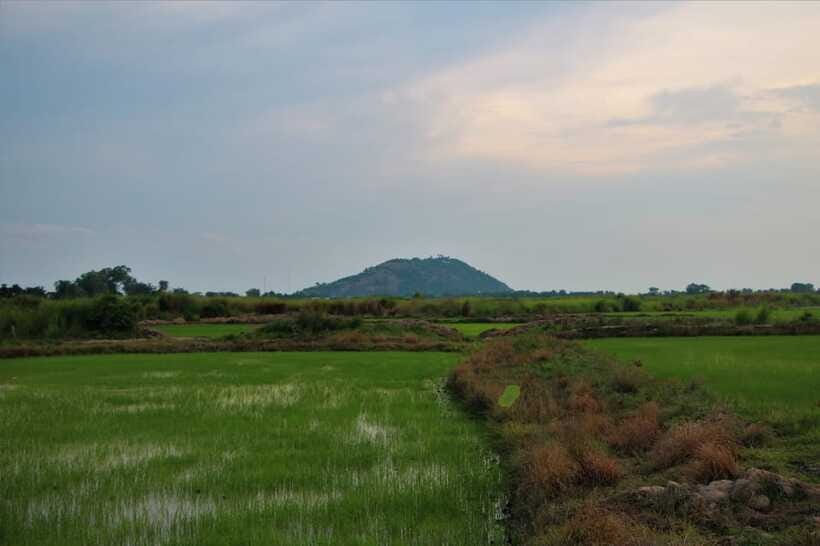
The ride finishes at a lotus field as the sun goes down. After several hours of cycling and conversation, this quiet stop gives you time to pause, take photographs, and enjoy the countryside without another major activity demanding your attention.
The timing depends on the departure time, since the tour lasts four hours and availability varies by day. Check the start time carefully if the sunset finish is important to you. The lotus field is described as the final stop, followed by a return to Siem Reap with transport waiting.
This ending works well because it slows the day down. You have already seen farms and villages, so the lotus field feels connected to the places you passed rather than being an isolated photo stop. Bring your phone or camera, but also leave a little time to simply watch the light change.
How hard is the cycling?
The route is classed as easy and flat, with an approximate distance of 15 to 20 kilometers. That should suit anyone who cycles regularly and feels comfortable on a bike for a few hours.
The important qualification is the surface. Review comments describe most of the ride as easy, with a smaller portion of trickier farm roads. You may need to handle loose or uneven sections, make slow turns, and share paths with everyday local activity.
This experience is not suitable for people with mobility impairments. It is also a poor match if you dislike outdoor heat, uneven tracks, or cycling outside a city center. On the other hand, you do not need a racing-bike background. A normal level of confidence and the willingness to ride at a steady pace should be enough.
Wear clothing you can move in. Sunglasses, a hat, and sunscreen are specifically recommended. Closed shoes would be a sensible choice for the farm roads, although the supplied information does not set a footwear requirement.
Why the $32 price makes sense
At $32 per person, the tour offers more than bike rental. The price includes a trail bike, local English-speaking guide, water, snacks, and hotel pickup. Return transport is also arranged at the end, as shown by the smooth pickups and returns described by several participants.
The strongest value is access. You could cycle outside Siem Reap on your own, but you would likely miss the family visits, the palm wine explanation, the duck farm, and the conversations about rice and village life. A guide also makes it easier to ask questions and approach local people respectfully.
The price is especially reasonable if you book a small group. A group of no more than 10 keeps the activity manageable, while a private trip can offer a more personal pace. You should still allow for personal spending and tips, since neither is included.
The free cancellation policy also reduces the risk of booking ahead. You can cancel up to 24 hours before the activity for a full refund, and the reserve-now, pay-later option lets you hold a place without paying immediately.
The guides can shape the whole morning
Guide quality is the most praised part of this experience. Names appearing across the guide team include Ron, Ti, Sai, Ty, Sokha, Sary, Tee, and Sokha Kim. You should not assume you can choose a particular guide, but you can expect an English-speaking local guide assigned by the provider.
What makes a good guide matter here is the lack of a fixed parade of major sights. The countryside itself is open and understated. A friendly guide who explains what you are seeing can turn a simple ride past a rice field into a useful lesson about food, work, and family life.
The best guide style for this tour is curious and conversational. Ask questions. If you want to know how rice is grown, why palm wine is made, or what a family farm produces, speak up. Guides have been praised for answering questions, sharing personal viewpoints, and making room for photo stops.
One guide also taught visitors how to greet local people properly. That is the sort of small help that improves the experience without making it feel formal.
Who should book this half-day ride?
I would recommend it to you if you want a break from temples and city streets, enjoy light outdoor activity, and prefer seeing how people live rather than checking off major monuments. It suits couples, solo participants, families with confident older cyclists, and small groups who like to ask questions.
It is also a good choice for a first or last day in Siem Reap. The four-hour length leaves room for other plans, and the hotel pickup keeps the logistics simple. You can fit it around temple visits, provided you allow enough time for rest and transport.
You should think twice if you want a highly active mountain-bike ride. This is mostly an easy countryside cycle, not a technical challenge. You should also reconsider if you have mobility limitations or are uncomfortable on uneven farm paths.
The experience is at its best when you treat the stops as conversations, not performances. Be polite, ask before taking close-up photographs, and remember that the people you meet are living and working in their own community.
Should you book the Siem Reap countryside cycle?
I would book this tour if you want an affordable, half-day look at rural life with a strong human element. The flat route, small group size, local guides, family visits, and sunset lotus field create a useful contrast to Siem Reap’s temple circuit.
Book with confidence if you are a reasonably comfortable cyclist and do not mind a few rougher farm roads. If you are tall, raise the bike-size question in advance. If you dislike heat or outdoor exertion, choose a slower cultural activity instead.
For $32, this is a good-value way to reach places you would be unlikely to find on your own. The scenery is pleasant, but the real reward is the chance to talk, taste, ask questions, and see how rice, ducks, palm wine, and family life fit together outside the city.
FAQ
Where does the tour take place?
The tour begins in Siem Reap and travels into the surrounding countryside in Siem Reap Province, including village roads, rice fields, farming areas, and a lotus field.
How long does the experience last?
The cycling experience lasts four hours.
How far will I cycle?
The route is approximately 15 to 20 kilometers.
Is the route difficult?
It is described as an easy, flat cycling experience. Most roads are manageable, though some farm paths can be uneven or more challenging.
What is included in the price?
The price includes a trail bike, local English-speaking guide, water, snacks, and hotel pickup in Krong Siem Reap.
Is hotel pickup available?
Yes. Pickup from your hotel in Krong Siem Reap is included.
How many people are in each group?
The small group can include up to 10 participants. A private guided option is also available.
What language does the guide speak?
The live guide speaks English.
What should I bring?
Bring sunglasses, a sun hat, sunscreen, and comfortable clothing.
Is the tour suitable for people with mobility impairments?
No. The activity is not suitable for people with mobility impairments.
Can I cancel the booking?
Yes. You can cancel up to 24 hours in advance for a full refund. A reserve-now, pay-later option is also available.
Newly added rides around Siem Reap
- Siem Reap: Bike the Angkor Temples – Full-Day 30km Tour★ 4.9 · 159 reviews
- Siem Reap: Bike Rental★ 4.7 · 12 reviews
- Kampong Phluk: Floating Village Sunset Bike Tour or E-Bike★ 5.0 · 11 reviews
- Siem Reap: Countryside Sunset Bike Tour / E-Bike or Tuk Tuk★ 4.7 · 13 reviews
- Siem Reap: Angkor Sunset Bike & Boat Tour /E-Bike Available★ 4.9 · 23 reviews
- Cycle Angkor Backroad Bike Tour / E-Bike or Tuk Tuk★ 4.9 · 16 reviews
- From Siem Reap: Angkor Wat Sunrise and Temples E-Bike Tour★ 5.0 · 52 reviews
- Siem Reap: Angkor Wat Sunrise Bike Tour & Jungle Breakfast★ 4.9 · 141 reviews
Siem Reap Bike Tours, compared.
Siem Reap Countryside Bike Tour / E-Bike or Tuk Tuk
Read our review →
Angkor Wat Sunrise Bike Tour & Jungle Breakfast
Read our review →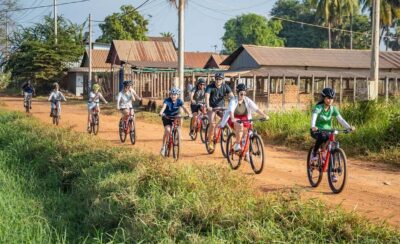
Angkor Wat Sunrise Bike Tour & Jungle Breakfast
Read our review →
Browse the lists this tour appears in