
REVIEW · BERLIN BIKE TOURS
Berlin: The Wall and Third Reich Guided Bike Tour
Berlin’s past rewards a slower look. This 15-kilometer ride links Nazi and Cold War sites that are spread across the city, with quiet streets and cycle paths making the history easier to follow. I especially like the way the tour connects famous places with less obvious corners, and the guides, including Carl, Juliet, Jake, and Bjorn, are praised for clear storytelling and personal insight. The main tradeoff is pace: three hours and many stops mean you will see a lot, but only briefly.
You start in Nikolaiviertel, close to the TV Tower, and ride with a guide who can adjust the route to the group. I like that the bikes are checked, fitted with baskets, and supplied with helmets on request. Bring warm clothes in cold weather, and be ready for a physical ride, some traffic, and paths that can become slippery after rain.
Key points at a glance
- A 15-kilometer history lesson on two wheels: Connects Nazi Berlin, the divided city, the Wall, escape routes, bunkers, and reunification-era changes.
- The Berlin Wall Memorial is only one part: You also reach watchtowers, the former border route, ghost-station areas, and the Memorial to Günter Litfin.
- Small-group flexibility matters: Guides can adjust the route and explanations to your interests, especially on private tours.
- The Führerbunker site is about context, not ruins: The bunker itself is inaccessible and has been covered, so do not expect an underground visit.
- Good equipment and weather backup: Rental bikes have baskets, helmets are available, and waterproof ponchos can be provided.
- Best for active history fans: The ride is family-friendly, but the distance and outdoor format may not suit every child or every visitor.
Why a bike works so well for Berlin’s divided past
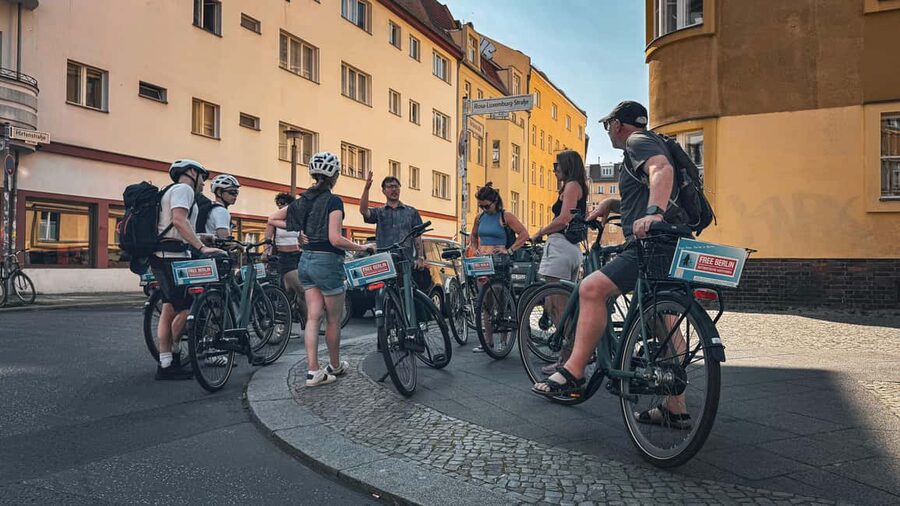
Berlin’s major 20th-century sites do not sit neatly around one square. The Berlin Wall ran through neighborhoods, parks, cemeteries, railway corridors, bridges, and ordinary streets. A bus can show you the landmarks, but a bicycle lets you follow the spaces between them.
That matters here. The tour covers about 15 kilometers in three hours, allowing you to move from central Berlin toward Bernauer Straße, Humboldthain, the former Wall route, and government sites near Potsdamer Platz. You get a sense of distance, which is important when learning how the border split homes, streets, transport lines, and communities.
I also like the pace of a guided bike ride for this subject. You stop often enough for short explanations and photos, then keep moving before the history becomes a string of indoor lectures. The guides are encouraged to shape the route around the group, so one outing might spend more time on East German daily life, while another may lean toward Nazi planning and wartime bunkers.
The ride is not a gentle sightseeing loop with no effort. It is family-friendly, and several people found the cycling manageable, but you should be comfortable riding for three hours. Busy roads appear along the way, even though much of the route uses quieter streets and cycle paths.
A few more rides around Berlin worth a look
- Berlin: Sights and Highlights Bike Tour with a Local Guide
★ 4.8 · 2,698 reviews - Berlin: Guided Bike Tour to Explore the Highlights
★ 4.8 · 506 reviews - Berlin: Cold War & Berlin Wall History Guided Bike Tour
★ 4.8 · 422 reviews
Starting in Nikolaiviertel and following Jewish Berlin
The meeting point is the Free Berlin office in the courtyard entrance at Poststraße 11. Look for the FREE BERLIN sign. The location is in Nikolaiviertel, about five minutes from the TV Tower, so it is easy to combine with central Berlin sightseeing.
Nikolaiviertel gives the tour an old Berlin starting point, though the area has been heavily reconstructed. From here, you collect a rental bike and meet your guide before heading toward the first historical stops.
The New Synagogue Berlin and Jewish Centre follows on the route. The exterior and surrounding area provide an early reminder that Berlin’s story cannot be told only through military buildings and political monuments. The guide places the Nazi period within the life of the city’s Jewish community, helping you see how persecution affected real streets and institutions.
Do not expect a long museum visit at this stop. The listed format allows only a short guided explanation, so this is more of an orientation than a full examination of the synagogue or Jewish Berlin. If this subject is central to your trip, plan separate time for the Jewish Museum or other memorial sites.
Bernauer Straße, Mauerpark, and the border people lived beside
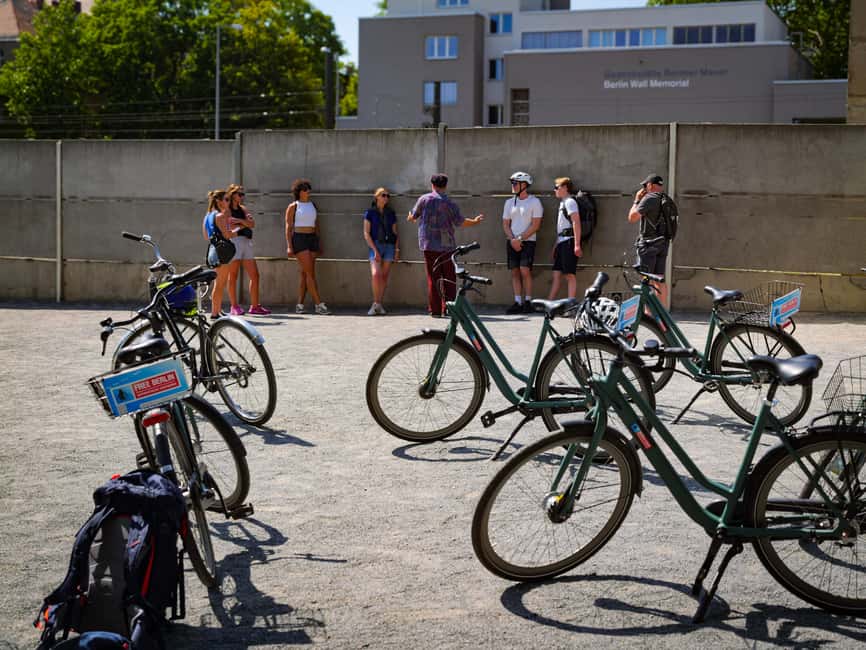
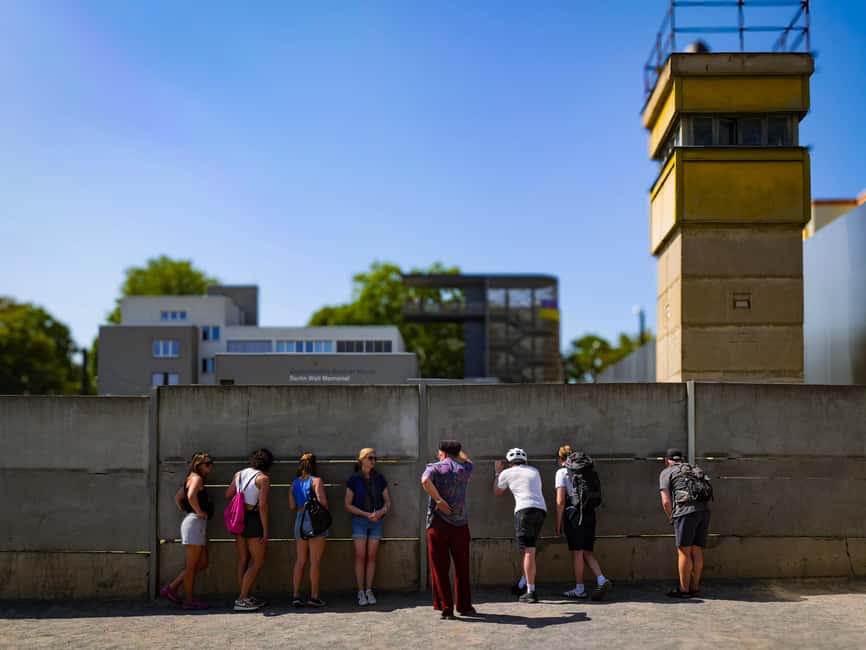
The Berlin Wall Memorial on Bernauer Straße is one of the strongest sections of the ride. This is where the Wall’s physical structure, watchtowers, border strip, and stories of escape come together. The location makes the division unusually easy to understand because the former border cut through a real residential area.
You stop for photographs and a short explanation, then continue through places connected to the old frontier. At Ruppiner Straße and Mauerpark, the guide explains how former borderland has found new uses. Mauerpark is now a well-known public space, but its position once formed part of the Wall zone.
That contrast is one of the tour’s best teaching tools. You are not just looking at a preserved slab of concrete. You are seeing how a controlled, dangerous strip of land became part of everyday city life again.
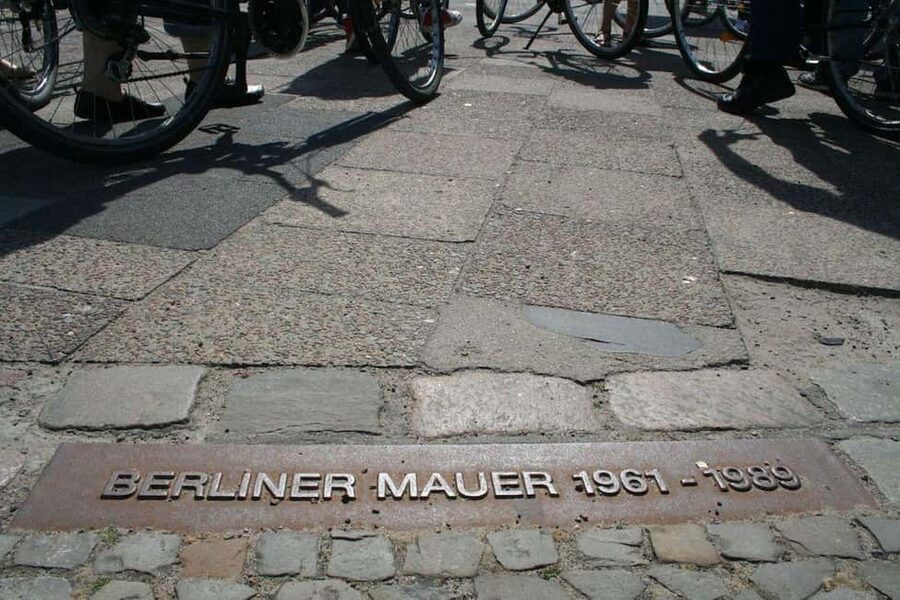
The ride then follows parts of the Berliner Mauerweg, the route marking the former Wall. At Behmstraßenbrücke, you get another useful view of how transport routes and infrastructure were affected by the border. The tour’s moving format helps connect separate fragments that can feel confusing when visited alone.
The drawback is time. Several stops are scheduled for roughly five minutes, and this is not enough to read every panel, take a long set of photographs, and ask many questions. I would treat the tour as a guided introduction, then return later to any place that catches your attention.
Humboldthain’s flak tower and the city below ground
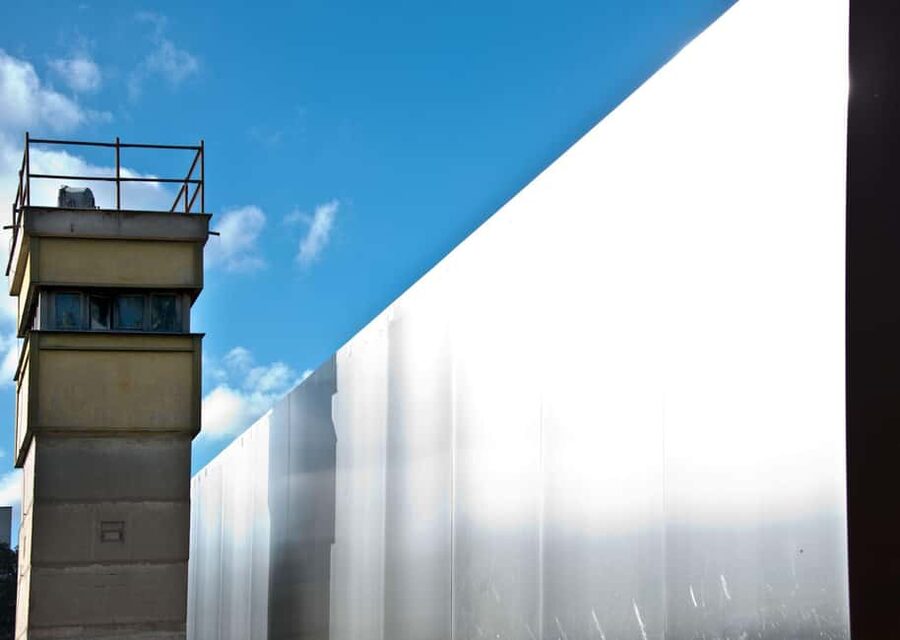
Flak Tower III in Volkspark Humboldthain adds a different layer to the route. The remains of the enormous wartime structure show the scale of Nazi Germany’s military construction. The guide also uses the site to explain the planned city of Germania, Hitler’s grand and unrealized vision for Berlin.
This is one of the stops that gives the tour its range. You move from the human scale of Wall escapes and divided neighborhoods to massive concrete projects built for war and propaganda. The contrast is useful, and the setting in a public park makes the remains feel especially stark.
You do not visit every bunker interior on this three-hour ride. The route focuses on seeing remains and understanding their purpose. If you want extensive bunker access or a museum-style examination of wartime Berlin, you will need a separate visit.
After Humboldthain, the route includes a surviving piece of the Berlin Wall and the Memorial to Günter Litfin. Litfin is remembered as the first person shot and killed while trying to cross the Berlin border, according to the tour explanation shared by one rider. This stop brings the Wall’s statistics back to one person and one attempted escape.
The Memorial to Günter Litfin is located near the former border and gives the guide a chance to explain the danger of crossing, rather than presenting the Wall as only a political symbol. That human focus is a recurring strength of this experience.
Same handlebars, a completely different route:
- Berlin Highlights 3-Hour Bike Tour
★ 5.0 · 948 reviews - Berlin City Bike Tour with Beer Garden Stop
★ 5.0 · 917 reviews - Berlin Highlights: 3-Hour Bike Tour
★ 4.9 · 809 reviews - Berlin Highlights Sightseeing Bike Tour in Small Groups
★ 5.0 · 652 reviews
Invalids’ Cemetery and the traces that are easy to miss
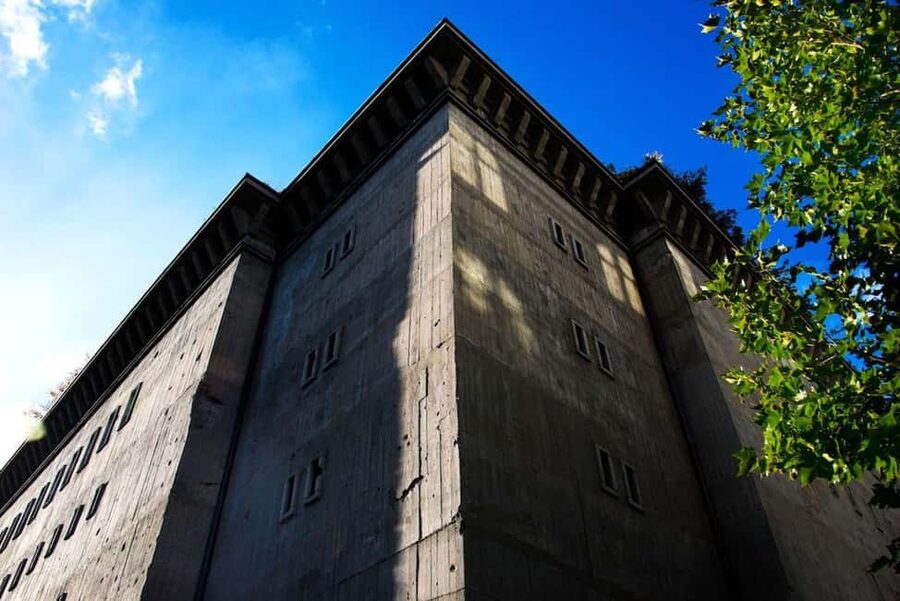
Invalids’ Cemetery adds another quiet layer. Cemeteries often preserve pieces of a city’s political past that can be overlooked on a standard sightseeing route. Here, the guide can point out how the former border affected the site and its surroundings.
This is the kind of stop that justifies taking a guided bike tour instead of following a simple Wall map. You might pass through the area on your own without realizing why the location matters. The guide supplies the connection between place, border control, and the changing city.
The route also passes the Boros Bunker, home to the Boros Collection. The bunker’s heavy wartime construction and its later use for contemporary art make it another example of Berlin reusing difficult buildings rather than erasing them. The bike tour does not replace a ticketed art visit, but you get the outside context and can decide if you want to return.
This part of the ride is especially good for visitors who enjoy seeing how Berlin’s old structures have been given new purposes. The former border becomes a path, a bunker becomes an art venue, and a military structure becomes part of a public park.
The Holocaust Memorial and the Führerbunker site
The Holocaust Memorial is one of the tour’s most important central stops. The field of concrete stelae is visually powerful, but the guide’s explanation helps place it within Berlin’s wider memorial culture and the responsibility to remember Nazi crimes.
You stop for photos and a short talk. Because the subject is serious, a respectful approach matters. This is not a quick photo backdrop, and the guide can help you understand why the memorial’s design feels deliberately unsettling.
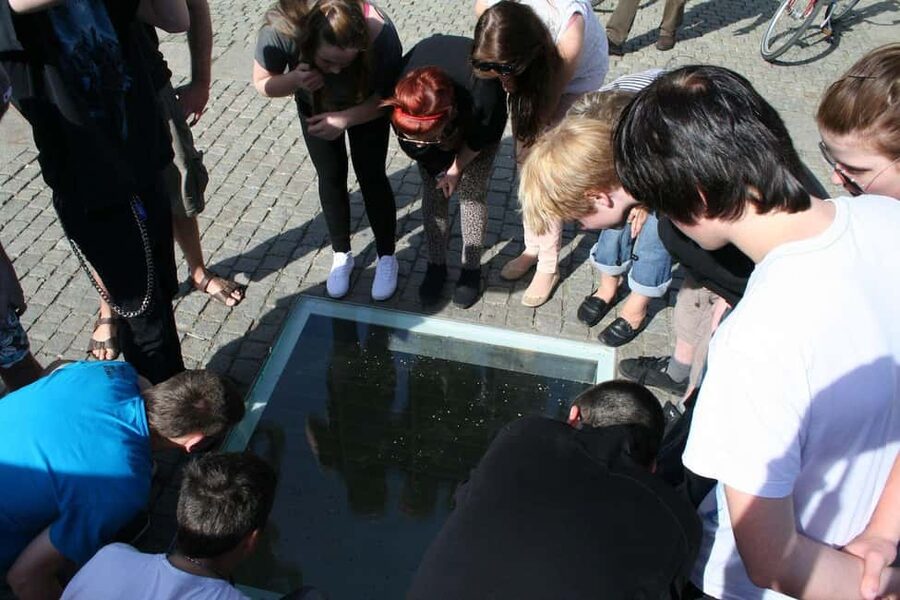
Nearby, the route reaches the location of Hitler’s Führerbunker. This is where expectations need careful handling. The bunker is not open to visitors, and the site has been covered. You will not descend into the room where Hitler died or walk through preserved corridors.
Instead, the guide explains why the location is difficult to access and how the city has chosen to mark it. The ordinary setting is part of the lesson. You are looking at a place loaded with historical importance that does not look like a dramatic ruin.
One older booking record complained that the bunker was not shown, despite repeated reminders. That points to a practical issue: if this site is your main reason for booking, confirm with the guide what you will see. The tour can explain the location, but it cannot provide entry to the bunker.
Government buildings and the ride back to the center
The final section includes the Federal Ministry of Justice before returning to the Free Berlin office. Government buildings help connect the historical route to present-day Berlin, showing how the city’s political center has changed since the Nazi and East German periods.
By this point, the tour has covered a lot: Jewish Berlin, Nazi plans and bunkers, the Wall, escape attempts, East German life, former border paths, and memorial culture. You will probably leave with a better mental map rather than a complete study of any single topic.
That is the right way to judge the experience. It is broad and story-led, not a substitute for visiting every memorial and museum. The guide gives you a framework, then you can choose where to spend more time afterward.
Guides who make difficult history easier to grasp
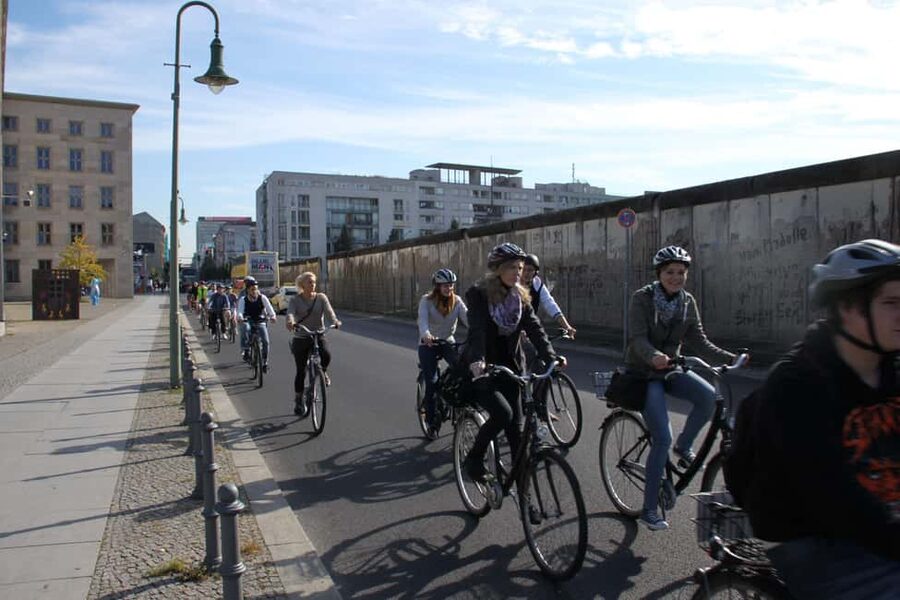
The guide is the most important part of this tour, and the feedback is unusually consistent. Carl is praised for bringing history to life on quiet streets. Juliet is described as friendly, flexible, and ready to stop for questions. Jake receives repeated credit for humor and clear explanations.
Other guides, including Paul, Yasmin, Fabian, Vince, Bjorn, Simone, Martin, and Faima, are also singled out for making the experience personal and approachable. Several guides adapted the route or added time around subjects that interested the group.
The strongest quality is not simply factual recall. It is the ability to connect large events with ordinary life. One Berlin-born guide shared family experience of the city’s later decades, while a former East Berliner helped explain what daily life felt like on the eastern side. Those details can make the Cold War less abstract.
The subject matter includes persecution, war, dictatorship, escape attempts, and death. A good guide needs to handle questions without turning the tour into either a dry lecture or a sensational story. The feedback points to guides who invite discussion and manage difficult questions calmly.
Because routes are flexible, your experience can depend on the guide and group. That flexibility is a benefit, but it also means no two tours are guaranteed to follow precisely the same pattern.
Bikes, weather, and practical comfort
The rental bikes have baskets and are regularly checked by a certified mechanic. Helmets are available if you request one, and waterproof ponchos can be supplied in rain. Large luggage can also be left with the operator during the ride if arranged as needed.
The equipment sounds basic, but it matters. A poor bike would make 15 kilometers and frequent stops tiring. The repeated comments about solid bikes and safe riding suggest that the equipment is a dependable part of the package.
Wear clothing for the forecast, not just for the city center. A three-hour ride can feel cold in winter, especially when you stop. One rider specifically advised warm clothes and gloves, while another found the guide handled very wet weather well.
Rain changes the experience. Some paths can become slippery, so sunny or dry weather is preferable if you have a choice. The ponchos help, but they do not turn a wet cycling tour into a dry one.
Children are welcome, and infant seats can be provided on request. Still, you should consider the full distance, traffic, weather, and serious subject matter before bringing a very young child. The tour is family-friendly, but it is not a short playground ride.
Is $41 good value for three hours?
At $41 per person, the price includes the bike, guide, and helmet if requested. That is fair value if you want a structured route through widely scattered sites and prefer not to work out the Wall geography yourself.
You are paying for access to a route and an explanation, not admission to museums or bunker interiors. The tour covers many locations, but most stops are short. If you prefer to spend 30 minutes reading every panel at one memorial, a self-guided visit may suit you better.
The value improves for a first visit to Berlin. You get an overview of the city’s Nazi and Cold War layers, learn which places deserve a longer return visit, and avoid losing time to navigation. A private tour costs more than the basic per-person price, but it makes more sense if your group wants to focus on family history, architecture, escape stories, or East Berlin life.
Free cancellation up to 24 hours before the start and reserve-now, pay-later terms make it easier to fit the ride into a changeable schedule. Check current availability and starting times when booking, since the supplied price and schedule can change.
Who should book this Berlin bike tour?
I would choose this tour if you want history with movement, practical context, and plenty of ground covered. It suits first-time visitors, families with older children, couples, and anyone who finds a long indoor lecture tiring.
It is especially useful if you want to understand the Wall as a physical border rather than only see a decorated section of concrete. The route shows how the frontier ran through parks, streets, bridges, transport links, cemeteries, and residential areas.
I would hesitate if cycling for three hours sounds uncomfortable, if you need long periods at each memorial, or if you mainly want to enter bunkers and museums. The tour explains the Führerbunker site, but there is no underground visit.
For the best experience, go in dry weather, wear layers, request a helmet if you want one, and tell the guide early what interests you. The flexible format is one of the tour’s best features, so use it.
FAQ
How long is the Berlin Wall and Third Reich bike tour?
The tour lasts three hours and covers approximately 15 kilometers.
Where does the tour begin?
It begins at the Free Berlin Bike Tours and Rental office in the courtyard entrance at Poststraße 11. Look for the FREE BERLIN sign.
Is the meeting point near the TV Tower?
Yes. The starting point in Nikolaiviertel is about five minutes from the TV Tower.
What languages are available?
The tour is available in German, French, and English.
Is a bicycle included?
Yes. The rental bike is included in the tour price. Bikes have baskets and are regularly checked by a certified mechanic.
Is a helmet provided?
A bike helmet is available if you request one.
Are children allowed to join?
Yes. The tour is family-friendly, and infant seats can be provided on request.
Can I leave large luggage with the operator?
Yes. Large pieces of luggage can be left safely with the operator for the duration of the tour if arranged with them.
Does the tour enter Hitler’s bunker?
No. The Führerbunker is no longer accessible. The tour visits the location and explains its history and present condition.
What happens if it rains?
Waterproof ponchos are available in case of rain. Some paths can become slippery when wet, so take care and dress warmly in colder weather.
Can I book a private tour?
Yes. Private or small-group options are available. A private tour can use a personal starting time and adjust the route to your interests.
Can I cancel the booking?
You can cancel up to 24 hours in advance for a full refund. Reserve-now, pay-later booking is also available.
Should you book it?
Book this tour if you want Berlin’s difficult past explained while you ride through the places where it happened. The guides are the main strength, the route reaches corners you might miss, and $41 is reasonable for a bike, equipment, and three hours of focused guidance.
Skip it if you need a slow museum visit or a bunker interior. Otherwise, choose a dry day, keep an open mind, and let the route show you how Berlin’s old divisions still shape the city’s streets.
Newly added rides around Berlin
- Potsdam Bike Tour with Rail Transport from Berlin★ 4.5 · 81 reviews
- Berlin: Guided Private Bike Tour to Explore the Highlights★ 5.0 · 12 reviews
- Alternative Berlin Bike Tour – Off the Beaten Tracks in Small Groups★ 5.0 · 99 reviews
- Small-Group Historical Bike Tour in Berlin★ 4.5 · 103 reviews
- Berlin : The best bike tour with a Berlin guide and insider tips★ 5.0 · 14 reviews
- Half-Day Bike Tour of Berlin’s Lesser Known And Historical Sites★ 5.0 · 10 reviews
- Berlin Wall and Cold War Bike Tour in Small Groups★ 5.0 · 114 reviews
- Berlin : Guided Private Sightseeing Tours with Funbikes, Teambikes★ 5.0 · 20 reviews
Berlin Bike Tours, compared.
Sights and Highlights Bike Tour with a Local Guide
Read our review →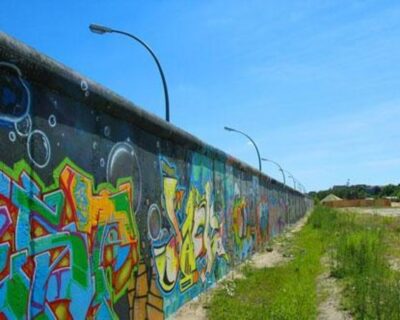
Berlin Highlights Sightseeing Bike Tour in Small Groups
Read our review →
Alternative Bike Tour of Kreuzberg & Friedrichshain
Read our review →
Cold War & Berlin Wall History Guided Bike Tour
Read our review →Browse the lists this tour appears in