
REVIEW · BERLIN BIKE TOURS
Berlin: Sights and Highlights Bike Tour with a Local Guide
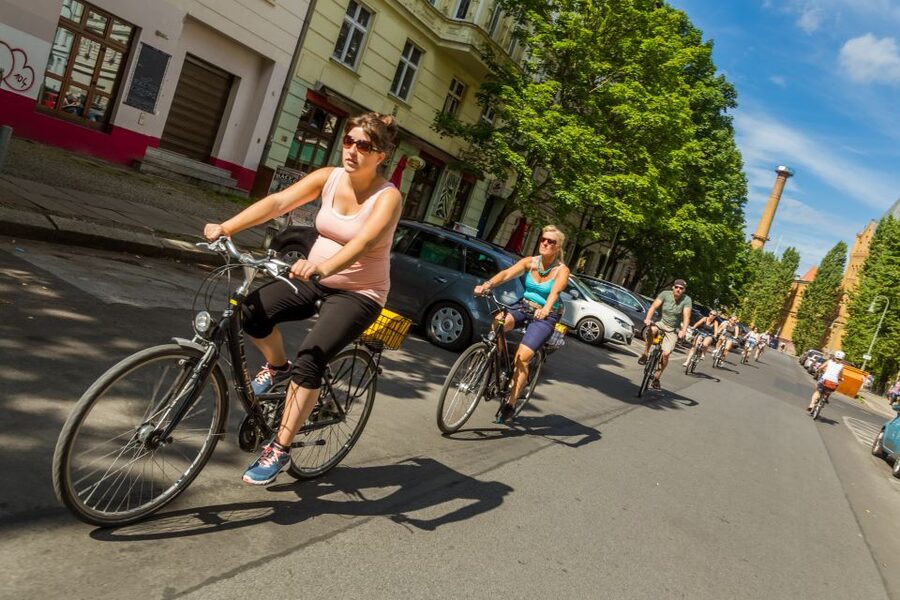
Berlin is easier on two wheels. This three-hour ride links the Brandenburg Gate, Reichstag, Berlin Wall, Museum Island, and lesser-known corners without making you march across the city. I especially like the small groups of up to 15 and the way guides such as Brendan, Angus, Ana, Andy, and Elisa mix clear history with humor. The bikes are fitted to your height, baskets hold light bags, and gloves or rain ponchos are available.
The strongest part is the balance between movement and explanation. You cover much more ground than on foot, yet stop often for stories and photographs. The main consideration is traffic: the route feels relaxed, but you still need to judge lights and road crossings yourself rather than simply follow the bike ahead.
What makes this Berlin bike tour worth considering
- Starts at Kulturbrauerei in Prenzlauer Berg: You begin in a restored former brewery complex, not at a bland transport hub.
- Covers major sights in one route: Brandenburg Gate, the Reichstag area, Berlin Central Station, the Holocaust Memorial, Gendarmenmarkt, Museum Island, and the Berlin Wall all fit into the ride.
- History comes with visual aids: Some guides use printed photographs to show how places looked during the Nazi period, the divided-city years, and reunification.
- Comfortable pace for mixed groups: The ride is described as easy and relaxed, with pauses, shade breaks when needed, and time for questions.
- Useful for a first day: You get a practical sense of Berlin’s central districts and can mark places to revisit on foot or by public transport.
- Good equipment for the price: At $41, the bike, helmet and gloves on request, basket, sunscreen, trouser clips, and wet-weather ponchos add useful value.
Starting in Prenzlauer Berg at Kulturbrauerei
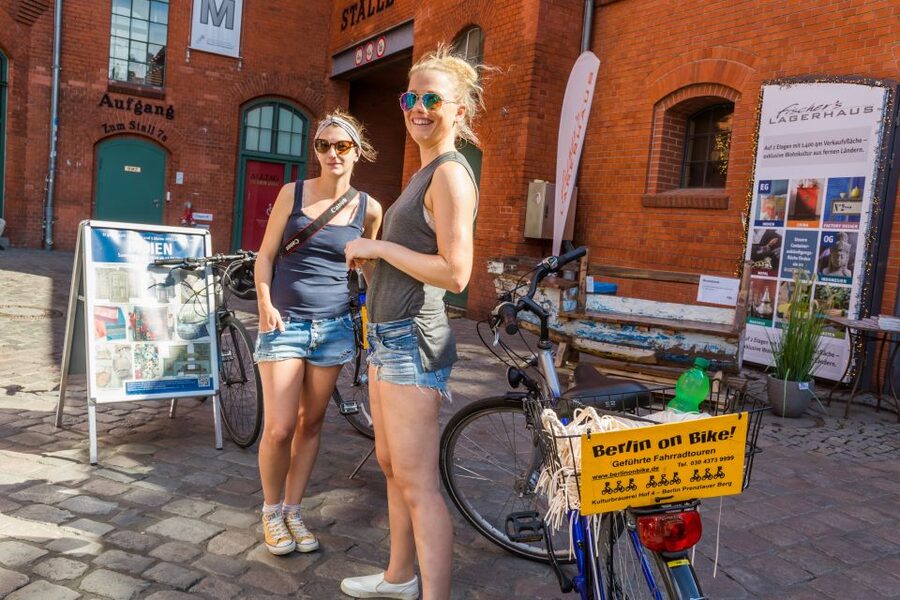
The meeting point may change with the option you book, so check your confirmation carefully. The tour described here starts at Kulturbrauerei, a carefully restored red-brick brewery complex in Prenzlauer Berg.
That setting gives the outing a pleasant beginning. You are not thrown straight into central-city traffic. Instead, you start in a district associated with Berlin’s changing neighborhoods, then move toward the landmarks that define the city for first-time visitors.
The rental fleet includes different bike sizes, and the staff can adjust the seat. One useful detail from the feedback is that guides carry tools and can make changes during the first stop, so speak up early if your saddle feels wrong. A poorly adjusted bike can turn an easy ride into three hours of unnecessary discomfort.
Baskets handle lightweight bags. Sunscreen and trouser clips are available, and helmets and gloves can be borrowed on request. In cooler weather, gloves are a welcome touch. If rain arrives, ponchos are available, though you should still wear comfortable clothes and shoes suitable for cycling.
The tour is limited to 15 people. That is large enough for a social outing but small enough for a guide to keep an eye on the group and answer questions. It also makes this a good choice for solo visitors who want some company without joining a giant coach tour.
More City Bike Tours in Germany
- Berlin Highlights 3-Hour Bike Tour
★ 5.0 · 948 reviews - Berlin City Bike Tour with Beer Garden Stop
★ 5.0 · 917 reviews - Berlin Highlights: 3-Hour Bike Tour
★ 4.9 · 809 reviews
Prenzlauer Berg to the Government District
The ride introduces Berlin through movement rather than a long opening lecture. You follow the guide through city streets, seeing how residential neighborhoods give way to the political center.
The Government District is one of the most important sections of the route. Here, the guide connects present-day Germany with the upheavals that shaped Berlin during the twentieth century. The Reichstag is the obvious focal point, but the value lies in understanding how the government quarter fits into the modern city.
You also pass Berlin Central Station, an enormous glass-and-steel transport hub. It is a useful contrast to the older buildings nearby. Berlin often works best when you see these contrasts together: imperial architecture, wartime scars, Cold War division, and fast-moving modern construction can appear within a short ride.
The guide stops to explain the setting, then lets you continue before the information becomes a wall of dates. That rhythm is one reason the tour suits people who want context but do not enjoy standing still for hours.
Brandenburg Gate and the Holocaust Memorial
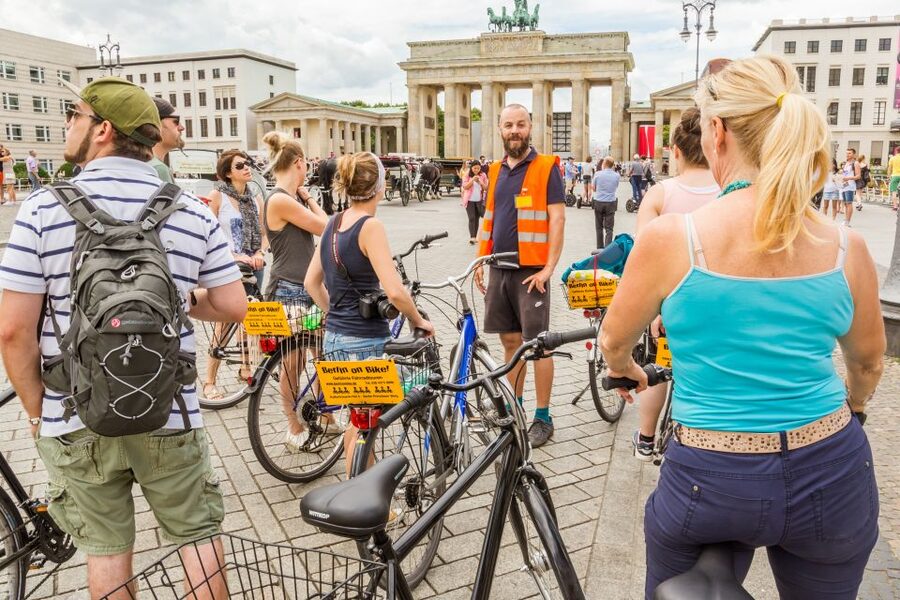
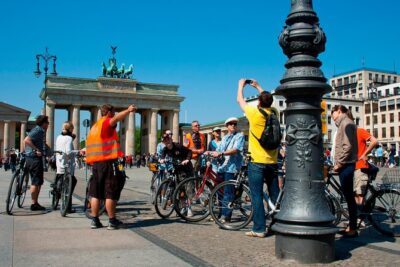
Brandenburg Gate is the natural headline stop. It is one of Berlin’s most recognizable sights, but arriving by bike gives you a sense of its position within the city rather than treating it as an isolated photo backdrop.
Your guide explains the gate’s role in Berlin’s political story and the changes that followed the fall of the Wall. You get time for photographs, but this is not a private photo session, so keep your camera ready before the group stops.
Nearby, the Holocaust Memorial brings a more serious mood. The tour uses the site to discuss Nazi persecution and the difficult ways Berlin remembers it. Several guides are praised for explaining this period clearly and without turning the subject into spectacle.
This is where the guide’s ability matters most. The best approach is direct, respectful, and open to questions. Printed historical photographs can help you connect the present-day surroundings with what once happened there. The stop is short compared with a dedicated museum visit, but it gives you the background you need if you plan to return to the memorial or visit the Topography of Terror later.
The bike format also keeps the day from becoming emotionally heavy from start to finish. You pause, listen, reflect, then continue through the city.
The Berlin Wall and the story of a divided city
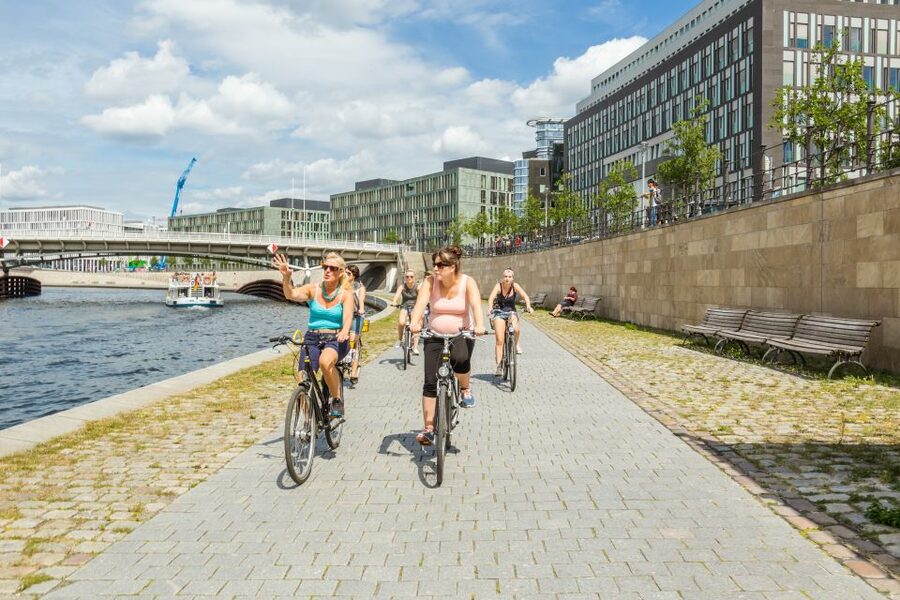
The Berlin Wall section is one of the tour’s most useful stops because the old border is not always easy to understand from a map. A guide can point out where the division ran and explain how the city functioned when streets, families, and neighborhoods were split.
Expect the focus to include the Wall, life in divided Berlin, and the changes after reunification. Guides have used photographs to show what the locations looked like in earlier decades, which makes the past easier to picture than a bare strip of pavement or a plaque.
Do not expect a long visit to every surviving Wall site. This is a city overview, not a specialist Wall tour. The benefit is breadth: you see the Wall in relation to the rest of Berlin and begin to understand why reunification reshaped the capital so dramatically.
If this subject matters deeply to you, use the tour to identify places for a later visit. The East Side Gallery, Berlin Wall Memorial, and many museums require more time than this route allows, and no admission to those sites is included.
More City Bike Tours in Berlin:
- Berlin Highlights Sightseeing Bike Tour in Small Groups
★ 5.0 · 652 reviews - Berlin: Guided Bike Tour to Explore the Highlights
★ 4.8 · 506 reviews - Berlin City Bike Tour with Beer Garden Stop
★ 4.9 · 308 reviews - Berlin: Guided Bike Tour to Explore the Highlights
★ 5.0 · 159 reviews
Museum Island and Gendarmenmarkt
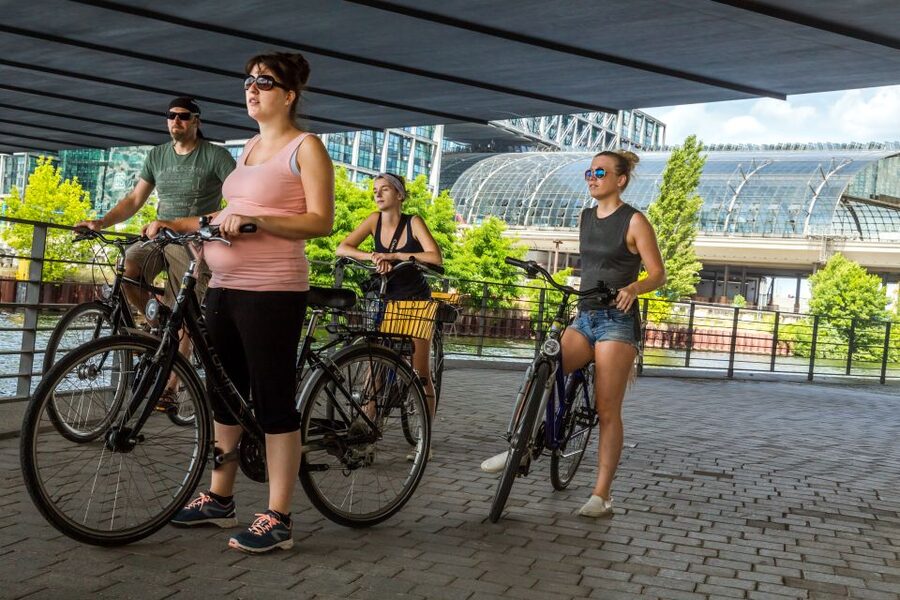
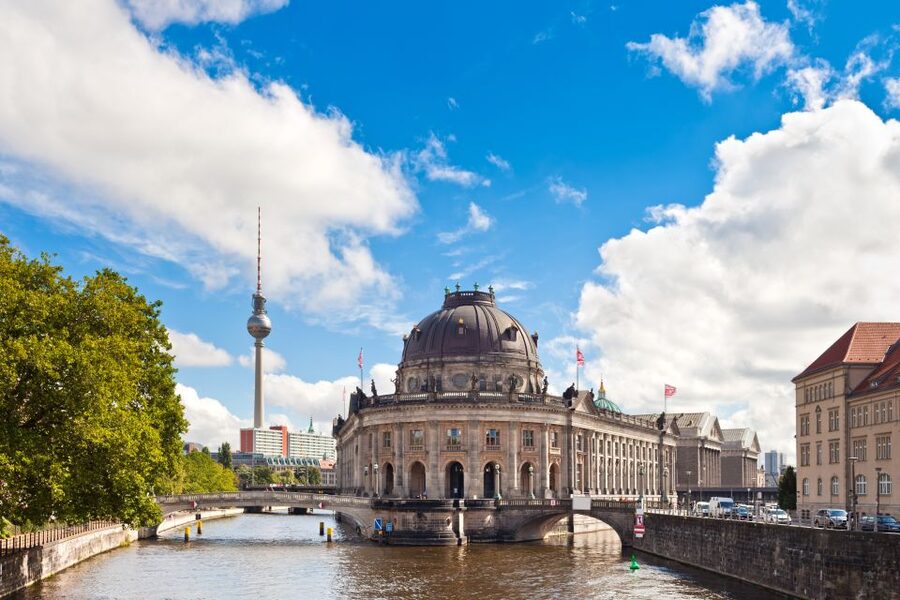
Museum Island adds another period to the story. The group rides past the island’s major museums and hears how this part of Berlin reflects Prussian ambition, royal culture, and the city’s long investment in art and scholarship.
The tour does not include museum entry. That is sensible for a three-hour ride, since trying to combine cycling with interior visits would make the schedule rushed. Instead, you get an orientation and can return later to choose the museum that suits you.
Gendarmenmarkt offers a different architectural view. The square is associated with grand civic design and formal Prussian style, giving the guide a chance to discuss the city before the twentieth-century crises transformed it.
These stops work well together. Museum Island shows Berlin as a cultural capital, while Gendarmenmarkt brings out its ceremonial side. Then the route moves on to places shaped by war, division, and reunification. In a single morning or afternoon, you get a broad sense of the city’s changing identity.
A relaxed ride, but not a no-effort ride
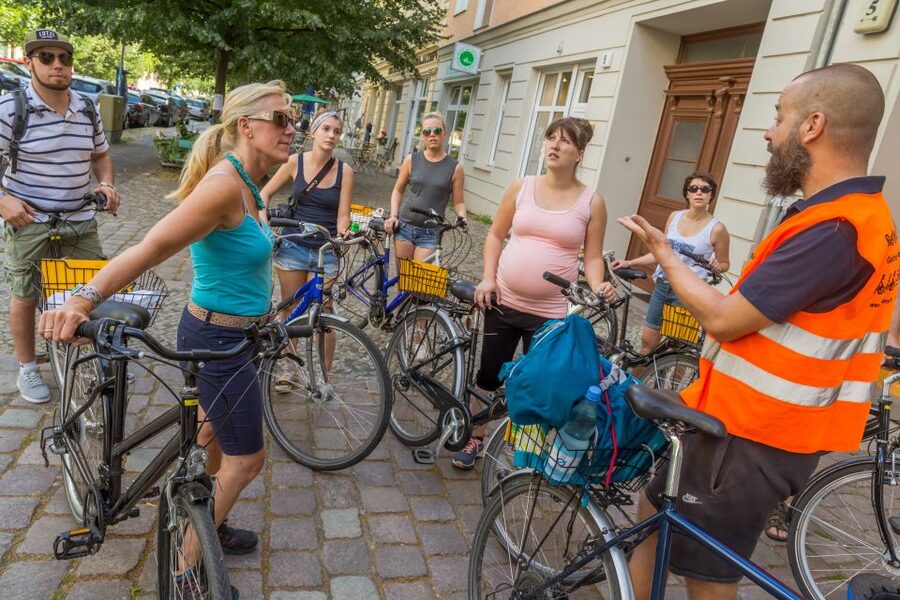
The pace is generally easy, and the route is repeatedly described as suitable for people who are not serious cyclists. One report put the distance at just over six miles, while another gave 19 kilometers, so the exact route can vary with road closures, group pace, and the guide’s choices.
That difference matters. Three hours on a bike is not strenuous for most reasonably active visitors, but it is still physical activity. You will spend time riding, stopping, restarting, and negotiating city streets. Comfortable clothing and shoes are sensible, and you should not arrive expecting a sightseeing bus with occasional steps off.
Road awareness is important. The group waits when people need to catch up, and guides watch the riders, but you remain responsible for checking lights and crossings. This is especially relevant if you have not cycled in a city recently.
Guides have adapted the route when conditions changed. During the Berlin Marathon, road closures required improvisation, yet the outing continued with alternative points of interest. On hot days, a guide may choose shaded pauses. Those details show the benefit of a live guide rather than a fixed audio route.
The guides make or break the experience
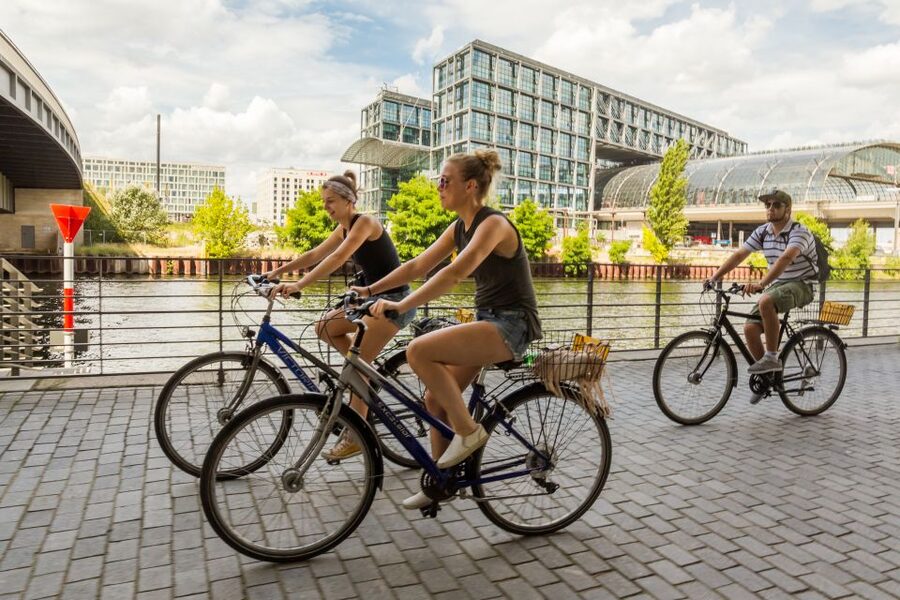
The strongest praise is reserved for the people leading the rides. Brendan is repeatedly singled out for clear explanations, humor, and useful suggestions for the rest of a Berlin stay. Angus is praised for making the history both detailed and fun. Andy is described as animated and attentive to safety, while Ana made time to get to know a solo rider and even included a coffee and cake stop on one extended outing.
Other named guides include Guy, Elisa, Frey, Benny, Matt, Alex, Oli, Isabelle, and Paul. The tone can vary by guide, but the common thread is an ability to explain without sounding like a textbook.
Isabelle’s approach is especially useful for history-minded visitors. She asked what the group wanted to know, used photographs at stops, and covered Nazi history, the Wall, and reunification in a connected way. That kind of conversation helps the tour feel less scripted.
You should also expect a social atmosphere. Groups often chat while riding and during pauses. Families with teenagers have found the format engaging, while solo visitors can meet people without committing to a full-day group excursion.
What the $41 price includes
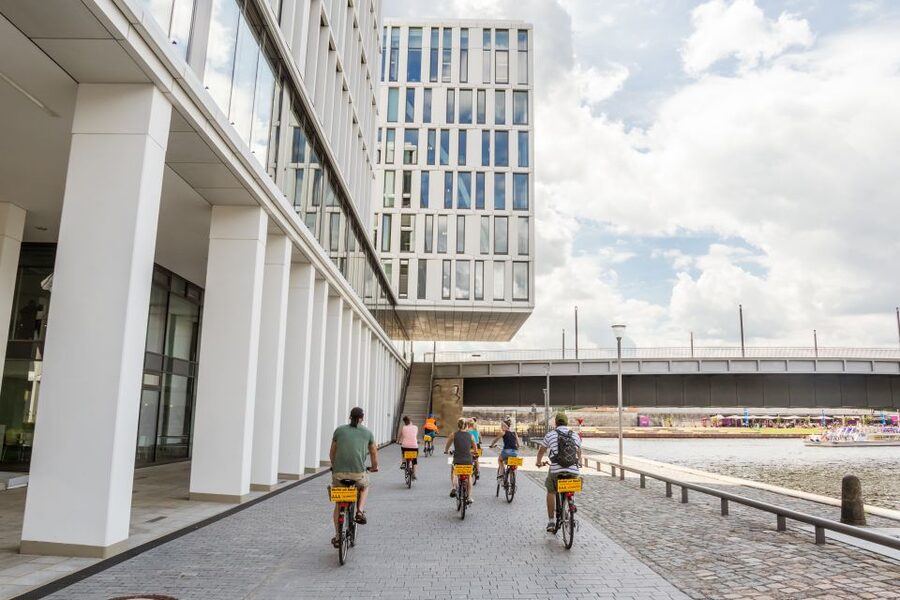
At $41 per person, this is a strong-value orientation tour if you want both transport and interpretation. A basic rental bike alone would not explain why a building matters or show you how Berlin’s divided past shaped the streets you are riding through.
The price includes a reliable bicycle, with different sizes available. Helmets and gloves are available on request, and the bikes have baskets for light bags. Sunscreen, trouser clips, and rain ponchos are practical extras that reduce the need to pack every small item yourself.
Coffee, snacks, and other purchases are not included. Some rides include a short café break, but treat that as an opportunity to buy something rather than part of the ticket price. Toilets are available at the start and finish, and a stop during the ride may also be possible, depending on the route and group.
The main value is time saved. Berlin is spread out, and walking between these sights can consume much of a day. A bike lets you cover the distance while still seeing the city at street level.
Who should book this ride?
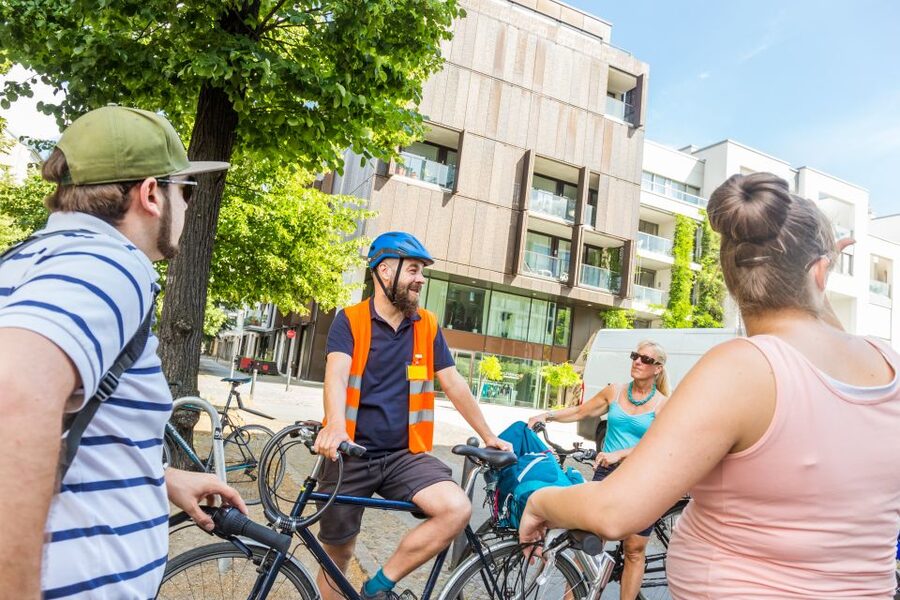
I would choose this tour for a first or second day in Berlin. It gives you a working map of the center and helps you decide which places deserve a longer visit.
It suits:
- First-time visitors with limited time
- Families with older children or teenagers
- Solo visitors who want an easy social activity
- People interested in twentieth-century German history
- Anyone who prefers seeing a city outdoors rather than sitting in a vehicle
- Visitors who are comfortable cycling for roughly three hours
It may be less suitable if you dislike city cycling, need a completely sedentary tour, or want extended time inside museums and memorial sites. The route provides an introduction, not admission or a deep visit to each attraction.
Book early enough to choose a time that fits your plans, and check the meeting point because it can vary by option. Free cancellation is available up to 24 hours before departure, and you can reserve now and pay later, which helps if Berlin is part of a changing itinerary.
Final verdict: a smart first look at Berlin
I recommend this ride if you want to see the major sights, hear the story behind them, and avoid spending your first day walking from one distant landmark to another. The $41 price is fair, particularly with the bike, small group, equipment, and guide included.
The best reason to book is the combination of coverage and human explanation. You see the Government District, Brandenburg Gate, Holocaust Memorial, Wall, Gendarmenmarkt, and Museum Island, then leave with a clearer plan for the rest of your stay.
Choose it early in your visit if possible. Just bring comfortable clothes, stay alert at crossings, and remember that the tour introduces Berlin rather than replacing its museums and memorials. For most visitors, that is exactly its strength.
FAQ
How long is the Berlin bike tour?
The listed duration is three hours, or 210 minutes. Individual outings can vary depending on the route, stops, road conditions, and group pace.
What sights are included?
The route passes the Government District, Berlin Central Station, Brandenburg Gate, the Holocaust Memorial, the Berlin Wall, Gendarmenmarkt, and Museum Island. It also begins at Kulturbrauerei in Prenzlauer Berg and includes lesser-known city corners.
Is the bike provided?
Yes. A rental bicycle is included, and you can choose from different bike sizes. The bikes have baskets for lightweight bags.
Are helmets and gloves available?
Helmets and gloves are available upon request. Sunscreen and trouser clips are also provided, and rain ponchos are available in bad weather.
What languages are offered?
The live guide service is available in Dutch, German, and English.
How large is the group?
The tour has a maximum of 15 participants. The small-group format allows time for questions and lets the guide keep track of the riders.
What should I bring?
Bring comfortable shoes and comfortable clothes. Alcohol and drugs are not allowed on the tour.
Newly added rides around Berlin
- Potsdam Bike Tour with Rail Transport from Berlin★ 4.5 · 81 reviews
- Berlin: Guided Private Bike Tour to Explore the Highlights★ 5.0 · 12 reviews
- Alternative Berlin Bike Tour – Off the Beaten Tracks in Small Groups★ 5.0 · 99 reviews
- Small-Group Historical Bike Tour in Berlin★ 4.5 · 103 reviews
- Berlin : The best bike tour with a Berlin guide and insider tips★ 5.0 · 14 reviews
- Half-Day Bike Tour of Berlin’s Lesser Known And Historical Sites★ 5.0 · 10 reviews
- Berlin Wall and Cold War Bike Tour in Small Groups★ 5.0 · 114 reviews
- Berlin : Guided Private Sightseeing Tours with Funbikes, Teambikes★ 5.0 · 20 reviews
Berlin Bike Tours, compared.
Berlin Highlights Sightseeing Bike Tour in Small Groups
Read our review →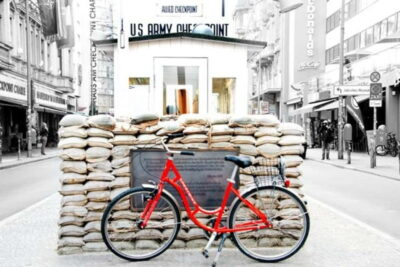
Alternative Bike Tour of Kreuzberg & Friedrichshain
Read our review →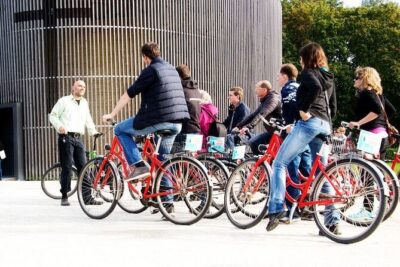
Cold War & Berlin Wall History Guided Bike Tour
Read our review →Browse the lists this tour appears in