
REVIEW · KYOTO BIKE TOURS
Cycle Kyoto’s Hidden Gems & Gion Stroll
Kyoto is better on two wheels. This bike tour takes you away from the busiest streets and into quiet riverside lanes, local shrines, the Imperial Palace, Shimo-gamo Shrine, and peaceful residential areas. You also get a short Gion or Pontocho walk, with tea, a Japanese sweet, and an introduction to geisha culture.
I especially like the calm riverside riding and the chance to see parts of Kyoto that are awkward to reach on foot. I also like the family-friendly pace, with regular stops and guides such as Mr. Go, Benjamin, Ko, and Claire praised for their kindness and care. The main consideration is simple: you need to ride a bike comfortably, and the tour may feel long for anyone who dislikes cycling in warm or wet weather.
The $73 price is fair for a guided ride, bike rental, snack, tea, shrine and temple visits, and restaurant advice. Just remember that an electric bike costs an extra 1,000 yen, and children must be at least nine years old.
Key points to know before booking
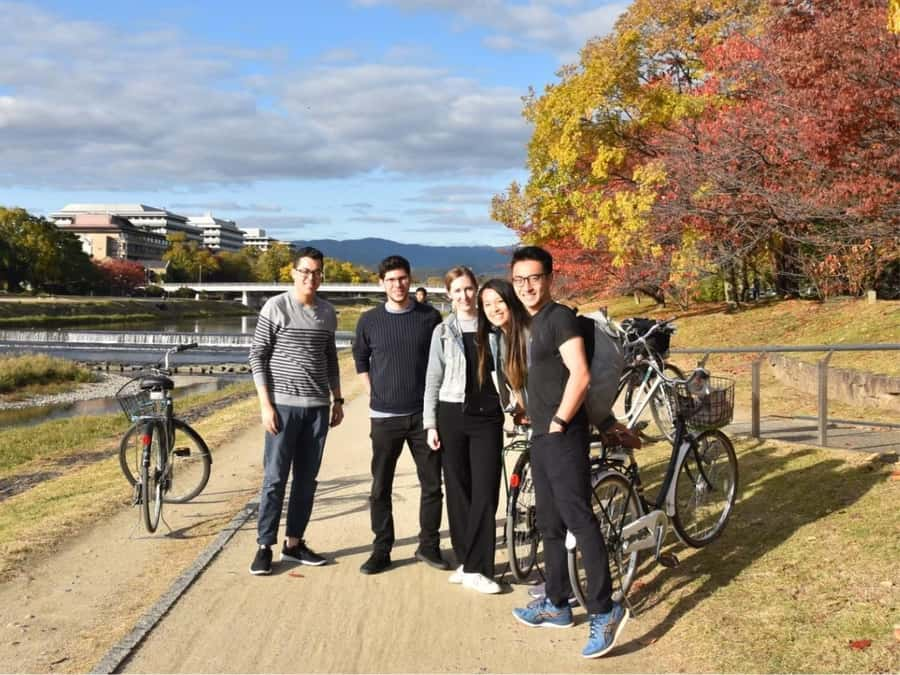
- Quiet riverside start: You begin along a peaceful river road, a welcome change from Kyoto’s crowded central streets.
- Several different sides of Kyoto: The route includes the Imperial Palace, a Zen temple, university areas, residential lanes, Shimo-gamo Shrine, and a distinctive river junction.
- Natural spring water stop: You pause at a lesser-known shrine to try fresh spring water.
- Tea and a Japanese sweet included: The traditional snack shop adds a small but memorable cultural break.
- Gion or Pontocho finish: The final 30-minute walk explains geisha districts and may include a glimpse of a geisha.
- Best for confident riders: The experience suits families with children nine and older, but not anyone who cannot ride a bike.
Why Kyoto works so well by bike
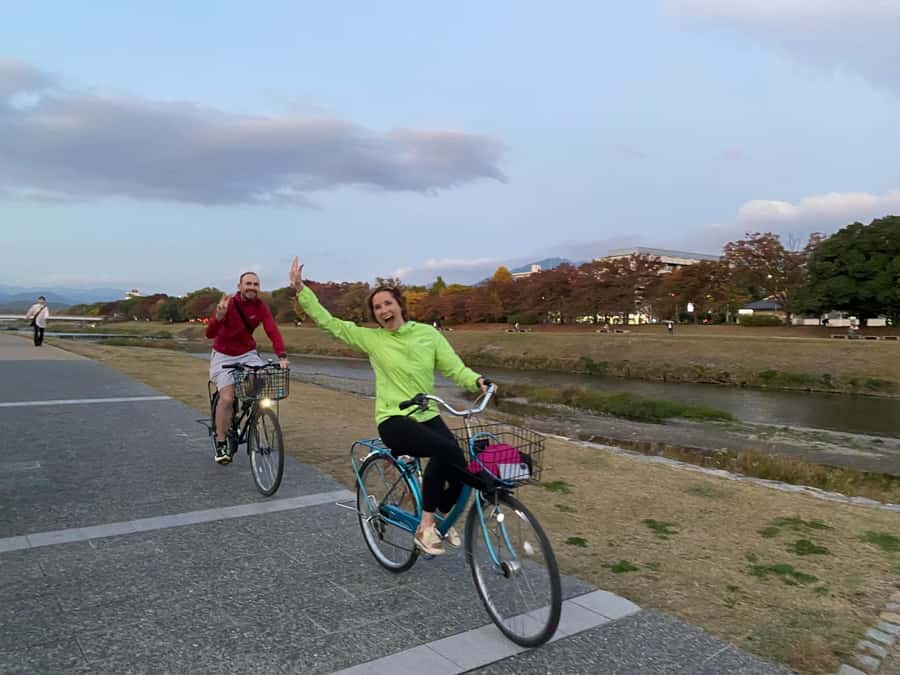
Kyoto has a practical problem. Its famous sights are spread across a broad city, yet the roads around them can be crowded and slow. A bike helps you cover ground without spending the day on buses, while still letting you notice small shrines, river views, gardens, and quiet streets.
I like that this route is not just a fast ride between major landmarks. The guide uses the bike to connect different parts of the city, then stops often enough for you to look around. That makes the ride feel like sightseeing rather than exercise with a few rushed photo stops.
The tour lasts about three and a half hours for the cycling portion, followed by a 30-minute town walk. That is a substantial outing, so you should be ready to spend much of the day moving. The route is described as refreshing, but Kyoto can be hot and humid, particularly in summer. Bring water, wear comfortable shoes, and dress for the forecast.
A few more rides around Kyoto worth a look
- Hidden Kyoto E-Biking tour
★ 5.0 · 1,843 reviews - Bike Tour Exploring North Kyoto plus Lunch
★ 5.0 · 1,087 reviews - Arashiyama Bamboo Forest & Hidden Gems Bike Tour (Early Bird)
★ 5.0 · 613 reviews
Meeting at Sanjo Ohashi
The tour begins at the kneeling man statue on the southeast corner of the Sanjo Ohashi intersection. From the east end of Sanjo Ohashi Bridge, cross the street and look for the statue.
This is a useful meeting point, but it may take a moment to identify if you are arriving in a hurry. If you use the subway, it is quicker to reach street level first and then find the statue rather than trying to orient yourself underground.
The route returns to this same meeting point at the end. That is convenient because you do not need to work out a new transport connection after the Gion or Pontocho walk.
Starting beside the river
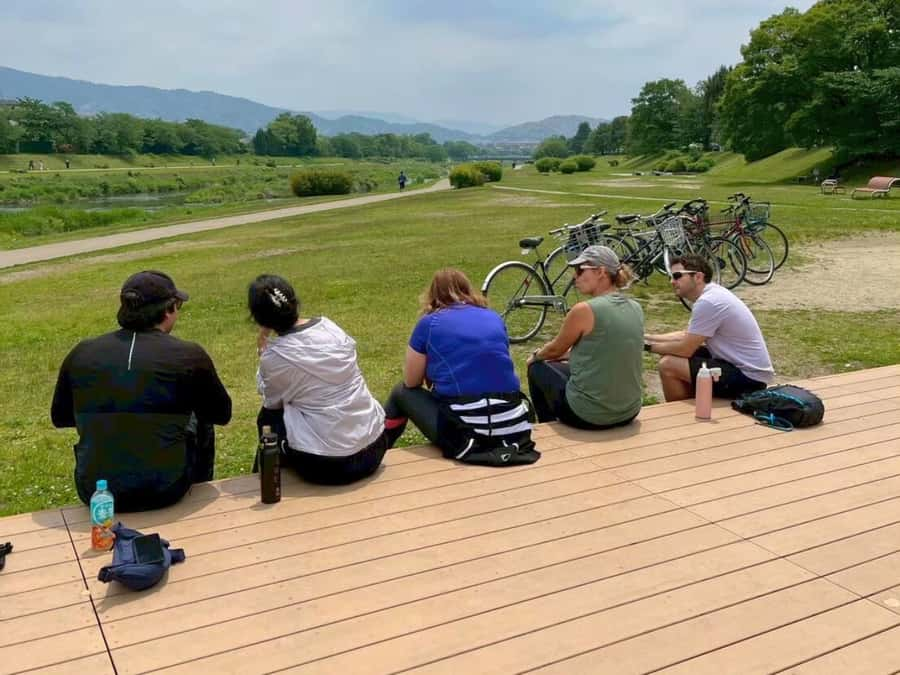
The first part takes you along a peaceful riverside road. This sets the tone for the whole outing: fresh air, open sky, and a slower view of Kyoto than you get from a crowded shopping street.
The riverside section is also one reason this outing works well for families. You can ride side by side in a more relaxed setting, with the guide setting the pace and stopping when there is something worth seeing. One family with children aged nine and ten particularly appreciated how patiently Mr. Go handled the younger riders.
The route is not presented as a race. You will still spend several hours on the bike, but the stops break up the effort. If you are comfortable cycling but not used to long rides, the regular pauses should help. If you rarely ride at all, this is probably not the right Kyoto activity for you.
A shrine, spring water, and a quieter Kyoto
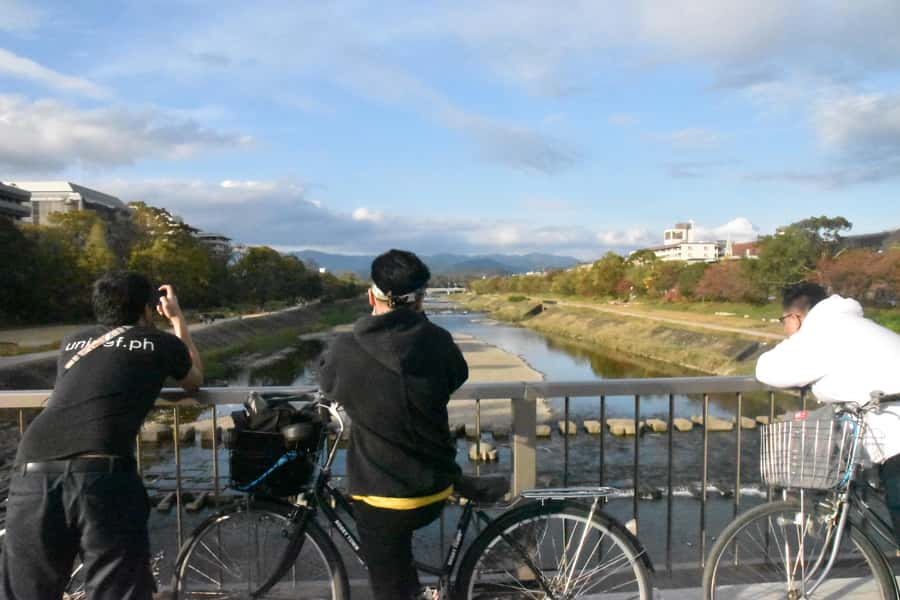
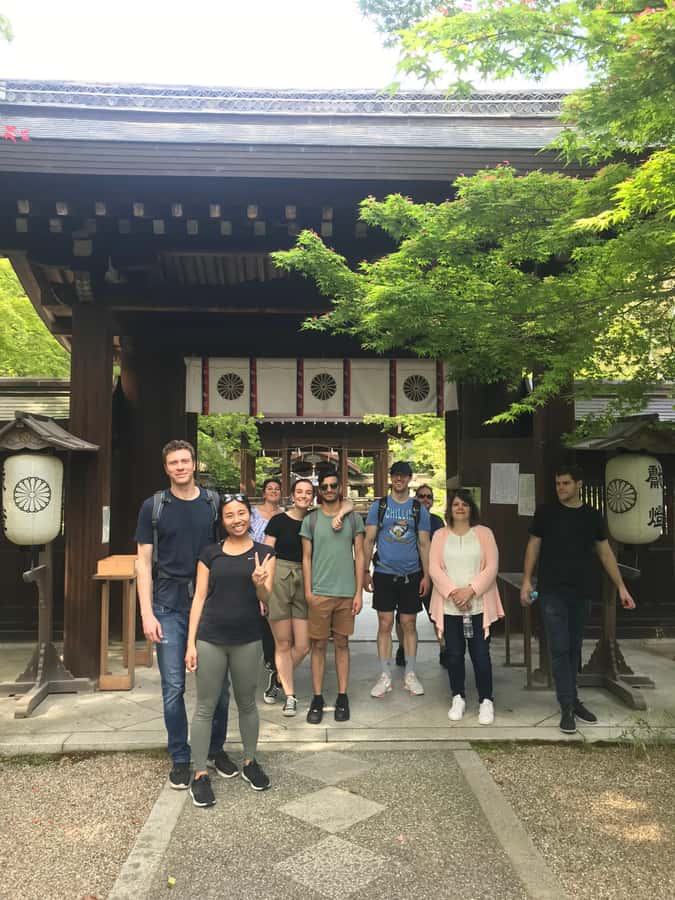
Early in the ride, you stop at a lesser-known shrine and try its natural spring water. This is a small detail, but it gives the route a local feel. Instead of simply photographing a grand building, you get a direct connection with a place valued for its water and calm setting.
The stop also shows the benefit of having a guide. Kyoto has countless small religious sites, but it is easy to pass them without understanding why they matter. Here, the guide can point out the setting and explain what you are seeing without turning the visit into a long formal lecture.
You will want to carry your own water as well. The spring stop is part of the experience, not a replacement for staying hydrated during the ride.
Same handlebars, a completely different route:
- 5 Top Highlights of Kyoto Full Day Bike Tour (E-bike option)
★ 5.0 · 511 reviews - Full Day Biking Tour Exploring the Best of Kyoto
★ 5.0 · 498 reviews - Kyoto: Memory Kyoto E-Bike Tour
★ 4.8 · 297 reviews - E-Bike Tours of the highlights of Kyoto!!!
★ 5.0 · 291 reviews
The Imperial Palace and a famous Zen temple
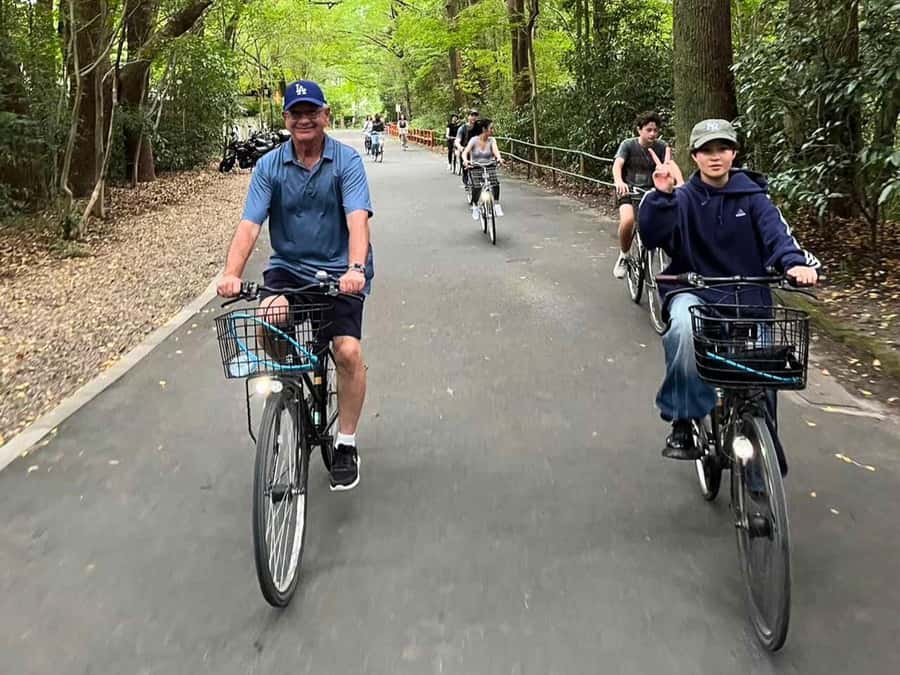
The Imperial Palace gives the cycling route a major landmark. Its broad grounds provide a sense of scale and offer a contrast to the narrow lanes and small shrines visited earlier.
You should not expect a full palace tour or an extended museum visit. The itinerary treats the palace as one stop within a wider city ride, which is useful if you want to see several areas in one outing. If the palace is high on your Kyoto list and you want a detailed architectural visit, you may still want to return separately.
The route also includes a famous Zen temple. The exact temple can vary because the destinations are described as examples, especially in rainy conditions. That flexibility helps the operator adjust the outing, but it also means you should not assume every stop will be identical on every departure.
The appeal here is variety. You get a major imperial site, a temple, and smaller local places without spending the whole day at only one attraction.
University campuses and residential lanes
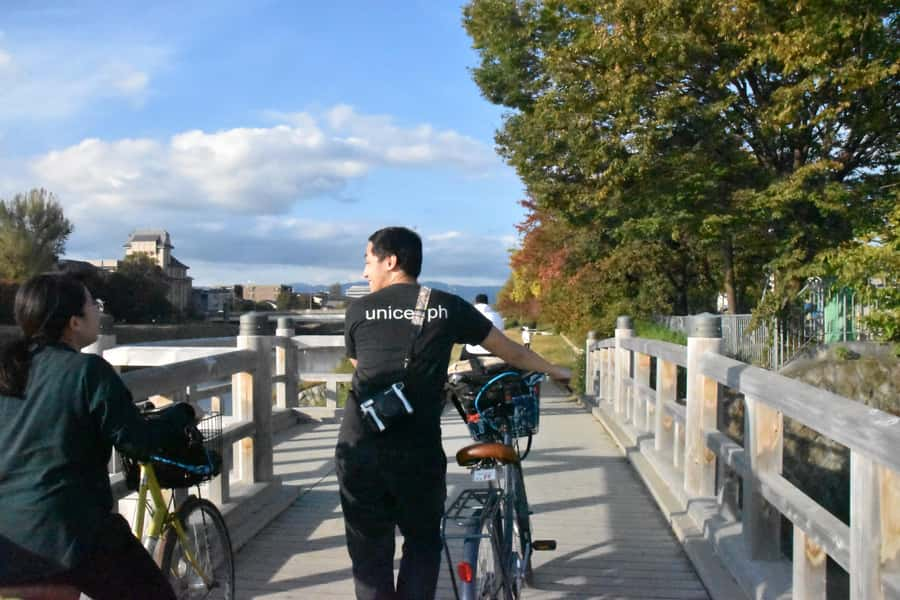
After the larger sights, the bike ride passes through university campuses and quiet residential areas. These sections may be less famous, but they help you see ordinary Kyoto rather than only its postcard locations.
I find these transitions valuable because they show how the city fits together. A shrine does not sit in isolation from daily life. It may be a short ride from a campus, a neighborhood street, or a river path. Cycling makes those connections clear.
The residential sections also provide a change of pace. You are not constantly stopping for a major attraction, and that gives you time to enjoy the ride itself. Guides Benjamin and Claire were praised for balancing well-known sights with quieter places, while keeping the stops frequent enough to remain comfortable.
Shimo-gamo Shrine and the primitive forest
Shimo-gamo Shrine is one of the strongest stops on the route. It is a UNESCO World Heritage site, but its appeal is not only the label. The shrine includes beautiful buildings and a primitive forest that gives the visit a quiet, almost separate-from-the-city feeling.
After several hours of cycling, this is the kind of stop that rewards slowing down. You can leave the bike for a while, look at the buildings, and enjoy the trees and open space. The contrast between the city streets and the forest is part of what makes the shrine memorable.
The route is especially useful here because reaching several of these places independently can take planning. One rider noted that the guide brought the group to shrines and temples that would have been difficult to find without help. You do not have to spend your valuable Kyoto time studying bus connections between each stop.
The river junction and the ride back
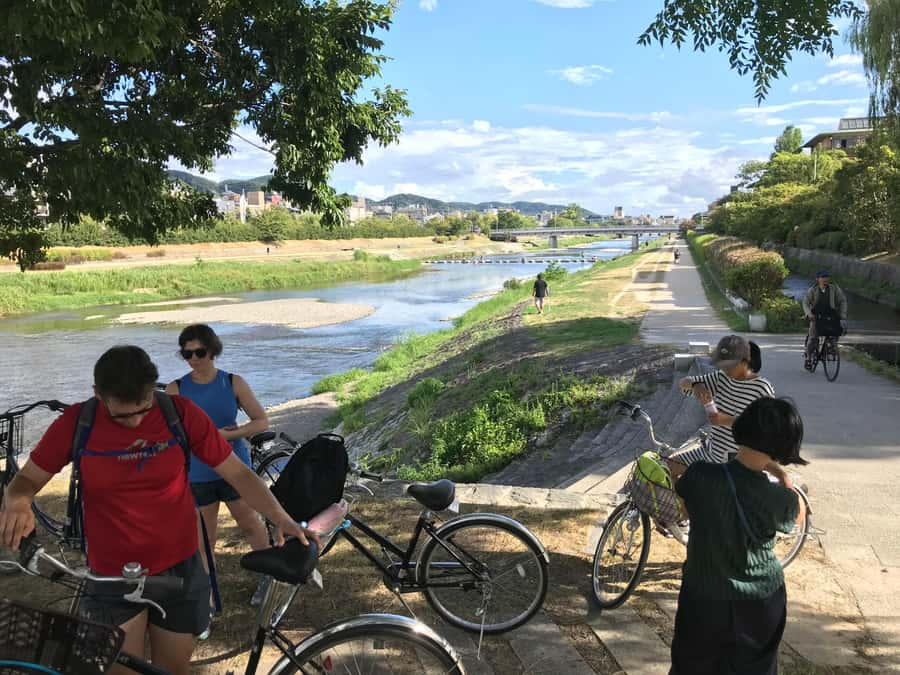
The tour then continues toward a distinctive point where rivers meet before following a scenic riverside route back. The return section is described as refreshing and lightly illuminated, adding a pleasant visual change after the daytime ride.
This part is less about checking off another famous attraction and more about enjoying Kyoto outdoors. You get moving water, open views, and a chance to settle into the rhythm of the bicycle. On a hot day, riding beside the river can feel much better than walking through dense central streets.
The route does not promise a fixed set of destinations every time. Rain or shine, the experience continues, and the stops may change. That is worth keeping in mind if you need a rigid sightseeing schedule. For most people, the flexibility is helpful, but you should come prepared for changing weather.
Tea, sweets, and the final town walk
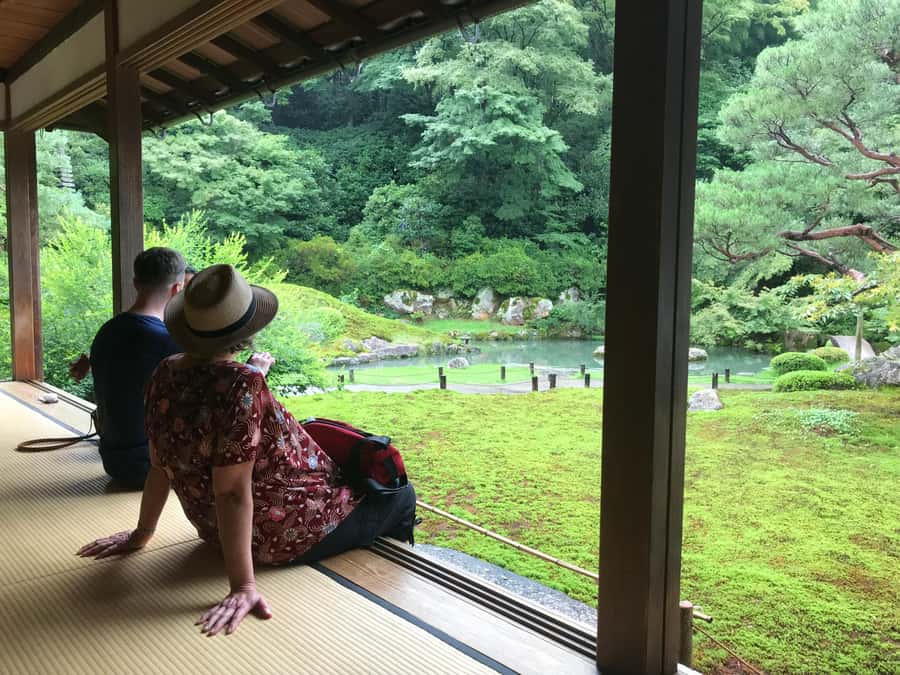
After returning the bikes, you take a 30-minute walk through Gion or Pontocho. These are two of Kyoto’s best-known entertainment districts, with narrow streets, traditional buildings, restaurants, bars, and the city’s historic geisha quarters.
The tour introduces the main Flower Towns, the traditional districts associated with geisha. The guide explains the culture and the system behind these entertainment areas, which is more useful than simply wandering through and wondering which streets are appropriate to photograph.
You might spot a geisha, but it is not guaranteed. It is best to treat that possibility as a bonus rather than the purpose of the walk. Gion and Pontocho are photogenic, but they are also working neighborhoods. Follow the guide’s advice, be discreet with cameras, and remember that a short glimpse is not an invitation to interrupt anyone.
The included visit to a traditional snack shop adds another welcome touch. You receive a Japanese sweet and Japanese tea, giving you a chance to sit or pause after the ride. Eva-Maria specifically valued this part of the experience, describing the tea and sweet in a typical teahouse as a highlight.
During the walking section, the guide can also recommend restaurants and bars based on your requests. This is practical at the end of a long day, especially if you want help choosing a place in Gion or Pontocho rather than simply picking the first menu you see.
The guides and the pace
The guide can make or break a cycling tour, and the human side of this experience is one of its strongest features. Mr. Go was praised for being patient with children. Benjamin was described as kind, helpful, and good at offering restaurant suggestions. Ko received praise for clear explanations, while Claire kept the ride friendly and well paced.
The recurring theme is care. Stops are frequent enough to make the ride manageable, and the guides are willing to help riders who need extra attention. That matters for families, especially when children are old enough to ride but may not have the stamina or confidence of adults.
The tour is offered in English. The available feedback is strongly positive, with a five-star rating based on 29 reviews. That is a solid signal, though it cannot tell you the exact group size or guarantee which guide you will receive on your date.
What the $73 price gets you
At $73 per person, this is a good value if you want several Kyoto areas connected by a local guide. The price includes the rental bike, the traditional Japanese sweet, Japanese tea, and entrance fees for a temple or shrine used as an alternative plan on a rainy day.
The value comes from more than the bicycle. You are paying for route planning, local explanations, help navigating between scattered sights, and restaurant advice at the end. A self-guided bike rental may cost less, but you would need to choose the route and find the smaller shrines yourself.
An electric bike costs an additional 1,000 yen if requested, payable on the spot. I would consider this if you are worried about the length of the ride, have limited cycling fitness, or simply want to save energy for the Gion walk. The standard bike should suit someone comfortable with ordinary cycling.
The price does not include personal drinks or food beyond the included tea and sweet. Bring water, and plan for your own meal afterward unless you follow one of the guide’s restaurant suggestions.
Who should book this Kyoto ride?
I would recommend this outing to families with children aged nine or older, couples, and solo visitors who want to see more than the standard central sights. It is also a strong choice if you enjoy temples and shrines but do not want to spend the whole day moving through crowded tourist streets.
You should be comfortable riding a bike for several hours. The experience is not suitable for anyone who cannot ride, and it is not a good pick if you want a short, gentle activity with little physical effort.
Bring comfortable shoes, a camera, water, and clothing suited to the weather. Pets, smoking, luggage, and large bags are not allowed. The experience runs in rain or shine, though the destinations may change and an indoor temple or shrine visit may be used as an alternative.
You can cancel up to 24 hours in advance for a full refund, and the reserve-and-pay-later option gives you some flexibility while planning your Kyoto days.
Should you book Cycle Kyoto’s Hidden Gems & Gion Stroll?
Book it if you want a friendly, active way to connect Kyoto’s major sights with quieter local places. The river roads, spring-water shrine stop, Shimo-gamo Shrine, tea and sweet, and Gion explanation give the outing more character than a simple city bike rental.
Skip it if you dislike cycling, need a guaranteed fixed itinerary, or prefer spending a full morning inside one major temple or palace. For everyone else, the $73 cost is sensible, especially if you value a well-planned route and a guide who can make Kyoto feel easier to understand.
FAQ
How long does the experience last?
The cycling portion is described as 3.5 hours, followed by a 30-minute walk through Gion or Pontocho.
What is included in the price?
The price includes a rental bike, a Japanese sweet, Japanese tea at a traditional snack shop, and any entrance fee for a temple or shrine used as an alternative plan on a rainy day.
How much does the tour cost?
The listed price is $73 per person.
Is an electric bike available?
Yes. An electric bike costs an additional 1,000 yen, payable on the spot if you request one.
Where does the tour begin?
The meeting point is the kneeling man statue at the southeast corner of the Sanjo Ohashi intersection, near the east end of Sanjo Ohashi Bridge.
Where does the tour end?
The activity ends back at the original meeting point.
What age is suitable for the tour?
The experience is not suitable for children under nine years old.
Do I need to know how to ride a bike?
Yes. The tour is not suitable for people who cannot ride a bike.
Does the tour operate in bad weather?
Yes. It operates in rain or shine, and the destinations may change. A temple or shrine may be used as an alternative during rain.
What should I bring?
Bring comfortable shoes, a camera, water, and clothing suitable for the weather. Pets, smoking, luggage, and large bags are not allowed.
What language is the tour offered in?
The tour is offered in English.
Can I cancel for a refund?
You can cancel up to 24 hours in advance for a full refund.
Newly added rides around Kyoto
- Kyoto: City Secrets eBike Tour★ 4.9 · 196 reviews
- Best of Kyoto: Ginkakuji & Path of Philosophy E-Bike Tour★ 4.9 · 79 reviews
- Kyoto: Tailored E-Bike Tour to Highlights & Hidden Gems★ 4.9 · 32 reviews
- Kyoto: Hidden Gems E-Bike Tour with Local Japanese Guide★ 4.9 · 189 reviews
- Kyoto: Half-day Guided Bike Tour with Fushimi Inari★ 4.9 · 21 reviews
- Kyoto: Hidden Gems E-Bike Tour Through Backstreets & Temples★ 4.9 · 54 reviews
- Kyoto: Early Bird E-Bike Tour with Lunch★ 5.0 · 14 reviews
- Kyoto: Full-Day City Highlights Bike Tour with Light Lunch★ 5.0 · 52 reviews
Kyoto Bike Tours, compared.
Arashiyama Bamboo Forest & Hidden Gems Bike Tour (Early Bird)
Read our review →
5 Top Highlights of Kyoto Full Day Bike Tour (E-bike option)
Read our review →
Full Day Biking Tour Exploring the Best of Kyoto
Read our review →

Afternoon Kyoto Bike Tour: Bamboo Forest, Monkeys & Hidden Spots
Read our review →Browse the lists this tour appears in