
REVIEW · BERLIN BIKE TOURS
Berlin (E)Bike Tour Historical Highlights in Small groups
Berlin’s past is spread across the city. This 3.5-hour small-group e-bike and rickshaw tour links the main sights of Mitte without asking you to walk between every one. You follow a guide through the former royal center, Nazi sites, Cold War landmarks, and modern Berlin, with plenty of stops for photos.
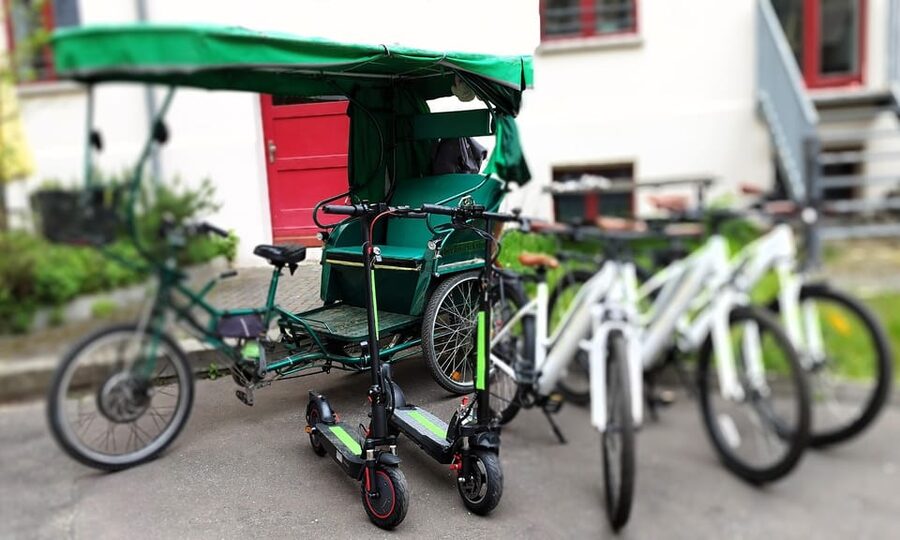
I especially like the choice of transport. E-bikes cover ground quickly, while the original-style rickshaws let grandparents, young children, and less-mobile companions join the same outing. I also like the small maximum of six people, which should make it easier to hear the guide and keep the group together. The main caution is equipment and organization: one report describes an e-bike losing power for half the ride, and another calls the bike handover chaotic.
Key things to know before you book
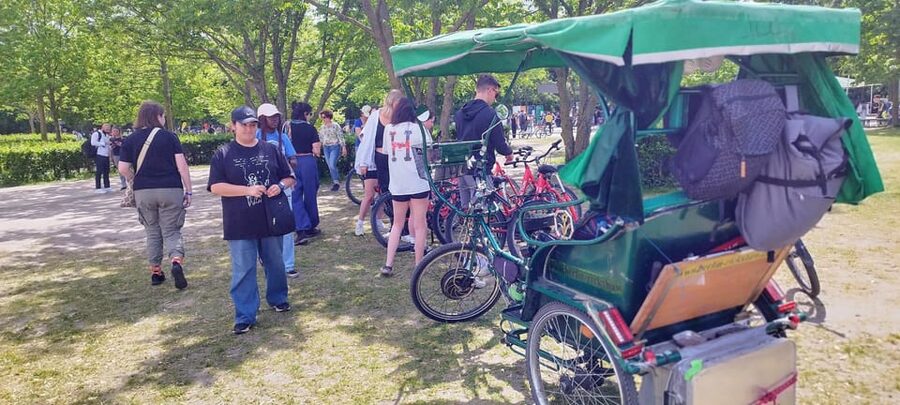
- Two ways to see Berlin together: Ride an e-bike or sit in a rickshaw, with room for up to two people in each rickshaw.
- A lot of ground in 210 minutes: The route links the TV Tower, Museum Island, Unter den Linden, Checkpoint Charlie, the Berlin Wall, Brandenburg Gate, and Reichstag.
- Useful for mixed-age groups: Children under 14 and people who do not want to cycle can still take part from the rickshaw.
- Maximum six participants: This is a much more personal setup than a large city sightseeing bus.
- Photo stops are built in: Guides take pictures and offer many places to stop, rather than rushing past every landmark.
- The starting point is convenient: Meet at Weinbergsweg 6 near U-Bahn Rosenthaler Platz, close to cafes, shops, and Weinbergspark.
Why a bike works so well in central Berlin
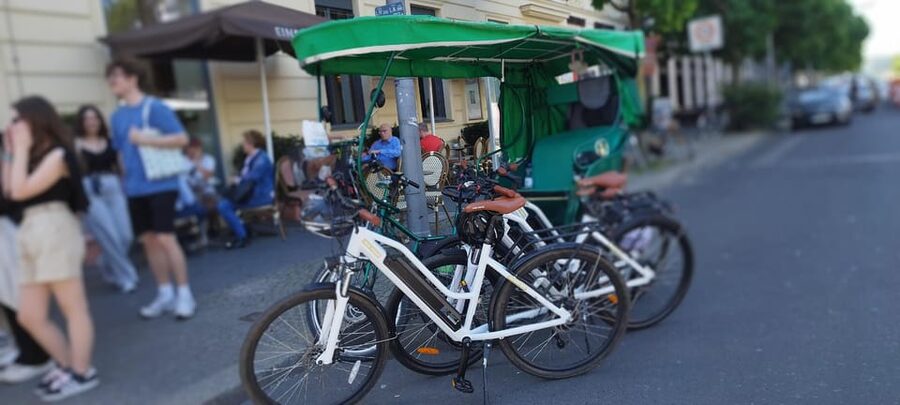
Berlin’s key sights are often too far apart for a pleasant walk, yet close enough that public transport can feel like overkill. An e-bike fills that gap. You move from Museum Island to the Brandenburg Gate and then toward Checkpoint Charlie without spending much of the tour waiting underground or crossing busy streets on foot.
The tour uses a guided route rather than asking you to plan your own path. That matters in Berlin, where a few blocks can take you from royal architecture to Nazi history, from the scars of the Berlin Wall to glass towers and modern plazas. You get the broad picture in one outing.
The e-bike format also saves energy. Berlin is mostly manageable by bicycle, but three and a half hours of sightseeing can still become tiring, especially when you are stopping, listening, and getting back on repeatedly. The electric assistance should make the riding easier, though you should still wear comfortable shoes and be ready for regular mounting and dismounting.
The group limit of six is another practical strength. The guide can keep the pace fairly tight, and you should have a better chance of hearing explanations at busy landmarks. The experience is offered in English. One guide, Levent, also gave an enthusiastic tour in Dutch on one occasion, but you should not assume Dutch is available on every departure.
More City Bike Tours in Germany
- Berlin: Sights and Highlights Bike Tour with a Local Guide
★ 4.8 · 2,698 reviews - Berlin Highlights 3-Hour Bike Tour
★ 5.0 · 948 reviews - Berlin City Bike Tour with Beer Garden Stop
★ 5.0 · 917 reviews
Rickshaw seating makes this a flexible family tour
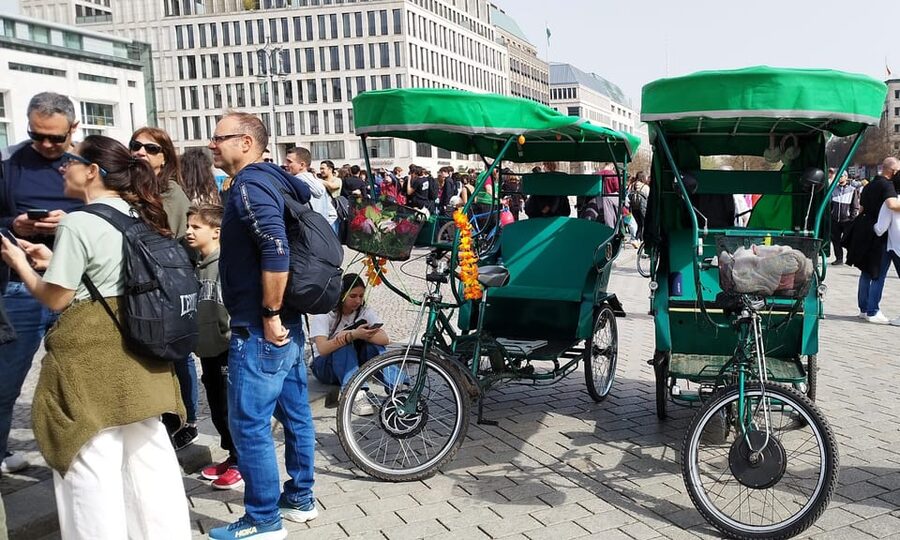
The rickshaw option is the feature that gives this outing its widest appeal. Each rickshaw carries up to two people, so a grandparent, small child, or less-mobile companion can remain with the group while others ride e-bikes.
Boarding is described as requiring only a few effortless steps, and the close seating gives you an intimate view of monuments along the route. You are not being separated into a different sightseeing program. You follow the same general route and hear the same historical commentary from the guide.
That arrangement is particularly useful for families with mixed abilities. One person may want to pedal, another may prefer to sit, and a younger child may not be ready for a long urban bike ride. The rickshaw lets everyone share the same experience without forcing the whole group to use one mode of transport.
Still, the rickshaw is not a substitute for a fully step-free tour. The information describes easy access, but it does not provide details about wheelchair storage, transfer assistance, or the exact boarding design. If you need a specific accessibility arrangement, ask before booking.
Starting at Rosenthaler Platz and Weinbergsweg
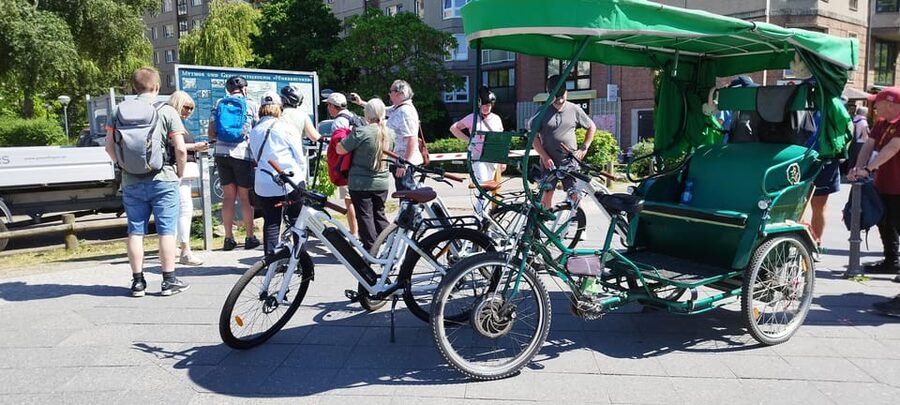
The meeting point is at Weinbergsweg 6, near U-Bahn Rosenthaler Platz in Mitte. This is a handy place to begin a morning or afternoon because the surrounding streets have cafes, bars, shops, and street art.
Weinbergspark is only a short walk away. If you arrive early, you can wait in the park or grab something nearby rather than standing beside a major monument. The area also works well for a meal or drink after the tour.
The route returns to Weinbergsweg 6, so you do not need to arrange a complicated pickup at the far end of Berlin. Check the exact start time when booking, since the activity provides several possible departures depending on availability.
TV Tower and Museum Island: Berlin’s older center
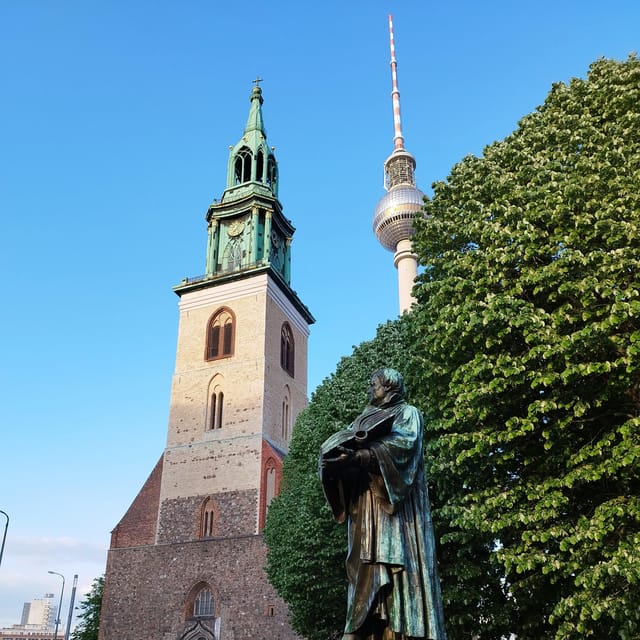
The first major stop is the TV Tower, one of the easiest landmarks to recognize in Berlin. Rising above Alexanderplatz, it gives you a clear orientation point for the city, even if this tour only provides a photo stop and views rather than admission to the tower.
From there, the route moves toward Museum Island. This is one of Berlin’s most important cultural areas, set in the middle of the River Spree. The tour gives you time to look at the architecture and hear how the center developed, but museum entry is not included, so treat this as an outside visit.
The Berlin Cathedral follows as part of the central route. Its large dome and formal facade make it one of the city’s most striking buildings. A bike or rickshaw is useful here because you can see the cathedral, the riverfront, and nearby Museum Island without committing to a long walk between each view.
This part of the tour is good for first-time visitors. You get your bearings quickly and see how Berlin’s historic center is arranged before moving into more difficult chapters of the city’s past.
More Historic Bike Tours in Germany
- Berlin: Cold War & Berlin Wall History Guided Bike Tour
★ 4.8 · 422 reviews - Berlin Wall History Small Group Cycling Tour
★ 4.9 · 152 reviews - Small-Group Historical Bike Tour in Berlin
★ 4.5 · 103 reviews - Half-Day Bike Tour of Berlin’s Lesser Known And Historical Sites
★ 5.0 · 10 reviews
Unter den Linden and the book-burning memorial
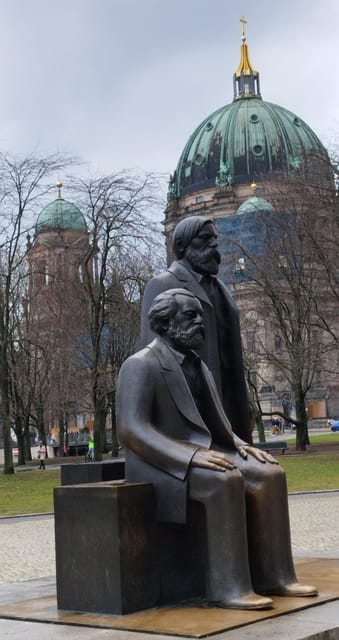
Unter den Linden is Berlin’s grand boulevard, running through the historic center toward Brandenburg Gate. Along the way, you see major buildings and broad streets that connect the former royal area with the government district.
The tour also stops at the memorial marking the Nazi book burning of May 10, 1933. This is a small but powerful historical site. The memorial is easy to miss if you are simply walking through the city, so having a guide point it out adds real value.
The location recalls the public destruction of books by Nazi supporters and helps explain how censorship and political control entered everyday life. It is not a flashy stop, and that is precisely why it benefits from explanation. You may pass over it on your own unless you already know where to look.
Checkpoint Charlie and the former Berlin Wall
Checkpoint Charlie is one of Berlin’s best-known Cold War locations. The name refers to the former crossing point between East and West Berlin, and the site remains a key place for understanding the city’s division.
The area can feel busy and commercial, and the original checkpoint structure is no longer intact in the way many visitors expect. That is worth knowing before you arrive. The value here comes less from a preserved border crossing and more from the guide’s explanation of what happened at this spot and why it mattered.
The route then connects with the Berlin Wall and its wider story. You learn about the physical barrier, the split between East and West Berlin, and the significance of the wall’s fall. Seeing these locations in sequence helps you understand that Berlin’s division was not confined to one famous checkpoint. It shaped streets, neighborhoods, families, and daily routines across the city.
Because the tour is on wheels, you can cover more than one Cold War site in a single afternoon. Walking between them would take longer and might leave less time for the Nazi and government landmarks later in the route.
Hitler’s bunker and the Topography of Terror
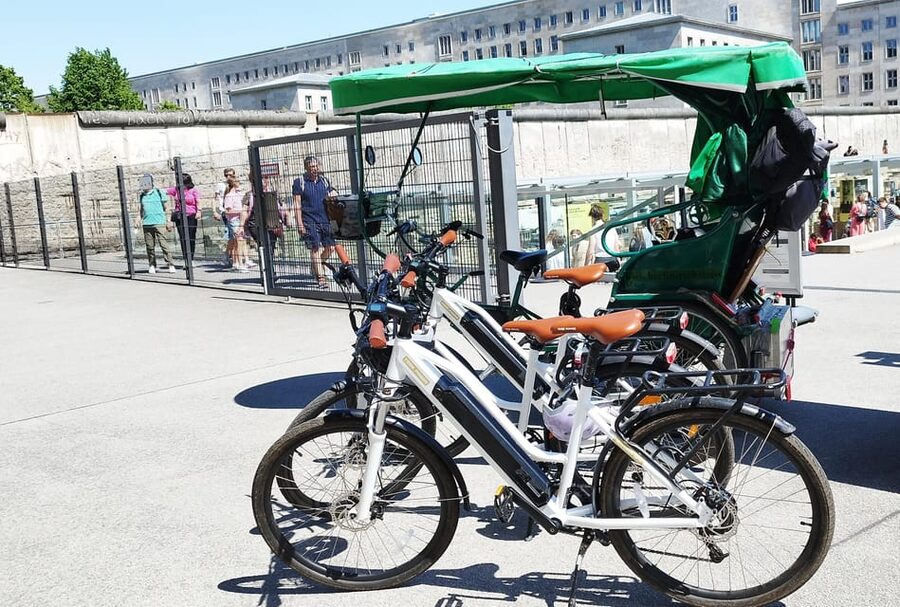
The stop at Hitler’s bunker is deliberately understated. The bunker itself is underground and not presented as a dramatic attraction. The location is marked above ground, and the guide provides the context for Hitler’s final days in 1945.
That plain treatment is appropriate. There is no grand entrance to photograph and no interior tour included. You come to understand the location, not to visit a preserved bunker room.
The Topography of Terror adds another layer. Located at the former headquarters of the SS and Gestapo, it focuses on the machinery of Nazi persecution. The site is important because it links government power, police control, and mass violence to a real place in central Berlin.
The tour lists a photo stop here, but you should not expect enough time for a full museum visit. If you want to study the exhibitions in detail, plan a separate visit. As part of this bike route, the stop works as a concise introduction.
The Holocaust Memorial and Brandenburg Gate
The Memorial to the Murdered Jews of Europe, commonly called the Holocaust Memorial, is one of Berlin’s most recognizable modern memorials. Its field of concrete blocks changes as you move through it, creating a serious and unsettling experience.
The tour gives you a chance to see the memorial and hear why it was built. Since the schedule includes many landmarks, the stop is likely an orientation and explanation rather than an extended period inside the memorial. You may want to return later if you want to walk through it slowly or visit the underground information center.
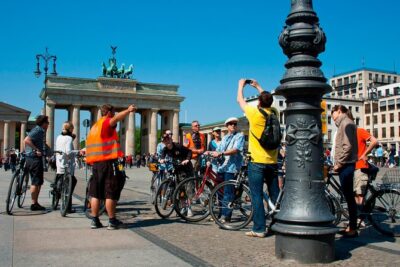
Brandenburg Gate is the city’s great symbol. Once a royal entrance, it later became linked with division and reunification. Today it sits at the edge of the government district and provides one of the tour’s strongest photo opportunities.
A guide is useful here because the gate’s meaning changed over time. You see more than a handsome neoclassical arch. You see a place shaped by monarchy, war, Cold War division, and German reunification.
Reichstag, Potsdamer Platz, and the modern city
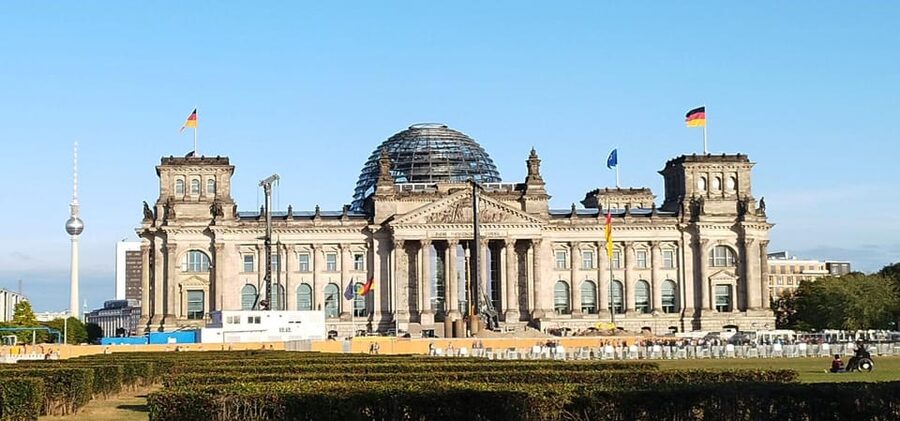
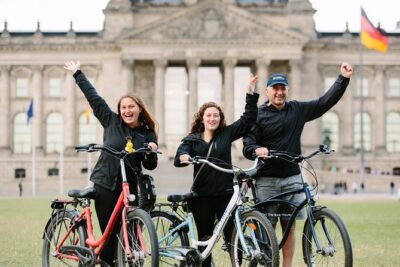
The route includes a photo stop at the Reichstag, home of Germany’s federal parliament. The building combines a historic exterior with a modern glass dome, though this tour does not include a dome reservation or interior visit.
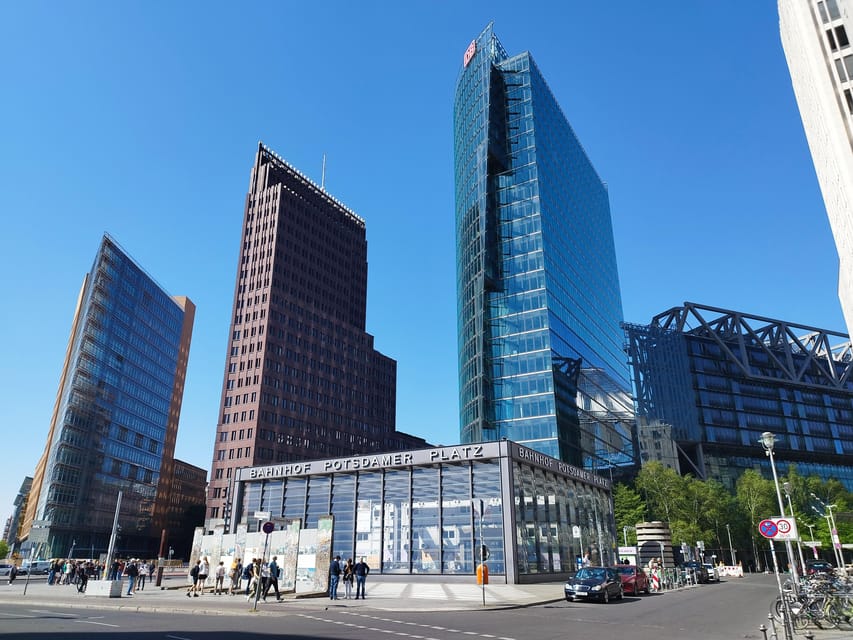
From the Reichstag, the wider government quarter helps show how Berlin rebuilt its political center after reunification. The tour also includes Potsdamer Platz among the major historical highlights, connecting older Berlin with the city’s modern commercial architecture.
Potsdamer Platz was once divided by the Berlin Wall and later redeveloped into a dense district of offices, shops, entertainment venues, and tall buildings. It is a useful contrast to the memorials and older monuments earlier in the day. Berlin is not only a city of surviving historic facades. It is also a place that repeatedly rebuilt itself.
The route includes the main locations listed for Mitte, but the exact time at each stop will depend on traffic, group pace, and the guide’s explanations. Think of this as a guided overview, not a series of long site visits.
The guide, photography, and the tour’s uneven points
The strongest praise centers on the guides. The experience has been described as informative, and Phillip called it a great introduction to Berlin’s key areas. A separate outing with Levent was appreciated for its enthusiasm and Dutch-language commentary. Those details suggest that the human side of the tour can make a real difference.
The guides also take photographs, and the tour includes many photo stops. That is convenient if you are traveling alone or want pictures of your whole group rather than only selfies. You should still clarify how the photos are delivered, since the available information does not explain that process.
The overall rating is 4.5 from 24 ratings, with several strong scores praising the tour and its guide. The less positive feedback points to two practical risks. One person reported that the e-bike battery stopped working during the ride, leaving the pair without electric assistance for much of the route. Another described the bicycle organizer as chaotic, even while praising the guide.
That does not prove equipment problems are common, but it is sensible to check the bike before leaving. Test the electric assistance, brakes, and seating position. If the battery seems weak or the bike feels wrong, say so immediately at the starting point rather than after you are several kilometers into the route.
Is $82 a fair price for 210 minutes?
At $82 per person, this is not the cheapest way to see Berlin. You are paying for a guide, an e-bike, a small group, a rickshaw alternative, bottled water, and a route that covers many central landmarks in three and a half hours.
The value improves if you are short on time or traveling with people who cannot walk long distances. Public transport may cost less, but it will not give you a continuous explanation of what you are seeing. Walking between all these places would take much longer and could leave you worn out before the final stops.
The price is also easier to justify for a first day in Berlin. The tour gives you a citywide framework, helping you decide which places deserve a longer return visit. It is less valuable if you already know Mitte well or want extended time inside museums and memorial exhibitions.
Free cancellation up to 24 hours before departure and reserve-now, pay-later booking add flexibility. Comfortable shoes remain a good idea even though you will be riding, since sightseeing includes stopping, standing, and boarding.
Who should book this Berlin e-bike tour?
I would recommend it most strongly to first-time visitors, families with different mobility levels, and anyone who wants a fast orientation to Berlin’s central history. It is also a good match for grandparents and young children who may not manage a long walking route.
You should choose it if you want a guide to connect the dots between the Nazi era, the Cold War, reunification, and modern Berlin. The itinerary is broad, and the moving format lets you see many sites without spending the whole day on foot.
I would be more cautious if your priority is entering monuments or museums. The tour focuses on outside views, explanations, and photo stops. You will see the Reichstag, Cathedral, Topography of Terror, and other key sites, but admission to interiors is not part of the experience.
If you book, arrive ready to inspect the e-bike and tell the operator at once if the battery or controls are not working properly. For a mixed group, reserve the rickshaw option in advance and confirm that the seating arrangement fits your party.
FAQ
How long does the tour last?
The tour lasts 210 minutes, or three and a half hours.
Where does the tour start and finish?
It starts and finishes at Weinbergsweg 6, near U-Bahn Rosenthaler Platz in Berlin.
Is the tour conducted in English?
Yes. The listed tour language is English.
How many people are in the group?
The tour is limited to six participants.
Can someone who does not ride an e-bike join?
Yes. A rickshaw option is available for non-bikers, people with limited mobility, and children under 14. Each rickshaw accommodates up to two people.
What happens if I need to cancel?
You can cancel up to 24 hours in advance for a full refund. The reserve-now, pay-later option lets you book without paying immediately.
More City Bike Tours in Berlin
- Berlin Highlights: 3-Hour Bike Tour
★ 4.9 · 809 reviews - Berlin Highlights Sightseeing Bike Tour in Small Groups
★ 5.0 · 652 reviews - Berlin: Guided Bike Tour to Explore the Highlights
★ 4.8 · 506 reviews - Berlin City Bike Tour with Beer Garden Stop
★ 4.9 · 308 reviews
More Historic Bike Tours in Berlin
- Historical Singapore Bike Tour on Full-Sized Bicycles
★ 5.0 · 1,421 reviews - Barcelona: 2.5-Hour Bike or E-Bike Historical Tour
★ 4.5 · 1,262 reviews - Asheville Historic Downtown Guided Electric Bike Tour with Scenic Views
★ 5.0 · 1,234 reviews - Krakow: Bike Tour of Old Town, Jewish Quarter and the Ghetto
★ 4.9 · 1,155 reviews
Newly added rides around Berlin
- Potsdam Bike Tour with Rail Transport from Berlin★ 4.5 · 81 reviews
- Berlin: Guided Private Bike Tour to Explore the Highlights★ 5.0 · 12 reviews
- Alternative Berlin Bike Tour – Off the Beaten Tracks in Small Groups★ 5.0 · 99 reviews
- Small-Group Historical Bike Tour in Berlin★ 4.5 · 103 reviews
- Berlin : The best bike tour with a Berlin guide and insider tips★ 5.0 · 14 reviews
- Half-Day Bike Tour of Berlin’s Lesser Known And Historical Sites★ 5.0 · 10 reviews
- Berlin Wall and Cold War Bike Tour in Small Groups★ 5.0 · 114 reviews
- Berlin : Guided Private Sightseeing Tours with Funbikes, Teambikes★ 5.0 · 20 reviews
Berlin Bike Tours, compared.
Sights and Highlights Bike Tour with a Local Guide
Read our review →
Berlin Highlights Sightseeing Bike Tour in Small Groups
Read our review →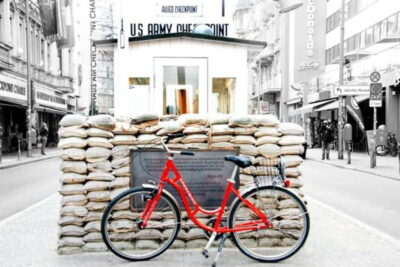
Alternative Bike Tour of Kreuzberg & Friedrichshain
Read our review →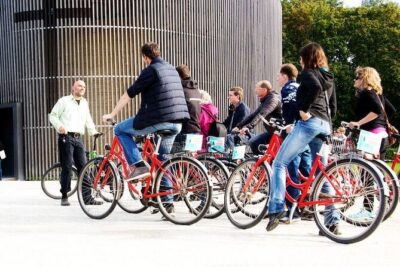
Browse the lists this tour appears in